
Walk into a prom and count the colors. You will see a great deal of black, a great deal of pink and red, plenty of blue, and almost no orange. That scarcity is the whole argument for an orange prom dress, and it is a stronger argument than it first appears, because standing out at a formal dance is usually a matter of choosing a color the room has not already saturated rather than choosing the loudest one available. Orange is also more wearable than its reputation suggests, since the family runs from the softest peach to a deep rust and those extremes behave nothing alike. This guide covers what each orange shade does, who each one suits, how orange behaves under dance lighting, which fabrics change it most, and what to wear with it.
Why orange is worth considering
The first reason is rarity. In a room where most people have chosen from a narrow band of colors, an orange dress registers immediately without needing to be dramatic in its cut or heavily embellished. The dress does the work through color alone, which means the silhouette can stay simple and comfortable.
The second reason is that orange is a warm color in a category dominated by cool ones. Warm shades tend to bring color to the face rather than drawing it away, which is why so many people find an orange dress unexpectedly flattering once they try one. The effect is strongest against warm and deep complexions but it is not limited to them.
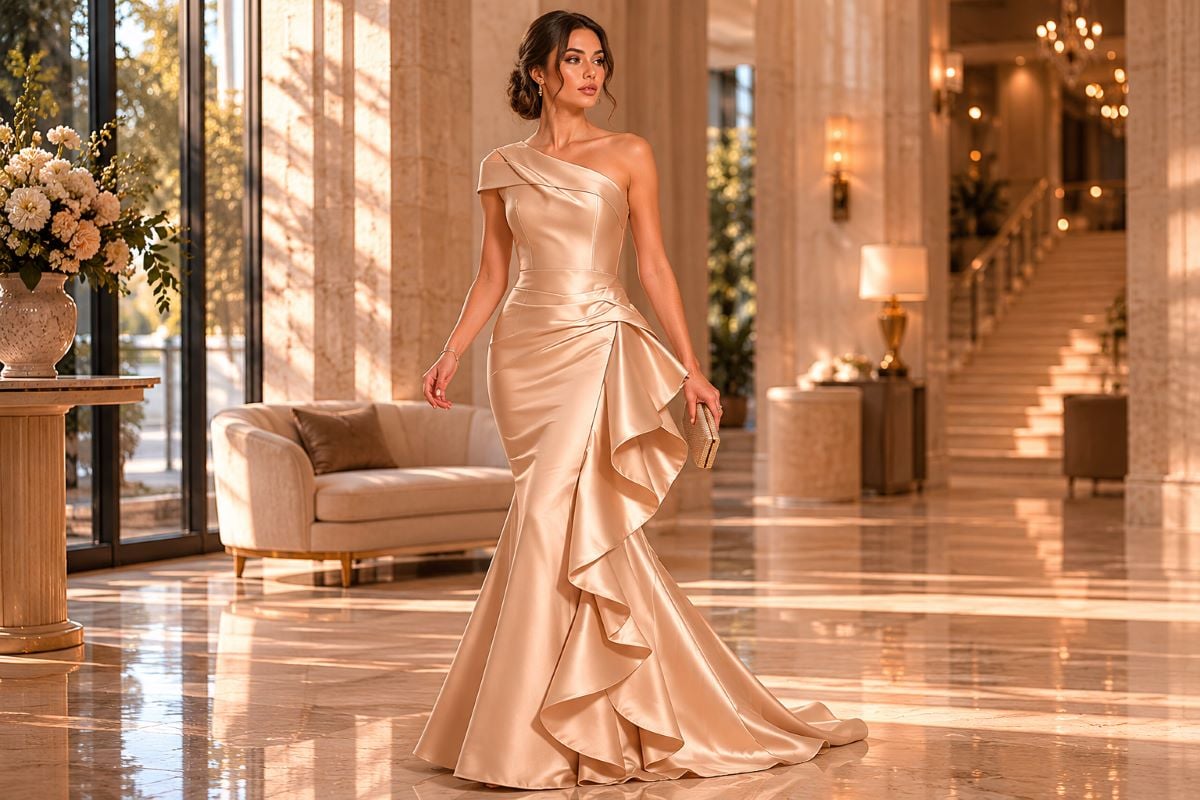
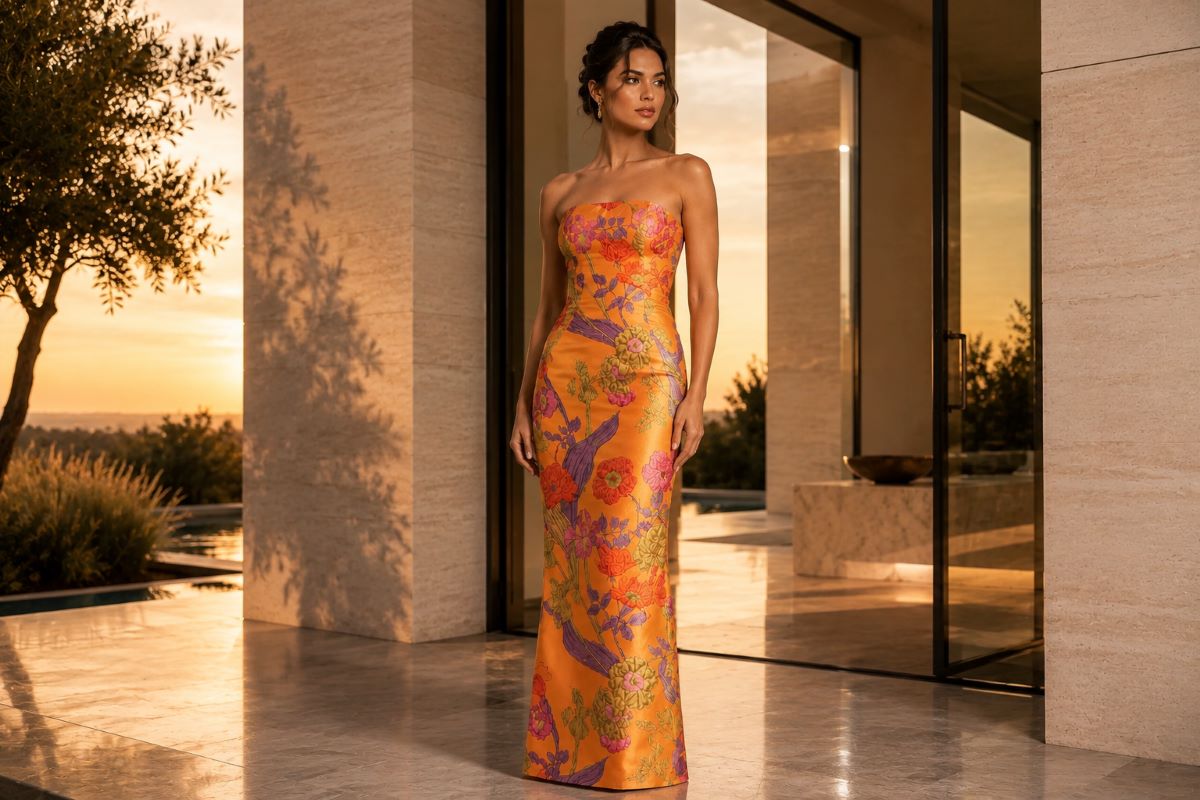
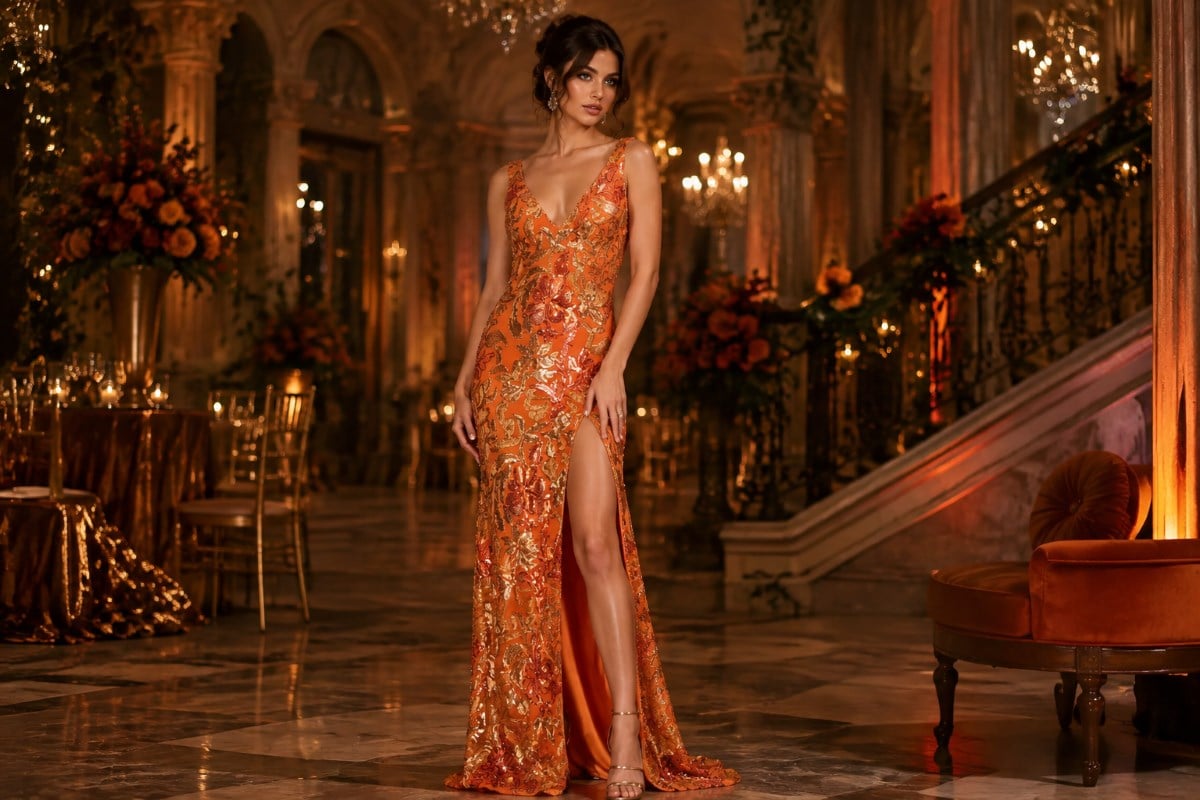
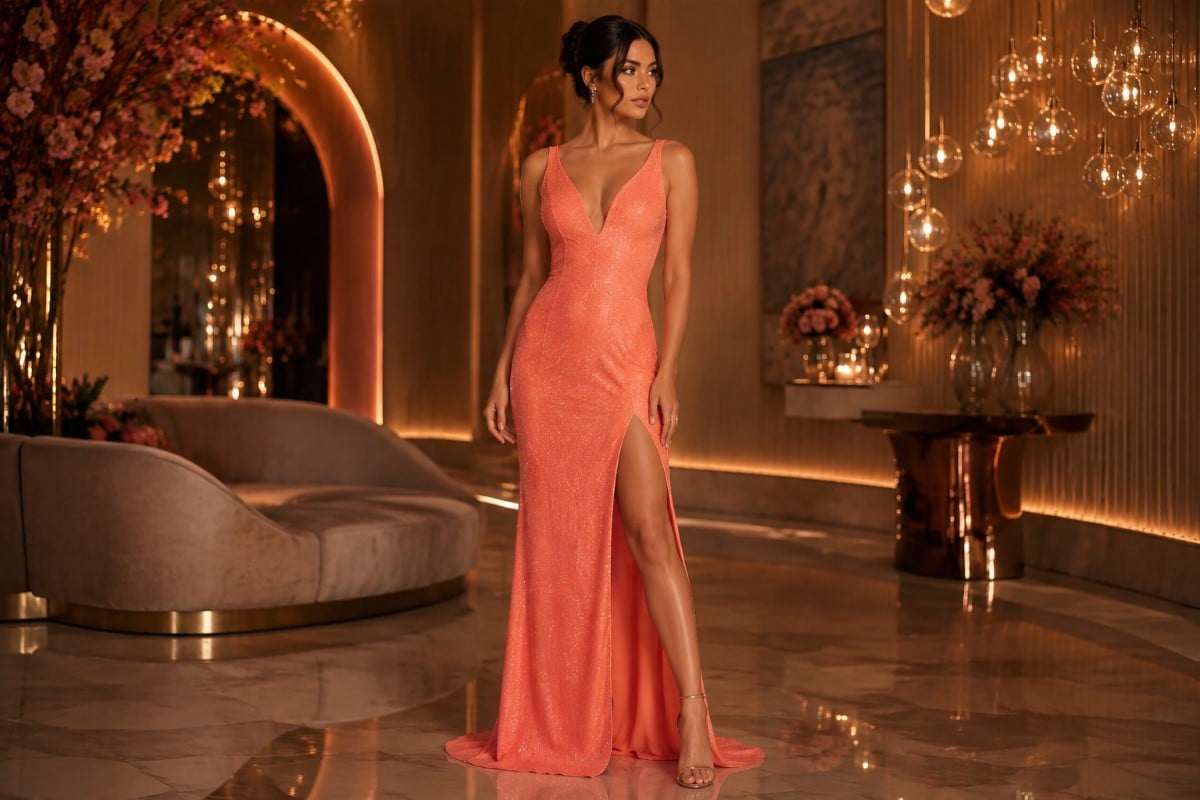
The third reason is photographic. Orange holds its intensity under the low, warm lighting typical of a dance far better than pastels do, and it does not shift toward another color the way some purples and teals can. What you see in the fitting room is close to what appears in the photographs. The range of orange prom dresses shows how wide the family is once you look at the shades together.
The orange shades and how each behaves
Orange covers more ground than most people expect, and the shade you choose changes everything about how the dress reads.
The soft oranges read romantic rather than bold
Peach and apricot sit at the palest end, warm and gentle enough that they read closer to a neutral than to a statement color. They photograph softly, suit lighter fabrics such as chiffon and tulle, and flatter fair to medium complexions particularly well. Coral adds pink to the mix, which makes it warmer and more flattering across a wider range of skin tones while still reading as fresh rather than bold. These are the shades to choose if you like the idea of orange but do not want the dress to be the loudest thing in the room, and they are also the most forgiving if you are uncertain.
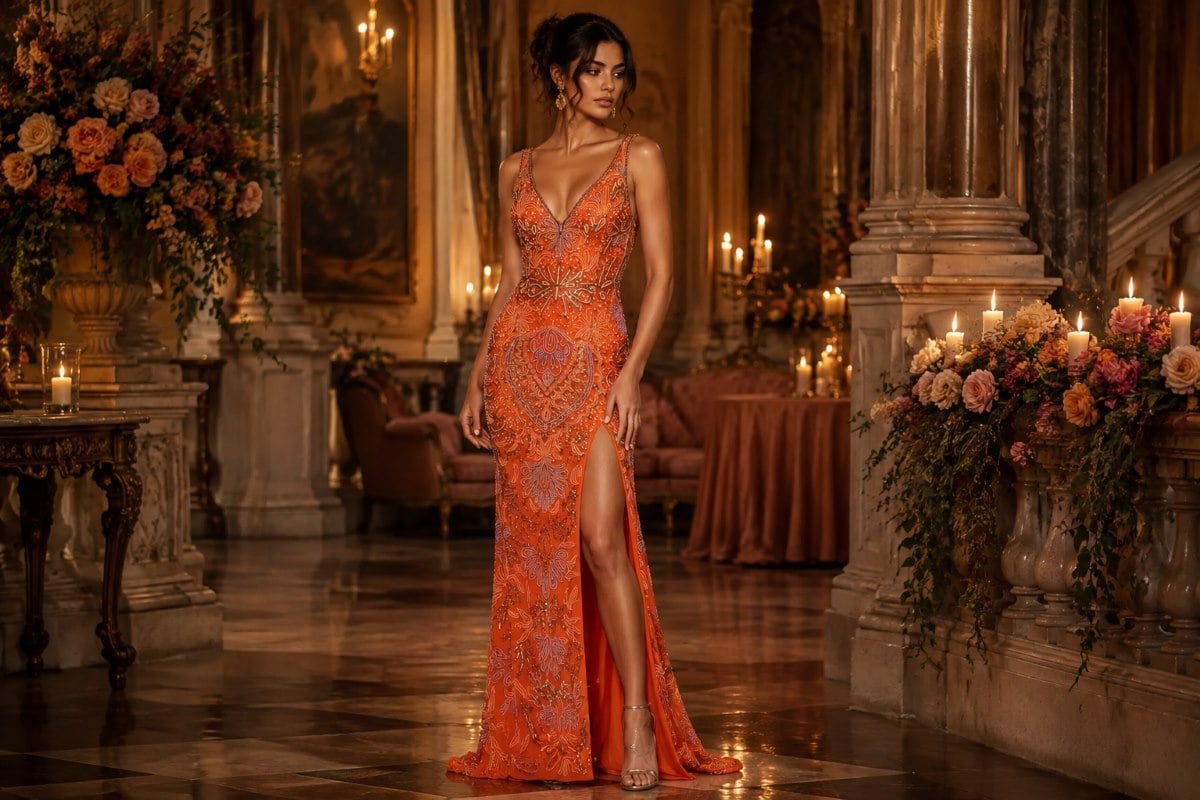
The deep oranges read rich and grown-up
Burnt orange, rust, and terracotta sit at the opposite end, deep and earthy with enough brown in them to read as sophisticated rather than bright. They behave more like a jewel tone than like a warm pastel, they suit heavier fabrics such as satin and velvet, and they flatter warm and deep complexions beautifully. Between the two extremes sit tangerine and true orange, fully saturated and unmistakably bold, which are the shades that deliver maximum impact and photograph most vividly under venue lighting. If you want the dress to be the statement, this is the part of the range to look at.
Matching orange to your coloring
Orange is a warm color throughout, so the question is less about warm versus cool undertones and more about depth and intensity.
Warm undertones, showing as golden, peach, or yellow beneath the skin, suit almost the entire range and look particularly good in tangerine, burnt orange, and terracotta, where the dress and the skin sit in the same temperature family.
Cool undertones can absolutely wear orange, and the shades that work best are the ones with pink in them. Coral is the obvious answer, since the pink content bridges the gap, and a cooler peach works similarly. The shades to approach carefully with cool undertones are the yellow-heavy oranges, which can create a slightly jarring contrast.
Depth matters as much as undertone. Deeper complexions carry saturated tangerine and true orange spectacularly, and the contrast between a vivid warm color and deep skin is one of the most striking combinations available. Medium and olive skin suits the whole range. Fair complexions generally do best with either the soft end, where peach and coral flatter without overwhelming, or a deep rust for contrast, avoiding the mid-brights that can sit close to the skin’s own warmth. The guide to prom dress colors for different skin tones covers how to identify your undertone.
Silhouette decides how much color is on show
With a bold color, the amount of fabric is the amount of color, and that changes how loud the dress reads more than the shade alone does. A full ball gown in tangerine puts a great deal of orange in the room and is unmistakably a statement. A fitted column in the same shade shows the color in one narrow unbroken line, which reads as sleek rather than overwhelming. A short dress reduces the quantity again and lets a bright orange feel playful rather than dramatic. If a shade appeals but feels like too much, choosing a less voluminous silhouette is as effective as stepping down to a softer tone.
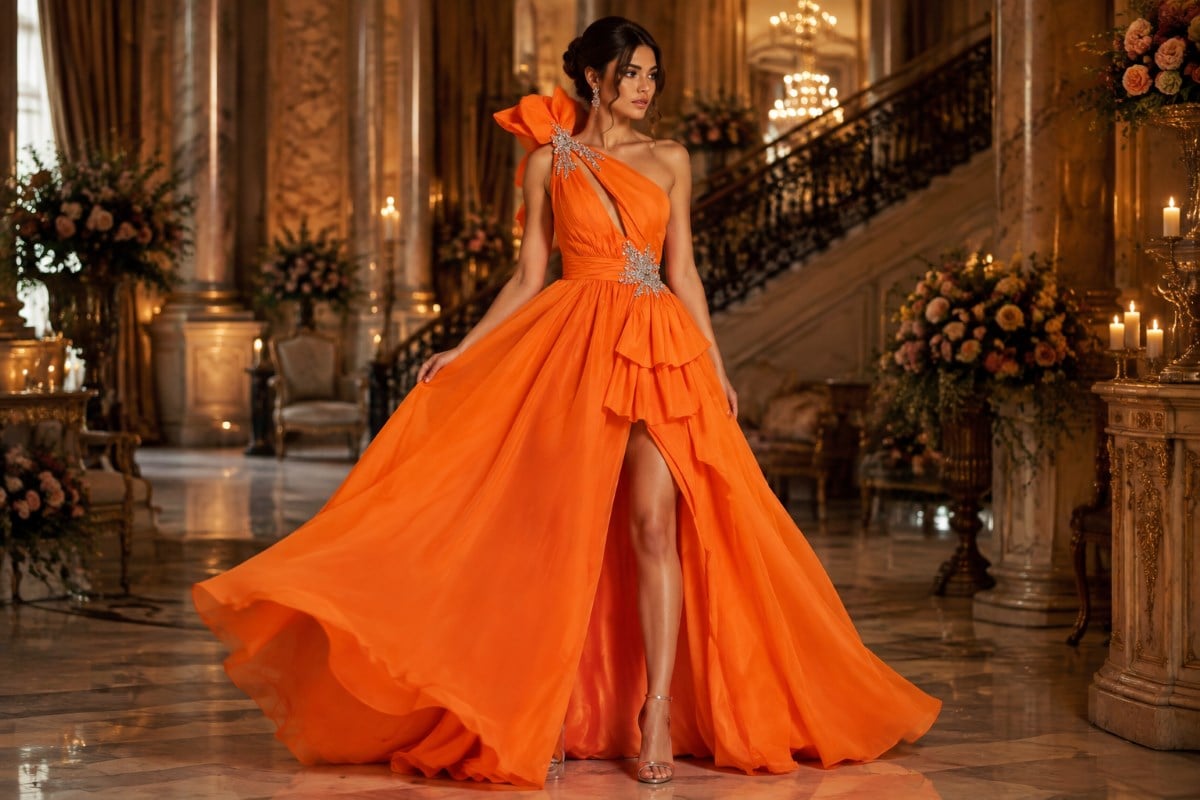
Contrast at the neckline changes the impact
Where the orange meets your skin affects how strongly the color registers. A strapless or wide neckline creates a large area of bare skin above the dress, which separates the color from the face and softens its impact. A high or halter neckline brings the orange right up to the jaw, which intensifies the effect considerably and works best when the shade genuinely suits your undertone. Illusion panels and nude mesh sit somewhere between the two, extending the design upward while keeping skin visible, which is a useful middle option with a color this warm.
Orange under dance lighting
Prom venues use low, warm lighting, often with colored spots over the dance floor, and this affects colors in ways worth anticipating.
Warm light pushes everything toward yellow and red, which for orange is largely helpful. A tangerine dress stays tangerine and a burnt orange deepens attractively. This is a real advantage over the pale colors, which lose definition, and over some purples and greens, which shift character.
The shade to check is peach, which under strongly warm light can drift toward a flat beige and lose the quality that made it appealing. If you want a pale orange and the venue is dimly lit, choosing a peach with some shimmer, sequin work, or a satin finish will keep it reading as a color rather than a neutral.
Under colored lighting, particularly blue or purple uplighting, warm colors can appear muted while cool colors amplify. This affects every warm shade equally, so it is not a reason to avoid orange, but it is a reason to lean toward the saturated end if you know the lighting will be heavy. The broader picture in the prom dress colors guide covers how shades behave across an evening.
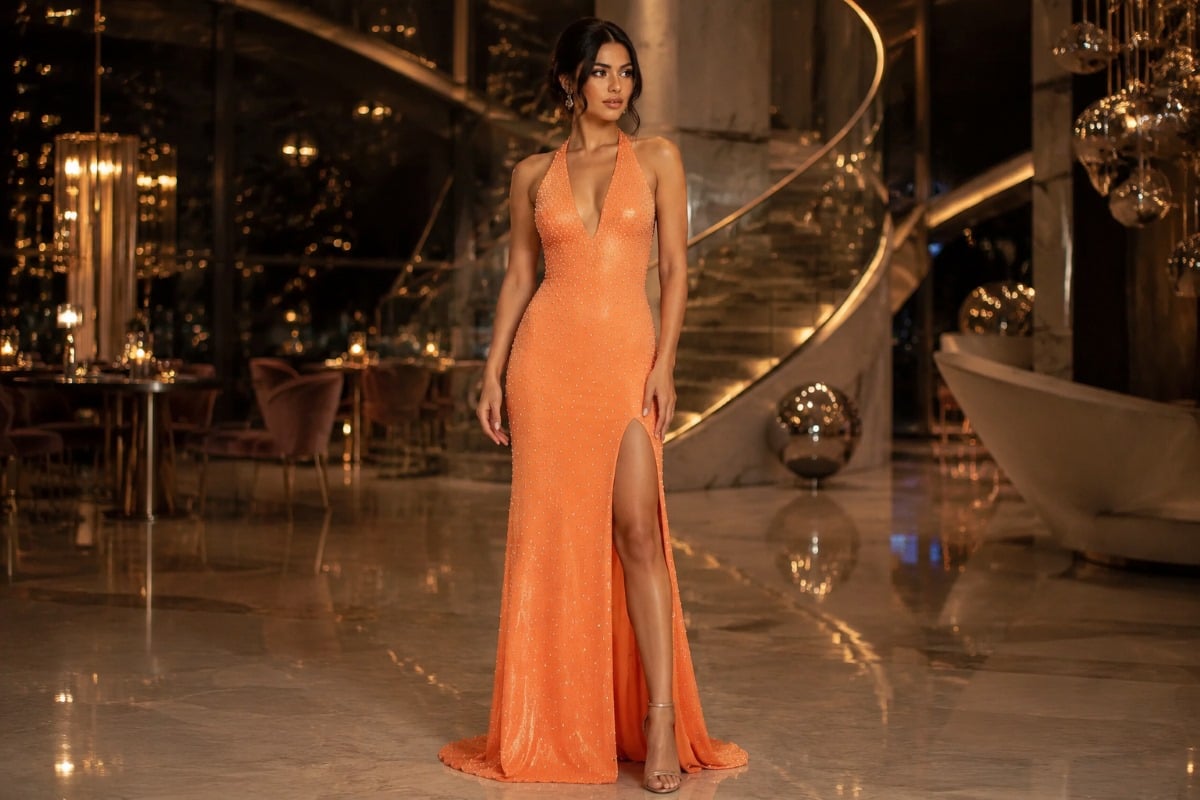
How fabric changes an orange dress
Fabric shifts orange more dramatically than it shifts most colors, largely because orange is so sensitive to how light hits it.
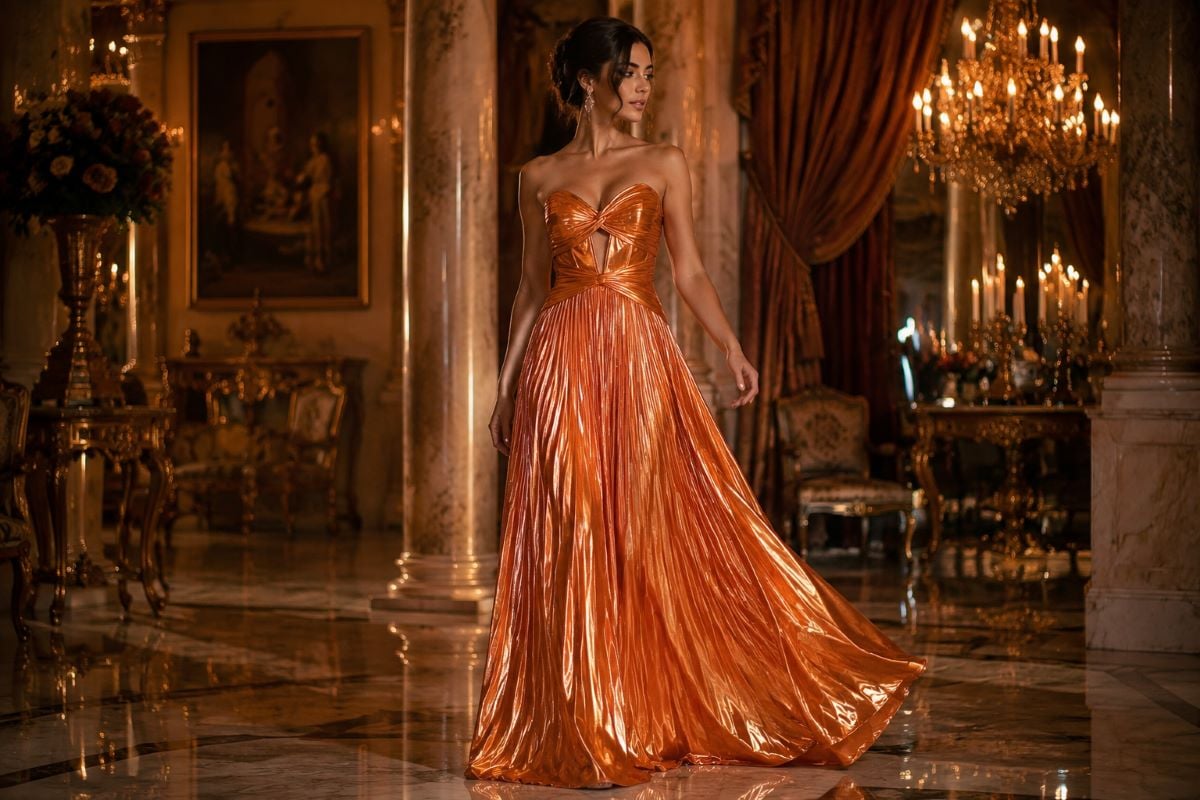
Satin gives orange a wet, glowing intensity, and a tangerine satin gown is about as vivid as formalwear gets. Sequins amplify the color further and throw warm light around the room, which suits the energy of a dance particularly well. Velvet takes orange into rust and terracotta territory even when the base shade is brighter, absorbing light and producing real depth.
Chiffon and tulle lighten orange considerably, so a shade that looks strong on a swatch becomes soft and airy in layers, which is the easiest way to wear a bright orange without the dress feeling loud. Crepe mutes the shine and produces a modern, tailored version of the color.
Beading changes the reading again. Gold beading over orange intensifies the warmth and reads as luxurious. Silver or crystal beading cools it slightly and adds crispness. Tonal beading in the same shade adds texture without altering the color at all. The red styles among red prom dresses sit immediately alongside the deepest oranges and are a useful comparison if you are deciding how far toward red to go.
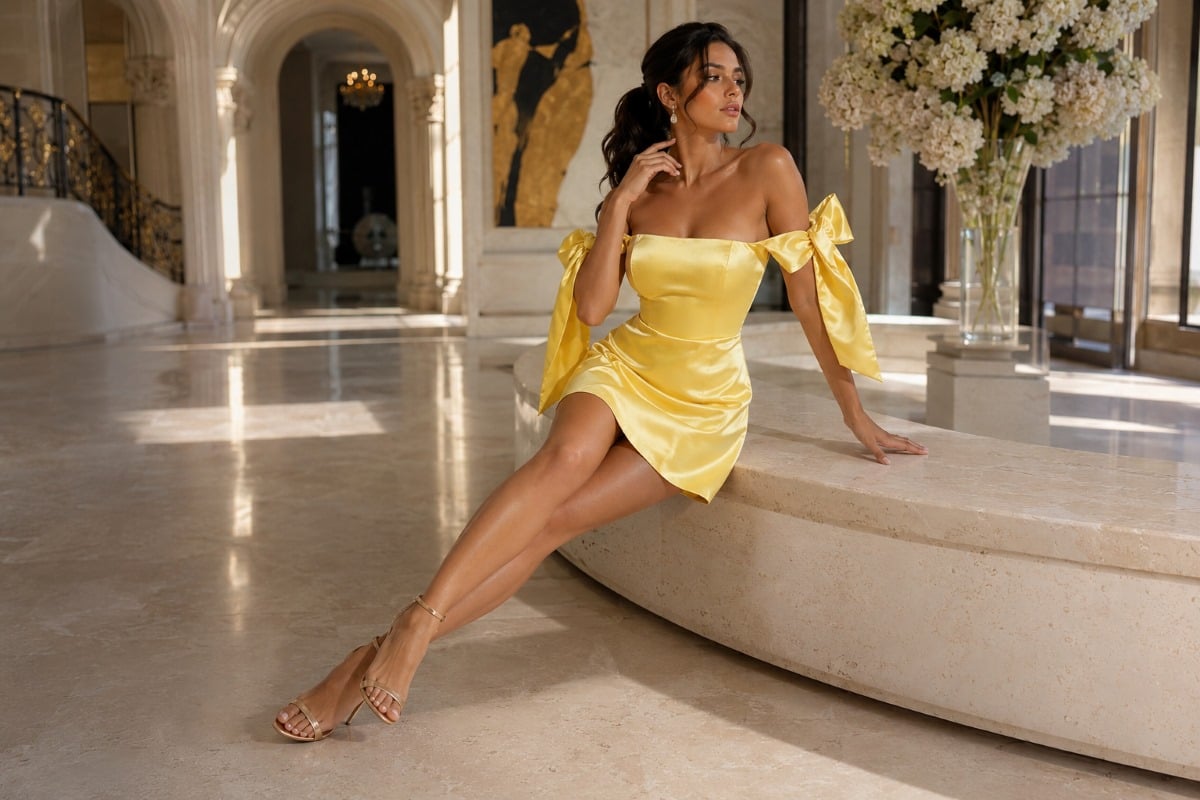
On the other side of the family, the yellow prom dresses show where the warm range continues once the red drops out, which helps place peach and tangerine between the two.
Keeping the look right for a school dance
Prom is a high school event and the dress should suit the setting, which orange makes easy since the color itself reads as energetic and celebratory rather than mature.
What actually determines whether a dress is appropriate is the practical side: a neckline and length you feel comfortable in, a bodice that stays secure without adjustment, and a fit that lets you dance rather than stand still. Most schools publish a dress code covering hem length and coverage, and reading it before buying rather than after is worth the two minutes.
The confidence point matters too. A bold color only works if you feel good in it, and someone wearing orange reluctantly will look less comfortable than someone wearing black happily. If you love the idea but feel unsure, starting at the coral or peach end gives you the color without the full commitment.
What to wear with orange
Orange is a strong warm color, so the accessories work best when they either match its temperature or stay neutral.
Gold is the natural partner across the entire range, since warm metal against a warm color reads as rich and cohesive. Rose gold suits coral and peach particularly well. Silver is the harder choice and generally works only with the cooler corals, where the pink content gives it something to relate to.
For shoes, gold metallic and nude matched to your own skin depth are the two most reliable options, and both keep the leg line long. A shoe matched to the dress works well with the deeper shades. Black is the one to think twice about, since black with bright orange can read as costume-like depending on the shade, and a nude or metallic almost always looks better.
Keep jewelry to one focal point, and if the dress is beaded or sequinned, keep it minimal. For a closer look at the pink-orange end of the family, the piece on the coral prom dress covers that shade specifically.
Working out how bold you want to be
The practical route is short. Decide first how bold you actually want to be, since that places you at the soft end, the saturated middle, or the deep earthy end, and each is a really different look. Then try two shades side by side against your face rather than one at a time, because the eye adapts to a single color and accepts it, while a direct comparison makes the better choice obvious in seconds.
Treat fabric as a second lever. If a shade appeals but feels too strong, the same color in chiffon or tulle will soften it considerably, and if a shade feels too flat, satin or sequins will bring it up. Check it under warm lighting rather than only in daylight, and move in it before deciding.
Orange rewards a little courage more than most colors, because the payoff is a dress nobody else in the room will be wearing. The wider range of prom gowns shows where orange sits among the more common choices.
The same shades behave differently at a shorter length, where less fabric means less color and the effect reads as lighter. The styles among cocktail and party dresses show how that works at a semi-formal length. To find the orange that reads correctly against your own coloring, explore the current styles through an authorized Jovani retailer.
Orange, From Peach to Rust
Who can wear an orange prom dress?
A wider range of people than the color’s reputation suggests, because orange spans from the softest peach to a deep rust and those extremes behave nothing alike. Warm undertones suit almost the entire range, particularly tangerine and burnt orange. Cool undertones do best with the shades that contain pink, especially coral. Deeper complexions carry saturated tangerine spectacularly, while fair complexions generally suit either the soft end or a deep rust for contrast.
What is the difference between coral, peach, and burnt orange?
They are different colors sharing a family. Peach is pale and warm, gentle enough to read closer to a neutral than a statement. Coral adds pink, which makes it flattering across a wider range of skin tones while staying fresh rather than bold. Burnt orange is deep and earthy with enough brown to read as sophisticated, behaving more like a jewel tone. Trying one says little about how the others will look on you.
Does orange photograph well at prom?
Yes, and better than most colors under the conditions. Dance venues use low warm lighting, which pushes colors toward yellow and red, and that generally deepens orange attractively rather than draining it. Orange also does not shift toward another color the way some purples and teals can under mixed lighting. The one shade to check is peach, which can drift toward flat beige under strongly warm light unless it has some shimmer or a satin finish.
What jewelry goes with an orange dress?
Gold is the natural partner across the whole range, since warm metal against a warm color reads as rich and cohesive. Rose gold suits coral and peach especially well. Silver is the harder choice and generally works only with cooler corals, where the pink content gives it something to relate to. Keep jewelry to a single focal point, and if the dress is beaded or sequinned, minimal is almost always better.
What shoes should you wear with an orange dress?
Gold metallic and a nude matched to your own skin depth are the two most reliable options, and both keep the leg line long. A shoe matched to the dress works particularly well with the deeper shades such as rust and terracotta. Black is the one to think twice about, since black paired with a bright orange can read as costume-like depending on the shade, and a nude or metallic almost always produces a better result.
Is orange too bold for a school dance?
No. Orange reads as energetic and celebratory rather than mature, so it suits a high school setting well. What determines whether a dress is appropriate is the neckline, length, fit, and comfort rather than the intensity of the color, and most schools publish a dress code worth reading before buying. If you like the idea of orange but feel unsure about a bright shade, starting at the coral or peach end gives you the color without the full commitment.