
The Black Mother of the Bride Dress, Chosen and Worn Well
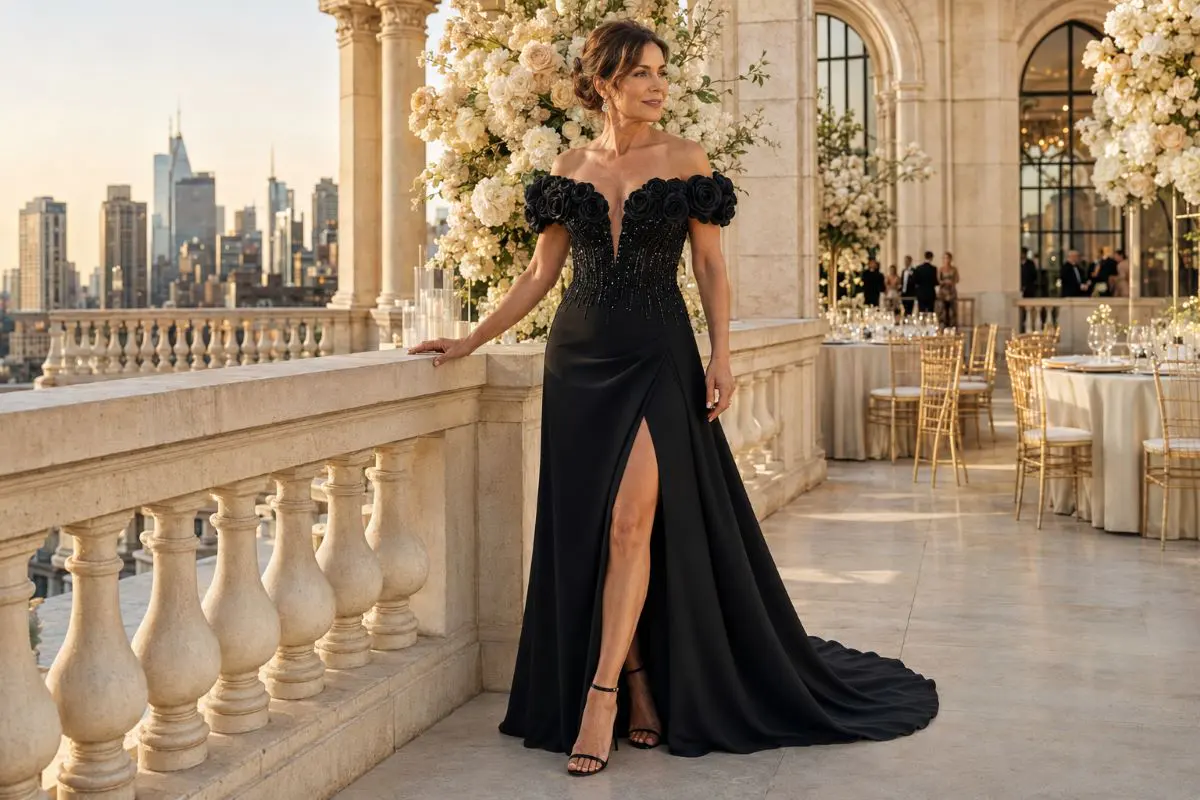
The permission question is settled, so let us spend one sentence on it and move to the interesting part. Yes, the mother of the bride can wear black at most modern weddings, with the couple's blessing and the venue's formality in mind, and the full etiquette lives in our guide to whether the mother of the bride can wear black. What that guide leaves for this one is the how: which weddings black serves best, how fabric carries an all-black gown, and the styling choices that make black read as celebration rather than ceremony. Because the truth about black mother of the bride dresses is that the color is the easy part; wearing it joyfully is the craft.
When Black Mother of the Bride Dresses Are the Right Call
Black earns its place fastest at evening weddings, formal and black-tie celebrations, city venues, and fall and winter dates, settings where its depth matches the occasion's weight. It also solves a genuinely practical problem: black coordinates with virtually every wedding palette, which means the mother in black does not clash with the bridesmaids, the florals, or the lighting scheme. The situations that ask for a second thought are few and specific. At a bright daytime garden wedding, black can sit heavier than the setting, though a lighter fabric and an open neckline close that gap. And in families or cultures where black still carries mourning associations, the couple's comfort decides it, which is one two-minute conversation with your daughter. Past those two checks, the range of black mother of the bride dresses is open territory.
In All Black, Fabric Is the Design
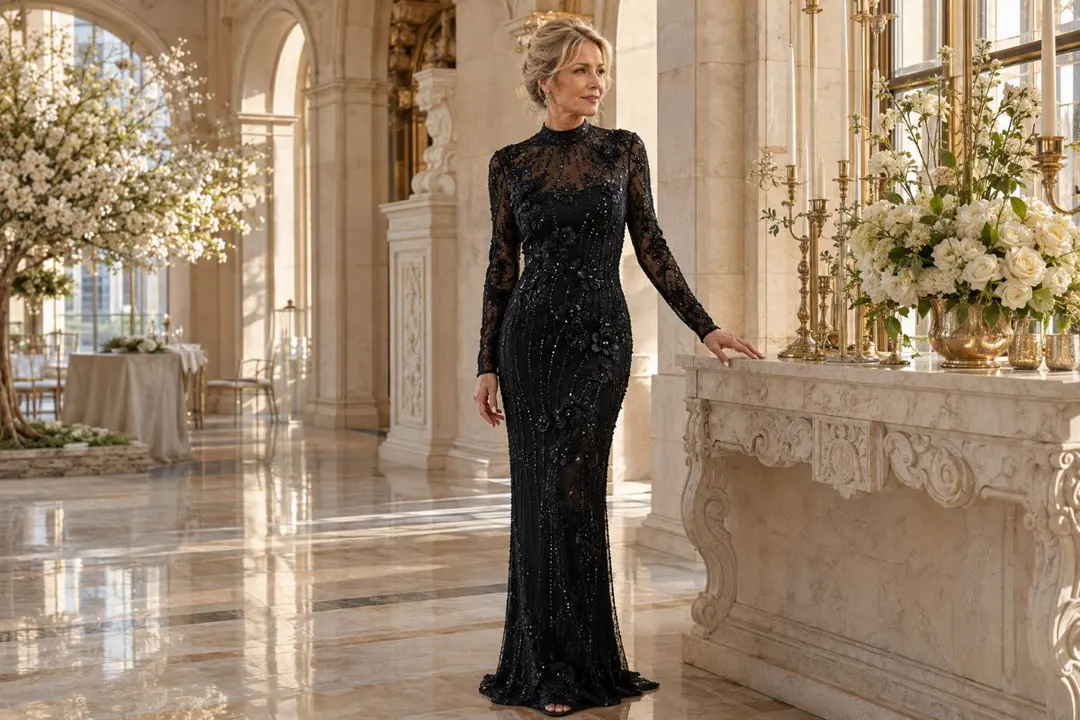
Remove color from a gown and every remaining decision grows louder. Texture becomes the pattern, construction becomes the silhouette, and the difference between two black gowns is the difference between their fabrics. Matte crepe builds the architectural version, clean lines that photograph sharply and suit the modern city wedding. Lace brings dimension and softness, and black lace over a matching lining reads formal rather than sheer. Beading is black's best friend, because hand-set beadwork catches candlelight against the dark ground the way it never quite can on a pale gown; the beaded mother of the bride dresses range shows how much light a black base can hold. Satin panels add a moving highlight, velvet owns the December wedding, and chiffon keeps black breathable for warmer dates.
Whichever direction you lean, the matte-or-shine decision shapes the whole gown, and our comparison of matte and shiny mother of the bride fabrics walks that fork in detail.
Silhouette, Coverage, and the Long Day
A mother's dress works a twelve-hour shift, from portraits through the last dance, so the silhouette conversation is really a comfort conversation. A-line and fit-and-flare shapes move easily and photograph gracefully beside the couple. A column or sheath in structured crepe gives the sleekest formal line, and the full mother of the groom gowns collection sorts every one of these by silhouette and sleeve.
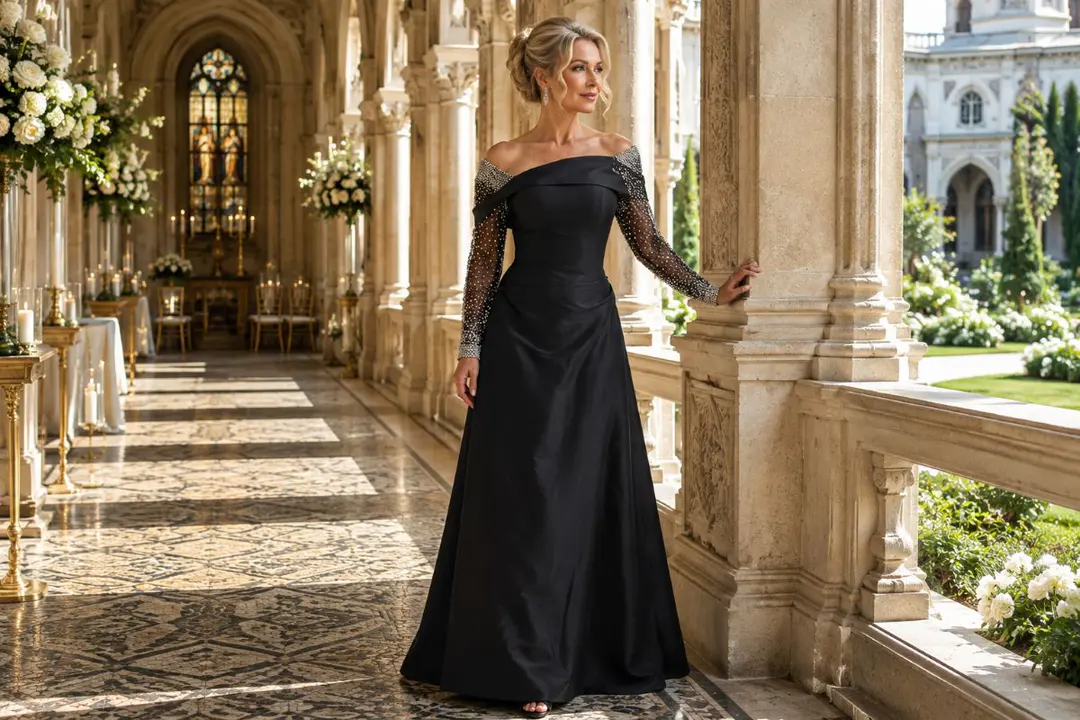
Sleeves deserve their own sentence, because black with sleeves is one of formalwear's most reliable combinations: illusion sleeves keep black airy, lace sleeves add texture, and full crepe sleeves handle a winter ceremony, all covered in depth across the long sleeves mother of the bride dresses selection. For a house-of-worship ceremony, a wrap or bolero over a sleeveless gown covers the service and comes off for the reception, two looks from one dress.
Styling Black So It Reads Celebratory
Here is the craft, and it comes down to adding warmth and light on purpose. Metallic accents are the fastest route: gold jewelry, a metallic clutch, or a champagne-toned heel warms black immediately and photographs as festive. A second route is controlled color, a jewel-toned wrap, an emerald earring, a deep red lip, one element, chosen once. A third is the flowers; a corsage or held bloom against a black bodice reads unmistakably wedding. Hair and makeup finish the job, since soft, warm styling beside a black neckline keeps the face luminous where severe styling would double the formality. The one coordination note worth making early: share your choice with the mother of the groom, so black beside her navy or plum looks planned, the same courtesy the wider color rules for the mother of the bride recommend for every shade. What to avoid is only the accidental uniform, black gown, black shoes, black bag, black wrap, with nothing warm anywhere; one deliberate point of light dissolves that risk entirely.
Black Beside the Couple, in the Photos
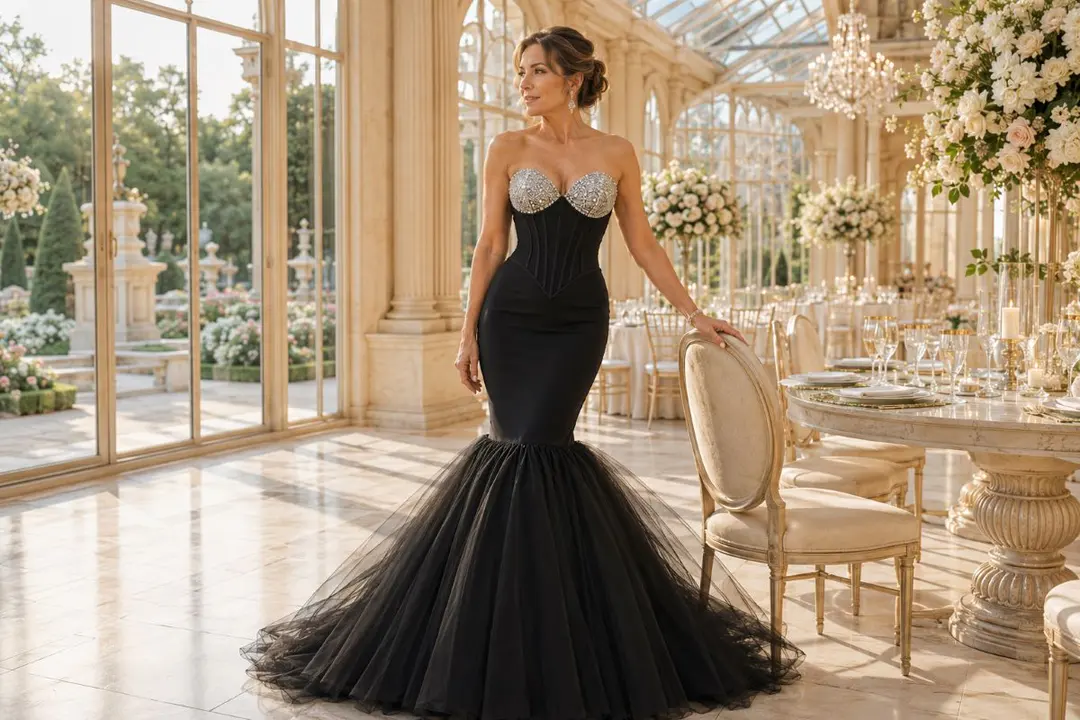
Black is generous to the camera at a wedding, and the reason is contrast. Beside a bride in white, black frames the couple instead of competing with them, and the family portraits gain a crisp, editorial quality that pastels rarely deliver. Two behaviors are worth planning for. In dim reception light, an unbroken matte black gown can soften into the background, which is exactly where beading, satin panels, or metallic jewelry earn their keep by giving the camera edges to hold. And in bright daylight, black shows dust and lint honestly, so a lint roller in the emergency bag is the least glamorous, most useful item of the day. When the celebration is black-tie and floor-length is the expectation, the same logic scales up through the black evening dresses range, where gown-length black sits at its most formal and most photographed.
Frequently Asked Questions
Is it OK for the mother of the bride to wear black?
At most modern weddings, yes, especially evening, formal, and winter celebrations. Confirm the couple is comfortable, mind any family or cultural associations, and style the gown with warmth so it reads celebratory. The dedicated etiquette guide covers the edge cases.
Is black formal enough for a black-tie wedding?
Black is arguably the most at-home color black tie has. A floor-length black gown in crepe, satin, lace, or beadwork meets the code exactly, and the only requirement is length and fabric quality, which the formal end of the collection is built around.
How do I keep a black dress from looking somber at a wedding?
Add one deliberate source of warmth or light: gold or metallic accessories, a jewel-toned wrap, a warm lip, or beadwork on the gown itself. Soft hair and luminous makeup finish it. Black turns somber only when everything around it is also dark and matte.
What jewelry works with a black mother of the bride dress?
Gold warms black most reliably; pearls soften it; diamonds and crystal sharpen it for evening. Scale the piece to the gown, bolder against plain crepe, quieter against beading, and keep to one metal story so the look stays composed.
Should I tell the mother of the groom I am wearing black?
Yes, as a courtesy both directions. A quick exchange of colors prevents an accidental match or clash in the family portraits, and black coordinates gracefully with nearly anything she chooses, which makes the conversation short and easy.
The Color That Rises to the Occasion
Black mother of the bride dresses succeed on three decisions: the right wedding, a fabric with presence, and styling that adds light on purpose. Made in that order, black delivers what the day actually asks of a mother's gown, elegance beside the couple, comfort across a long celebration, and photographs the family will frame. To feel the difference between crepe, lace, and beaded black in person, visit an authorized Jovani retailer with the wedding's venue and hour in mind.