
Can the Mother of the Bride Wear Black? Modern Etiquette
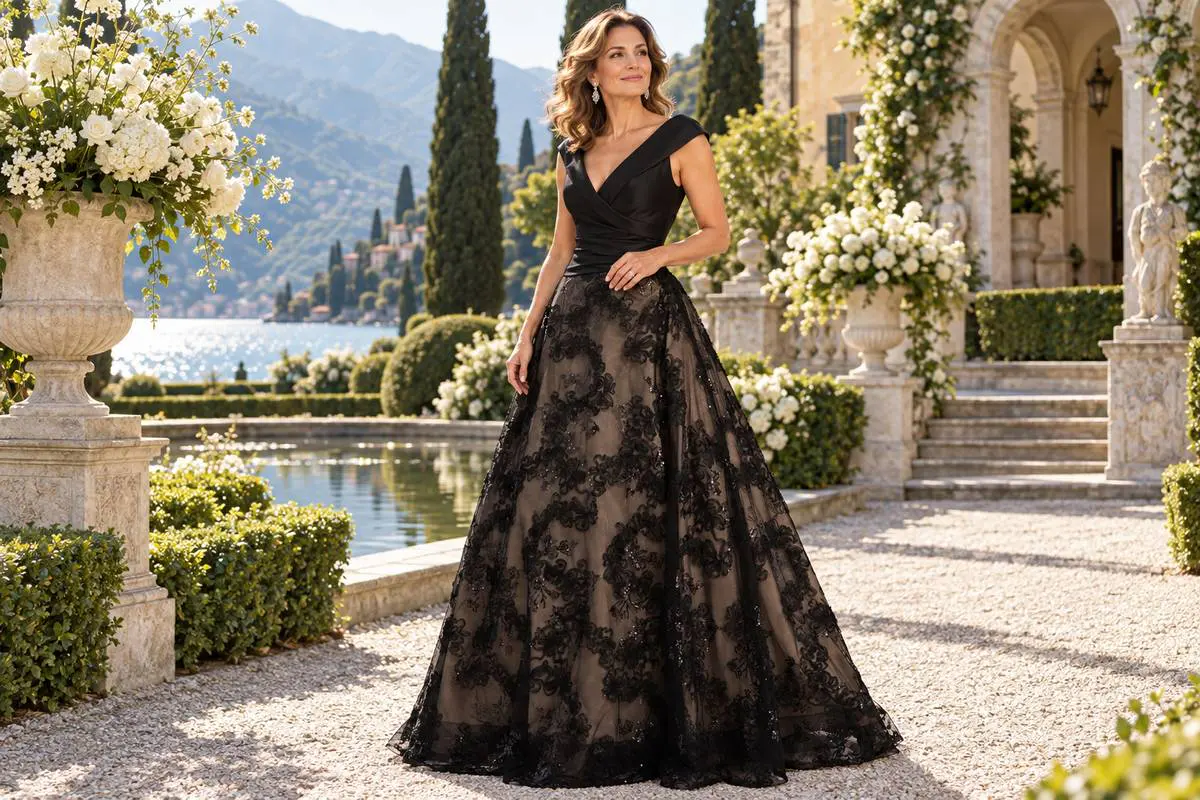
Yes, the mother of the bride can wear black at many modern weddings when the couple is comfortable with it. The safest decision comes from the invitation, the couple’s preferences, and any family or cultural meaning attached to black. If those signals agree, black can suit formal, evening, city, and many daytime weddings.
Jovani’s black formal dresses for the bride’s mother show the color across tulle, satin, crepe, beading, and several formal silhouettes. Etiquette approves the color first, while the complete dress still has to match the wedding.
Is black appropriate for the mother of the bride?
Yes. Black is appropriate when it fits the wedding plan and the couple has no objection to the color. It is not automatically disrespectful, too somber, or reserved for evening events.
The mother of the bride has a visible family role, so her choice deserves more coordination than an ordinary guest outfit. Compare formal looks for the bride’s mother only after the couple’s color expectations and dress code are clear.
Ask the couple before black becomes the plan
A short conversation with the bride or couple resolves the most important etiquette question. Ask whether black fits their vision instead of assuming a general wedding rule applies to their celebration.
If the couple has a family palette, ask where the mothers fit within it. Jovani’s mother of the bride color guide covers broader color coordination, while this page stays focused on the black-specific decision.
This check matters most when the couple has requested bright colors, pastels, or a coordinated family look. It also matters when one partner’s family associates black with mourning or another meaning that could affect the day.
Read the dress code, venue, and time together
Black is easiest to place at formal evening weddings because the color naturally sits within traditional eveningwear. For that setting, floor-length formal gowns for mothers are a clear starting point when a long hem matches the invitation.
Black tie still requires the complete outfit to carry the formality. Jovani’s black-tie guidance for mothers explains how length, fabric, coverage, and venue work together instead of treating color as the whole dress code.
Daytime, garden, beach, and destination weddings do not automatically rule out black. Check the requested palette, temperature, terrain, ceremony setting, and garment weight before deciding whether black feels practical for that event.
Check family and cultural meaning without guessing
Black does not carry the same meaning in every family, religion, or community. Do not apply a broad cultural rule when the couple can give you the answer for their own ceremony.
Ask a knowledgeable family member when you are unsure about color symbolism or ceremony expectations. The same approach applies to coverage, headwear, footwear, and other customs that may matter more than the dress color itself.
Once black is approved, let the dress match the setting
Approval of black does not make every black dress equally suitable. Coverage, fabric, skirt volume, surface detail, and movement still need to fit the invitation and the practical demands of the day.
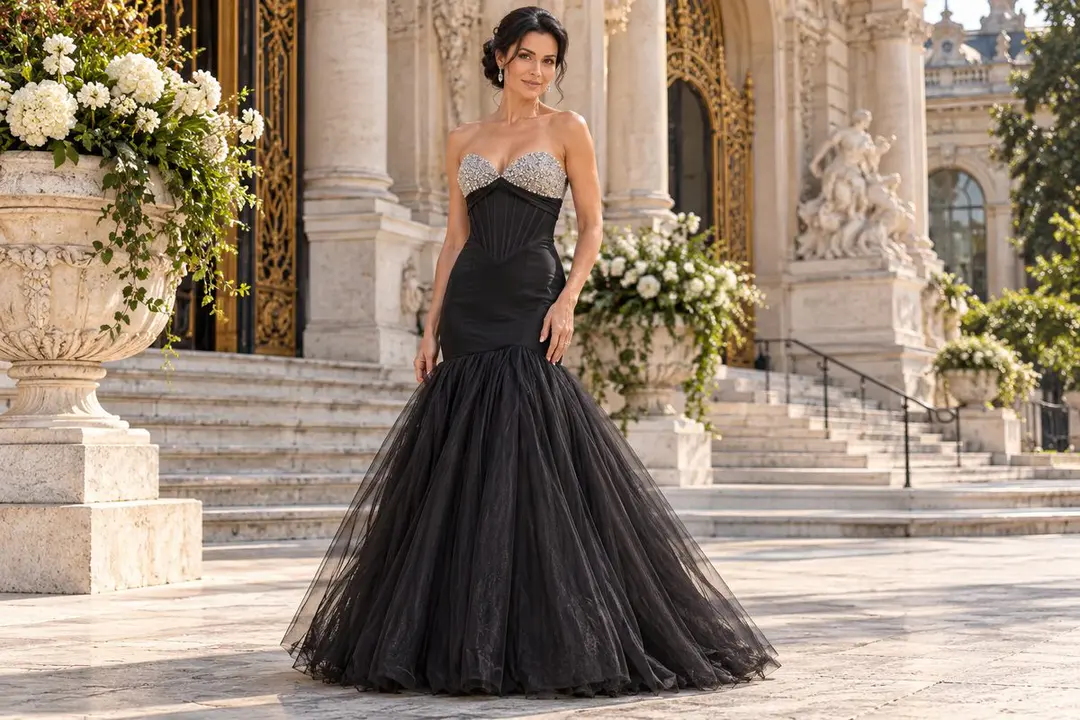
Jovani Style 48974 is a floor-length tulle mermaid with a sweetheart neckline and chapel train. Style 45617 is a floor-length crepe mermaid with long sleeves and a high collar. Those two live styles show how differently black can read through structure and coverage.
If you want more shoulder exposure, off-the-shoulder formal styles offer one direction. Treat that neckline as a design choice, then confirm that its coverage and movement suit the ceremony.
An asymmetrical neckline creates a different upper outline, and one-shoulder wedding-day dresses give another option within the same formal category. The neckline should stay secure while sitting, greeting guests, and taking photographs.
For fabric, silhouette, and accessory decisions after black is approved, use Jovani’s black mother of the bride styling guide. Keeping that styling question separate prevents this etiquette page from competing with the dedicated black-dress guide.
Coordinate the two mothers without making them match
The two mothers do not need matching colors, fabrics, or silhouettes. They benefit from knowing each other’s level of formality so one look does not feel much more casual than the other.
Share the chosen color once it is reasonably settled, then compare dress code and length. If both mothers like black, the couple can decide whether that creates the coordinated family look they want.
Use photos and lighting as a final reality check
Black fabric can change under daylight, warm ballroom lighting, and flash. Matte crepe, satin, tulle, and dense beading do not reflect light in the same way, so photograph the actual dress before the event.
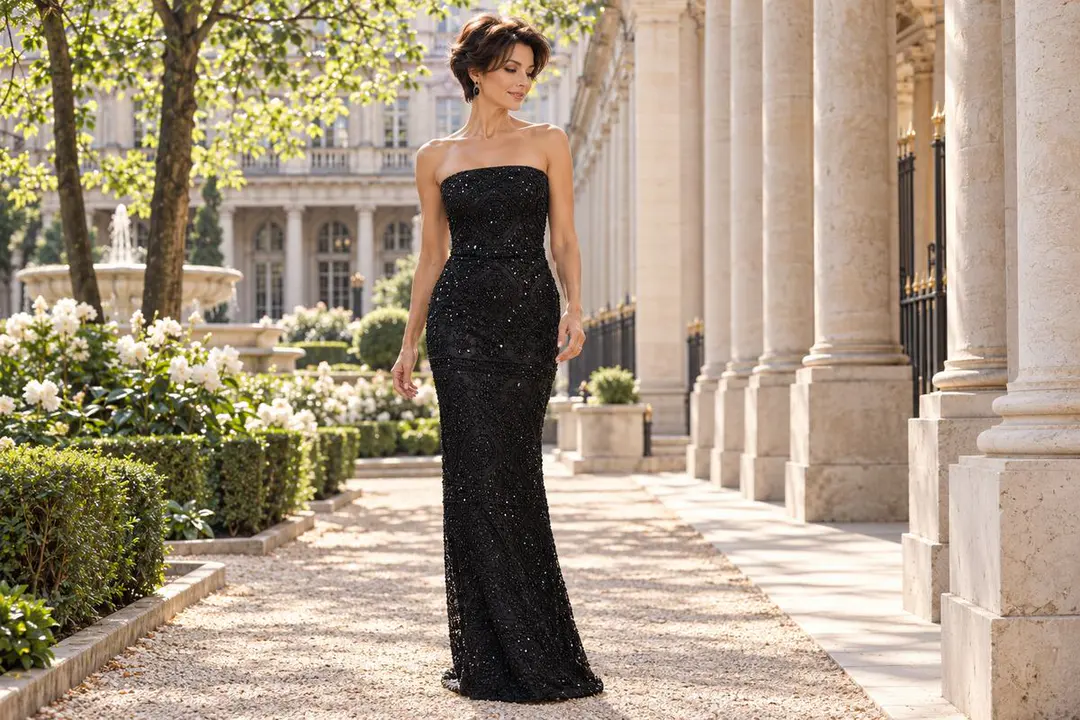
Jovani Style 42137 combines all-over beading with a draped satin overlay on a floor-length fitted gown. That combination shows why texture and reflection can matter in photographs even when the color stays entirely black.
Choose another color when black creates avoidable friction
Another color is the easier choice when the couple clearly dislikes black or has assigned a different family palette. The same is true when black carries a family meaning that would distract from the celebration.
Changing color in those situations is coordination, not an admission that black is wrong for weddings. The answer to can the mother of the bride wear black remains yes, but the couple’s event always outranks a general rule.
If black fits the wedding, compare the fabric, fit, and movement in person through an authorized Jovani retailer. Bring the invitation details so the final dress can be judged against the real dress code and venue.
Frequently Asked Questions
Can the mother of the bride wear black to a black-tie wedding?
Yes. Black is a natural fit for many black-tie weddings when the couple approves it. Choose a dress whose length, fabric, coverage, and finish match the event’s formal level.
Can the mother of the bride wear black to a daytime wedding?
Yes. A daytime wedding does not automatically prohibit black. Check the couple’s palette, venue, temperature, and complete garment instead of treating time of day as a ban.
Does a black mother of the bride dress look too somber?
No, not by default. A black dress can read celebratory when its design suits the wedding and the couple welcomes the color. Fabric, silhouette, lighting, and styling affect the overall impression.
Can both mothers wear black to the wedding?
Yes, if the couple is comfortable with a coordinated black look. The mothers can still choose different silhouettes, fabrics, necklines, or details so each outfit remains distinct.