
Yellow Evening Dresses: How to Choose the Right Shade, Fabric, and Style
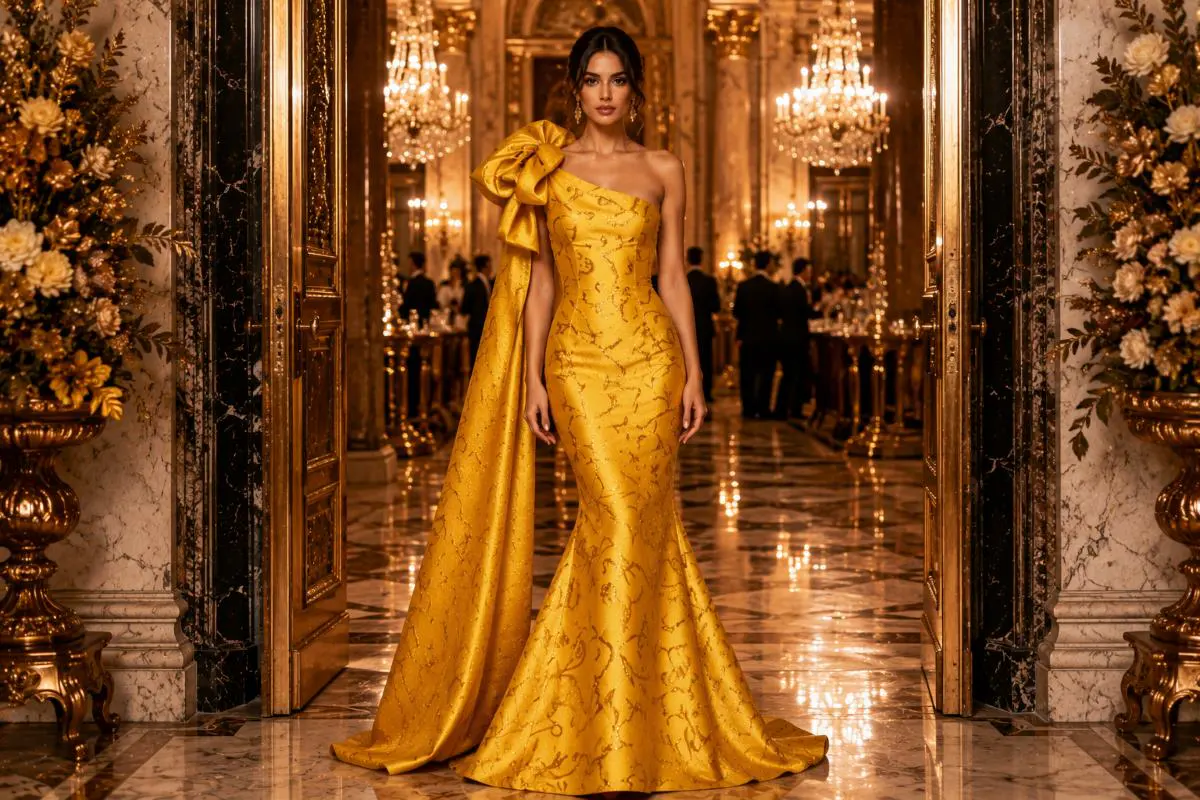
Of all the colors in formal wear, yellow is the one most women hesitate over and then quietly fall in love with once they try the right shade. It is bolder than most of the safe choices and softer than many of the dramatic ones, sitting in a category of its own that says confident and joyful without saying loud. The yellow evening dress photographs differently from any other color, carrying its own light into a room and warming the skin tone of the woman wearing it. It also reads as an intentional choice in a sea of black and navy, which is part of why it has become one of the most quietly powerful color picks for galas, formal weddings, and red-carpet events. This guide walks through everything: the different shades of yellow and what each one actually does, how to pick the right shade for your skin tone, which fabrics make yellow look richest, when to wear it across the year and the occasion, and how to style a yellow gown so it reads as elegant rather than overdone.
Why yellow has earned its place in formal wear
For years, yellow sat outside the standard formal palette. Black, navy, jewel tones, and metallics were the safer evening colors, and yellow felt reserved for sundresses or daytime occasions. That has shifted, and for genuinely good reasons.
Yellow photographs beautifully under both natural and indoor lighting, picking up warmth in skin and creating a softer, more flattering glow than many cooler colors. It also stands out in event photography in a way that reads intentional rather than attention-seeking, since the color itself communicates joy and confidence without needing volume or embellishment to do the work. The shade is also remarkably versatile across event types. A soft butter yellow reads as romantic for a spring wedding. A deeper marigold or saffron suits a charity gala. A bright lemon brings energy to a summer formal event. Each version of yellow tells a slightly different story, which is exactly what makes the color so useful once you understand the range. For the broader question of how color shapes a gown's mood, our guide on classic vs trendy evening dress colors walks through the wider palette, and yellow sits comfortably between the two.
The different shades of yellow and what each one does
Yellow is not one color but a family of related shades, and each one creates a different impression. Knowing the differences helps you describe what you actually want and recognize the right tone when you see it.
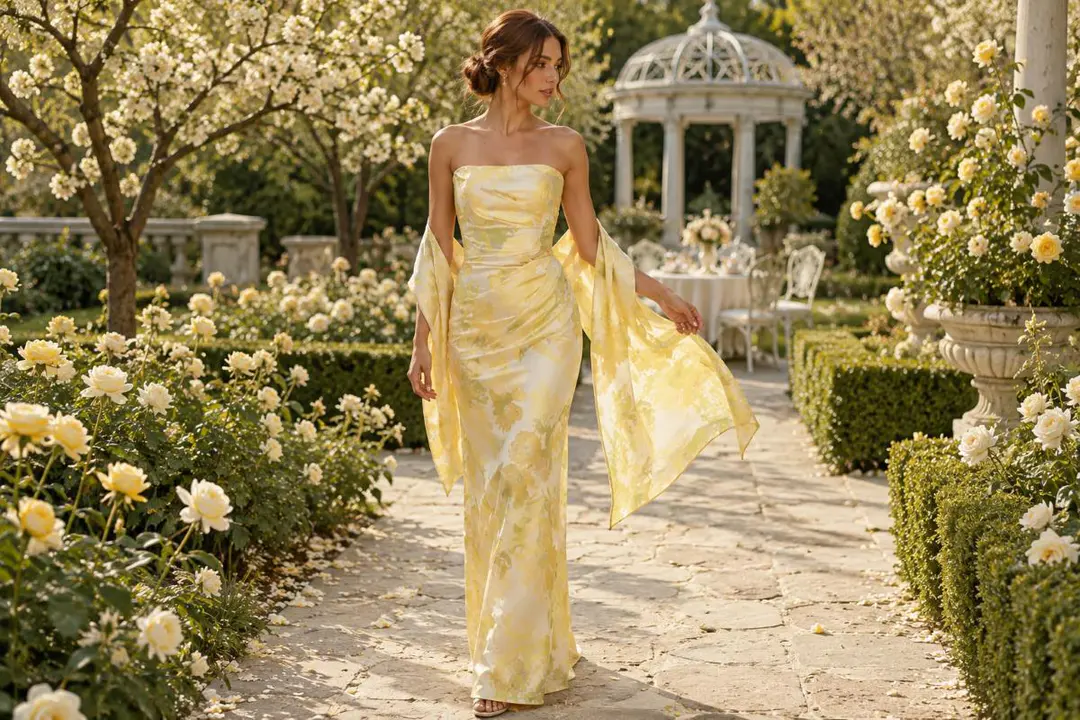
- Pale butter and cream yellow. The softest of the family, almost a warm neutral. These shades read as romantic and gentle, suiting spring weddings, garden events, and daytime formal occasions.
- Lemon yellow. Brighter and crisper, with a clean, optimistic quality. Lemon suits summer events and outdoor receptions, and it photographs particularly well under natural light.
- Canary yellow. The most saturated of the bright yellows, vivid and confident. Canary makes an immediate statement and suits women who want their color to be noticed without crossing into novelty.
- Marigold and amber. Warmer, deeper, and richer, with a golden undertone. These suit autumn events, indoor galas, and women with warm skin undertones who want a sophisticated, less expected shade.
- Mustard yellow. Earthy and slightly muted, sitting between yellow and gold. Mustard reads as fashion-forward and modern, suiting more contemporary settings and editorial-feeling looks.
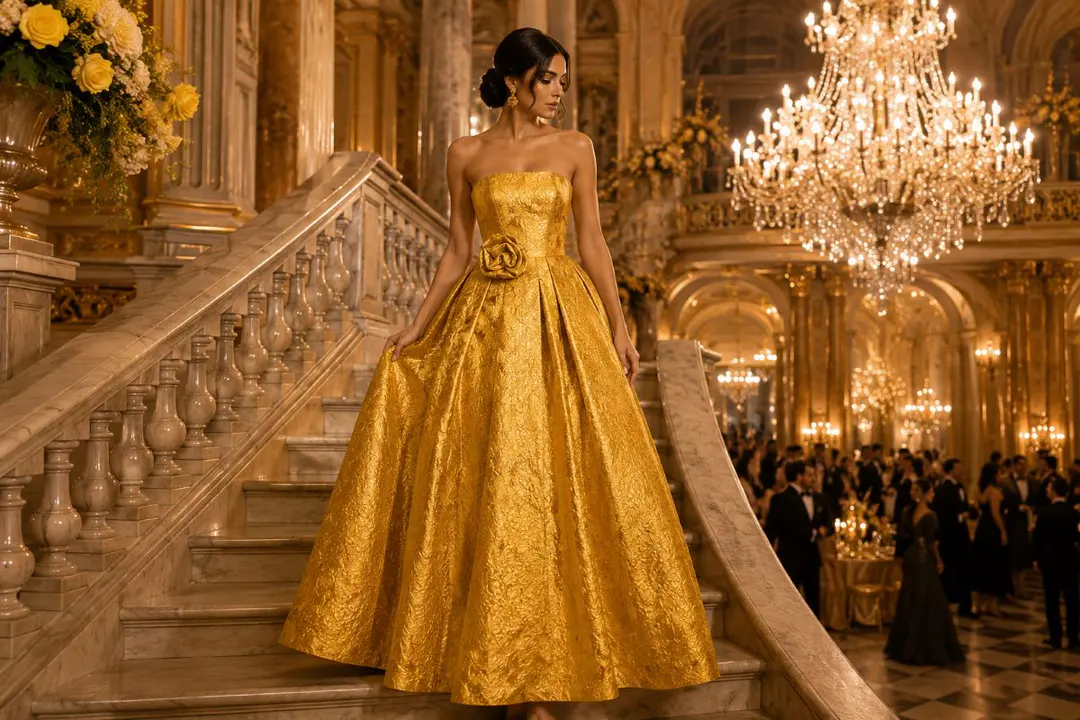
- Saffron and golden yellow. The richest tones in the family, leaning toward gold. These work beautifully for the most formal evening events and pair effortlessly with metallic accessories.
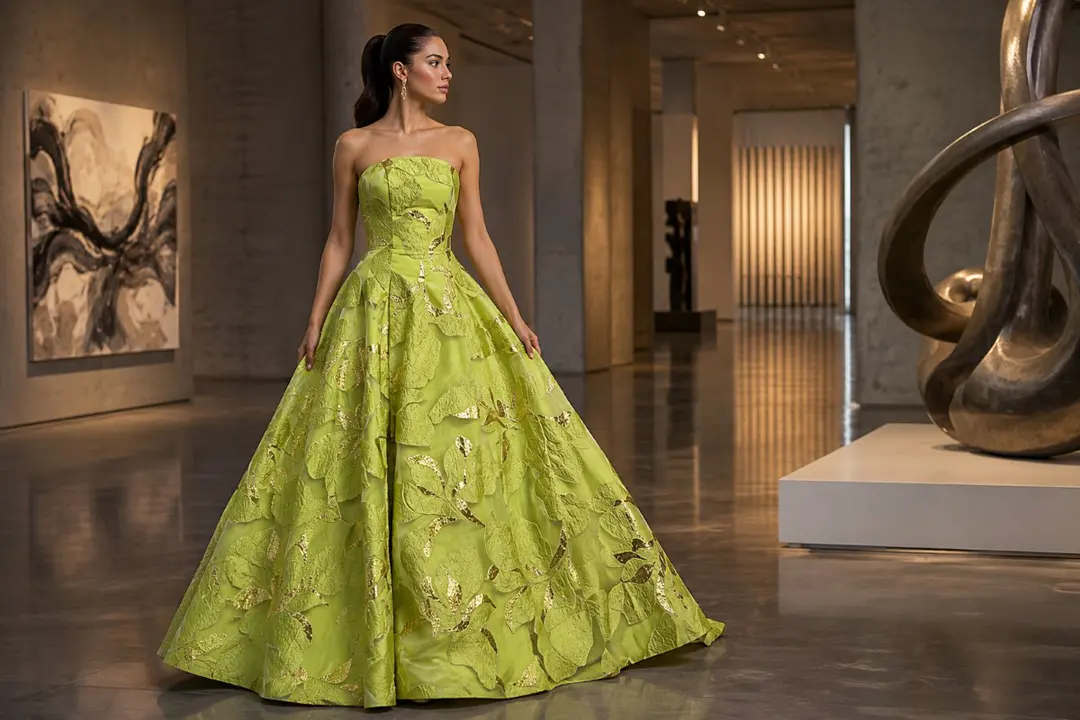
- Chartreuse. Yellow with a hint of green, creating a striking modern shade that reads as editorial and unexpected. Chartreuse suits a confident, fashion-aware aesthetic.
The first decision when shopping for a yellow gown is which shade family suits both your skin tone and the occasion, since the same silhouette can read entirely differently in pale butter versus deep saffron. The styles among yellow formal dresses include the full range of these tones, which is the easiest way to see how each shade behaves in person.
Matching yellow to your skin tone
This is where many women feel uncertain, since yellow has a reputation for being tricky against skin. The truth is that yellow works on every complexion, but the right shade for one tone is different from the right shade for another.
For fair skin with cool undertones, soft butter yellow, pale lemon, and gentle pastel shades flatter best, since they harmonize with the skin's natural coolness without competing. Brighter canary or marigold can feel overwhelming against very pale skin unless balanced with strong makeup. For fair skin with warm undertones, cream, golden yellow, and soft amber work beautifully, since the warmth in the shade aligns with the warmth in the skin. For medium skin, the range opens up considerably, since most yellows look good. Marigold, canary, and amber all glow against medium tones, and the choice becomes more about the event and the season. For olive skin, mustard, saffron, and chartreuse flatter particularly well, since these earthier and modern shades complement the natural depth of the complexion. For deep skin tones, the brightest and richest yellows shine. Saffron, canary, marigold, and pure golden yellow all create stunning contrast against deep skin, and these are the shades that photograph most spectacularly. The principle is that yellow loves skin tones that share its warmth, and slightly cooler skin benefits from softer or paler versions. For the broader question, our piece on evening dress color for your skin tone applies the same logic across the full palette.
Fabrics that make yellow look its richest
The fabric of a yellow gown matters as much as the shade, since yellow is one of the colors most affected by how it is woven and finished. The same hue can look luxurious in one fabric and cheap in another.
Satin is one of the most reliable fabrics for yellow, since the smooth finish reflects light evenly and gives the color depth and luminosity. A yellow satin gown reads as polished and formal, suiting the most elevated occasions. The styles among long evening gowns in satin show how the fabric carries yellow particularly well in floor-length silhouettes. Crepe gives a matte, modern finish that suits more contemporary versions of yellow, especially mustard and chartreuse. Chiffon in yellow creates soft, romantic movement and works beautifully for spring and summer events, with the lightness of the fabric matching the lightness of the shade. Beaded yellow gowns catch and refract light spectacularly, making them ideal for the most formal evening events where the lighting will pick up every detail. Lace in yellow softens the color and reads as romantic, suiting weddings and garden formal events.
The fabrics that handle yellow less well are heavy, dense materials that absorb light rather than reflect it, since yellow loses its luminosity in matte heavy weaves. Cheap synthetic satin in yellow is particularly unforgiving, often reading as flat or overly shiny, which is why fabric quality matters disproportionately with this color. A well-made yellow gown in quality satin or crepe looks expensive immediately, while a cheap version looks costume-like fast.
When to wear yellow across the year and the occasion
Yellow is more seasonally versatile than most women realize, but the right shade shifts with the time of year and the type of event. Reading the occasion correctly is what makes the color choice feel intentional, and our wider piece on evening dress color trends places yellow in the broader palette movement.
For spring formal events, soft butter, pale lemon, and gentle cream shades feel seasonal and natural, harmonizing with the lighter palette of the season. For summer formal events, brighter lemon and canary thrive, especially in outdoor settings where natural light brings out the cleanest version of the color. For autumn formal events, marigold, amber, mustard, and saffron come into their own, since these warmer, richer shades suit the season's deeper palette and pair beautifully with autumn lighting. For winter formal events, the deepest and richest yellows work best, particularly saffron, golden yellow, and amber, since these tones bring warmth into a season otherwise dominated by cooler colors.
For occasion type, lighter shades suit daytime, outdoor, and spring events, while deeper shades suit evening galas, formal dinners, and black-tie occasions. A yellow gown at a black-tie wedding should generally lean toward the richer end of the spectrum, since pale yellow can read as too daytime or too close to a bridal color depending on the shade. For galas and red-carpet events, saffron, marigold, and canary all command attention beautifully. The styles among black tie gowns in yellow show how the right shade rises to the most formal occasions.
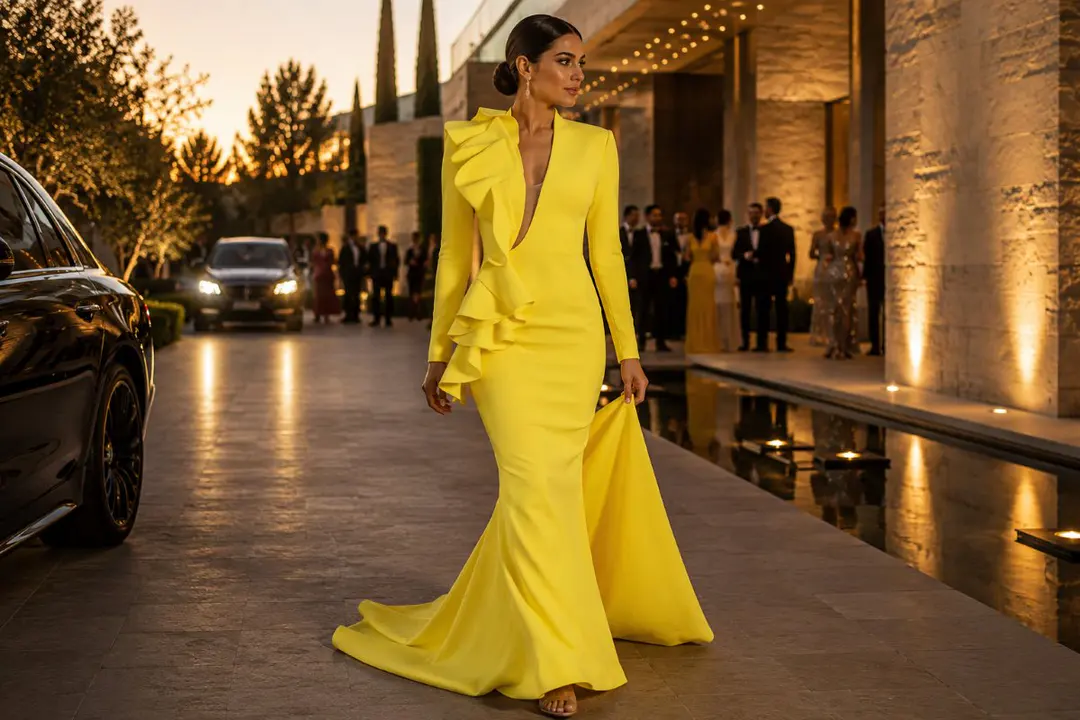
Silhouettes that flatter a yellow gown
Yellow interacts with silhouette in ways worth understanding, since the color itself is already a statement and the shape of the gown either supports that statement or competes with it.
A clean, minimal silhouette lets a saturated yellow do its work without distraction. A column or fitted sheath in canary or saffron reads as confident and modern. The styles among mermaid evening dresses in yellow create elegant, flattering lines, since the fitted lower half emphasizes the curves while the rich color provides the drama. An A-line in soft yellow reads as romantic and seasonal, suiting weddings and garden events particularly well. A ball gown in a deeper yellow makes the most ceremonial statement, suited to the most formal occasions where the volume of the skirt and the richness of the color combine into an unmissable entrance. What works less well is heavy embellishment on top of a saturated yellow, since the combination can overwhelm. The cleanest application of yellow lets the color speak first, with construction supporting rather than competing.
Styling a yellow evening dress
Once you have the gown, the styling around it should support rather than fight the color. This is where many women either underdress or overdress the look.
For accessories, metallic tones work beautifully with yellow. Gold is the most natural pairing, since it shares the warm undertone, while silver creates a more modern, slightly editorial contrast. Rose gold is another flattering option, particularly with softer yellows. Avoid heavy colored jewelry that competes with the yellow itself. For shoes, nude tones in a shade that matches your skin are the most lengthening choice, since they create an uninterrupted line. Gold metallic shoes also pair effortlessly. A pop of contrast color, such as a deep navy or burgundy, can work in a fashion-forward direction but requires confidence to carry. For hair, a polished updo or sleek wave both work well, since the color is already commanding attention and elaborate styling can compete. For makeup, yellow generally rewards a slightly more saturated lip color, since the warmth of the dress can wash out very neutral makeup. Bronze, peach, and warm pink shades on the cheek all complement yellow beautifully. The overall principle is that yellow is the statement, and styling should let it stay the statement.
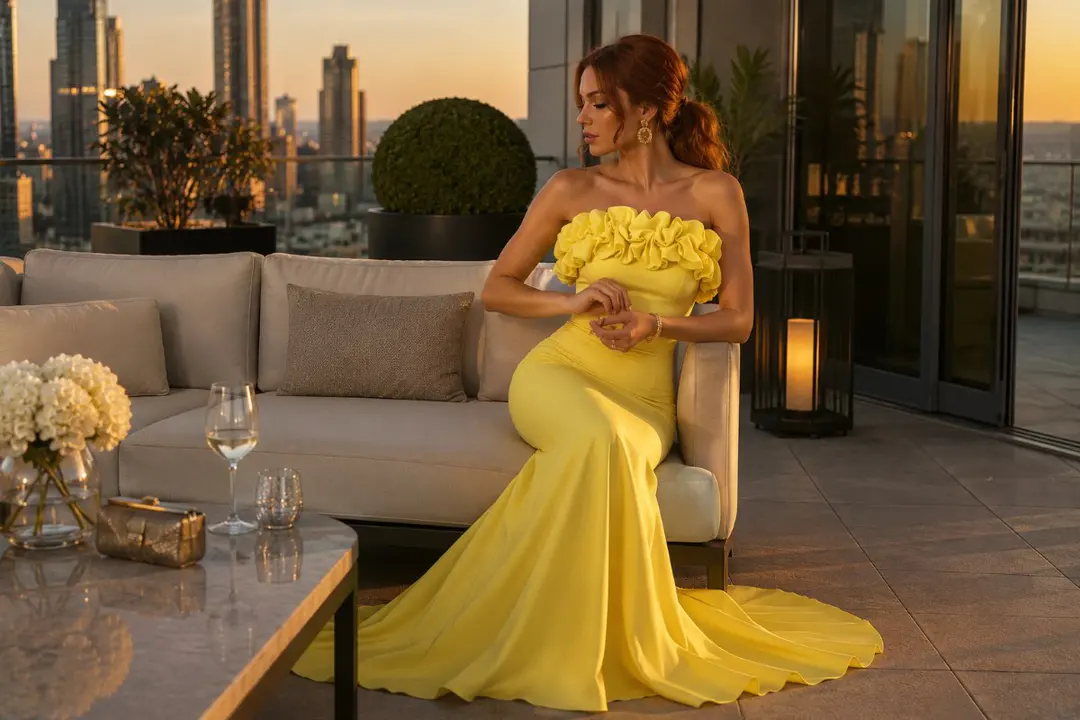
How yellow behaves in photographs and lighting
This is the part most color guides skip, and it matters enormously for a color as light-reactive as yellow. The same gown can read entirely differently depending on the lighting it sits in.
Under warm tungsten lighting, common in older venues and traditional ballrooms, yellow appears richer and slightly more golden than it does in daylight. This is generally flattering for saturated shades but can make pale yellow look slightly washed out. Under cool LED lighting, common in modern venues, yellow appears cleaner and crisper, which suits brighter canary and lemon shades but can flatten the warmth of softer yellows. Under natural daylight, yellow appears closest to its true shade and tends to photograph most accurately, which is why outdoor and daytime events are particularly forgiving for yellow gowns. Candlelight, found at many wedding receptions and intimate dinners, deepens yellow into golden territory, which can be stunning with saffron and amber but may shift pale yellow further toward cream than intended.
If your event has known lighting, choose a shade that thrives in that light. If you cannot know in advance, the safest universal shades are mid-tone yellows like marigold and canary, which hold their character across most lighting conditions. The other photographic factor worth mentioning is contrast. Yellow stands out beautifully against natural backdrops, dark interiors, and group photographs where most guests wear neutrals or darker tones, which is one of the reasons the color photographs so memorably in event coverage.
Common mistakes to avoid
A few recurring errors can undermine an otherwise beautiful yellow gown. Knowing them helps you avoid them.
- Choosing the wrong shade for your undertone. Yellow is a color that genuinely rewards getting the shade right and punishes getting it wrong. A bright canary on cool fair skin can wash the wearer out, while a pale butter on deep skin can read flat. Try multiple shades before committing.
- Cheap fabric in a bright shade. Bright yellow is particularly unforgiving of synthetic satin or low-quality weaves. Invest in quality fabric or choose a softer shade that hides imperfections better.
- Wearing yellow to a wedding without checking. Pale yellow in particular can read as too close to bridal in certain photographs. If in doubt, choose a more saturated shade and confirm with the couple.
- Over-styling with too many warm tones. Yellow with heavy bronzer, gold jewelry everywhere, and an orange-red lip can read as overwhelming. Balance warmth with at least one cooler element.
- Ignoring how yellow photographs under venue lighting. Yellow shifts more than most colors under different lighting, so check how your specific dress looks under the type of light your event will use.
Frequently asked questions about yellow evening dresses
What shade of yellow is best for a formal event?
Deeper and richer yellows like saffron, marigold, canary, and golden yellow suit formal evening events best, since they read as elegant and intentional under indoor lighting. Softer shades like butter and pale lemon work better for daytime, spring, and garden formal events.
Can I wear a yellow dress to a wedding as a guest?
Yes, with care. Pale yellow can sometimes read as too close to a bridal color depending on the shade and the lighting, so saturated shades like marigold, canary, or saffron are generally safer choices. Confirm with the couple if you have any doubt, particularly for a formal ceremony.
Which skin tones look best in yellow?
Yellow flatters every skin tone when matched correctly to the shade. Cool fair skin works best with soft butter and pale lemon, warm fair skin with cream and golden yellow, medium skin with most yellows, olive skin with mustard and saffron, and deep skin with the brightest and richest yellows including canary and pure gold.
What fabric is best for a yellow evening gown?
Satin gives yellow the most depth and luminosity, suiting the most formal occasions. Crepe offers a matte modern finish ideal for mustard and chartreuse. Chiffon creates soft romantic movement perfect for spring and summer. Beaded yellow gowns catch light beautifully for the most elevated events.
What accessories work best with a yellow gown?
Gold metallic accessories pair most naturally with yellow, since they share the warm undertone. Silver creates a modern editorial contrast, and rose gold works beautifully with softer yellows. Keep colored jewelry minimal so it does not compete with the gown. Nude shoes lengthen the line, and gold metallic shoes pair effortlessly.
Is yellow appropriate for autumn and winter events?
Absolutely. The deeper shades of yellow, including marigold, saffron, amber, and golden yellow, suit autumn and winter beautifully. These richer tones bring warmth into a season otherwise dominated by cooler colors, and they pair particularly well with autumn lighting and winter venue settings.
When you are ready to find a yellow gown that brings warmth, confidence, and a memorable presence to your next formal event, explore the full collection of formal gowns through an authorized Jovani retailer.