
The dress is chosen. The shoes are sorted. The jewelry is laid out. And then there is the small detail most people leave to the last few seconds, the spray of perfume before walking out the door. Choosing the right perfume for a formal event is one of those decisions that sounds trivial and is actually surprisingly impactful, because fragrance is the only element of your look that reaches people before you do and lingers after you leave. The wrong scent can fight your dress, overwhelm a small room, or fade before the night even begins. The right one becomes part of how the entire evening feels, both to you and to everyone around you. This guide is for the woman who wants her fragrance to belong with the rest of her look, not float in from another occasion entirely. It covers how to match a perfume to your dress, the kind of event, the time of year, and the fabric you are wearing, plus the practical mechanics of application so the scent lasts gracefully through a long evening.
Why fragrance is part of dressing for a formal event
Most women treat perfume for a formal event as a final, almost automatic step, but on a formal evening it deserves more thought than that. Fragrance is one of the most powerful elements of how you are remembered, and it interacts with everything else you have put on.
A scent that suits a daytime business setting can feel out of place at an evening gala, just as a perfume that announces itself in a candlelit dining room would feel overwhelming. Perfume also lingers in a way clothing does not, settling into the air around you and into your dress itself, which means it interacts with your fabric, your warmth, and the room you are in. There is also a personal dimension worth naming. Choosing a fragrance you genuinely love for a particular event makes the night feel like its own moment, and many women find that the scent later becomes tied in memory to that specific evening. The whole look is more cohesive when the fragrance feels like part of it rather than a separate decision, in the same way that thoughtful styling around the dress, as our guide on how to accessorize formal evening wear explains, makes everything read as deliberate rather than improvised.
Matching the fragrance to the formality of the event
Different events ask for different fragrance intensities, and reading the occasion correctly is the first decision. A scent that lands beautifully at one kind of evening can feel wrong at another.
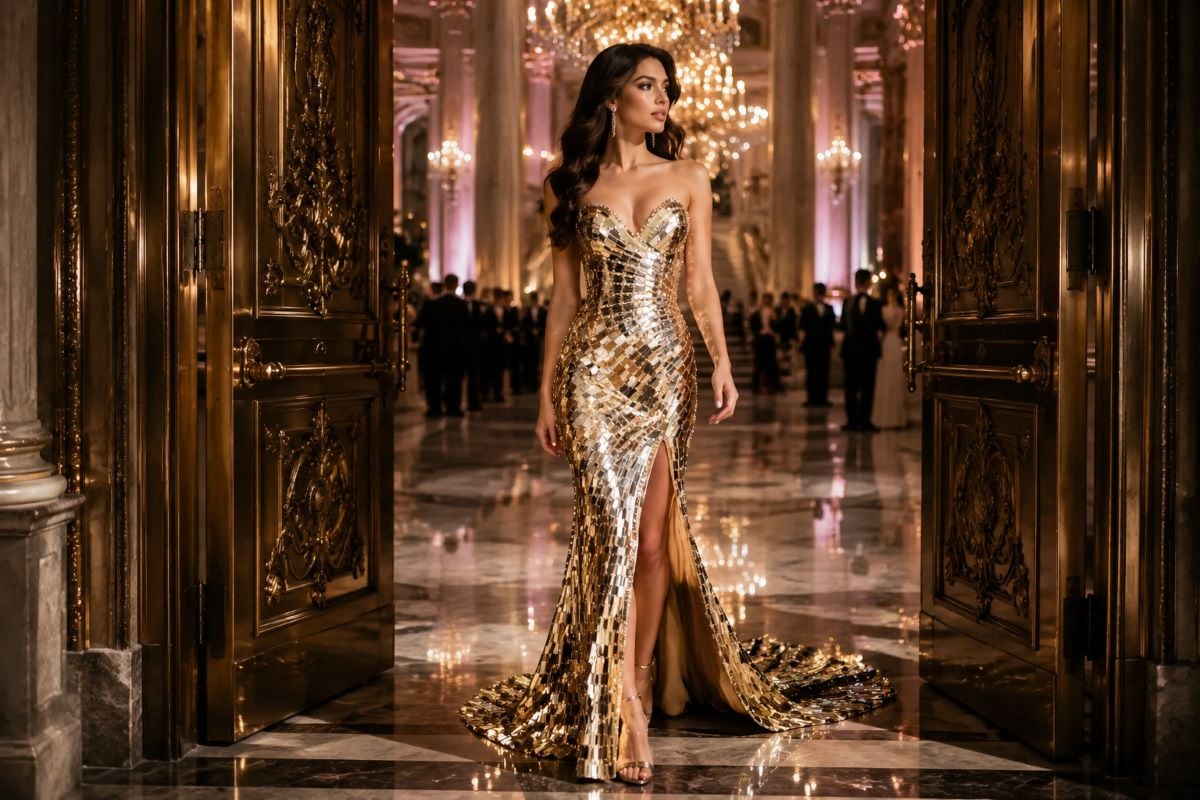
- Black-tie galas and formal evening events. A perfume for a formal event of this caliber should be richer and more sophisticated, with real depth. Florals with woody or amber undertones, refined orientals, and elegant chypre fragrances all suit the formality and the evening lighting that surrounds them.
- Cocktail and semi-formal occasions. A step lighter. Modern florals, sophisticated citrus blends, and clean musk-based perfumes feel current and considered without being overpowering.
- Daytime formal events. Lighter and brighter. Fresh citrus, green florals, and airy white florals suit a daytime register and behave well in natural light.
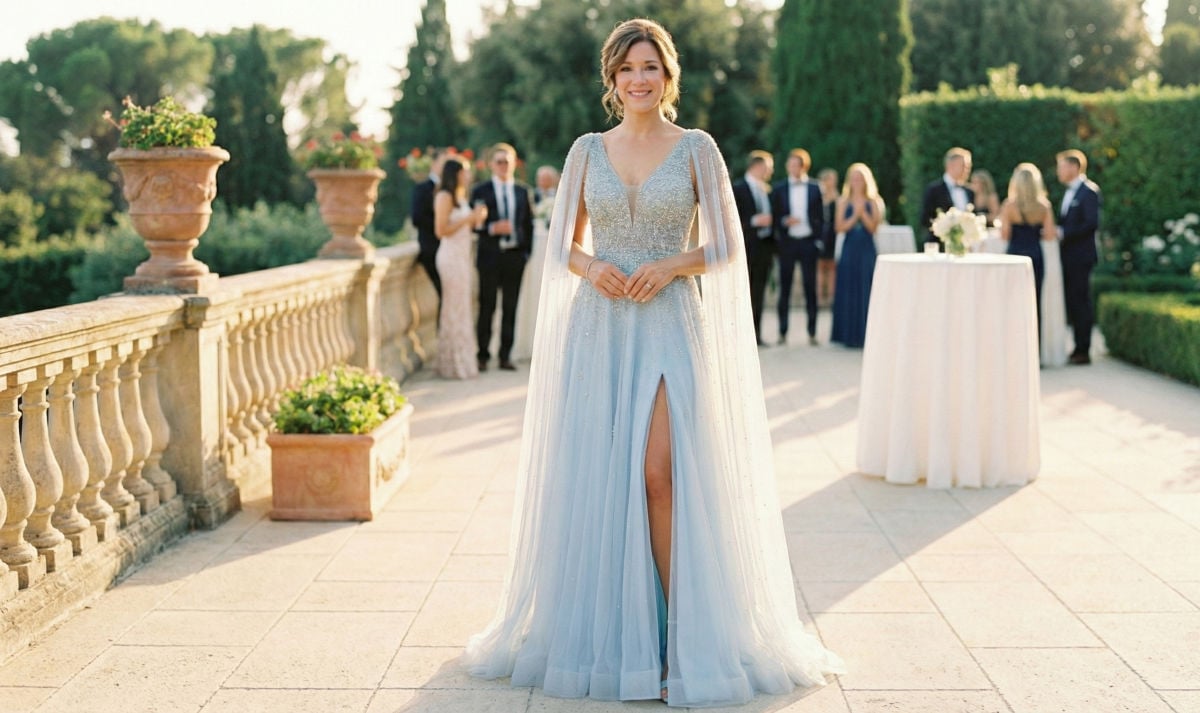
- Outdoor and garden formal events. Even lighter again. The open air dilutes fragrance quickly, but soft floral and aquatic scents feel appropriate to the setting and never compete with the natural environment.
- Black-tie weddings as a guest. Choose something refined and understated. A wedding is not the occasion for a powerful signature scent that pulls focus during the ceremony.
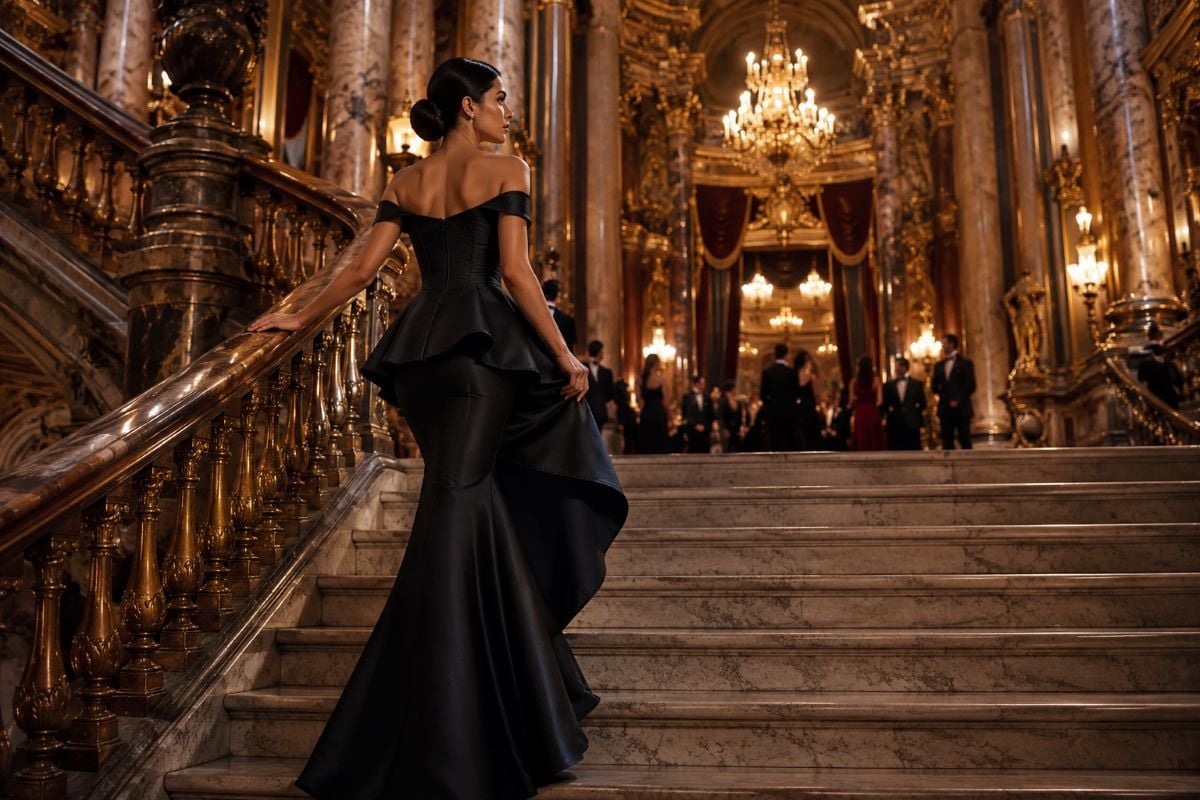
The reliable principle is to match the weight of the perfume to the weight of the occasion. A perfume that smells beautiful but lands wrong for the setting reads as the same kind of misjudgment as wearing a daytime dress to an evening gala. For the broader question of dressing for the moment, our piece on evening dresses for special occasions covers how the event shapes every other decision too.
What perfume to wear with a formal dress: matching the gown
Here is the part most fragrance guides skip, and it is the most interesting one. The dress you are wearing actually changes which perfume works best, both because fabric interacts with fragrance and because the visual mood of the gown should align with the olfactory mood of the scent.
Match the fragrance mood to the dress mood
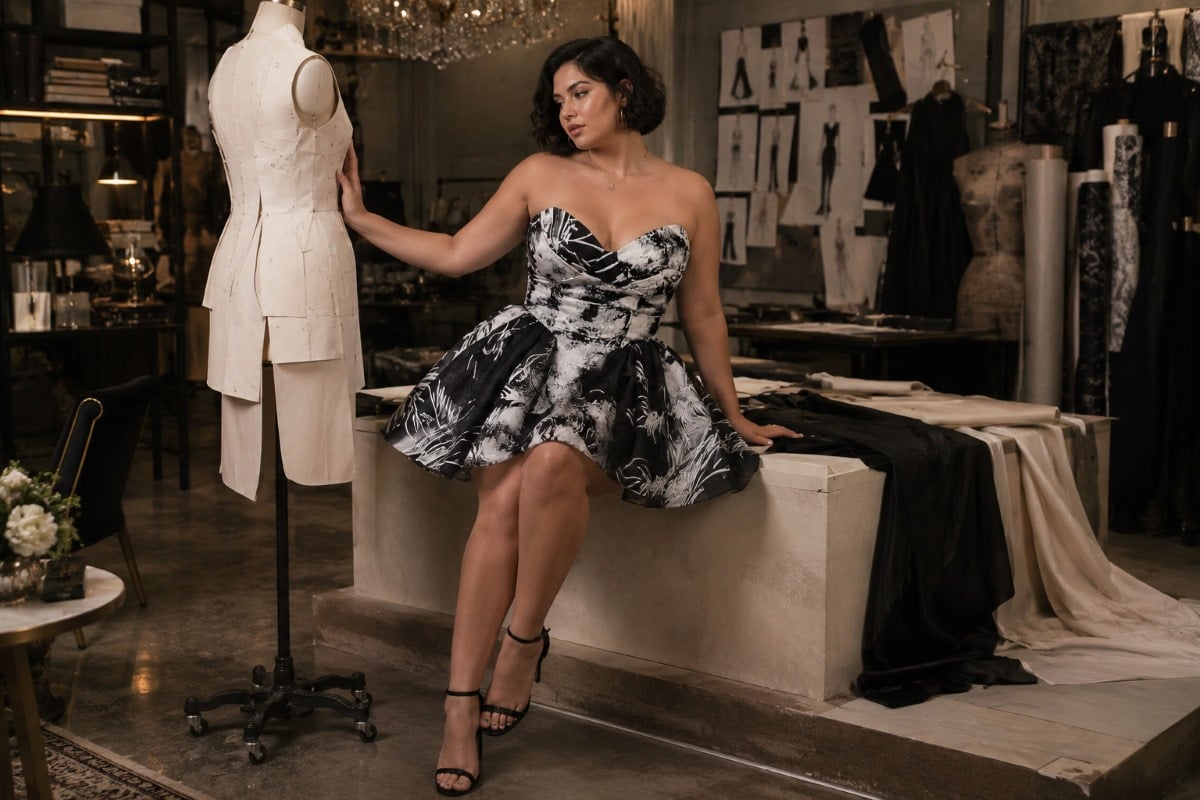
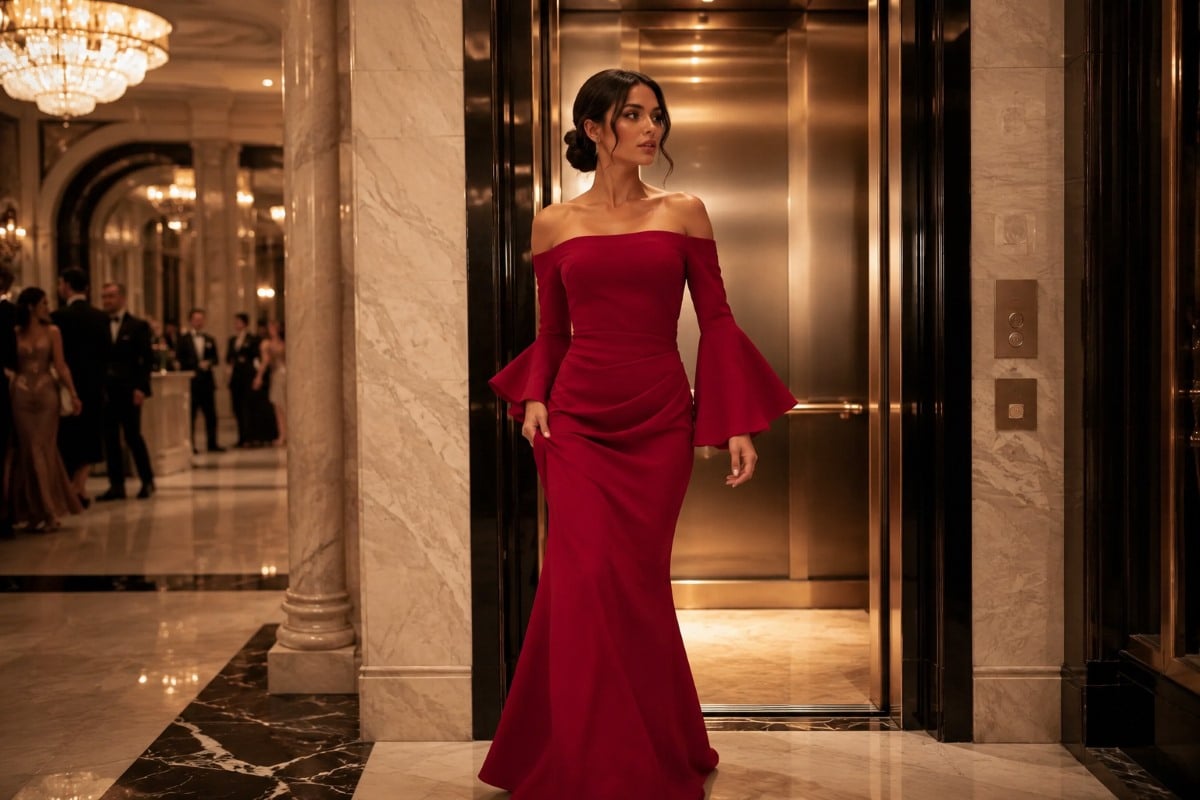
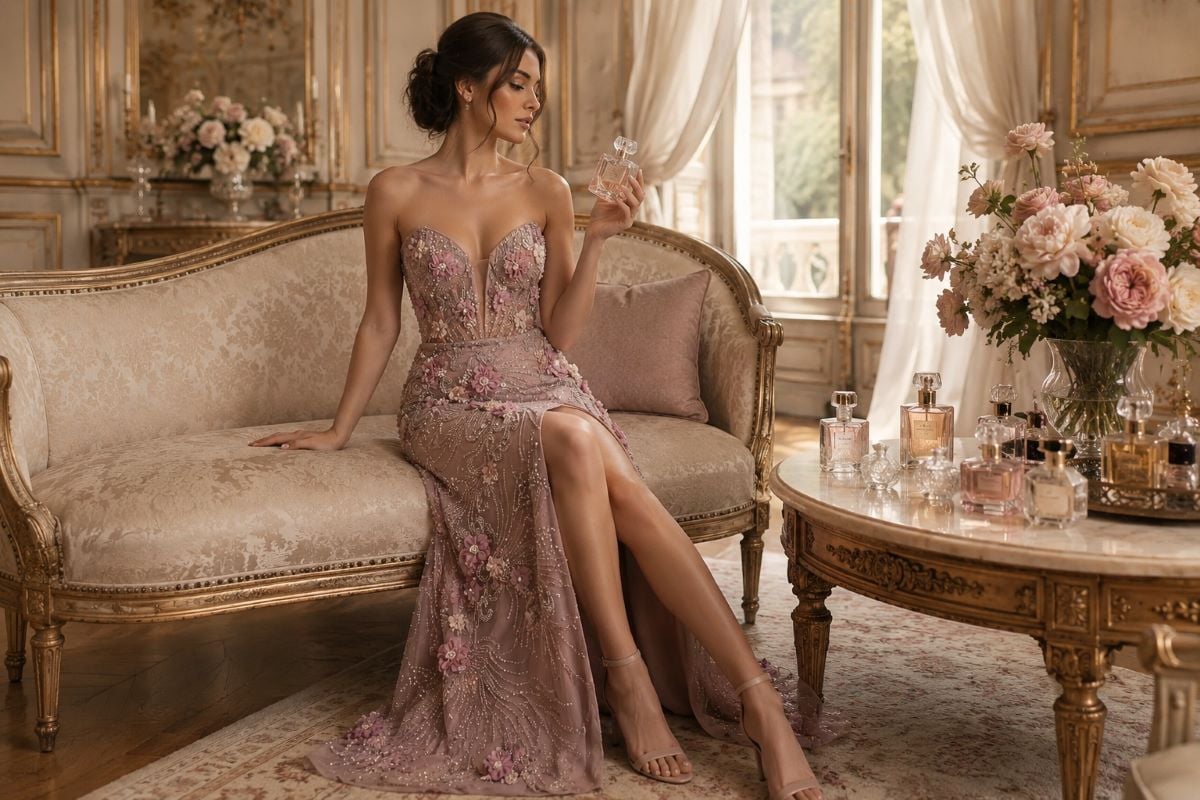
A simple, sleek dress in a clean line suits a modern, refined fragrance, since both share a sense of restraint and intention. A romantic dress with lace or soft draping pairs beautifully with a softer floral or a powdery scent, where the gown and the fragrance share a sense of femininity. A dramatic embellished gown can carry a richer, more complex perfume, since the look already commands attention. A sleek black gown is one of the most versatile foundations and pairs with almost any sophisticated scent, which is part of why the styles among black formal dresses are such a reliable starting point for women who change their fragrance based on mood.
Fabric and fragrance interact
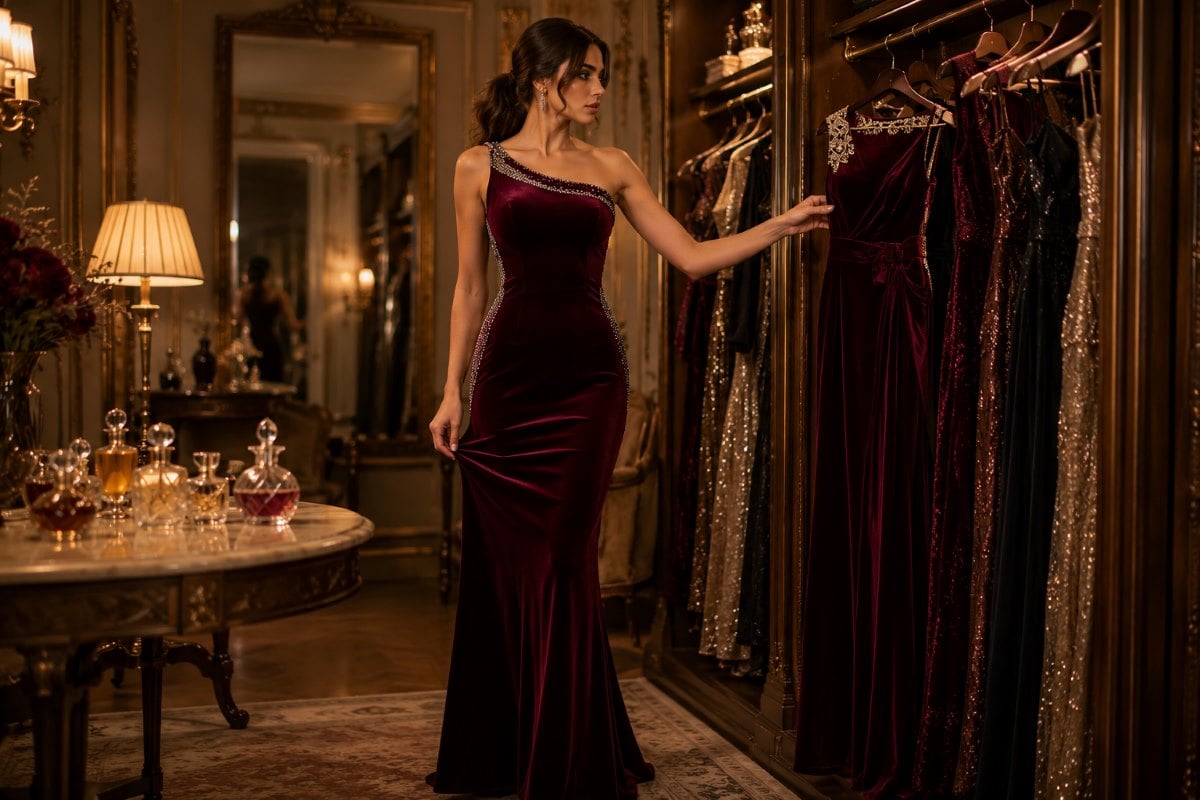
The fabric of your dress affects how fragrance behaves, and this is real chemistry rather than superstition. Heavier, denser fabrics tend to hold scent longer. Velvet is particularly absorbent and carries fragrance well across hours, so a perfume sprayed on skin near a velvet gown often projects more steadily through the evening. The styles among the velvet dresses collection naturally hold a scent well, which is something to keep in mind when you choose how much perfume to apply.
Smooth satin and structured crepe also hold scent reasonably well but in a cleaner, less saturated way. Lighter fabrics like chiffon and georgette release fragrance more quickly, so a perfume on skin near these fabrics fades faster. Delicate lace and beadwork should never be sprayed directly with perfume, since the alcohol in fragrance can damage adhesives, dull beadwork, and stain delicate fibers. This is especially important with intricate gowns like those in the lace evening gowns range, where the lace finish should be protected. The same caution applies to embellished gowns and refined fabrics like satin, including the styles among satin mother of the groom dresses where a stain or dulled finish would be devastating before a major event.
Matching fragrance to the time of year
Season shapes what feels right almost as much as the event itself. The same perfume that smells perfect on a December evening can feel heavy at a June garden event.
For spring and summer formal events, lighter, fresher fragrances suit both the weather and the mood. Florals like rose, peony, jasmine, and freesia, alongside citrus blends and clean white florals, behave beautifully in warmer air. Aquatic and green scents also feel seasonal and current. For autumn and winter formal events, richer, warmer fragrances are at home. Orientals with amber, vanilla, and spice, woody scents built around sandalwood or cedar, and gourmand notes like fig or honey all bring the depth that cold-weather evenings welcome. Heavier fragrances also project better in cooler air, which is why a perfume that feels too much in summer can feel just right in winter. When deciding on the best fragrance for evening events across the year, the seasonal logic is the same as with fabric and color. A summer gown and a summer fragrance share an instinct toward lightness, and a winter gown and a winter fragrance share an instinct toward depth.
The practical mechanics: how to apply perfume so it lasts
Even the perfect perfume for a formal event fails if it is applied wrong. The mechanics of application are simple, but they make the difference between a scent that lingers gracefully and one that fades before dinner.
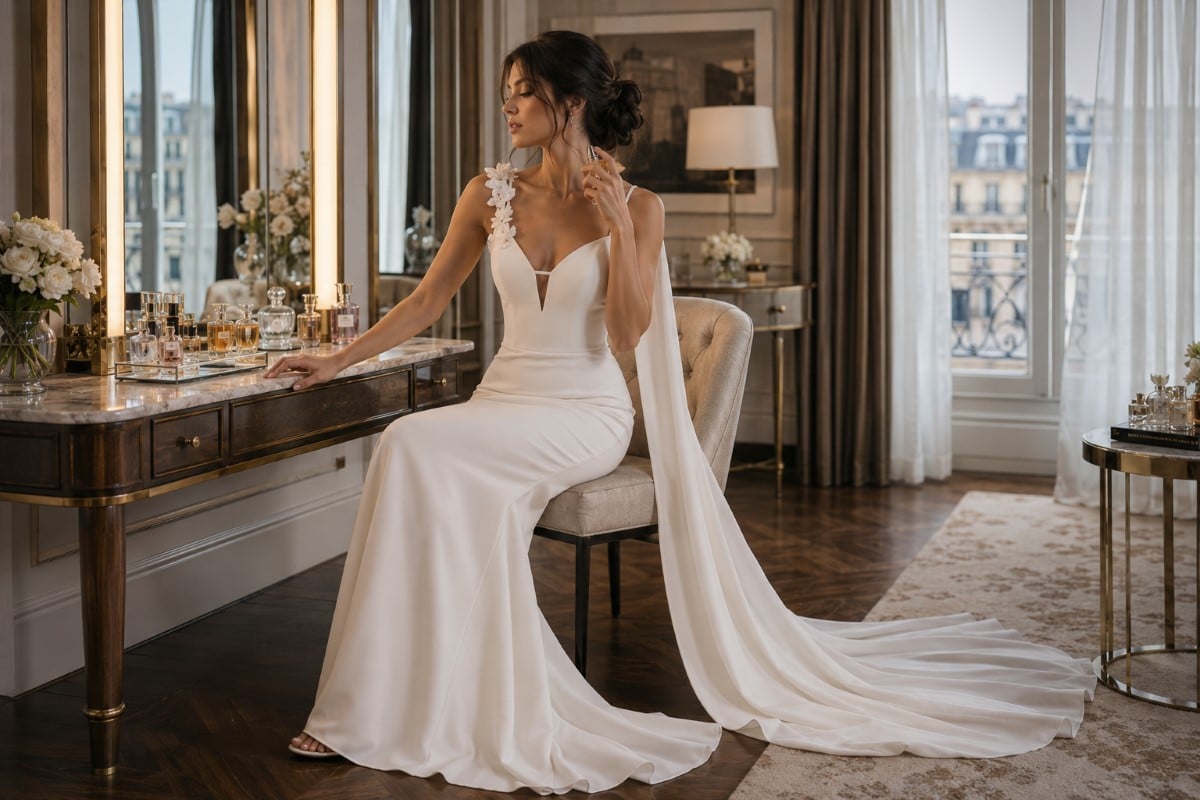
Apply perfume to clean, moisturized skin. Fragrance bonds better with hydrated skin and lasts longer than on dry skin, so a light unscented body lotion before the perfume is a worthwhile step. The classic pulse points are still the right answer: wrists, behind the ears, the base of the throat, and the inside of the elbows. Warm skin where blood flows close to the surface releases fragrance steadily into the air around you. Spray rather than dab, since dabbing crushes the top notes of a perfume and changes how it develops. Hold the bottle a small distance from skin, two or three inches, and spray with one steady motion rather than several quick bursts.
Critically, never spray perfume directly onto your dress. This is the single biggest mistake. Perfume contains alcohol that can stain delicate fabrics, dull embellishments, and damage adhesives on beadwork or appliqué. Apply fragrance before you put the dress on, give it a minute to dry on the skin, then dress carefully. If you want to refresh the scent later in the evening, apply only to skin that the dress does not touch. The dress is the canvas your scent surrounds, never the surface it sits on.
Understanding fragrance families before you choose
Even a basic understanding of fragrance families helps enormously when matching a perfume to a formal event. Most perfumes fall into a handful of categories, and knowing the difference makes the choice feel less like guessing in a crowded store and more like a considered decision.
Floral fragrances are the largest and most familiar category, built around the scents of flowers such as rose, jasmine, peony, tuberose, and lily of the valley. They range from soft and romantic to rich and seductive, and they suit almost any formal occasion depending on the specific blend. Oriental and amber fragrances are warm, sensual, and built around notes like vanilla, amber, resin, and exotic spices, and they are the natural choice for cooler weather, evening events, and occasions that welcome drama. Woody fragrances are anchored by notes like sandalwood, cedar, and oud, giving a sophisticated, often unisex quality that suits the most modern and understated evenings. Chypre fragrances combine citrus brightness with mossy, woody depth, creating an elegant, slightly retro impression that feels timeless for black-tie events. Fresh fragrances, including citrus, green, and aquatic scents, are the lightest of the families and suit daytime and summer formal events. Gourmand fragrances, built around edible notes like vanilla, caramel, honey, and fig, feel modern and indulgent and can be very expressive at a confident, more contemporary evening event. Knowing which family suits your dress and your event narrows the entire decision quickly, and most perfumes describe themselves clearly in these terms so you can read a bottle and understand what to expect.
Common mistakes to avoid
A few avoidable errors can undermine an otherwise considered fragrance choice. Knowing them protects both the scent and the dress.
- Applying too much. The most common mistake. You should leave a soft trail, not a wake. Two to three sprays for most evening perfumes is plenty, and the test is whether you can still smell yourself an hour later, since you should not be able to.
- Spraying directly onto fabric. Already covered, but worth repeating. Perfume on fabric risks stains and damage to embellishments.
- Choosing a scent that clashes with your dress’s mood. A bold gourmand on a minimalist dress, or a fresh citrus on a heavy embellished gown, creates a disconnect between how you look and how you smell.
- Wearing a perfume you have not worn before to a major event. The night of a formal event is not the time to test a new fragrance, since you cannot predict how it will develop on your skin or how you will feel wearing it for hours. Wear something familiar.
- Layering multiple scented products. A perfumed lotion, a scented hairspray, and a perfume can compete or combine into something unintended. Keep other products unscented or in the same fragrance family.
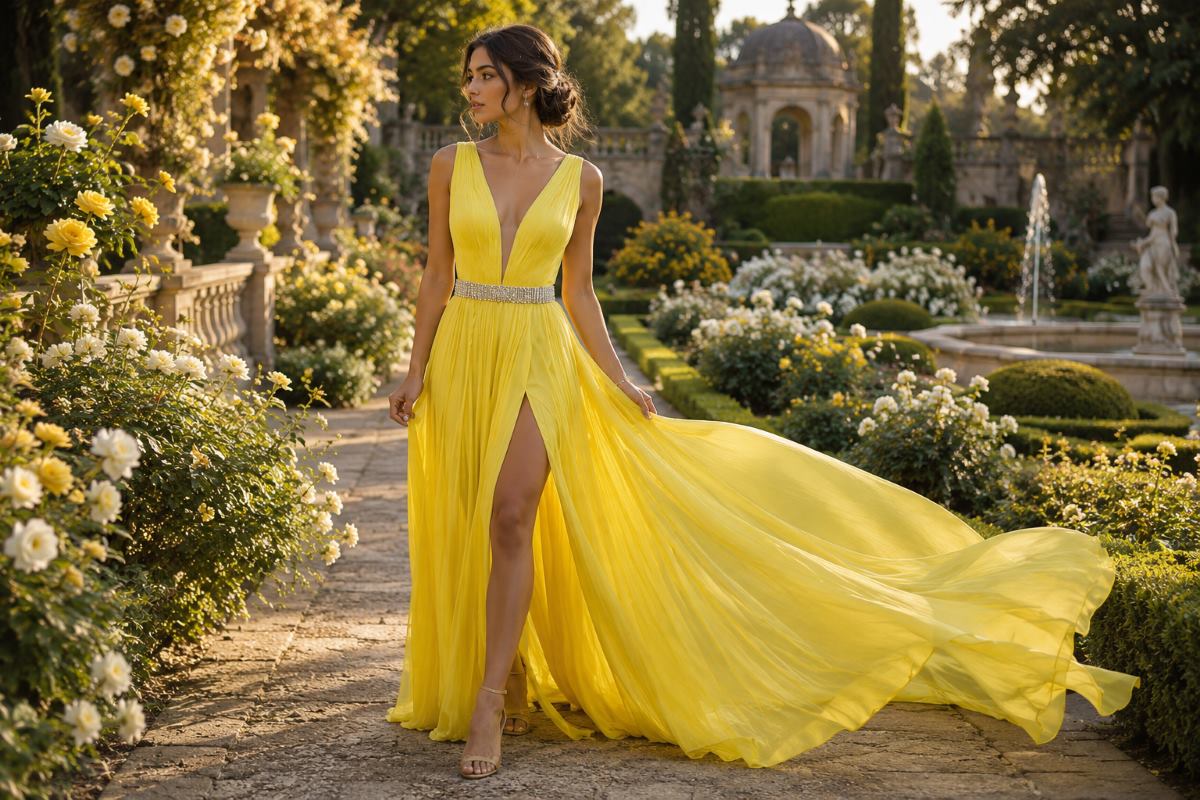
Building a small evening fragrance collection
For women who attend formal events regularly, having a small, deliberate collection of fragrances saves the decision-making each time and ensures you always have an appropriate scent on hand. A workable evening fragrance wardrobe might include three to five perfumes that cover the range of occasions and seasons.
A good starting set typically includes a refined floral for romantic evenings and weddings as a guest, a sophisticated oriental or amber for black-tie galas, a clean fresh scent for daytime and summer formal events, and a deeper signature scent for the events you most want to be remembered for. Beyond that, a quiet woody or musk scent serves the quieter, more understated occasions. The point of a collection is not to own many perfumes but to have the right one ready when an event invitation arrives. Choosing scents thoughtfully and wearing them deliberately fits the same approach we suggest in our guide on dress to impress formal style guide, where every element of the look is chosen with intention rather than by default.
FAQs about fragrance for formal events
What kind of perfume is best for a formal event?
Match the weight of the perfume to the weight of the occasion. Black-tie evening events call for richer, more sophisticated scents like florals with woody or amber undertones, while cocktail occasions suit lighter modern florals and clean musks. Daytime and outdoor formal events welcome fresh citrus and soft floral scents.
Should I spray perfume on my dress?
No. Perfume contains alcohol that can stain delicate fabrics, dull embellishments, and damage adhesives on beadwork or lace appliqué. Always apply fragrance to skin before putting on your dress, and let it dry for a minute before getting dressed. To refresh later, apply only to skin areas the dress does not touch.
How much perfume should I wear to a formal event?
Two to three sprays on classic pulse points is plenty for most evening fragrances. You should leave a soft trail, not overwhelm a room. A useful test is that you should not be able to smell your own perfume after an hour, since your nose adjusts and stops detecting it, while others around you still can.
Where on the body should I apply perfume?
The classic pulse points work best, where blood flows close to the surface and warmth releases fragrance steadily. These include the inside of the wrists, behind the ears, the base of the throat, and the inside of the elbows. Apply to clean, lightly moisturized skin for the longest lasting scent.
Does the fabric of my dress affect which perfume to choose?
Yes. Heavier fabrics like velvet absorb and hold fragrance well, so a single application projects steadily for hours. Lighter fabrics like chiffon release scent more quickly. Delicate lace and beadwork should never be sprayed directly, since alcohol in perfume can damage them. Apply to skin before dressing in any fabric.
Should my perfume change with the season?
It can, and many women rotate fragrances seasonally. Spring and summer suit lighter florals, citrus, and aquatic scents that match warmer air. Autumn and winter welcome richer orientals, woody scents, and warmer notes like amber and vanilla. The seasonal logic mirrors how you would adjust fabric and color for the time of year.
When you are ready to find a dress that deserves a fragrance chosen with the same care, explore the full range of formal gowns through an authorized Jovani retailer.