
What Is the Most Popular Mother of the Bride Dress Style?
The most popular mother of the bride dress style depends on what popularity measures. Jovani retailer orders favor fitted mermaid and trumpet gowns, while A-line dresses remain a practical choice for many mothers. Sheath and column styles offer a quieter alternative. Use those patterns as a starting point, then choose for your venue, dress code, and comfort.
A mother does not need to copy a bestseller to look right for the occasion. Browse the range of mother of the bride dresses to compare shapes before focusing on a single color or detail.
Which Mother of the Bride Dress Style Is Most Popular?
Mermaid and trumpet silhouettes lead Jovani boutique purchasing data, not necessarily every mother’s personal preference. In wholesale orders placed by Jovani retailers from May through October 2026, mermaid and trumpet styles accounted for 58%, A-line for 18%, and sheath or column for 17%. These figures measure retailer orders, not national wedding sales or a universal styling rule.
That distinction matters when you read lists of popular mother of the bride dresses. Boutiques buy for local customers and upcoming events; a particular woman still needs a dress that works on her body. A widely ordered gown can be too restrictive for someone who plans to dance all evening.
How Do the Leading Mother of the Bride Silhouettes Compare?
The three familiar options create different shapes and different movement. A fitted mermaid emphasizes the waist and hips, an A-line opens gradually below the waist, and a sheath follows a straighter path. Jovani’s guide to mother of the bride dress cuts explains the construction differences in more detail.
Mermaid and Trumpet: A Defined, Formal Shape
A mermaid fits closely through the hips before opening near the knee. A trumpet releases higher, often making steps and sitting easier. Both can suit a formal evening reception, but test how the skirt behaves while walking and climbing stairs.
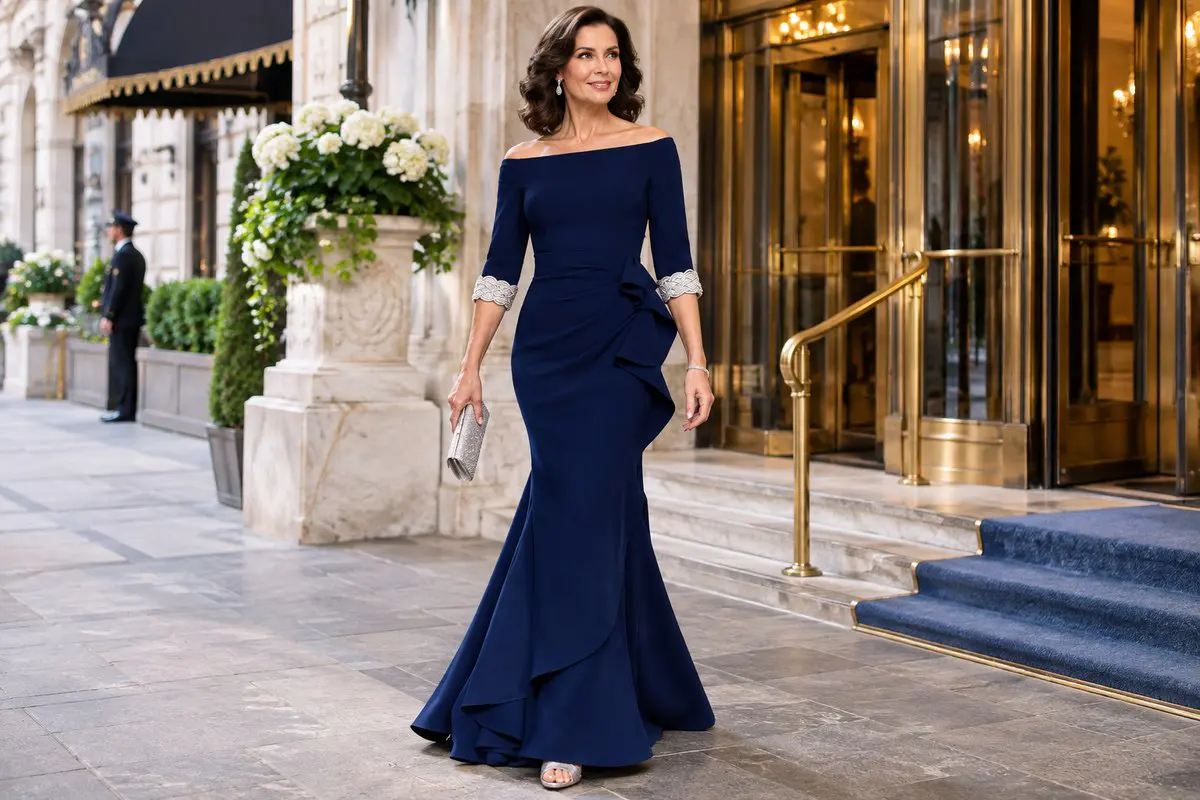
Jovani style 42409 shows a practical version of this look: a floor-length crepe mermaid dress with an off-the-shoulder neckline, beaded cuffs, and side draping. Compare mermaid mother of the bride gowns with your preferred level of coverage and room to move.
A-Line: Shape Without a Close-Fitting Skirt
An A-line defines the bodice and opens away from the hips. That gives the legs more room while keeping a clearly shaped waist. It is an especially useful comparison for mothers who dislike a narrow skirt but still want a formal silhouette.
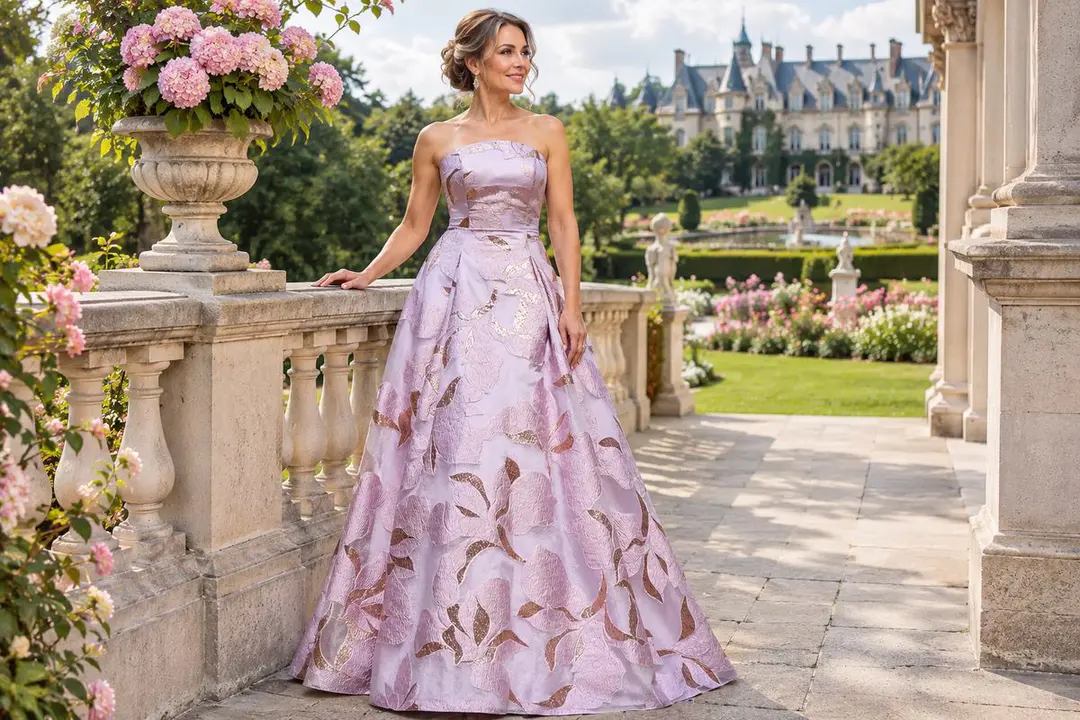
Jovani style 44369 has a strapless straight neckline, a structured bodice, and a pleated brocade skirt with a metallic floral pattern. Other A-line mother of the bride dresses use softer fabrics and less volume, so compare both the cut and fabric.
Sheath and Column: A Clean, Narrow Outline
A sheath skims the figure, while a column maintains a straighter line from shoulder to hem. Neither needs a large skirt or elaborate decoration to feel formal. Check the back closure, lining, and walking room, particularly in a nonstretch fabric.
A streamlined dress can be an excellent choice for an intimate ceremony or a modern venue. The fit should remain smooth when seated rather than pulling across the hips. Choose the version that feels comfortable without requiring repeated adjustments.
Which Length Works Best for the Wedding?
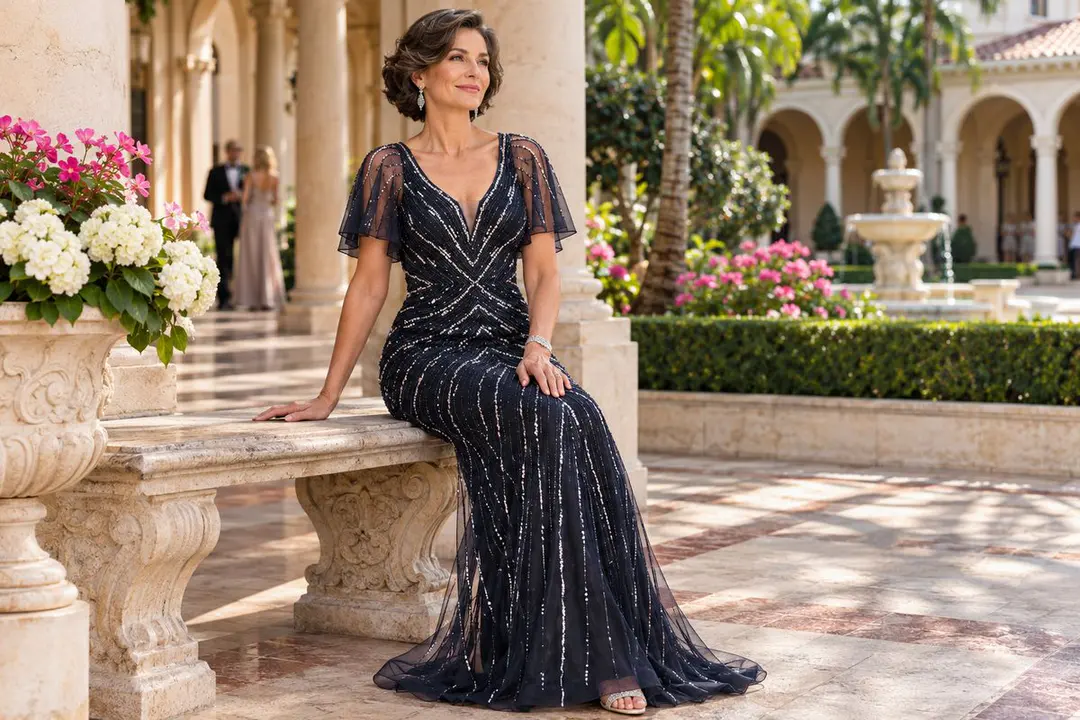
Floor length remains a strong option for black-tie, evening, and ballroom weddings, but the invitation should guide the hem. Long mother of the bride gowns can work in mermaid, A-line, and column shapes. Ask the retailer to check the hem with your actual wedding shoes.
For a daytime, garden, or semi-formal celebration, a midi or knee-length style can feel more natural. Shorter mother of the bride dresses make footwear visible and may be easier on uneven ground. Consider the venue surface and weather before deciding.
Which Necklines and Details Are Worth Considering?
Off-the-shoulder, strapless, and one-shoulder necklines each change how a gown feels during a long event. Start by checking whether the bodice remains secure when you move your arms. Then consider sleeves, undergarments, and any extra coverage required by the ceremony setting.
Jovani style 00446 pairs a fitted crepe mermaid silhouette with an off-the-shoulder neckline, three-quarter sleeves, and a side ruffle. Its draped construction gives texture without relying on an allover pattern. A structured floral brocade, like style 44369, creates a fuller and more architectural result.
Details should serve a purpose. Beaded cuffs bring attention to the upper body, while waist draping can change the way a fitted skirt looks. Check the weight of embellishment and whether decorative seams rub against the arms or waist.
How Do You Choose the Best Style for Your Wedding?
Start with the formality of the invitation, then compare the silhouette against the day’s activities. A grand hotel ballroom may accommodate a fitted floor-length gown; an outdoor ceremony may favor a shorter or less restrictive skirt. Neither is a rule for age or body shape.
Coordinate the color with the couple and wedding party rather than trying to match everyone exactly. The mother of the bride dress color guide covers palette decisions separately, so you can keep your first fitting focused on cut and comfort.
What Should You Check During a Fitting?
Try each finalist in three positions: standing, sitting, and walking. Pay attention to the bodice when you reach forward, the hips when you sit, and the hem when you take a full step. A flattering photograph is helpful, but comfortable movement is the deciding test.
Check whether alterations can address the specific problem you notice. Hem length and small fit adjustments may be possible, but major changes to a beaded bodice or a sculpted skirt can be more difficult. Discuss feasibility and timing with the retailer before committing.
For planning the purchase around fittings and alterations, use Jovani’s mother of the bride dress shopping timeline. Confirm the retailer’s actual availability and ordering schedule rather than assuming every style can arrive by the same date.
A Popular Dress Should Still Feel Like Your Dress
The most popular mother of the bride style is a useful shopping clue, not a required uniform. A fitted mermaid may suit one mother’s taste, while another feels better in an A-line or simple column. What matters is that the gown fits the celebration and stays comfortable.
Bring your favorite silhouettes, wedding details, and shoes to an appointment. A local authorized Jovani retailer can help you compare proportions, confirm available colors, and review fit before you decide.
Frequently Asked Questions
Is an A-line still a popular mother of the bride dress?
Yes. A-line dresses remain a widely chosen option because their skirts allow movement below a fitted bodice. They suit many venues, even though mermaid and trumpet styles led Jovani’s recent wholesale orders.
Are mermaid dresses appropriate for the mother of the bride?
Yes. A mermaid gown can be appropriate for a formal wedding when the fit, neckline, and overall styling suit the occasion. Test sitting and walking before choosing a close-fitting cut.
Can a mother of the bride wear a knee-length dress?
Yes. Knee-length or midi dresses can work for daytime and semi-formal weddings. Choose a polished fabric and a hem that suits the invitation and venue rather than assuming every mother needs a floor-length gown.
Should the mother of the bride and mother of the groom match?
No. The two mothers can coordinate their level of formality without wearing identical dresses. Share the wedding palette and dress-code expectations, then allow each person to choose a comfortable silhouette.