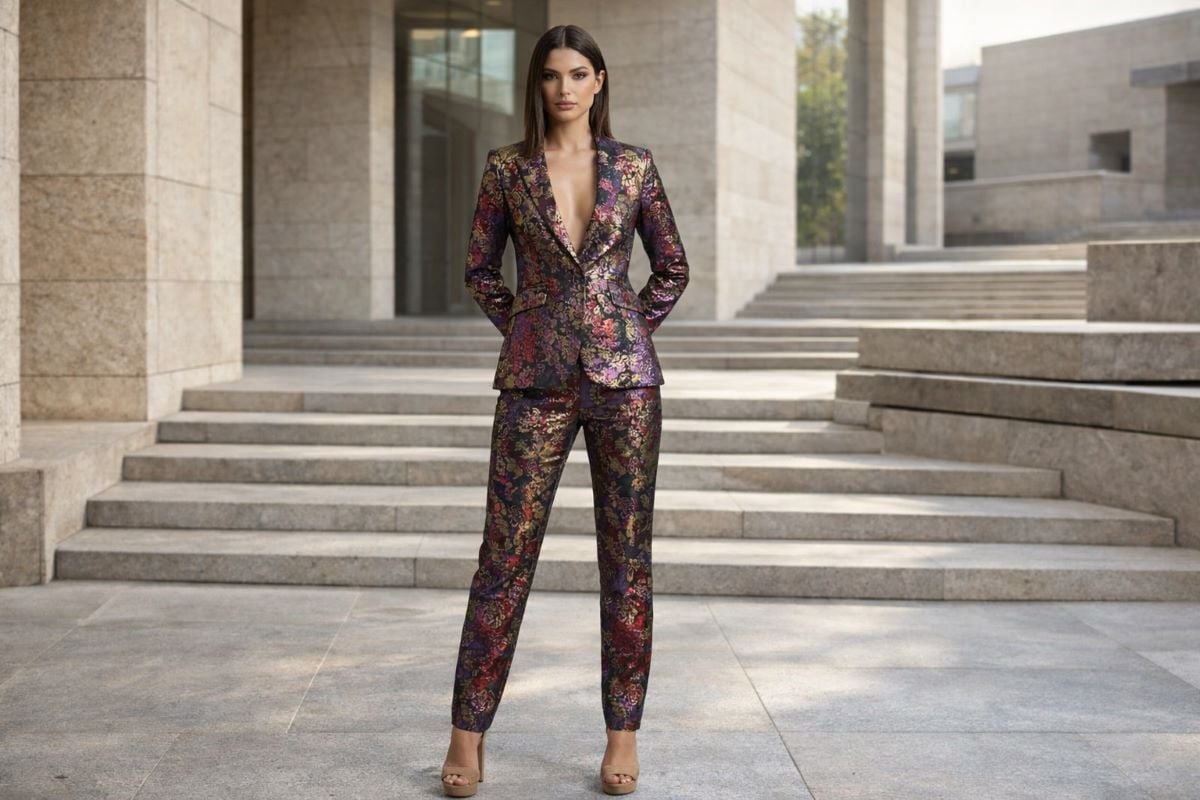

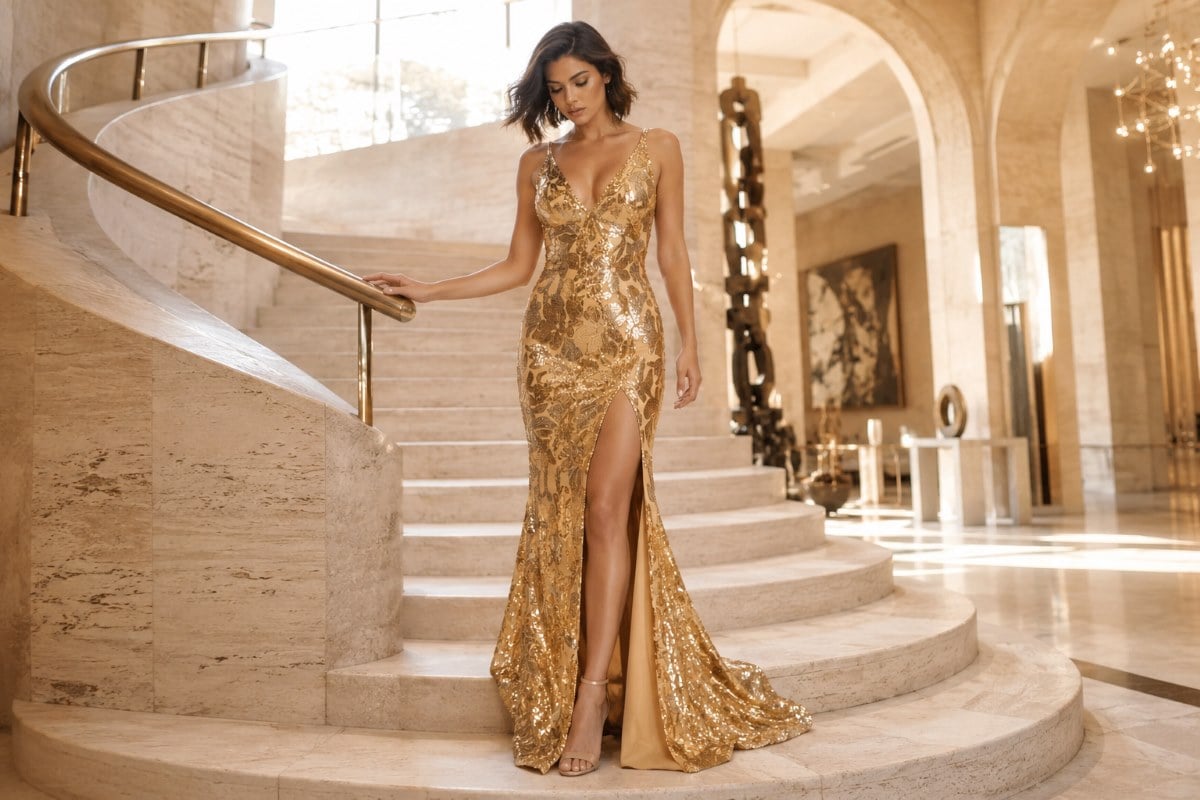
The trumpet dress solves a problem that a lot of people run into with fitted gowns. You want the sculpted line that follows the body, but you also want to climb a set of stairs, sit through a long dinner, and get onto a dance floor without planning each movement in advance. A trumpet silhouette gives you the first without sacrificing the second, because the skirt releases higher on the leg than the styles it is usually confused with. That single design decision changes almost everything about how the dress wears. This guide covers what defines a trumpet dress, how it genuinely differs from a mermaid and a fit-and-flare, why the flare point needs to match your own proportions rather than a generic measurement, and how the silhouette performs across a real evening.
What defines a trumpet dress
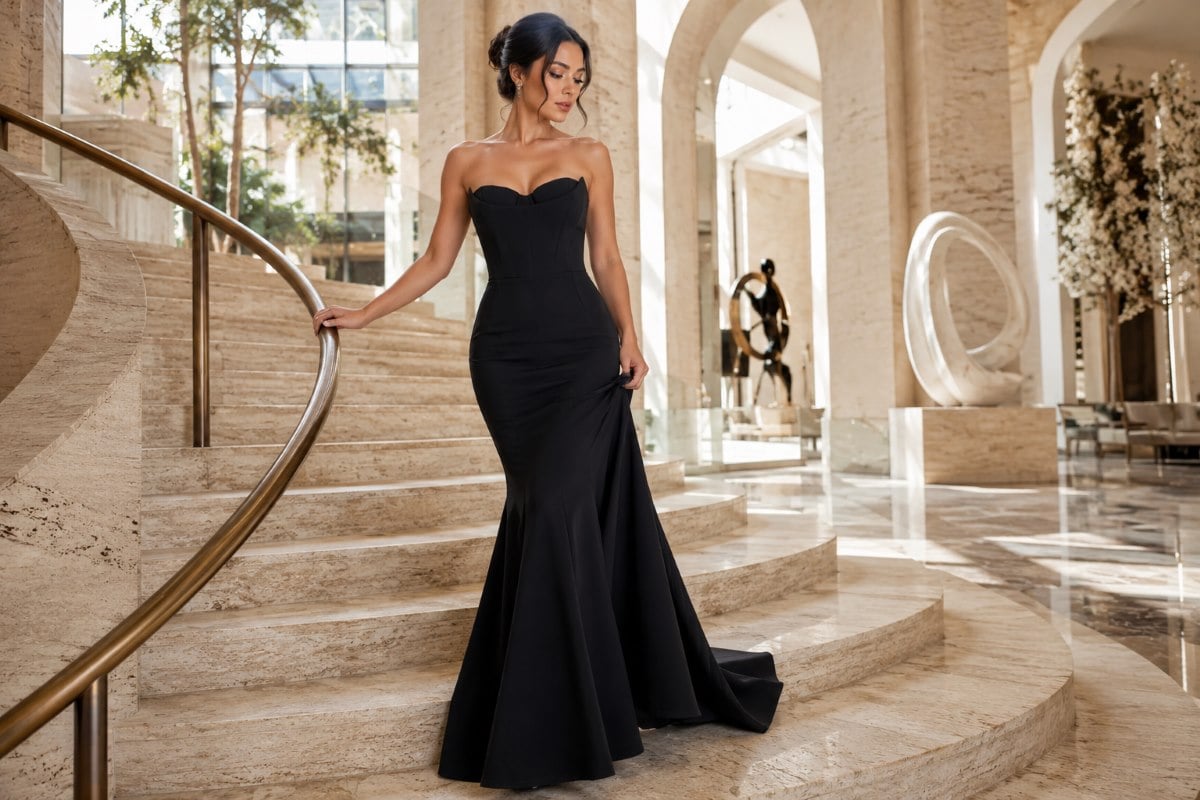
A trumpet dress is fitted through the bodice, waist, and hips, and then flares outward from around the mid-thigh into a skirt that widens toward the hem. The name comes from the shape of a trumpet’s bell, narrow through the body and opening gradually at the bottom. The defining feature is not that it is fitted, since several silhouettes are fitted, but where the release happens.
That release point does a great deal of work. Because the skirt begins to open above the knee, the legs have room to move naturally, and the flare has enough length below it to develop real volume and swing. The result is a dress that reads as sculpted and formal from a distance while behaving more like a normal garment up close. The styles among trumpet prom dresses show how the shape reads on a formal gown.
Trumpet, mermaid, and fit-and-flare compared
These three silhouettes get treated as interchangeable in shop descriptions, and they are not. Understanding the difference is the fastest way to know which one you are actually looking for.
The flare point is the whole difference
All three are fitted above and flared below, and the only structural variable that separates them is where the flare begins. A fit-and-flare releases at or just below the waist. A trumpet holds the fit through the hips and releases around the mid-thigh. A mermaid holds the fit all the way down through the thigh and releases at or just below the knee. Everything else people say about these silhouettes follows from that one measurement. The mermaid is more dramatic because a lower release point means a longer fitted run and a sharper, more sudden flare. The trumpet is softer because the transition is more gradual. Neither is better; they are different amounts of the same idea. For a related comparison, the breakdown of mermaid and A-line silhouettes covers the two ends of the fitted spectrum.
Fit-and-flare is the loosest of the three
Because a fit-and-flare releases at the waist, it never grips the hips or thighs at all, which makes it the most forgiving and the least sculpted of the three. It skims where the trumpet holds. If you want the shape of a fitted gown without the fit through the hip, fit-and-flare is the answer rather than trumpet. If you want the body followed through the hip and released before the knee, trumpet is the answer. The styles among fit-and-flare prom dresses show the looser end of the family for comparison.
Why the flare point should match your proportions
Here is the part that most guides leave out, and it matters more than any of the definitions above. Mid-thigh is not a fixed distance from the floor. It is a location on your body, and a dress pattern cut for one set of proportions will place its flare somewhere different on someone taller or shorter.
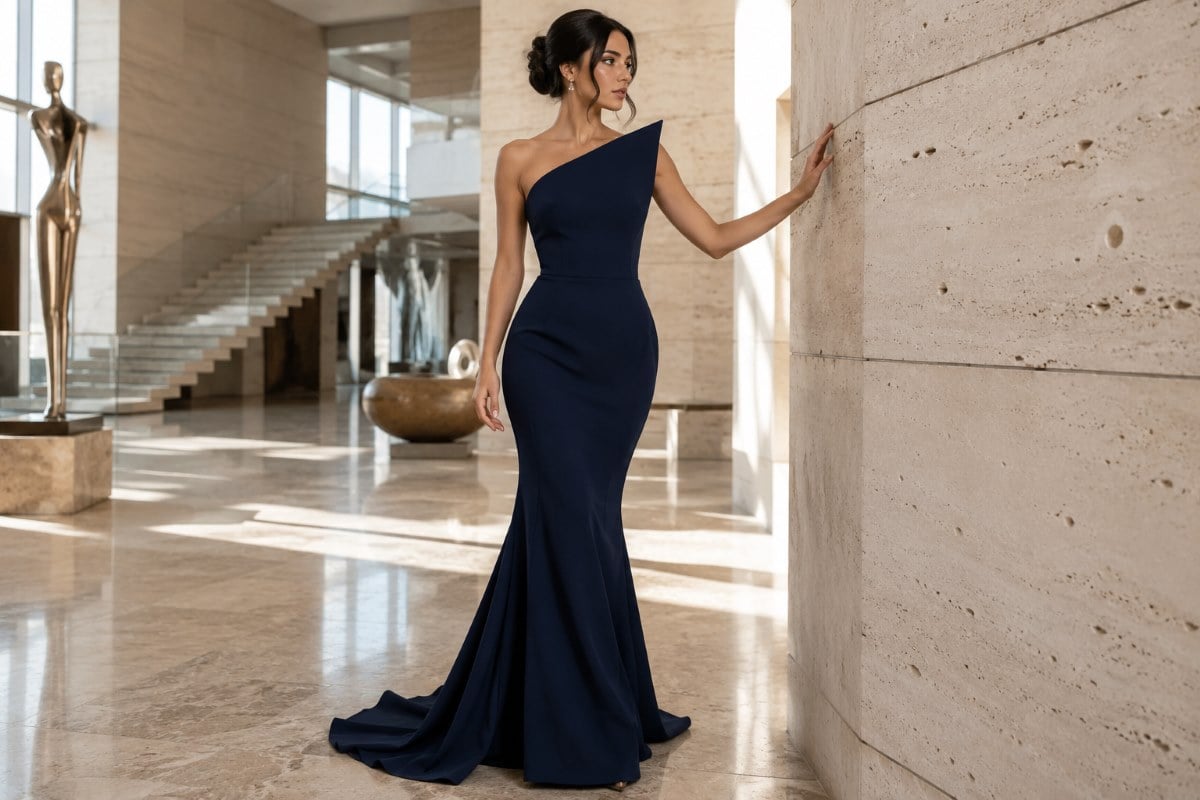
On a petite frame, a trumpet cut to a standard grade can release closer to the knee than intended, which quietly turns the dress into a mermaid and takes away the movement you chose it for. It can also cut the leg at an unflattering point, since a flare that begins right at the widest part of the calf shortens the leg visually. On a taller frame, the same pattern can release too high, which pushes the silhouette toward fit-and-flare and loses the sculpted line through the hip.
The practical takeaway is to judge the flare against your own knee rather than against a description. When you try a trumpet dress, look at where the skirt starts to open relative to the top of your kneecap. A hand’s width above the knee is roughly where the silhouette does what it is supposed to do. If it sits much lower, expect mermaid behavior and mermaid restriction. If it sits much higher, you are wearing a fit-and-flare with a trumpet label. This is also the reason petite and tall wearers often prefer a dress designed for their proportions rather than a standard cut that has been hemmed, since hemming changes the length but never moves the flare.
Who a trumpet dress flatters
The trumpet silhouette is one of the more broadly flattering fitted shapes, and the reasons are specific rather than general. Because it follows the body through the waist and hip and then widens, it creates a defined hourglass line even on a frame that does not naturally have one. The narrowest visual point lands at the waist and the widest at the hem, which is a proportion the eye reads as balanced.
For a pear-shaped figure, the flare is really useful. Volume at the hem balances fuller hips, so the silhouette reads as proportional rather than bottom-heavy, and because the release happens above the knee there is more skirt available to do that balancing than a mermaid provides. For an hourglass figure, the trumpet follows the shape that is already there without the restriction of a lower release point. For a straighter or more athletic frame, the fitted run through the waist and hip plus the sudden width at the hem creates curve where the body does not supply it.
The silhouette also suits a broader age range than its reputation suggests. Because a trumpet can be cut with any neckline and any sleeve, the same shape works for a prom gown, an evening dress, a pageant gown, or a mother of the bride dress, with the neckline and fabric doing the work of setting the tone. The range of mother of the groom gowns shows how a fitted, flared shape reads at that level of formality.
Fabrics that change how the flare behaves
Two trumpet dresses cut from the same pattern in different fabrics will behave like different garments, because the fabric decides what the flare does once it releases.
Structured fabrics give a crisp, architectural flare
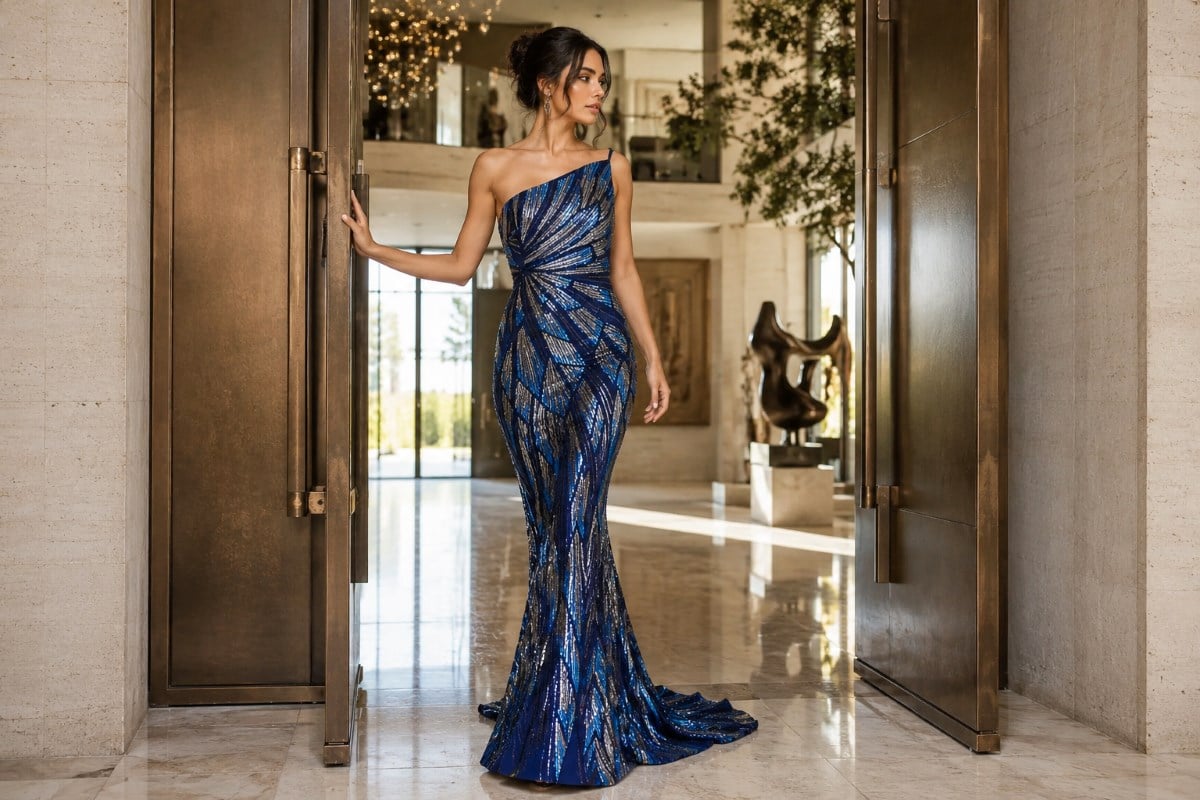
Mikado, taffeta, duchesse satin, and heavier crepe hold their own shape, so the flare stands away from the leg in a clean, sculptural curve. This produces the most dramatic, defined version of the silhouette, the kind that keeps a precise outline in photographs and does not collapse when you stop moving. The tradeoff is that a structured flare has less swing to it and takes up more space in a crowded room or a narrow seat.
Soft fabrics give a fluid, moving flare
Chiffon, georgette, jersey, and soft crepe produce a flare that falls closer to the leg and moves with you rather than holding a fixed shape. This version reads as softer and more romantic, and it photographs beautifully in motion because the skirt trails and catches air as you walk. It also packs and travels far better than a structured flare. The tradeoff is that a soft flare will not give you that crisp sculptural outline when standing still.
How a trumpet dress performs in real life
The reason to choose a trumpet over a mermaid is usually practical, so it is worth being concrete about what changes. Walking is the most obvious difference. With the skirt open above the knee, your stride is unrestricted at normal walking pace, where a mermaid requires shorter steps. Stairs are the clearest test of all, since climbing requires knee lift and a mermaid restricts precisely there.
Sitting is the second difference. A trumpet skirt has fabric to spare around the knee, so sitting through a long dinner does not pull the skirt tight across the thighs. Getting into a car is easier for the same reason. Dancing is where the silhouette earns its keep, since the flare gives movement to the hem while the fitted section keeps the dress in place rather than swinging around the body.
There is one thing to plan for, and it applies to any long fitted gown. The hem needs to clear the floor once you are wearing your actual shoes, because a flared hem that is slightly too long is exactly the kind of thing you or someone else will step on. Bring the shoes to the fitting rather than estimating the heel height. The practical advice on walking in a long gown covers the small adjustments that keep a flared hem out of your way.
Sitting deserves the same brief thought, since a fitted skirt behaves differently in a chair than it does standing. The guidance on how to sit in a formal gown applies directly to a trumpet skirt through a long dinner.

Styling a trumpet silhouette
Because a trumpet dress creates its effect through shape rather than surface, the styling that works tends to keep the line clean and let the silhouette speak. Jewelry is best kept to one focal point, most often earrings, since a long necklace interrupts the vertical line that the fitted section creates and works against the elongating effect.
Shoes matter more here than with a looser silhouette, because a trumpet hem sits close to the floor and a change of heel height alters where the flare falls relative to your leg. A heel you can walk in comfortably, chosen before the hem is set, is the practical requirement. Metallic and nude shoes both keep the leg line long, while a shoe matched to the dress produces the cleanest unbroken line.
For a bag, a clutch or small structured style suits the silhouette, since a large bag held at hip height sits exactly where the dress is narrowest and breaks the shape. If you want a layer, a cropped jacket or a wrap that stops at or above the waist preserves the line, while a long coat or a hip-length jacket covers the fitted section that gives the dress its character.
Getting the fit right
A trumpet dress depends on fit more than a forgiving silhouette does, and the order of priorities is worth knowing before you shop. Fit the hip first. The hip is the widest part of the fitted section and the hardest place to gain room, so choose the size that fits your hip comfortably and plan to take in the waist and bodice rather than trying to let out a hip that is too tight. A trumpet that pulls across the hip will crease horizontally and read as too small no matter how good the rest of the fit is.
Understand what can and cannot be altered. Taking in the waist, adjusting the bodice, and shortening the hem are all routine. Moving the flare point is not, because it requires reconstructing the skirt panels. This is why judging the flare position on your own body during a fitting matters so much: it is the one element you are stuck with.
Foundations matter too, since the dress is fitted through the body. A smooth foundation garment keeps the line clean under a fitted skirt, and for a strapless or low-backed trumpet the internal construction of the bodice does most of the support work, so check that it holds you comfortably when you move rather than only when you stand still. If you find yourself weighing the trumpet against its more dramatic sibling, the styles among mermaid prom dresses show what the lower release point looks like in practice.
At a more formal register, the mermaid evening dresses show the same sharper flare on an evening silhouette, which makes the contrast with a trumpet easy to judge side by side.

What to do in the fitting room
The trumpet is a practical choice dressed up as a dramatic one, and that combination is rare. You get the sculpted line, the defined waist, and the sweep at the hem that make a fitted gown feel like an occasion, without committing to the restriction that comes with a lower release point. For a long event with dinner, photographs, stairs, and dancing in it, that tradeoff usually favors the trumpet.
When you try one on, do three things before deciding. Check where the flare sits relative to your knee, since that determines whether you are getting trumpet behavior or mermaid behavior. Walk a full length of the room and sit down properly rather than perching, because a fitted skirt reveals its problems in motion rather than on a stand. And look at the hem with your real shoes on. Get those three right and the rest is a question of neckline, fabric, and color. To see how the trumpet silhouette translates across prom, evening, and occasion gowns in both structured and soft fabrics, explore the current styles through an authorized Jovani retailer.
Sorting Out the Fitted Silhouettes
What is a trumpet dress?
A trumpet dress is fitted through the bodice, waist, and hips, then flares outward from around the mid-thigh into a skirt that widens toward the hem. The name comes from the shape of a trumpet’s bell. The defining feature is where the release happens rather than the fact that it is fitted, since the higher flare point gives the legs room to move while the dress still reads as sculpted and formal from a distance.
What is the difference between a trumpet and a mermaid dress?
The only structural difference is where the skirt begins to flare. A trumpet releases around the mid-thigh while a mermaid holds the fit down through the thigh and releases at or just below the knee. Everything else follows from that. The mermaid is more dramatic because the longer fitted run produces a sharper, more sudden flare, and it is more restrictive for the same reason. The trumpet has a more gradual transition and allows normal walking, stair climbing, and sitting.
Is a trumpet dress the same as fit-and-flare?
No. A fit-and-flare releases at or just below the waist and never grips the hips or thighs, which makes it the most forgiving and least sculpted of the fitted family. A trumpet holds the fit through the hips before releasing around the mid-thigh. If you want the look of a fitted gown without the fit through the hip, fit-and-flare is what you want. If you want the body followed through the hip and released above the knee, that is a trumpet.
Who does a trumpet dress suit?
It is one of the more broadly flattering fitted shapes. For a pear-shaped figure, volume at the hem balances fuller hips and reads as proportional. For an hourglass, it follows the existing shape without the restriction of a lower release point. For a straighter or athletic frame, the fitted run through the waist and hip plus the width at the hem creates curve. It also works across formality levels, since the same shape can be cut with any neckline for prom, evening, pageant, or mother of the bride.
Can you walk and dance in a trumpet dress?
Yes, and this is the main practical reason people choose it over a mermaid. Because the skirt opens above the knee, your stride is unrestricted at normal walking pace and stairs are manageable, since climbing requires knee lift and that is exactly where a lower flare restricts. Sitting is easier too, as the skirt has fabric to spare around the knee. On a dance floor the flare gives movement to the hem while the fitted section keeps the dress in place.
Can the flare on a trumpet dress be altered?
Moving the flare point is not a routine alteration, because it means reconstructing the skirt panels rather than adjusting a seam. Taking in the waist, adjusting the bodice, and shortening the hem are all straightforward, but the release point is essentially fixed. This is why it is worth checking during the fitting where the flare sits relative to your own knee, since a hand’s width above the kneecap is roughly where the silhouette behaves the way it should.