
From Desk to Gala: How to Transform a Formal Day Look into an Evening Event Masterpiece
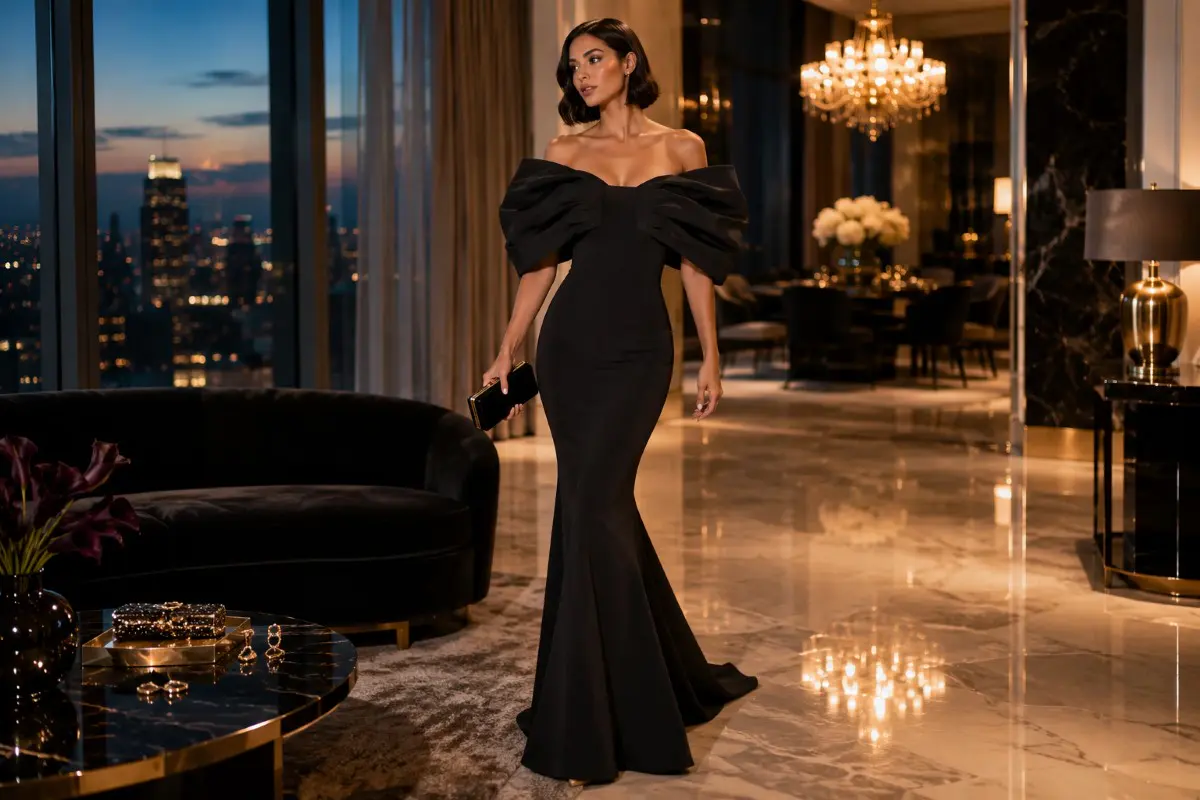
The invitation says the gala begins at seven. Your day, realistically, does not end until six. Somewhere between a full schedule of meetings, a daytime work event, or a formal lunch and the moment you walk into a candlelit ballroom, you are expected to transform, and going home to change is rarely an option. This is one of the most common modern dressing challenges, and it is also one of the most solvable. A successful day to evening formal look is not about a magic trick or a complete costume change. It is about understanding what genuinely separates daytime dressing from evening dressing, then planning a small, deliberate set of changes you can make in a few minutes. This guide walks through exactly how to do that, from choosing a foundation outfit that can travel between both worlds to the specific swaps that take you from desk to gala looking like you planned it all along.
What actually changes between day and evening
Before any practical advice, it helps to understand what truly shifts when day turns into night. Once you can name the differences, planning for them stops feeling like guesswork.
The first change is formality. A daytime professional setting, even a polished one, sits at a more restrained level than an evening gala. Evening events invite more drama, more shine, and more expressiveness, while a daytime look is expected to stay composed and understated. The second change is lighting, and it matters more than most people think. Daytime light is bright, clear, and honest, and it favors matte fabrics and subtle finishes. Evening light is low, warm, and soft, and it is the setting where embellishment, metallics, and rich color genuinely come alive. The third change is mood. A day look is built for efficiency and composure, while an evening look is built for celebration and presence.
There is also a fourth, quieter shift worth naming: how much attention the outfit is meant to draw. During the day, a professional look is designed to support you without becoming the focus, since the focus is your work. In the evening, the outfit is allowed to be a statement in its own right. That change in intent is subtle, but it explains why the same dress can feel correct in both settings only once the styling around it shifts to match.
Those three shifts, formality, lighting, and mood, are what your transformation needs to address. The encouraging news is that you do not need a different outfit to bridge them. You need one well-chosen foundation and a clear plan. Understanding the demands of the evening side of that equation is its own subject, and our guide on how to choose an evening dress for a night event covers it in depth.
Choosing a foundation that can travel from day to evening
The easiest transformation is the one you plan for when you choose the outfit. Some pieces are naturally built to move between a formal day and an evening event, and starting with one of them removes most of the effort later.
A sleek, simple silhouette is your anchor
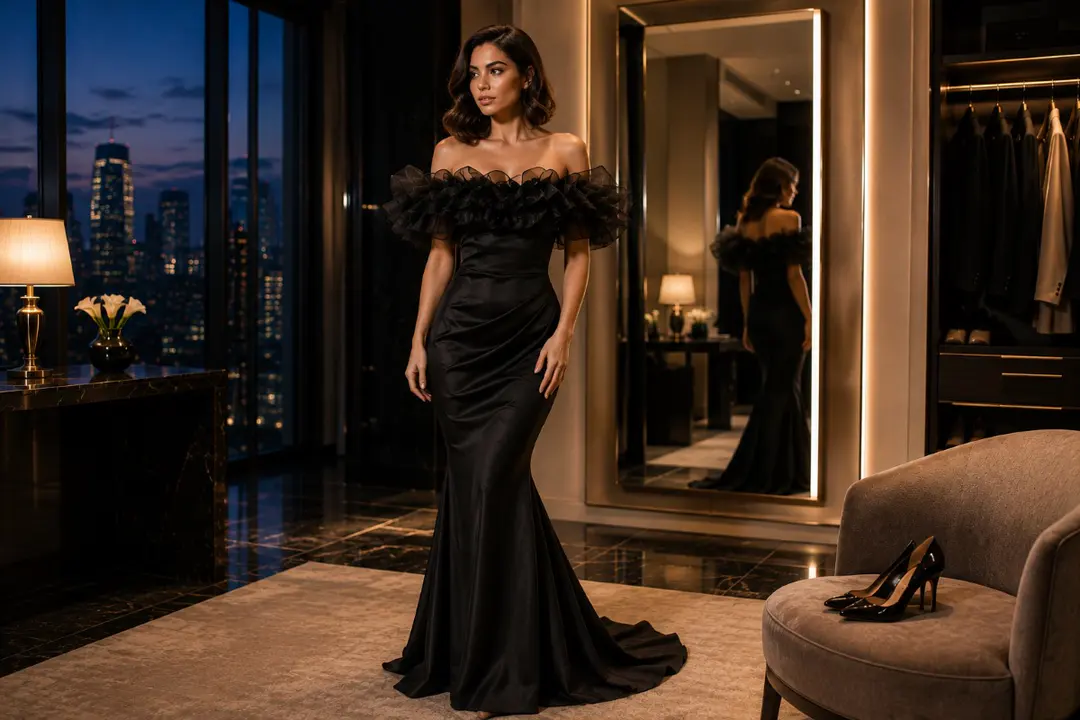
The most versatile foundation is a clean, well-cut dress without loud, fixed embellishment. A streamlined silhouette reads as appropriate and composed during the day, and it becomes a blank canvas that accessories can dress up for the evening. The styles among fitted straight formal dresses show this principle clearly, since a sleek column shape looks restrained on its own and dramatic once evening styling is added. A heavily embellished, unmistakably formal gown does the opposite. It cannot be toned down for daytime, so it locks you into one mode.
Consider length carefully
Length is a real factor in how versatile a piece is. A midi length is the strongest choice for a true day to evening look, because it is genuinely appropriate in both settings. It reads as polished and professional during the day and as elegant and current in the evening, and the styles among midi evening dresses are tailor-made for this kind of flexibility. A full floor-length gown, by contrast, can look out of place in a daytime professional setting, so it is best reserved for the evening from the start.
Black is the most reliable foundation of all
There is a reason black is the default for anyone who needs one outfit to do two jobs. A well-cut black dress is entirely appropriate during the day and effortlessly elegant at night, and it shifts mood through styling alone with no compromise in either direction. The range of black formal gowns is the most reliable place to find a true day-to-evening anchor. A clean dress in a deep, solid color works on the same principle.
The day to evening formal look: the transformation toolkit
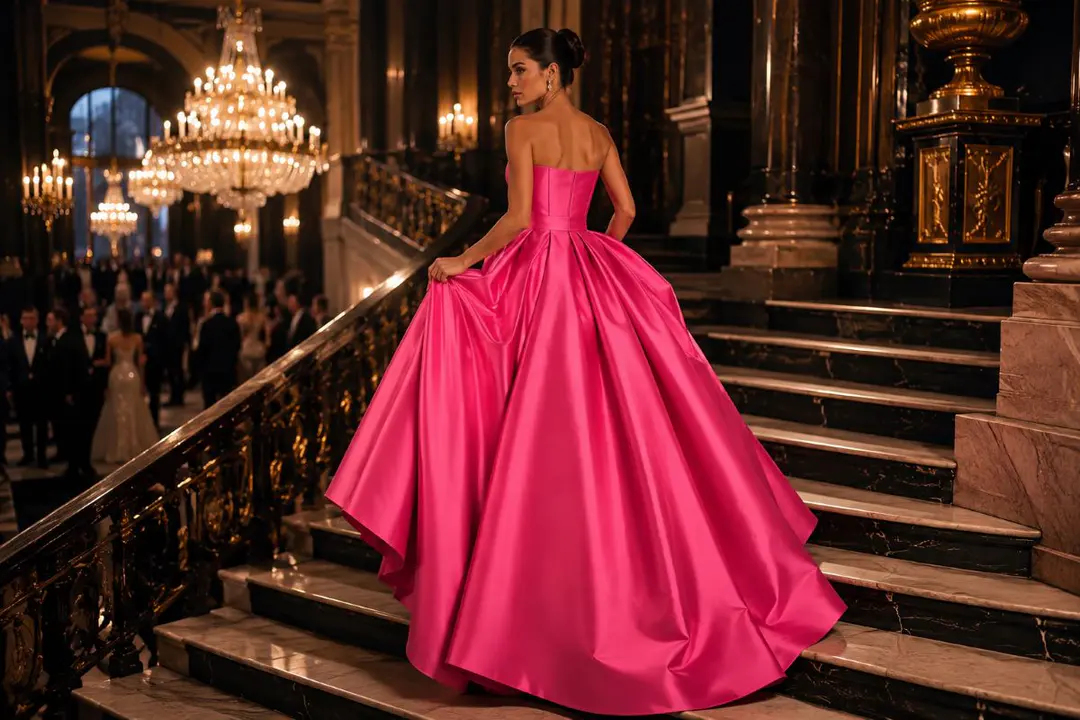
With the right foundation chosen, the actual transformation comes down to a small, planned set of changes. A complete day to evening formal look can be assembled from a kit that fits in a single bag, and each element does a specific job. The principle behind the toolkit is worth understanding: an outfit's formality lives less in the dress itself than in everything around it. The same dress reads as professional with a blazer, daytime jewelry, and a work bag, and reads as evening-ready with those three things changed. You are not disguising the dress. You are changing the signals that surround it, and signals are quick to swap.
- The layer change. This is the most powerful single move. During the day, a tailored blazer or a structured jacket over your dress reads as composed and professional. Removing it for the evening instantly reveals a more elegant, event-ready silhouette, often with a more open neckline. One removal, two distinct looks.
- The jewelry swap. Daytime calls for refined, understated pieces, a delicate pendant or simple studs. For the evening, switch to jewelry with real presence, a sparkling drop earring or a bold cuff that catches the low light. This single change carries an enormous amount of the mood shift.
- The shoe change. A practical daytime shoe, a block heel or a refined low heel, can be exchanged for a more glamorous evening heel. This also lets you walk comfortably through your day and save the dressier shoe for when it counts.
- The bag swap. A structured tote or work bag is replaced by a small, elegant clutch. Nothing signals evening faster than a refined clutch in place of a daytime bag.
- The beauty refresh. A few minutes is all it takes. A deeper or bolder lip, a touch more definition on the eyes, and your daytime face shifts into evening mode.
- The hair change. An optional but effective touch. Releasing pinned-back daytime hair, adding soft volume, or lifting it into an updo signals the change clearly.
The key is that none of these requires a private room or a long break. A blazer, a second set of jewelry, a clutch, evening shoes, and a lip color cover the entire transformation, and the whole change takes only a few minutes. For a fuller breakdown of which pieces suit which necklines and silhouettes, our guide on how to accessorize an evening dress goes deeper. The same logic of restyling one outfit across a long day is explored in our piece on day-to-night outfit transformations, which applies the principle to the wedding context.
Dressing for the shift in lighting
Lighting deserves its own attention, because it genuinely changes how your outfit reads, and a transformation that ignores it misses an easy win.
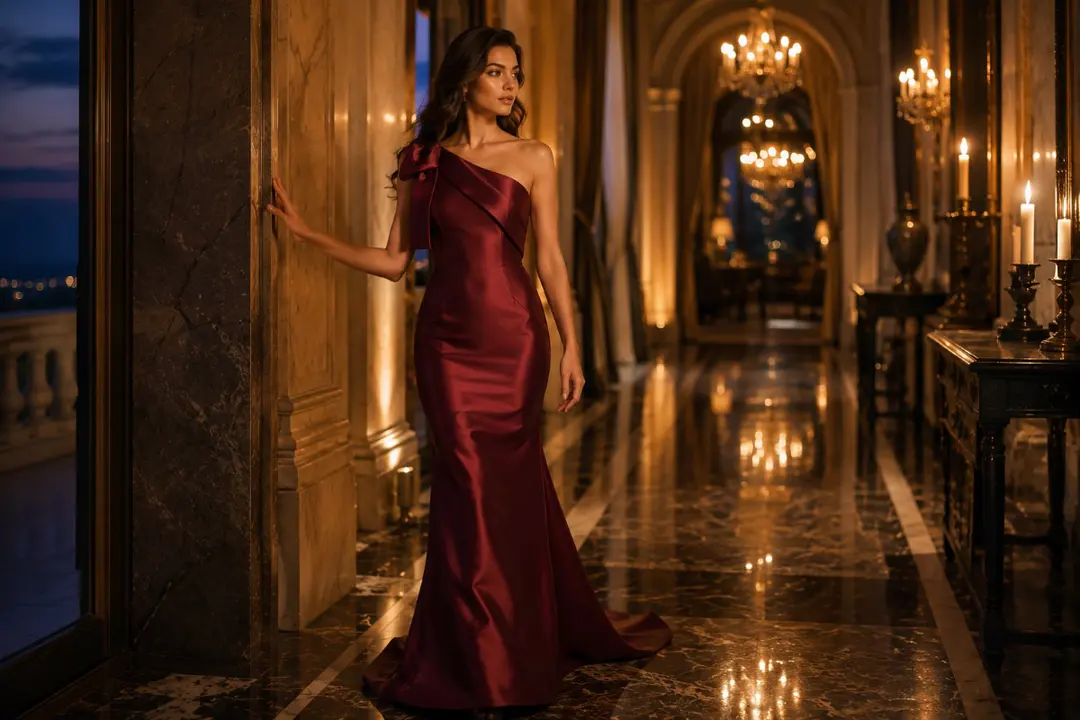
Bright daytime light is honest and revealing. It flatters matte and lightly textured fabrics, which look refined and intentional rather than harsh under it. A clean crepe or a soft satin reads beautifully during the day. Evening light is the opposite environment. It is low, warm, and forgiving, and it is the natural home of shine. Beadwork, metallic thread, and sequins that might look like too much in daylight come alive under candlelight and chandeliers, catching and reflecting the warm glow.
This is why a foundation dress with subtle, well-placed embellishment is such a smart choice for a day to evening look. A gown with refined beaded detail can read as quietly elegant during a daytime event and then become genuinely radiant once evening lighting takes over, all without changing the dress. The light does the work for you. The styles among beaded evening dresses show how embellishment can stay tasteful by day and turn luminous by night. If your foundation dress is plain, this is also where your evening accessories earn their place, since a sparkling earring or a metallic clutch introduces the shine the evening setting expects.
Adjusting the look for different evening events
Not every evening event asks for the same thing, and a smart transformation accounts for where you are actually heading after the day ends. The foundation dress stays the same, but the intensity of the evening styling shifts with the occasion.
- A formal gala or benefit. This is the most dressed-up end of the scale. Lean fully into the evening styling: the most striking jewelry, the dressiest shoes, and a confident lip. This is the setting where shine and drama are not only allowed but expected.
- A cocktail reception or evening party. A step softer than a gala. The transformation can be lighter, with refined rather than dramatic jewelry and a polished but not theatrical finish. The blazer might even stay on if it is an elegant one.
- A business dinner or networking event in the evening. Here the look should remain composed rather than glamorous. Keep the styling restrained, swap only the shoes and bag, and let the outfit stay closer to its daytime register, since the setting is professional even though the hour is late.
- An awards evening or red-carpet-style event. The most expressive setting of all. This is the one occasion where a longer length and bolder embellishment are genuinely appropriate, so if you know this is the destination, you can plan a more dramatic foundation from the start.
Reading the specific event correctly is part of dressing well. The same foundation dress can carry you to all of these, but matching the level of evening styling to the occasion is what makes the final look feel intentional rather than generic.
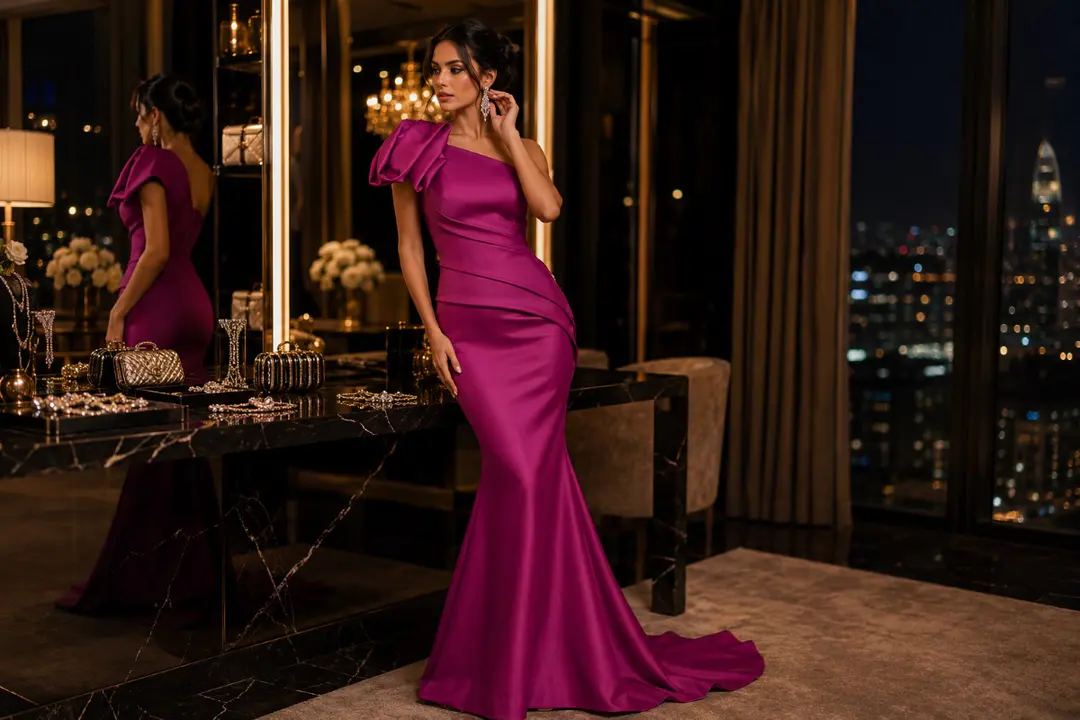
Putting the transformation together: a realistic timeline
Knowing the pieces is one thing. Knowing how the day actually flows is another. Here is how a desk to gala transition works in practice, as a simple sequence.
- In the morning, wear your foundation dress with its daytime layer in place, a blazer or structured jacket, refined daytime jewelry, your comfortable daytime shoes, and a natural daytime face. This is your professional, composed look.
- Pack your evening kit. Before you leave home, prepare a single bag with your statement jewelry, your clutch, your evening shoes, a lip color, and a few hairpins if you plan a hair change.
- Shortly before the event, find a few quiet minutes. Remove the blazer, switch the jewelry, change the shoes, swap the bag, refresh your lip, and adjust your hair. This is the entire transformation.
- Arrive at the gala in a look that reads as fully evening-appropriate, with no one aware that an hour earlier you were still at your desk.
The whole change is quick, portable, and low-stress. The reason it works is that you never actually changed your outfit. You changed its context. The foundation dress stayed constant, and a handful of deliberate swaps shifted everything around it from day into evening.
Common mistakes to avoid
A few recurring errors can undermine an otherwise smart transition. Knowing them in advance keeps the transformation smooth.
- Choosing a foundation that only works for one setting. A heavily embellished gown cannot be dressed down for the day, and a casual dress cannot be dressed up to gala level. The foundation must genuinely suit both.
- Forgetting to pack the evening kit. The plan only works if the jewelry, clutch, shoes, and lip color are actually with you. Pack the bag the night before.
- Over-relying on a floor-length gown. A full gown rarely suits a daytime professional setting, so it is not a true day-to-evening piece. A midi length is far more versatile.
- Planning a complicated change. If the transformation needs many steps or a long private session, it becomes a burden. Keep it to a layer and a few swaps.
- Ignoring comfort. You will be in this outfit for many hours across two very different settings. A foundation you can sit, move, and stand in comfortably is essential.
Frequently asked questions about day to evening dressing
How do I transform a day outfit into an evening look without going home?
Start with a versatile foundation dress, then make a few planned swaps: remove a daytime blazer, switch to statement jewelry, change into evening shoes, swap a work bag for a clutch, and refresh your lip color. The whole change takes only a few minutes and needs nothing more than a small prepared kit.
What kind of dress works best for a day to evening formal look?
A sleek, simply cut dress without loud fixed embellishment is the most versatile foundation. A midi length is ideal because it is appropriate in both settings, and a black or deep solid color is the most reliable choice, since it shifts mood through styling alone with no compromise in either direction.
What should I pack to take a look from desk to gala?
Pack a single evening kit with statement jewelry, an elegant clutch, dressier shoes, a deeper lip color, and a few hairpins if you plan a hair change. With your daytime blazer removed, these items handle the entire transformation in just a few minutes.
Why does lighting matter when dressing for an evening event?
Daytime light is bright and honest and favors matte fabrics, while evening light is low and warm and brings shine to life. Beadwork and metallics that might look like too much in daylight become radiant under candlelight and chandeliers, so a dress with subtle embellishment transforms naturally as the light changes.
Can I wear the same dress to a daytime event and a gala?
Yes, if you choose the dress for that purpose. A clean, well-cut dress in a versatile length and color acts as a foundation that styling can shift between both settings. The dress stays constant while layers and accessories change its formality and mood.
Should I change my shoes between the day and the evening?
It is a practical choice. Wearing a comfortable block or low heel through your day and changing into a more glamorous evening heel before the event keeps you comfortable while still looking polished at the gala. The shoe change is a simple, effective part of the transition.
A polished day to evening formal look is well within reach with a little forethought. When you are ready to find a versatile foundation that carries you gracefully from a formal day into an evening event, explore the full range of formal gowns through an authorized Jovani retailer.