
Choosing a Black Cocktail Dress by Finish, Not by Default

Black is what most people buy when they stop deciding. It goes with everything, it offends no dress code, and it will not be the wrong call. All of that is true, and none of it explains why one black cocktail dress turns heads while another disappears into the coat check. The difference is almost never the color. It is the finish, the way the surface of the fabric handles light, and it is the most useful lens for choosing black well. This guide walks through the five finishes that matter, where black belongs and where it deserves a second thought, and the styling moves that keep the most reliable color in the room from reading like a uniform.
One clarification first, because two different ideas share a color. A little black dress is a wardrobe concept: a simple, adaptable piece you restyle for years, and the little black dress edit is built around exactly that kind of versatility. A black cocktail dress is an event decision. It can be beaded, sheer paneled, velvet, architectural, anything the occasion invites, because it is chosen for a night rather than for a decade. Plenty of dresses qualify as both, but shopping with the right idea in mind changes what you pick up first.
Choosing a Black Cocktail Dress by Finish
Every black fabric answers the same question differently: what happens when light hits it? In a color with no hue to carry the interest, that answer is the whole personality of the dress. All five finishes below sit side by side in the range of black cocktail dresses, which makes comparing them in person easy.
Matte Crepe and Jersey
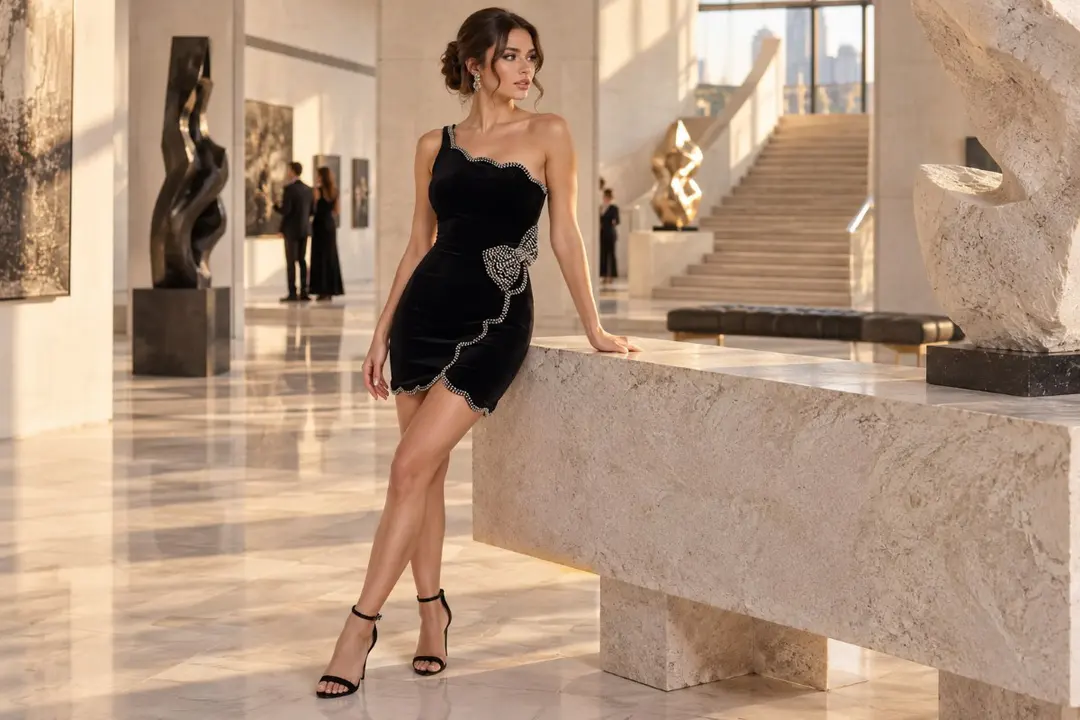
Matte black is the sleekest and the quietest version, all silhouette and no sparkle. It photographs as a clean shape and moves well, which makes it the pick for dinners, galleries, and rooms where you want to look composed rather than festive. Its one risk is familiar: cut too plainly, matte black drifts toward workwear. The fix lives in the design, an interesting neckline, a defined waist, an open back, or a hem with intent, so the dress reads evening before you add a single accessory.
Satin
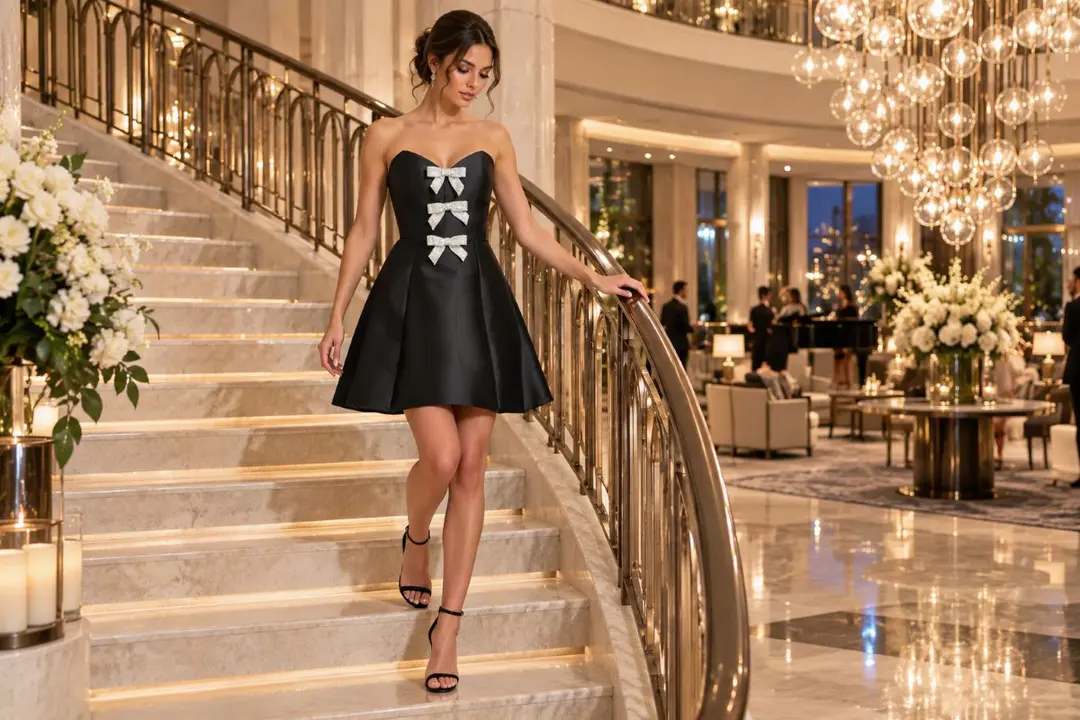
Black satin trades stillness for a moving line of light that follows every fold. It looks rich under warm bulbs and candles, and it turns a simple slip shape into something worth photographing. Choose a weight with body, since thin satin telegraphs every seam beneath it, and keep the cut simple; the highlight is already the detail.
Velvet
Velvet absorbs light instead of reflecting it, which makes black velvet the deepest black in the room, closer to ink than to fabric. It belongs to the cold months and to evening, and it pairs naturally with crystal or metallic accents that give the light somewhere to land. If you want the season's full playbook for the fabric, our guide to keeping velvet modern for winter events covers the cuts and colors that stay current.
Sequin and Beaded
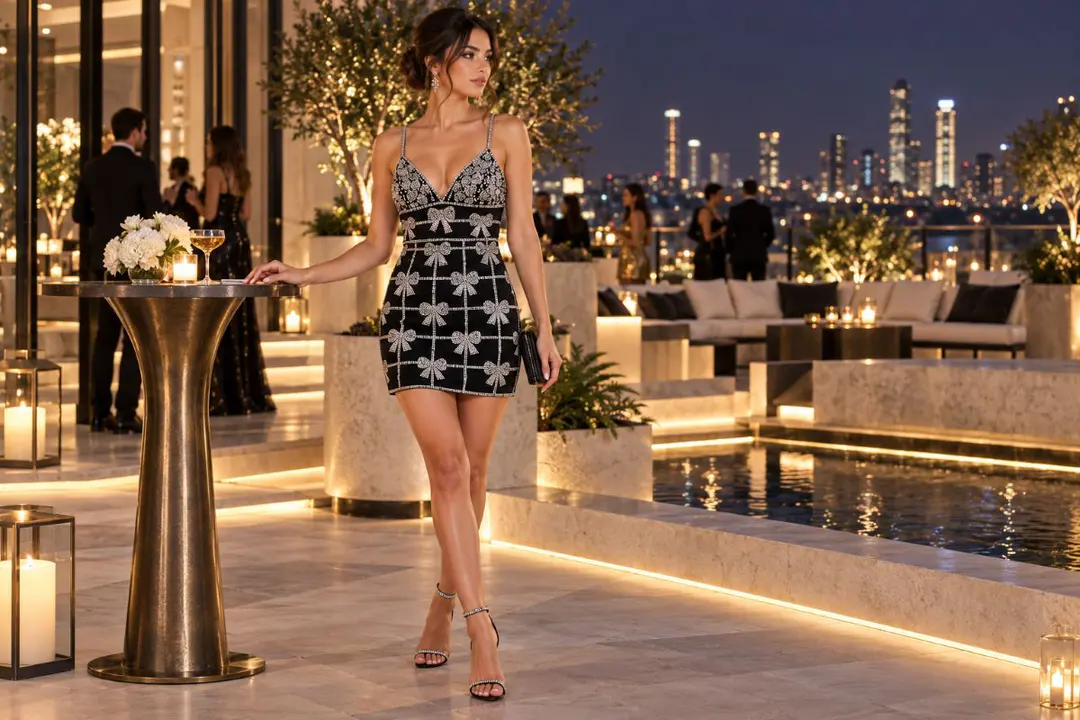
Embellished black is the insurance policy for dark rooms. Where matte black can sink into a dim reception, a sequined or beaded surface throws hundreds of small highlights and keeps the dress visible in every frame. Black sequins are also the most wearable version of sparkle, festive without the volume of silver or gold, and the range of sequin cocktail dresses shows how much ground that middle position covers, from scattered bead to full pavé.
Lace
Black lace adds pattern and depth without shine, and the lining decides its character. Over a matching black lining, the lace reads as texture, formal and contained. Over a nude lining, the pattern reads as openwork and the dress becomes noticeably more evening. Both are legitimate; just decide which one you are buying, because they do not style the same.
Where Black Works, and Where to Pause
Black clears almost every bar. It is at home at cocktail receptions, holiday parties, dinners, galas, and city events of every kind, and it is fully accepted at most modern evening weddings, with the small courtesy of a palette check when the couple's culture or family traditions treat the color differently. The genuine pauses are only two. The first is strict black tie, which is a length question rather than a color one: the code expects a gown, so black stays and the hem drops, which is where black evening dresses take over from cocktail length. The second is bright daytime, a garden party or a noon celebration, where a full block of black can sit heavier than the setting. It still works there; it just works better in a lighter fabric, an open neckline, or with a deliberate hit of color nearby.
If the invitation language itself is the puzzle, our overview of what cocktail attire expects of guests settles the definitions, and the safe zone for a black cocktail dress spans the entire middle of that range, from dressy casual up to formal.
Length, Cut, and the Room
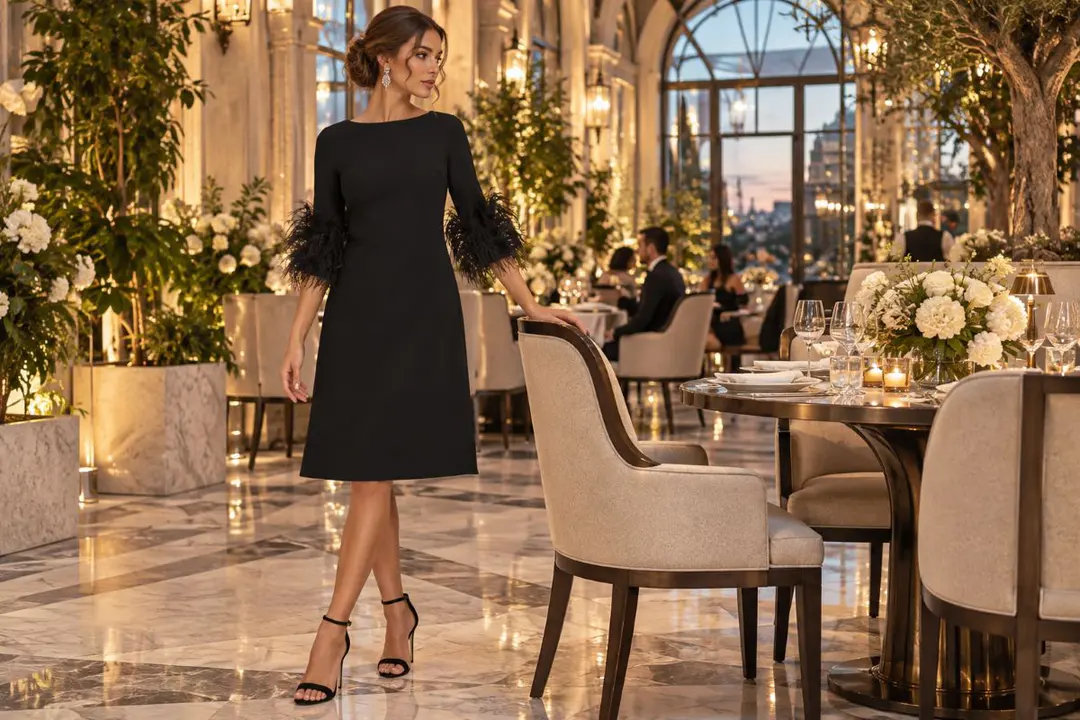
Cocktail length runs from mini to midi, and black handles the full span. A short black cocktail dress is the energetic end, right for parties, birthdays, and nights built around a dance floor, with the usual venue judgment about how short suits the crowd. Knee and midi lengths carry more formality and suit dinners, receptions, and dressier invitations. Silhouette follows the same event logic as any color, fitted for sleek occasions, flared for movement, structured for formal rooms, with one black-specific note: because the color hides seaming detail at a distance, shape matters more. A black dress is read by its outline, so buy the outline you want to project. When you want to compare those outlines side by side, the full range of short and cocktail dresses makes the differences easy to see in one place.
Styling Black So It Reads Intentional
The styling problem with black is never that it clashes. It is that it can go silent. The cure is one deliberate point of interest, chosen from three options: light, texture, or skin. Light means metal or shine, gold or silver jewelry, a metallic shoe, a beaded clutch, one of them, not all three. Texture means mixing surfaces, suede against satin, patent against crepe, velvet against smooth knit, so an all-dark outfit still has depth up close. Skin means the design itself does the work through an open back, bare shoulders, or a strong neckline that breaks up the block of color. Pick one lane and commit; a black dress styled with three competing ideas loses the composure that made black appealing in the first place.
Two small traps finish the list. The first is the accidental office read: a plain matte black dress with plain black pumps and a blazer is a work outfit no matter what the invitation says, so if the dress is minimal, let the shoes or jewelry say evening. The second is the unbroken column: black dress, black hose, black shoes, black bag, with nothing to catch the eye, photographs as one shadow. One warm or bright element, a lip, a metal, a skin tone shoe, restores the picture.
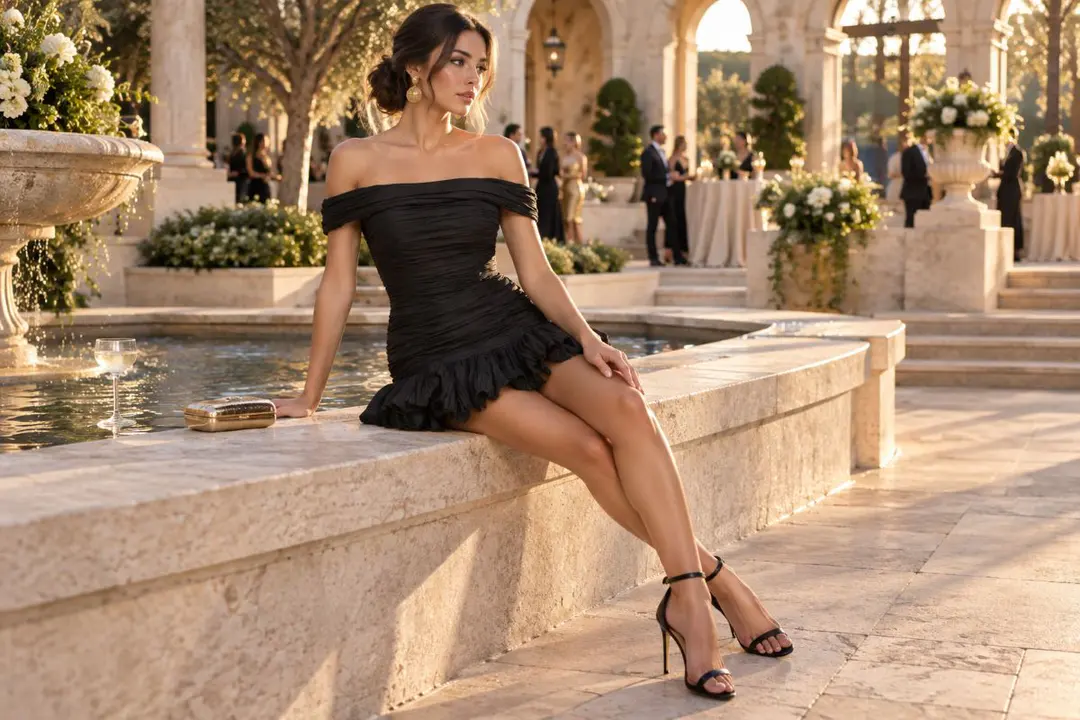
Black in Night Photos
Black behaves predictably on camera once you know its two habits. In dim rooms, matte black merges with dark backgrounds, so the dress loses its edges unless something defines them, shine at the surface, skin at the neckline, or a lighter wall behind you. Under direct flash, the opposite problem appears: flash flattens matte fabric into a shape with no detail, while satin, sequins, and beadwork give the light structure to hold onto. None of this argues against matte black, which looks superb in daylight and well-lit rooms. It argues for matching the finish to the lighting you actually expect from the night.
The Rewear Case, Honestly
Here is the practical argument that makes black the best value in a formal closet. A distinctive colored or printed dress is memorable, which is its gift and its limit; it gets logged by everyone who sees it. Black in a great cut resets between events. Style it with gold and a red lip for one party, silver and slicked hair for the next, and the same dress reads as two different decisions; our guide to styling a little black dress you already own maps a full month of those resets. Nobody keeps score on black. That means the cost of a well-made black cocktail dress spreads across more nights than any other purchase in the category, which is a better reason to buy quality than any trend will ever be.
Frequently Asked Questions
Can I wear a black cocktail dress for a wedding?
At evening and cocktail-code weddings, yes, black is a standard guest choice today. Offer the couple the courtesy of a quick palette check if their family or cultural traditions view the color differently, and save the very short hemlines for the reception crowd you know. For daytime and garden ceremonies, black still works best in a lighter fabric with some ease in it.
Is a long sleeve black cocktail dress right for winter events?
It is one of the strongest winter formulas there is. A long sleeve black cocktail dress in crepe, velvet, or lined lace handles cold venues, reads polished in photos, and needs nothing but one metallic accent to feel finished. Sheer black sleeves give the same line with less warmth for heated ballrooms.
How short is too short for a black cocktail dress?
There is no universal number, only a venue test: seated at a dinner table or on a cocktail stool, you should not be managing the hem. For dance-floor parties a true mini is fine; for dinners and dressier receptions, a hem within a hand's width of the knee keeps the night easy.
How do I keep a black dress from looking flat in photos?
Give the camera something to define the shape: a finish with shine or bead work, skin at the neckline or back, or simply position yourself against a lighter background. In very dim rooms, embellished black photographs dramatically better than matte black.
What jewelry goes with a black cocktail dress?
Everything, which is exactly why you should choose one idea. Gold warms black, silver and diamonds sharpen it, and pearls soften it. Pick a single metal family, size the piece to the dress, bolder against plain black, quieter against embellished black, and stop there.
The Default, Chosen on Purpose
A black cocktail dress earns its reputation only when the finish is chosen for the night: matte for composure, satin for a moving light, velvet for winter depth, sequins for dark rooms, lace for pattern. Decide that first, add one point of interest, and the safest color in formalwear becomes the most deliberate thing in the room. To see the finishes side by side under real lighting, try them on at an authorized Jovani retailer before the invitation gets close.