
Best Fabrics for Evening Gowns: How to Choose by Feel and Fit
The best fabrics for evening gowns depend on how you want the dress to move, hold its shape, and feel throughout the event. Choose chiffon for soft flow, satin for a polished surface, crepe for clean drape, or velvet for a richer texture. Fabric names help narrow the search, but a short fitting-room test makes the final decision more reliable.
The same silhouette can feel very different in two materials. Start with Evening Dresses that suit your event, then compare the fabric, lining, and construction rather than judging the front photograph alone.
What Are the Best Fabrics for an Evening Gown?
There is no single best fabric for every evening gown. Chiffon favors movement, satin shows light and tailoring, crepe follows smoother lines, and brocade keeps volume. Velvet offers a distinct surface, while lace and beadwork add texture. The right choice depends on the dress design and how you plan to wear it.
Begin by separating fiber from fabric construction. Silk is a fiber, while satin describes a weave that can use silk or other fibers. A fabric label alone also cannot tell you whether the gown is lined, stretchy, or comfortable against skin. Those details depend on the finished dress.
Lightweight Choices for Flowing Evening Gowns
Lightweight fabrics are useful when you want a skirt that follows your steps rather than holding a rigid outline. Their transparency and lining deserve special attention, especially under bright event lighting.
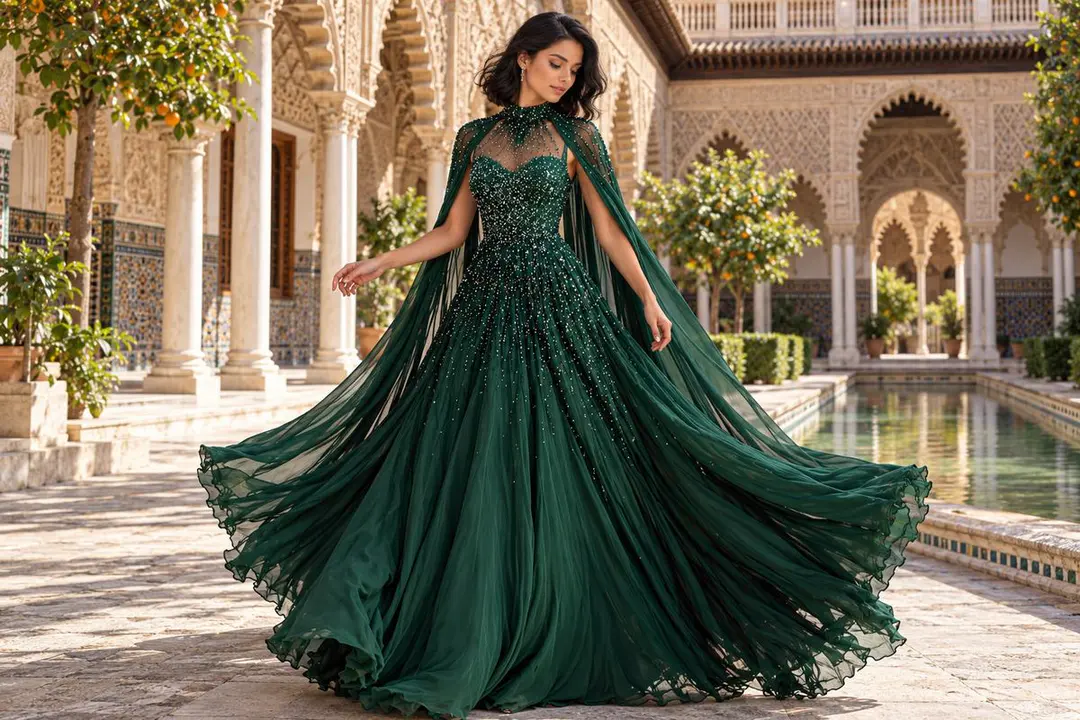
Chiffon for Soft Movement
Chiffon falls in gentle folds and can work well in an A-line skirt. Jovani style 49743 combines a flowing chiffon silhouette with a beaded high neckline and cape sleeves. The contrast demonstrates how a soft skirt can sit beneath a more detailed upper section.
Try a few steps and a full turn in chiffon. Watch whether the outer layer catches on the lining or bunches near your shoes. In A-Line Evening Dresses, compare hem movement and skirt fullness rather than assuming every layered gown feels equally light.
Silk and Lightweight Blends
Silk offers different results depending on its weave, thickness, and finish. A smooth silk satin behaves differently from a crisp silk organza, so the fiber name is not enough. Ask the retailer which material the dress uses, and inspect the care label before choosing it for travel or frequent wear.
Structured Fabrics for Defined Silhouettes
For a clean column, fitted mermaid, or full skirt, fabric weight matters as much as surface finish. Structured textiles hold seams and folds more firmly. Softer ones show the movement of the wearer.
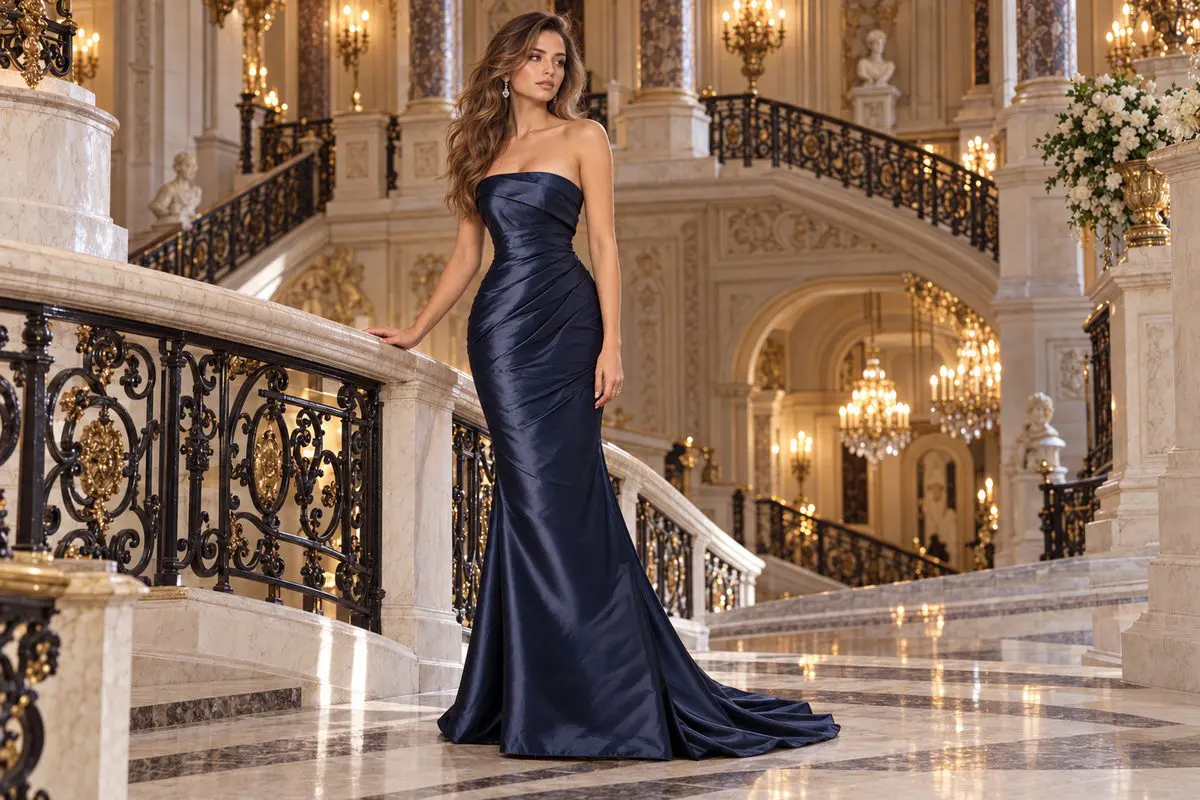
Satin for a Reflective, Tailored Finish
Satin can appear fluid or quite firm, depending on the version. Jovani style 49508 uses satin for a strapless mermaid gown with a draped waist and asymmetric peplum. The dress shows how a glossy material can emphasize both controlled folds and a defined outline.
During a fitting, face a window and then overhead lighting. Check the waist seam and any pulling across the hip. For more specific satin styling ideas, the Satin Evening Dresses Trend article covers that fabric in greater depth.
Crepe for Smooth Lines
Crepe is useful when you want a relatively understated surface with a fluid or tailored fall. Its appearance varies by weight and fiber content. Jovani style 51632 lists crepe alongside a fitted mermaid silhouette, long sleeves, and floral crystal detailing at the shoulder.
Sit and stand in a crepe gown, then look for horizontal pulling at the hips. Check that the lining allows a comfortable stride. A neat photograph cannot show whether the dress still feels balanced after several minutes of movement.
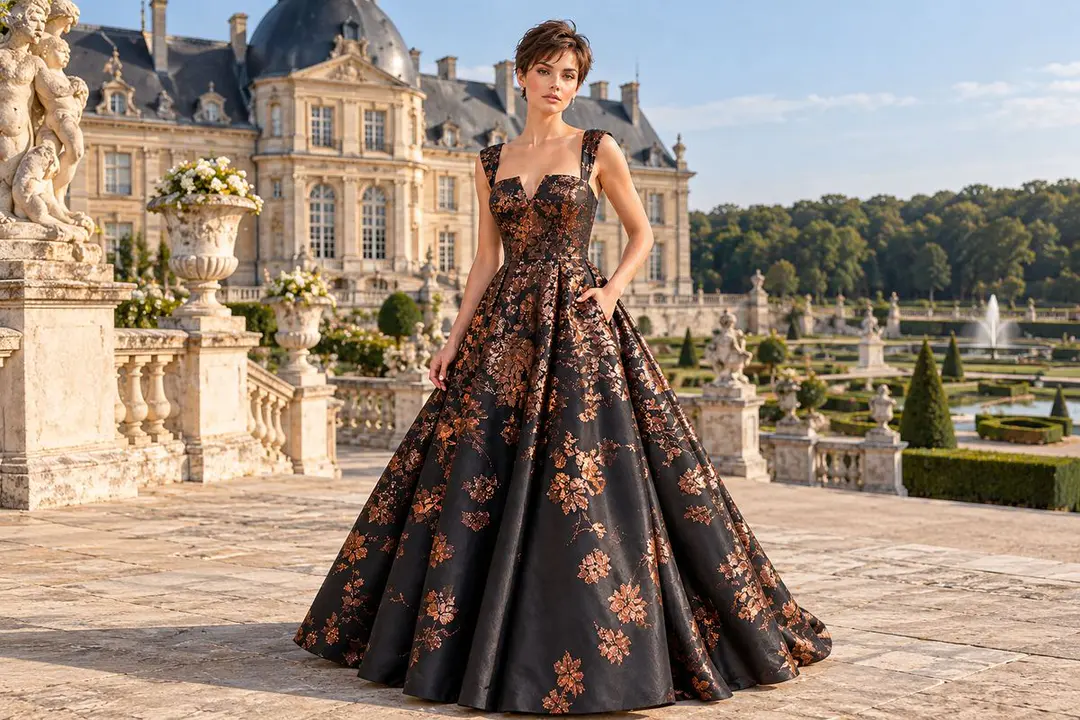
Brocade and Jacquard for Volume
Brocade and patterned jacquard often create more visual structure than a plain fluid fabric. Jovani style 47590 has a black and copper floral jacquard surface, corset bodice, and full ball-gown skirt. Its construction illustrates how surface texture and silhouette work together.
Consider Brocade Evening Dresses when a sculpted skirt suits your event. Compare the actual width of the skirt at doorways and on stairs, not just its formal appearance in photographs.
Texture and Embellishment That Change the Feel
Surface details affect more than appearance. A heavier overlay, dense beadwork, or raised texture can change how a gown moves and how comfortable it feels during a seated dinner.
Velvet for Depth and a Closer Drape
Velvet has a pile that changes appearance as light reaches it from different directions. Jovani style 51648 uses velvet with a sheath silhouette, draped waist, side slit, and train. This is a useful example of texture paired with a relatively close-fitting shape.
Browse Velvet Dresses to compare sleeve, slit, and skirt options. During a fitting, gently check the seat and waist for pressure lines. Ask about appropriate storage because flattened pile can be difficult to restore.

Lace, Tulle, and Beadwork
Lace and tulle often work as layers rather than the main support of a gown. Beadwork adds weight and can alter the way fabric hangs. Inspect the inside of the bodice for rough edges and check whether decoration rubs your arms.
Jovani offers Beaded Evening Dresses with several silhouettes. Compare how the embellished skirt feels after walking and sitting. A dress that is comfortable for a short photo session may not suit an evening of dancing.
How Can You Test an Evening Gown Fabric Before Buying?
Use a quick fitting-room checklist before committing to a fabric. Test the finished gown, not a loose swatch, because lining and construction change how a material behaves.
- Walk, turn, and take a longer step. Look for pulling, twisting, or layers that catch.
- Sit for a moment and stand again. Check whether the skirt or waist keeps bunching.
- View the gown in natural and indoor light. Note shine, transparency, and visible seams.
- Feel the lining at the neckline and underarms. Rough trim can become distracting over time.
- Ask what a tailor can adjust without changing the intended drape or decoration.
If two dresses fit equally well, choose the one that passes your movement test. The Evening Dress Style Guide provides broader help with formality and silhouette once your fabric preference is clear.
Match the Fabric to the Event and Venue
For a warm outdoor reception, a lined chiffon gown may feel more manageable than a dense, heavily decorated design. For an indoor gala, satin or textured jacquard can create a stronger outline. Venue temperature, walking distance, and seating matter more than the month alone.
A fitted skirt should have enough ease for stairs and dining, regardless of its fabric. If you want a comparison of popular surface finishes, read Chiffon vs Satin vs Velvet Evening Dresses. Keep that comparison separate from the actual movement test for the gown you try on.
Check Care, Alterations, and Repeat Wear
Before purchasing, read the care label and ask which changes a tailor can reasonably make. Delicate layers, heavy appliques, and fitted seams may limit alterations. Confirm cleaning recommendations rather than assuming all evening fabrics require the same treatment.
For a gown you hope to rewear, consider how the fabric looks after sitting and how easily you can store it. The best fabrics for evening gowns are the ones that support your intended silhouette without making the event uncomfortable.
To compare fabric and fit in person, use Jovani’s Find a Store page to locate an authorized retailer and ask which evening gowns are available to try on.
Frequently Asked Questions
Is satin or chiffon better for an evening gown?
Choose chiffon for softer skirt movement and satin for a smoother, more reflective finish. Compare the lining and finished silhouette before deciding.
Which evening dress fabric wrinkles the least?
Choose based on the specific garment rather than a fabric name alone. Weight, fiber blend, packing, and garment construction all affect creasing.
Can a chiffon evening gown be worn to a formal event?
Yes. A well-lined chiffon evening gown can suit a formal occasion when its length, bodice, and overall design match the dress code.
What should I check before buying a beaded evening gown?
Check the weight, lining, attachment of embellishments, and ease of movement. Sit and walk in the dress to see whether details scratch or pull.