
Two dresses belong in nearly every woman’s wardrobe, and they pull in opposite directions. The little black dress is the timeless icon of effortless sophistication, while the little white dress has become its fresh, modern counterpart, equally versatile but signaling something entirely different. Owning both is smart; knowing which to reach for on any given occasion is what separates a confident dresser from someone staring into a closet. The choice between a little white dress vs little black dress is rarely about which is more beautiful, since both can be stunning, but about which one fits the moment: the season, the event, the message you want to send, and the role you are playing. This guide breaks down exactly when each one wins, so you can build a wardrobe around both and always know which to wear when.
Two Wardrobe Staples, Two Different Signals
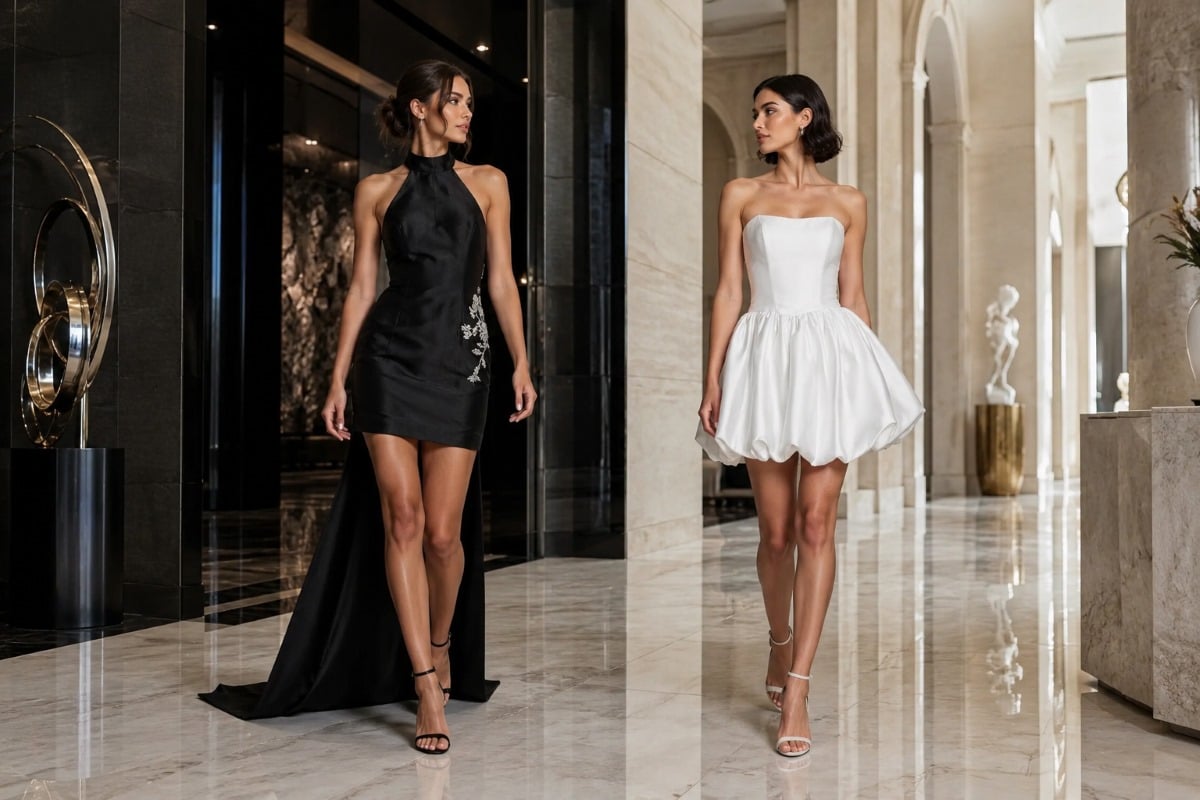
The little black dress and the little white dress are both wardrobe essentials, but they communicate almost opposite things, and understanding that difference is the foundation of choosing between them. They are not interchangeable; each carries its own associations and suits its own moments.
The little black dress signals timeless sophistication, versatility, and a certain understated confidence. Black is universally flattering, endlessly adaptable, and reads as polished in nearly any setting. It is the safe, chic, never-wrong choice, the dress you reach for when you want to look effortlessly put-together without making a statement about anything other than your good taste. The styles among little black dress options carry this quality, offering the kind of adaptable elegance that works from a business dinner to a cocktail party.
The little white dress signals freshness, modernity, and a more deliberate, of-the-moment style. White is crisp, clean, and reads as intentional and current in a way black does not. It carries celebratory and sometimes bridal associations, which makes it powerful in certain settings and inappropriate in others. A little white dress is a choice that gets noticed, where a little black dress blends in elegantly. The styles among little white dress options reflect this fresher, more deliberate register, suited to occasions where a crisp, modern statement is welcome.
The practical upshot is that the two dresses are tools for different jobs. The black dress is your reliable, versatile workhorse; the white dress is your fresh, celebratory statement. Knowing which job you are dressing for tells you which dress to reach for, and a well-built wardrobe includes both for exactly that reason.
When the Little Black Dress Wins
The little black dress is the more universally versatile of the two, and there are specific occasions and circumstances where it is clearly the better choice. Reaching for black in these moments is reliably correct.

Formal and Professional Settings
For business events, professional dinners, work-related functions, and any setting where understated polish matters more than making a statement, the little black dress is ideal. Black reads as serious, competent, and appropriately restrained, where white can feel too attention-grabbing for a professional context. When the goal is to look polished without standing out, black wins. The styles among contemporary gowns include refined black options that suit a professional or business-social setting beautifully.
Evening and Cocktail Events
For most evening events and cocktail parties, the little black dress is the timeless choice, endlessly adaptable through accessories and always appropriate. Black is the foundation of cocktail dressing for good reason, it photographs well under evening lighting, suits nearly every venue, and can be dressed up or down with jewelry and shoes. When you are unsure what an evening event calls for, a black dress is the safest elegant default.

When You Want to Blend In Elegantly
At an event where you are a guest among many, where you want to look lovely without drawing focus, or where someone else is meant to be the center of attention, black is the considerate, elegant choice. Black lets you look polished while deferring the spotlight, which is exactly right when the occasion belongs to someone else.
Cooler Seasons
Black reads as seasonally appropriate in fall and winter, when its depth and richness suit the cooler months. While black is genuinely year-round, it feels especially natural in autumn and winter, where a crisp white dress can read as out of season. For cold-weather events, black is the more naturally seasonal of the two.
When the Little White Dress Wins
The little white dress has its own set of occasions where it clearly outshines black, generally moments that call for freshness, celebration, or a deliberate modern statement. Reaching for white in these settings is what makes it feel current and right.

Celebratory Personal Milestones
For occasions where you are the one being celebrated, a graduation, a milestone birthday, a bridal shower or bachelorette as the bride-to-be, an engagement celebration, the little white dress signals that this is your moment. White’s celebratory and bridal associations work in your favor here, marking you as the person at the center of the occasion. The styles among graduation dresses show how a white dress becomes the natural choice for a personal milestone, where being noticed is exactly the point.
Spring and Summer Events
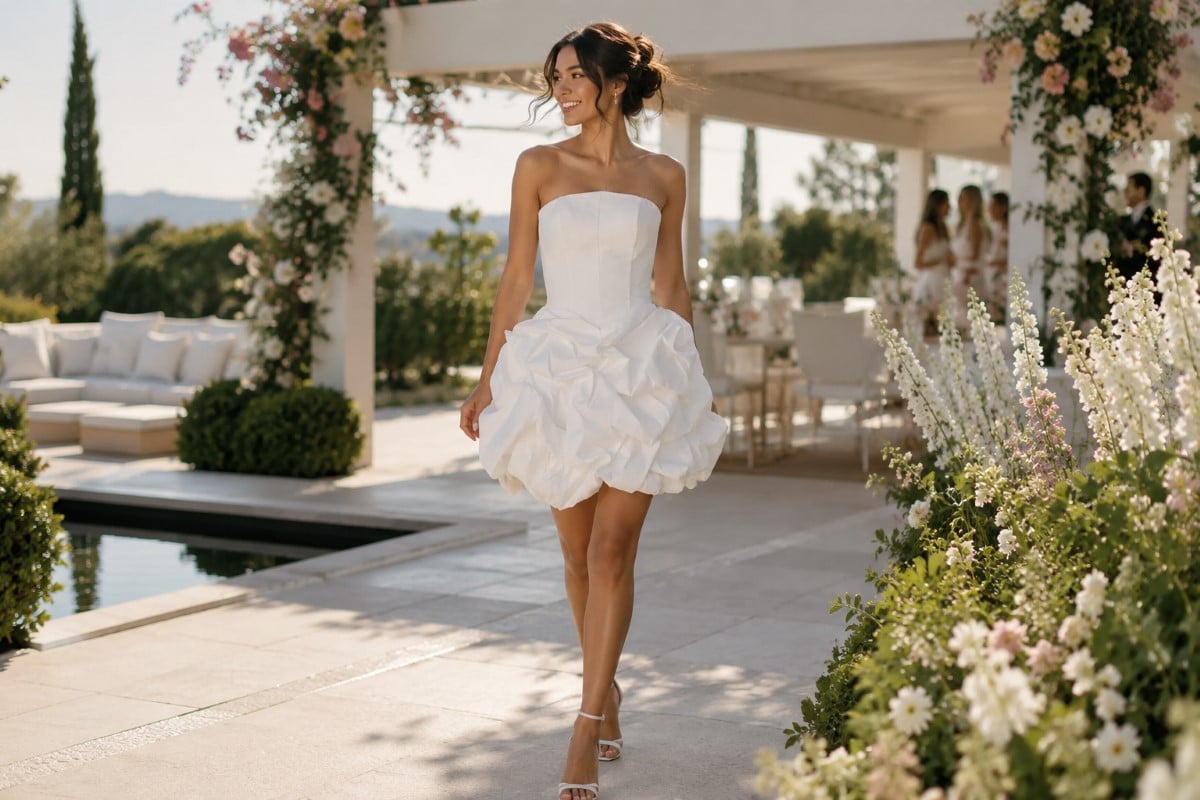
White reads as fresh and seasonally perfect in spring and summer, when its crispness suits the warmer, brighter months. A little white dress at a summer garden party, a daytime celebration, or a warm-weather event feels exactly right, where black can read as heavy. For the bright seasons, white is the more naturally seasonal choice.
When You Want a Fresh, Modern Statement
When you want to look current, crisp, and deliberately stylish rather than safely classic, the little white dress makes that statement. White reads as intentional and of-the-moment in a way black, for all its elegance, does not. If the goal is to look fresh and modern rather than timelessly understated, white wins.
Warm-Weather Destinations and Resort Settings
For vacations, resort events, destination celebrations, and warm-weather travel, white is the quintessential choice, fresh, bright, and perfectly suited to sun and sand. A little white dress is practically the uniform of resort dressing, where it reads as effortlessly chic against a warm-weather backdrop.

The Occasions Where One Is Clearly Right
Some specific situations have a clear answer, and knowing them prevents the most common mistakes. These are the moments where the choice is not a matter of taste but of appropriateness.
Wear white, not black, when you are the one being celebrated and want to mark the moment, at your own graduation, milestone birthday, or bridal pre-wedding events as the bride. White signals your central role. Conversely, avoid white and choose black when attending someone else’s wedding as a guest, since white can read as competing with the bride, making black the considerate choice. The principles of dressing appropriately as a guest are covered in this guide on wedding guest dress etiquette, which explains exactly why white is reserved for the bride at a wedding.
Wear black for professional and business-social settings where understated competence matters, and for cooler-season evening events where black’s depth suits the season. Wear white for spring and summer celebrations, resort and destination events, and any warm-weather occasion where freshness is the goal. And when you genuinely cannot decide and the occasion has no specific rule, black is the safer universal default, since it is appropriate in more contexts, while white is the more situational choice that shines in its right moments.
How Accessories Transform Each Dress
Both the little black dress and the little white dress are designed to be transformed by accessories, and understanding how each responds to styling extends their versatility enormously. The same dress can read very differently depending on how it is accessorized.
The little black dress is the ultimate blank canvas, accepting nearly any accessory color and style. Bold jewelry, colorful accessories, metallic shoes, statement pieces, all read beautifully against black, which absorbs and frames them. This is part of why black is so versatile: a single black dress can become many different looks through accessories alone. Silver, gold, jewel tones, brights, and neutrals all work against black, giving you enormous range.
The little white dress is a different kind of canvas, one that reads as crisp and clean and pairs especially beautifully with certain palettes. Metallics, especially gold, look striking against white, as do natural tones, soft pastels, and bold single-color accents. White can feel slightly more deliberate to accessorize than black, since some combinations read as more intentional, but it offers a fresh, modern backdrop that black cannot. The broader principles of coordinating accessories with any dress are covered in this guide on matching jewelry metals with dresses, which helps you style either dress to its best effect.
Silhouette and Fabric: Choosing Each Dress Well
Beyond color and occasion, the silhouette and fabric of each dress determine how versatile and flattering it will be, and the considerations differ slightly between black and white. Choosing each one well is what lets it earn its place through repeated wear.
For the little black dress, a classic, clean silhouette maximizes versatility, since the goal is a dress that adapts to countless settings through accessories. A flattering sheath, a fit-and-flare, or a simple A-line in a quality fabric reads as timeless and dresses up or down easily. Because black hides fabric flaws well and reads as polished even in simpler fabrics, the black dress is forgiving, but a quality fabric still elevates it from ordinary to elegant.
For the little white dress, fabric quality matters even more, because white is less forgiving and shows construction, fit, and fabric quality clearly. A white dress needs a fabric substantial enough not to read as cheap or become see-through, and a clean, well-fitted cut, since white emphasizes the silhouette. The shade of white matters too: bright white reads as crisp and modern and flatters cool and neutral skin tones, while ivory and off-white are warmer and more flattering on warm complexions. When choosing between a little white dress vs little black dress for a specific event, factoring in how each shade suits your own coloring is part of the decision. The styles among wedding guest gowns show the range of silhouettes that work for both colors across different occasions and body types.

Building a Wardrobe Around Both
The smartest approach is not choosing between the two dresses but owning both and understanding when each serves you, since together they cover an enormous range of occasions. They are complementary rather than competing wardrobe pieces. Knowing when to deploy a little white dress vs little black dress turns two simple pieces into a wardrobe that always has the right answer ready.
With both a little black dress and a little white dress in your wardrobe, you are prepared for nearly any occasion: the black for professional settings, cooler-season events, and moments where understated elegance is the goal; the white for celebrations where you are the focus, warm-weather events, and moments calling for a fresh, modern statement. Each handles the occasions the other cannot, which is exactly why both belong in a complete wardrobe.
When investing in each, choose quality and a flattering, versatile silhouette, since both dresses earn their place through repeated wear across many occasions. A well-made dress in a flattering cut, in either color, will serve you for years and adapt to countless settings through accessories. The styles among cocktail outfits include both black and white options built for exactly this kind of versatile, repeated wear, the foundation of a wardrobe that always has the right dress ready.
Frequently Asked Questions About the Little White and Little Black Dress
Should I wear a little white dress or a little black dress?
It depends on the occasion. Choose a little black dress for professional settings, cooler-season evening events, and moments where understated elegance is the goal or where you want to blend in elegantly. Choose a little white dress for celebrations where you are the focus, spring and summer events, resort settings, and moments calling for a fresh, modern statement. When unsure with no specific rule, black is the safer universal default.
When should you not wear a little white dress?
Avoid a little white dress when attending someone else’s wedding as a guest, since white can read as competing with the bride. White is also less suited to professional settings, where it can feel too attention-grabbing, and to cooler seasons, where it can read as out of season. White shines when you are being celebrated or at warm-weather events, not when deferring the spotlight to someone else.
Is a little black dress more versatile than a little white dress?
Yes, the little black dress is the more universally versatile of the two, appropriate in more contexts and easier to accessorize, since it accepts nearly any accessory color and style. The little white dress is more situational, shining in celebratory, warm-weather, and modern-statement moments but less suited to professional or somber settings. Both belong in a wardrobe, but black covers more occasions.
What season is best for a little white dress?
Spring and summer, when white’s crispness reads as fresh and seasonally perfect for warmer, brighter months and warm-weather events. A little white dress suits garden parties, daytime celebrations, and resort settings beautifully. Black, by contrast, feels especially natural in fall and winter, though it is genuinely year-round while white is more seasonal.
Can a little white dress be worn to formal events?
Yes, a little white dress can absolutely be formal, depending on its fabric, cut, and styling, particularly for celebratory occasions where you are the focus. For professional formal settings, black is often the safer choice, but for a celebratory formal event like a milestone birthday, an elegant white dress makes a fresh, current statement. The occasion, not the color, determines formality.
Do I need both a little black dress and a little white dress?
If you want to be prepared for nearly any occasion, yes, since the two are complementary rather than competing. The black handles professional settings, cooler-season events, and understated-elegance moments, while the white handles celebrations where you are the focus, warm-weather events, and modern statements. Together they cover an enormous range, which is why both belong in a complete wardrobe.
The Right Dress for Every Moment
Choosing between a little white dress vs little black dress is not about which is better but about which fits the moment, and a confident dresser knows the difference instinctively. Reach for the little black dress when you want timeless, understated elegance, in professional settings, at cooler-season evenings, and whenever blending in beautifully is the goal. Reach for the little white dress when you want a fresh, modern, celebratory statement, at your own milestones, in spring and summer, and at warm-weather events where being noticed is the point. Better still, own both, since together they prepare you for nearly any occasion life presents. Jovani has spent more than forty years designing both staples in flattering, versatile silhouettes, so the right dress for every moment is always within reach.