
Sheer and illusion fabrics are some of the most beautiful things in formalwear. They let beading appear to float on bare skin, turn a neckline into something soft and weightless, and make a back look daringly open while still feeling secure. They are also the fabrics that cause the most quiet worry in the fitting room, because the first question every woman asks is the practical one: what do I wear under this. The good news is that the answer is far simpler and far more reassuring than most people expect, once you understand how these fabrics actually work. Knowing what to wear under a sheer dress is mostly a matter of identifying what kind of sheer you are dealing with, because a true sheer panel and an illusion mesh panel are not the same thing and they do not call for the same solution. This guide walks through the difference, explains when the gown already has you covered, and gives clear, honest advice on the few situations where you do need to plan ahead.
First, understand what you are actually wearing
The biggest source of confusion is that the words sheer, illusion, and mesh get used loosely, as if they all mean the same see-through fabric. They do not, and telling them apart is the single most useful thing you can do.
Illusion mesh: coverage that looks like skin
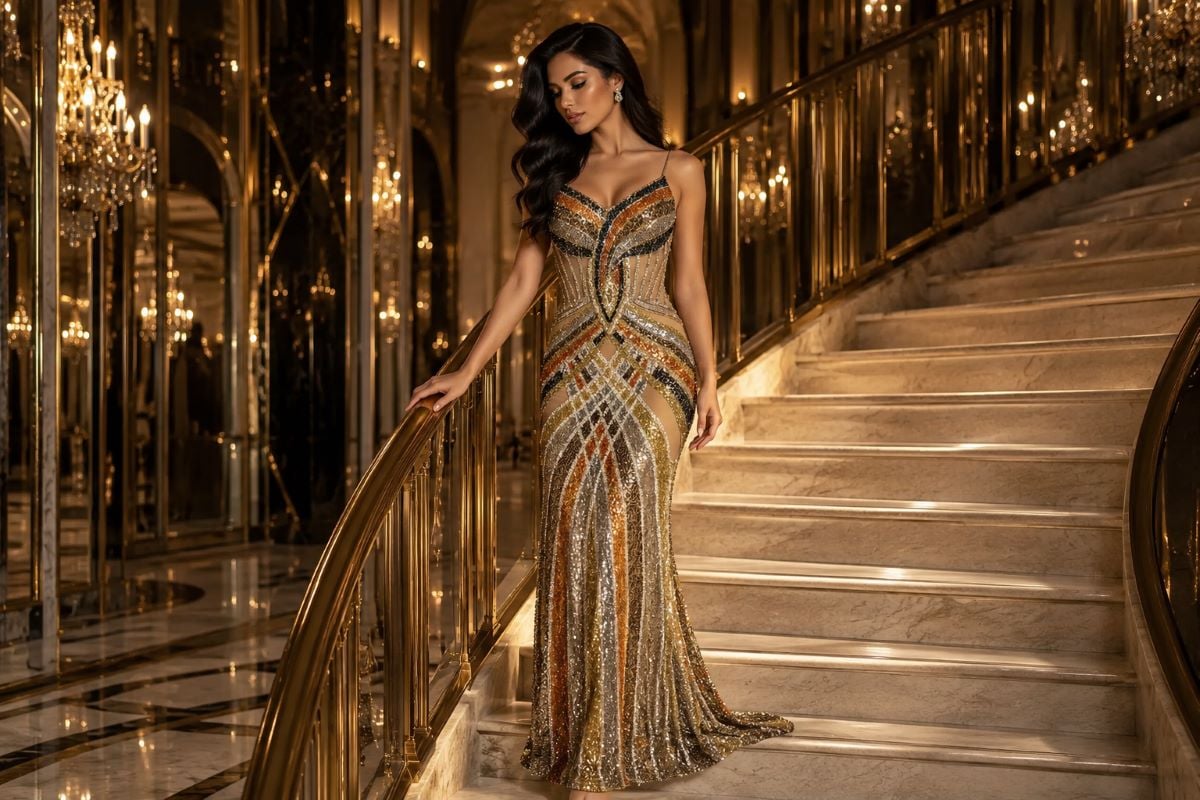
Illusion is a fine mesh in a nude or skin-toned shade. From a short distance it appears nearly invisible, so embellishments like beading and lace look suspended directly on the body. The important point is that illusion mesh is a real, functional fabric. It provides genuine coverage and, in a well-made gown, real structural support. An illusion neckline, an illusion back, or an illusion sleeve gives the appearance of bare skin while the mesh underneath holds everything in place. This is exactly why illusion is so widely used in formalwear, and the range of illusion prom dresses shows how it lets detail float without exposing the wearer. High-grade illusion mesh is durable enough to act as a supportive second skin, securing the shoulders and side seams and anchoring hidden bra cups, which is covered in depth in our guide to how illusion mesh provides support.
True sheer: transparency you can see through
True sheer fabrics, such as fine tulle, chiffon, organza, and unlined lace, are genuinely transparent. Unlike skin-toned illusion mesh, a true sheer panel shows whatever is behind it clearly. These fabrics are used for soft skirts, overlays, sleeves, and sometimes panels, and they create a light, romantic effect. When a part of a dress is truly sheer, that is the part you may need to think about, since it will reveal what is underneath.

The practical takeaway
Before you worry about what to wear underneath anything, look at the dress closely and ask one question of each see-through area: is this skin-toned illusion mesh that provides coverage, or is it a true sheer fabric you can see through. The honest answer is that most see-through areas on a quality formal gown are illusion mesh, which means they cover you already. Only the genuinely transparent sections need a plan. Our overview of a guide to evening dress fabrics can help you recognize each one.
When the gown already has you covered
Here is the most reassuring part of this whole subject, and it is something many shoppers never get told. A well-constructed formal gown is built with its own underpinnings, and for a large share of sheer and illusion styles, you do not need to add anything at all.
Quality formalwear is engineered, not just sewn. A well-made gown with sheer or illusion elements is fully lined in every area where coverage is needed, with the transparent fabric used deliberately only where the design intends a skin effect. The bodice typically has built-in cups, so a separate bra is unnecessary and would only disrupt the line. The structure of the dress, including internal boning and a smooth lining, does the supporting and smoothing on its own. Jovani builds its gowns this way, with layered construction that maintains support and modesty especially in sheer bodices, drawing on more than forty years of formalwear design from its New York studio.
What this means in practice is simple. When you try on a sheer or illusion gown, look in the mirror and see what the dress already does. Very often the honest answer is that the illusion mesh covers you, the lining covers you, and the built-in cups support you, so the only thing to add is smooth underwear for the lined lower half. Do not assume a sheer dress is a problem to solve. Assume the dress is well made, then check, and only plan for the genuinely transparent areas.
What to wear under the genuinely sheer areas
For the parts of a dress that are truly see-through rather than illusion mesh, a few clear principles cover almost every situation. The aim is always the same: underpinnings that stay invisible.
- Match your skin tone, not the dress. The single most important rule. Underpinnings that match your own skin tone disappear under a sheer fabric. Underpinnings that match the dress color, or that are simply white, will show. Nude is not one color, so choose the nude that genuinely matches your skin.
- Choose seamless styles. Seams, lace edges, and decorative trims print through sheer fabric and catch the eye. A smooth, seamless edge stays hidden. This applies to underwear and to any shaping layer.
- For a sheer skirt or sheer lower panels. If a skirt has truly transparent sections, high-cut seamless briefs in your skin tone are the reliable choice. Where a sheer panel sits high on the leg, make sure the underwear sits above or below the panel, not crossing it.
- For a sheer or illusion bodice without built-in cups. Most quality gowns include cups, but if a particular dress does not, an adhesive or stick-on bra in your skin tone gives support without straps or bands showing. Confirm this at the fitting rather than discovering it later.
- For a fuller shaping effect. If you want light shaping under a lined section of the dress, a seamless shaping piece in your skin tone works, as long as it ends where the lining ends and does not extend into a truly sheer area.
Keep a small roll of fashion tape on hand as well. For a sheer panel that needs to stay exactly in place, or an edge that should lie flat against the skin, a discreet piece of double-sided fashion tape solves it quietly. This is especially useful on illusion necklines and at the edges of sheer panels.
The mistakes that show up in photographs
Most sheer-dress regrets are not about the dress at all. They are about a few avoidable errors with what goes underneath, and several of them only become obvious in photos.
The most common mistake is wearing white or light underwear under any see-through fabric. White does not read as invisible, it reads as white, and under a camera flash it can glow brightly against the dress. Always choose your skin tone instead. The second mistake is visible seams and lace, which look fine to the eye up close but print clearly through sheer fabric in pictures. The third is the wrong nude, since underwear a few shades off from your actual skin tone is visible under a true sheer panel. The fourth is adding shapewear that extends past the lining into a transparent area, where its edge suddenly becomes visible. And the fifth is wearing a standard bra with visible straps or a band under an illusion bodice that was designed to be worn with built-in cups alone. Check all of this in good light, and ideally in a photograph with flash, before the event rather than after.
Choosing a sheer style you will feel comfortable in
Comfort and confidence matter as much as construction, and a little honesty at the shopping stage prevents second-guessing on the night.
Sheer and illusion dresses range widely in how much skin they appear to show. A dress with subtle illusion at the neckline or a sheer sleeve is a gentle, widely comfortable choice. A dress with large truly sheer panels makes a bolder statement. Neither is better, but they suit different wearers and different events, so choose the level you will feel genuinely at ease in. If you love the romance of sheer fabric but want more coverage, lace over a solid lining gives you intricate texture with no transparency, which is why lace evening dresses are such a popular middle ground. For those who want the look of detail with full coverage, the styles among modest formal dresses use illusion netting precisely so the dress appears to show skin while the mesh provides actual coverage. The styles in the sheer prom dresses range, meanwhile, run from a whisper of transparency to fully embroidered illusion gowns. Whatever you choose, our guide on balancing elegance and allure is a useful read on wearing a revealing fabric with poise. Think about the event too, since a dramatically sheer dress suits a gala or a party far better than a conservative or religious setting.
Frequently asked questions about sheer and illusion dresses
Do I need to wear anything special under an illusion dress?
Often not. Illusion is a skin-toned mesh that provides real coverage, and quality gowns are fully lined where needed with built-in cups in the bodice. For many illusion dresses, smooth skin-toned underwear for the lined lower half is all you need. Always check the specific dress in the mirror to see what it already covers.
What is the difference between illusion mesh and a true sheer fabric?
Illusion mesh is a fine, skin-toned fabric that looks nearly invisible but actually provides coverage and support. A true sheer fabric, such as tulle, chiffon, or unlined lace, is genuinely transparent and shows whatever is behind it. Illusion covers you, while a true sheer area is the part you may need to plan for.
What color underwear should I wear under a sheer dress?
Match your own skin tone, not the dress. Underpinnings in your skin tone disappear under sheer fabric, while white or dress-colored underwear will show, especially under a camera flash. Since nude varies, choose the shade that genuinely matches your skin, and pick seamless styles so no edges print through.
Can I wear a regular bra under an illusion or sheer bodice?
Usually not. Most quality formal gowns have built-in cups, and a standard bra with visible straps or a band would disrupt the design. If a particular dress has no built-in support, a skin-toned adhesive bra is the better choice. Confirm what the dress includes during your fitting.
How do I keep a sheer panel in place?
Use a small piece of double-sided fashion tape to hold a sheer panel or an illusion edge flat against the skin. This is especially helpful at illusion necklines and along the borders of sheer panels, where you want the fabric to stay exactly where it was designed to sit.
Are sheer dresses appropriate for formal events?
Yes. Because illusion mesh provides genuine coverage, sheer and illusion gowns are appropriate across many formal events, from galas to weddings as a guest. The level of transparency should match the occasion, so a subtle illusion neckline suits almost anywhere, while a dramatically sheer design is best for less conservative settings.
When you are ready to find a sheer or illusion style with the construction to back it up, explore the formal dresses collection through an authorized Jovani retailer.