
The Tuxedo Dress for Women: Sharp Tailoring in a Single Garment
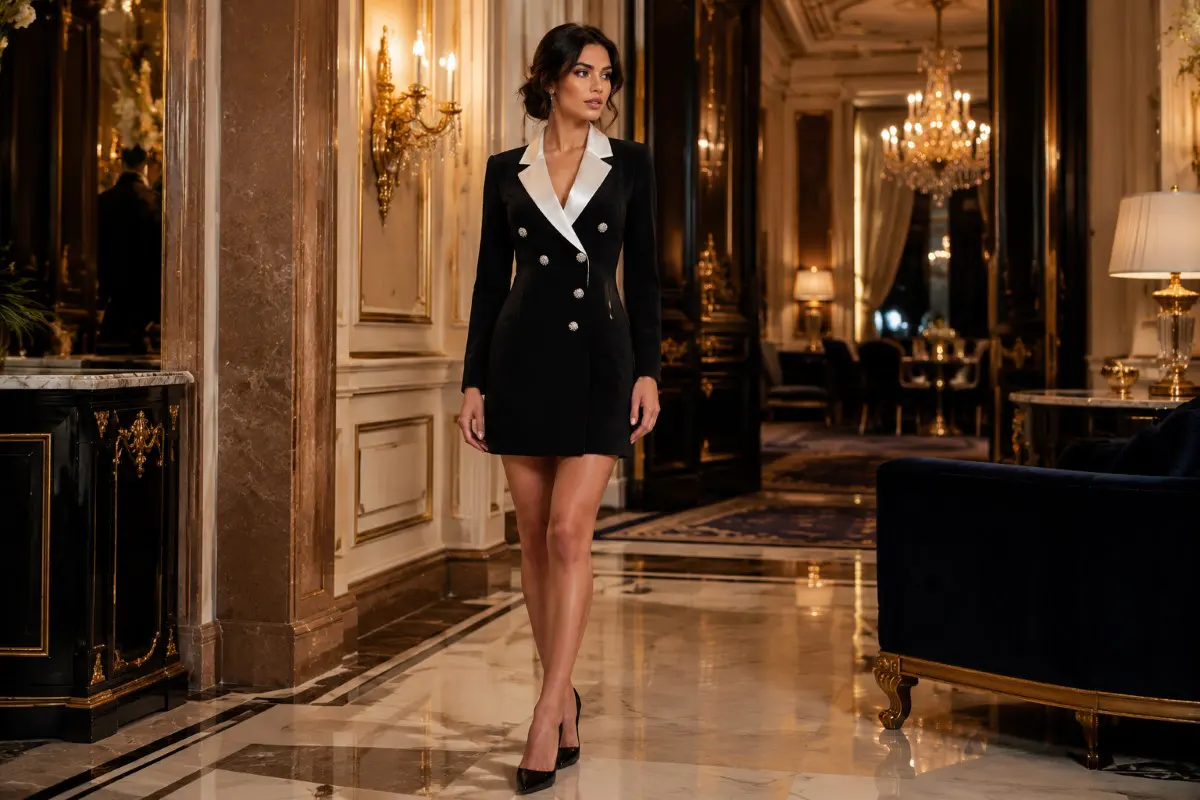
A tuxedo dress takes the most formal language in menswear, the satin lapel, the structured shoulder, the clean button front, and reshapes it into a dress built for a woman. It is the answer for anyone who wants the authority and sharpness of a tuxedo without the separates, a single garment that reads as powerful, modern, and unmistakably dressed up. The look has moved from a red-carpet statement into a genuine evening option, because it offers something most gowns do not, a confident, tailored edge that feels current rather than traditional. This guide explains the tailoring details that define the style, the construction underneath, the lengths and variations available, which events suit it, and how to choose and wear one so it reads as elegant and intentional rather than borrowed from a man's wardrobe.
What a tuxedo dress is
A tuxedo dress is a dress that borrows the defining elements of a formal tuxedo jacket and builds them into a single tailored garment. The recognizable features are a satin or grosgrain lapel, often a peak lapel for a sharper line, a structured shoulder, and a clean front closure, frequently with covered or crystal buttons. The piece is a dress rather than a two-piece suit, so the tailored details run from the shoulder down through the hem in one continuous line. That single-garment construction is the appeal, since it delivers the crisp formality of a tuxedo with the ease of stepping into a dress.
The style sits within the world of modern, tailored formal wear, a close relative of the trouser suit and the blazer dress but with its own distinct identity. It belongs to the same move toward suiting in women's formal dressing, where sharp tailoring stands as an alternative to the traditional gown. You can see the broader category in the house collection of women's suits, which shows how a tailored dress sits alongside formal trouser suits and other structured pieces.
The tailoring details that define it
What separates this style from an ordinary tailored dress is a specific set of details drawn directly from formal menswear. The lapel is the most important, since a satin or grosgrain lapel against a matte fabric is the single feature that signals tuxedo rather than blazer. A peak lapel, which points sharply upward toward the shoulder, reads as the most formal and commanding, while a shawl lapel, a smooth rounded curve, reads as softer and more classic. The contrast between the shiny lapel and the matte body of the dress is the heart of the look.
The shoulder is the second defining detail, since the whole effect relies on a structured, defined shoulder line to carry the formal, powerful quality. The front closure completes it, whether a single covered button, a double-breasted arrangement of buttons, or a row of crystal-set buttons that adds a touch of evening shine. These details together, the lapel, the shoulder, and the closure, are what make a dress read as a tuxedo, and the quality of each one determines whether the garment looks sharp and expensive or flat and approximate.
The construction underneath
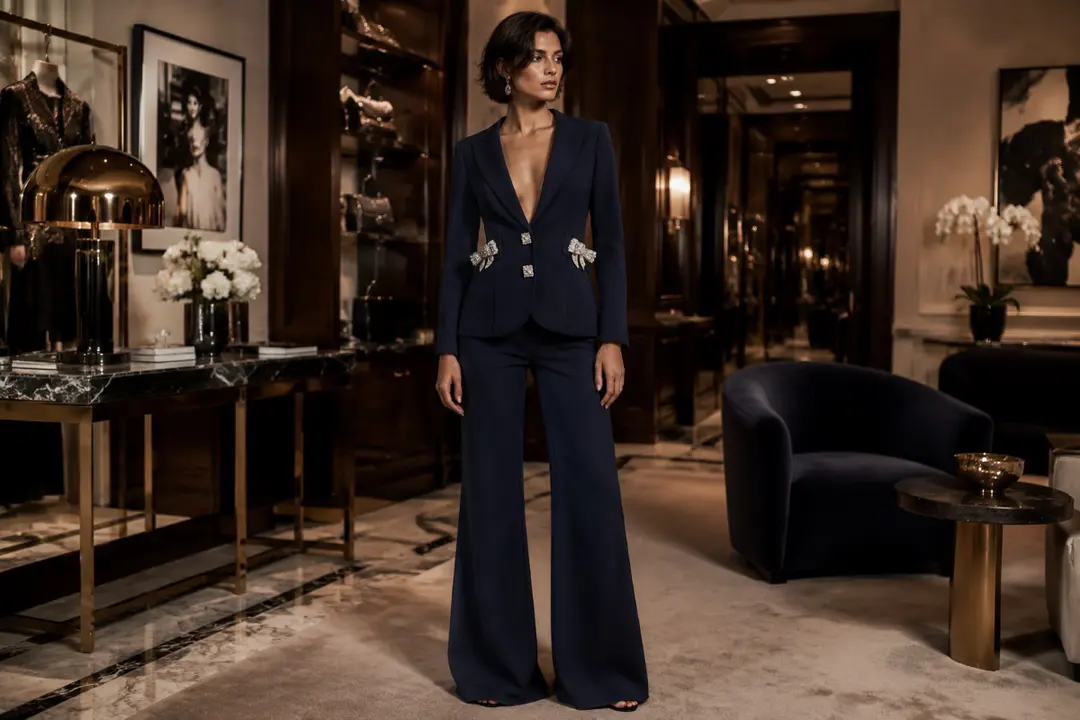
A tuxedo dress looks effortless on the outside, but the formality depends on real tailoring underneath. The shoulders carry light padding or a structured canvas so the line stays crisp and defined rather than collapsing, the lapels are rolled and pressed so they hold their sharp shape, and the front is reinforced so the closure sits flat and does not gap or strain. A proper lining lets the dress glide over what you wear underneath and gives the garment the weight that makes tailoring hang correctly. Without this internal structure, the look reads as a flimsy approximation rather than the sharp statement it should be.
Jovani has built structured formal wear from its New York studio since 1983, and this is exactly the kind of garment that rewards that construction experience. Under design director Julie DuRocher, the contemporary tailored pieces use the same internal logic as the brand's gowns, reinforced seams, considered linings, and shaping that holds through a long evening. The satin lapel in particular has to be applied cleanly so it lies flat and catches light evenly, which is precise work, and it is one of the clearest places where careful construction separates a refined garment from a cheap one.
Tuxedo dress lengths and variations
The tuxedo dress comes in several lengths and variations, and each reads as a different level of formality. A mini version keeps the hem short and the proportion modern and leggy, which suits a cocktail setting or a fashion-led evening. A midi length reads as more covered and more formal, suiting events where a very short hem would feel out of place. A long or floor-length version, sometimes built as a tuxedo gown with a tailored bodice flowing into a full-length skirt, reads as the most formal and can stand among full evening gowns at a black-tie event.
Sleeves and details vary as well. A long sleeve completes the formal tuxedo statement, while a sleeveless or short-sleeved version reads as lighter and more contemporary. Some designs add a self-belt to define the waist, others keep a clean, straight tailored line. The buttons range from understated covered closures to crystal-set buttons that add evening shine. Each combination shifts the mood, from a sharp, minimal cocktail look to a grand, formal tuxedo gown, so the right choice depends on the event and the impression you want to make. The broader house edit of contemporary dresses shows how tailored pieces sit among other modern silhouettes.
Which events suit a tuxedo dress
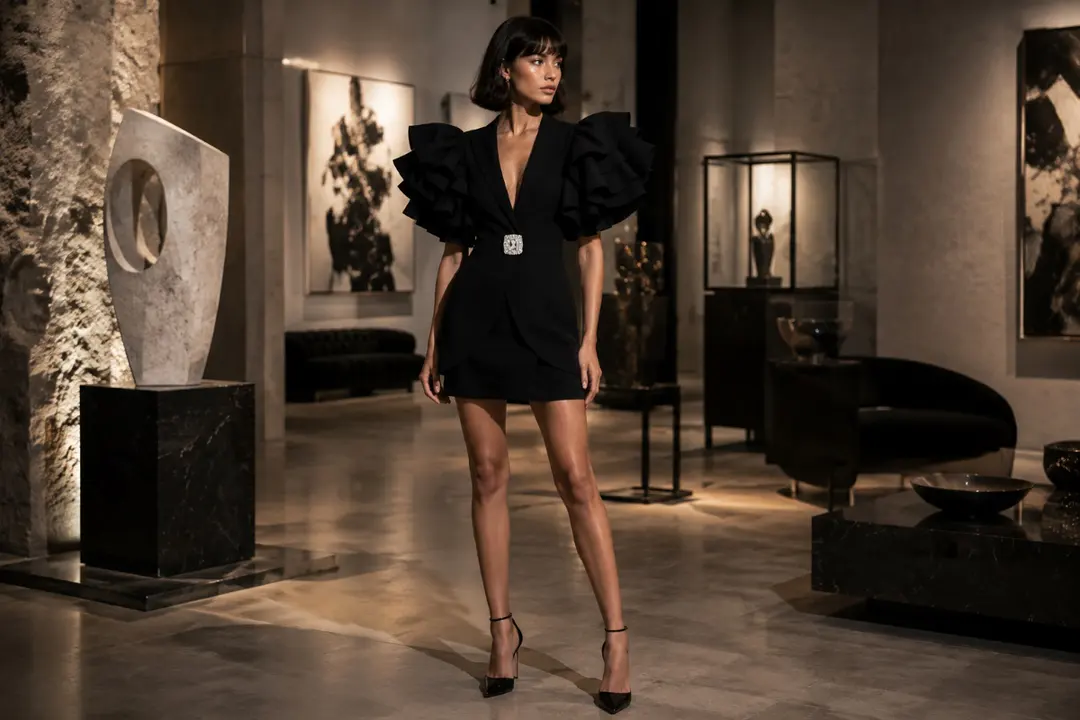
This style suits events where you want to look powerful, modern, and sharply dressed rather than traditionally feminine. It is a confident choice for a black-tie event, particularly a modern or creative black-tie gathering, where a tailored tuxedo gown stands as a striking alternative to the usual sea of gowns. It works beautifully for a cocktail party, a gallery opening, an awards evening, or an upscale dinner, where the sharp tailoring reads as fashion-forward and assured. For a modern city wedding as a guest, the look reads as polished and current, as long as you avoid white and stay clear of upstaging the couple.
The style also suits anyone hosting or stepping into a leadership moment at a formal event, since the tailored, commanding quality projects confidence and authority. For a strict, traditional black-tie occasion, a long or floor-length cut carries the formality best, while a short version suits a more relaxed cocktail code. Matching the length and formality to the event is the key, and the guide to the contemporary dress code helps decode where a tailored look like this belongs.
How to style a tuxedo dress
A tuxedo dress is already a complete, sharp statement, so styling should sharpen rather than soften it. The garment carries strong tailored lines, so the accessories should be clean and deliberate. Footwear sets the register, and a pointed pump or a sleek heeled sandal keeps the look sharp and lengthens the leg, while a sculptural heel adds a fashion-forward edge. Avoid anything fussy or overly soft, since it works against the tailored quality of the dress.
Jewelry should stay minimal and architectural, since the lapel and button front already provide detail at the neckline and center. A pair of clean, sculptural earrings or a single cuff is usually enough, and a heavy necklace tends to clutter the sharp neckline created by the lapel. A sleek clutch completes the look. The contrast this style creates, sharp and tailored where most evening wear is soft, is the whole point, so styling that keeps the lines clean lets that contrast read clearly. For more on building a wardrobe around tailored, modern pieces, the overview of best contemporary dress styles places the look in context.
Who the tuxedo dress flatters
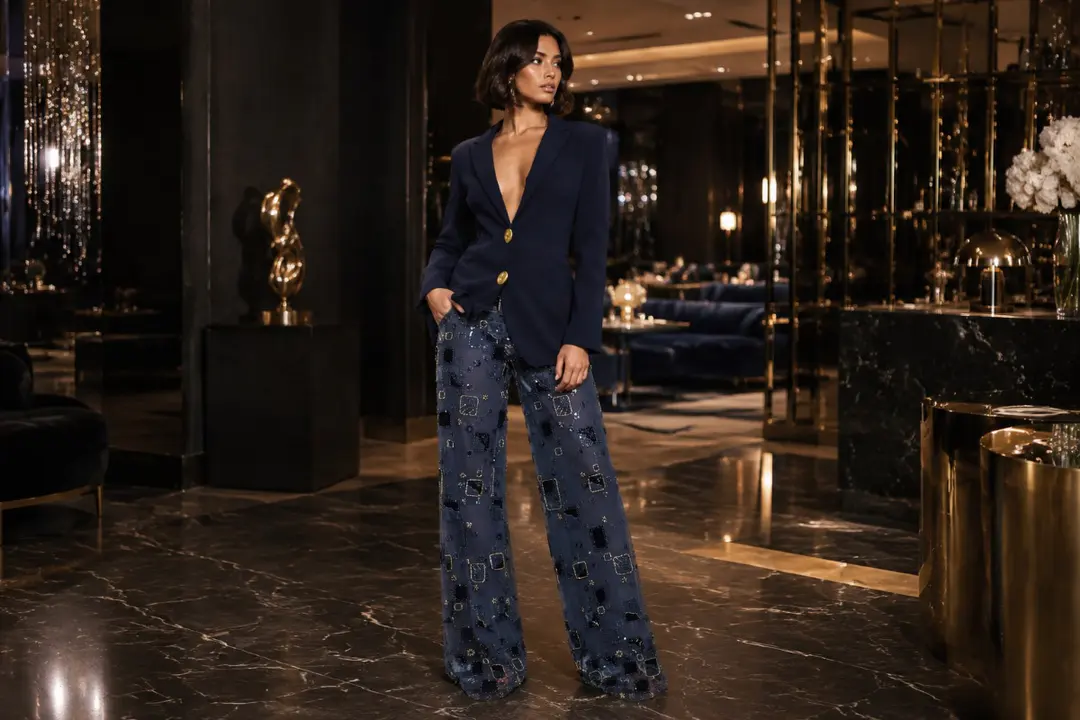
The style flatters in a particular way, and understanding it helps you choose the right cut. The structured shoulder and the vertical line of the lapel and button front draw the eye up and down the center of the body, which lengthens and slims the torso and creates a strong, defined upper line. That defined shoulder balances fuller hips, which makes the look a flattering choice for a pear shape. The clean vertical line also suits anyone who wants a streamlined, elongating silhouette rather than added volume.
For an apple shape, a cut that skims rather than clings through the middle, ideally one with a self-belt to define the waist, gives shape without pressure across the stomach. For a petite frame, a fitted cut and a shorter or precisely tailored length keep the proportion long rather than swamped, since an oversized version can overwhelm a smaller body. The honest rule across shapes is to judge the shoulder seam first, since a shoulder that sits exactly on your own shoulder edge makes the tailoring read as sharp, while a drooping shoulder undermines the whole look no matter how good the fabric.
Tuxedo dress versus a formal pant suit
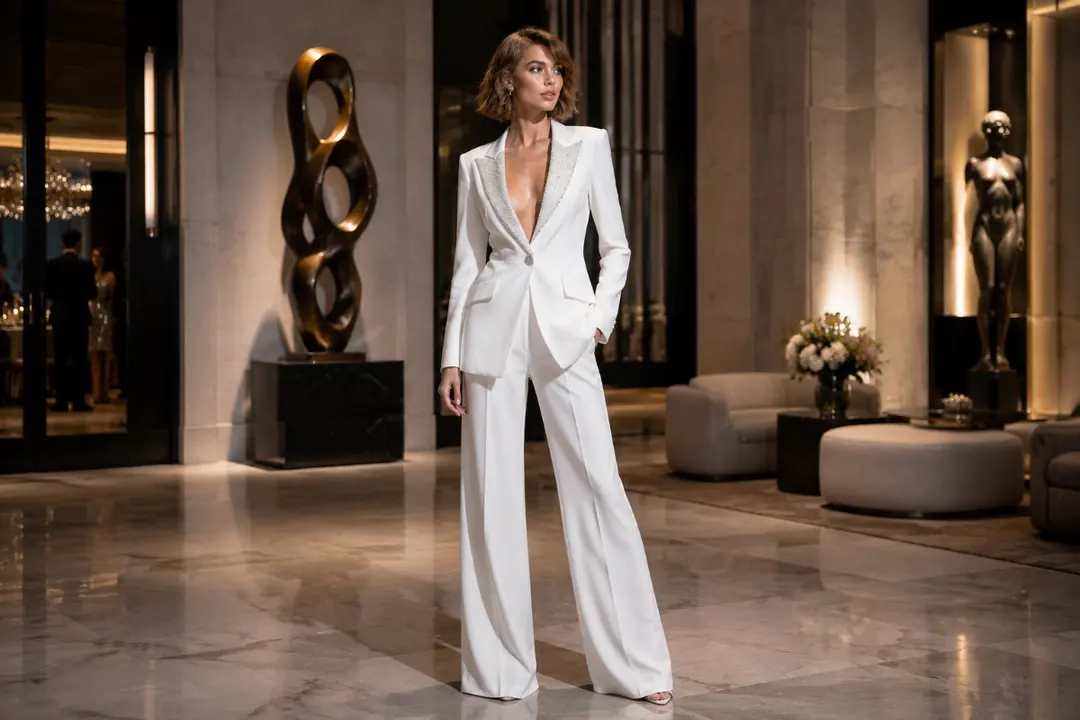
Shoppers often weigh this style against a formal trouser suit, since both deliver tailored, suiting-inspired formality, and the two serve genuinely different moods. A formal pant suit, with tailored trousers and a matching jacket, offers a fully covered, powerful, androgynous look with the freedom of trousers, ideal for someone who wants maximum tailored authority and ease of movement. A tuxedo dress keeps the sharp tailoring of the upper body but pairs it with a dress hem and bare legs, which reads as a softer, more overtly feminine take on the same tailored idea.
The choice comes down to the impression and the comfort you want. A pant suit reads as the most powerful and the most covered, while a tailored dress reads as sharp but still dress-like and leggy, a middle ground between a suit and a gown. Neither is more formal in the abstract, since both can be dressed up or down depending on fabric and detail. For the fuller picture of tailored options and how they compare, the complete women's formal suits guide covers the trouser-suit end of the spectrum in detail.
Choosing a quality tuxedo dress
When you are choosing a tuxedo dress, the quality of the tailoring is everything, since the entire look depends on sharp, clean construction. First, check the lapel, which should lie flat, hold its shape, and catch light evenly across a clean satin or grosgrain surface, with no puckering or bubbling where it meets the body. Second, check the shoulder, since the seam should sit exactly on your shoulder edge and the line should stay crisp and defined. Third, test the closure, which should sit flat without gapping or straining when you move.
Fabric matters as much as construction, since the look needs a fabric with body to hold the tailored line, and crepe, a structured woven, or a firm scuba all hold the crisp shape the style requires. A flimsy fabric will not support a structured shoulder or a rolled lapel, so the architectural quality collapses. A garment that is constructed well, cut from a fabric with body, and fitted correctly at the shoulder reads as sharp, expensive, and assured, which is the whole reason to choose the style. When the tailoring is right, this is one of the most confident things a woman can wear to a formal event.
For a sharper, more structured take on the tailored neckline, the house edit of tailored jackets and blazers shows the construction that defines the category. The edit of black tie dresses shows where a formal tuxedo dress sits among evening options. And when only a classic will do, this look competes most directly with a little black dress for the most reliable choice in your wardrobe.
Frequently Asked Questions tuxedo dress
What is a tuxedo dress?
A tuxedo dress is a dress that borrows the defining elements of a formal tuxedo jacket, a satin or grosgrain lapel, a structured shoulder, and a clean button front, and builds them into a single tailored garment. It is a dress rather than a two-piece suit, so the tailored details run from the shoulder through the hem in one continuous line. The contrast between the shiny lapel and the matte body of the dress is what gives it the recognizable tuxedo look.
Is a tuxedo dress appropriate for a black-tie event?
It can be, especially a long or floor-length version at a modern or creative black-tie event, where a tailored tuxedo gown stands as a striking alternative to traditional gowns. For a strict, traditional black-tie occasion that expects floor-length gowns, choose a long cut in a refined fabric rather than a short one. A short version suits a cocktail code better, so match the length and formality of the dress to the event.
What is the difference between a tuxedo dress and a pant suit?
A tuxedo dress keeps the sharp tailoring of the upper body, the lapel, shoulder, and button front, but pairs it with a dress hem and bare legs, which reads as a more feminine take on the tailored idea. A formal pant suit pairs tailored trousers with a matching jacket for a fully covered, powerful, androgynous look with the freedom of trousers. Neither is more formal in the abstract, so the choice depends on the impression and coverage you want.
What body type suits a tuxedo dress?
The style is broadly flattering because the structured shoulder and vertical lapel line lengthen the torso and create a strong upper line. The defined shoulder balances fuller hips, which suits a pear shape, and the clean vertical line suits anyone wanting a streamlined silhouette. Apple shapes do well with a skimming cut and a defined waist, and petite frames look longest in a fitted, precisely tailored version. The shoulder seam sitting on your shoulder edge is what makes the tailoring read sharp.
How do you style a tuxedo dress?
Keep the styling clean and sharp, since the dress is already a complete statement. A pointed pump or sleek heeled sandal lengthens the leg and keeps the look tailored, while minimal, architectural jewelry respects the neckline the lapel creates. A heavy necklace tends to clutter the sharp lines, so a pair of sculptural earrings or a single cuff is usually enough, finished with a sleek clutch. The goal is to let the tailored contrast read clearly rather than softening it with fussy accessories.
What fabric is best for a tuxedo dress?
The look needs a fabric with body to hold the tailored line, so crepe, a structured woven, or a firm scuba all work well, holding a crisp shoulder and a clean lapel. The lapel itself is usually satin or grosgrain for the recognizable tuxedo contrast against the matte body. Flimsy, fluid fabrics will not support a structured shoulder or a rolled lapel, so the architectural quality collapses, which makes a fabric with body essential to the style.
To see how sharp tuxedo tailoring translates across mini, midi, and floor-length cuts for your own next formal event, explore the current designs through an authorized Jovani retailer.