
Few phrases create more last-minute closet panic than “festive attire” printed at the bottom of an invitation. It sounds cheerful and a little vague all at once, and that is exactly the point. Festive attire is the dress code hosts choose when they want you dressed up and celebratory without the strict rules of black tie. Think of it as a polished cocktail look with the volume turned up on color, shine, and texture. This guide breaks down what festive attire means, how it differs from cocktail, semi-formal, and black tie, and exactly what to wear so you walk in feeling like you read the room perfectly.
What Festive Attire Really Means
At its core, festive attire is celebratory dressing that invites richer color, sparkle, metallics, velvet, and seasonal flair. It sits a notch above everyday cocktail attire because it actively rewards personality. Where a standard cocktail party might call for a sleek, restrained look, a festive dress code gives you room to reach for the sequined dress, the emerald velvet, or the gold that catches candlelight. The word is intentionally generous, and that generosity is a gift once you understand the boundaries it lives inside.
The Short Definition
If you remember one thing, remember this: festive attire equals cocktail-level formality plus celebration. You are dressing for an evening that feels special, not a boardroom and not a red carpet. The hemline, the fabric, and the mood all communicate that you understood this was a party. A festive look should feel joyful and intentional rather than sleepy or overly serious, which means a plain work dress will undersell the occasion just as surely as a ball gown will overshoot it.
Where the Dress Code Shows Up
You will see festive attire most often on holiday party invitations, upscale New Year’s Eve gatherings, end-of-year celebrations, and increasingly on wedding invitations for events with a playful spirit. It peaks during the winter holidays, but it is not exclusively a December code. A summer rooftop party or a milestone birthday can call for festive attire too, which is why color and shine matter more than strictly seasonal motifs. When the invitation simply says festive with no other context, let the venue, the time of day, and who is hosting guide how dressy you go. A festive code on an evening invitation to a grand hotel means something dressier than the same words on an afternoon gathering at a friend’s home.
How Festive Attire Differs From Other Dress Codes
The fastest way to get festive attire right is to understand where it sits on the formality spectrum, because the word borrows from several neighbors at once. Once you can place it next to cocktail, semi-formal, and black tie, the guesswork mostly disappears.
Festive Attire Versus Cocktail and Semi-Formal
Cocktail and semi-formal are close cousins, and in practice they ask for the same thing: a dress or dressy separates that read as occasion-appropriate. Festive attire starts from that same cocktail foundation but pushes harder on expression. A simple black sheath is perfect cocktail attire, but for a festive event you would want that same silhouette in a light-catching sequin, or you would add a velvet texture and a jewel tone. The difference is rarely about formality and almost always about mood, since festive asks you to look like you came to celebrate. If a cocktail party is a polished dinner, a festive party is that same dinner with music, candles, and a reason to toast.
Festive Attire Versus Black Tie
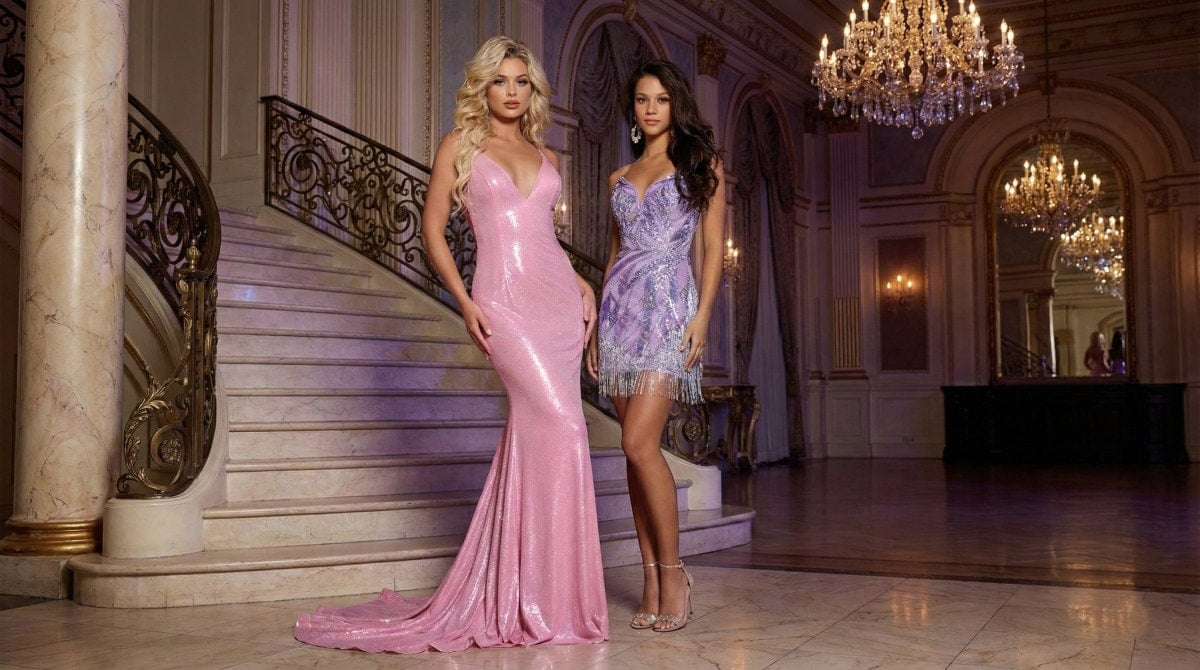
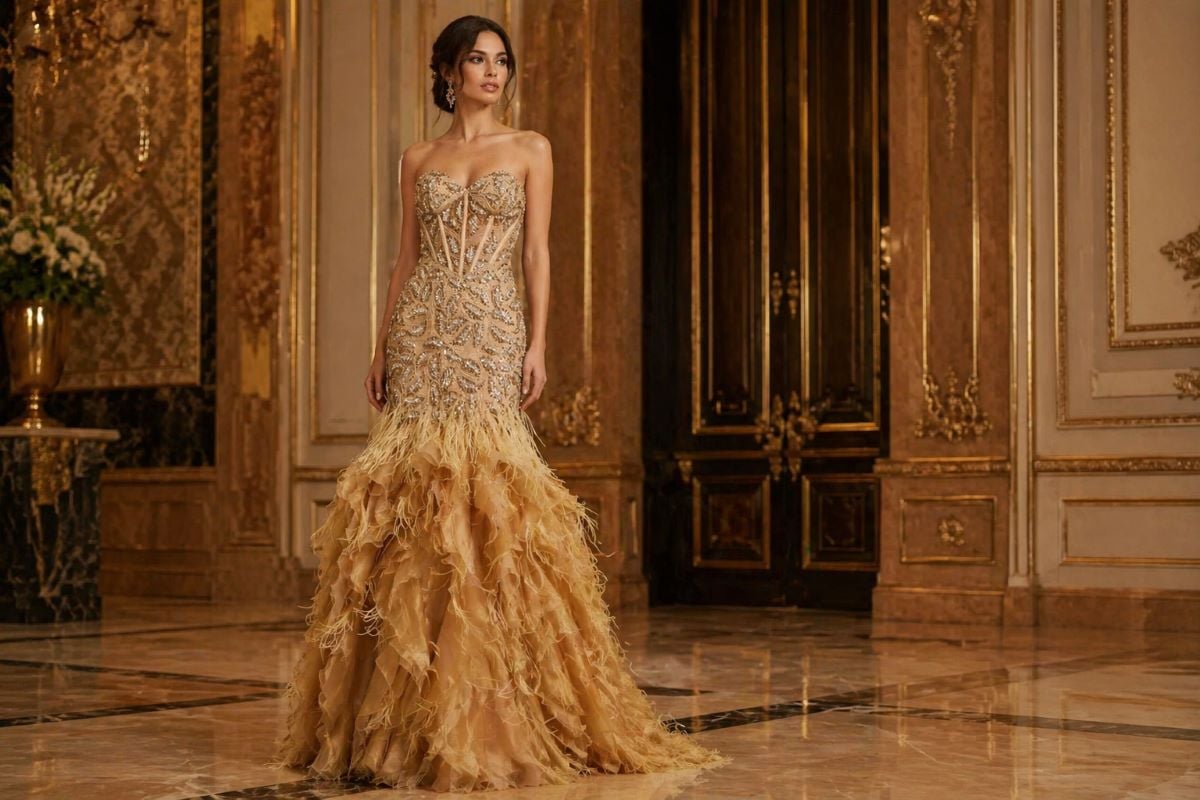
This is the distinction people get wrong most often. Black tie expects a floor-length gown in a refined fabric and leans toward darker, classic palettes. Festive attire is more relaxed and more colorful, and it does not require a long gown. In fact, a sweeping floor-length dress can read as too formal for a standard festive holiday party and leave you overdressed among guests in shorter styles. The exception is a festive code attached to a clearly formal evening, such as a festive gala, where you should lean toward the dressier end. When you are genuinely unsure whether the night calls for full-length, our collection of holiday party dresses spans both short and long options designed for exactly this kind of celebration.
The Colors That Make Festive Attire for Women Work
Color is the single most powerful signal of festive dressing. It is the easiest way to tell a room that you embraced the occasion rather than defaulting to your weekday wardrobe, and it is the lever you can pull even when your silhouette is simple.
Jewel Tones and Holiday Classics
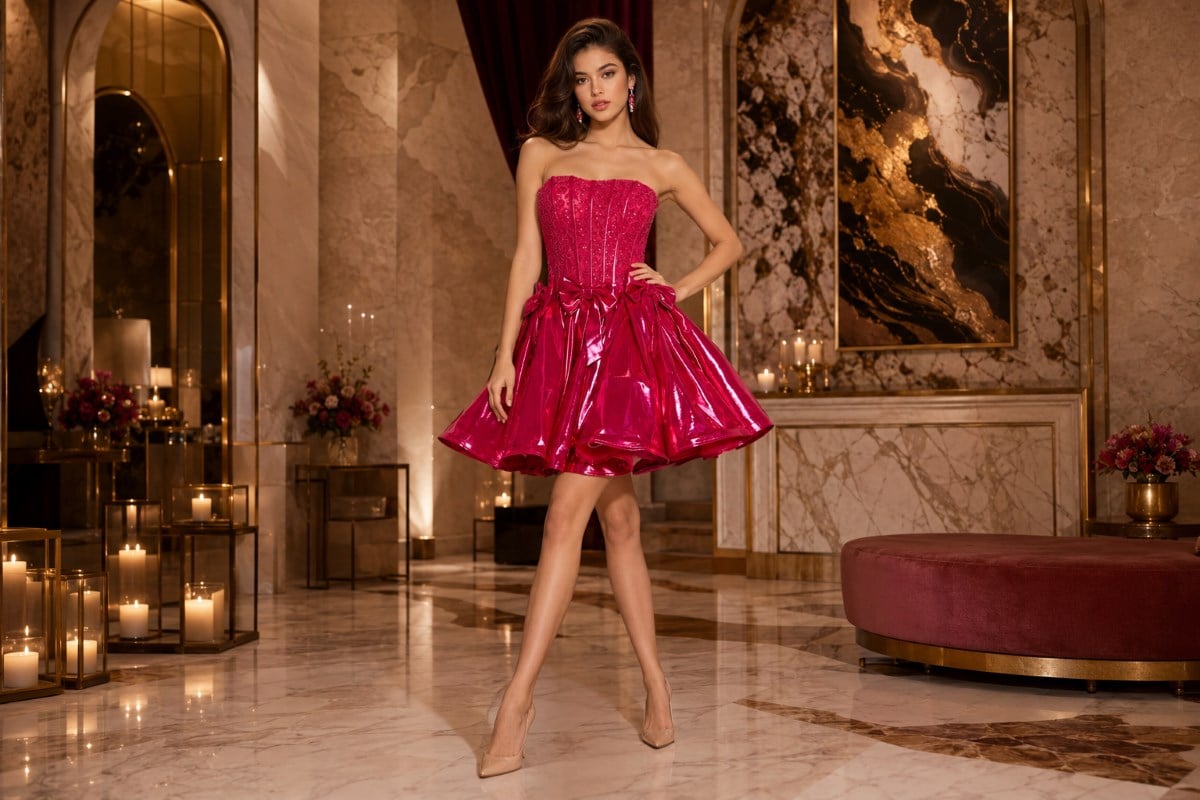
Saturated jewel tones are the heart of festive attire for women. Emerald, sapphire, ruby, amethyst, and deep teal all photograph beautifully under warm event lighting and feel inherently celebratory. Holiday classics like a true Christmas red and a forest green never miss during the winter season, and a confident red in particular reads as both festive and timeless. If red is calling your name, our edit of red formal dresses shows how many moods a single color can carry, from sleek to dramatic.
Metallics, Sequins, and the Case for Black
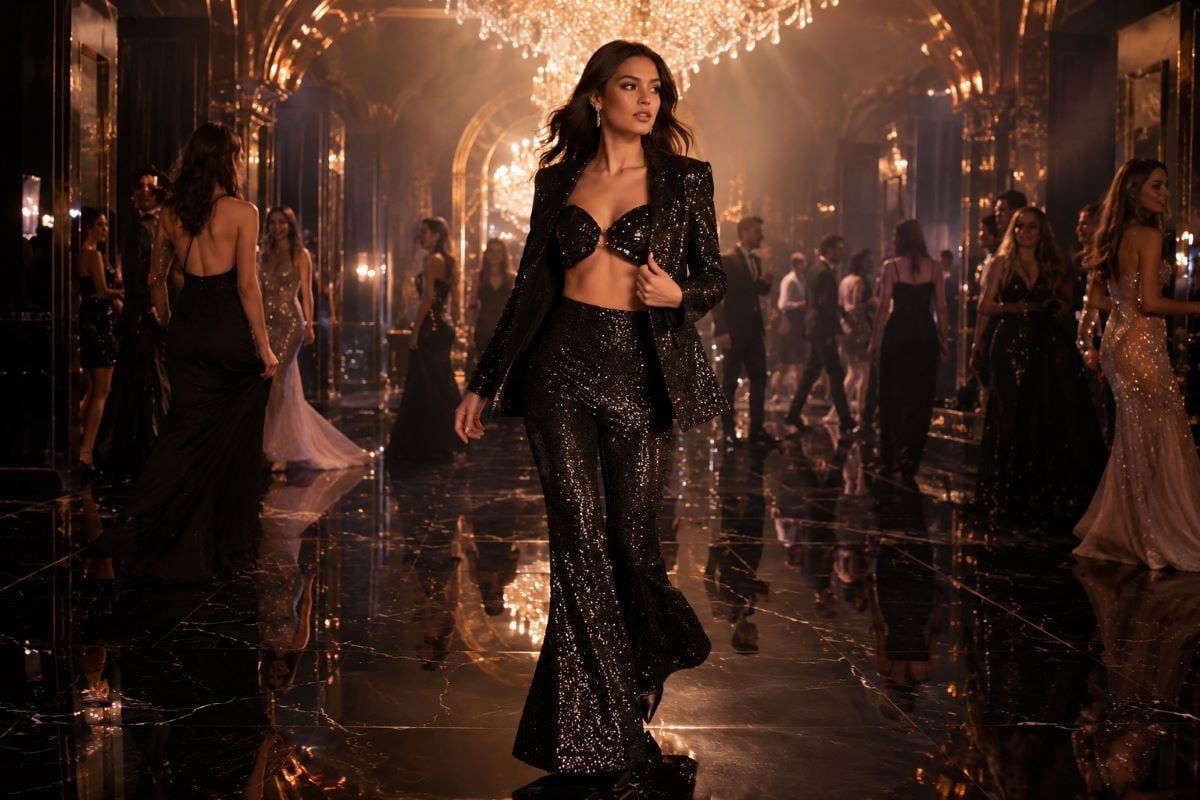
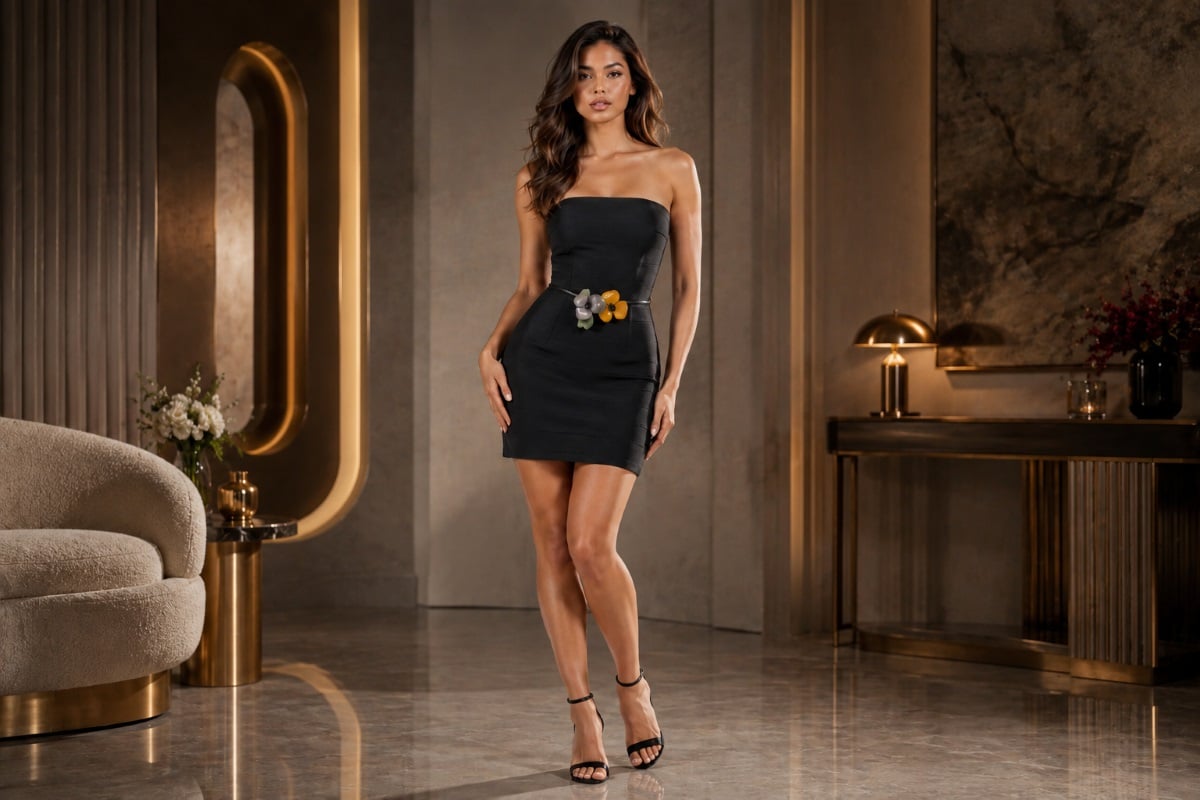
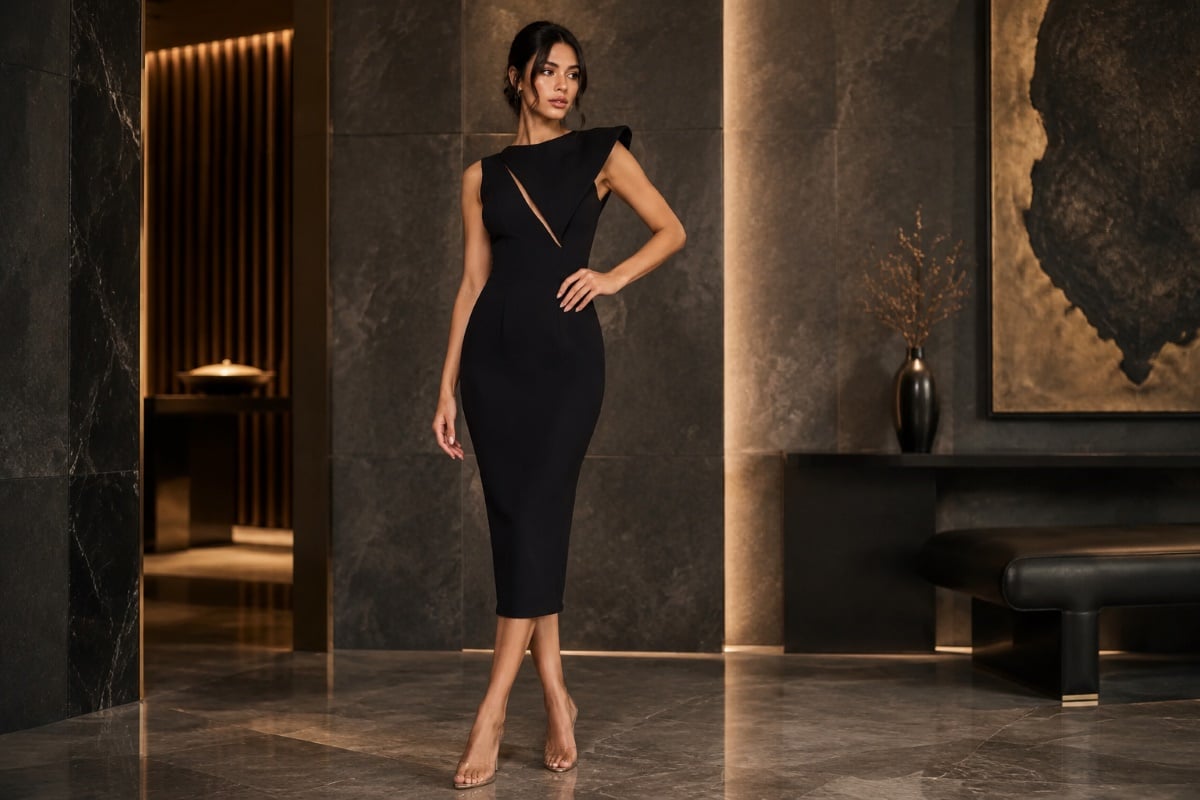
Metallics are a festive secret weapon because gold, silver, bronze, and rose gold behave like jewelry for the whole body, reflecting light with every movement. Black is also completely fair game, despite its reputation as a neutral. The trick with black at a festive event is to choose a version with built-in interest, a sequin finish, a velvet pile, or beadwork, so it reads as celebratory rather than corporate. A great little black dress with the right texture can be the most festive thing in the room when you style it with sparkling accessories.
How to Pair Festive Colors Without Clashing
Once you have chosen a festive color, the styling around it decides whether the look feels considered or busy. A saturated jewel tone is happiest with metallic or neutral accessories rather than a second bold color, since two competing brights tend to fight for attention. Red pairs cleanly with gold or black, emerald loves gold and warm metallics, and sapphire sits beautifully against silver. If your dress already mixes colors, such as a multi-tone sequin, pull a single shade out of it for your shoes and bag and let everything else stay quiet. The aim is a palette that feels intentional, where one color leads and the rest support it, which reads as far more polished than matching every element to a different festive hue.
Fabrics and Textures That Read as Festive
If color sets the tone, fabric seals it. Festive attire is a texture-forward dress code, and the right material does half the styling work for you before you even add a single accessory.
Velvet, Satin, and Lace
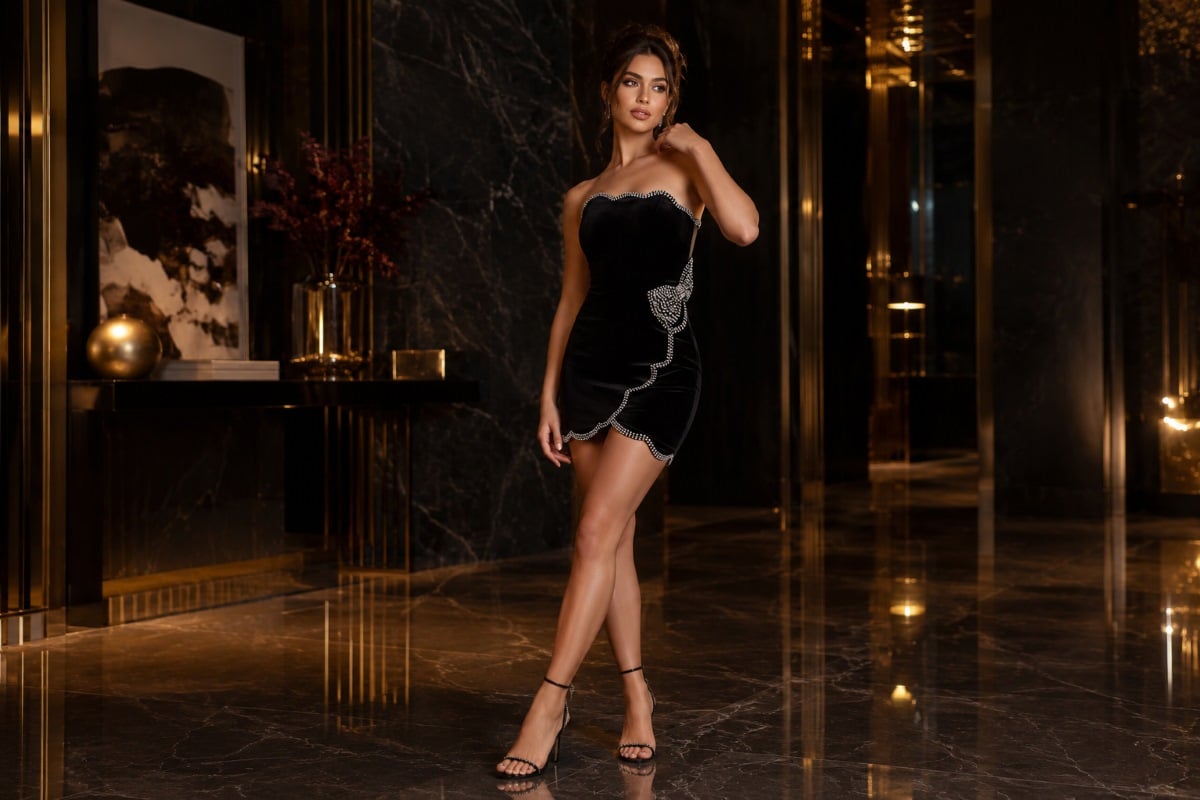
Velvet is arguably the defining festive fabric of the colder months. Unlike satin, which reflects light, velvet absorbs it, which gives deep colors a richness and depth no other material matches. It also provides genuine warmth, which makes it practical for winter parties. Our velvet gowns lean into that plush, light-catching quality that feels made for candlelit rooms. Satin brings a fluid, polished sheen that moves with you, while lace adds a softer, romantic texture that still reads as dressed up. Each of these fabrics carries formality on its own, which means even a simple cut looks considered when the material is right.
Sparkle Without Costume
Sequins, beading, and metallic thread are the most direct route to festive, but balance is everything. The goal is to look celebratory, not theatrical. A fully beaded dress is a showstopper as long as you keep the rest of your look quiet, letting the embellishment be the star. To understand how different materials behave when you walk, sit, and dance, it helps to know the fabrics that define evening wear in more detail. At Jovani, where Design Director Julie DuRocher has led the brand’s collections for years and draws on a design heritage reaching back to 1983, sequins are applied with hand-sewn attention so the sparkle lies flat and moves with the body rather than against it.
Dress Lengths and Silhouettes That Fit Festive Attire
One of the genuinely freeing things about festive attire is that hemlines are not dictated the way they are at black tie. You get to choose the length that flatters you and suits the venue, and there is no single correct answer.
Short, Midi, and When Long Works
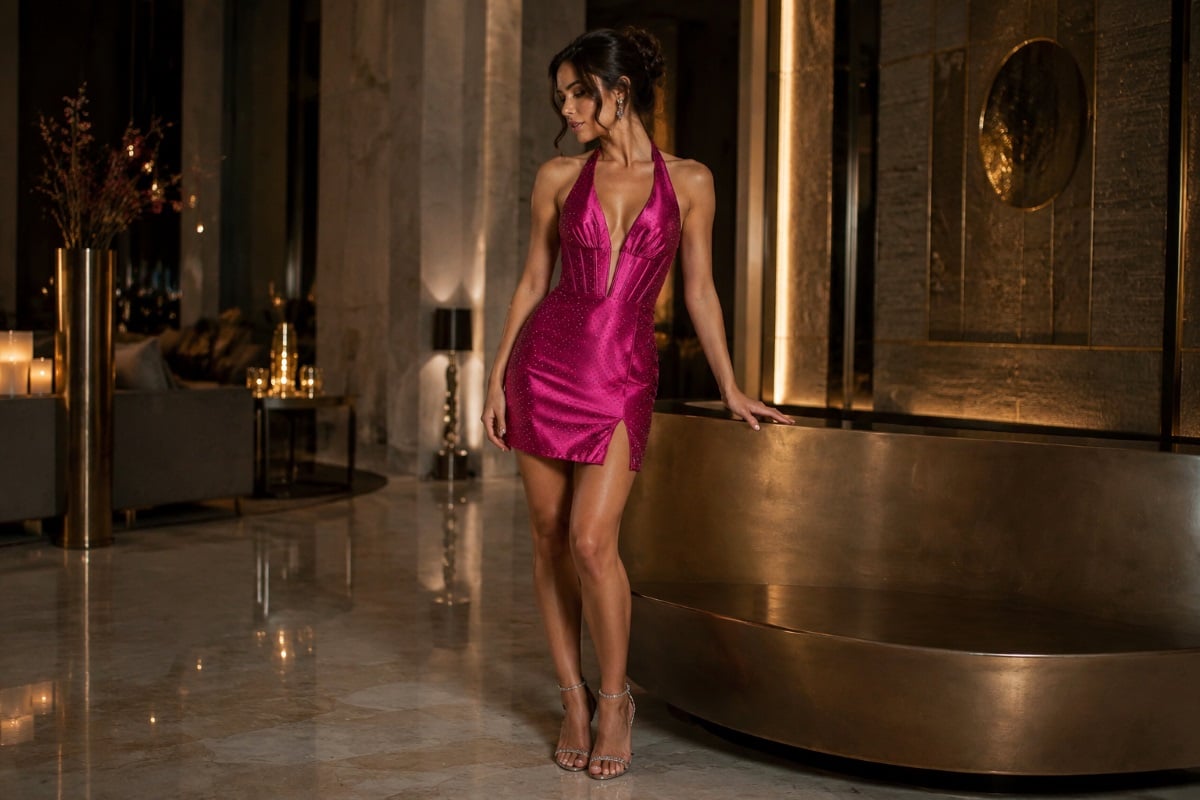
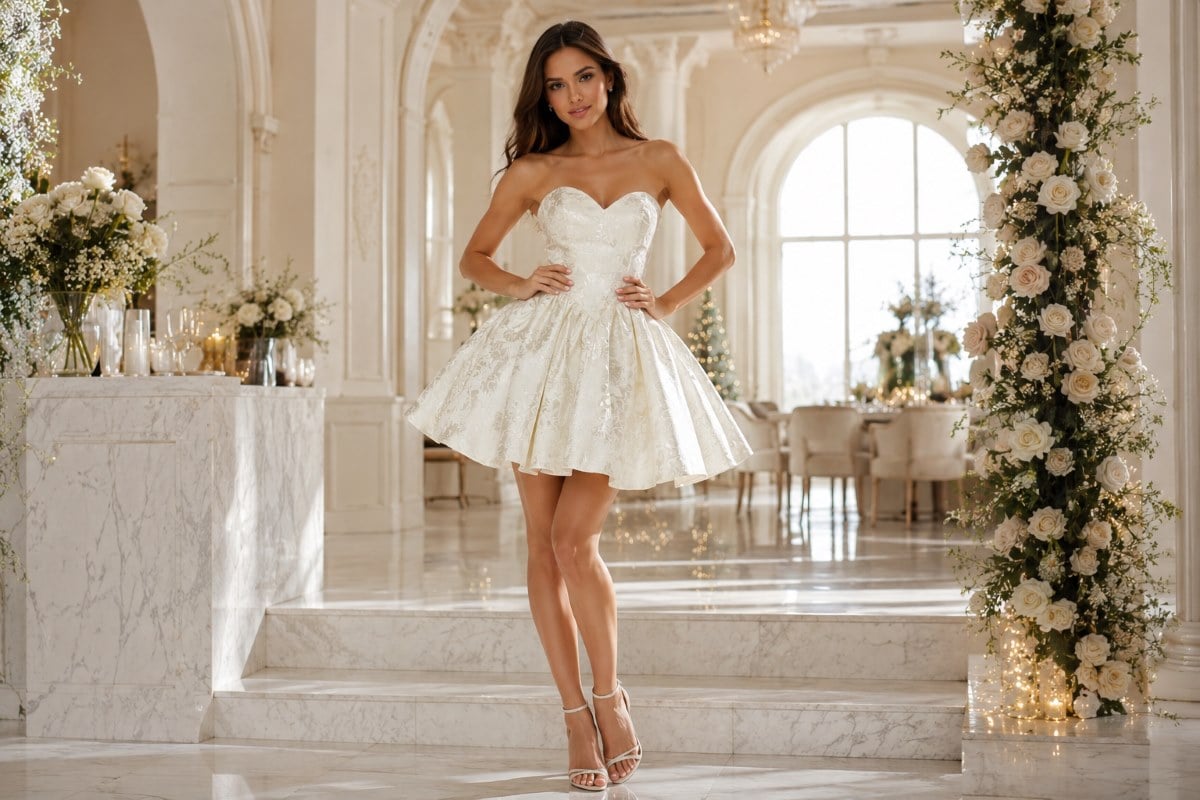
A short cocktail length is the most common and most reliable choice for a festive holiday party, especially an evening event at a bar, restaurant, or home. It feels playful and party-ready, and it is easy to move and dance in. Our range of cocktail dresses is built for exactly this energy. A midi length splits the difference and feels a touch more elevated, which works well for a festive dinner or a slightly dressier crowd. Save true floor-length for festive events that clearly skew formal, such as a gala or an evening wedding, where a longer silhouette will feel right rather than excessive.
Jumpsuits and Separates
A dress is never your only option. A well-cut jumpsuit in a luxe fabric like satin or velvet reads as modern and intentional, and a sequined jumpsuit is a genuine alternative to a party dress. Dressy separates also work beautifully, a silky jewel-tone blouse with a statement skirt, or a velvet top with tailored trousers. The key with any non-dress option is that the fabric must do the talking, because a casual material in a festive cut still reads as casual no matter how good the styling around it is.
Festive Holiday Party Versus Festive Wedding
The same two words can mean slightly different things depending on whether you are headed to a December office party or a couple’s celebration, so context is everything when you decode the line on the card.
Reading the Invitation
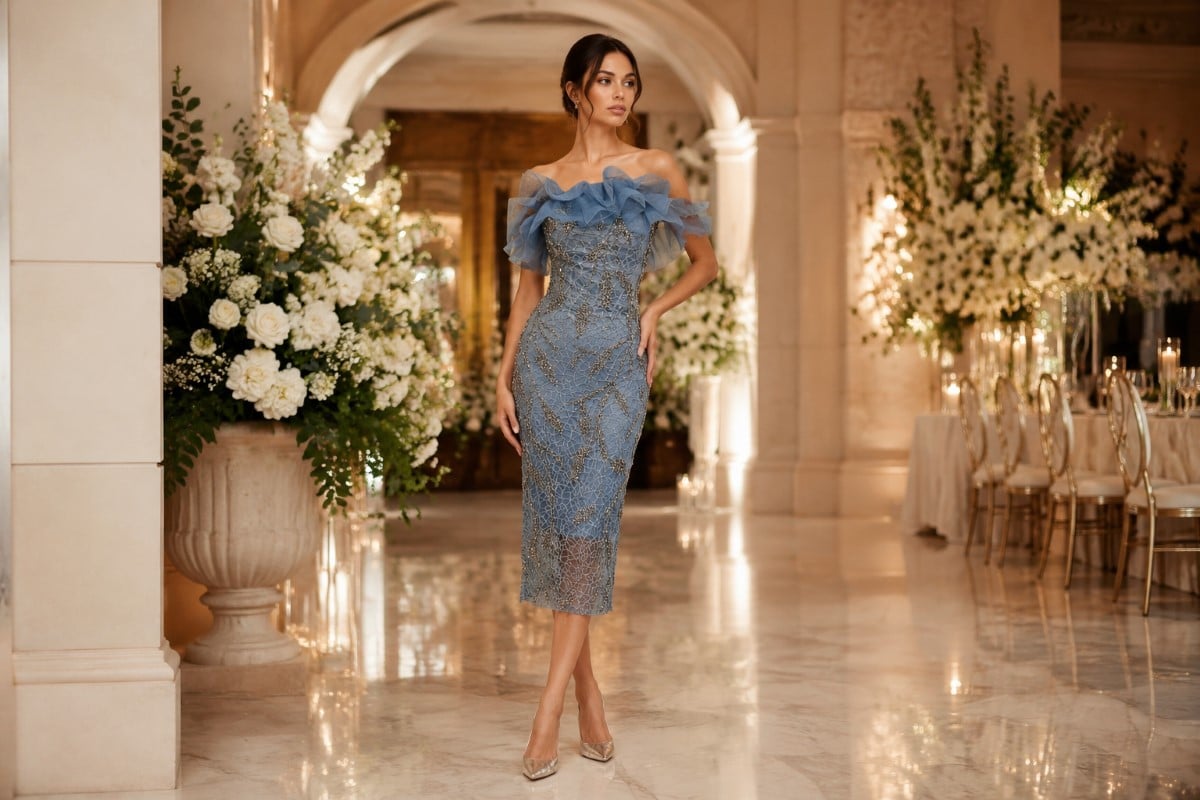
For a holiday party, lean into seasonal color and sparkle with confidence. For a festive wedding, the celebratory spirit still applies, but the universal guest rules return: avoid white, ivory, and anything that could read as bridal, and never aim to outshine the couple. A festive wedding is your cue to embrace bold color and texture while staying polished. Reading the venue and the time of day on the invitation tells you how far to push, and when the wording is truly ambiguous, a quick message to the host is always smarter than guessing.
Day Versus Evening
Daytime festive events generally call for lighter colors and slightly more relaxed fabrics, while evening events welcome deeper hues, richer textures, and more shine. A sequined mini that is perfect for a New Year’s Eve countdown might feel like a lot at a noon holiday brunch. If you are specifically planning a December 31 look, our guide to what to wear on New Year’s Eve walks through the dressiest end of festive dressing.
How to Accessorize Festive Attire
Accessories are where festive attire either comes together or tips into too much. The reliable formula is to let one element lead. If your dress is heavily embellished, keep jewelry minimal and let the dress shine. If your dress is a clean, solid jewel tone, that is your moment for statement earrings or a bold cuff. Metallic heels, a sparkling clutch, and a sleek updo all reinforce the festive mood without competing. One detail that separates a thoughtful look from a busy one is matching your metals to the dominant tone of your dress, and our guide to coordinating your jewelry metals explains how to keep everything cohesive. In colder months, do not forget a polished layer, since a velvet wrap, a tailored coat, or a structured blazer keeps the festive feeling intact on the way in.
What to Avoid With Festive Attire
The most common festive mistakes are easy to sidestep once you know them. The first is going too casual, since festive attire is never jeans, sneakers, or an everyday sweater, no matter how relaxed the gathering feels. The second is going too revealing, because festive is playful, not nightclub, so choose one feature to highlight rather than several at once. The third is veering costume-y. A few people hear festive and reach for novelty holiday prints or head-to-toe glitter, but elegance always wins, so concentrate sparkle in one piece. The fourth, specific to weddings, is wearing white or anything that pulls focus from the couple. And the final mistake is forgetting to commit to the code at all, showing up in a flat, under-accessorized look that ignores the celebratory invitation entirely.
A Quick Note on Festive Attire for Men
Festive attire gives men more room for personality than standard cocktail dressing. A dark suit is a safe foundation, but the festive twist comes from texture and color, a velvet blazer in burgundy or midnight blue, a jewel-tone shirt, or a seasonal tie or pocket square. The same balance rule applies, one festive statement rather than five. The aim is a sharp, put-together look with a deliberate seasonal accent, skipping novelty ties unless the event is explicitly casual.
Frequently Asked Questions About Festive Attire
Is festive attire the same as cocktail attire?
Not quite. Festive attire is built on the cocktail foundation, but it asks for more color, sparkle, and seasonal texture. Think of cocktail as the base layer and festive as cocktail with the celebration turned up. A look that works for cocktail will rarely be wrong for a festive event, but adding a jewel tone, a metallic, or a velvet texture is what makes it truly festive.
Can I wear a floor-length dress to a festive event?
You can, but read the event first. For a typical festive holiday party, a short or midi dress is the safer and more expected choice, and a floor-length gown can feel overdressed. Save full-length for festive events that clearly skew formal, such as a gala or an evening wedding, where a long silhouette will fit right in.
What colors are best for festive attire?
Jewel tones lead the way, emerald, sapphire, ruby, and amethyst, along with holiday classics like red and green and any metallic. Black absolutely works when it has texture or sparkle built in. The only colors to approach with caution are white and ivory at weddings, where they are reserved for the couple.
Is black okay for festive attire?
Yes, black is always welcome, provided it feels celebratory rather than corporate. Choose a black dress with a sequin finish, a velvet pile, or beadwork, then add sparkling accessories. A textured black dress styled with festive jewelry can easily be the most polished look at the party.
What should I avoid wearing to a festive attire event?
Skip anything too casual like jeans or sneakers, anything overly revealing, and anything that crosses into costume territory such as novelty prints or all-over glitter. At weddings, avoid white and avoid upstaging the couple. The safest path is one celebratory statement piece supported by polished, simple accessories.
Are jumpsuits appropriate for festive attire?
Absolutely. A tailored jumpsuit in satin or velvet, or a sequined one for a bolder moment, is a modern and entirely appropriate festive choice. The same rule applies as with dresses, the fabric needs to feel luxe, because a casual material will read as underdressed regardless of the cut.