
Asymmetry is one of the most modern, eye-catching design choices in formalwear. An asymmetrical dress breaks the expected symmetry of a garment, whether through a one-shoulder neckline, a diagonal hem, a draped bodice, or a slit set off to one side, and the result is a dress that reads as contemporary, dynamic, and quietly sophisticated. The off-balance line draws the eye and creates movement, which is exactly why asymmetry has become a favorite for evening gowns and cocktail dresses. Done well, an asymmetrical dress is striking without being loud, modern without being trendy. This guide covers what makes a dress asymmetrical, the main types of asymmetry and how they read, why asymmetric lines flatter, the silhouettes and occasions they suit, and how to style an asymmetrical dress so its modern line reads at its best. The aim throughout is to show how a single off-balance line, whether at the shoulder, the hem, or through the bodice, can make a dress read as contemporary and striking while staying genuinely elegant.
What makes a dress asymmetrical
An asymmetrical dress is defined by a design element that is intentionally uneven or off-center, breaking the mirror-image symmetry that most dresses follow. This can be a neckline that covers one shoulder and leaves the other bare, a hem that falls at different lengths, a bodice draped to one side, or a detail set off-center. The defining quality is the deliberate asymmetry, which creates a dynamic, modern line.
Asymmetry works because the eye expects symmetry, so an off-balance line draws attention and creates visual interest and movement. The asymmetry can be subtle, like a gently draped bodice, or bold, like a dramatic high-low hem, but in every case it reads as intentional and contemporary. This is what separates an asymmetrical dress from a symmetrical one: the deliberate, eye-catching imbalance. The range of formal dresses shows how design lines shape a gown, and asymmetry brings a modern, dynamic quality to whatever silhouette it sits on.
The main types of asymmetry and how they read
Asymmetry appears in several forms on a dress, and the type shapes how an asymmetrical dress reads. Understanding the differences helps in choosing the asymmetric effect that suits your taste.
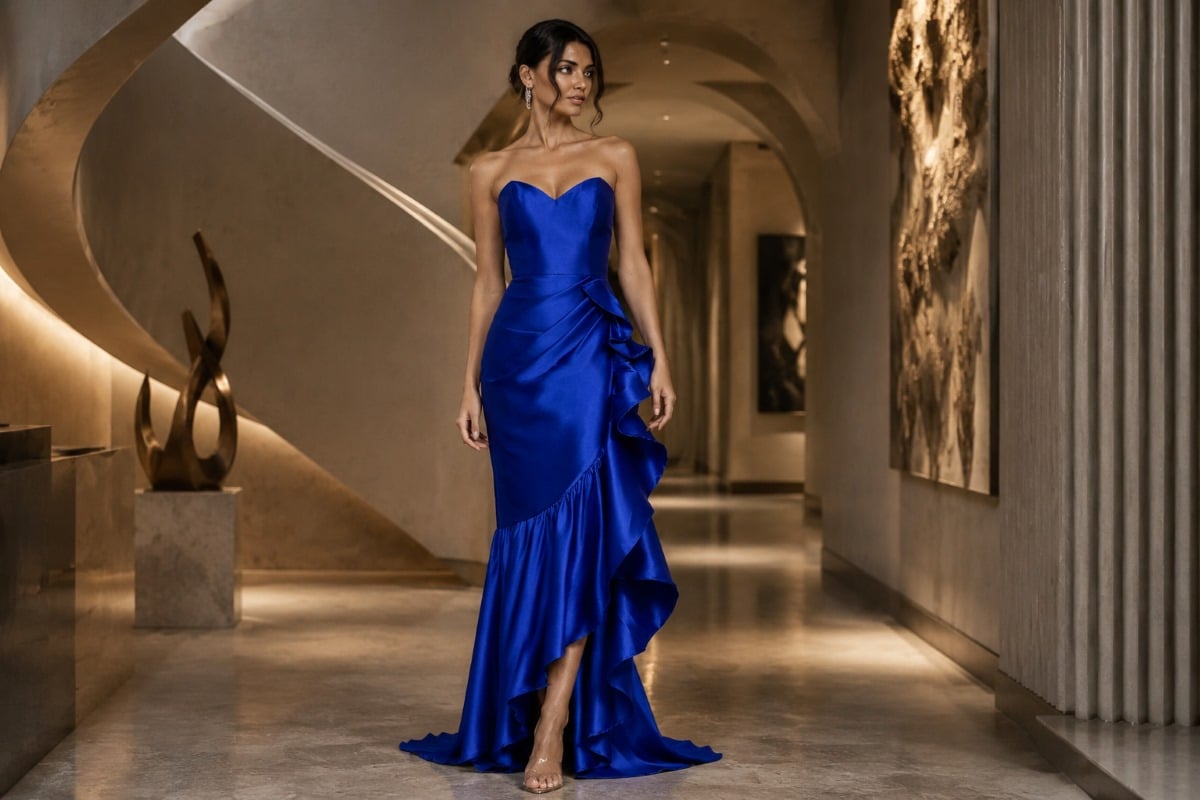
Asymmetric necklines
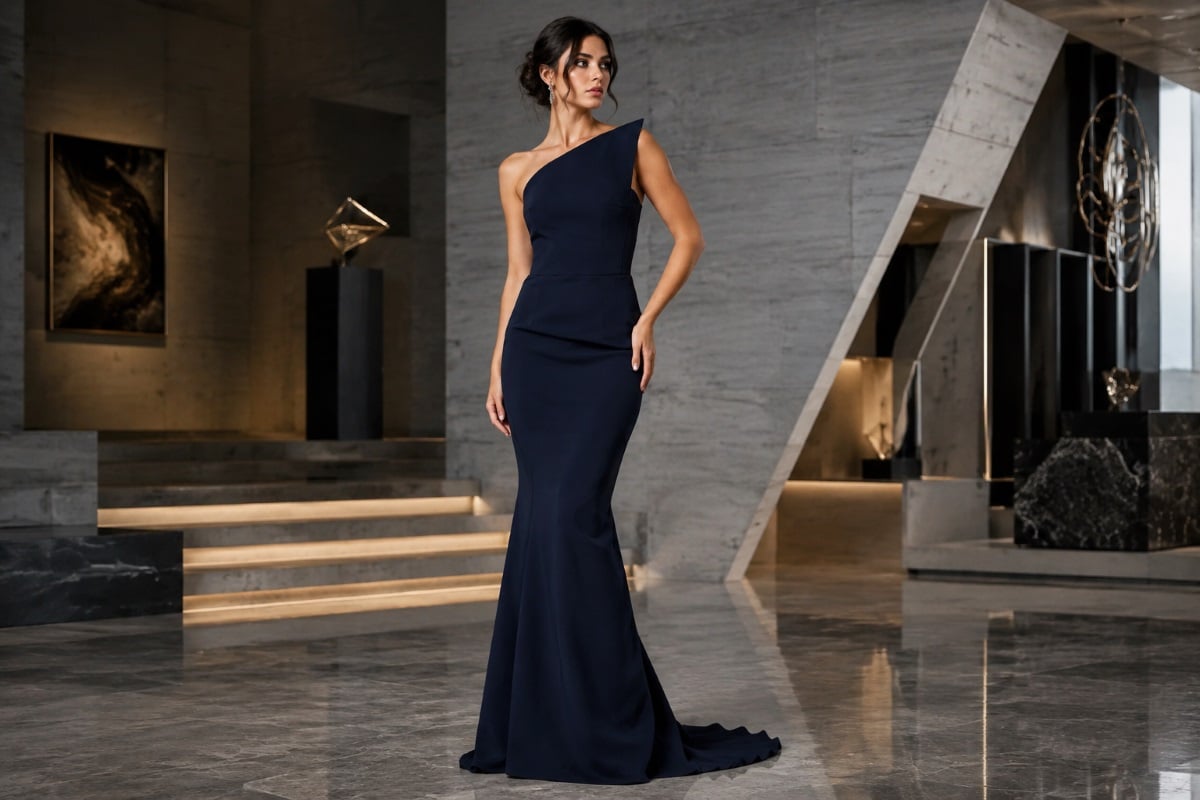
The one-shoulder neckline is the most common asymmetric neckline, covering one shoulder while leaving the other bare, which creates a striking, modern line that frames the shoulders beautifully. A diagonal or angled neckline crosses the body at an angle for a similar effect. Asymmetric necklines read as elegant and contemporary, drawing the eye to the shoulders and neckline with their off-balance line. This type of asymmetry is both flattering and modern, which is part of why one-shoulder styles are so popular. The one-shoulder styles among one shoulder evening dresses show how an asymmetric neckline reads, which creates a striking asymmetrical dress.
Asymmetric hems and details
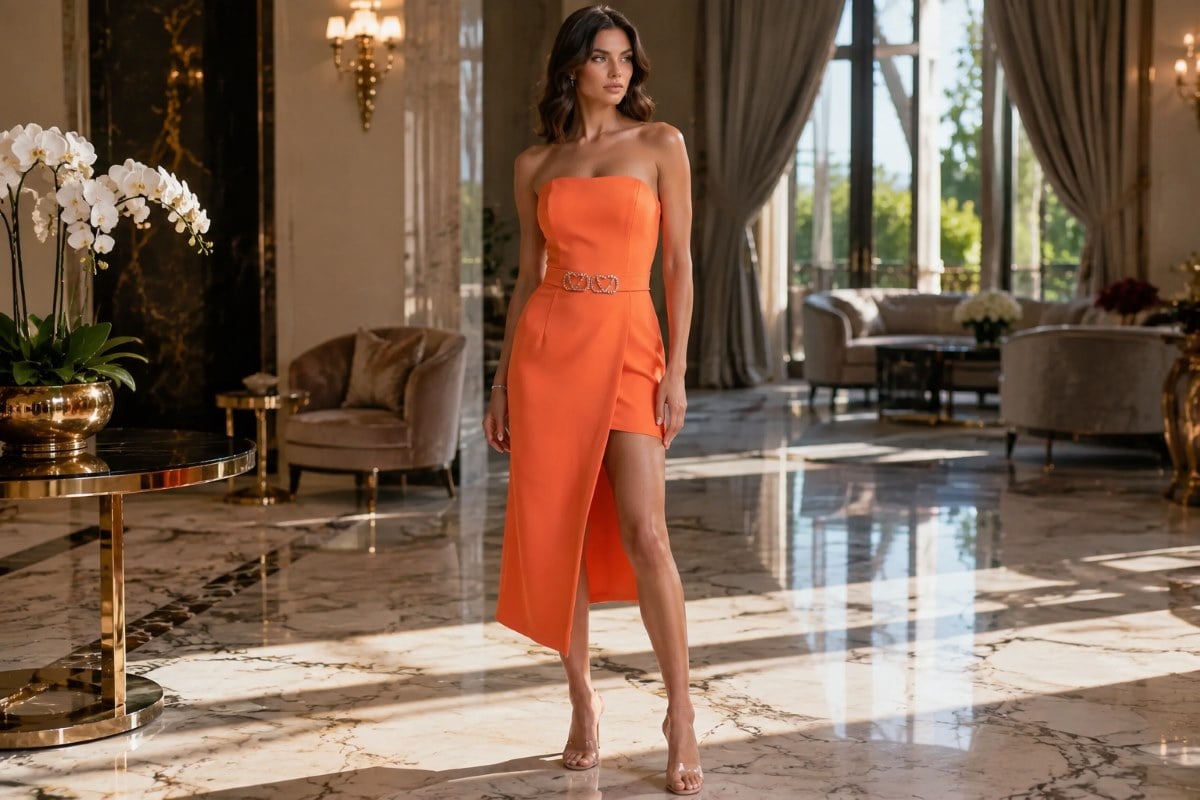
An asymmetric hem, such as a high-low hem that falls shorter in front and longer in back, or a diagonal hem that angles across the legs, creates movement and a dynamic line at the bottom of a dress. A draped bodice gathered to one side, or a slit set off-center, adds asymmetry in a subtler way. These asymmetric details read as modern and interesting, adding a contemporary quality without necessarily a one-shoulder neckline. An asymmetric hem in particular adds drama and movement, showing the legs at an angle. The asymmetric styles among asymmetric prom dresses show how an off-balance line reads, which creates a dynamic asymmetrical dress.
Why asymmetric lines flatter
Asymmetric lines can be remarkably flattering, since the diagonal lines they create draw the eye in flattering directions. Understanding how asymmetry flatters helps in seeing why an asymmetrical dress can be so striking. A diagonal line, whether at the neckline, the hem, or through a draped bodice, draws the eye across the body at an angle, which can elongate and slim the figure.
An asymmetric neckline draws the eye up and across to the shoulders, creating an elegant line, while an asymmetric hem draws the eye down at an angle, showing the legs in a flattering way. A draped, gathered bodice can also flatter by skimming the midsection while drawing the eye to the diagonal line. The off-center line breaks up the figure in a way that reads as dynamic and slimming, since diagonal lines tend to flatter more than horizontal ones. An asymmetrical dress chosen well reads as both striking and flattering. For more on how lines and necklines flatter, the guide to the best necklines for different body shapes covers how design lines work with a figure, which applies to asymmetric cuts.
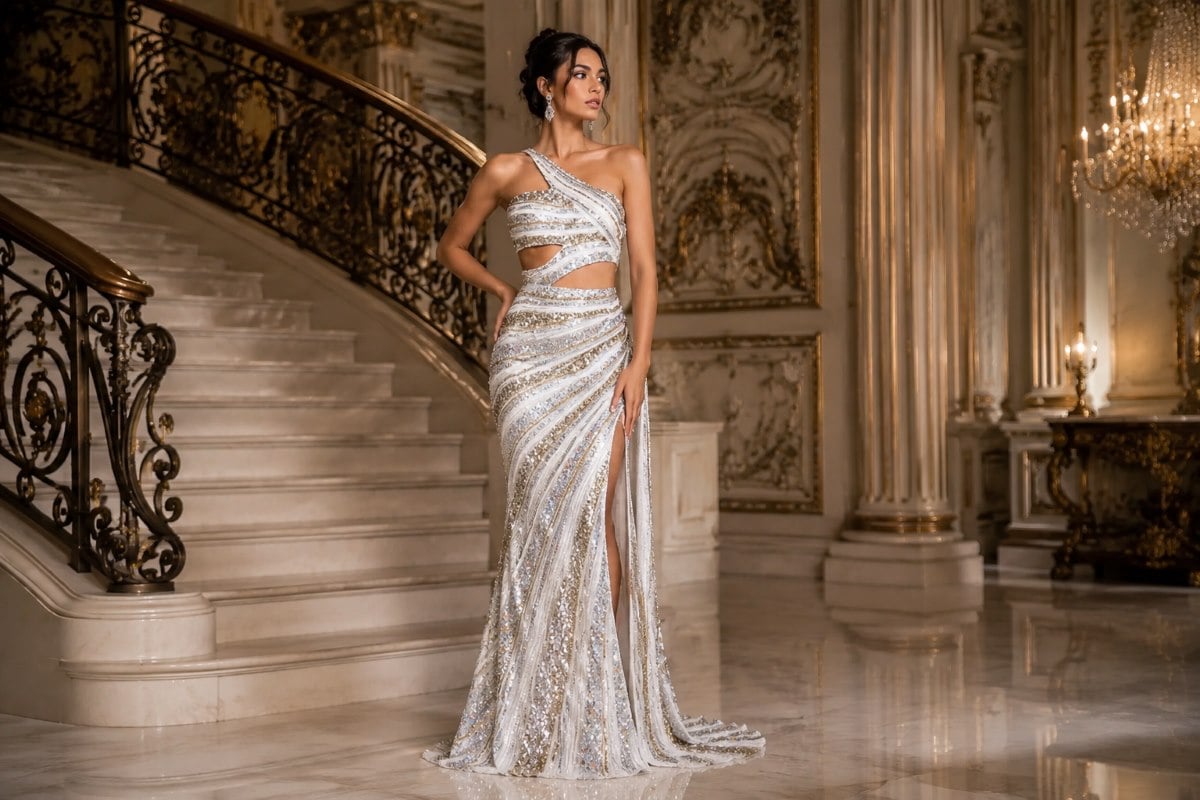
Silhouettes and occasions for an asymmetrical dress
Asymmetry works across silhouettes and occasions, with the off-balance line adding its modern quality to many kinds of dress. On a fitted or sheath dress, an asymmetric neckline or a draped bodice adds a modern line to a sleek shape. On a flowing gown, an asymmetric hem or a one-shoulder neckline adds drama and movement. On a short cocktail dress, an asymmetric hem or neckline adds a contemporary, eye-catching quality.
For occasions, an asymmetrical gown suits a formal evening or black-tie event, reading as elegant and modern, with a one-shoulder gown being a classic, sophisticated choice. An asymmetrical cocktail dress suits a semi-formal event with a contemporary edge, while an asymmetric detail suits a mother of the bride or guest looking for a modern line. The one-shoulder styles among one shoulder cocktail dresses show how asymmetry reads in a shorter length.
For a more formal role, the one-shoulder styles among one shoulder mother of the bride dresses show how it suits a more formal role, both bringing a modern line to the occasion.
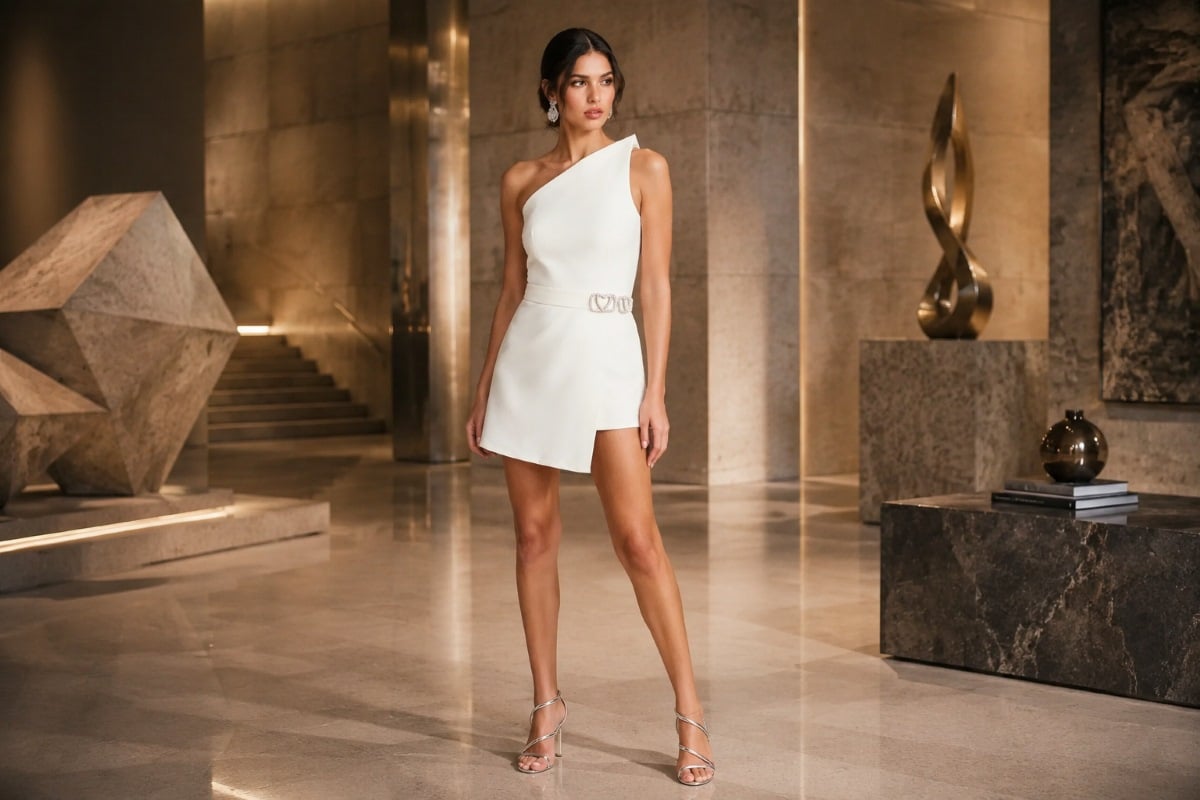
Styling an asymmetrical dress
Styling an asymmetrical dress is about complementing its modern, off-balance line, which the right approach supports. Because asymmetry is already the statement of the dress, the styling works best when it stays clean and lets the line lead. For a one-shoulder asymmetrical dress, the bare shoulder is a focal point, so statement earrings or a single elegant detail draw the eye there beautifully, while a necklace often competes with the asymmetric neckline.
For an asymmetric hem, shoes that suit the dynamic line and let the dress move complete the look. The asymmetry guides the styling, since the off-balance line is the feature that the rest of the look should support rather than compete with. Keeping jewelry and accessories clean lets the modern line be the focus. The goal is to let the asymmetry lead, with the rest of the styling staying considered and contemporary. For another view of a dramatic hemline, the guide to high low hemline gowns covers how an asymmetric hem reads and how to wear it, which applies to an asymmetrical dress beautifully.
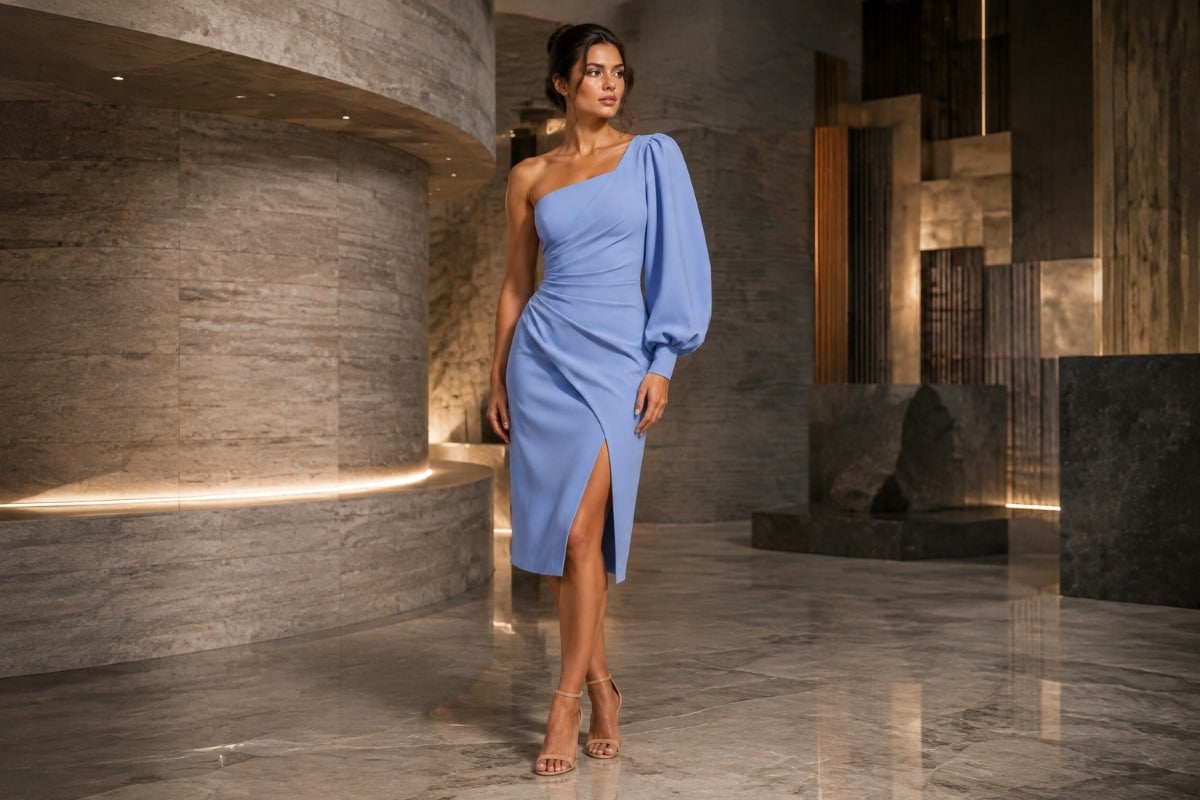
Choosing a quality asymmetrical dress
When choosing an asymmetrical dress, the cut and construction make all the difference, since asymmetry depends entirely on a precise, intentional line. First, look at how the asymmetric element is cut, since a quality asymmetrical dress has a clean, deliberate line, whether a crisp one-shoulder neckline, a well-draped bodice, or a precise hem, while a poorly cut one can look uneven or accidental rather than intentional. The asymmetry should read as a clear design choice.
Second, consider how the asymmetric line flatters your figure and suits the look you want. Third, confirm the fit, since an asymmetric dress, particularly a one-shoulder or draped style, depends on a good fit to sit cleanly and stay in place. A well-made asymmetrical dress reads as modern, striking, and intentional, with the off-balance line doing the work. Because the effect depends so much on a precise cut, seeing how a specific dress sits is worthwhile, and a fitting at a retailer that carries formalwear confirms the asymmetric line flatters and sits cleanly. To see how one-shoulder necklines, draped bodices, and asymmetric hems translate across silhouettes and occasions for your next event, explore the current styles through an authorized Jovani retailer.
The appeal of asymmetry in formalwear
Why asymmetry reads as modern
Asymmetry reads as modern because it breaks from the expected, and the eye registers the off-balance line as deliberate and contemporary. Where symmetry reads as classic and balanced, asymmetry reads as dynamic and current, which is part of why an asymmetrical dress feels so modern. The off-center line creates visual interest and movement that a symmetrical dress lacks, drawing the eye and giving the dress a sense of motion even when still. This contemporary quality is exactly why asymmetry has become so popular in evening and occasion wear, since it offers a way to look modern and striking without relying on bold color or heavy embellishment. The line itself does the work, which reads as sophisticated and considered.
Balancing a striking line with elegance
The appeal of a well-done asymmetrical dress is that it is striking without being loud, which comes down to balancing the bold line with overall elegance. A single asymmetric element, such as a one-shoulder neckline or a draped bodice, makes the statement, while the rest of the dress stays clean and lets that line lead. This restraint is what keeps asymmetry sophisticated rather than busy, since one strong, intentional line reads as elegant while several competing ones read as chaotic. Choosing an asymmetrical dress with one clear asymmetric feature, executed cleanly, creates a look that is modern and eye-catching while remaining genuinely elegant, which is exactly the balance that makes asymmetry so appealing in formalwear.
For another view of an asymmetric neckline, the guide to the one shoulder evening dress covers how the cut reads and flatters, which applies to an asymmetrical dress beautifully.
The lasting appeal of the asymmetrical dress
An asymmetrical dress endures because it offers a modern, striking line without relying on anything loud, which is a rare and appealing combination in formalwear. The off-balance cut draws the eye and creates movement through the line itself, so an asymmetrical dress can read as sophisticated and contemporary even in a simple color or fabric. This is part of why asymmetry has stayed popular across changing fashion, since a clean, intentional asymmetric line reads as elegant rather than trendy.
For anyone who wants a dress that feels modern and eye-catching while remaining genuinely elegant, asymmetry delivers exactly that, whether through a one-shoulder neckline, a draped bodice, or an asymmetric hem. A well-cut asymmetrical dress, with one clear asymmetric feature executed cleanly and a fit that lets the line sit beautifully, reads as striking and sophisticated at once. That balance of modern drama and genuine elegance is the lasting appeal of the asymmetrical dress, which is exactly why the off-balance line remains such a favorite for evening and occasion wear, suiting anyone who wants to look contemporary and refined.
In the end, an asymmetrical dress is for anyone who wants a modern, striking look that stays genuinely elegant, achieved through the power of a single off-balance line rather than anything loud. With one clean asymmetric feature, a precise cut, and a fit that lets the line sit beautifully, an asymmetrical dress reads as contemporary and sophisticated at once, letting you stand out with quiet confidence at any event where a modern edge is exactly the right note, from a formal evening gala to a stylish cocktail celebration where you want to look contemporary and refined.
The Off-Balance Line, Explained
What is an asymmetrical dress?
An asymmetrical dress is defined by a design element that is intentionally uneven or off-center, breaking the mirror-image symmetry most dresses follow. This can be a one-shoulder neckline, a hem that falls at different lengths, a bodice draped to one side, or a detail set off-center. The defining quality is the deliberate asymmetry, which creates a dynamic, modern line. The asymmetry can be subtle, like a gently draped bodice, or bold, like a dramatic high-low hem, but it always reads as intentional and contemporary.
Are asymmetrical dresses flattering?
Yes, asymmetric lines can be remarkably flattering, since the diagonal lines they create draw the eye in flattering directions. A diagonal line at the neckline, hem, or through a draped bodice draws the eye across the body at an angle, which can elongate and slim the figure. An asymmetric neckline draws the eye up to the shoulders, while an asymmetric hem shows the legs in a flattering way. Diagonal lines tend to flatter more than horizontal ones, so a well-chosen asymmetrical dress reads as both striking and slimming.
What are the types of asymmetrical dresses?
Asymmetry appears in several forms. Asymmetric necklines include the one-shoulder neckline, which covers one shoulder and bares the other, and diagonal necklines that cross at an angle. Asymmetric hems include the high-low hem, shorter in front and longer in back, and diagonal hems that angle across the legs. Other forms include a bodice draped to one side or a slit set off-center. Necklines and hems create the most visible asymmetry, while draping and off-center details add subtler modern lines.
What occasions suit an asymmetrical dress?
Asymmetry works across occasions. An asymmetrical gown suits a formal evening or black-tie event, with a one-shoulder gown being a classic, sophisticated choice. An asymmetrical cocktail dress suits a semi-formal event with a contemporary edge. An asymmetric detail suits a mother of the bride or a wedding guest looking for a modern line. Because asymmetry reads as modern and striking, it suits any event where a contemporary, eye-catching look is wanted, with the scale of the asymmetry matching the formality of the occasion.
How do you style a one-shoulder asymmetrical dress?
For a one-shoulder asymmetrical dress, the bare shoulder is a focal point, so the styling works best when it draws the eye there cleanly. Statement earrings or a single elegant detail complement the asymmetric neckline beautifully, while a necklace often competes with the off-balance line, so it is frequently left off. Keeping the rest of the styling clean lets the modern neckline lead. Shoes and accessories that suit the dress’s formality complete the look without competing with its striking, asymmetric line.
Is a one-shoulder dress considered asymmetrical?
Yes, a one-shoulder dress is the most common type of asymmetrical dress, since covering one shoulder while leaving the other bare breaks the symmetry of the garment and creates an off-balance, diagonal line. The one-shoulder neckline is a classic example of flattering, elegant asymmetry, which is part of why it is so popular. Other asymmetrical dresses use hems, draping, or off-center details, but the one-shoulder neckline is the most recognizable and widely worn form of asymmetry in formalwear.