
Few lines on an invitation cause as much quiet panic as semi-formal. It sounds like it should be self-explanatory, and then you open your closet and realize you have no idea whether it means a gown, a cocktail dress, or the nice outfit you wear to dinner. The confusion is understandable, because semi-formal sits in the middle of the dress code ladder, and middles are always the hardest to read. The good news is that the code is far more forgiving than it sounds, and once you understand where it sits and what signals it, choosing becomes simple. This guide explains what semi-formal attire actually means for women, where it falls among the other dress codes, which lengths and fabrics belong in it, how the time of day and the venue shift the answer, and the handful of things that will make you feel over or underdressed.
What semi-formal attire actually means
Semi-formal attire means polished, considered dressing that stops short of a full formal gown. The phrase describes a look that is clearly a step above everyday clothes and clearly below black tie, and for women it usually lands on a refined dress in a quality fabric, most often somewhere between the knee and the ankle.
The term is old, and its original meaning was literally half of formal dress, which is a useful way to hold it in your head. A formal event asks for the fullest expression of dressing up: floor-length, structured, often embellished. Semi-formal asks for the same intention and the same quality of fabric with the volume turned down. You are dressing for an occasion, not a gala. Nothing about a semi-formal event calls for a train, a cathedral silhouette, or heavy allover beadwork, and nothing about it excuses jeans, cotton jersey, or sneakers either. The range of cocktail and party dresses sits comfortably inside this code, which is why so many people reach for one first.
Where semi-formal sits among the other dress codes
Most of the confusion around semi-formal comes from not knowing what surrounds it. Placing it on the ladder solves the problem faster than any list of outfit ideas.
The ladder runs from casual to white tie
Read from the bottom, the ladder runs roughly like this: casual, dressy casual, business casual, semi-formal, black tie optional, black tie, and white tie at the very top. Cocktail is deliberately left off that list, because it is not a separate rung at all, as the next section explains. Semi-formal sits comfortably in the upper middle. Everything below it allows fabrics that read as everyday, such as cotton, denim, and jersey. Everything above it starts to expect floor length, structured construction, and evening fabrics. Semi-formal is the first rung where the answer is almost always a proper dress rather than separates you might wear to the office, and the last rung before a floor-length gown becomes the expectation rather than an option.
Cocktail is a subset of semi-formal, not a rival
This is the single most useful thing to understand, and it is the point most guides skip. Cocktail attire lives inside semi-formal rather than beside it. Every cocktail dress satisfies a semi-formal dress code, but semi-formal is broader and also welcomes a midi dress, a tailored jumpsuit, or elegant separates that would read as slightly understated for a strict cocktail invitation. In practice this means a cocktail dress is the safest possible answer to semi-formal, because it can never be wrong, while semi-formal gives you room to choose something a little softer or a little more covered if that suits you better. For the fuller picture of the narrower code, the guide to cocktail attire covers what that specific invitation expects.
Dress lengths that work for semi-formal
Length is where most people get stuck, usually because they have absorbed a rule that semi-formal means short. That rule is outdated and it was never absolute. The honest answer is that semi-formal has a comfortable center and generous edges.
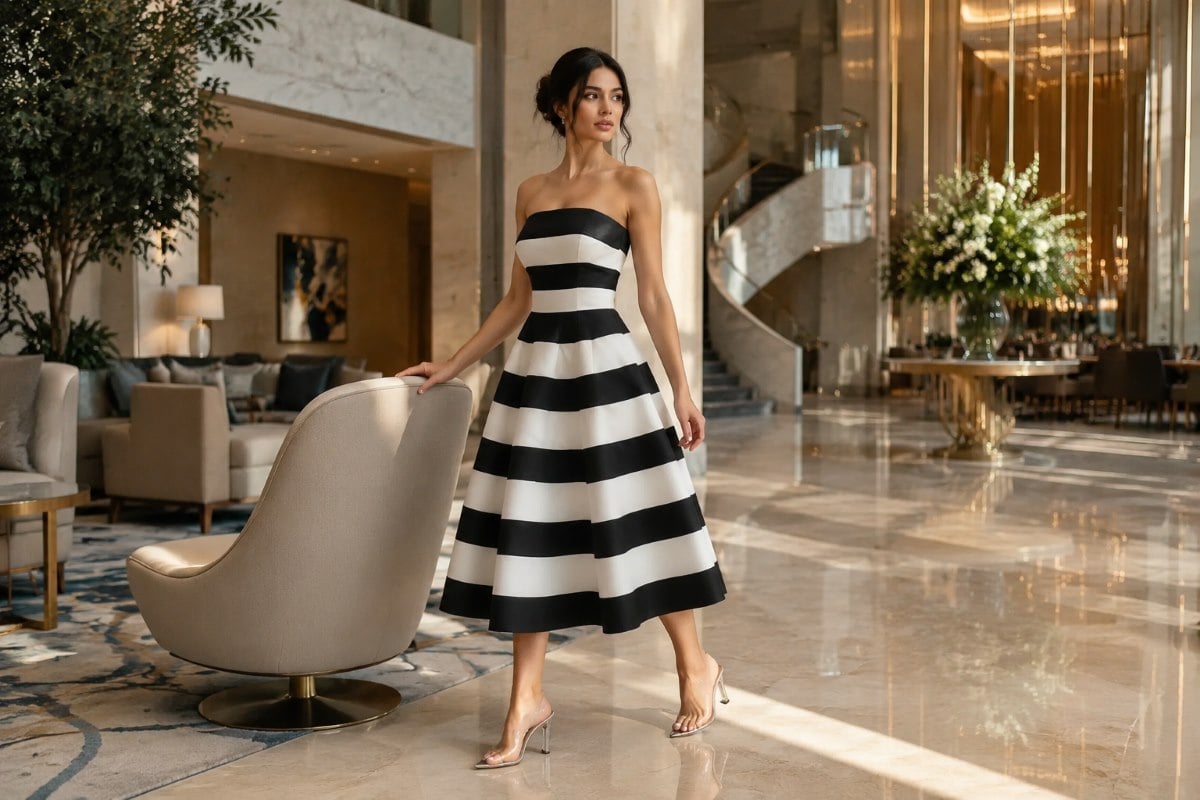
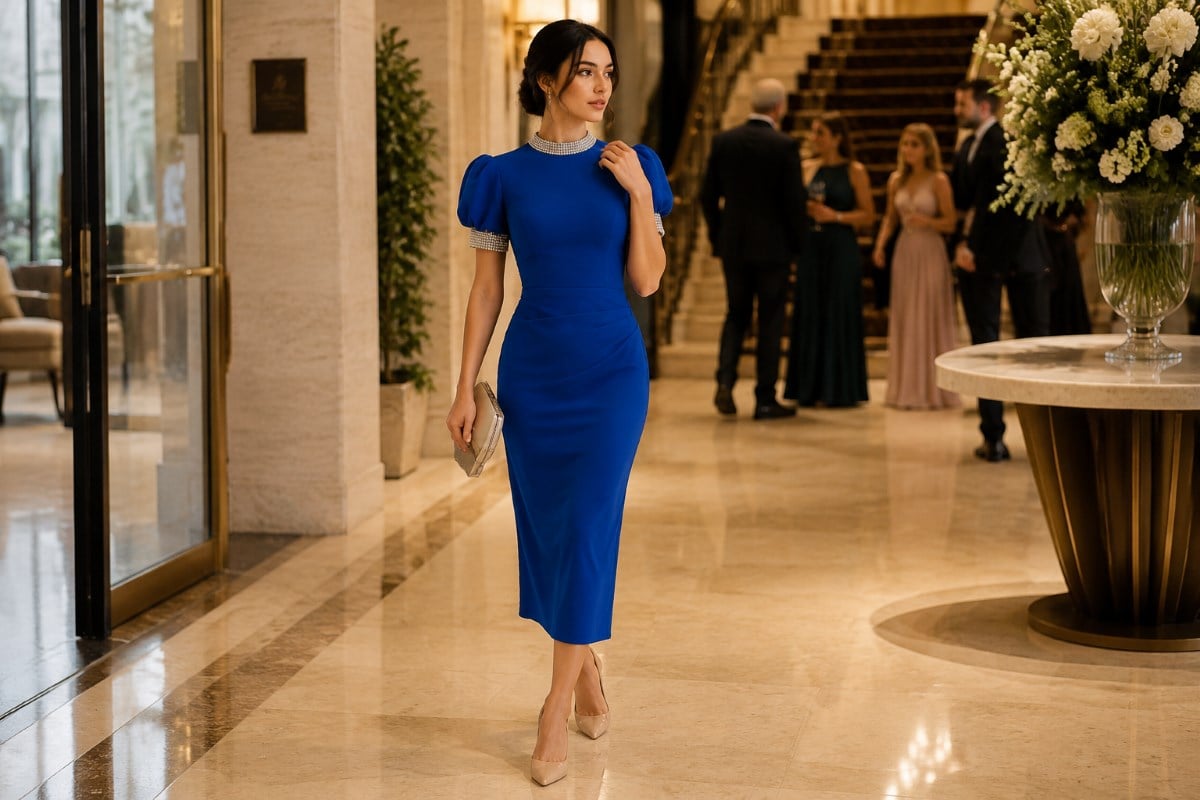
Knee-length and midi sit in the safe center
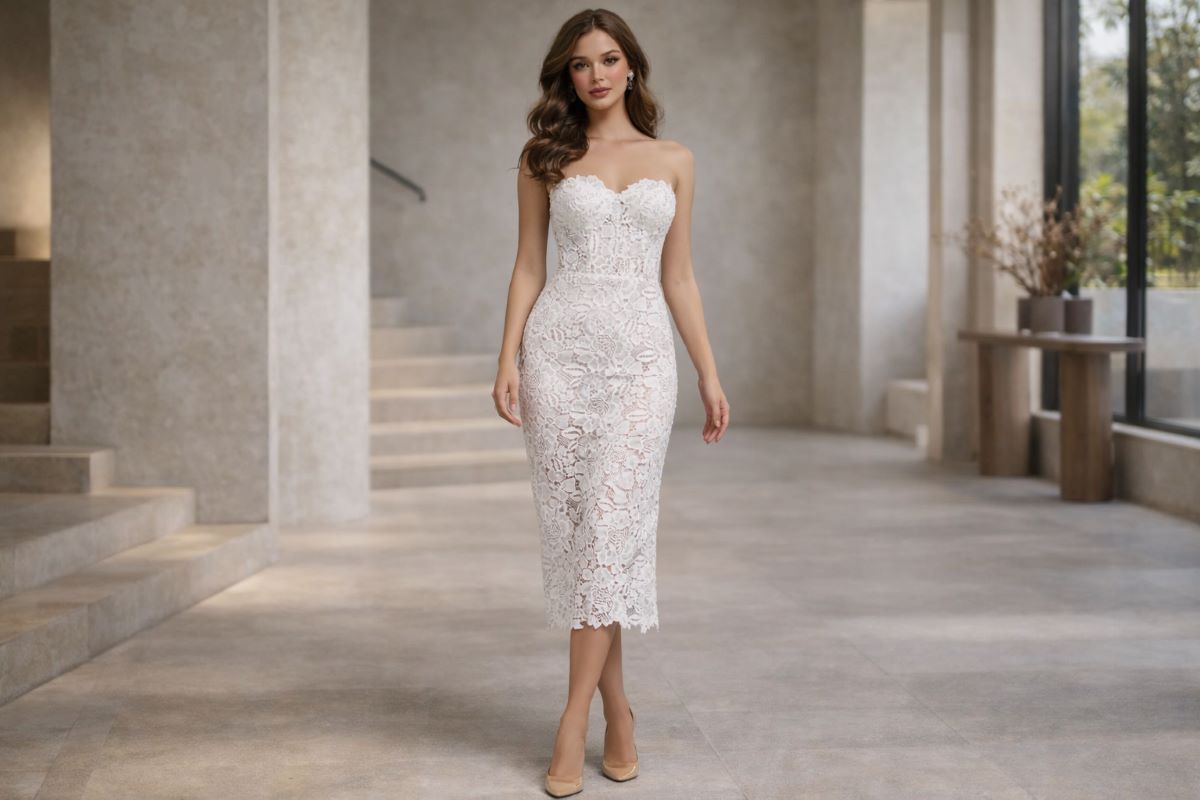
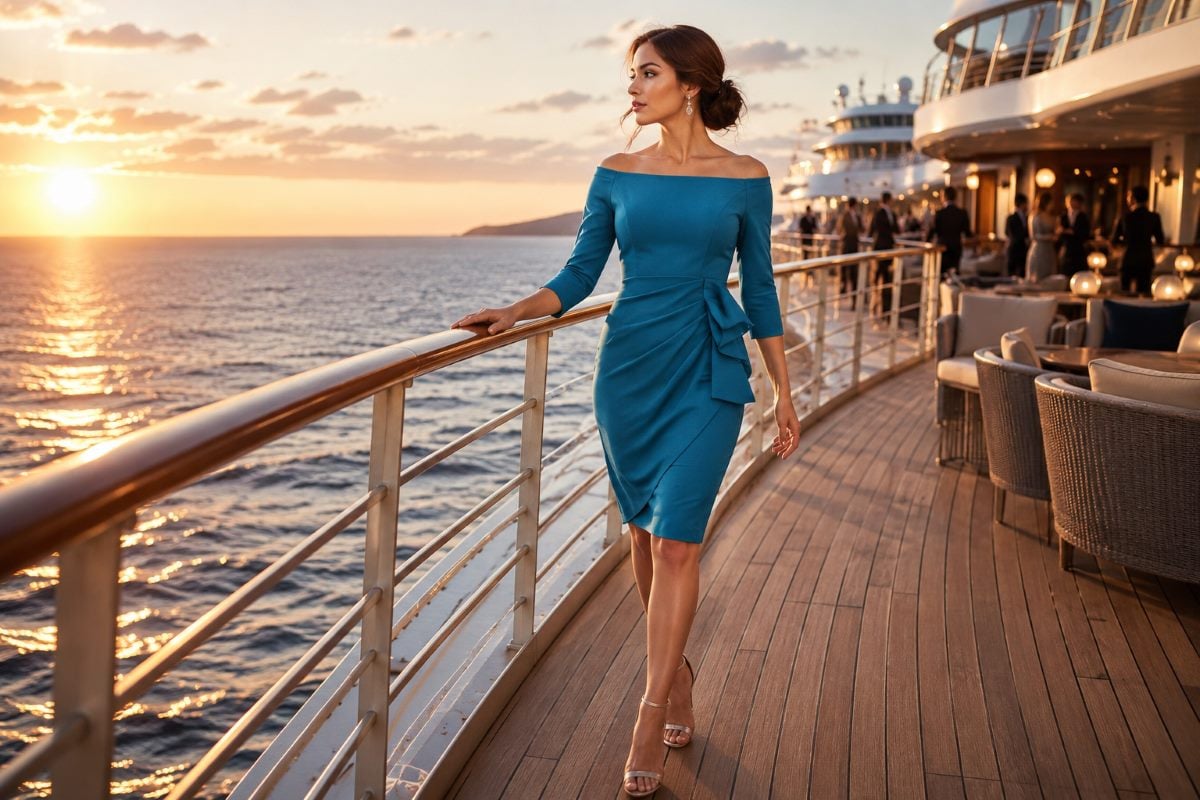
A hemline that falls at or just below the knee is the historical heart of semi-formal and it remains the answer that works at every semi-formal event without a second thought. A midi length, hitting somewhere between the mid-calf and the ankle, has become equally standard and often reads as the more current of the two. Both lengths let you sit, walk, and move without managing fabric, and both photograph cleanly. If you want one length that will never be questioned, this is it. The styles among midi evening dresses show how the in-between hem reads as polished without tipping into gown territory.
A long dress can work when the fabric stays restrained
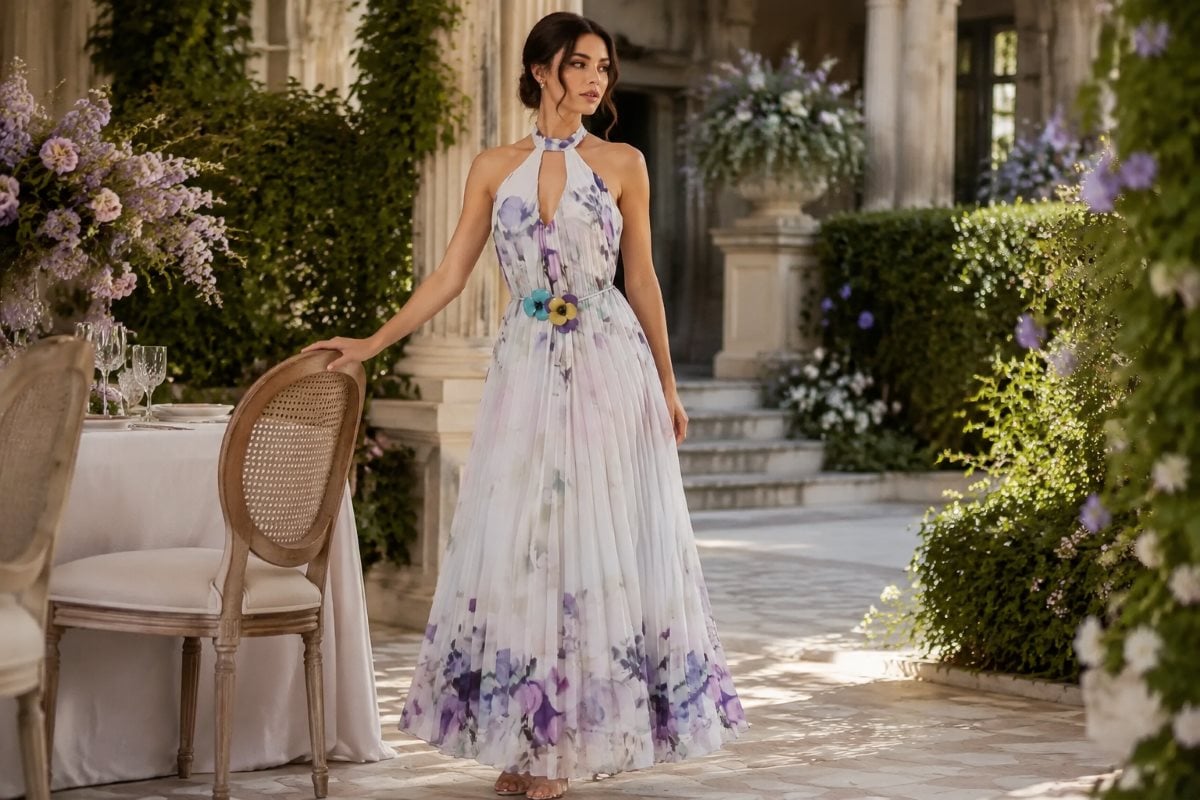
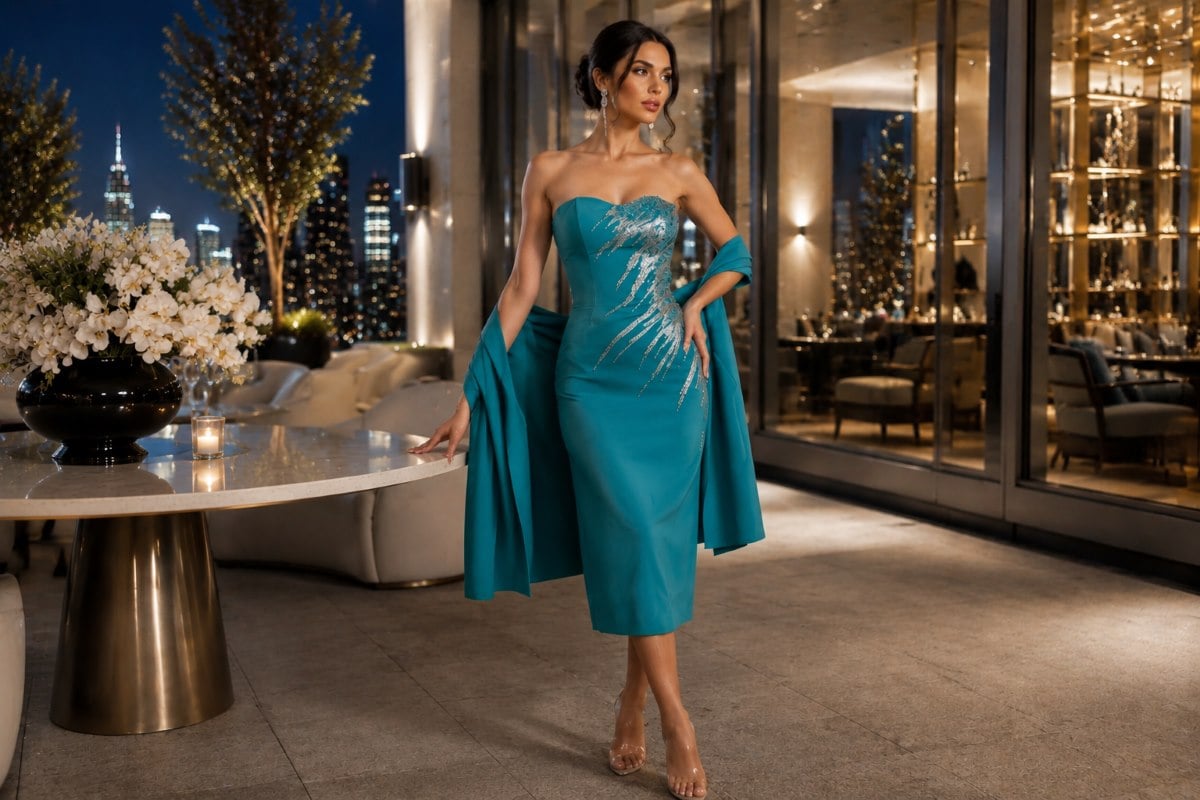
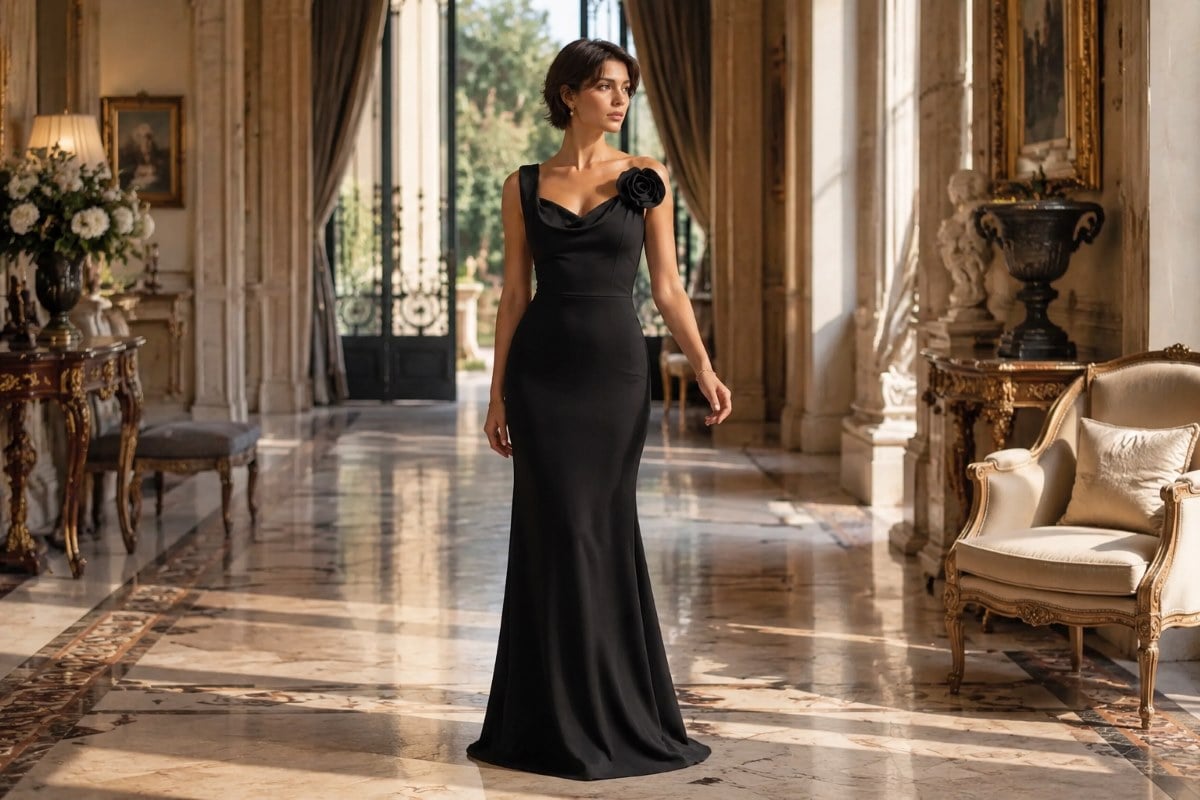
Floor length is not forbidden at a semi-formal event, and pretending otherwise leaves people badly advised. What matters is what the long dress is made of and how much it announces itself. A simple floor-length dress in crepe, chiffon, or matte satin, with a clean neckline and little or no embellishment, reads as elegant and appropriate at an evening semi-formal event. The same length in heavy allover beading, with a train or a dramatic structured skirt, reads as a gown and will leave you dressed for a different party than everyone else. Length alone does not make a dress formal. Weight, structure, and embellishment do.
Fabrics and details that signal semi-formal
Fabric does more work than almost any other factor in placing an outfit on the ladder, because a person can read fabric from across a room before they register the cut. This is why the same silhouette can read as casual in one material and appropriate in another.
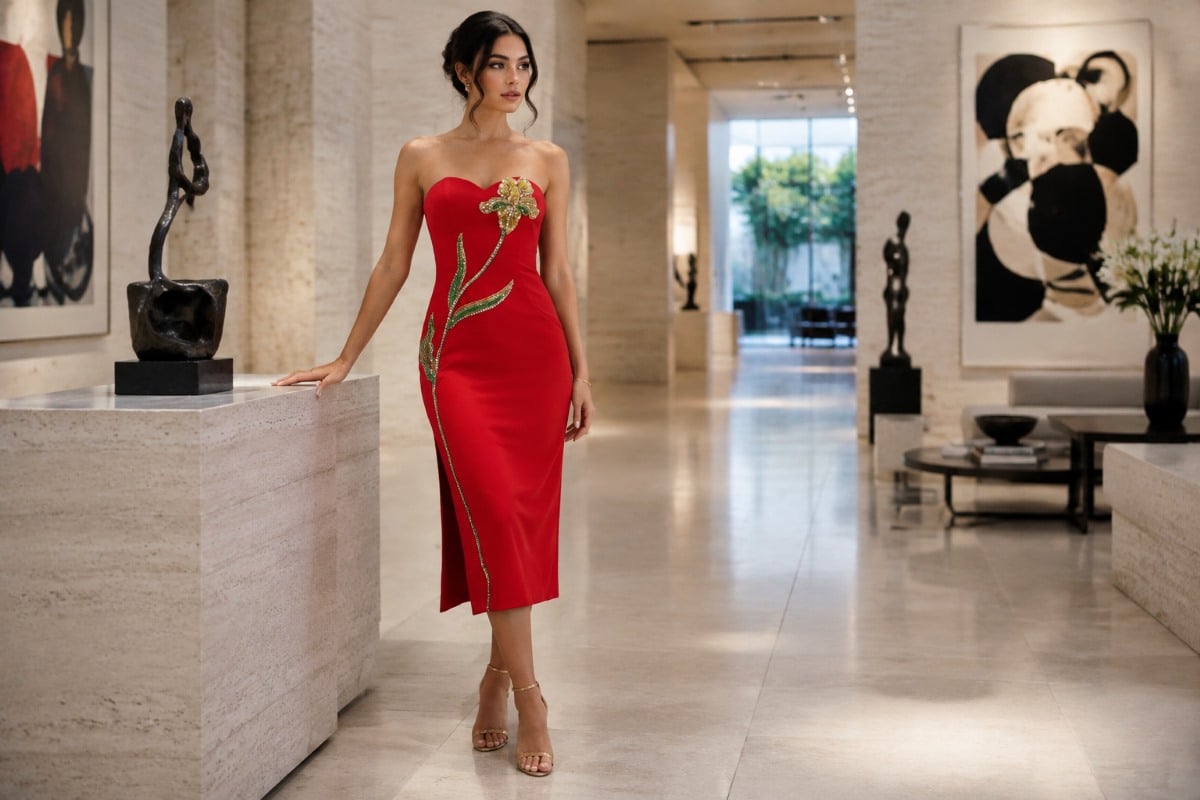
The fabrics that sit naturally in semi-formal are the ones with a refined surface and a good drape: crepe, satin, chiffon, georgette, lace, velvet, and quality blends with a soft or lustrous hand. These read as intentional. The fabrics that pull an outfit downward are the everyday ones, including cotton jersey, denim, linen, and anything with a visible casual weave. A dress cut in a beautiful silhouette will still read as a sundress if it is made of lightweight printed cotton, which is why the fabric question deserves attention before the silhouette question. A dress cut in a beautiful silhouette will still read as a sundress if it is made of lightweight printed cotton, which is why the fabric question deserves attention before the silhouette question.
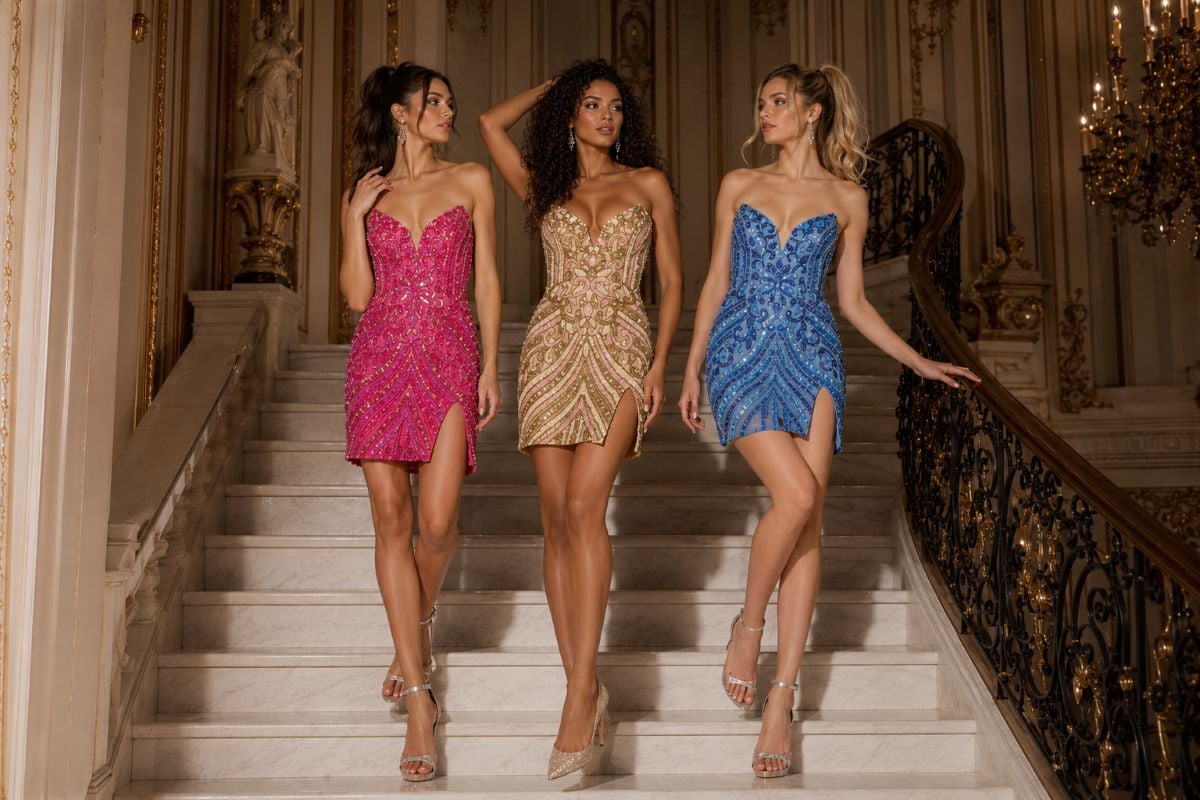
Detail follows the same logic. A little shine, a subtle texture, a lace overlay, or scattered beading all sit comfortably in semi-formal, particularly for an evening event. Heavy allover crystal work, dense sequins from shoulder to hem, or elaborate three-dimensional embellishment start to read as formal and are better saved for an invitation that asks for it. The useful test is whether the detail is a feature of the dress or the entire point of it.
Alternatives to a dress
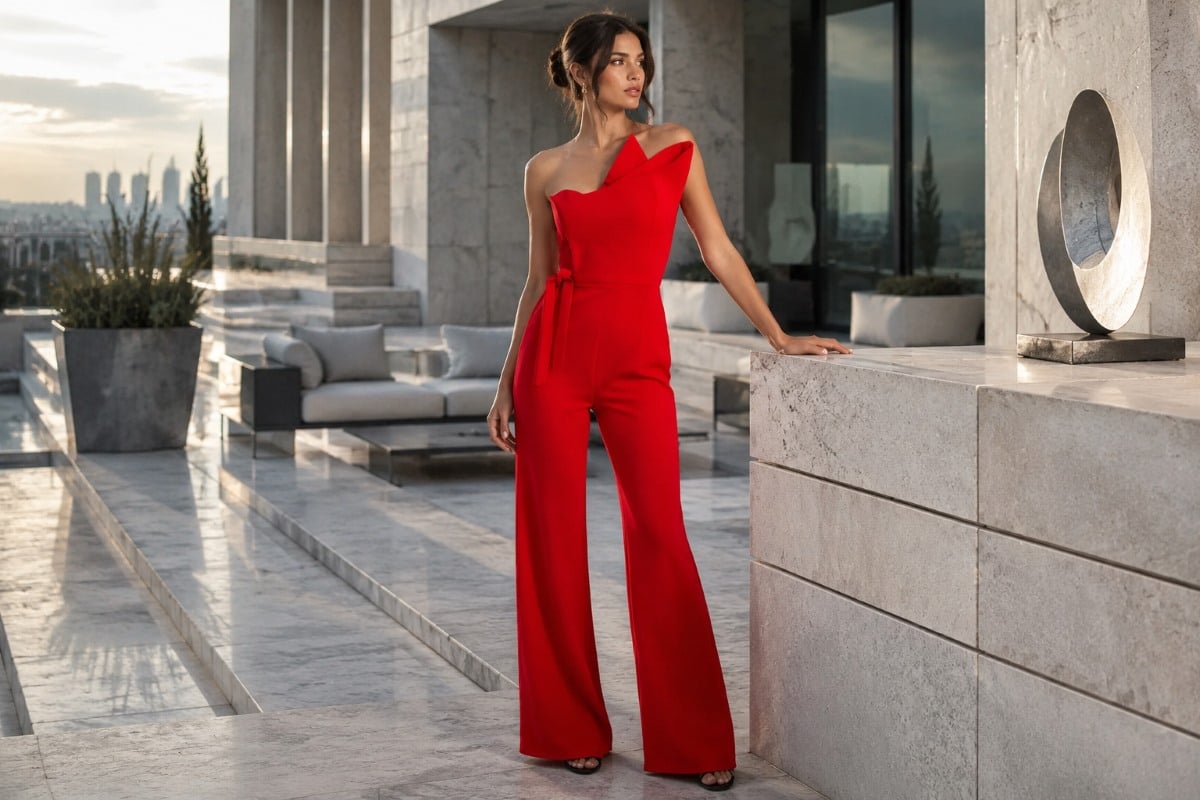
Semi-formal is one of the more flexible codes precisely because it does not require a dress, and this is worth knowing if dresses are not how you feel most yourself. A well-cut jumpsuit in a refined fabric reads as entirely appropriate and often as the most current choice in the room, particularly with a clean neckline and a wide or tapered leg that has been hemmed to the right length for your shoe.
Tailored separates also work when the pieces are dressy in their own right, such as a silk or satin top with a full skirt, or fluid trousers with a structured top. The rule for separates is that both halves have to earn their place. A beautiful top paired with everyday trousers reads as an office outfit, not a semi-formal one. The styles among jumpsuits show how a one-piece alternative can carry the same polish as a dress while feeling entirely different to wear.
How the time of day and venue change the answer
Semi-formal is not a single fixed look, and the same invitation can call for two quite different outfits depending on when and where the event happens. Reading those two variables narrows your choice more than any amount of browsing.
Evening events lean darker, richer, and slightly dressier
An evening semi-formal event pulls toward deeper colors, more lustrous fabrics, and a little more sparkle. This is where a long simple dress is most at home, where satin and velvet read best, and where subtle beading earns its place. Jewel tones, black, and rich neutrals all suit the setting. If the invitation lists a start time after six, you can safely dress toward the upper edge of the code. The styles built around the little black dress show how a single clean silhouette handles an evening semi-formal event without any risk of misreading the room.
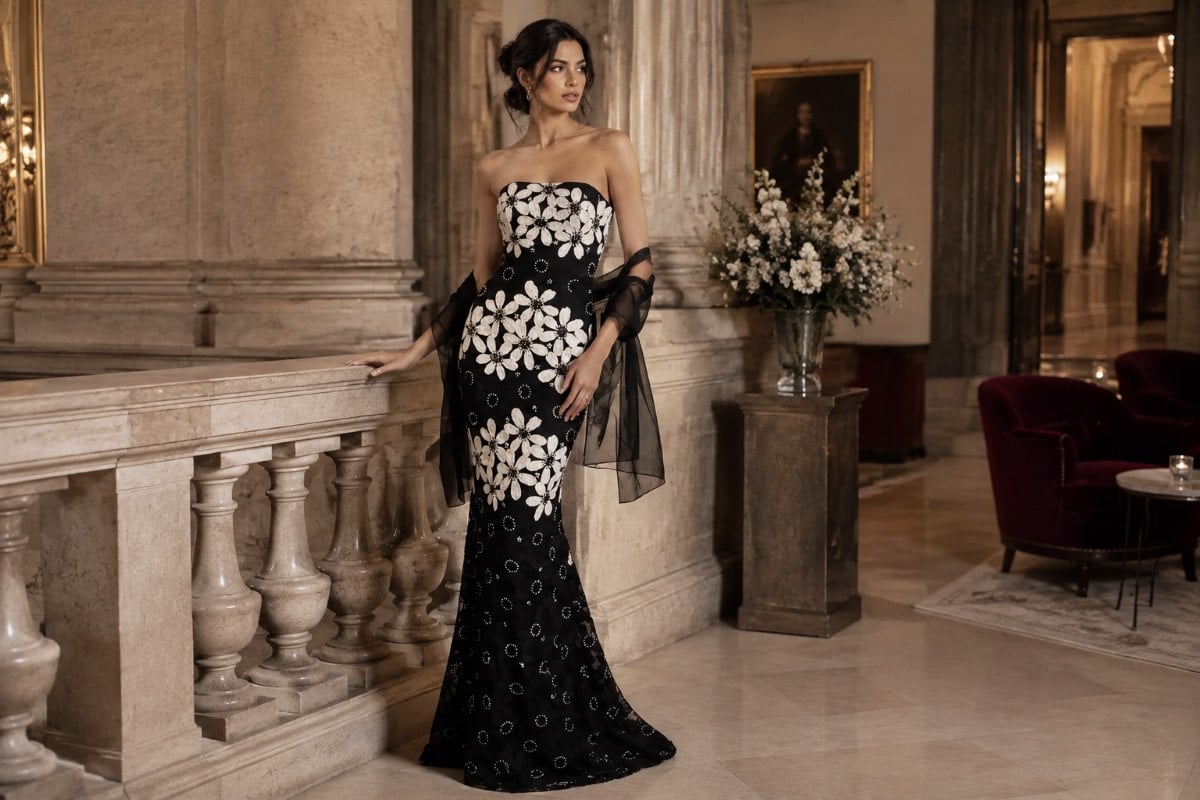
Daytime events lean lighter and less embellished
A daytime semi-formal event asks for the same quality with a lighter hand. Softer colors, matte or lightly textured fabrics, and minimal shine all read correctly under natural light, where heavy sparkle can look out of place. A knee-length or midi dress in crepe, chiffon, or lace is the natural answer. This is also where a refined separates outfit or a lighter jumpsuit works particularly well, since daytime gives you more room to be understated without reading as underdressed.
Venue does the rest of the work. A hotel ballroom, a private dining room, or an upscale restaurant all push toward the dressier edge of semi-formal. A community hall, a garden, or a casual restaurant pulls toward the lighter edge. When the invitation gives you a dress code and a venue, trust the venue to break the tie.
What to avoid at a semi-formal event
Knowing what sits outside the code is as useful as knowing what sits inside it, and the misses tend to fall into two predictable groups.
The first group is underdressing, which usually comes from treating semi-formal as a synonym for smart casual. Denim in any form, cotton sundresses, casual sandals, sneakers, and anything you would wear to run errands all fall short, however nicely they are styled. The second group is overdressing, which is less common but more uncomfortable, and it comes from treating semi-formal as a synonym for formal. A heavily beaded floor-length gown, a dress with a train, a ball gown silhouette, or anything you would wear to a black-tie gala will leave you conspicuously ahead of the room. For a sense of where that upper line actually falls, the guide to black-tie evening dresses shows what genuinely formal looks like by comparison.
There is one additional rule that applies whenever the semi-formal event is a wedding, and it overrides everything else. White, ivory, cream, and anything that reads as bridal are reserved for the bride. This holds regardless of how flattering the dress is or how modern the couple seem about it. Beyond that single restriction, color is entirely your own choice, and a confident shade in a clean silhouette usually makes a stronger impression than a fussier dress in a forgettable one. For the wider set of wedding-specific expectations, the breakdown of wedding guest dress codes covers how each level translates for a guest.
Building the rest of the look
Once the dress is settled, the rest of a semi-formal look is straightforward, and the guiding principle is that the accessories should match the dress in level rather than compete with it. A heel, whether a pump, a block heel, or a refined sandal, reads correctly across the code, and a polished flat is entirely acceptable if heels are not comfortable for you. What matters is that the shoe is finished rather than casual.
A small structured bag or a clutch is the right scale, since a large everyday handbag pulls the whole look downward regardless of how good the dress is. Jewelry should be considered rather than piled on: a pair of statement earrings, or a necklace that suits the neckline, is usually enough. If the dress already carries detail at the neckline, let the earrings do the work and skip the necklace entirely. Outerwear deserves a moment of thought too, since arriving in a casual coat over a beautiful dress undoes the effect at the door. A wrap, a tailored coat, or a structured jacket all keep the look intact. The range of contemporary gowns shows how a modern, clean silhouette gives accessories room to finish the look rather than rescue it.
The one test that settles it
The reason semi-formal attire feels difficult is that it asks for judgment rather than obedience, and judgment is harder than a rule. But the judgment involved is small once you know the landmarks. Aim for a dress between the knee and the ankle in a refined fabric, adjust the depth of color and the amount of shine according to whether the event runs by daylight or after dark, keep embellishment as a feature rather than the whole story, and finish with accessories that match the level of the dress.
If you want a single test that works almost every time, ask whether the outfit would feel right at a nice dinner where you had made a real effort. If the answer is yes and you would still feel comfortable dancing or standing for a few hours, you have landed in semi-formal. The most common mistake is not choosing the wrong dress but choosing a dress you are not comfortable in, since confidence is what actually reads across a room. To see how knee-length, midi, and softly long silhouettes translate into a semi-formal look for your next invitation, explore the current styles through an authorized Jovani retailer.
The Semi-Formal Questions That Trip People Up
What does semi-formal attire mean for women?
Semi-formal attire means polished dressing that stops short of a full formal gown. For women it usually means a refined dress in a quality fabric, most often falling between the knee and the ankle, worn with finished shoes and considered accessories. It is clearly a step above everyday clothing and clearly below black tie. The original sense of the phrase was half of formal dress, which captures it well: the same intention and fabric quality as formal, with the volume turned down.
Is semi-formal the same as cocktail attire?
Not quite, and the relationship is worth understanding. Cocktail attire sits inside semi-formal rather than beside it. Every cocktail dress satisfies a semi-formal dress code, but semi-formal is the broader category and also welcomes a midi dress, a tailored jumpsuit, or dressy separates that might read as slightly understated for a strict cocktail invitation. In practice this makes a cocktail dress the safest possible answer to a semi-formal invitation, while semi-formal gives you more room to choose something softer or more covered.
Can you wear a long dress to a semi-formal event?
Yes, provided the dress stays restrained. A simple floor-length dress in crepe, chiffon, or matte satin, with a clean neckline and minimal embellishment, reads as elegant and appropriate at an evening semi-formal event. What pushes a long dress out of the code is not the length but the weight and drama: heavy allover beading, a train, or a structured ball gown skirt all read as formal. Length alone does not determine formality, so judge the fabric and the embellishment instead.
What is the difference between semi-formal and formal attire?
Formal attire expects the fullest expression of dressing up, which usually means a floor-length gown, often with structured construction and significant embellishment. Semi-formal asks for the same quality of fabric and the same level of intention with far less volume, most often landing on a knee-length or midi dress. The practical difference is that formal makes a gown the expectation, while semi-formal makes it one option among several and generally the least necessary one.
What should you not wear to a semi-formal event?
The misses fall into two groups. Underdressing comes from treating semi-formal as smart casual, so denim, cotton sundresses, casual sandals, and sneakers all fall short. Overdressing comes from treating it as formal, so a heavily beaded gown, a dress with a train, or a ball gown silhouette will leave you ahead of the room. If the event is a wedding, one further rule applies without exception: avoid white, ivory, cream, and anything that reads as bridal.
Can you wear a jumpsuit or trousers to a semi-formal event?
Yes. Semi-formal is one of the more flexible codes and does not require a dress. A well-cut jumpsuit in a refined fabric reads as entirely appropriate and often as the most current choice in the room, especially when the leg has been hemmed to suit your shoe. Tailored separates also work, as long as both pieces are dressy in their own right. A beautiful top over everyday trousers reads as an office outfit rather than a semi-formal one, so both halves need to carry equal weight.