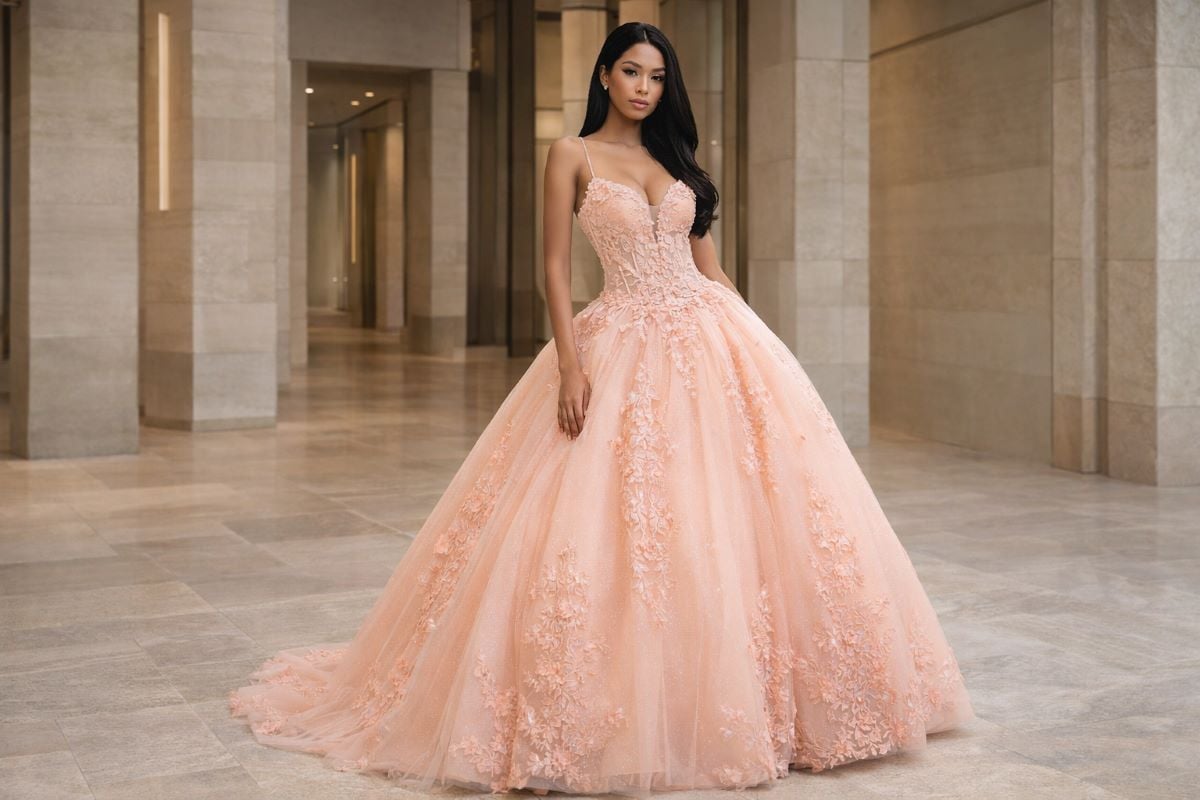


A teen pageant gown and a Miss division gown can look similar on a hanger, but the contestants wearing them are competing under different expectations, and dressing for the wrong division is a mistake that judges notice immediately. The teen divisions, Miss Teen USA, Miss America’s Teen, and their local equivalents, reward a look that reads as polished and age-appropriate, while the Miss divisions reward a more mature, sophisticated, fully realized formal presentation. Understanding the wardrobe differences between a teen pageant vs miss pageant dress is essential for any contestant or parent navigating the move from one division to the next, or simply competing in the right register for a contestant’s age. This guide breaks down exactly how the two differ in coverage, embellishment, silhouette, color, and overall styling, so the gown matches the division and the contestant.
Why the Two Divisions Call for Different Gowns
The fundamental reason teen and Miss gowns differ is that the two divisions are evaluating contestants at different life stages, and the evening gown presentation is expected to reflect that. Judges in each division look for a gown that suits the age and register of the contestant, and a mismatch reads as immediately off.
In the teen divisions, contestants are typically in their teen years, and the gown should read as polished, elegant, and age-appropriate, sophisticated enough for competition but never too mature. The teen presentation rewards a fresh, graceful, age-suitable elegance. In the Miss divisions, contestants are young women, and the gown can be fully mature, dramatic, and sophisticated, a complete formal evening gown presentation without the age considerations that shape teen dressing. The Miss presentation rewards full, realized glamour and sophistication.
This difference shapes nearly every wardrobe decision, from coverage to embellishment to silhouette. A gown that is perfect for a Miss contestant can read as too mature for a teen, while a gown calibrated for a teen can read as not quite sophisticated enough for the Miss stage. The full range of pageant dresses spans both registers, but understanding which division a contestant is competing in is what tells her where on that spectrum to land. Matching the gown to the division is the foundation of dressing correctly for either.

Coverage and Neckline: The Clearest Difference
The single clearest wardrobe difference between teen and Miss divisions is coverage, since age-appropriateness is a genuine consideration in the teen divisions in a way it is not in the Miss divisions. This is where the mismatch is most visible and most important to get right.
For teen contestants, the coverage should be age-appropriate: necklines that are elegant rather than plunging, cutouts that are minimal or absent, and an overall level of skin exposure that reads as polished and suitable for a teen. A teen gown can absolutely be beautiful, dramatic, and competitive while remaining age-appropriate, through elegant necklines, tasteful detailing, and a silhouette that flatters without exposing. Judges in teen divisions specifically reward this age-suitable elegance and notice when a teen gown reads as too revealing or mature.
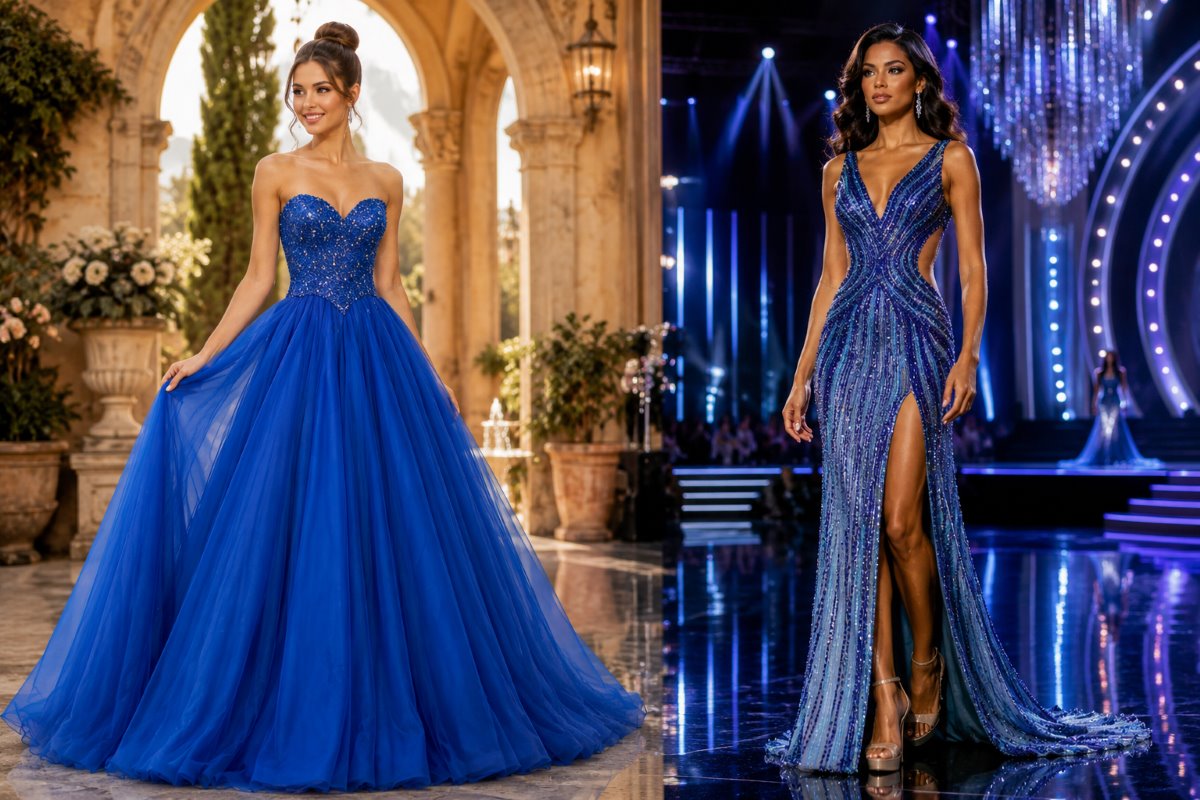
For Miss contestants, the coverage expectations relax considerably, since these are young women competing in a mature division. Plunging necklines, strategic cutouts, high slits, and more revealing silhouettes are all appropriate and common in the Miss divisions, where a fully mature, sophisticated, sometimes daring formal presentation is rewarded. A Miss gown can embrace the drama and sophistication that would read as too much for a teen. The styles among evening gowns show the full range of mature formal options that suit the Miss divisions, where the gown can be as sophisticated and dramatic as the contestant wishes.

Embellishment and Drama
The level of embellishment and overall drama also tends to differ between the divisions, reflecting the different registers each rewards. This is a more subtle difference than coverage but still meaningful.
Teen gowns often suit a slightly fresher, cleaner level of embellishment, polished and beautiful without necessarily the maximum drama of a Miss gown. A teen gown can certainly sparkle and make a statement, but it often reads best with embellishment that enhances rather than overwhelms, keeping the overall look age-appropriate and graceful. The teen register favors elegance that suits a younger contestant.
Miss gowns can embrace fuller drama, more elaborate embellishment, and a more commanding overall presence. A Miss contestant can wear a fully embellished, dramatic gown that reads as sophisticated and powerful on the mature stage. The styles among black pageant dresses show how a dramatic, sophisticated gown creates a powerful presence that suits the Miss divisions particularly well, where full glamour is rewarded. The general pattern is that the Miss divisions allow more maximalist drama, while the teen divisions reward polished restraint, though both can be beautiful and competitive.

Silhouette Choices Across the Divisions
Silhouette choices overlap considerably between the divisions, but some shapes suit one register better than the other, and understanding this helps a contestant choose well for her division.
For teen contestants, A-line and softly fitted silhouettes often read as age-appropriate and graceful, flattering the figure without the dramatic body-consciousness of a tightly fitted mermaid. That said, a well-chosen fitted silhouette can absolutely work for an older teen with the poise to carry it, as long as the coverage and styling keep the overall look age-suitable. The teen register favors silhouettes that flatter while reading as graceful and polished.
For Miss contestants, the full range of silhouettes is available, including the most dramatic and body-conscious options. A fitted mermaid that emphasizes the figure, a dramatic ball gown, a sleek column with a high slit, all suit the Miss divisions, where a mature, confident, sophisticated presentation is rewarded. The Miss contestant can choose the silhouette that makes the strongest statement for her, including the most dramatic options that would read as too mature for a teen. The principle is that silhouette choice widens in the Miss divisions, where full sophistication and drama are welcome.
Color and Overall Styling
Color works somewhat similarly across the divisions, but the overall styling, hair, makeup, and total presentation, tends to differ in register between teen and Miss. Both color and styling reinforce the age-appropriate-versus-mature distinction.
For color, both divisions reward a shade that flatters the individual contestant and reads well under stage lighting, so the core principle is the same. The difference is more in styling: teen contestants often suit a fresher, more natural styling, hair and makeup that read as polished but age-appropriate rather than heavily done, while Miss contestants can embrace a more fully glamorous, sophisticated total look. The teen total presentation favors fresh elegance; the Miss total presentation favors full, realized glamour. The way color reads under bright competition lighting matters in both divisions, a consideration explored in this guide on evening dress color trends, which helps a contestant choose a shade that performs on stage.
The overall styling should reinforce the register of the division. A teen contestant in an age-appropriate gown paired with fresh, polished styling reads as exactly right for her division, while the same gown with heavy, mature styling can push the look too old. For Miss contestants, fully sophisticated hair, makeup, and styling complete a mature presentation. The interplay between the gown and the total look is what creates a cohesive, division-appropriate presentation, and the same attention to deliberate, intentional styling that shapes the pageant interview gowns choice applies to building a complete evening gown look in the right register for the division.
Stage Performance and Construction Across Divisions
Beyond the visible differences of coverage and drama, both teen and Miss gowns share the demands of competition performance, though the way those demands are met can differ slightly by register. Understanding the construction that makes a gown competition-ready matters for both divisions.
Every pageant gown, teen or Miss, needs to perform on stage in ways a formal dress does not: it must read clearly under bright stage lighting, hold its structure through a competition day, and move correctly during the walk, the turn, and the exit. This is true regardless of division, and it is why a true competition gown differs from an ordinary formal dress. The construction, the internal structure, the quality of the fabric, the security of the embellishment, serves a teen contestant and a Miss contestant equally, since both are walking the same kind of stage under the same kind of scrutiny. The broader principles of what makes a gown win on stage are explored in this guide on winning pageant dress trends, which applies across both divisions.
Where the register shapes construction is in the calibration of the details. A teen gown achieves its stage impact through age-appropriate means, structure and quality that create presence without relying on the most revealing or dramatic elements, while a Miss gown can use the full range of dramatic construction, deep necklines, high slits, body-conscious fitting, to command the stage. When choosing a teen pageant vs miss pageant dress, the construction should serve the register: competition-ready in both cases, but calibrated to age-appropriate elegance for teen or full drama for Miss. The way a gown is built to flatter and perform under stage conditions is part of the same thinking explored in this guide on how to look slimmer in an evening dress, where construction and silhouette work together to create a flattering line.
How Judges Read the Gown in Each Division
Judges in teen and Miss divisions are evaluating the evening gown presentation through the lens of the division’s register, and understanding what each set of judges rewards helps a contestant dress strategically. The gown is part of the score, and dressing for the wrong register works against the contestant.
Teen division judges reward a contestant who looks polished, confident, and age-appropriate, whose gown reads as elegant and suitable for her stage of life. A teen who presents fresh, graceful elegance signals that she understands her division and competes with poise. A gown that reads as too mature or revealing works against a teen contestant, since it suggests a misreading of the division’s expectations. Judges notice when a teen gown hits the right register of age-appropriate sophistication.
Miss division judges reward full, realized sophistication and confidence, a contestant who presents a complete, mature formal look and carries it with poise. A Miss contestant who embraces the drama and glamour the division allows signals that she is competing at the full register of the division. The total presentation, the gown, the styling, the walk, the confidence, comes together differently in each division, and dressing for the correct register is what allows a contestant to present her strongest self. The principle holds across both: when the gown matches the division, the contestant reads as someone who understands exactly where she is competing.
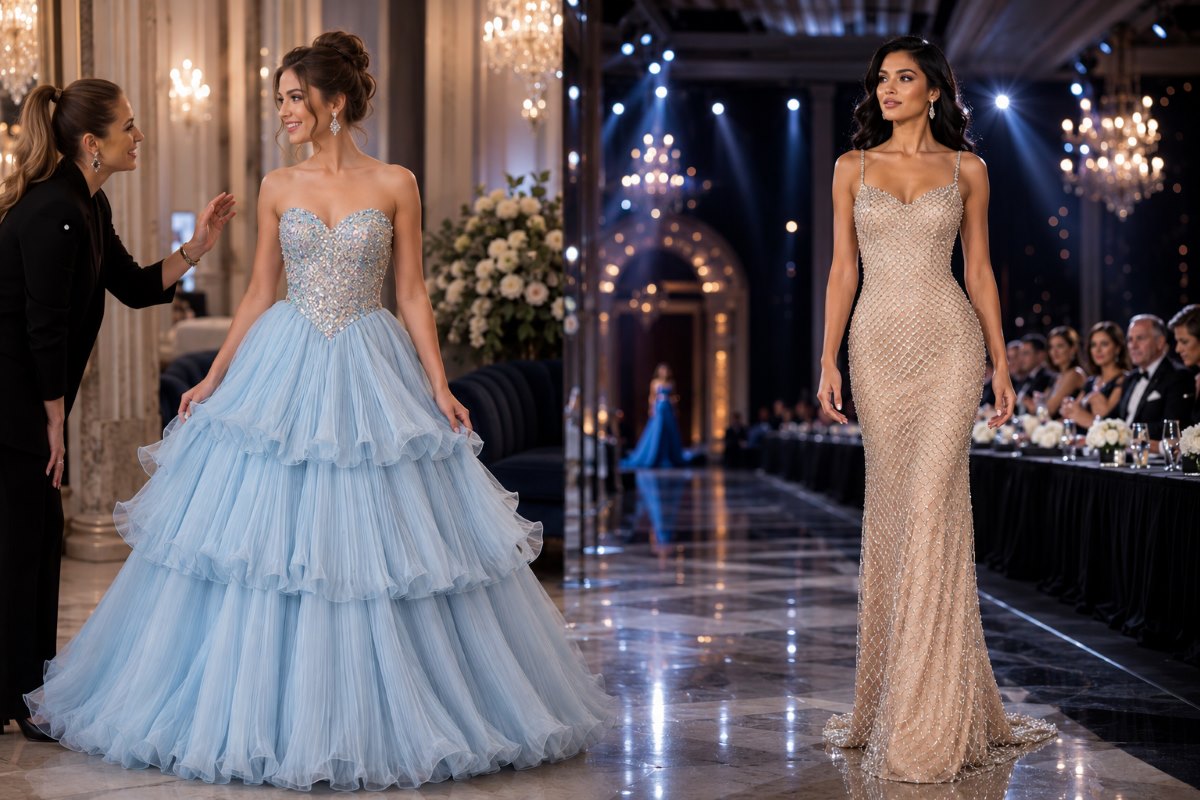
Guidance for Moving From Teen to Miss
One of the most common moments to navigate these differences is when a contestant ages up from the teen divisions to the Miss divisions, and her wardrobe needs to mature accordingly. This transition is a meaningful shift in presentation.
A contestant moving from teen to Miss can embrace the fuller sophistication, drama, and maturity that the Miss divisions allow, stepping into more dramatic silhouettes, deeper necklines, more elaborate embellishment, and a more fully glamorous total look. The transition is an opportunity to present a more mature, realized version of her competition aesthetic. A gown that would have read as too mature in her teen years is now exactly appropriate.
For parents and contestants navigating this transition, the shift is genuinely freeing, since the age considerations that shaped teen dressing relax in the Miss divisions. The contestant can now compete in the full register of mature formal glamour. Understanding that the Miss divisions reward a different, more sophisticated presentation than the teen divisions helps a contestant make the most of the transition and dress for the division she is now competing in. For younger competitors still in the teen or pre-teen range, the age-calibrated styles among the girls dresses collection reflect the same principle of matching the gown to the contestant’s stage, with silhouettes and embellishment suited to younger competitors rather than scaled-down adult gowns.
Frequently Asked Questions About Teen and Miss Pageant Dresses
What is the difference between a teen and Miss pageant dress?
The main difference is register: teen gowns read as polished and age-appropriate, with elegant necklines, minimal cutouts, and graceful styling, while Miss gowns can be fully mature, with plunging necklines, cutouts, high slits, and dramatic embellishment. The teen divisions reward fresh, age-suitable elegance, and the Miss divisions reward full, sophisticated glamour. Coverage is the clearest difference between the two.
Can a teen contestant wear a revealing pageant gown?
No, the teen divisions reward age-appropriate coverage, with elegant rather than plunging necklines and minimal or absent cutouts. A teen gown can absolutely be beautiful, dramatic, and competitive while remaining age-appropriate through elegant necklines, tasteful detailing, and a flattering silhouette. Judges in teen divisions specifically notice and reward age-suitable elegance, and a too-revealing gown reads as a mismatch for the division.
How should a pageant gown change when moving from teen to Miss?
A contestant aging up to Miss can embrace fuller sophistication and drama: deeper necklines, more dramatic silhouettes like a fitted mermaid, strategic cutouts, more elaborate embellishment, and a more fully glamorous total look. The age considerations that shaped teen dressing relax in the Miss divisions, so the transition is an opportunity to present a more mature, realized version of her competition aesthetic.
Do teen and Miss divisions allow the same silhouettes?
They overlap, but the Miss divisions allow a wider range, including the most dramatic and body-conscious options. Teen contestants often suit A-line and softly fitted silhouettes that read as graceful and age-appropriate, while Miss contestants can wear fitted mermaids, dramatic ball gowns, and sleek columns with high slits. A well-chosen fitted silhouette can work for an older teen if the coverage and styling keep the look age-suitable.
Is embellishment different for teen versus Miss gowns?
Somewhat. Teen gowns often suit a fresher, cleaner level of embellishment that enhances without overwhelming, keeping the look age-appropriate and graceful. Miss gowns can embrace fuller drama and more elaborate embellishment for a commanding, sophisticated presence. Both can sparkle and make a statement, but the Miss divisions allow more maximalist drama while the teen divisions reward polished restraint.
Does styling differ between teen and Miss pageants?
Yes, in register. Teen contestants often suit fresher, more natural hair and makeup that read as polished but age-appropriate, while Miss contestants can embrace a more fully glamorous, sophisticated total look. The styling should reinforce the division: fresh elegance for teen presentations and full, realized glamour for Miss presentations. The total look and the gown together create a cohesive, division-appropriate presentation.
Dressing for the Right Division
Understanding the wardrobe differences between a teen pageant vs miss pageant dress comes down to register: the teen divisions reward polished, age-appropriate elegance with modest coverage, graceful silhouettes, and fresh styling, while the Miss divisions reward full, mature sophistication with deeper necklines, dramatic silhouettes, elaborate embellishment, and complete glamour. Matching the gown to the division is essential, since a mismatch reads as immediately off to judges who are evaluating contestants in the right register for their age. Whether a contestant is competing in the teen divisions, the Miss divisions, or transitioning between them, choosing the correct register for a teen pageant vs miss pageant dress is the foundation of a strong evening gown presentation. Jovani has spent more than forty years designing competition gowns across both registers, from age-appropriate teen elegance to fully realized Miss glamour, each built to perform on the pageant stage.