
There is a profound and beautiful shift taking place in the landscape of modern bridal fashion—a movement toward an aesthetic that champions quiet confidence over loud, overwhelming embellishment. For decades, the societal expectation for bridal attire in American culture leaned heavily into the dramatic. Brides were frequently encouraged to wear voluminous skirts, intricate layers of heavy lace, and bodices completely encrusted with crystal beading, pearls, or complex floral appliqués. While those maximalist styles certainly have their devoted admirers and their rightful place in bridal history, a rapidly growing number of modern women are discovering the breathtaking power of the simple wedding dress.
This is not merely a passing trend born out of a desire to do “less,” nor is it a shortcut to bridal styling. Rather, it is a sophisticated understanding that sometimes, the most unforgettable statement a woman can make is a completely understated one. The decision to wear a minimalist gown is a declaration of self-assured style. It requires a distinct level of fashion fluency to recognize that true elegance does not need to shout to be heard. When a woman chooses minimalism for her wedding day, she is boldly declaring that her presence, her joy, and her love story are the true centerpieces of the event.
As a leading voice in formalwear and bridal design, Jovani has long understood that the absence of heavy ornamentation places the spotlight exactly where it belongs: on the flawless construction of the garment and the radiant, natural beauty of the woman wearing it. Available exclusively through our curated network of authorized boutiques across the United States, our bridal designs reflect the meticulous craftsmanship required to execute minimalism flawlessly. If you are beginning your journey toward the altar and find yourself naturally drawn to clean designs, unembellished fabrics, and sleek silhouettes, you are stepping into a rich, sophisticated tradition of styling. Understanding the myriad benefits of wearing an elegant simple wedding dress can help clarify your vision, refine your aesthetic choices, and give you the confidence to trust your instinct for true, refined elegance.
The Evolution of Minimalist Bridal Fashion
To truly appreciate the modern minimalist bridal gown, it is helpful to deeply examine how bridal fashion has evolved over the past century. Fashion is inherently cyclical, constantly swinging between the extremes of opulence and restraint, but minimalism has always maintained a steadfast presence among the most style-conscious and avant-garde brides.
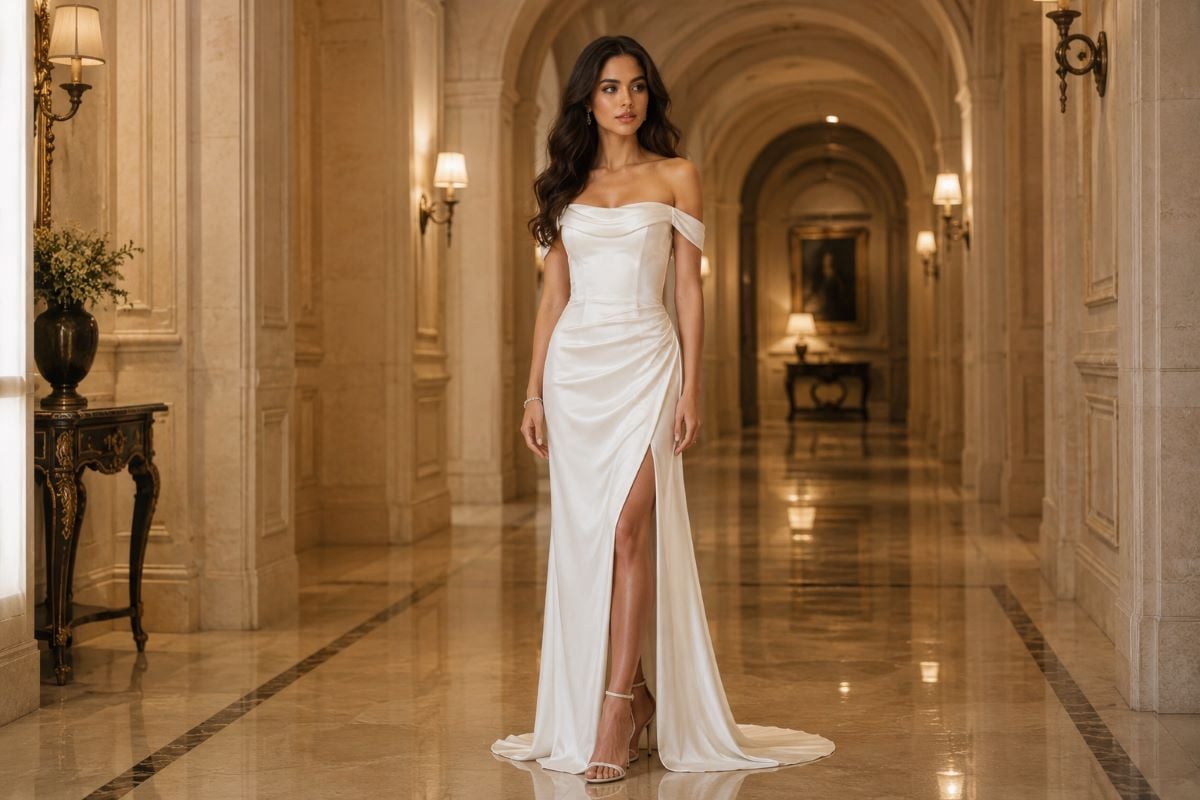
From Vintage Roots to Mid-Century Modernism
In the 1920s and 1930s, simple, bias-cut silk dresses were the absolute height of bridal elegance. Following the highly structured, corset-heavy eras of the Edwardian period, designers of the Jazz Age prioritized the fluid movement of the fabric and the natural, uninhibited lines of the female body over heavy adornment. The bias cut—a technique of cutting the fabric diagonally across the grain—allowed the material to drape over curves with a liquid, sensuous grace.
Moving into the 1940s, wartime rationing of fabrics and materials necessitated a return to pragmatic, understated silhouettes. Brides often wore simple, tailored suits or minimally adorned dresses, finding elegance in crisp lines and smart tailoring rather than yards of excessive tulle. However, the post-World War II eras—particularly the economic boom times of the 1980s and 1990s—saw a massive explosion of bridal maximalism. Think of the iconic, larger-than-life royal weddings of the 1980s, which set a global precedent for exaggerated puff sleeves, massive cathedral trains, heavy petticoats, and intricately sequined bodices that weighed down the wearer.
The 1990s Shift and the Modern Renaissance
The pushback against this maximalism began in the mid-to-late 1990s, spearheaded by iconic fashion figures and elite minimalists who chose sleek, slip-style dresses for their highly publicized weddings. These cultural moments completely redefined what it meant to look like a bride, proving that a bias-cut silk sheath could be infinitely more captivating than a massive ballgown.
Today, we are experiencing a powerful and enduring renaissance of the timeless bridal look. More recently, modern royal nuptials have further cemented this shift, demonstrating to the global public that a gown completely devoid of lace or heavy beading can still command the attention of millions and convey profound, historical regality. Furthermore, the rise of micro-weddings and intimate destination elopements in the 2020s has accelerated the demand for clean, fuss-free, yet impeccably chic bridal wear.
The Cultural Shift Toward Authenticity
Modern brides are realizing that a dress does not need to be physically heavy, impossibly voluminous, or visually complicated to be deeply important. This shift reflects a broader cultural movement toward authenticity, intentionality, and fierce individuality. Women today want to look like the absolute most beautiful version of themselves on their wedding day, rather than feeling as though they are wearing a theatrical costume or fulfilling an outdated, patriarchal societal expectation of what a bride “should” look like.
A clean lines wedding gown bridges the critical gap between high-fashion sophistication and genuine, authentic personal style. It acts as a mirror rather than a mask, allowing the bride’s true character, confidence, and spirit to step forward and command the room.
Why a Simple Wedding Dress Amplifies the Bride
There is a subtle but incredibly vital distinction in the fashion world between a dress that wears the bride and a bride who wears the dress. The primary goal of any bridal garment, from a couture masterpiece to an off-the-rack gem, should be to highlight the wearer, not obscure her behind a fortress of fabric.
The Psychology of the Unadorned Dress
Choosing an understated bridal style is, at its core, an exercise in psychological confidence. When a gown is heavily saturated with visual information—such as thick three-dimensional floral appliqués, heavy metallic sequins, complex multi-toned tulle, and deep illusion mesh—the eye of the observer is naturally drawn to the garment itself. The dress becomes the main character of the visual narrative. In these instances, the bride’s face, her joyous expression, and her natural glow can sometimes become entirely secondary to the grand spectacle of the fabric.
When you strip away those heavy elements and embrace an understated bridal style, a beautiful and profound aesthetic shift occurs. The dress transforms from being the primary focal point into becoming the ultimate framing device. A minimalist gown draws the observer’s eye upward, highlighting your face, the elegant slope of your shoulders, your posture, and the raw emotion radiating from you as you walk down the aisle. You are presenting your truest, most polished self to your partner and your guests, communicating that your beauty is inherent, not applied.
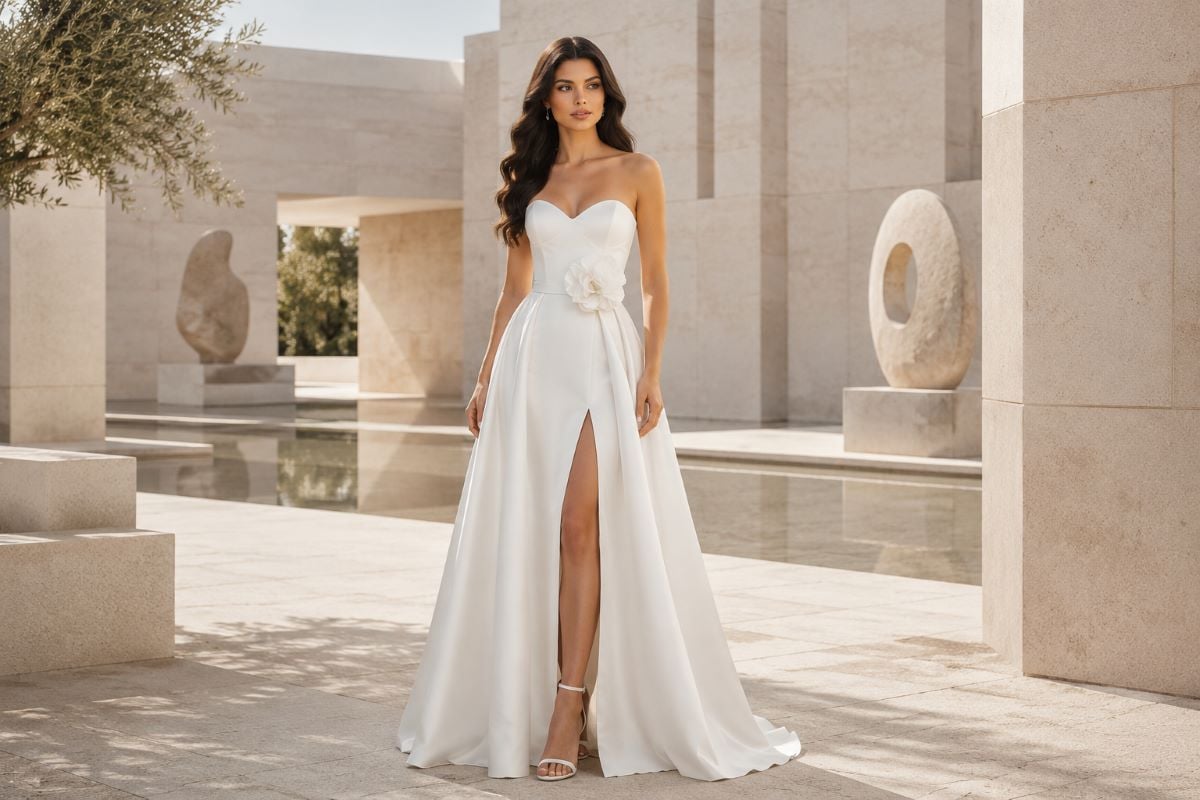
Highlighting Natural Beauty and Modern Glamour
This minimalist approach to the gown perfectly complements modern trends in bridal beauty. The “clean girl aesthetic”—characterized by glowing, natural skin, soft romantic hairstyles, and minimal, strategically placed makeup—pairs flawlessly with a simple wedding dress. A heavily beaded dress might demand heavy, dramatic makeup to balance the visual weight, but a clean crepe gown allows for fresh, dewy skin and effortless hair, making the bride look youthful, modern, and radiantly healthy.
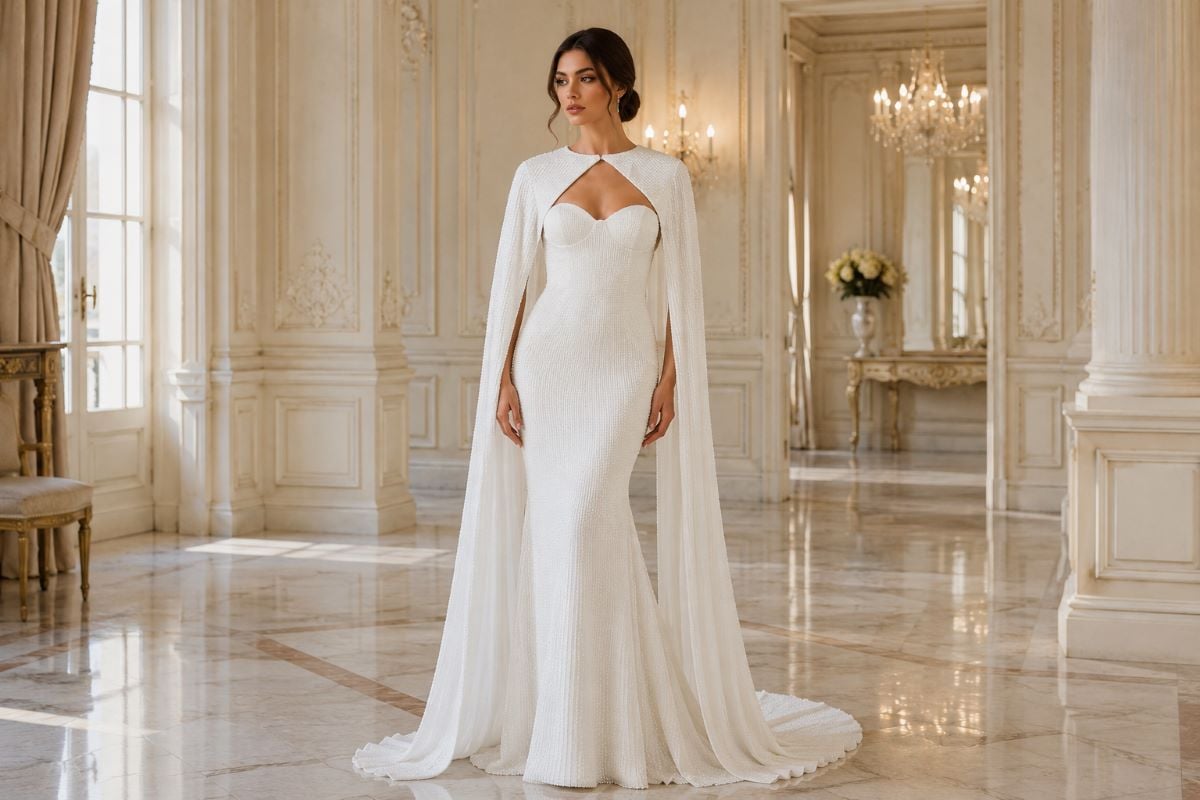
Creating an Heirloom: The Timeless Bridal Look
Perhaps one of the most compelling arguments for choosing a simple wedding dress is the absolute guarantee of visual longevity. Wedding photographs are not just for the immediate aftermath of the celebration or for a fleeting social media post; they are familial archives meant to be framed on mantles, displayed in albums, and passed down through generations.
When you look back at historical wedding fashion, the gowns that feel immediately dated or even slightly comical are almost always the ones that leaned too heavily into the hyper-specific micro-trends of their respective decades. The immense sleeves of the 80s, the heavy rhinestone belts of the early 2010s, or the highly contrasted illusion mesh of recent years will inevitably act as timestamp markers on your photos.
A timeless bridal look deliberately bypasses the rapid, often exhausting cycle of passing fads. By relying on the fundamental principles of good design—proportion, balance, architectural structure, and harmony—an unadorned gown remains eternally stylish. When you choose a dress defined by its elegant drape or its architectural structure rather than its heavy appliqué, you are ensuring that your wedding album will age beautifully. This enduring quality is a cornerstone of the Jovani design philosophy; we believe in creating bridal wear intended to be as breathtaking twenty, forty, or sixty years from now as it is the moment you first step into it in the boutique.
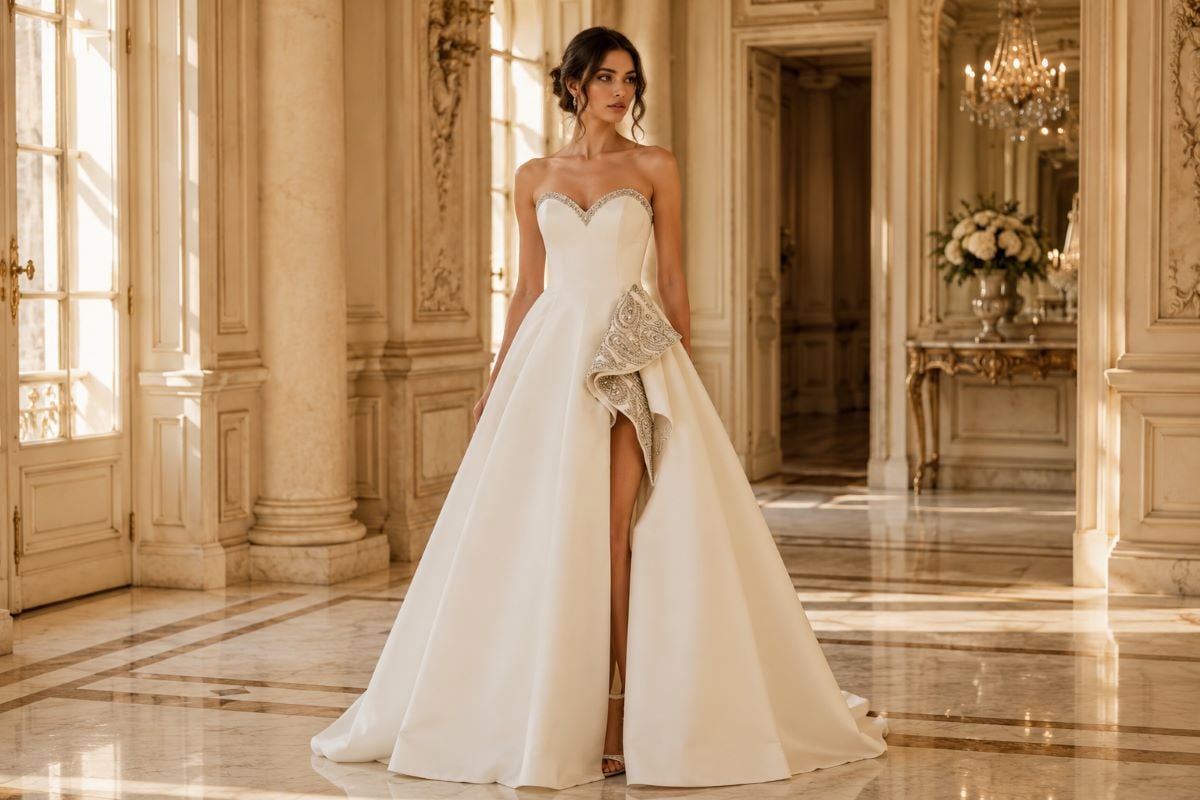
The Mastery Behind Minimalist Design
There is a very common misconception among shoppers that a minimalist bridal gown is somehow easier to design, pattern, or create than a highly embellished one. In the world of high-end bridal fashion, the exact opposite is true. Creating simplicity is the ultimate test of a designer’s skill.
The Unseen Architecture and Flawless Tailoring
Embellishments like thick Guipure lace, heavy bugle beading, and scattered sequins can act as beautiful camouflage for a garment. They can easily hide a less-than-perfect seam, a slight miscalculation in the drape, or a minor flaw in the fabric’s tension. A simple wedding dress, however, offers absolutely no place to hide. The beauty of the gown relies entirely on the precision of its pattern and the absolute mastery of its tailoring.
The magic of a minimalist gown often lies in what you cannot see. The internal architecture of the dress must be incredibly robust to support a smooth outer facade. Every single dart must be placed with mathematical accuracy to perfectly contour the bust and waist without creating puckers. Every seam must be perfectly straight, meticulously graded, and pressed flawlessly flat. The internal structure—the carefully channeled boning, the waist stays, the corsetry, and the multi-layered lining—must be impeccably engineered to support the outer fabric seamlessly without showing through.
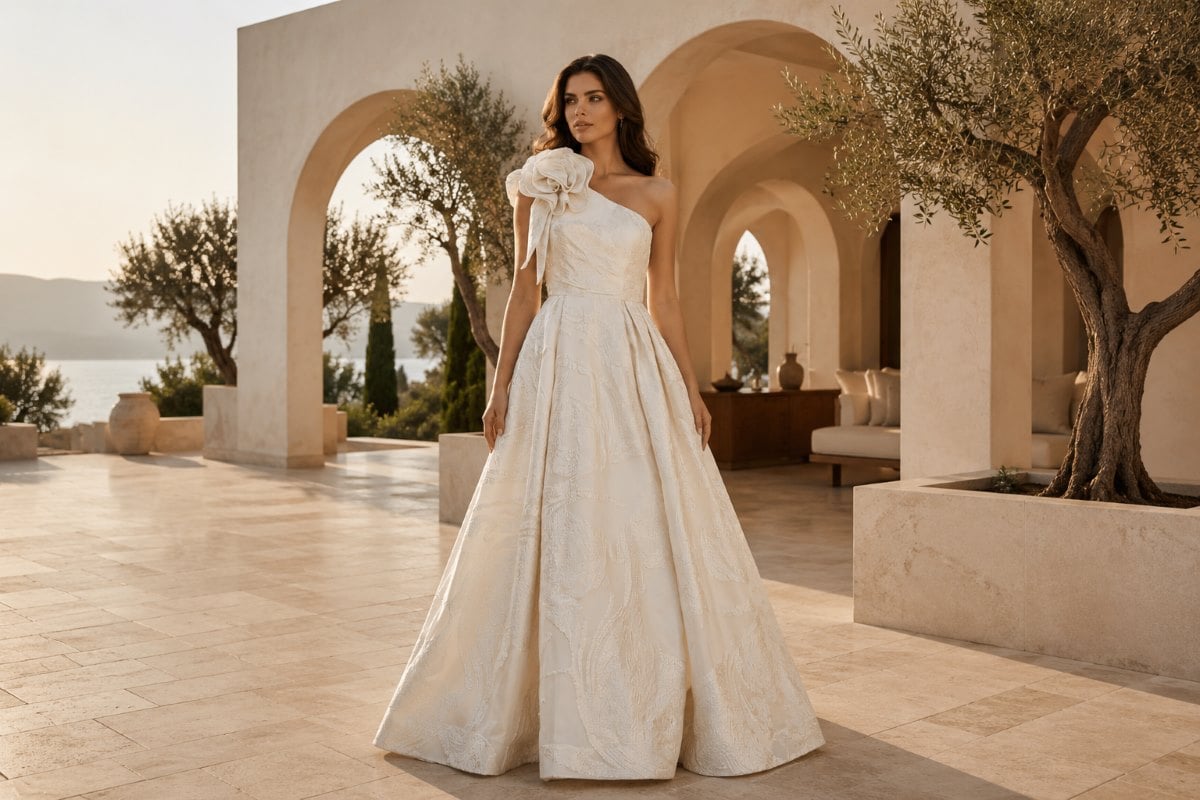
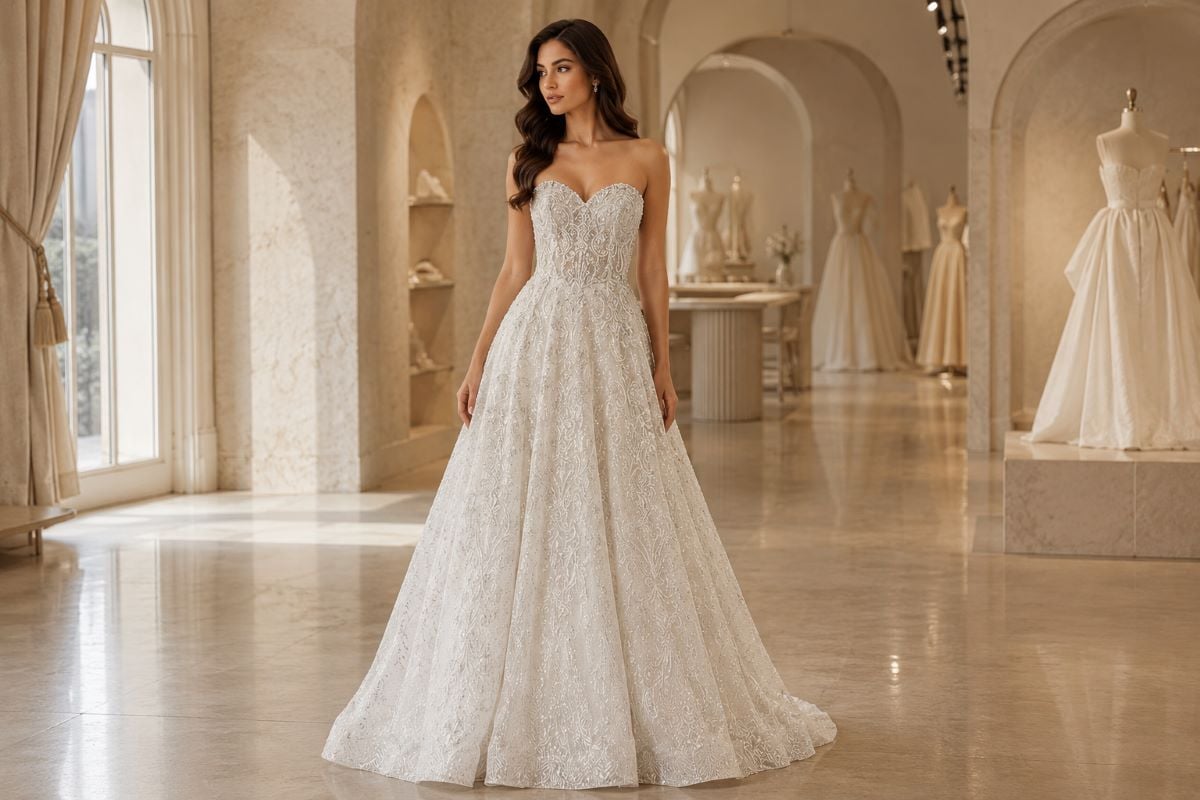
When crafting unadorned classic A-line designs, for instance, the architecture of the bodice and the precise, mathematical volume of the skirt must be meticulously calibrated. Because the fabric is smooth, the fit must be nothing short of absolute perfection. The dress must sculpt the body flawlessly, relying solely on the masterful cut of the cloth to create a breathtaking silhouette.
Choosing the Right Fabric for Clean Lines
When you intentionally remove heavy embellishment from the design equation, the fabric becomes the undeniable star of the show. In an elegant simple wedding dress, the material dictates the movement, the mood, how the dress photographs, and the ultimate formality of the look. Selecting the right fabric is essential for achieving the perfect minimalist aesthetic:
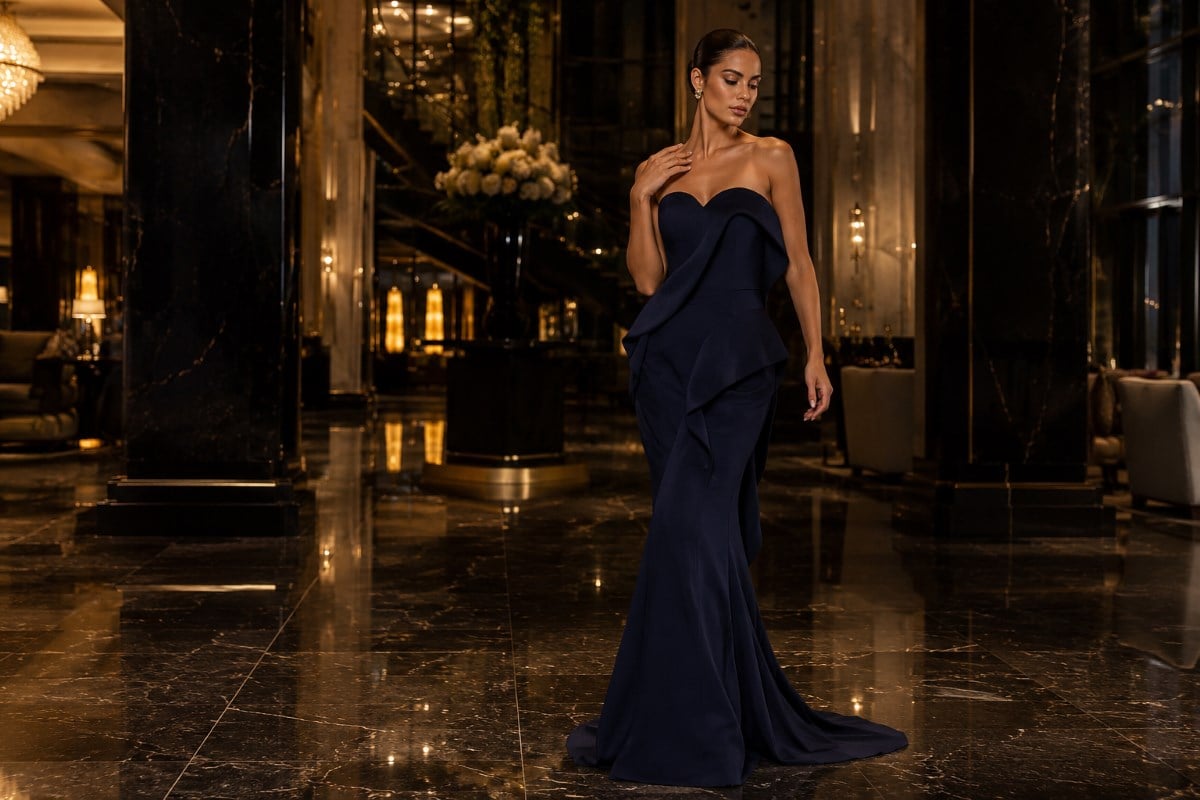
- Stretch Crepe: This is the absolute favorite for modern, understated gowns. It has a beautiful, heavy drape that effortlessly skims the body, providing a smooth, matte finish that feels incredibly contemporary and chic. It is perfect for column, sheath, and dramatic mermaid silhouettes, offering both structural support that acts almost like built-in shapewear, while still allowing for comfortable mobility.
- Silk Mikado: A luxurious, tightly woven blended silk that is heavier, stiffer, and far more structural than traditional satin. Mikado holds its shape brilliantly without wrinkling easily, making it the ideal choice for sculptural, architectural designs with sharp, uncompromisingly clean lines. It catches the ambient light with a subtle, pearlescent glow rather than a high, cheap shine, offering a truly regal aesthetic.
- Silk Satin and Charmeuse: Known worldwide for their luminous sheen and fluid, liquid movement. A simple satin slip dress cut on the bias beautifully evokes a sense of vintage 1930s Hollywood glamour. It is sensuous, highly delicate, and undeniably luxurious, melting over the body’s natural curves.
- Silk Faille and Taffeta: These fabrics offer a crisp, paper-like rustle and incredible structural memory. They are perfect for minimalist ballgowns that require dramatic, sweeping volume without the sheer weight of heavy satins. They provide a high-fashion, editorial edge to simple designs.
- Organza and Georgette: Organza is a crisp, sheer fabric that offers the dramatic volume of tulle but with a much lighter, more modern, and sophisticated finish. Georgette is similar to chiffon but with a slightly heavier, crinkled texture, offering beautiful, opaque drape. Both are excellent for adding airy volume or soft romance to a minimalist gown without adding heavy visual weight or distracting texture.
Versatility and Personalization: The Styling Guide
One of the greatest, most enjoyable joys of selecting a minimalist gown is the sheer amount of styling freedom it grants the bride. Without competing patterns or heavy beadwork, the bride becomes the ultimate stylist and creative director of her own look.
A Blank Canvas for Unrestricted Styling
A heavily beaded or intensely laced dress strictly dictates how you must accessorize. If the dress is loud, the accessories must typically be very quiet to avoid visual clutter and overwhelming the bride. A simple wedding dress, conversely, is the ultimate blank canvas. It actively invites you to express your personal style with total, unrestricted freedom, allowing you to change your look dramatically from the ceremony to the reception simply by swapping accessories.
The Veil as a Statement Piece
If you have always dreamed of wearing a dramatic, cathedral-length veil heavily embroidered with vintage lace, or a veil scattered with pearls, crystals, or even 3D silk flowers, a clean, modern dress provides the perfect backdrop. It allows the veil to truly shine as a standalone statement piece. Alternatively, a chic, modern birdcage veil or a vintage Juliet cap pairs flawlessly with a simple gown, adding a touch of retro glamour without fighting the dress for attention.
Curating Your Jewelry
This incredible versatility extends deeply into jewelry. An understated bridal style allows you to wear heirloom statement pieces that might otherwise look too “busy.” Imagine pairing a crisp Mikado sweetheart neckline with a bold pair of vintage emerald chandelier earrings, a heavy diamond tennis necklace, or a stack of shimmering gold bracelets. Conversely, you can lean into the minimalist vibe with delicate, barely-there pearl studs and a single gold chain for a highly refined, modern look.
Footwear and Finishing Touches
A simple dress with a high slit or a slightly shorter hemline is the perfect excuse to invest in spectacular footwear. Because the dress is quiet, you can afford to wear brightly colored designer pumps—perhaps in “something blue,” bold emerald, or even a metallic fuchsia—that playfully peek out as you walk. You can also experiment with a bold red lip color, a highly intricate, architectural bridal updo, or even a custom-painted leather jacket for the reception. The dress acts as an anchor, grounding even the most adventurous accessories.
Seamless Adaptability to Any Venue
The landscape of modern weddings has shifted dramatically over the past decade. Couples are no longer restricted to traditional houses of worship or standard hotel ballrooms. Today, vows are exchanged on windswept coastal beaches, in lush tropical botanical gardens, on the stark concrete rooftops of urban industrial lofts, in chic downtown restaurants, and in beautifully renovated historic barns. Your dress must make sense within the specific context of your chosen environment.
A highly formal, crystal-encrusted ballgown might look spectacularly out of place in a bohemian desert setting or a relaxed, sun-drenched vineyard. Conversely, a casual bohemian lace dress might severely lack the necessary gravitas and formality for a black-tie event hosted in a historic, gilded mansion or a grand cathedral.
A simple wedding dress possesses a unique, chameleon-like quality that allows it to adapt seamlessly to almost any environment imaginable. A sleek, high-neck crepe gown looks incredibly chic, edgy, and modern in an industrial city loft, yet it also reads as classically elegant, demure, and appropriate against the backdrop of a traditional, manicured country club. Because the gown is not aggressively tied to one specific thematic aesthetic (like “rustic,” “glam,” or “boho”), it molds effortlessly to the atmosphere you create with your floral design, your lighting, and your venue selection.
Physical Comfort and Practical Benefits
While aesthetics and photographs are often the driving forces behind choosing a wedding dress, the physical reality of wearing a gown for up to fourteen hours cannot—and should not—be ignored. A wedding day is a beautiful, emotionally resonant, and intensely spiritual experience, but it is also a demanding physical marathon.
Unrestricted Freedom of Movement
From the early morning hair and makeup preparations to the final, late-night dance with your new spouse, you will be on your feet. You will pose for hundreds of photographs in various locations, navigate tight spaces between dinner tables, hug and embrace countless guests, sit for a multi-course dinner, use the restroom, and dance for hours.
Highly structured, massively voluminous, or heavily embellished gowns can easily weigh between ten and twenty pounds. Over the course of the day, that sheer physical weight sitting on your shoulders and waist becomes genuinely exhausting. Furthermore, stiff layers of itchy crinoline, unyielding tulle petticoats, and rigid horsehair hems can severely restrict your movement, making it difficult to sit comfortably, walk naturally without tripping, or breathe deeply.
One of the most immediate, tangible, and highly celebrated benefits of a simple wedding dress is the immense physical comfort it provides. For brides planning an intimate outdoor ceremony, a summer garden party, or a destination elopement, opting for casual wedding gowns made from soft, breathable fabrics ensures that you remain entirely present, joyful, and physically at ease throughout the best day of your life. Without the burden of heavy glass beadwork or massive underskirts, you can move with a natural, unforced, and cinematic grace that translates beautifully in both candid photographs and professional videography.
Weather Adaptability
Minimalist gowns also offer superior adaptability to varying weather conditions. Natural, unembellished fabrics like silk crepe or organza breathe significantly better than layers of synthetic tulle covered in heavy beading. For a hot summer wedding, a simple slip dress keeps you cool. For a winter wedding, a minimalist gown can easily be layered. You can pair a simple strapless dress with a luxurious faux-fur wrap, a sharply tailored bridal blazer, or an elegant velvet cape, adapting to the cold without the outerwear clashing with the dress beneath.
Budget Flexibility and Life Beyond the Ceremony
While high-quality, luxurious fabric and expert, couture-level tailoring are certainly financial investments, avoiding the intense, time-consuming manual labor required for heavy hand-beading, crystal encrusting, or custom, hand-sewn lace appliqué can sometimes offer more flexibility within your overall wedding budget.
Choosing a clean lines wedding gown does not mean you are compromising on luxury or settling for less; it means you are strategically reallocating your resources. The significant funds that might have gone toward thousands of intricate glass beads can instead be directed toward a larger, more spectacular floral installation, world-class catering, an open bar for your guests, a highly sought-after photographer, or an extended, luxurious honeymoon.
Furthermore, a minimalist aesthetic allows a bride to easily build a cohesive, highly sophisticated fashion wardrobe across all associated wedding events. Modern brides often need stylish outfits for engagement parties, formal bridal showers, rehearsal dinners, welcome parties, and farewell brunches. For a chic reception look or a late-night after-party, many brides are turning to impeccably tailored short bridal dresses. These provide the perfect, stylish bridge between the solemnity of the vows and the high energy of the party, maintaining an elevated bridal feel while maximizing mobility for dancing.
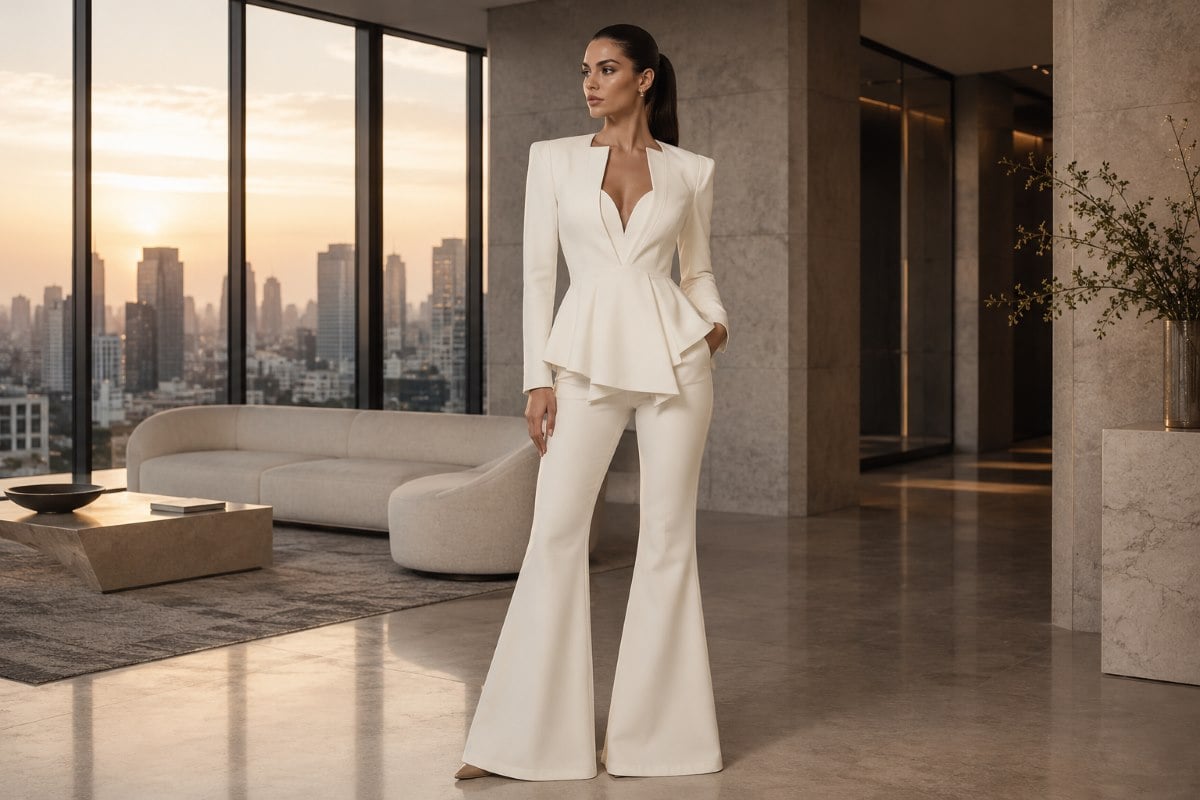
Additionally, a simple gown often has a beautiful, sustainable life beyond the wedding weekend. A sleek crepe sheath dress, a minimalist midi, or a perfectly tailored white bridal suit can often be professionally hemmed or beautifully dyed by a skilled artisan after the wedding. This allows you to sustainably wear a piece of your wedding history to future formal events, upscale anniversary dinners, or black-tie galas, turning a one-day, single-use garment into a cherished, lifelong wardrobe staple.
Finding Your Perfect Minimalist Gown
The journey to finding the perfect simple wedding dress requires a highly strategic approach. Because you are purposefully forgoing heavy embellishments that distract the eye, the focus shifts entirely to how the dress interacts with your unique body shape, your skin tone, and your personal posture.
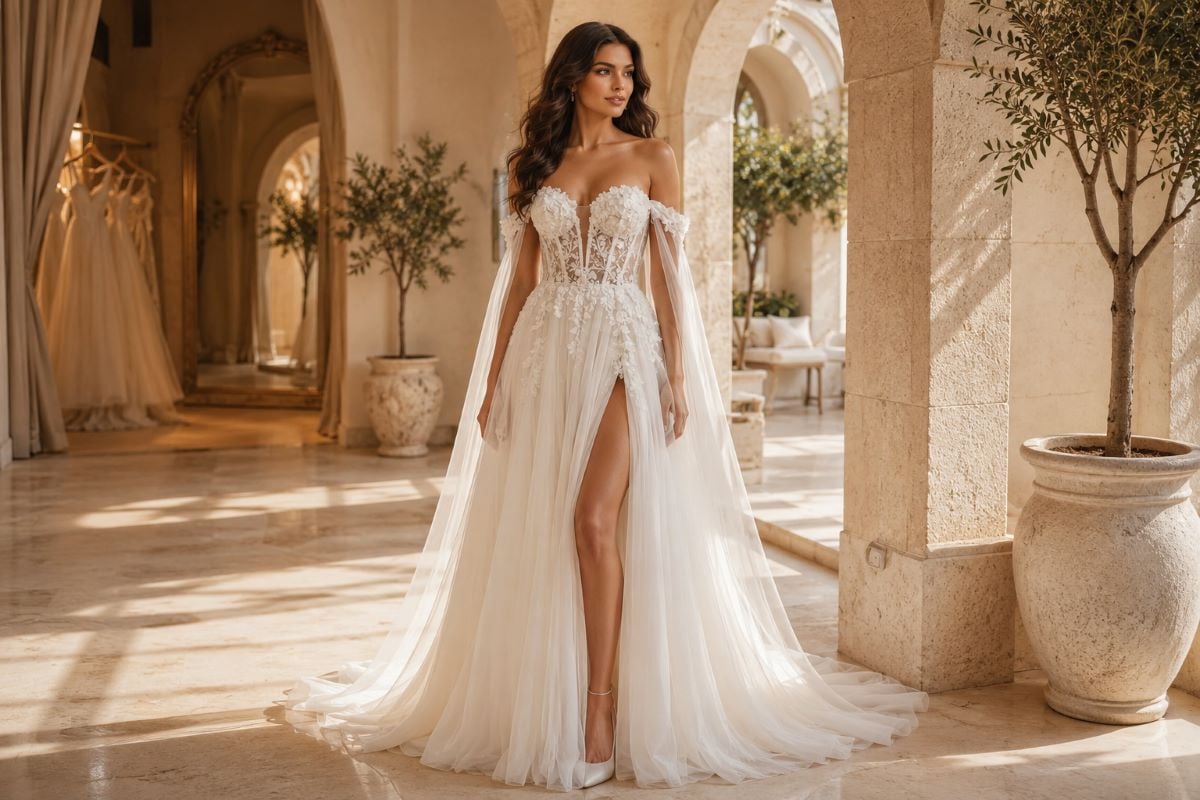
Navigating Silhouettes and Body Types
The fundamental shape of the dress is absolutely paramount. Whether you lean toward the architectural drama of a structured trumpet skirt or the soft, romantic flow of a classic A-line, the cut must flatter your specific proportions. It is highly recommended that brides research and thoroughly understand the various popular wedding dress silhouettes prior to their boutique appointments.
Knowing whether a structured fit-and-flare, a sleek column dress, or a regal ballgown best highlights your favorite features will make the shopping experience far more streamlined, focused, and enjoyable. When trying on minimalist gowns, pay close attention to the neckline and the waistline, as these two elements will define the entire look. A sharp, plunging V-neck offers a completely different vibe than a demure, high bateau neckline, even if the rest of the dress is identical.
The Importance of Foundation Garments
With simple wedding dresses, what you wear underneath the gown is almost as important as the gown itself. Because fabrics like crepe and satin can be unforgiving, investing in high-quality, seamless shapewear and proper undergarments is essential. Depending on the silhouette, you may need a seamless bodysuit, high-waisted shaping shorts, or a specialized backless bustier. Discuss undergarment options with your bridal consultant early in the process, and always bring your chosen shapewear to every fitting.
The Alterations Process
Once you have selected your silhouette and purchased your gown, the final, most crucial, and transformative step is the tailoring process. Because there are no visual distractions on a minimalist dress, any pulling at the hips, puckering at the bust, or looseness in the straps will be immediately and glaringly visible.
It is absolutely essential to invest in professional wedding dress alterations with a seamstress who specializes in bridal couture. You should expect to attend three to four separate fittings. The seamstress will ensure the bodice is perfectly contoured to your specific body shape, the darts hit at the exact apex of the bust, and the hem grazes the floor flawlessly regardless of your shoes. The ultimate goal is a fit so incredibly precise, so perfectly molded to your unique form, that the dress appears to have been custom-sculpted directly onto you.
Walking down the aisle in a perfectly tailored, simple wedding dress is the ultimate expression of personal confidence and refined taste. It is a powerful, visual statement that you are enough, exactly as you are, radiant, unburdened, and entirely ready for the next beautiful chapter of your life.
FAQs About Minimalist Bridal Styles
1. What exactly defines a simple wedding dress in modern bridal fashion?
A simple wedding dress is primarily characterized by its deliberate lack of heavy, surface-level embellishments. Instead of relying on 3D floral appliqués, extensive crystal or pearl beading, thick overlays of patterned lace, or heavy metallic sequins to create visual interest, a minimalist gown relies entirely on the purity of its silhouette, the luxurious, tactile quality of its fabric, and the structural integrity of its tailoring. The focus is squarely on clean lines, flawless drape, architectural shapes, and impeccable, custom-level fit.
2. Are minimalist bridal gowns considered too plain or casual for a highly formal, black-tie wedding?
Absolutely not. This is a common misconception. The true formality of a bridal gown is dictated much more by its overall silhouette, its internal structure, and the quality and weight of its fabric than by the amount of surface sparkle it has. A highly structured, voluminous silk Mikado ballgown or a sweeping stretch-crepe mermaid gown with absolutely no embellishments is incredibly formal, deeply regal, and commands massive visual presence. This makes it perfectly appropriate for a grand cathedral ceremony or a luxurious black-tie ballroom reception. You can also easily elevate the formality of a simple dress with dramatic accessories, such as a sweeping cathedral-length train, an embellished mantilla veil, a dramatic cape, or fine heirloom jewelry.
3. Which fabrics work best for creating an elegant simple wedding dress?
Because the fabric takes center stage and acts as the main feature in a minimalist design, utilizing high-quality, substantial materials is absolutely crucial. Stretch crepe is excellent for form-fitting styles as it smooths the figure beautifully, acts as subtle shapewear, and allows for comfortable movement. Silk Mikado is perfect for structured, sculptural gowns that need to hold a specific architectural fold or shape without wrinkling. Silk satin and charmeuse offer a liquid, luxurious drape ideal for bias-cut slip dresses, reflecting light beautifully. Meanwhile, silk organza and silk taffeta provide crisp volume and structure while remaining incredibly lightweight and modern.
4. How do I make a clean lines wedding gown feel unique to my own personality and not generic?
A simple gown acts as a beautiful, high-quality blank canvas, making it arguably the easiest type of dress to deeply and authentically personalize. You can add a customized, detachable element for the ceremony, such as a dramatic oversized bow at the back, an elegant sheer bridal cape, or romantic detachable off-the-shoulder sleeves that can be easily removed for the reception to change your look entirely. Your choice of accessories—ranging from a pearl-encrusted veil to brightly colored designer heels, a customized leather jacket, or a bold, vintage family necklace—will completely dictate the final vibe of the look, allowing your unique personality and fashion sense to shine through clearly without ever competing with the dress itself.
5. What kind of undergarments are required for a minimalist wedding gown?
Because simple fabrics like crepe, satin, and silk do not have heavy lace to hide seams, seamless foundation garments are an absolute necessity. You will want to look for laser-cut, seamless shapewear in a shade that closely matches your natural skin tone (not white, which can show through). Depending on the neckline and back of the dress, you may need a low-back bustier, sewn-in bra cups (which your seamstress can add), or a seamless smoothing bodysuit. It is vital to purchase these undergarments before your first alterations appointment so the dress is tailored precisely over them.