
The Midi Cocktail Dress and the Art of the Right Hem Point
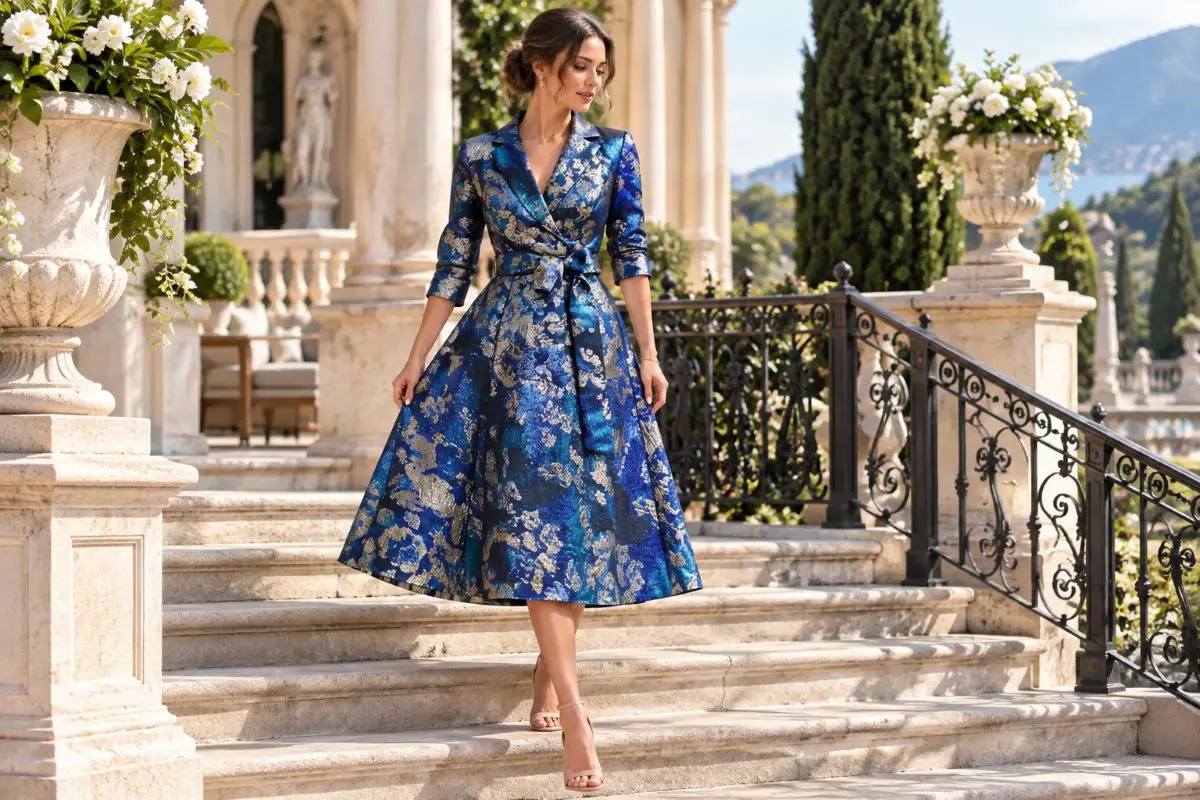
The midi is the length people argue about, and both sides are right. Done well, a midi cocktail dress is the most sophisticated thing at the party, covered without being conservative and formal without being a gown. Done carelessly, the same length can swallow the person wearing it. The difference between the two outcomes is not the wearer and not the price tag; it is a few centimeters of hem placement and a handful of proportion decisions that this guide lays out plainly. Learn where a midi should end on your leg, and the length that scared you becomes the one you reach for first.
Definitions first, because the terms blur. A midi cocktail dress ends anywhere from just below the knee to mid-calf. Below that sits tea length, which grazes the lower calf to the ankle, and above it sits the classic knee-length cocktail zone. The site's midi evening dresses range lives in that below-knee-to-mid-calf band, and everything in this guide is about wearing that band well.
The zone directly above it, hems at or just above the knee, belongs to the classic short and cocktail dresses range, a useful reference point for where midi begins.
The Calf Point: Where a Midi Cocktail Dress Should End
Here is the rule almost no one states directly: a midi hem should end where your leg is narrowing, never at the widest point of the calf. A hem that stops at the fullest part of the calf draws a horizontal line exactly there and visually shortens the whole leg, which is the source of nearly every bad midi experience. A hem that lands just below that fullest point, where the leg tapers toward the ankle, does the opposite, lengthening the line and making the dress look tailored to you. This is a one-inch decision with an outsized payoff, and it is why the same midi flatters one person off the rack and needs a small hem adjustment for another. Petite frames extend the trick: a midi at the shorter end of the band plus a heel with some height preserves leg line beautifully, while taller frames can wear the deepest midis as a pure luxury. A front or side slit adds motion and a vertical line when the hem sits low, and a defined waist is non-negotiable at this length, because a midi without waist definition reads as a column of fabric rather than a silhouette.

Midi by Occasion and Dress Code
The midi's superpower is range. At cocktail-code weddings it is the sweet spot, dressier than knee-length and lighter than a gown, the exact middle the invitation is asking for; when guests debate whether long is too much, the midi is usually the answer, and the full argument lives in our guide to wearing a long dress to a cocktail event.
Daytime celebrations, showers, christenings, garden parties, are natural midi territory, covered in depth in our piece on dressing for an afternoon event, and office parties and client dinners reward the length's built-in polish.
The honest ceiling is strict black tie, where a gown is the expectation and even the finest midi reads a step short; that is the moment to move to the long evening dresses range and save the midi for the next invitation.
For weddings that specify knee-adjacent formality, the knee-length wedding guest dresses selection sits one notch above the midi band and one notch below it in coverage, a useful comparison point when the invitation is ambiguous.

Fabric and Movement at Midi Length
A midi shows fabric behavior more than any other length, because there is simply more skirt in motion at eye level. Bias-cut satin is the length's signature, flowing with every step and turning a walk across the room into the best argument for the style. Pleats add rhythm and forgive wind at outdoor events. Structured crepe makes the pencil midi, the sharpest professional version of the length. Chiffon layers keep a summer midi airy instead of heavy. The failure mode is stiffness: a rigid, heavy fabric cut to mid-calf can stand away from the body and read dated, so at this length, drape is what keeps the look current. Prints thrive here too, with more canvas than a mini and less commitment than a gown, and the daytime end of that spectrum is exactly where the floral cocktail dresses range meets the midi band.
Shoes Make or Break a Midi
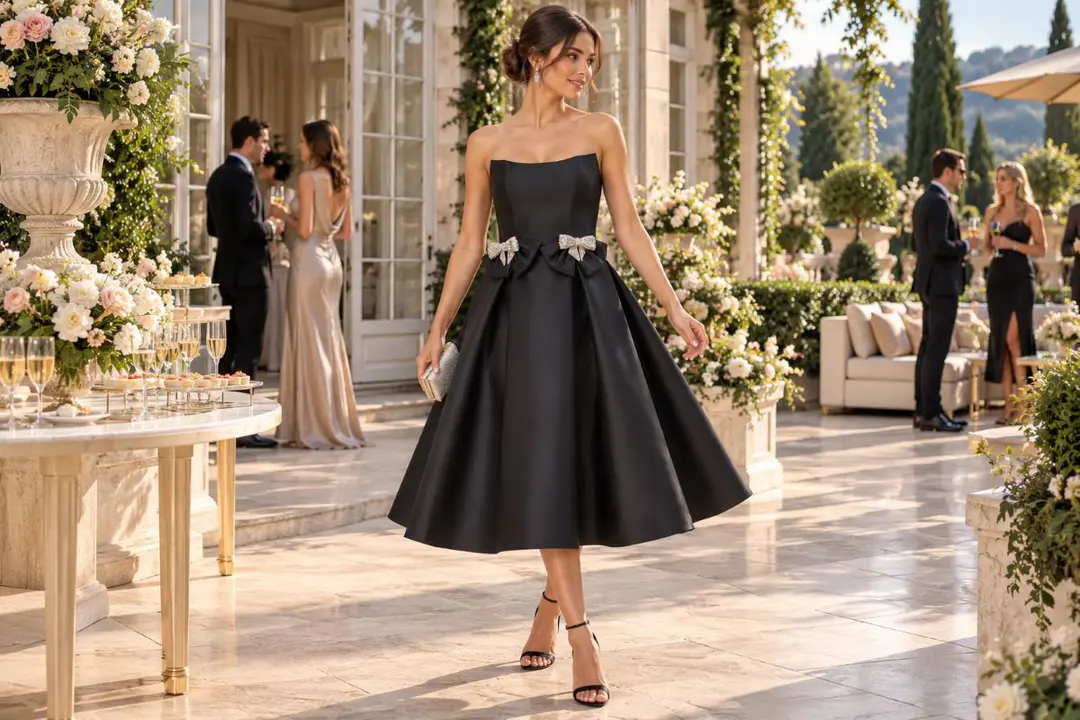
No length depends on footwear more. Because the hem already interrupts the leg, the shoe's job is to continue the line, and three choices do it reliably: a nude pump in your skin's tone, a pointed toe in any color, and a barely-there heeled sandal. The one specific trap is the wide ankle strap, which draws a second horizontal line just below the hem's horizontal line and chops the visible leg into a short segment; if you love a strap, keep it thin and close to skin tone. Flats work with midis when they are pointed and sleek, a genuine advantage of the length for long events. In fall and winter, a fitted knee boot under a midi closes the gap entirely and turns the length into the season's most practical formal option. Heel height is then a proportion tool rather than a rule: the lower the hem sits in the band, the more a little height helps the line.
Styling the Middle Length
The midi carries more visual weight than a mini, so balance the frame: a fitted or waist-defined top half, earrings over long necklaces when the neckline is busy, and a bag scaled small to medium. Belts earn their keep at this length, sharpening the waist the silhouette depends on. Outerwear has one guideline worth keeping, coat hems should clear the dress hem or match it, since a coat ending mid-skirt creates a stacked, choppy line in photos. None of this is complicated; the midi asks only that the pieces around it respect the proportions it sets. The reward for that small discipline is the most invitation-proof dress in the closet, and the wider rules of cocktail attire bend toward the midi more every season.
Frequently Asked Questions
What is the difference between midi and tea length?
A midi ends between just below the knee and mid-calf. Tea length picks up where midi stops, from the lower calf to just above the ankle. The practical difference is formality and era: midi reads modern and versatile, while tea length carries a vintage, occasion-specific character.
Can petite women wear midi dresses?
Absolutely, with two adjustments that protect the leg line: choose a hem at the shorter end of the midi band, ending just below the knee rather than deep on the calf, and add heel height or a pointed flat. A slit or a bias cut adds the vertical motion that keeps the proportion long.
Is a midi dress appropriate for black tie?
For strict black tie, no; the code expects a floor-length gown, and a midi reads a level short regardless of quality. For black tie optional and formal codes, an evening-fabric midi with rich detail is increasingly accepted, though a gown remains the safest reading of the room.
What shoes should I wear with a midi cocktail dress?
Nude pumps, pointed toes, and slim heeled sandals continue the leg line the hem interrupts. Avoid wide, contrasting ankle straps, which add a second horizontal cut just below the hem. In cold months, a fitted knee boot under the hem is the length's best seasonal partner.
Can I wear a midi dress to a wedding?
Yes, and for cocktail and semi-formal wedding codes it is arguably the ideal guest length, polished for the ceremony and easy through a long reception. Follow the universal guest rules on color, skip white and near-white, and let fabric quality carry the formality.
Why does my midi dress make my legs look shorter?
Almost always because the hem ends at the widest point of your calf, drawing a horizontal line exactly there. Moving the hem an inch or two, so it lands where the leg narrows, restores the line, and a slight heel or a slit finishes the correction.
The Length That Meets in the Middle
A midi cocktail dress succeeds on placement: a hem that ends where the leg narrows, a defined waist, fabric that moves, and a shoe that continues the line. Those four choices turn the most debated length in formalwear into the most useful one, at home at more occasions than anything else on the rail. To find where the band flatters your own leg, stand in front of a long mirror at an authorized Jovani retailer and let the hem point, not the trend, make the call.