
Daytime Elegance: Choosing the Right Cocktail Dress for an Afternoon Event
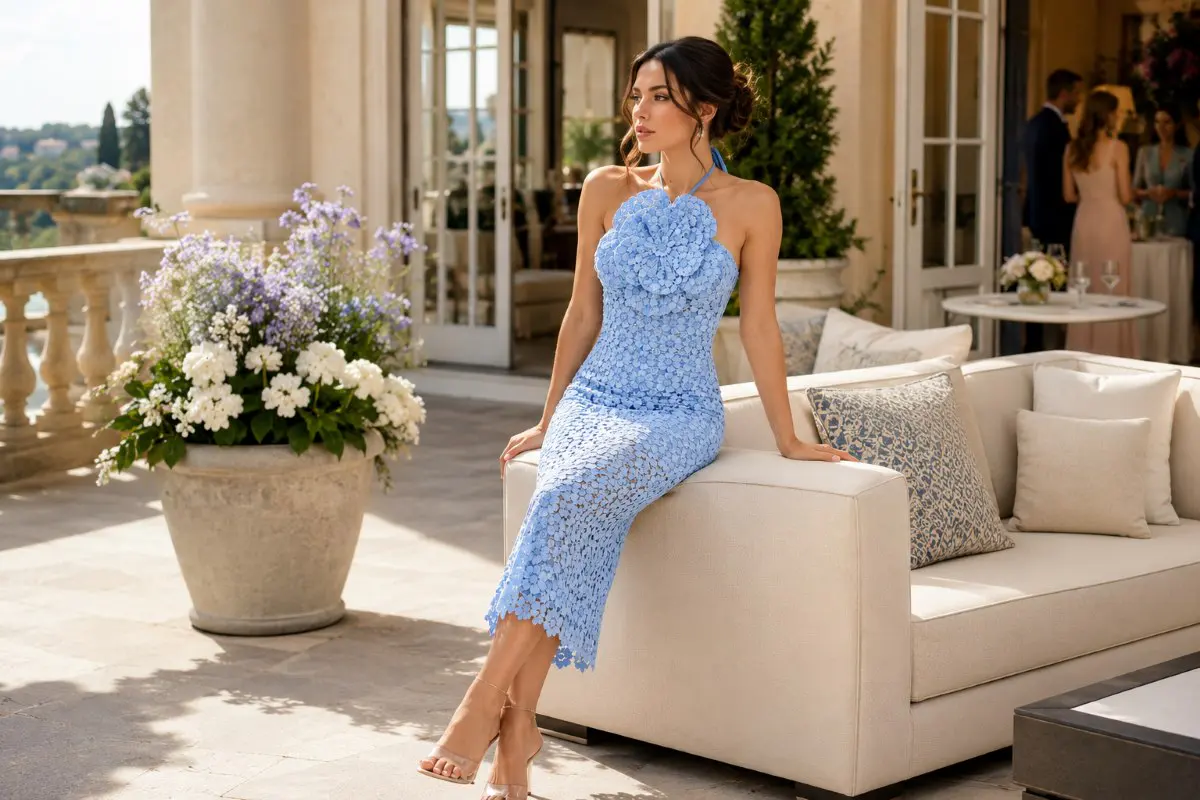
A cocktail dress code is familiar enough until the invitation says the event starts at two in the afternoon. Suddenly the usual instincts feel off. The little black dress with heavy sequins that works so well at an eight o'clock party can look out of place in full daylight, and a dress that seemed elegant under warm evening lights can read differently under an open sky. Choosing a cocktail dress for afternoon events is a genuine skill, and it is not the same as dressing for the evening. Daylight is brighter and less forgiving, afternoon gatherings have their own pace, and the line between dressed-up and overdressed sits in a different place before sunset. This guide explains exactly how to get it right: the fabrics and colors that suit natural light, the lengths that work, how to read different types of afternoon events, and how to style a daytime look that feels polished rather than like an evening outfit worn too early.
Why an afternoon cocktail dress is different from an evening one
The cocktail dress code traditionally carries an evening association, and some style guides tie it strictly to events that begin after five. In practice, modern hosts use the cocktail and semi-formal labels for plenty of afternoon occasions, from daytime weddings to milestone luncheons. When that happens, the smart move is to keep the polish of cocktail dressing while adjusting the details for daylight. If you want the full background on the dress code itself, our guide to what a cocktail dress actually is covers the history and the rules in depth. This article focuses on the daytime version specifically.
The core difference comes down to three things. Light is the first. Daylight is stronger and clearer than venue lighting, so it reveals texture, shine, and color far more honestly. Formality is the second. Afternoon events usually sit a step softer than their evening equivalents, so the dress should feel refined rather than dramatic. Energy is the third. Daytime gatherings tend to be brighter and more relaxed in mood, and the outfit should match that ease. Keep those three differences in mind and every other choice becomes simpler.
Choosing fabric for daylight
Fabric is the first decision, because daylight changes how a fabric reads more than anything else. The same dress in two different fabrics can look entirely appropriate or slightly wrong depending on the hour.
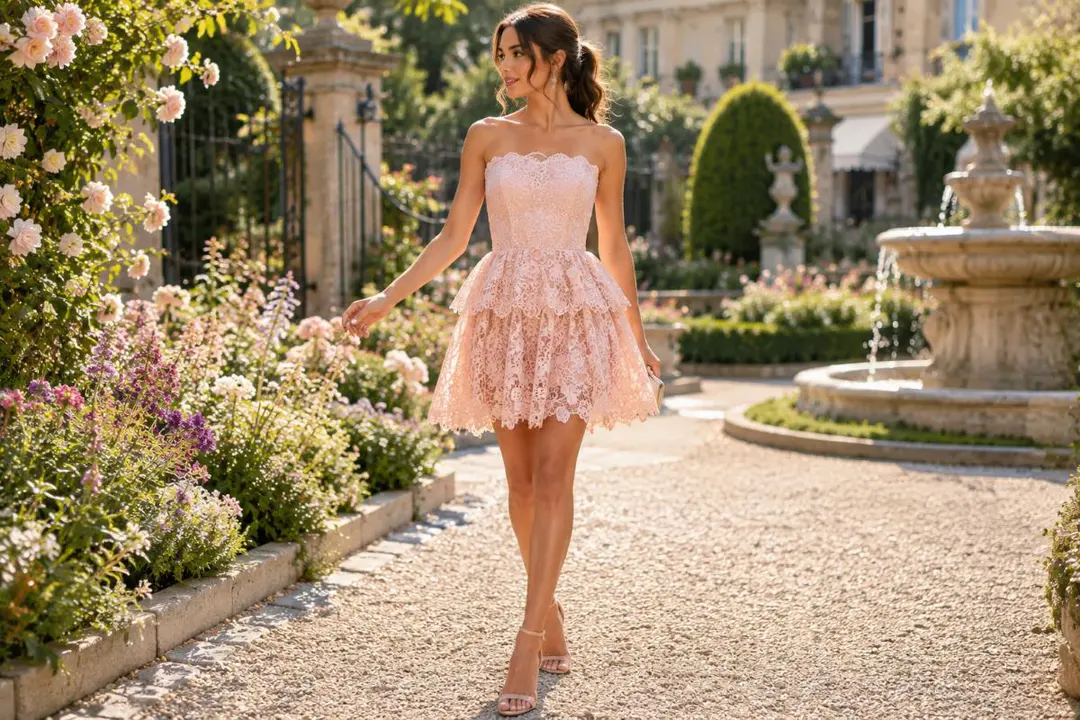
For an afternoon event, matte and lightly textured fabrics are your strongest choice. Crepe, mikado, lightweight satin with a soft rather than glassy finish, fine cotton blends, and textured jacquard all look refined in natural light. They catch the light gently instead of flaring under it. Lace is a particularly good daytime fabric, since it adds visual interest through texture rather than shine, which is why lace short cocktail gowns work so well before sunset.
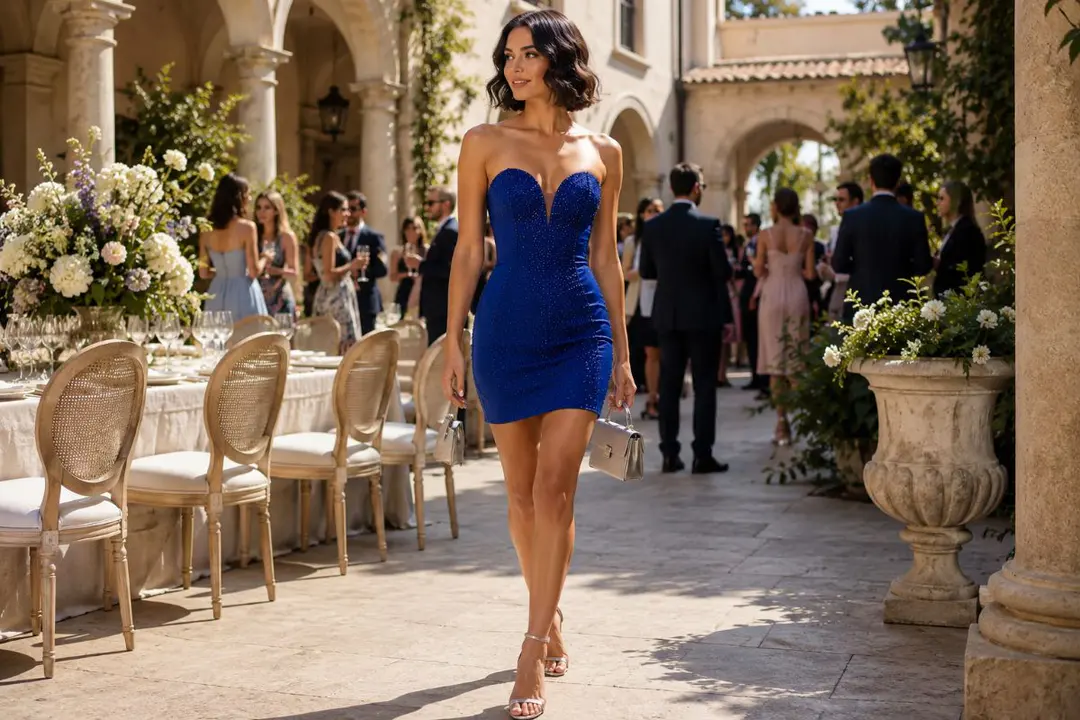
The fabrics to approach with caution are the high-shine and heavily embellished ones. A dress covered in dense sequins, high-gloss liquid satin, or large reflective beading can look spectacular under evening lights but harsh and overdone in direct daylight. This does not mean no sparkle at all. A little shine, a beaded neckline, or a subtle metallic thread reads as elegant. The issue is scale and finish. Reserve the all-over glitter for the evening, and let an afternoon dress shine quietly.
Picking colors that work in natural light
Color is where daytime and evening dressing part ways most visibly. Evening events welcome deep, dramatic, dark shades. Afternoon events open the door to a brighter, fresher palette, and leaning into that makes a daytime cocktail dress feel intentional.
- Soft pastels. Blush, sky blue, lavender, mint, and butter yellow look fresh and seasonal in daylight and photograph beautifully outdoors.
- Clear, saturated brights. Coral, emerald, cobalt, and warm pink read as confident and celebratory under a bright sky without being severe.
- Warm neutrals. Soft taupe, camel, and warm grey are elegant and understated for a daytime semi-formal dress.
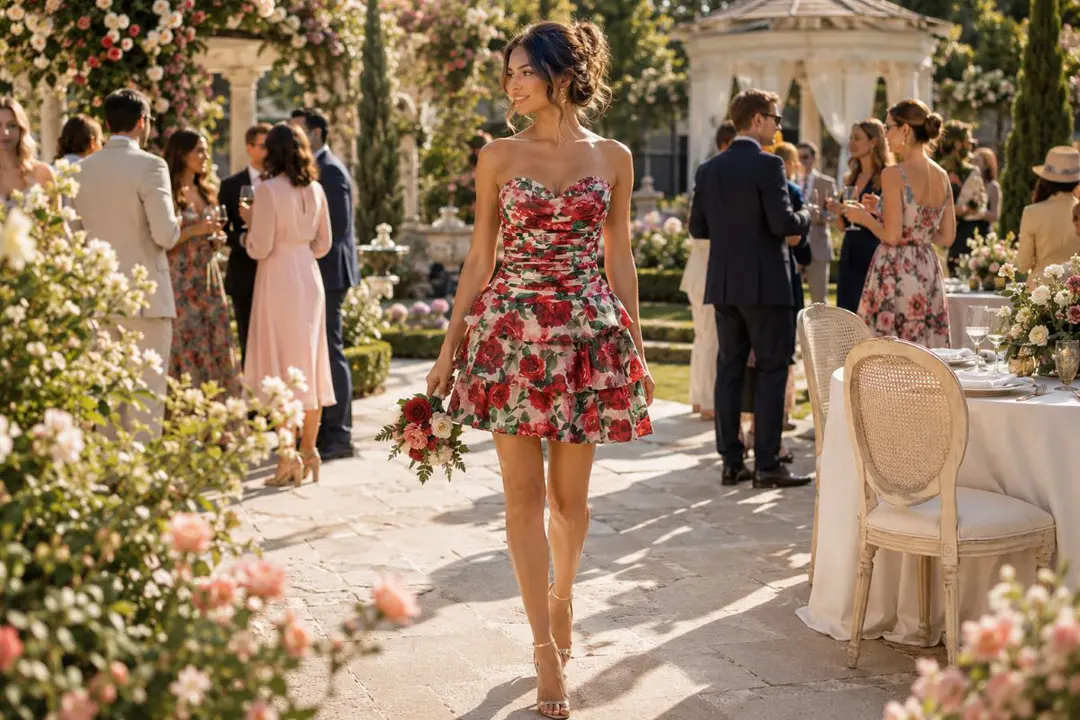
- Florals and prints. A print feels naturally at home in the afternoon, especially outdoors. The styles among floral short cocktail dresses show how a print reads as cheerful rather than busy in daylight.
A few colors deserve thought. Very dark shades such as deep black or heavy charcoal are not wrong for the afternoon, but they can feel weighty in bright light, so if you choose a dark dress, lighten it with daytime accessories. And if the event is a wedding, the usual rule holds firmly: white, ivory, cream, and pale champagne are reserved for the bride, in daylight as much as in the evening.
The right length and silhouette for an afternoon event
Length signals your reading of the occasion, and afternoon events have a comfortable range. A true cocktail length, falling just above, at, or just below the knee, is the classic and most reliable choice for a daytime event. It is polished, easy to move in, and never looks like an evening gown worn early. The selection of cocktail gowns is the natural place to find this length.
A midi length, hitting mid-calf, is equally appropriate and feels current and elegant for the afternoon. It gives a little more coverage while staying clearly distinct from a formal floor-length gown, and the draped styles among midi formal dresses suit a refined daytime look. A full floor-length gown, on the other hand, is usually too formal for an afternoon cocktail or semi-formal event and tips into evening or black-tie territory. For more on where that line sits, our comparison of the difference between cocktail and evening looks is worth a read.
For silhouette, daytime favors shapes that feel light and easy. A fit-and-flare defines the waist and gives a relaxed, graceful skirt, which is why fit-and-flare cocktail dresses are a daytime staple. An A-line is universally flattering and effortless to move in. A sheath gives a clean, modern line for a more tailored event. A soft wrap dress is comfortable and adjustable. Body-hugging, heavily structured silhouettes can feel a touch much for the afternoon, so if you love a fitted look, choose one in a matte fabric with a softer construction.
Reading the specific afternoon event
An afternoon cocktail dress is not one fixed outfit, because afternoon events vary widely. Matching the dress to the specific occasion is what separates a well-judged look from a generic one.
- A daytime wedding. The most formal of afternoon events. A cocktail or midi dress in a refined fabric is ideal. Read the invitation for the dress code, dress toward the more polished end of it, and never wear white or anything near it.
- A bridal or baby shower. Light, pretty, and relaxed. Pastels, florals, and soft silhouettes suit the mood perfectly. The tone is celebratory rather than grand.
- A formal luncheon or daytime gala. More structured. A tailored sheath or a clean A-line in a solid color reads as appropriately serious without being stiff.
- A graduation or religious celebration. Often calls for a little more coverage. A dress with sleeves or a higher neckline, in a respectful color, is a considerate choice. Comfort matters too, since these events can run long.
- An afternoon garden party or outdoor event. Light fabrics, prints, and a hem that clears grass cleanly. Plan footwear for soft ground rather than a hard floor.
When the invitation uses a vague phrase, look at the time, the venue, and the host's usual style together. An event at a private club at one in the afternoon asks for something more tailored than a backyard celebration at three.
Styling a daytime cocktail look
The styling around an afternoon dress should feel lighter than an evening approach. The same dress can read as daytime or evening depending almost entirely on how it is accessorized.
For jewelry, choose refined rather than dramatic pieces. Delicate gold or a single elegant earring suits daylight better than large, heavily sparkling statement jewelry. Pearls and matte metals look especially right in the afternoon. For shoes, a block heel, a kitten heel, a wedge, or an elegant flat all work, and they are far more comfortable for a daytime event that involves standing and mingling. A very high, formal stiletto can feel like an evening choice. For a bag, a structured mini bag or a simple clutch in a soft color completes the look without weight.
Outerwear is worth planning, since afternoon events often drift cooler as they go on, particularly outdoors. A tailored blazer, a fine knit, a cropped jacket, or a light wrap adds polish and warmth, and a blazer over a simple dress is one of the most reliable daytime-formal combinations there is. Keep makeup and hair fresh and natural rather than heavy, since a soft daytime finish suits natural light far better than a full evening face. For more ideas on building the whole outfit, our broader piece on cocktail attire offers a deeper look at cocktail attire across different settings.
Common mistakes to avoid
A few recurring errors turn an otherwise good afternoon outfit into one that feels slightly wrong. They are easy to avoid once you know them.
- Wearing a heavy evening dress too early. Dense sequins and dark, dramatic gowns belong after sunset. In daylight they look like a borrowed evening look.
- Going too casual. A cocktail or semi-formal code is still a dress-up request. A simple sundress or anything in casual cotton or denim falls short of the standard, however pretty it is.
- Choosing floor-length for a daytime cocktail event. A sweeping gown overshoots the formality of most afternoon occasions.
- Over-accessorizing. Heavy, sparkling jewelry and a towering heel push a daytime look toward evening. Keep the finishing touches light.
- Ignoring the venue surface. Thin heels and outdoor afternoon events do not mix. Match the shoe to the ground.
Frequently asked questions about afternoon cocktail dressing
Can I wear a cocktail dress to an afternoon event?
Yes. While the cocktail label is often associated with evening events, hosts frequently use cocktail and semi-formal codes for afternoon occasions. The key is to keep the polish of cocktail dressing while choosing a matte fabric, a lighter color, and a knee or midi length suited to daylight.
What length is best for a daytime cocktail dress?
A knee-length cocktail dress is the classic and most reliable choice for an afternoon event, and a midi length is equally appropriate and feels current. Avoid a full floor-length gown, which is generally too formal for a daytime cocktail or semi-formal occasion.
What fabrics work best for a cocktail dress for afternoon events?
Matte and lightly textured fabrics such as crepe, mikado, soft satin, and lace look refined in natural light. Avoid heavy all-over sequins and high-gloss fabrics, which can look harsh and overdone in direct daylight. A small amount of subtle shine is fine.
What colors should I choose for a daytime event?
Soft pastels, clear saturated brights, warm neutrals, and florals all suit daylight well and photograph beautifully outdoors. Very dark shades can feel heavy in bright light, though they work if balanced with lighter accessories. At a wedding, always avoid white, ivory, and cream.
How do I make a cocktail dress look more daytime appropriate?
Style it lighter. Choose refined jewelry over heavy sparkle, a block or kitten heel rather than a tall stiletto, and a soft natural makeup look. Adding a tailored blazer or a light wrap also shifts a dress firmly into daytime-formal territory.
Is a semi-formal daytime dress the same as a cocktail dress?
They overlap closely. Semi-formal can lean slightly more conservative, especially for daytime events, while cocktail allows a little more glamour. For an afternoon occasion, a refined knee-length or midi dress satisfies both codes comfortably.