
Most bridal accessory advice is organized the wrong way around. It starts with the veil, then the jewelry, then the shoes, and treats every gown as if it were the same. In reality, a bride has already made her biggest decision when she chooses her dress, and that dress should drive every accessory that follows. A mermaid gown and a soft A-line ask for completely different earrings. A glossy satin asks for something different from a textured lace. This guide flips the usual order and works the way a real bride does, starting from the dress she has chosen and explaining which wedding accessories for your dress silhouette and fabric will genuinely complete the look.
Why the Dress Should Choose the Accessories
The single most useful principle in bridal styling is that the gown leads and the accessories follow. A wedding dress is the largest, most considered element of the entire look, and it has its own silhouette, its own fabric, and its own level of detail. The job of every accessory is to support that, not to fight it.
This is why two brides should almost never wear the same accessories. The bride in a heavily structured mermaid gown and the bride in a flowing, romantic A-line have chosen different moods, and a piece of jewelry that finishes one will look out of place on the other. When you start with the dress and let it guide you, the choices become logical instead of overwhelming. You are no longer asking “do I like these earrings,” you are asking “do these earrings belong with this gown.”
Before any accessory decision, it helps to be clear on what your gown actually is. Knowing your silhouette is the foundation, and the breakdown of popular wedding dress silhouettes is a useful place to confirm exactly which shape you are working with before you read on. Once you know your silhouette and your fabric, the right wedding accessories for your dress fall into place far more easily.
Accessories by Dress Silhouette
Silhouette is the shape and structure of the gown, and it is the first thing to style around. Each major silhouette carries a different amount of visual weight and creates a different mood, and the accessories should answer that mood. A silhouette that commands attention through scale or structure needs little help, while a quieter silhouette leaves more room. Reading your silhouette correctly is the difference between accessories that complete a look and accessories that fight it.
The Ball Gown: Let the Dress Lead
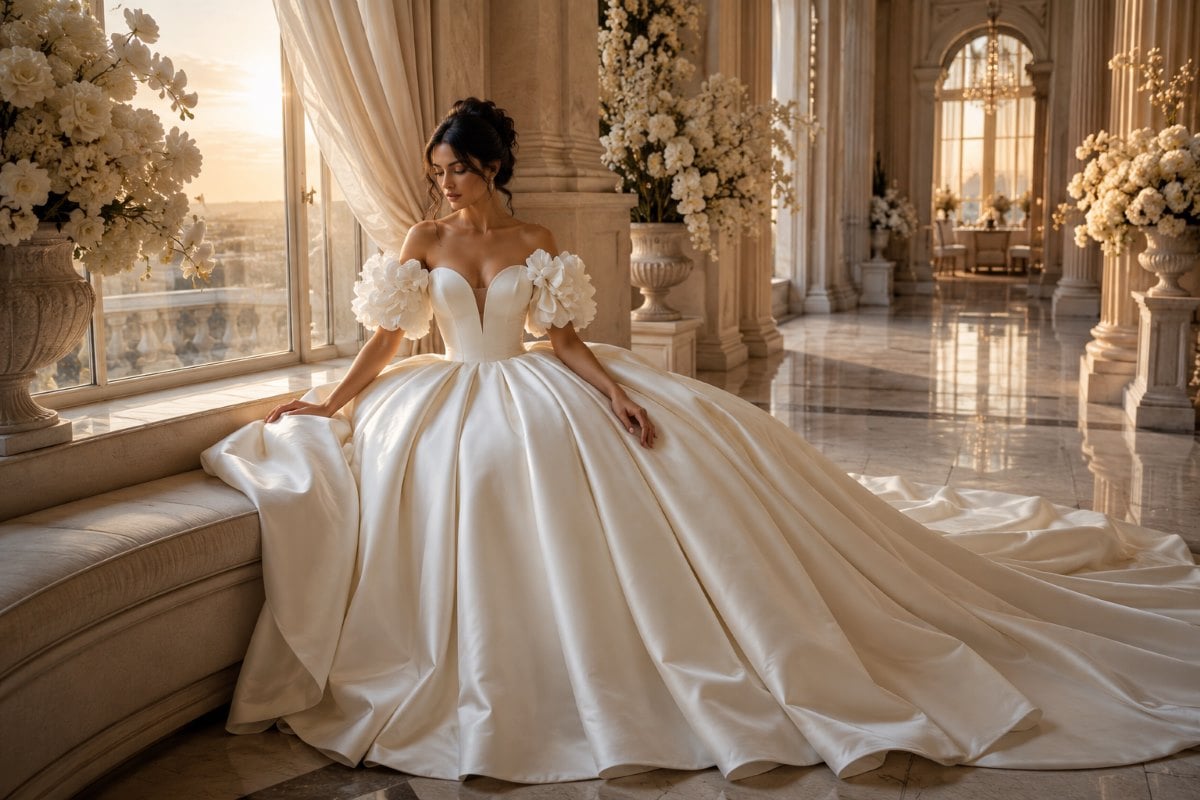
A ball gown is the most dramatic bridal silhouette, with a fitted bodice and a full, voluminous skirt. The dress is already making a powerful statement through sheer scale, so the accessories should be elegant and restrained rather than competitive. Delicate drop earrings, a fine bracelet, and a classic veil all work beautifully. A long cathedral veil suits the grandeur of the silhouette without adding visual clutter. The mistake to avoid is piling a bold necklace, heavy bangles, and elaborate hair pieces onto a gown that is already commanding the room. With a ball gown, the dress is the statement, and the accessories are the quiet frame.
The A-Line: The Balanced Canvas
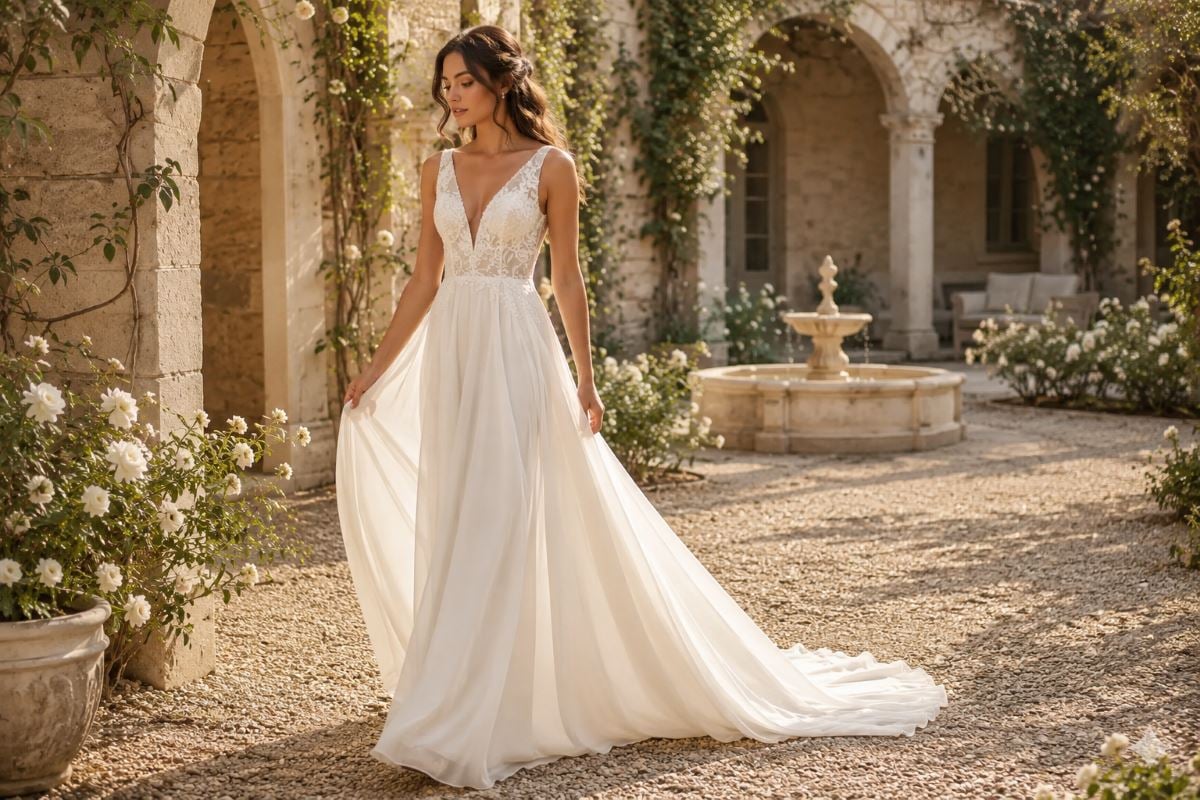
The A-line is fitted through the bodice and flares gently from the waist, and it is the most versatile silhouette to accessorize because it is balanced rather than extreme. It gives you genuine freedom. You can lean delicate and romantic, or you can introduce one bolder piece, a statement earring or a decorative belt at the waist, without overwhelming the look. The range of A-line wedding gowns suits almost any accessory direction, which makes this the easiest silhouette for a bride who wants room to express her personal taste. A belt or sash is especially effective on an A-line, since it defines the waist where the silhouette already narrows.
The Mermaid: Structural and Sleek
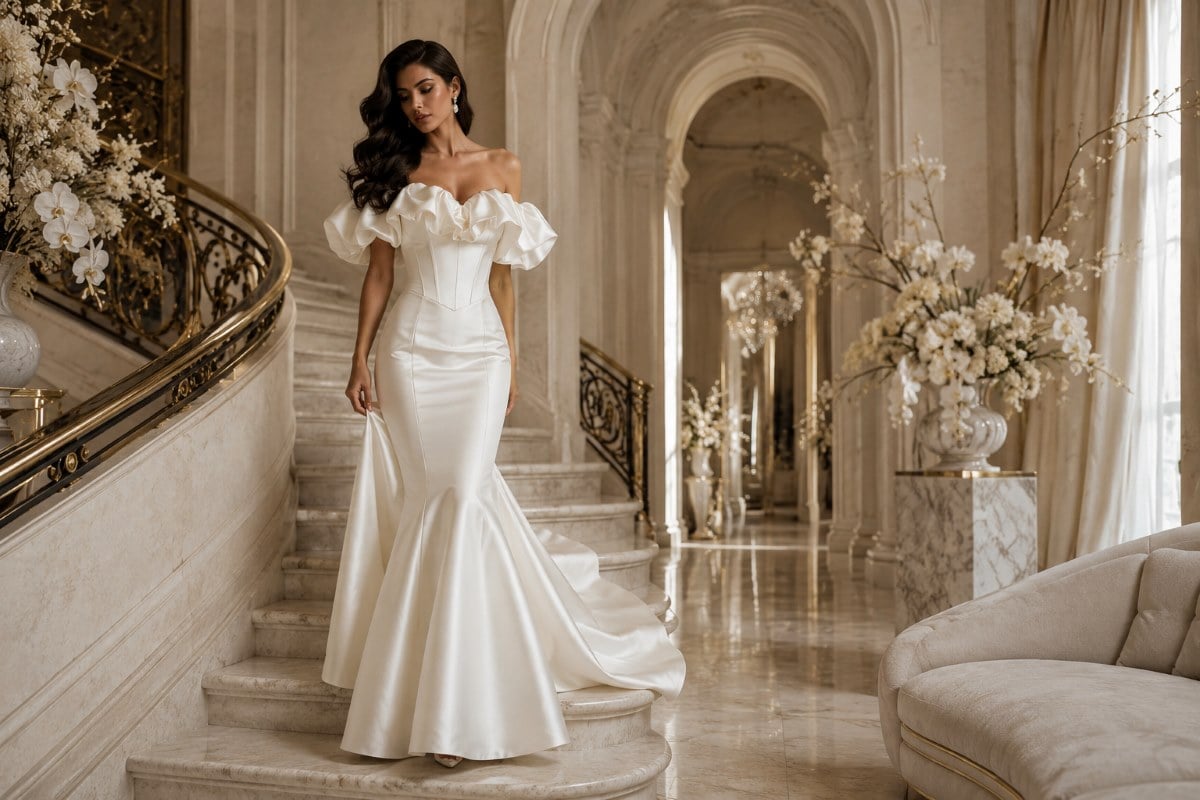
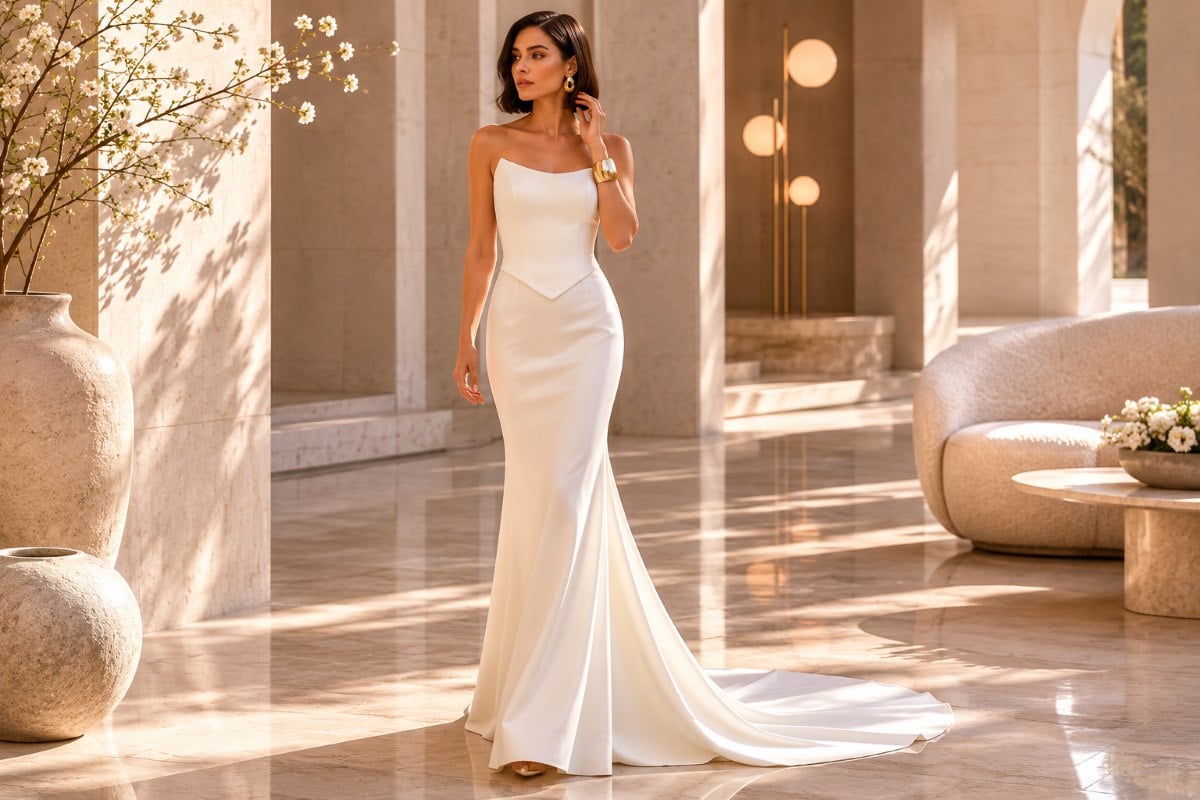
A mermaid gown contours closely to the body through the chest, waist, and hips before flaring below the knee. It is a strong, sculptural silhouette, and it pairs best with accessories that echo that structure. Sleek, geometric, or architectural jewelry mirrors the dramatic line of the gown, a clean drop earring or a structured bracelet rather than something soft and fluttery. The collection of mermaid wedding gowns shows how much shape the silhouette carries on its own, which means the accessories should be polished and intentional rather than busy. A modern, sleek hairstyle often complements a mermaid gown better than very soft, romantic waves.
The Sheath and Fitted Silhouettes: Modern Minimalism
A sheath or closely fitted gown falls straight and skims the body without a dramatic flare. It is the most modern and minimal of the silhouettes, and it gives a bride two clear paths. She can keep everything understated for a sleek, contemporary look, or she can treat the clean lines as a backdrop for one genuine statement piece. The range of fitted wedding gowns works as a true blank canvas, so a fitted gown is the silhouette where a bold accessory has the most room to shine, as long as it stays the only bold element in the look.
Accessories by Dress Fabric
Fabric is the second half of the equation, and it is the part most brides overlook. Two gowns in the same silhouette can call for different accessories purely because of what they are made of. Fabric controls shine, texture, and weight, and each of those changes what belongs beside it.
Satin and Mikado: Smooth and Lustrous
Satin and Mikado are smooth fabrics with a soft sheen, and that sheen is the key styling fact. Because the fabric already reflects light, it pairs beautifully with jewelry that has its own clean shine, polished metals, crystal, diamonds. The smooth surface also has a modern, structured quality, so geometric and contemporary pieces feel right at home. What can clash with a lustrous satin is a very rustic or heavily textured accessory, which fights the polished surface rather than complementing it. Keep the accessories as refined as the fabric.
Lace: Detailed and Romantic
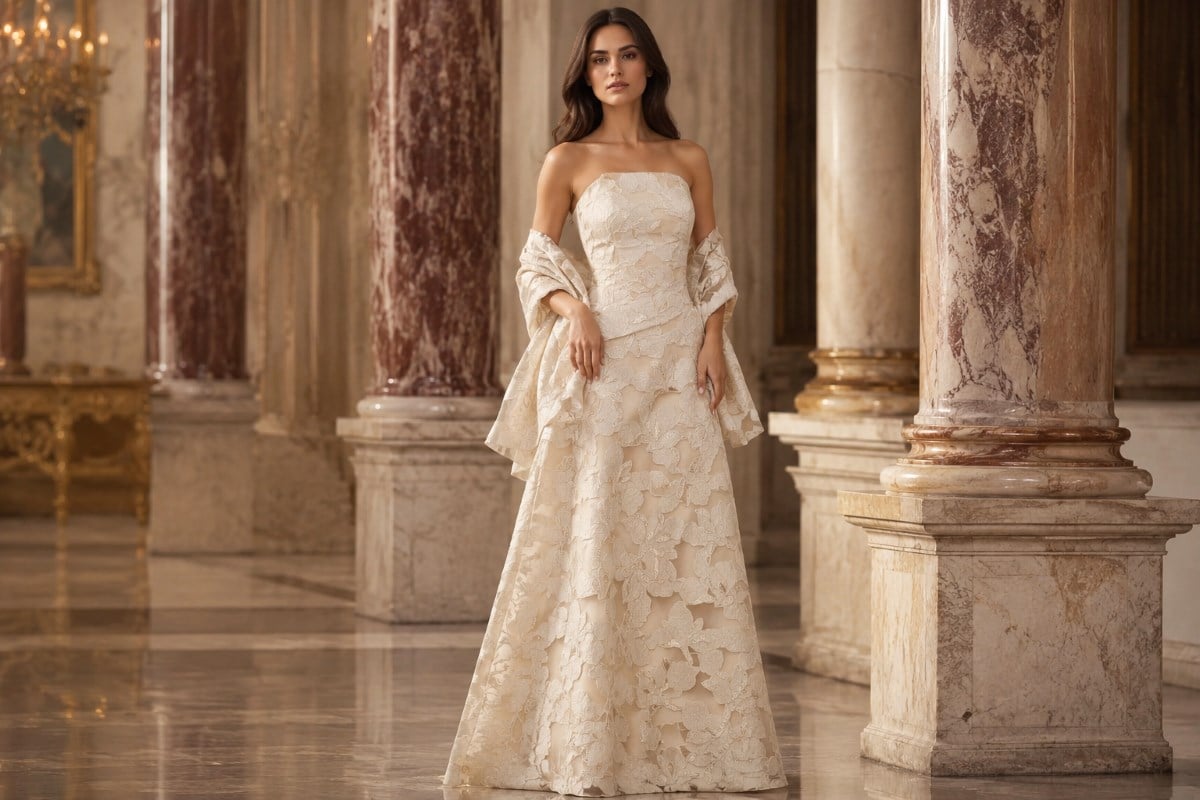
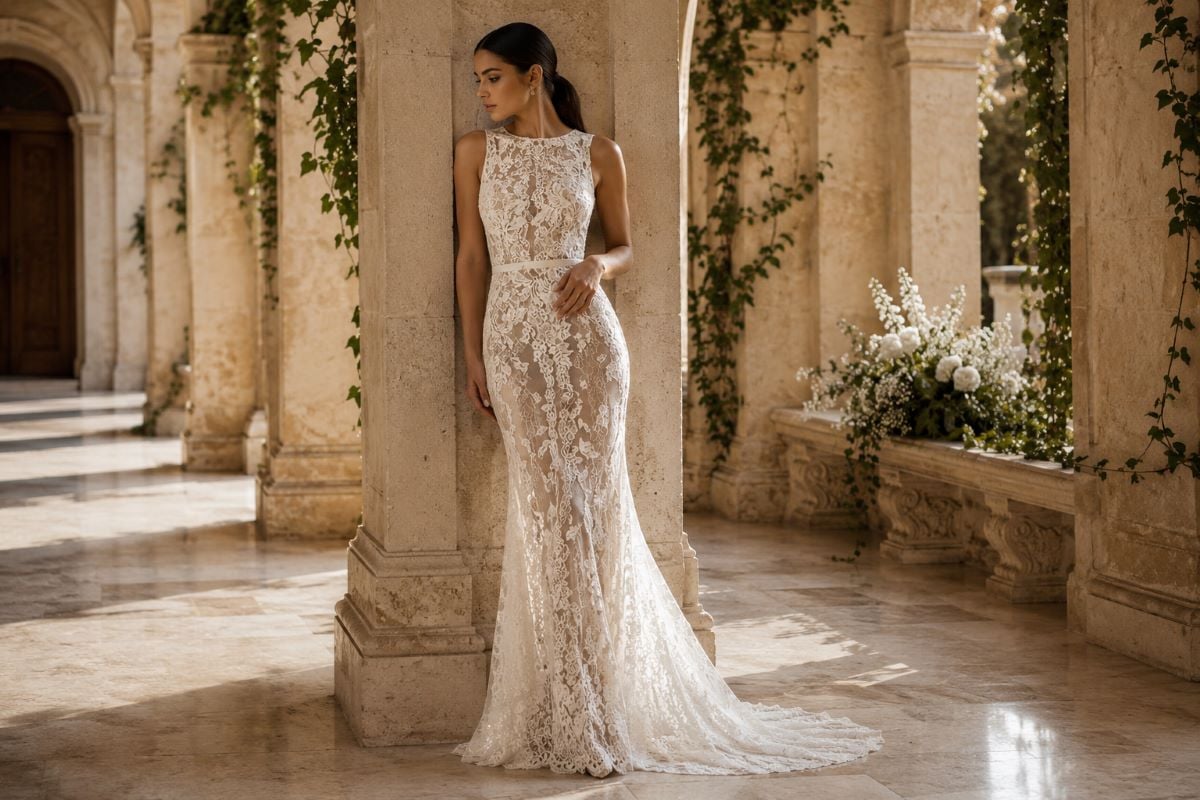
Lace is intricate and textured, and it is already doing significant decorative work across the surface of the gown. This is the most important fabric rule to understand: a detailed lace gown does not need detailed accessories, because the dress is the detail. The range of lace wedding dresses pairs best with simpler, cleaner pieces that give the eye a place to rest, a delicate earring, a fine bracelet, a smooth metal rather than another intricate pattern. Layering busy lace with a busy beaded necklace and an ornate hair comb creates visual noise. Let the lace be the texture, and keep everything else calm.
Tulle and Chiffon: Soft and Ethereal
Tulle and chiffon are light, airy, and romantic fabrics that move softly and create a dreamy quality. They pair naturally with accessories that share that softness, delicate jewelry, a flowing veil, romantic loose hair. A heavy, rigid, ultra-modern accessory can feel out of step with the gentle mood of these fabrics. The accessories should feel as light and romantic as the fabric itself, supporting the ethereal effect rather than grounding it with hard, heavy pieces.
Crepe: Matte and Minimal
Crepe has a matte finish and a clean, fluid drape, and it has become a favorite of the modern minimalist bride. Because crepe is understated and free of shine, it is the ultimate blank canvas. It is the one fabric that genuinely invites a bold, sculptural statement piece, since there is no competing sheen or texture to clash with. A matte crepe gown with one architectural earring or a single striking cuff looks intentional and high-fashion. Crepe is also where a minimalist gown can carry a maximalist accessory most successfully, a balance explored further in this guide to simple wedding dresses and minimalist style.
Bringing Silhouette and Fabric Together
Real gowns are always a silhouette and a fabric at the same time, so the final decision combines both. The two factors usually point in the same direction, and when they do, the choice is easy. A mermaid gown in satin is doubly a case for sleek, polished, structural jewelry, the silhouette and the fabric agree. A soft A-line in tulle is doubly a case for delicate, romantic accessories.
Occasionally the two seem to pull apart, and that is worth thinking through honestly. A ball gown, a dramatic silhouette, made in plain matte crepe, a minimal fabric, is a genuine example. Here the guiding rule is to let the more dominant feature lead. The sheer scale of a ball gown is hard to ignore, so the silhouette usually wins and the accessories stay restrained, even though the crepe alone might have invited a statement piece. When silhouette and fabric disagree, ask which one a person notices first across the room, and style for that.
One principle holds across every combination: balance. A gown that is bold in shape or rich in fabric wants quieter accessories. A gown that is simple in both wants, at most, one strong piece. The full range of wedding gowns spans every silhouette and fabric, and once you can read your own gown in these terms, the accessory choices stop being guesswork.
It is also worth remembering that accessories can shift a single gown between two moods. The same fitted crepe dress can read as sleek and modern with one architectural earring, or soft and romantic with a delicate veil and loose hair. This is part of why starting from the dress is so freeing rather than limiting. The silhouette and fabric set the boundaries, but within those boundaries a bride still has real room to decide whether her look leans contemporary or classic, understated or bold. The dress narrows the field to the choices that will actually work, which is exactly what makes the final decision feel manageable instead of endless.
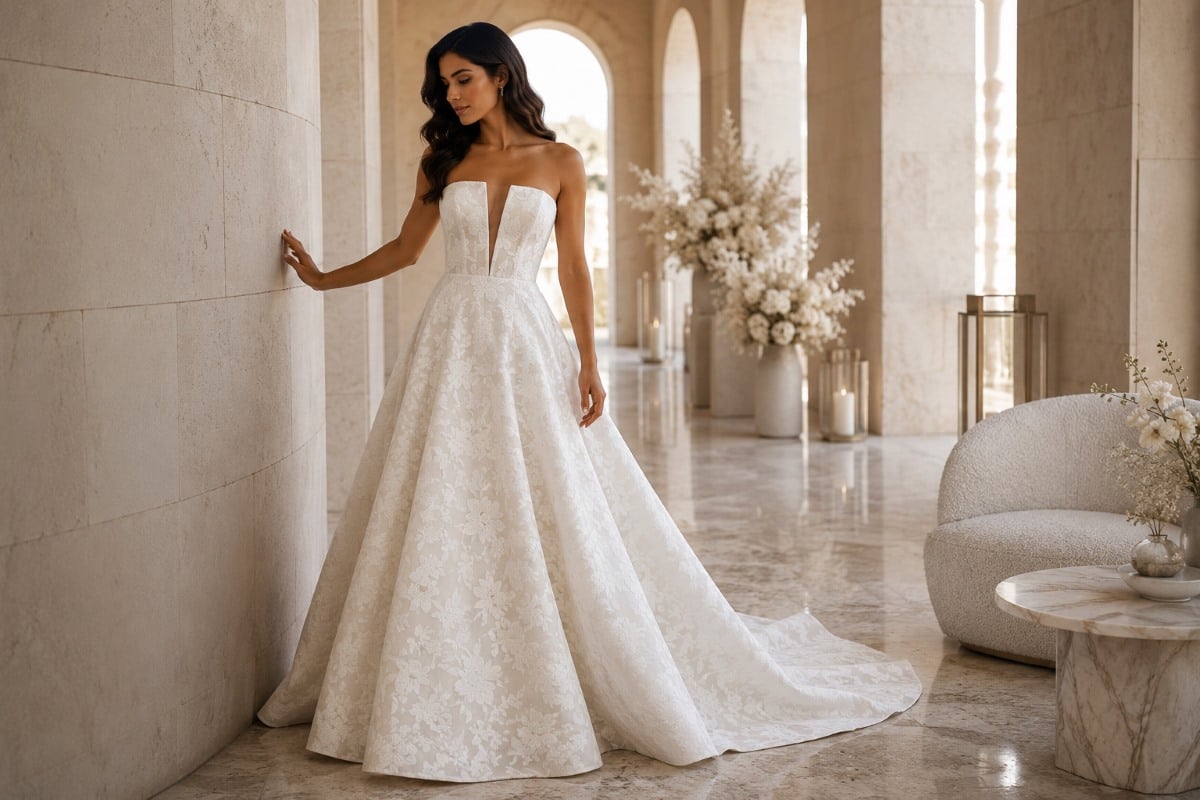
The Third Factor: How Much Detail Your Gown Already Has
Silhouette and fabric do most of the work, but there is a third factor worth weighing: the level of detail already built into the gown. Two dresses can share a silhouette and a fabric and still call for different accessories, simply because one is plain and one is heavily embellished.
The principle is straightforward. The more decoration a gown already carries, the less the accessories should add. A bodice covered in beading, a skirt scattered with three-dimensional florals, or a heavily embroidered panel is already a focal point, so the jewelry, the veil, and the hair pieces should step back and stay simple. The dress has spent its detail budget, and adding more competes rather than completes.
The reverse is just as true. A genuinely plain gown, whatever its silhouette, has detail to spare, and that is where a bride has the most freedom to introduce a striking earring, a decorative belt, or a bolder hair piece. This is the same logic that makes a minimalist gown such a strong partner for a maximalist accessory: the dress leaves room, so one statement piece can fill it without crowding. When you assess a gown, look at it honestly and ask how much it is already saying. The answer tells you how loudly the accessories are allowed to speak. Choosing the right wedding accessories for your dress always comes back to this balance between what the gown provides and what it leaves for you to add.
A Few Practical Rules That Apply to Every Gown
Beyond silhouette and fabric, a handful of universal principles keep any bridal look polished. These are worth keeping in mind no matter what dress you have chosen:
- Choose one focal point. Decide whether the eye should land on your earrings, your necklace, or your hair, and let that one area be the boldest. Competing focal points dilute the whole look.
- Mind the neckline. A high or detailed neckline usually means skipping a necklace and letting earrings carry the jewelry. A simple neckline leaves room for a necklace if you want one.
- Keep metals consistent. Pick one metal tone, gold, silver, or rose gold, and keep your jewelry within it for a cohesive finish.
- Let an heirloom lead. If you are wearing a meaningful family piece, treat it as the statement and keep everything else simple around it.
- Do the mirror test. Before the day, put on the full look and remove one thing. If it still feels complete, leave that thing off. Restraint almost always reads as more elegant.
For a fuller walk-through of choosing each individual piece, from the veil to the shoes, the guide on how to accessorize your wedding dress is a natural next read once you know what your silhouette and fabric are asking for.
About Wedding Dress Accessories FAQs
Should I choose my wedding dress or my accessories first?
Always the dress first. The gown is the largest and most considered part of the look, and its silhouette and fabric should guide every accessory decision that follows. Choosing accessories before the dress means styling blind.
What accessories suit a mermaid wedding dress?
A mermaid gown is a strong, sculptural silhouette, so it pairs best with sleek, geometric, or architectural jewelry that echoes its clean lines. A structured drop earring or a polished bracelet works well, and a modern hairstyle often complements the silhouette better than very soft waves.
What jewelry works best with a lace wedding dress?
Simpler, cleaner pieces. Lace is already an intricate, textured fabric doing significant decorative work, so it pairs best with delicate jewelry and smooth metals rather than another busy pattern. Layering ornate accessories over detailed lace creates visual noise.
Why does a crepe gown work so well with bold accessories?
Crepe has a matte finish and no surface detail, which makes it a true blank canvas. With no competing shine or texture, a matte crepe gown can carry a bold, sculptural statement piece without anything clashing, which is why it suits a minimalist dress with a maximalist accessory.
What if my dress silhouette and fabric call for different accessories?
Let the more dominant feature lead. A dramatic ball gown in plain crepe, for example, is still first and foremost a ball gown, so the silhouette wins and the accessories stay restrained. Ask which feature a person notices first across the room, and style for that.
How many accessories should a bride wear?
There is no fixed number, but the guiding rule is one focal point. Decide whether the eye should land on the earrings, the necklace, or the hair, and let that be the boldest element. A bold gown wants fewer accessories, while a simple gown can carry one strong piece.
Letting Your Gown Guide the Way
The easiest path to a polished bridal look is to stop thinking about accessories as a separate decision and start treating them as a response to the dress. Once you can name your silhouette and your fabric, the right wedding accessories for your dress become far clearer: a ball gown wants a quiet frame, a fitted crepe gown can carry one bold statement, a lace gown wants simplicity, a satin gown wants polish. The dress has already told you what it needs. Jovani has spent more than forty years designing gowns where silhouette, fabric, and detail are considered together from the very first sketch, which is exactly the harmony a bride is reaching for when she completes her look.
When you are ready to find the gown that will guide the rest of your bridal style, explore the full bridal collection through an authorized Jovani retailer.