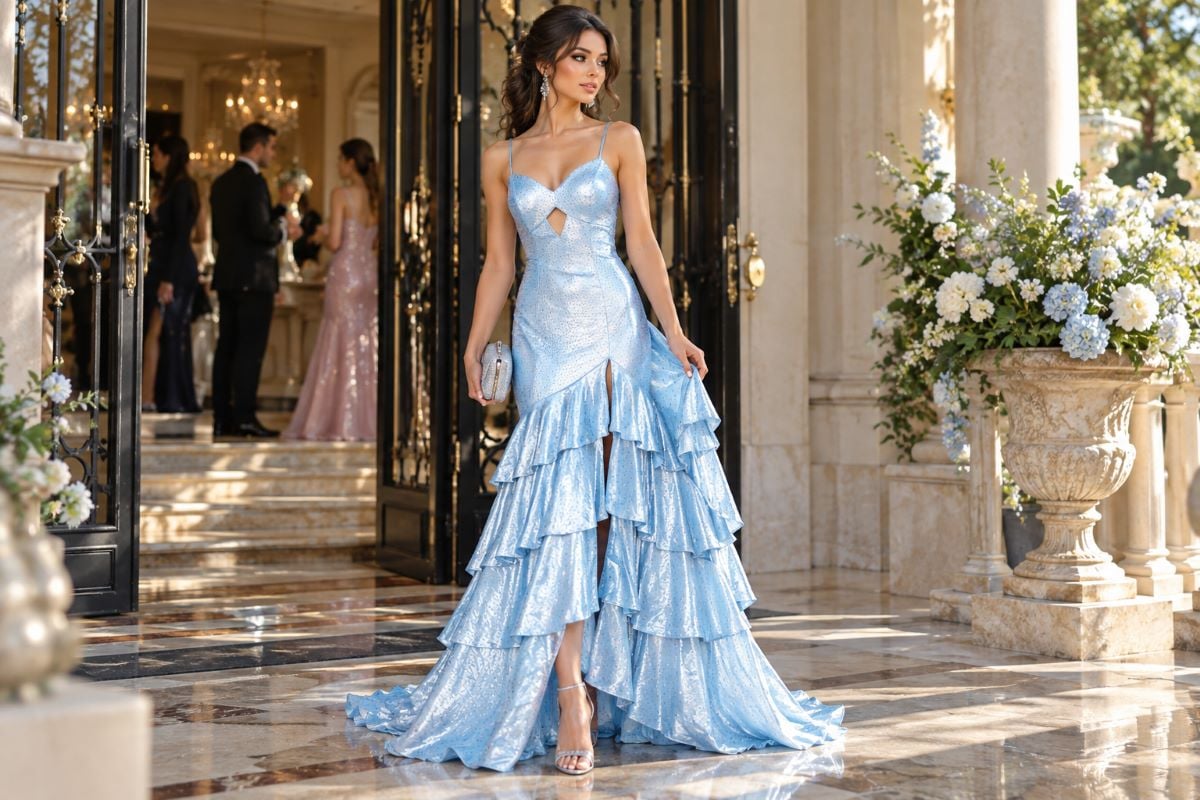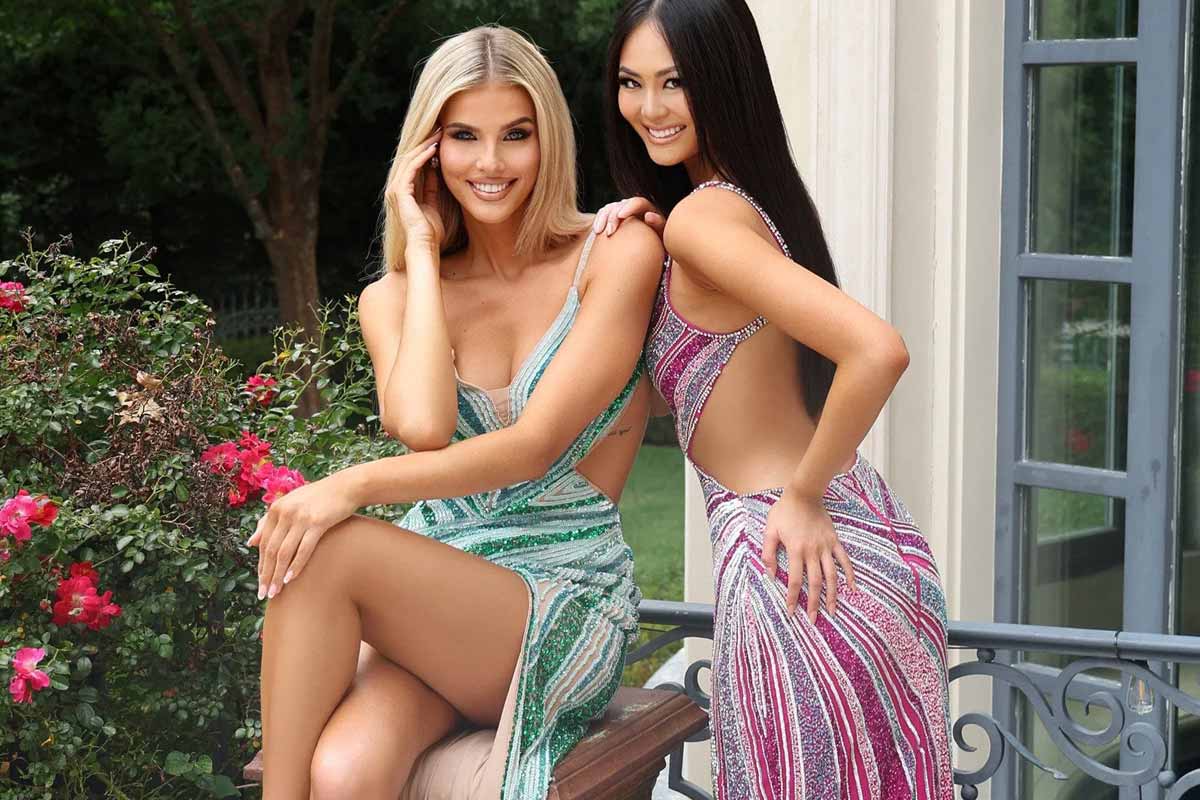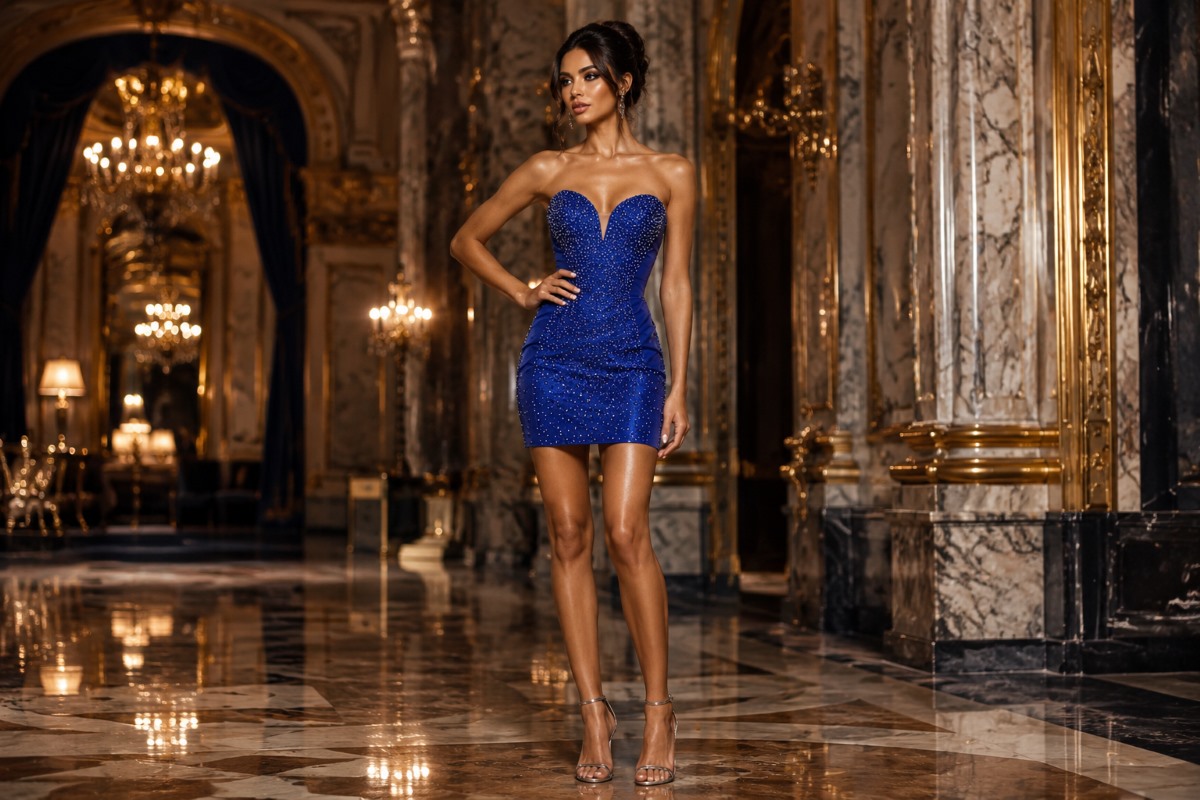

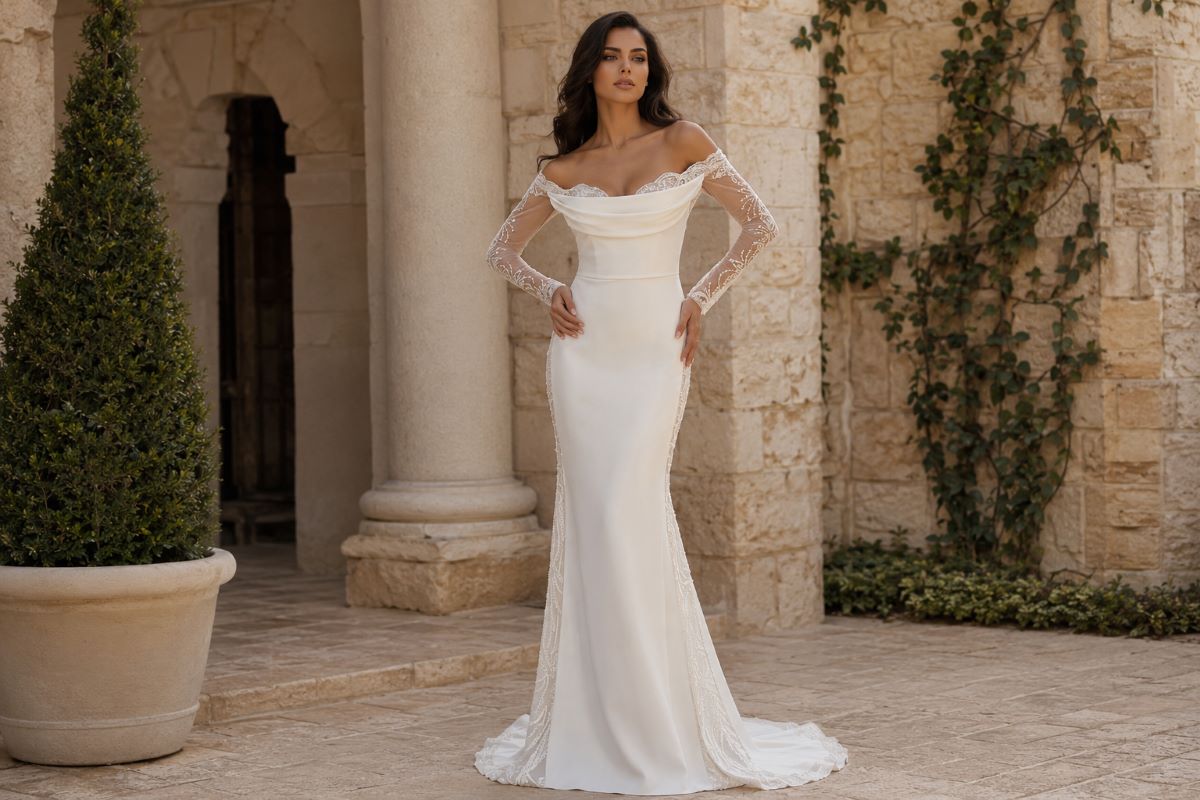
Finding the perfect wedding gown is a monumental milestone, traditionally associated with a whirlwind of voluminous tulle, intricate beadwork, thick layers of heavy lace, and dramatic embellishments. For decades, the bridal industry frequently equated the emotional weight and importance of a wedding day with the sheer physical complexity of the dress worn to celebrate it. However, a significant and enduring shift has occurred within modern bridal fashion.
Today, an increasing number of brides are turning away from excessive ornamentation and instead embracing the breathtaking clarity and architectural focus of simple wedding dresses. This shift is not merely a temporary trend; it is a deep-rooted movement toward authenticity, personal confidence, and an enduring style that firmly places the woman not the garment at the center of her celebration.
The rise of the “Quiet Luxury” movement in everyday fashion has seamlessly transitioned into bridal wear. Modern brides recognize that true elegance does not need to shout. Choosing a minimalist approach does not mean sacrificing glamour, formality, or high-end sophistication. In fact, stripping away the excess often reveals a much deeper level of design. When a gown relies solely on its silhouette, the inherent quality of its fabric, and the absolute precision of its tailoring, there is nowhere to hide flaws. This makes the creation of minimalist bridal gowns a true test of a designer’s skill, artistry, and technical mastery.
At Jovani, the philosophy behind crafting these pristine garments is rooted in the belief that the dress should elevate the bride, acting as a flawless architectural canvas that highlights her natural beauty rather than competing with it. In this comprehensive guide, we will explore the myriad benefits of choosing an unadorned gown for your special day. From the unparalleled comfort these dresses provide and their incredible versatility across various venues, to the profound historical context of minimalist bridal aesthetics, there are countless reasons why a refined approach might be the perfect choice for your walk down the aisle.
The Historical Context of Minimalist Bridal Aesthetics
To truly appreciate the enduring power of simple wedding dresses, one must understand their profound place in fashion history. Minimalist bridal fashion is not a new invention born in the 21st century; it is a cyclical, influential aesthetic that has marked some of the most iconic, paradigm-shifting weddings of the past hundred years.
The Bias-Cut Revolution of the 1930s
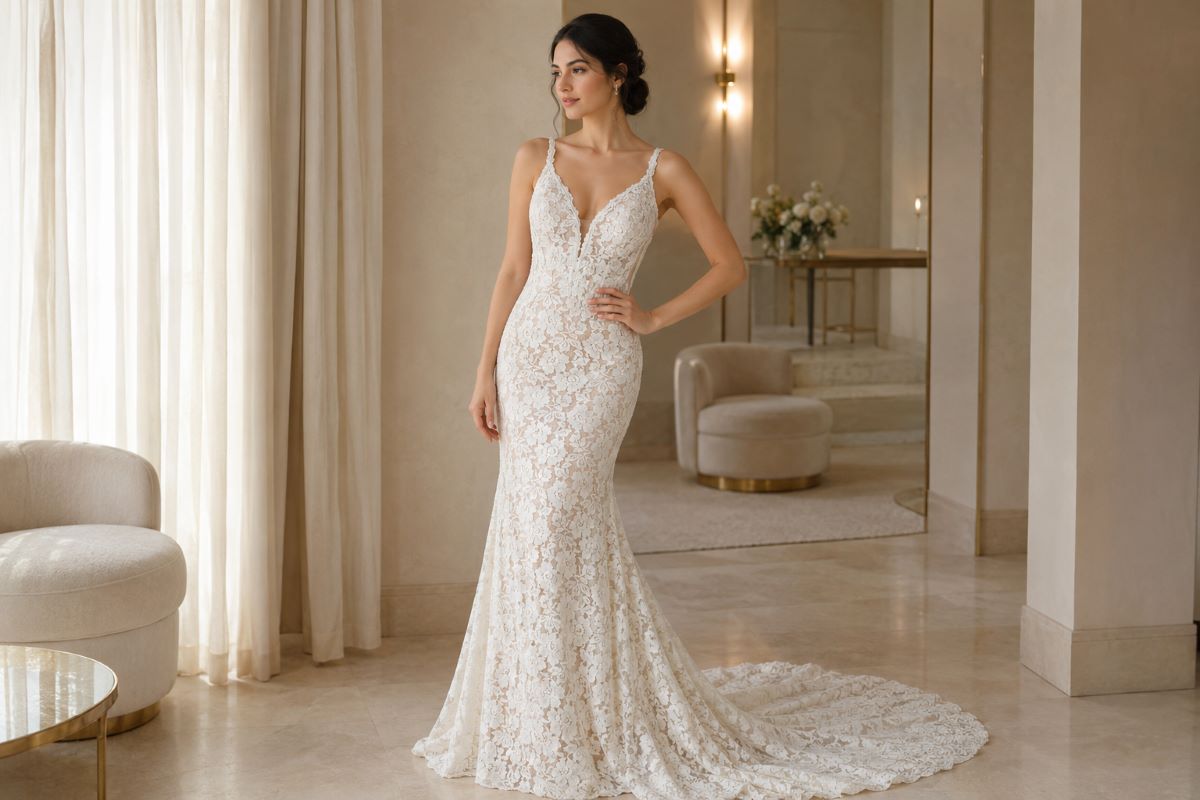
During the 1930s, the bias-cut silk slip dress revolutionized both evening and bridal wear. Moving entirely away from the restrictive corsetry and stiff fabrics of the Victorian and Edwardian eras, visionary designers introduced gowns cut on the diagonal grain of the fabric. This allowed the silk to stretch and mold to the wearer’s natural curves. Brides began favoring sleek, body-skimming gowns that moved effortlessly, prioritizing the natural female form over artificial, structured shaping.
Mod Minimalism and Structural Chic in the 1960s
The 1960s brought a wave of structural minimalism to the bridal world, famously championed by cultural icons like Audrey Hepburn and Mia Farrow. Hepburn’s iconic tea-length Givenchy gown and Farrow’s sharply tailored two-piece skirt suit proved that you did not need a sweeping train or a crystal-encrusted bodice to look devastatingly chic. This era emphasized clean geometric lines, shorter hems, and crisp, unembellished fabrics, giving birth to a modern, youthful approach to bridal fashion.
The Era of the Slip Dress in the 1990s
Fast forward to the 1990s, and the world witnessed another massive, industry-altering resurgence of minimalism. The undisputed pinnacle of this era was Carolyn Bessette-Kennedy’s iconic wedding to John F. Kennedy Jr. By choosing a radically simple, completely unembellished silk crepe slip gown designed by Narciso Rodriguez, she single-handedly shifted the global bridal landscape away from the voluminous, puff-sleeved styles of the 1980s. She proved that modern elegance is fundamentally rooted in restraint, confidence, and impeccable cut.
The Royal Influence of the 21st Century
More recently, contemporary royal weddings have further solidified the global appeal of the unadorned gown. Meghan Markle’s choice of a stark white, unembellished bateau-neck gown, followed by a sleek halter-neck reception dress, commanded the global stage. These dresses featured sharp necklines, stark fabrics, and zero beadwork, proving that you do not need heavy embellishments to project majesty and high-fashion sensibility. These historical moments underscore a powerful truth: minimalist wedding aesthetics are inherently powerful because they project a quiet, unshakable confidence that transcends fleeting trends.
The True Meaning of Understated Luxury
A frequent misconception among brides beginning their shopping journey is that a simple dress equates to a budget-friendly or “plain” dress. In the realm of high-end bridal fashion, nothing could be further from the truth. To deeply understand the appeal of a minimalist gown, one must first grasp the concept of understated luxury.
True luxury does not always need to announce itself with dense metallic embroidery or overpowering details. Instead, understated luxury whispers. It requires a discerning eye to appreciate. It is found in the tactile experience of how a premium fabric feels against the skin. It is evident in the way a heavy silk drapes effortlessly across the collarbone, the exact mathematical placement of a dart that cinches the waist perfectly without puckering, or the subtle sheen of high-grade silk catching the golden-hour light of an afternoon ceremony.
When brides begin to explore curated collections of timeless wedding gowns, they consistently discover that the most memorable and breathtaking pieces are those that exercise master-level restraint. A dress free from heavy beadwork allows the inherent quality of the materials and the genius of the pattern-maker to take center stage.
This intense focus on premium, unembellished fabrics requires meticulous craftsmanship. Every single seam must be perfectly aligned, every hem must fall with geometric precision, and the internal corsetry must provide flawless, invisible support. The result is a garment that feels incredibly rich and substantial, appealing directly to the modern bride who values high-end construction and architectural elegance over loud, momentary trends.
Fabric Mastery: The Foundation of Minimalist Gowns
When a designer consciously decides they will not rely on lace appliques or sequins to add visual interest to a gown, the fabric itself must do all the heavy lifting. This requires the sourcing and use of exceptional, luxury textiles that possess inherent beauty, dynamic movement, and profound structural integrity. The choice of fabric completely dictates how the dress will behave, how it will catch the light in photographs, and how it will feel against the bride’s skin for twelve or more hours.
The Architectural Power of Silk Mikado
Silk Mikado is one of the most beloved and respected fabrics in the world of structured, simple wedding dresses. It is a heavier, expertly blended silk that possesses a brilliant, subtle, and sophisticated sheen. Because of its weight and tightly woven density, Mikado has an incredible “memory”—meaning it holds its shape beautifully. It is the absolute perfect fabric for creating dramatic, sculptural silhouettes, such as striking, unembellished ballgowns or sharp, architectural pleated skirts that look regal and commanding.
The Fluidity and Grace of Heavy Crepe
Crepe is the ultimate fabric for the modern, minimalist bride who desires sleekness, supreme comfort, and fluid movement. It features a sophisticated matte finish and an exceptional, heavy drape that falls fluidly over the body. Crepe moves like liquid, creating a soft, romantic silhouette that is exceptionally comfortable to wear. Because it has a slight stretch and contouring ability, it is frequently used for sheath and fit-and-flare styles, celebrating the body’s natural curves without adding any stiff bulk.
The Vintage Allure of Silk Charmeuse
For brides drawn to the sultry sleekness of the 1930s or the chic minimalism of the 1990s, silk charmeuse is unparalleled. Highly reflective, luxuriously lightweight, and incredibly soft to the touch, charmeuse is typically cut on the bias to allow the fabric to skim the body naturally rather than clinging to it. It is the defining fabric of the bridal slip dress, offering an aesthetic that is simultaneously effortless, relaxed, and glamorous.
The Crisp Structure of Silk Faille
Faille is a slightly lesser-known but deeply luxurious fabric favored by haute couture designers. It features a subtle, finely ribbed texture woven into the silk, which gives it a matte appearance with a very subtle luster. Faille is exceptionally crisp and holds volume magnificently, making it an incredible choice for minimalist A-line gowns or modern ballgowns that require a rigid, flawless skirt shape without the high shine of satin or Mikado.
Silhouettes That Shine in Minimalism
The incredible beauty of a minimalist approach is that it can be masterfully applied to almost any bridal silhouette. However, the total lack of surface embellishment fundamentally changes how these silhouettes are perceived, making them look far more modern, sophisticated, and intentional.
The Minimalist Ballgown
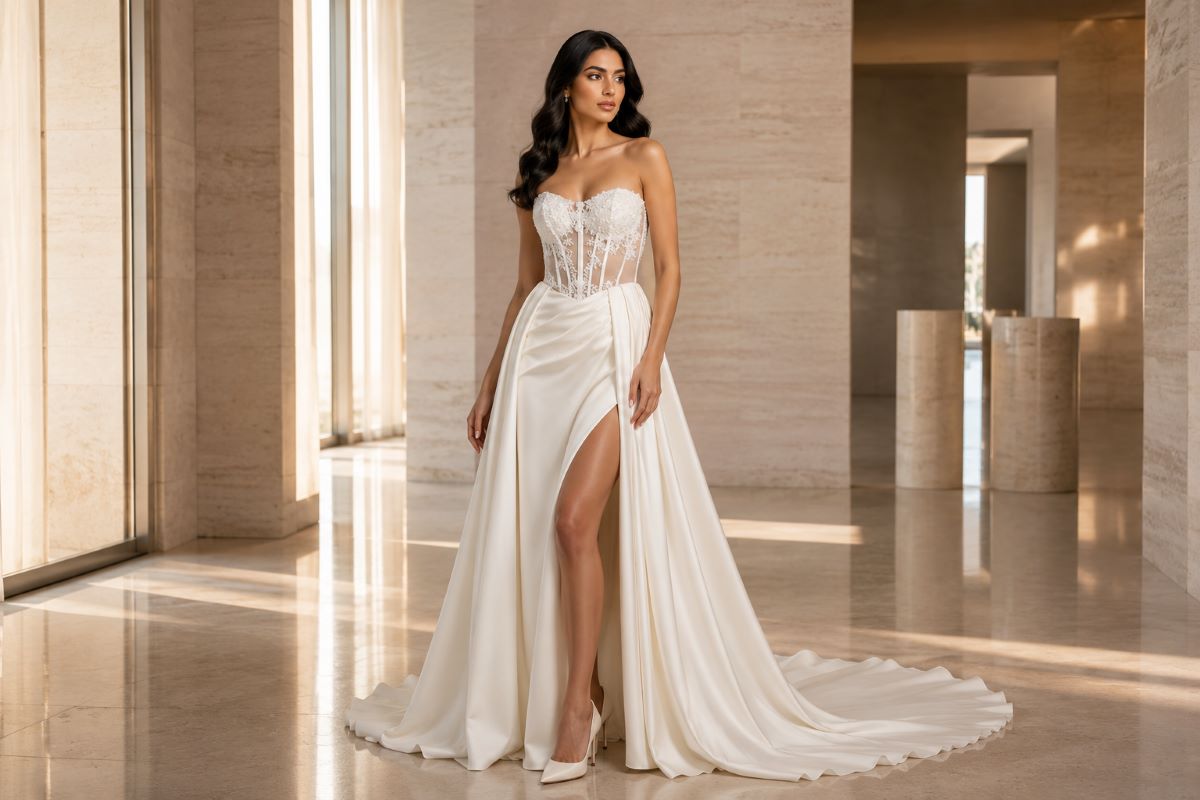
Traditionally, ballgowns are deeply associated with heavy princess aesthetics—think endless layers of scratchy tulle, intricate floral lace, and aggressive sparkle. However, a minimalist ballgown crafted entirely from smooth satin, crisp faille, or structured Mikado is an absolute revelation. The visual focus shifts entirely to the dramatic, sweeping volume of the skirt and the sharp, contrasting geometry of a tightly fitted bodice. It is grand, imposing, and undeniably bridal, yet strikingly modern and clean.
The Sleek Sheath and Column
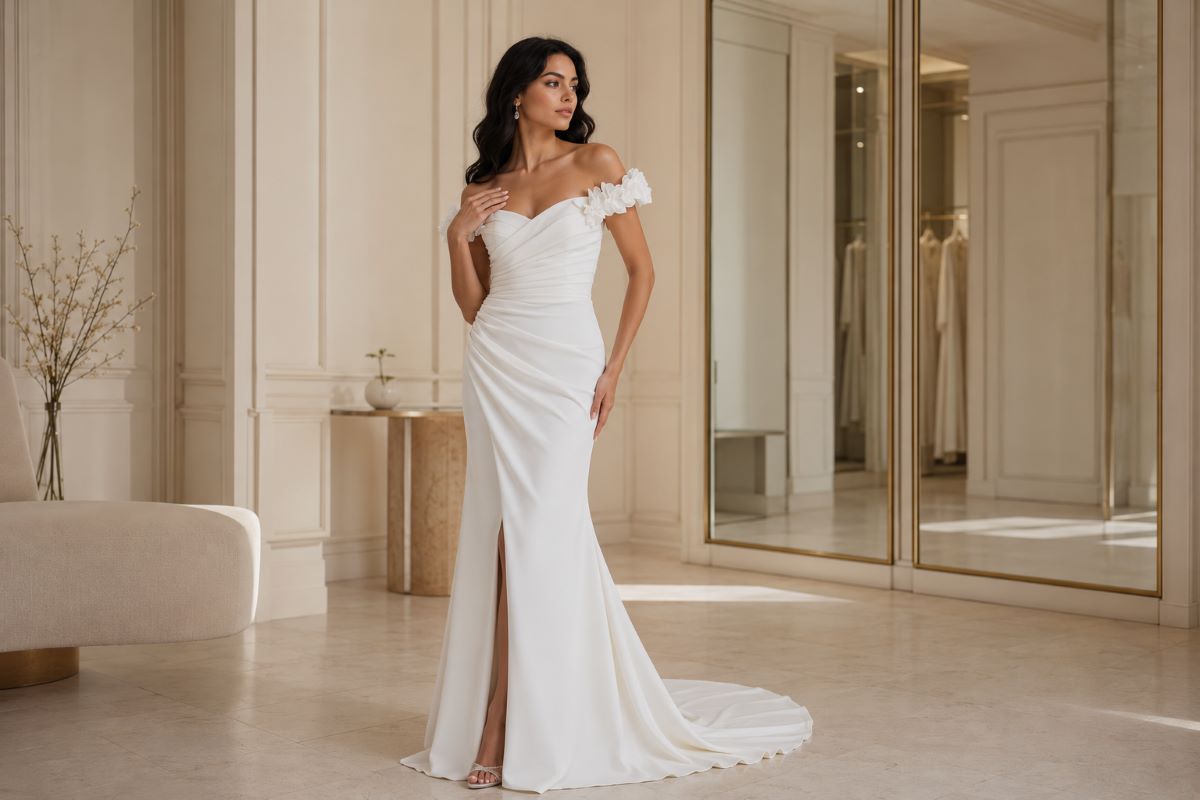
The sheath and its narrower cousin, the column dress, are the quintessential minimalist silhouettes. Falling straight down from the hips, they offer a narrow, elongated, statuesque profile. When executed in a clean, heavy white crepe with a modern square neckline or a subtle cowl draped back, the sheath dress becomes the absolute epitome of chic, metropolitan bridal style.
The Unadorned A-Line
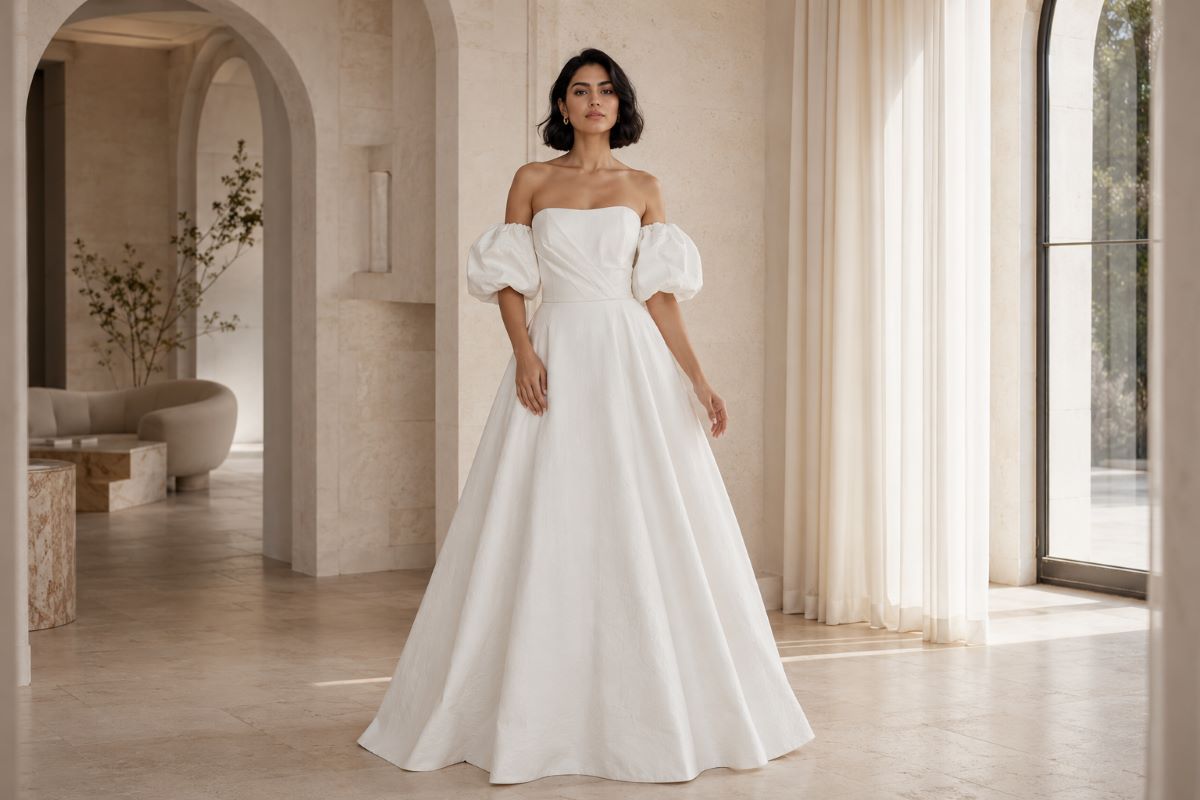
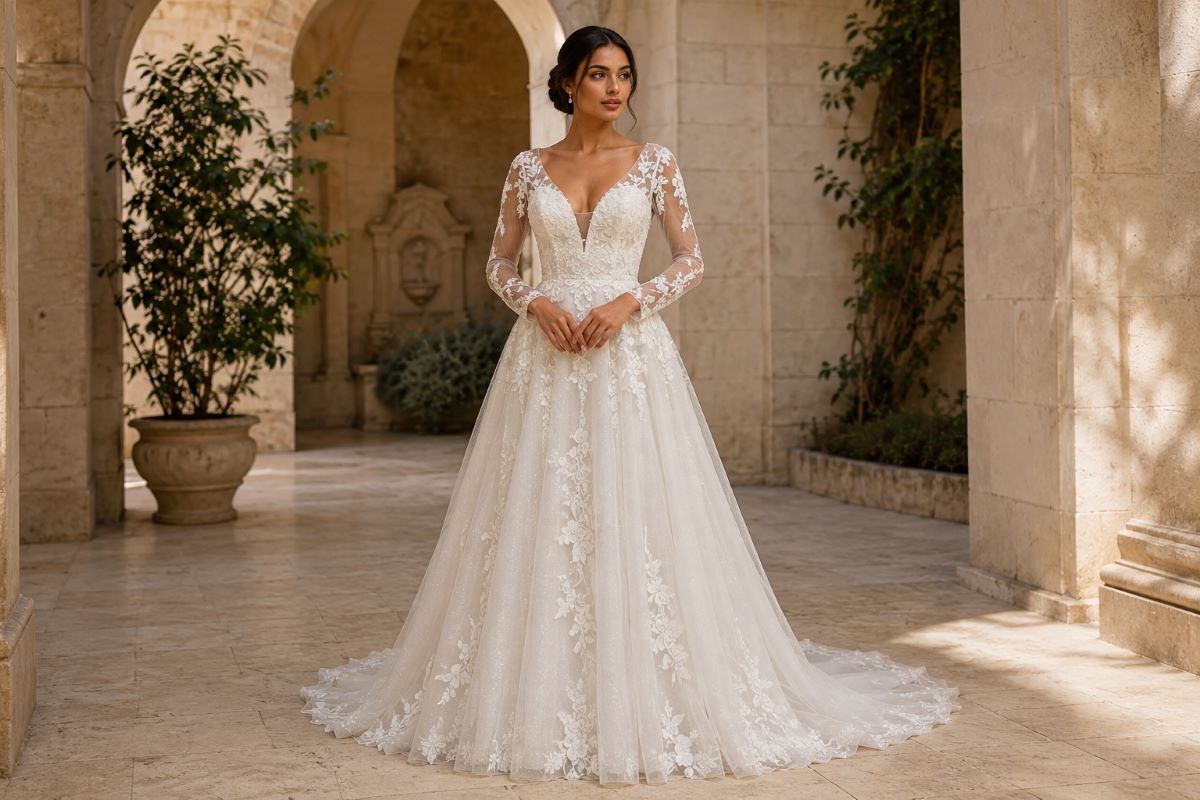
The A-line is widely considered by stylists and designers to be the most universally flattering bridal silhouette in existence. When you remove the distraction of heavy lace and beading, a-line wedding gowns take on a fresh, sophisticated, and almost regal character. A smooth A-line skirt flowing gracefully from a perfectly tailored bodice provides a timeless, traditional feel that still aligns perfectly with modern minimalist sensibilities.
The Sculptural Mermaid or Fit-and-Flare
Often associated with dramatic, heavily embellished styling, the mermaid silhouette takes on a completely different mood when rendered in a simple fabric. A minimalist fit-and-flare gown made of heavy stretch crepe or sleek satin focuses entirely on celebrating the bride’s natural curves. The drama comes purely from the shape of the dress—the tight contouring of the waist and hips followed by the sharp, dramatic flare at the knee—making it a remarkably sexy yet refined choice.
Architectural Necklines and Statement Backs
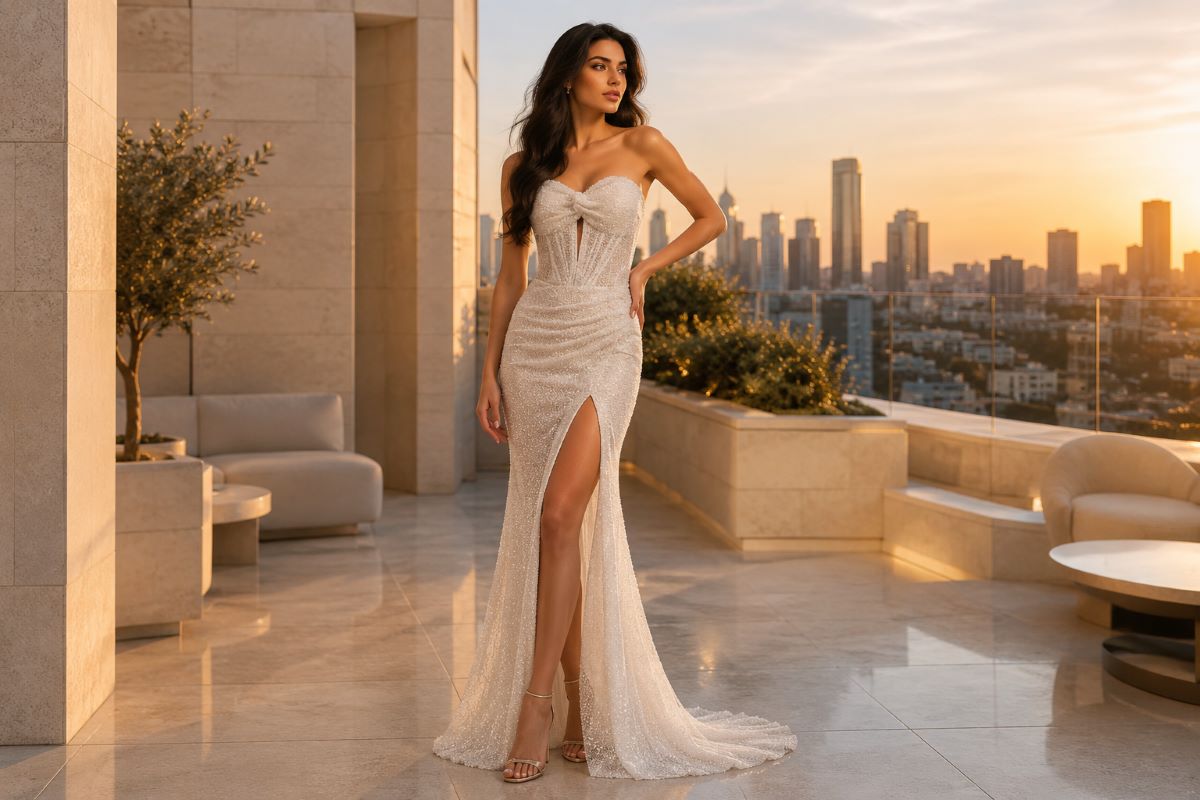
In the total absence of surface decoration, the architectural cut and geometry of the dress become its primary defining features. Simple wedding dresses rely heavily on innovative necklines and dramatic, unexpected back details to provide intense visual intrigue and frame the bride’s features.
The Regal Bateau Neckline
Sitting high on the chest and stretching straight across to the points of the collarbones, the bateau offers a regal, mid-century elegance that is intensely flattering. It naturally broadens the shoulders and draws the eye directly upward to the bride’s face, creating a beautifully balanced proportion.
The Bold Deep V-Neck
A plunging V-neck, when executed with sharp, perfectly clean lines and invisible illusion mesh, introduces an element of contemporary boldness. This specific cut does an incredible job of elongating the torso, adding a touch of sensual modernism to an otherwise austere gown.
The Modern Square Neckline
Reminiscent of Renaissance portraiture but highly modernized, a sharp square neckline paired with thick straps offers a clean, structural frame for the décolletage. It feels incredibly fresh, current, and provides excellent support while showcasing the collarbones beautifully.
The Sophisticated Halter
Sporty yet undeniably elegant, a high-neck halter gown highlights the shoulders and arms beautifully, offering a sophisticated, high-fashion look. Halter designs are particularly stunning for evening receptions or sophisticated city weddings.
Unexpected and Dramatic Back Details
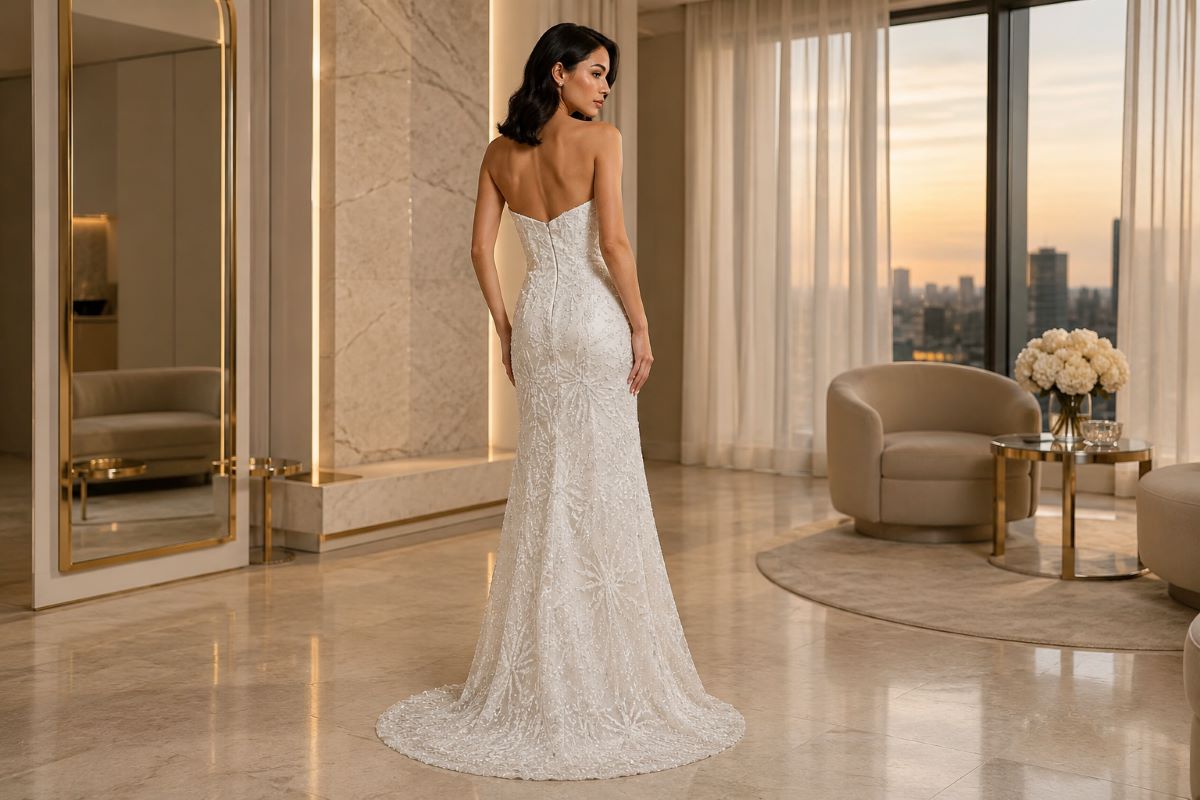
The back of a minimalist gown also provides an incredible, often surprising opportunity for design innovation. Because the front of the gown is kept pristine and simple, a dramatic cowl drape, a completely open back framed by delicate spaghetti straps, or a precise, perfectly spaced row of silk-covered buttons trailing down the entire length of a cathedral train can serve as a breathtaking focal point as the bride walks down the aisle and stands at the altar.
The Physical Freedom of Comfortable Bridal Wear
While the visual and aesthetic benefits of a minimalist gown are profound and undeniable, the physical benefits are equally important to the actual experience of the bride. A wedding day is a long, emotional, and intensely demanding marathon. From the early hours of hair and makeup preparation, the emotional weight and nerves of the ceremony, to hours of posing for extensive photography, greeting hundreds of guests, and dancing late into the night, the bride is constantly in motion.
Many traditional, decorated gowns can easily weigh upwards of fifteen to twenty pounds. Carrying that immense weight, managing expansive, heavy skirts through narrow doorways, and dealing with the physical discomfort of stiff boning rubbing against the ribs can quickly turn a joyful celebration into a grueling test of endurance. This is exactly where comfortable bridal wear becomes a truly transformative factor in the wedding experience.
Simple wedding dresses are inherently lighter, significantly softer, and far more manageable. The lack of heavy glass beading, thick metallic embroidery, and stiff crinoline translates to immense physical freedom. A bride wearing a minimalist gown can breathe deeply without restriction, sit down comfortably to actually enjoy her expensive reception dinner, use the restroom with ease, and move effortlessly across the dance floor without feeling exhausted or weighed down by her own clothing.
This profound physical comfort directly impacts the bride’s mood, her posture, and her overall presence. When a woman feels physically at ease in her gown, she naturally stands taller, her shoulders relax, and she radiates a genuine, authentic happiness that is impossible to fake and translates beautifully into candid wedding photography.
Versatility Across Venues, Themes, and Seasons
The modern wedding landscape is incredibly diverse. Couples are no longer restricted to traditional church ceremonies and standard hotel banquet hall receptions. Today, weddings take place on windswept coastal cliffs, in lush botanical gardens, atop sleek urban skyscrapers, and within the halls of historic museums. One of the greatest practical benefits of elegant simple bridal looks is their unparalleled, chameleon-like adaptability to almost any environment.
A heavily beaded, voluminous princess ballgown might look perfectly appropriate in a grand, historic cathedral, but it can appear severely out of place—and prove highly impractical—at a relaxed vineyard or a destination beach wedding in the tropics. Minimalist bridal gowns, however, effortlessly bridge these gaps.
A sleek, unadorned crepe slip dress is perfectly suited for a chic city hall elopement or an avant-garde art gallery reception. Yet, that exact same dress, when paired with a sweeping cathedral-length veil, long silk gloves, and an opulent cascading floral bouquet, seamlessly transitions into a highly formal, traditional country club setting.
This high level of adaptability also makes simple designs ideal for brides planning intimate, daytime, or non-traditional celebrations. For outdoor garden vows or relaxed daytime events, casual wedding outfits with clean, fuss-free lines offer a sophisticated look that feels entirely bridal without feeling overly dramatic, heavy, or completely out of place in the natural, bright sunlight.
Furthermore, minimalist gowns transition beautifully across seasons. A heavy silk Mikado ballgown with a high bateau neckline is breathtaking for a winter wonderland wedding, especially when paired with a faux-fur wrap. Conversely, a feather-light silk chiffon or crepe sheath is the ultimate choice for a sweltering summer wedding, allowing the bride to remain cool, collected, and chic.
A Blank Canvas for Deeply Personal Styling
A frequent, yet easily debunked misconception about simple wedding dresses is that they somehow lack personality, individuality, or creative flair. In reality, the exact opposite is true. A heavily embellished dress makes all the styling choices for you; a minimalist gown serves as the ultimate blank canvas, allowing the bride to inject her unique personality through careful, intentional, and creative styling.
When a dress is heavily decorated, the garment aggressively dictates the accessories. A beaded, high-neck gown leaves virtually no room for a statement necklace, and a highly complex, busy lace pattern will inevitably clash with an elaborate veil. With a minimalist gown, the bride completely regains creative control over her final aesthetic.
If a bride wishes to make a dramatic, high-fashion statement, she can pair her stark white crepe gown with a dramatic cathedral-length pearl-studded veil, bold geometric diamond earrings, and brightly colored, designer statement shoes. If her goal is a highly romantic, ethereal vibe, she might choose a delicate fresh floral headpiece, a fine vintage heirloom pendant, and a sheer drop veil.
This styling versatility extends to the very cut of the dress itself. For instance, short wedding gowns crafted from pristine white satin can be styled to look highly traditional with a vintage birdcage veil, pearl studs, and classic pumps. Alternatively, they can look incredibly modern and edgy with sleek metallic stilettos, dark dramatic makeup, and a sharp architectural blazer draped over the shoulders. The process of styling a simple dress becomes a joyful, highly creative endeavor, allowing the bride to curate a multidimensional look that feels completely authentic to her personal style narrative.
Highlighting the Bride’s Natural Beauty
There is an age-old adage in the fashion industry that rings exceptionally true in bridal design: “The woman should wear the dress; the dress should not wear the woman.” A bride should always be the absolute focal point of her celebration. When guests look at her, their eyes should immediately be drawn to her glowing complexion, her radiant smile, and the raw emotion in her eyes, rather than getting lost in the complicated pattern of her dress.
Overly complex gowns with aggressive detailing, highly contrasting appliques, and overwhelming sparkle can sometimes act as a significant visual distraction. They draw the eye away from the bride’s face and force it to focus strictly on the fabric. Minimalist wedding aesthetics resolve this issue beautifully and naturally. By consciously stripping away visual clutter, simple wedding dresses act as a beautifully designed, supportive frame for the woman wearing them—much like a sleek gallery frame enhances a priceless piece of art without overshadowing it.
This framing effect is particularly powerful when exploring different design elements, like the use of clean sleeves. For example, gowns with long sleeves executed in a smooth, opaque stretch crepe draw a beautiful, uninterrupted, and elegant visual line down the arm. This elongates the bride’s frame and draws the eye naturally upward to her face. Without the distraction of heavy lace appliques, the bride’s natural beauty, her meticulously chosen hairstyle, and her flawless makeup become the undisputed centerpiece of the bridal look.
Sustainability, Upcycling, and Future Wearability
In an era where sustainability, mindful consumption, and eco-consciousness are becoming increasingly important to modern consumers, the minimalist wedding dress offers a distinct and highly appealing advantage. Highly traditional, heavily beaded ballgowns are almost exclusively single-use garments. After the wedding day, they are typically dry-cleaned, packed tightly into preservation boxes, and stored away in dark closets for decades, never to be worn, seen, or appreciated again.
Simple wedding dresses, depending largely on their silhouette and fabric, possess a much higher potential for future wearability and upcycling. A beautifully tailored, unembellished white sheath dress or an elegant midi-length silk slip can be easily taken to a skilled tailor after the wedding. They can be expertly shortened to knee-length, dyed a deep jewel tone like navy or emerald, or separated into a top and skirt. These garments can be given a vibrant second life, seamlessly integrated into a luxury capsule wardrobe, and repurposed for future formal events, high-end anniversary dinners, or sophisticated black-tie galas.
Even if the bride chooses to preserve the dress in its original, pristine state, the timeless nature of a minimalist gown means it is much more likely to appeal to future generations. A daughter or granddaughter fifty years from now is far more likely to want to wear a chic, classically tailored, unadorned silk gown inherited from her mother than a highly stylized dress that distinctly reflects the passing fads of a bygone decade.
Tracking Modern Bridal Trends and Convertible Fashion
While minimalism is inherently timeless, the innovative ways in which modern designers interpret simplicity continue to evolve and thrill the fashion world. Keeping a close eye on designer wedding dress trends reveals that modern bridal fashion is increasingly focused on an architectural, customizable approach to unembellished fabrics.
Current trends within the minimalist space include asymmetrical draping, where a single piece of fabric is expertly manipulated and pinned on a dress form to create stunning visual tension and artistic folds across the bodice. We are also seeing a massive rise in structural, exposed corsetry that is visible yet completely unadorned, providing a subtle nod to vintage lingerie styling while maintaining a clean, modern, and modest exterior.
Furthermore, the rise of “convertible” minimalist fashion is changing how brides shop. Designers are pairing simple, core dresses with dramatic, detachable elements. A bride might wear a sleek, simple crepe column dress, but pair it with a massive, detachable Mikado overskirt for a dramatic ceremony entrance, removing it later to reveal a sleek reception look. The incorporation of elegant sheer bridal capes, detachable puff sleeves, and opera-length silk gloves are all highly popular ways that modern designers are injecting fresh, high-fashion versatility into the minimalist aesthetic without permanently altering the simple core of the gown.
Why Jovani Excels in Minimalist Bridal Design
Creating a flawless, breathtaking simple wedding dress is widely considered by industry experts to be one of the most demanding, unforgiving, and technically difficult tasks in fashion design. Because there is absolutely no ornamentation, every single stitch, seam, and dart is completely visible to the naked eye. The fit must be perfect, contouring to the bride’s specific body measurements with expert, millimeter-level precision. There are no layers of distracting tulle or highly reflective beading to mask an imperfect seam, a poorly placed zipper, or an awkward, puckering drape in the fabric.
This rigorous demand for perfection is precisely where Jovani’s decades of profound experience in high-end formalwear and luxury evening gowns truly shine. Renowned globally for a steadfast, uncompromising commitment to quality, construction, and fit, Jovani approaches minimalist bridal gowns with the exactitude, patience, and precision of haute couture.
The brand understands intrinsically that the magic of a simple dress lies entirely in the unseen details. It is found in the highly engineered internal corsetry that provides incredibly comfortable, invisible support, often eliminating the need for the bride to source complicated, uncomfortable undergarments. It is found in the meticulous cutting of the fabric—understanding exactly how the warp and weft of the silk will behave—to ensure a perfect, fluid drape that moves harmoniously with the body. And it is found in the careful, uncompromising selection of premium, luxury materials that feel just as sensational against the skin as they look to the photographer’s lens.
When a bride makes the decision to choose a simple gown crafted by Jovani, she is not just buying a piece of clothing; she is investing in master-level tailoring. She is choosing a dress that has been expertly engineered from the inside out to flatter her specific figure flawlessly, providing the architectural structure she needs while allowing her the physical freedom and supreme comfort she deeply desires on her wedding day. Jovani continually proves that simplicity is indeed the ultimate sophistication, delivering breathtaking gowns that allow the modern bride to step into her new life feeling unapologetically confident, perfectly comfortable, and radiantly, naturally beautiful.
About Simple Wedding Dresses FAQ’s
1. Are simple wedding dresses appropriate for a highly formal, black-tie wedding?
Absolutely, without a doubt. The formality of a wedding dress is not dictated solely by the amount of beading, sequins, or lace it features. Instead, formality is determined by the silhouette of the gown, the sheer quality and weight of the fabric, and how the overall look is styled. A sleek, unembellished Mikado ballgown with a dramatic cathedral-length train, or a deeply elegant minimalist crepe sheath gown, perfectly aligns with the most stringent black-tie dress codes. You can easily elevate a simple gown for a highly formal setting by incorporating luxury accessories, such as a diamond tennis necklace, elegant opera-length silk gloves, or a dramatically long, lace-trimmed mantilla veil.
2. What are the absolute best fabrics to look for when choosing a minimalist wedding dress?
When the design of the dress is kept strictly simple, the quality of the fabric becomes paramount to the success of the look. You should look for luxurious, substantial fabrics that either hold a defined shape or drape beautifully and heavily over the body. Silk Mikado, silk faille, and heavy duchess satin are excellent choices for structured, architectural styles because they provide a crisp, clean, and regal finish. For more fluid, body-skimming, and romantic silhouettes, double-faced silk crepe, heavy silk chiffon, and charmeuse are ideal as they offer a beautiful, natural drape and a subtle, highly sophisticated sheen that looks incredibly expensive.
3. How do I ensure a simple wedding dress doesn’t look too plain or underwhelming in my photographs?
A well-tailored, premium minimalist dress is never plain; it is strikingly elegant. To ensure your look feels fully realized and highly impactful in photos, you must focus heavily on the fit. A dress that is tailored flawlessly to your exact measurements will always look expensive, intentional, and breathtaking. Additionally, you must use accessories strategically to add depth, texture, and dimension to your overall look. A dramatic, raw-edge veil that catches the wind, an elegant structured bridal cape, a bold red lip, or a pair of stunning vintage chandelier earrings can instantly elevate a simple silhouette, adding immense visual intrigue without overwhelming the pristine, clean lines of the gown itself.
4. Is it possible for a minimalist wedding dress to feature a long, dramatic train?
Yes, minimalist wedding dresses often feature incredibly dramatic and expansive trains. In fact, because the body of the gown is kept completely simple and free of distraction, a long, sweeping train made of unembellished crepe, georgette, or heavy satin can create a stunning, highly impactful visual moment, especially as you walk down the aisle or stand at the altar. A plain fabric train looks exceptionally chic and provides a fantastic opportunity for high-fashion, editorial-style wedding photography, focusing entirely on the graceful shape, flow, and structural puddle of the material on the floor.
5. Can simple wedding dresses be flattering for all body types, including plus-size brides?
Simple wedding dresses are exceptionally flattering for every single body type and size because the minimalist category encompasses a wide variety of structural silhouettes. The key is simply to find the underlying structure and cut that makes you feel the most confident, secure, and supported. For instance, a minimalist A-line gown is universally flattering for all sizes, highlighting the natural waist and flowing gracefully over the hips and lower body. Conversely, a simple, highly structured fit-and-flare gown crafted from heavy stretch crepe can beautifully highlight and celebrate hourglass curves. Furthermore, the total absence of bulky fabric, heavy 3D floral appliques, and thick embellishments often results in a longer, leaner, and much more elongated visual profile for the wearer.
The ultimate decision to wear a simple wedding dress is a profound celebration of your own innate elegance, offering a deeply timeless aesthetic that will never lose its breathtaking appeal. Step into the next chapter of your life with uncompromised physical comfort, profound personal confidence, and undeniable, high-fashion style by exploring the meticulously crafted, expertly tailored bridal designs available to you today.