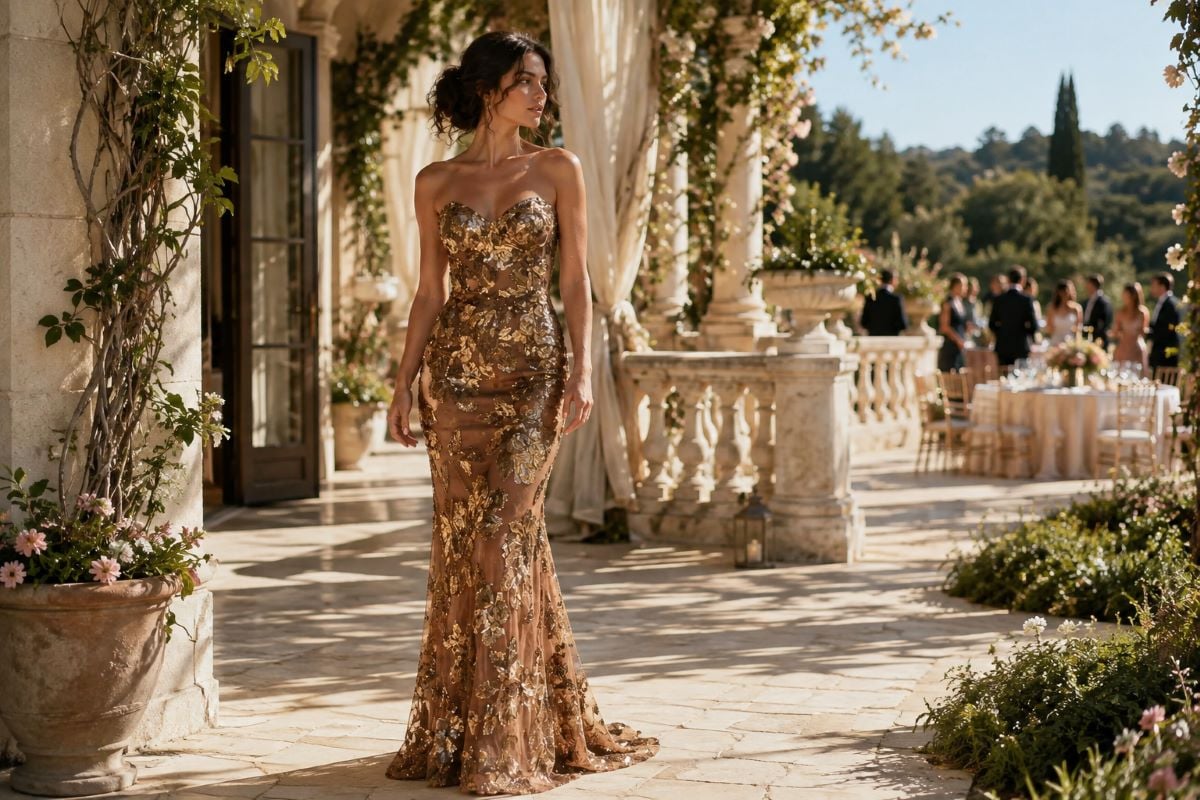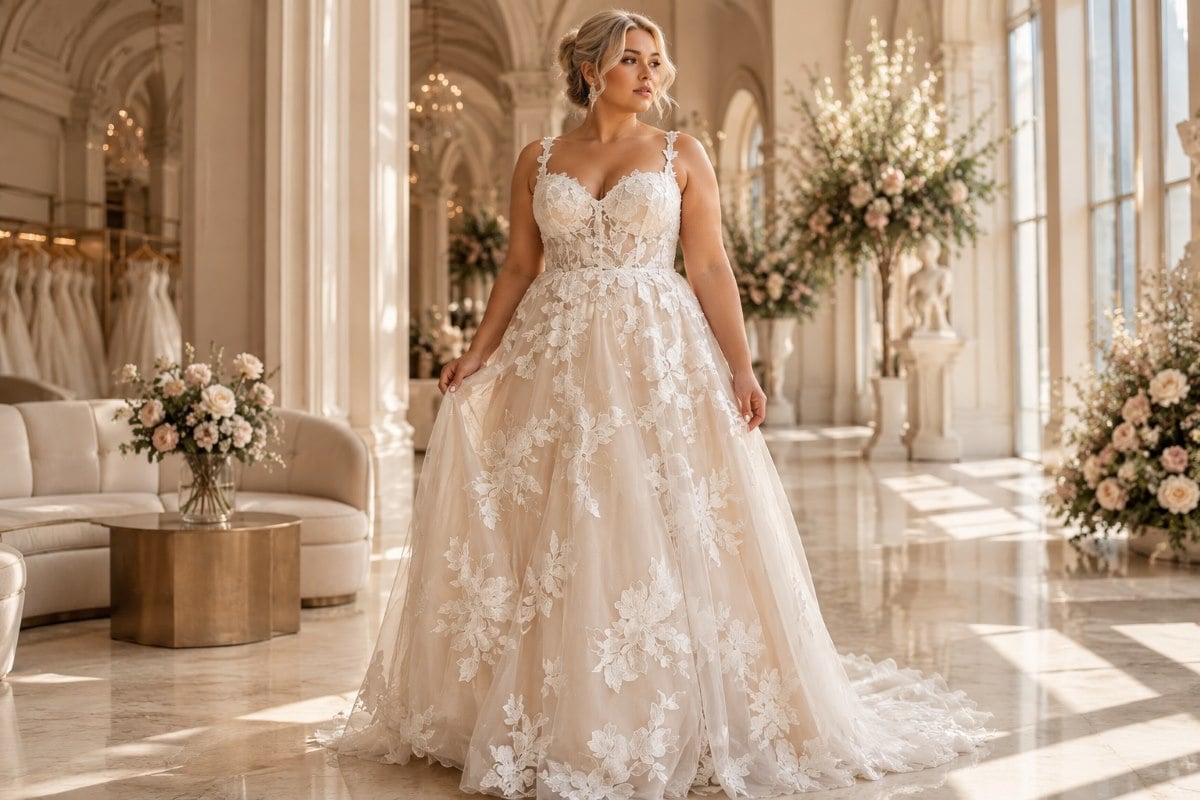

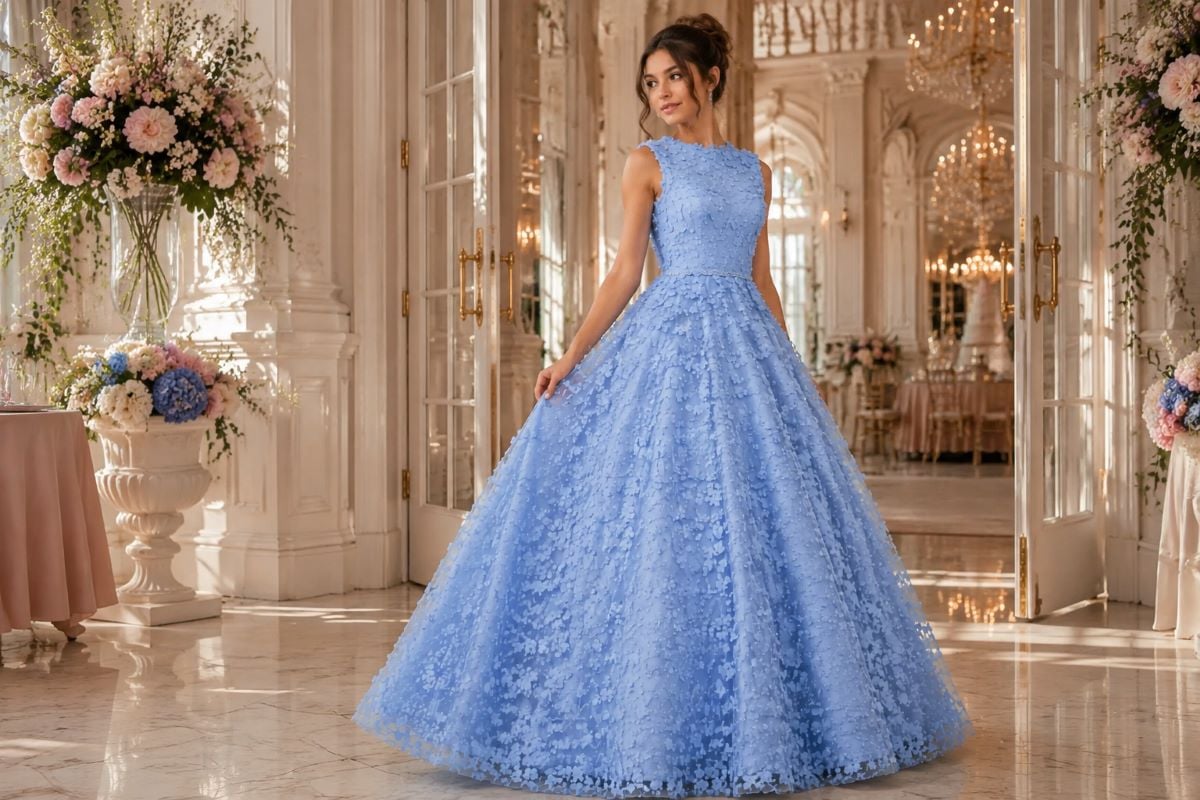
Quick answer: A ball gown can be an excellent Sweet 16 dress when the celebration is formal, the venue has room for a full skirt, and the wearer can sit, walk, and dance comfortably in the finished hem. It is not a requirement for the occasion. Short, midi, A-line, and fitted dresses can be equally appropriate when they better match the party plan and personal style.
Merriam-Webster describes a ball gown as a long dress worn to large formal parties for dancing. In occasionwear, the term often also suggests a fitted bodice and a full skirt, but retail labels are not perfectly standardized. Before choosing from Sweet 16 gowns, look beyond the category name and evaluate the actual skirt circumference, understructure, bodice support, hem, and venue.
When Does a Ball Gown Make Sense for a Sweet 16?
The best silhouette is the one that supports the events planned for the night. A full gown can create a formal entrance and strong visual presence, and the silhouette’s most formal expression fills the ball gown evening dresses range, but it also needs more clearance than a short or narrow dress. Use the following questions before deciding.
| Decision point | A ball gown may work well when… | Consider less volume when… |
|---|---|---|
| Party format | The celebration includes a formal entrance, portraits, a seated dinner, or ceremonial moments. | The event is casual, activity-based, or centered almost entirely on unrestricted dancing. |
| Venue | There are wide paths, adequate space between tables, a usable dance floor, and convenient restrooms. | The room has narrow aisles, crowded seating, steep stairs, grass, gravel, or frequent movement between locations. |
| Transportation | The wearer can enter and exit the vehicle safely and the gown has protected space during travel. | The route involves several small cars, public transportation, or long outdoor walks. |
| Fit and comfort | The bodice stays secure and the skirt can be managed without constant lifting or adjustment. | The gown restricts breathing, sitting, arm movement, or normal walking during the try-on. |
| Alteration plan | There is enough time to fit the bodice and set the hem with the final shoes. | The dress needs major structural work shortly before the event. |
A ballroom or hotel is not automatically suitable, and a restaurant or home is not automatically unsuitable. Room layout matters more than the venue label. Ask for a floor plan, visit the space, or confirm the width of the main route from the entrance to the table, photo area, dance floor, and restroom. And when a theme drives the format, the gown question changes with it; our guide to dressing for a masquerade Sweet 16 shows how far a theme can steer the silhouette.
How Much Skirt Volume Do You Want?
Two gowns can look equally full in a front-facing product photo while behaving very differently in person. Volume may come from the outer fabric, pleats, gathered layers, an attached underskirt, a detachable petticoat, or a rigid hoop. Ask how the specific dress creates its shape. The Metropolitan Museum of Art documents a Balenciaga ball gown sustained by wide panniers, a useful reminder that visible skirt volume and internal construction are separate questions. Our guide to why quinceañera gowns are built so big unpacks the same engineering from the inside.
- Layered tulle or organza: Multiple layers can create airy-looking volume, but the total weight and stiffness depend on the number of layers, lining, trim, and construction. Check whether the layers feel scratchy or catch on embellishment.
- Mikado, taffeta, brocade, or substantial satin: These fabrics may hold defined folds and an architectural shape without a visible hoop. The finished skirt can still be heavy, so test it rather than judging from the fabric name.
- Petticoat or crinoline: A soft or structured underskirt can add lift and keep fabric away from the legs. Confirm whether it is sewn in, included, recommended separately, or unnecessary.
- Hoop structure: A hoop can create maximum circumference with fewer fabric layers, but it changes how the wearer sits, turns, uses stairs, and moves through doors. It should be fitted and practiced with the actual gown.
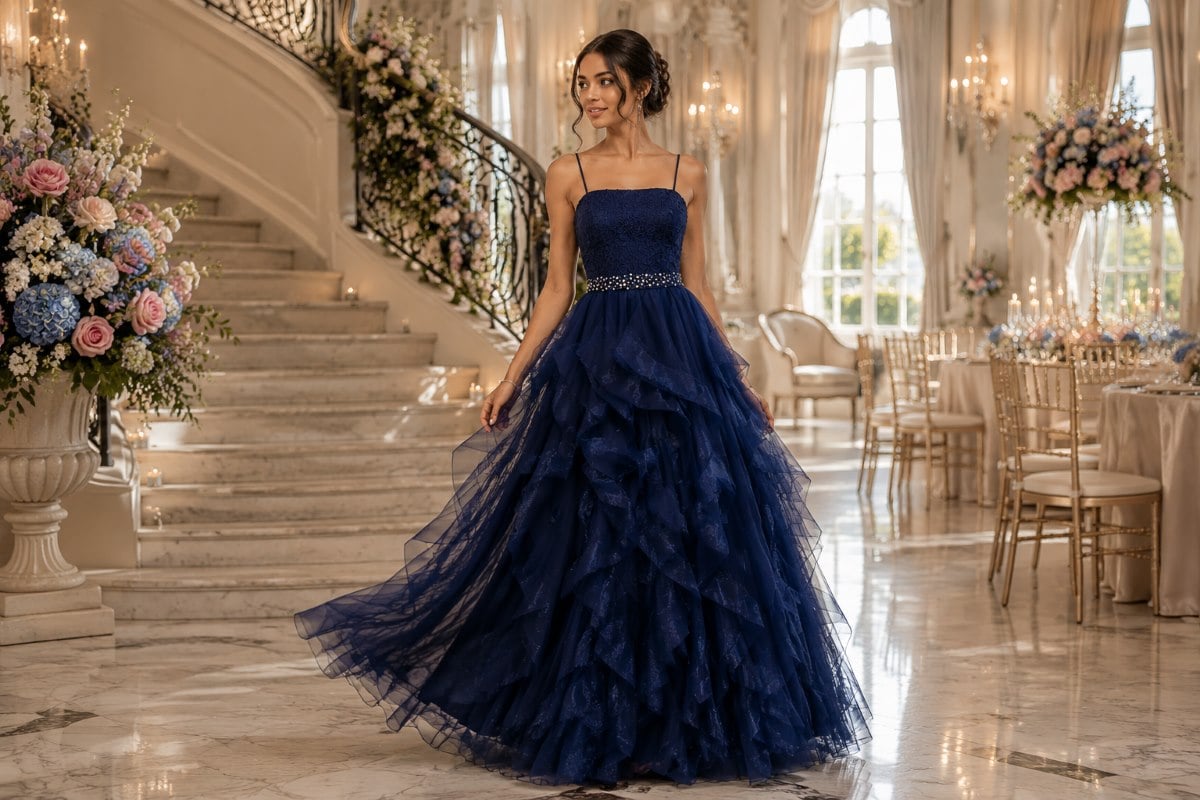
Do not add a petticoat simply because the skirt looks less full than a campaign image. Extra understructure can change the hem, place stress on seams, reveal the lining, or make the gown too wide for the room. Ask the retailer or alterations professional what the design was built to support. The same volume spectrum, one occasion over, runs through the puffy prom dresses range.
How Should the Bodice and Waist Fit?
A full skirt may place weight at the waist seam or on internal support, so a secure bodice matters. Secure does not mean painfully tight. The dress should stay in its intended position without pinching, gaping, sliding, or requiring repeated pulling.
- Neckline: The top edge should remain in contact with the body when the wearer stands, sits, leans slightly forward, and raises her arms. Check for gaping, overflow, empty cup space, or underarm pressure.
- Straps or sleeves: They should lie flat and allow normal arm movement. Straps add one source of stability, but they do not correct a bodice that is otherwise the wrong size or shape.
- Cups and boning: Built-in cups, boning, and corset-style panels can shape the bodice, but their placement must match the wearer. No single feature guarantees support.
- Waist: The waistline or inner stay should feel secure without digging in. Look for horizontal pulling, buckling, or a waist seam that rises as the wearer moves.
- Back and closure: A zipper, lace-up back, or hook-and-eye closure should lie flat and fasten without visible strain. A lace-up back allows some adjustment but does not make every size interchangeable.
- Lining: Check the fabric that actually touches the skin, especially at the underarms, waist, zipper, and top of the bodice.
Repeat the fit check after wearing the gown for several minutes. A bodice that feels acceptable for thirty seconds may begin to slide, compress, or rub after sitting and moving.
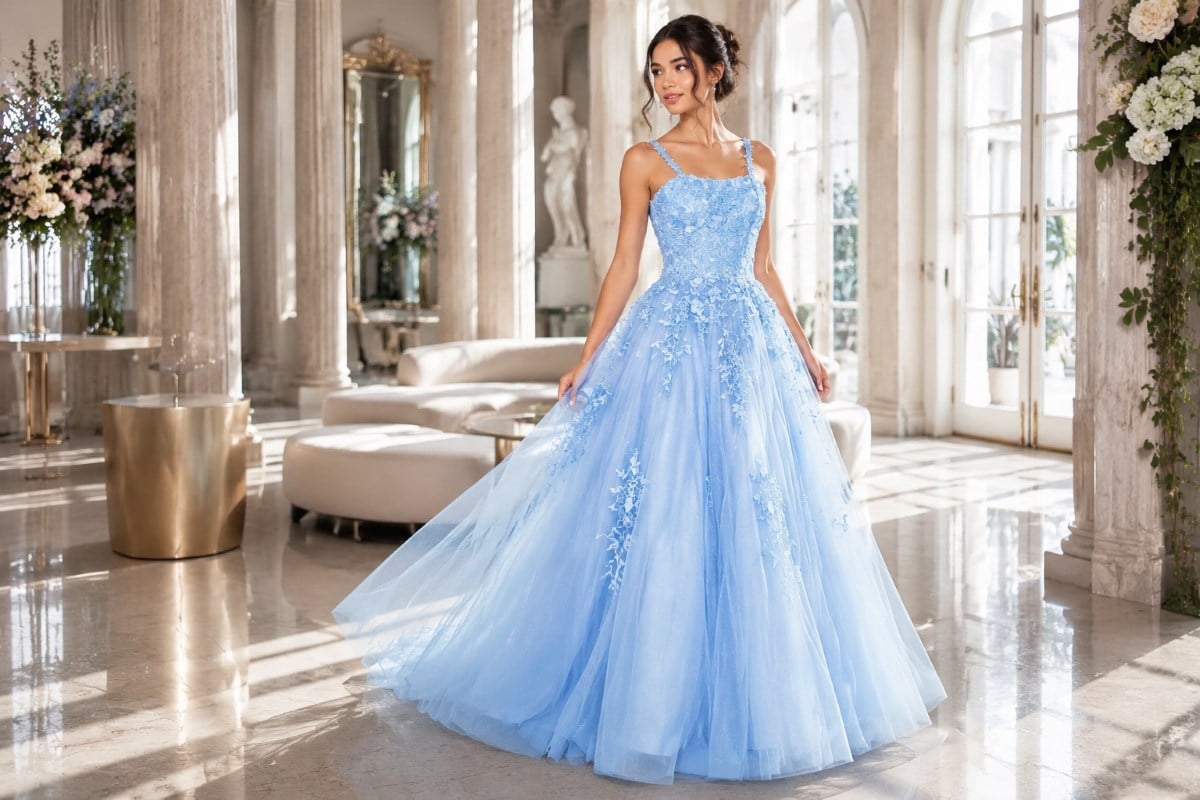
Test the Gown for Sitting, Walking, and Dancing
A fitting-room pose is not enough for an event dress. Use a movement test that resembles the real celebration:
- Walk at a normal pace, stop, turn in both directions, and walk through a doorway.
- Sit in a chair with a back, then stand without stepping on the skirt.
- Climb and descend several steps while holding the skirt safely.
- Raise both arms, reach forward, and make the movements planned for the entrance or dance.
- Try a slow turn and several faster dance steps while another person watches the hem and underlayers.
- Check whether the skirt returns to its intended position or remains twisted around the body.
A ball gown can be danceable, but the answer depends on the individual dress, its hem, its understructure, and the type of dancing. Practice any choreographed entrance in the final gown when possible. When that is not practical, rehearse in a long, full practice skirt and complete at least one controlled run-through in the actual dress before the event.
Choose Shoes and Set the Hem Together
Bring the planned event shoes to the hem fitting. The finished length should allow a natural stride without requiring the wearer to kick the skirt forward or hold it continuously. The tailor may set the front, sides, and back differently depending on the design, train, and floor surface.
A second pair of flats or sneakers can be practical for dancing, but a large change in sole height makes a floor-length hem longer relative to the ground. Either choose a second pair with a similar height or ask the tailor how to manage the change safely. Do not shorten a gown based on one shoe and assume every other pair will work.
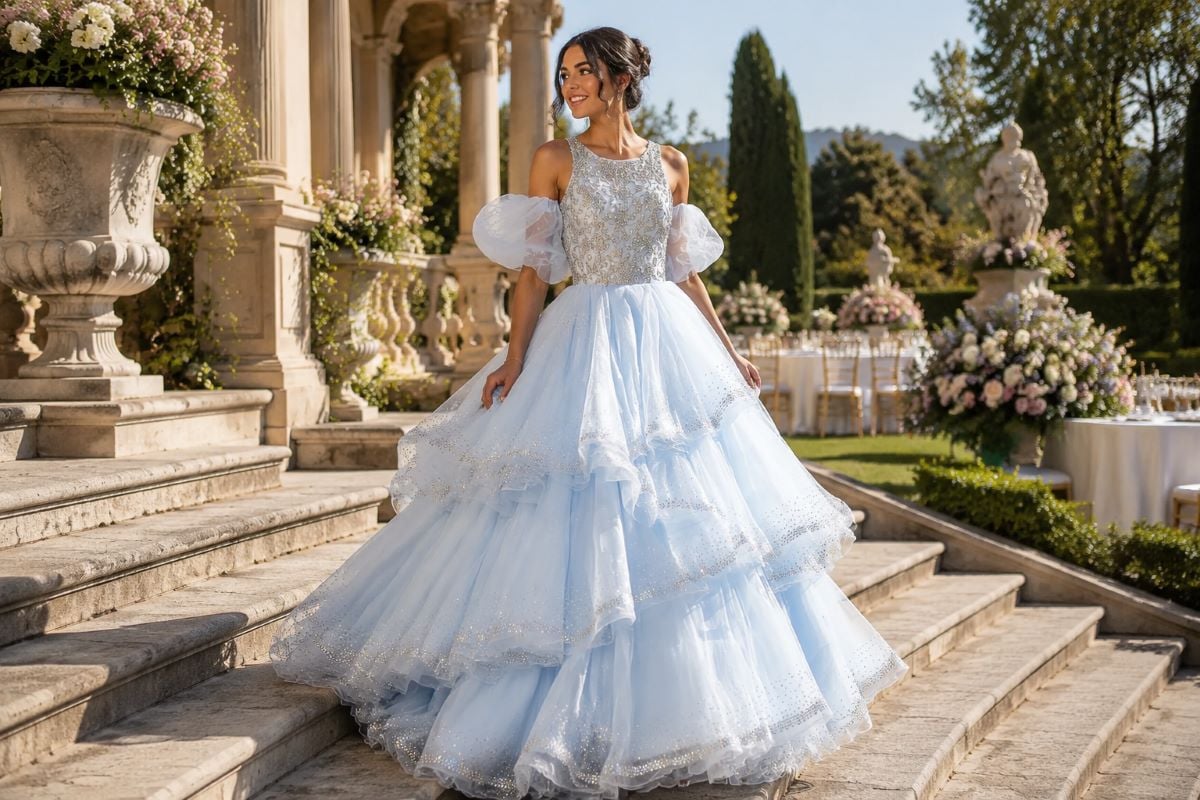
Evaluate Color and Photos on the Actual Dress
No color or fabric is universally best for photographs. Venue lighting, flash, backdrop color, skin tone, makeup, fabric sheen, and embellishment all affect the result. A pale gown may separate beautifully from a dark backdrop and disappear against a pale wall; reflective crystals may look controlled in daylight and flare under direct flash.
During the try-on, take full-length photos and short videos from the front, side, and back. Test daylight, indoor light, and phone flash when possible. Include standing, sitting, walking, and turning. The goal is not to find a color that obeys a general rule; it is to see how the specific gown behaves under conditions similar to the event.
Sweet 16 and Quinceañera Gowns Can Overlap, but the Celebrations Are Different
Some retailers market the same full-skirted styles for Sweet 16, quinceañera, prom, or pageant use, and the ball gowns prom dresses range is where that overlap is most visible. The garment categories may overlap, but the celebrations should not be treated as interchangeable. A Sweet 16 is a sixteenth-birthday celebration whose format and traditions vary by family. A quinceañera marks a fifteenth birthday in many Hispanic communities and may include religious and cultural elements.
For Catholic celebrations in the United States, the U.S. Conference of Catholic Bishops explains that the blessing may take place within or outside Mass and may be followed by dinner and dancing. Local parish guidance and family customs can affect the ceremony, participants, and clothing expectations. If the gown will be used for a church service, ask the family and parish about coverage or other requirements rather than relying on a general product label. The dedicated quinceanera gowns collection is built around that celebration’s own traditions.
The full comparison between the two gown traditions sits in our guide to quinceañera dresses versus ball gowns.
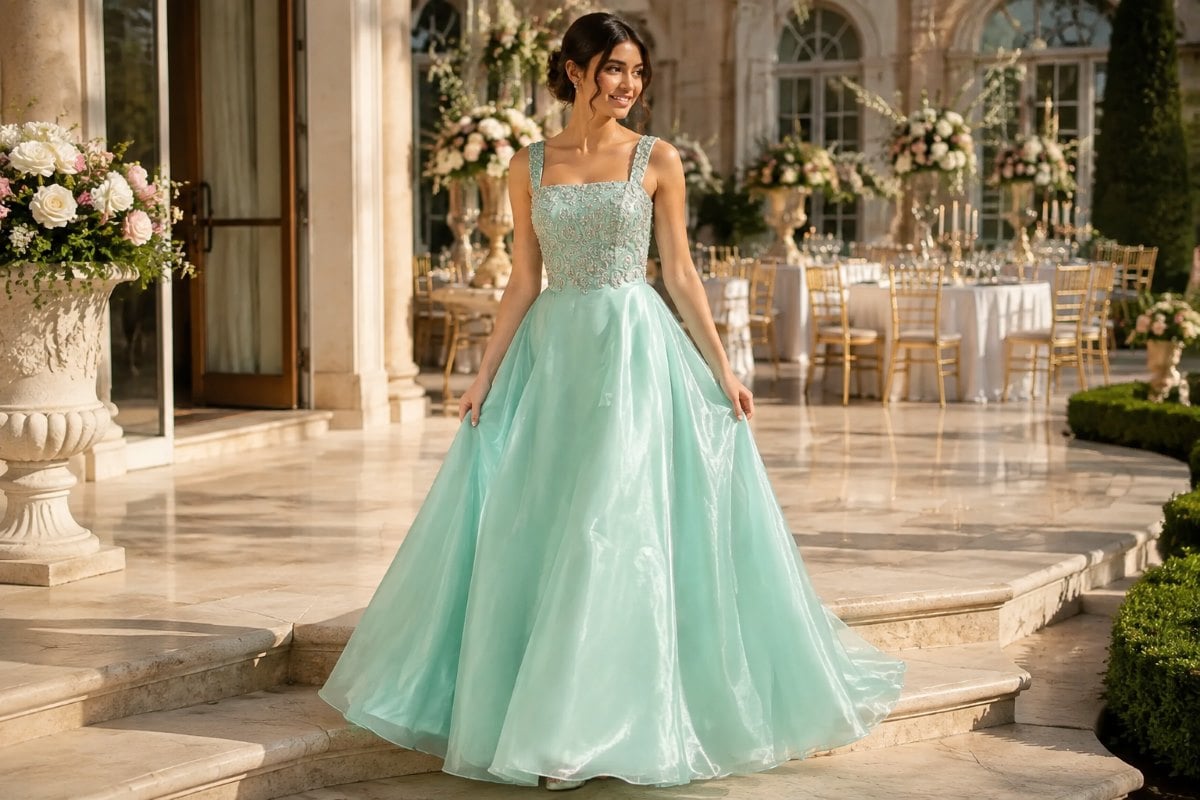
Sizing, Ordering, and Alterations
Do not choose a size from everyday clothing alone. Jovani notes that its guides are product-specific, so compare current bust, waist, and hip measurements with the relevant Jovani size chart and the listing for the exact gown. Measure over the undergarments planned for the event, keep the tape level, and ask the retailer which measurement should lead when the numbers fall into different sizes.
There is no universal order-by date for every ball gown. Timing depends on whether the dress is in stock, retailer processing, special-order availability, shipping, return or exchange rules, and the amount of alteration needed. Work backward from the event date and obtain the retailer’s current timeline before purchasing. Leave room for more than one fitting when the bodice, hem, straps, or understructure needs work.
Major changes may be limited by boning, built-in cups, corset panels, embroidery, beadwork, lace placement, layered hems, horsehair braid, or a printed border. Before buying a dress that needs substantial alteration, have a qualified professional inspect it. Do not assume a bodice can be let out; usable seam allowance varies by garment.
Plan Care, Transport, and Storage
Use the sewn-in care label for the finished gown rather than applying a generic rule based on one fabric name. The Federal Trade Commission’s care-label guidance explains that instructions and warnings must be supported for the garment as a whole, including its combined fabrics, dyes, lining, trim, and embellishment. Do not assume that every tulle, satin, beaded, or sequined gown can be steamed, ironed, washed, or dry-cleaned in the same way.
Ask the retailer how to transport and store the exact dress. Protect the gown from vehicle floors, food, makeup, rain, and rough surfaces, and support the skirt rather than pulling it by the outer layers. For longer-term storage, construction matters: National Park Service textile-conservation guidance notes that heavy, heavily embellished, fragile, or dimensionally unstable garments may need flat storage, while heavy skirts can require added waist support if a garment is hung.
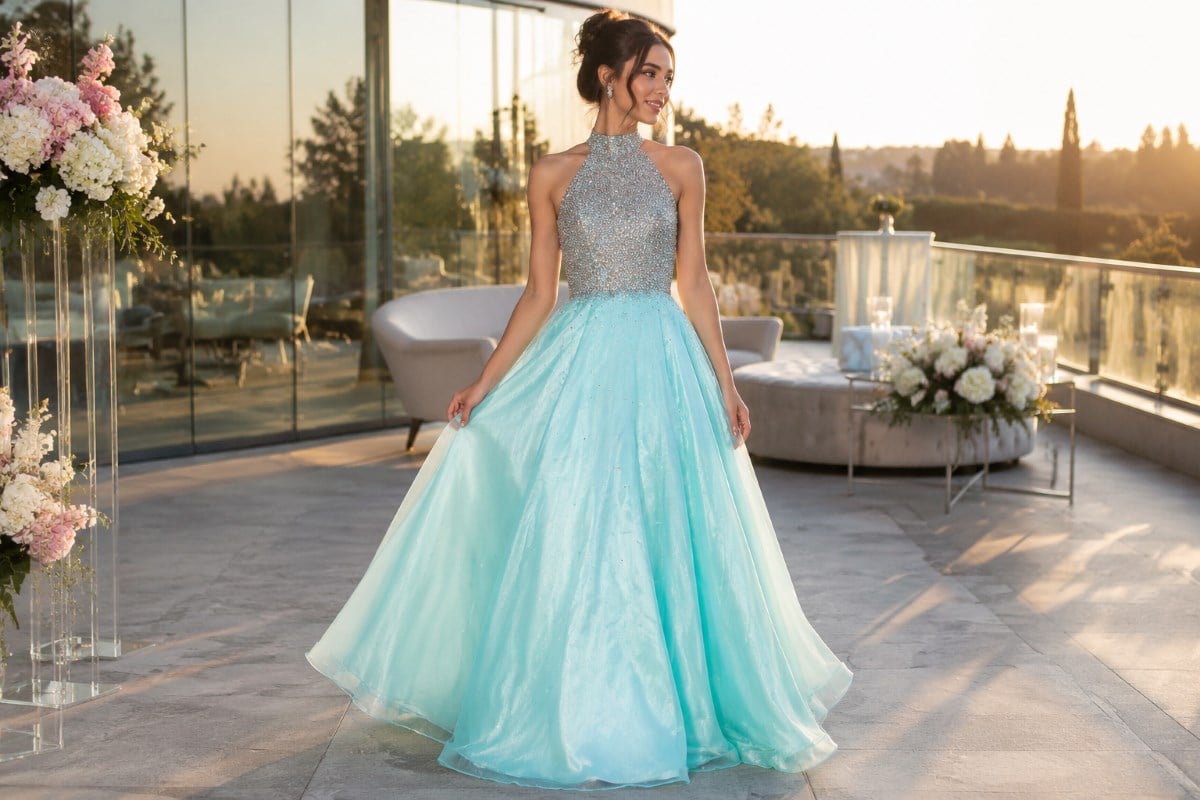
Sweet 16 Ball Gown Checklist
- Confirm the party format, venue layout, floor surface, stairs, seating, and restroom access.
- Ask how the skirt volume is created and whether any petticoat or hoop is included.
- Check neckline, cups, straps, waist, closure, lining, and underarm comfort.
- Test sitting, standing, walking, stairs, turning, and dancing.
- Photograph the actual gown in several lighting conditions and from multiple angles.
- Compare current measurements with the product-specific size guide.
- Review stock status, delivery timing, return rules, and alteration limits in writing.
- Bring final shoes and undergarments to each fitting.
- Plan transportation and a safe way to manage the skirt during restroom breaks.
Sweet 16 Ball Gown FAQ
Can I wear a ball gown to a Sweet 16?
Yes. A ball gown can suit a formal Sweet 16, especially when the venue and schedule support a long, full skirt. It is a style choice, not an event requirement, so select a shorter or narrower silhouette when that better matches the celebration.
How full is too full for the venue?
The skirt is too full when it blocks normal movement through the entrance, seating, dance floor, stairs, or restroom. Evaluate the actual room layout and test the gown’s widest point rather than relying on the venue name.
What should be worn under a Sweet 16 ball gown?
It depends on the dress. Volume may already be built in, or the design may call for a specific petticoat or hoop. The bodice may work with planned undergarments or with its own internal structure. Try every layer with the gown and do not add support pieces without checking the fit and hem.
Can you dance in a ball gown?
Often, yes, provided the bodice stays secure, the hem clears the feet, and the skirt volume works with the dance. Complete a movement test and rehearse any planned choreography before the event.
How far in advance should I order?
There is no reliable one-size-fits-all timeline. Contact the retailer early, confirm whether the gown is in stock or special order, add shipping time, review exchange rules, and reserve enough time for the alterations the specific dress needs.
Do ball gowns work for petite, tall, or plus-size wearers?
They can work at any height or size. The useful questions are whether the bodice length, waist placement, skirt scale, neckline, and hem feel right on the individual wearer. Try more than one version instead of following a body-type rule.
Can the birthday celebrant wear white?
Yes. White or ivory can be an option for a Sweet 16, but neither color is required. Family traditions, theme, venue backdrop, and personal preference may influence the choice, so test the exact shade in photos before deciding.
A Sweet 16 ball gown should create the level of formality the wearer wants without making the celebration harder to enjoy. Compare different skirt constructions in person, complete the full movement test, and use an authorized Jovani retailer to confirm product-specific sizing, availability, and alteration needs.