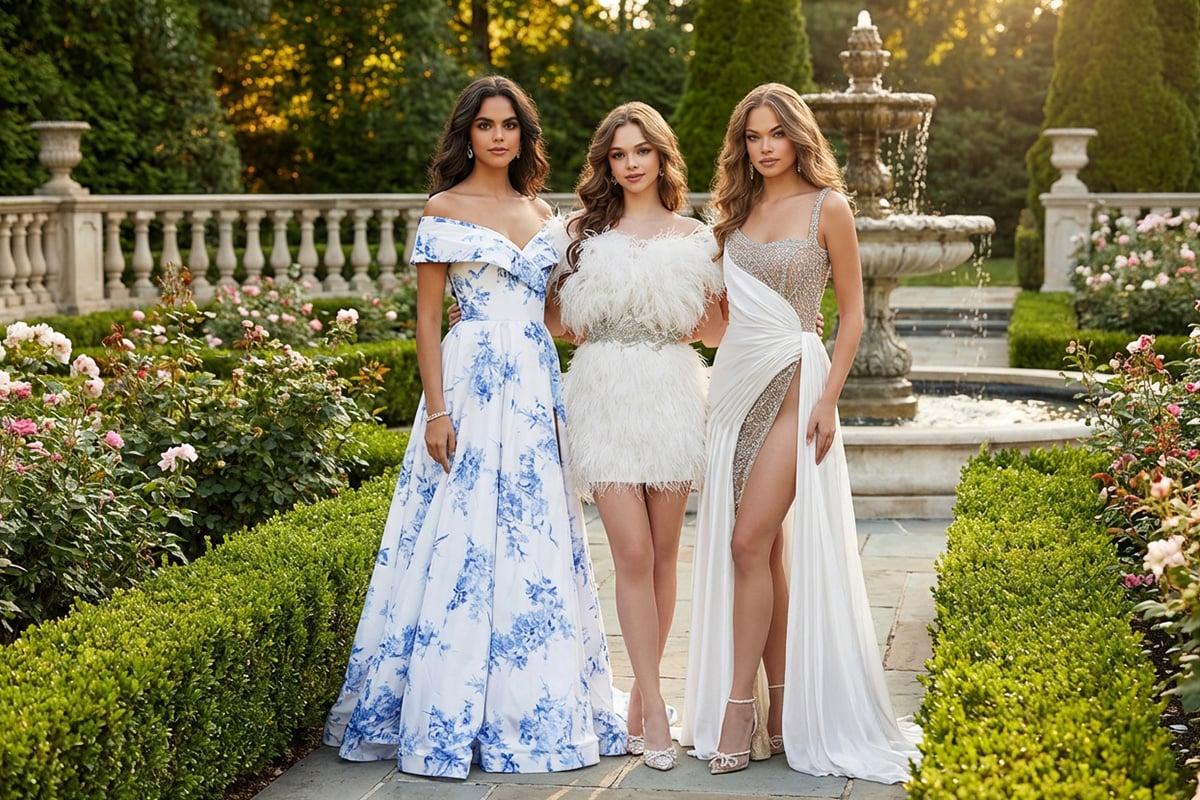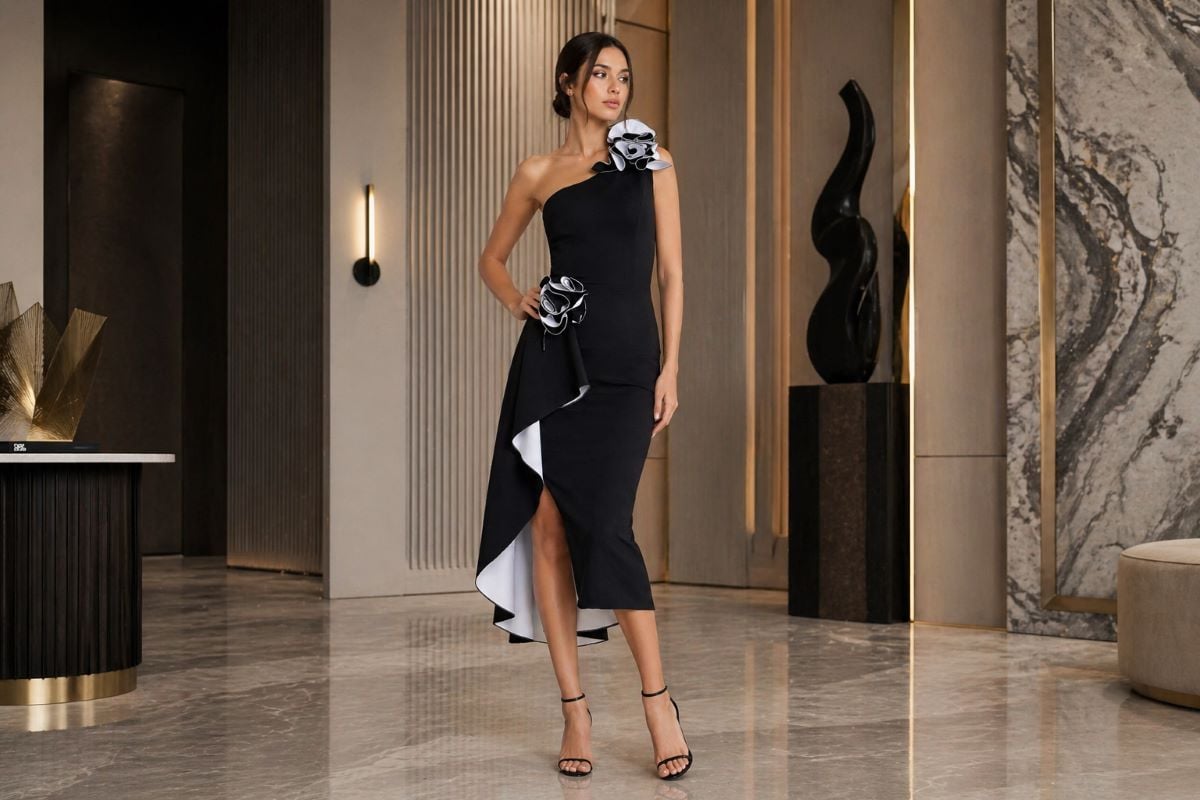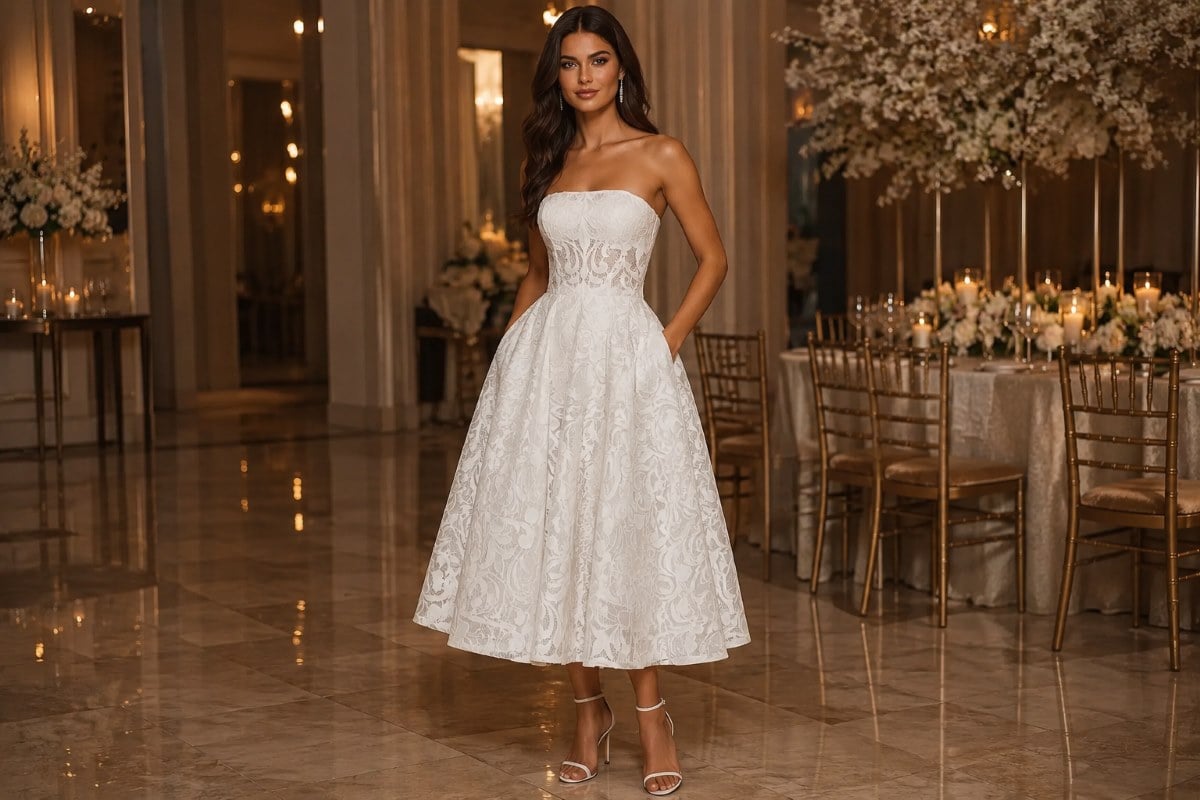

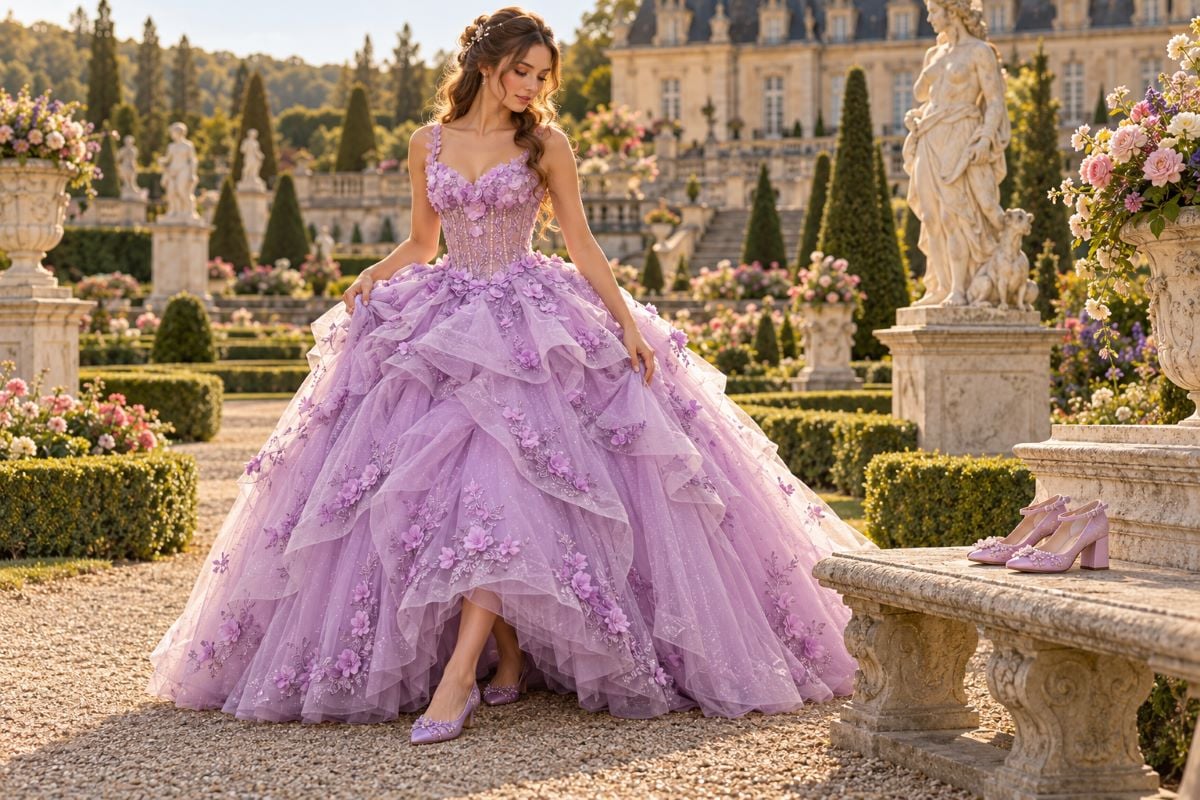
Quinceanera shoes are really two pairs, chosen in order. The flats come first and carry the mass and the early reception; the heels come second and wait in their box for the shoe change, the moment a parent kneels and replaces one pair with the other. Buy the heels before the final fitting, keep them at a height the court and the gown can live with, and plan a third pair for the dancing if the heels will not last the night. This guide takes each choice in the order the day makes it.
Why Are There Two Pairs of Quinceanera Shoes?
Because the day is built around a change. A quinceanera traditionally wears flat shoes through the mass and into the reception, and before the waltz a parent, usually her father, kneels and replaces them with heels, her first as a young woman. The Spanish name for the moment is the cambio de zapatillas, and its meaning, along with the doll and the crown, is explained in our guide to the quinceanera dress change tradition. This article stays with the shoes themselves: which flats, which heels, at what height, and what goes on your feet once the dancing starts.
The Flats: Chosen for the Mass, Not for the Photographs
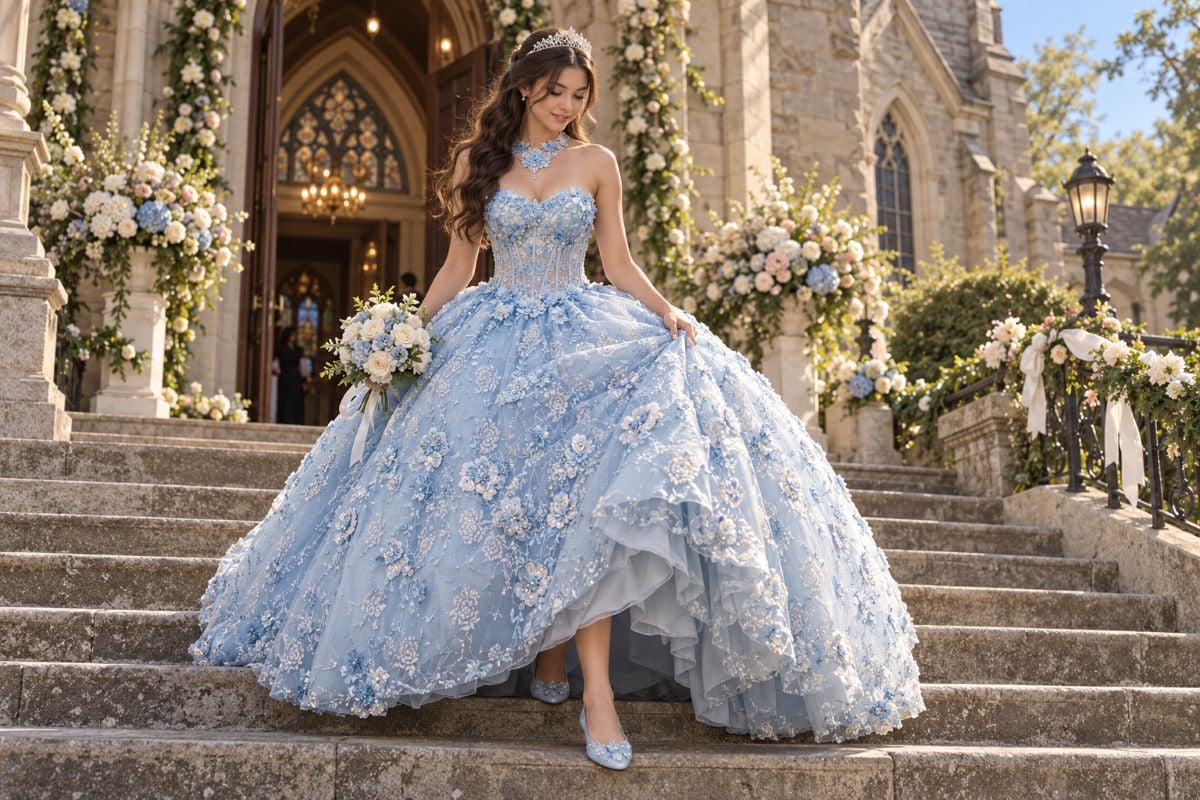
The flats have the longer shift. They carry the walk down the aisle, the standing during the mass, the photographs on the church steps, and the arrival at the reception, so they should be comfortable first and quietly pretty second. A ballet flat, a low satin slipper, or an embellished flat in the gown’s color or in ivory all qualify. They disappear under a full skirt for most of that time, which is why the money usually goes to the heels. They are also the pair on your feet when the guests first see you, and a scuffed, borrowed pair shows in every arrival photograph.
Quinceanera Heels: Height, Hem, and the Chambelan
Quinceanera heels are usually the first real heels their owner has worn for a whole evening, so height is a decision rather than a default. Two to three inches is the range most girls can walk, waltz, and stand in for hours; anything higher should be earned in practice weeks before the day. The height also answers to two partners, the hem of the gown and the height of the chambelan de honor, since the waltz is danced face to face and photographed from the side.
The hem is the part families get backward. The gown is hemmed to the shoes, not the shoes chosen to the gown, so the heels have to be bought and brought to the fitting before the seamstress pins the length. A hem set to flats drags once the heels come off, and a hem set to heels floats above flats, which is why the skirt has to be long enough for both pairs. The full skirts across quinceanera gowns hide most of the shoe, so the length matters more than the style.
The fitting timeline, deposits, and costs are in our guide to quinceanera dress alterations. The shoe rule inside that timeline is short: heels first, hem second, and both pairs on your feet at the final fitting.
The same rule protects any full skirt, not only this one. The ball gown prom dresses a younger sister wears two years later get hemmed the same way, with the heels bought first and the length pinned to them.
The Cambio de Zapatillas, Practically
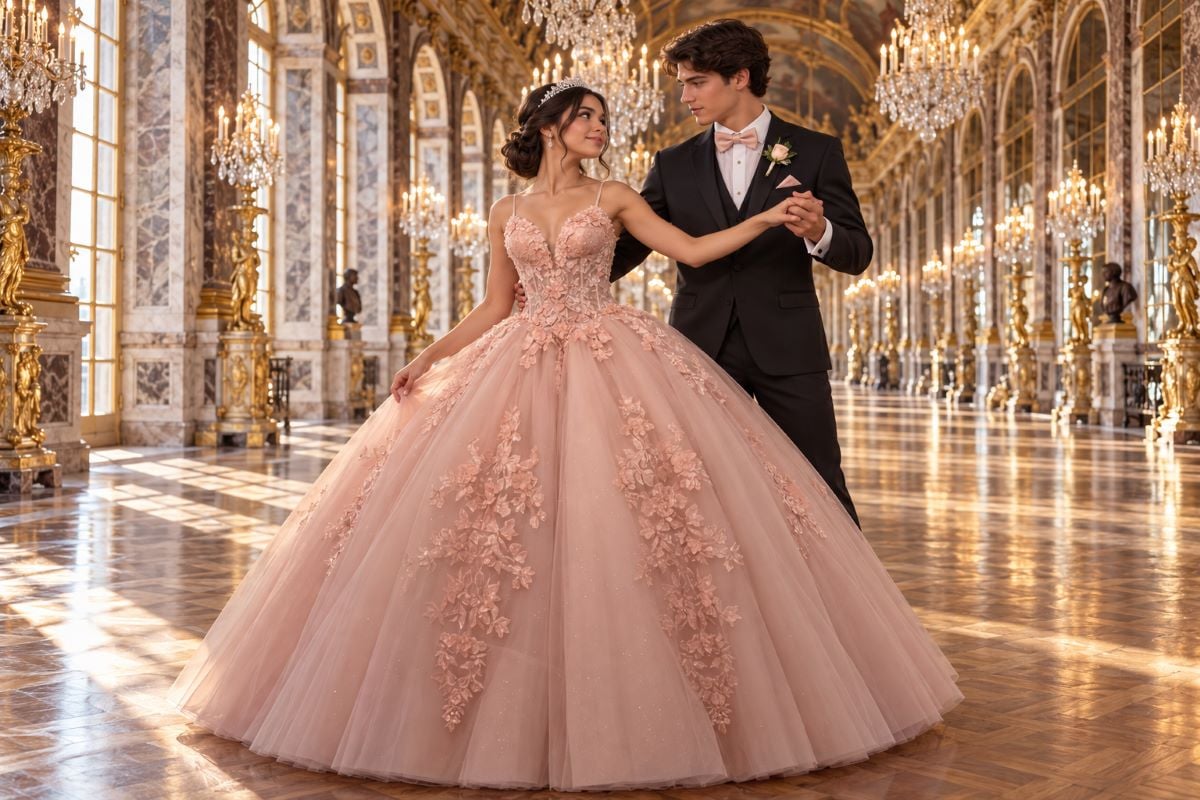
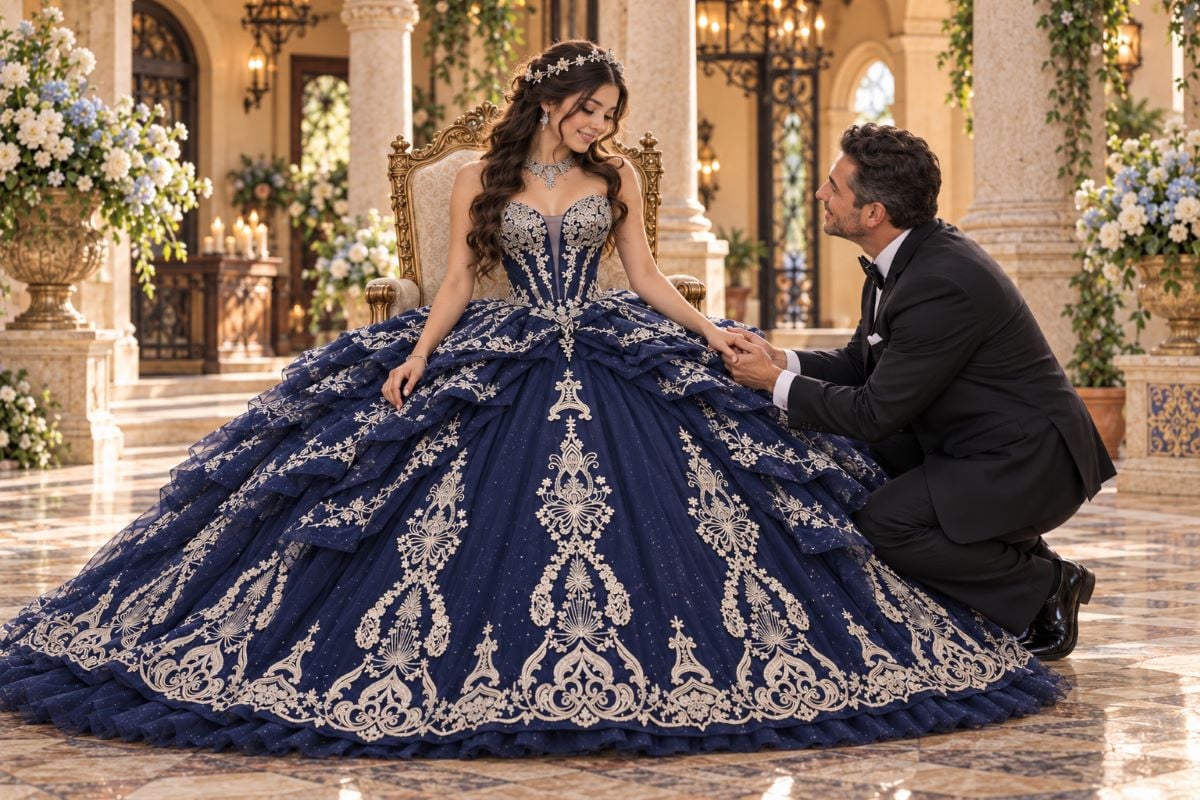
The ceremony needs three things arranged in advance: a chair on the dance floor, the heels in a box or on a small pillow, and a person to carry them, often a madrina or the youngest member of the court. The one rehearsal most families skip is sitting down. A hooped or layered skirt has to lift enough for a kneeling parent to reach your feet. Practice the sit in the gown at the final fitting, with the person who will kneel, and decide then whether the front of the skirt is gathered by you or by a dama.
Which Shoes Do You Dance In? Quince Sneakers and the Surprise Dance
Heels get the vals; the rest of the night belongs to whatever you can dance in. Many celebrants change a third time, into quince sneakers or boots for the surprise dance. The sneaker reveal has become a moment of its own: a customized pair carried out after the formal waltz to mark the shift from ceremony to party. The second outfit that often comes with it, a shorter dress that moves, is where cocktail dresses earn a place at a quinceanera.
If you stay in heels, choose them the way a dancer would: a block or a chunky heel over a stiletto, a strap across the instep, and a rubber pad on the sole so satin does not skate across a ballroom floor. Practice matters more than padding, and the technique in our guide to how to walk in heels is what separates the girl still dancing at midnight from the girl carrying her shoes at ten.
Quince Shoes by Color and Material
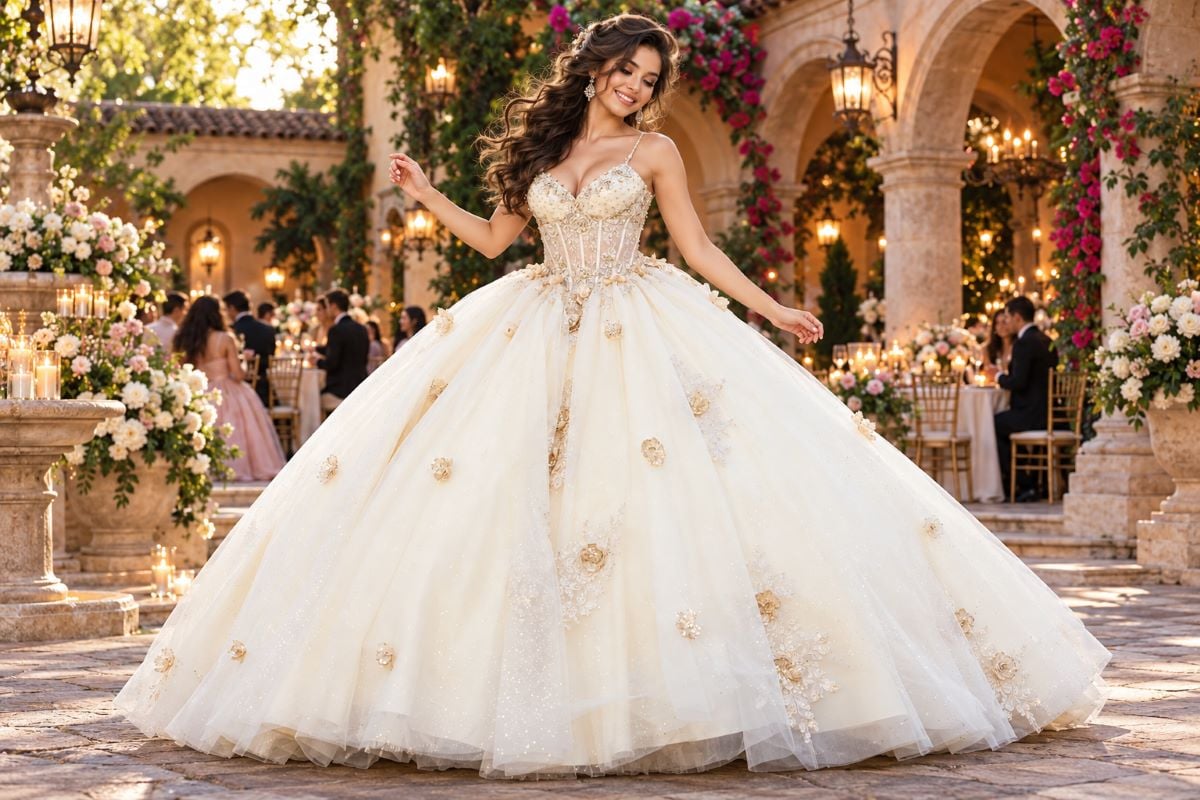
Quince shoes follow the gown in one of three ways. An exact match is usually a dyed satin heel in the gown’s color. A metallic, gold with warm gowns and silver with cool ones, reads as celebration and hides scuffs. A clear or nude heel lengthens the leg and leaves the attention on the skirt. White and ivory heels belong with white and ivory gowns and read as bridal anywhere else. Sparkle on the heel is welcome, but a shoe that will be dyed should be plain, since embellishment takes dye badly. Buy the heels once the gown color is final, not before.
The Court’s Shoes and the Sweet 16 Version
The damas’ shoes match one another rather than the honoree: one style and one color across the court, chosen for a night of dancing, usually a low block heel or a dressy flat in a metallic or in the court’s color. Their dresses often come from the same rack as hoco dresses, and their shoes should be bought together so the line looks like a line in the group photograph.
A Sweet 16 borrows the shoe change more often every year, with the same flats-to-heels gesture and the same rules: heels bought before the hem, a height the girl can dance in, and a pair for the party. The gowns and the party dresses for that version live in sweet 16 dresses.
Quinceanera Shoes, in the Order the Day Asks
Quinceanera shoes come down to a sequence: flats for the mass that are comfortable and quietly pretty, heels bought before the final fitting at a height the waltz can survive, and a hem set to those heels. Then comes the plan for the dancing, whether that is a padded block heel or a sneaker reveal. Quince heels are a milestone, and planning them in this order is what makes the milestone feel like a gift rather than a test.
Bring the heels, or the exact height you intend to wear, to the fitting at an authorized Jovani retailer near you, and have the hem pinned to the shoes you will actually change into.
Quinceanera Shoes FAQ
What shoes does a quinceanera wear to the mass?
Flats: a ballet flat, a low satin slipper, or an embellished flat in the gown’s color or in ivory. They stay on through the mass, the photographs, and the arrival at the reception, and they come off at the shoe change before the waltz.
How high should quinceanera heels be?
Two to three inches for most girls, which is walkable for a whole evening and safe for a choreographed waltz. Go higher only after weeks of practice, and check the height against your chambelan de honor and the hem, since the gown is hemmed to the heels.
Who changes the shoes at a quinceanera?
Traditionally the father, kneeling before his daughter to replace her flats with heels. Many families choose the mother, both parents, a grandparent, or a godparent instead, and the gesture carries the same meaning whoever performs it.
Can you wear sneakers to your quinceanera?
Yes, usually as the third pair. Many celebrants change into custom sneakers or boots after the formal waltz for the surprise dance and the party, and the sneaker reveal has become a moment of its own. Keep the flats and the heels for the mass and the ceremony.