
Long before the actual birthday celebration begins, another major event takes place: the formal portrait shoot. Usually scheduled several weeks or even months prior to the party, this studio appointment produces the images that will grace your invitations, the large entrance portrait at your reception, and the framed photos your family will keep for decades. Selecting the perfect Quinceanera photo session dress requires a completely different approach than choosing a gown for the dance floor. While the reception demands a garment built for mobility, dancing, and interacting with hundreds of guests, the studio portrait demands architectural perfection, flawless fabric texture, and meticulous attention to how colors react under high-intensity flash photography. Understanding these technical differences ensures your portraits look like professional editorial fashion images rather than standard snapshots.
How should you style a Quinceanera dress for a studio photo session? To style a Quinceanera dress for a studio photo session, prioritize garments with strong interior structure and matte or highly textured fabrics like Mikado, velvet, or 3D lace, which absorb harsh studio strobes beautifully. Avoid highly reflective, cheap satins that cause severe camera glare. Select rich, saturated colors that provide high contrast against standard photography backdrops. Complete the look by tailoring the bodice perfectly for seated poses, ensuring the neckline frames the face cleanly, and positioning accessories like tiaras to catch the light without creating harsh shadows.
The Critical Difference Between Stage and Studio Environments
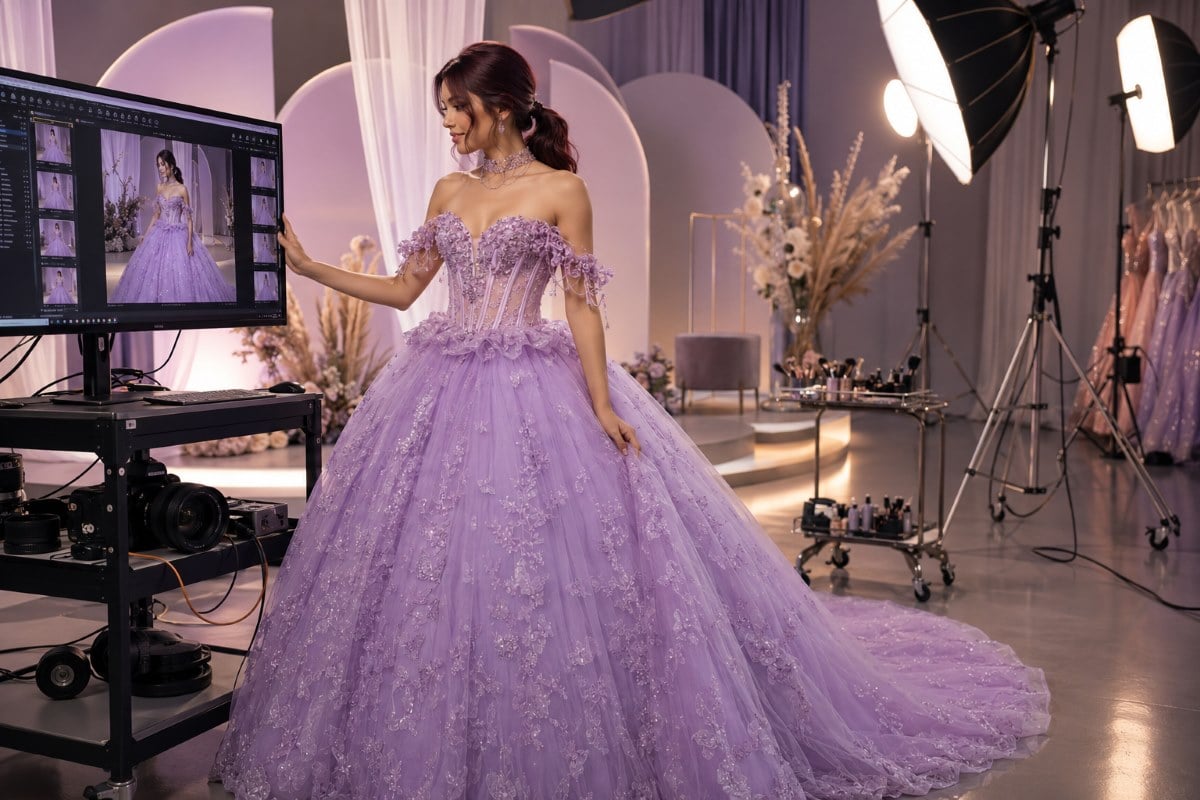
To make the best wardrobe decisions, you first need to understand the environment where the photos will be taken. A reception hall is typically dark, illuminated by colorful, moving DJ lights, ambient candlelight, and perhaps a spotlight. In that setting, minor wrinkles vanish, and highly reflective sequins simply look like pleasant, scattered sparkles. The photography studio is the exact opposite. It is a highly controlled, incredibly bright environment designed to capture maximum detail.
In a studio setting, photographers use powerful strobe lights modified by large softboxes or umbrellas. These flashes emit a massive burst of light directly onto your garment in a fraction of a second. High-resolution modern cameras will pick up every single detail: a loose thread, a bunched zipper, a slightly ill-fitting bust dart, or a fabric that looks thin. The way your Quinceanera photo session dress interacts with this specific environment dictates the success of the entire shoot. Therefore, the priority shifts heavily toward heavy, high-quality materials and impeccable tailoring that can withstand microscopic visual scrutiny.
Choosing the Right Silhouette for Posing
The silhouette you choose determines how you will interact with the photographer and the physical space of the studio. While A-line and mermaid cuts exist, the traditional, highly voluminous ball gown remains the standard for this milestone. However, photographing a massive skirt presents unique physical challenges.
Mastering the Traditional Ball Gown
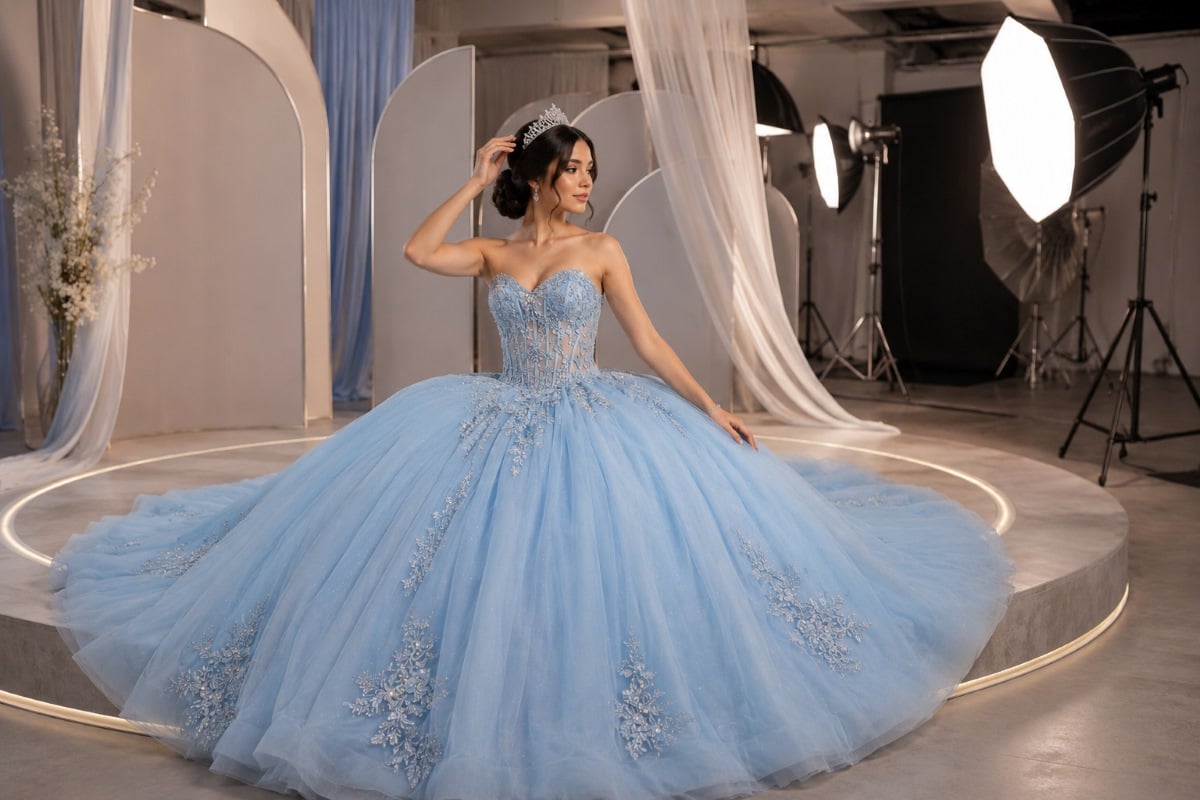
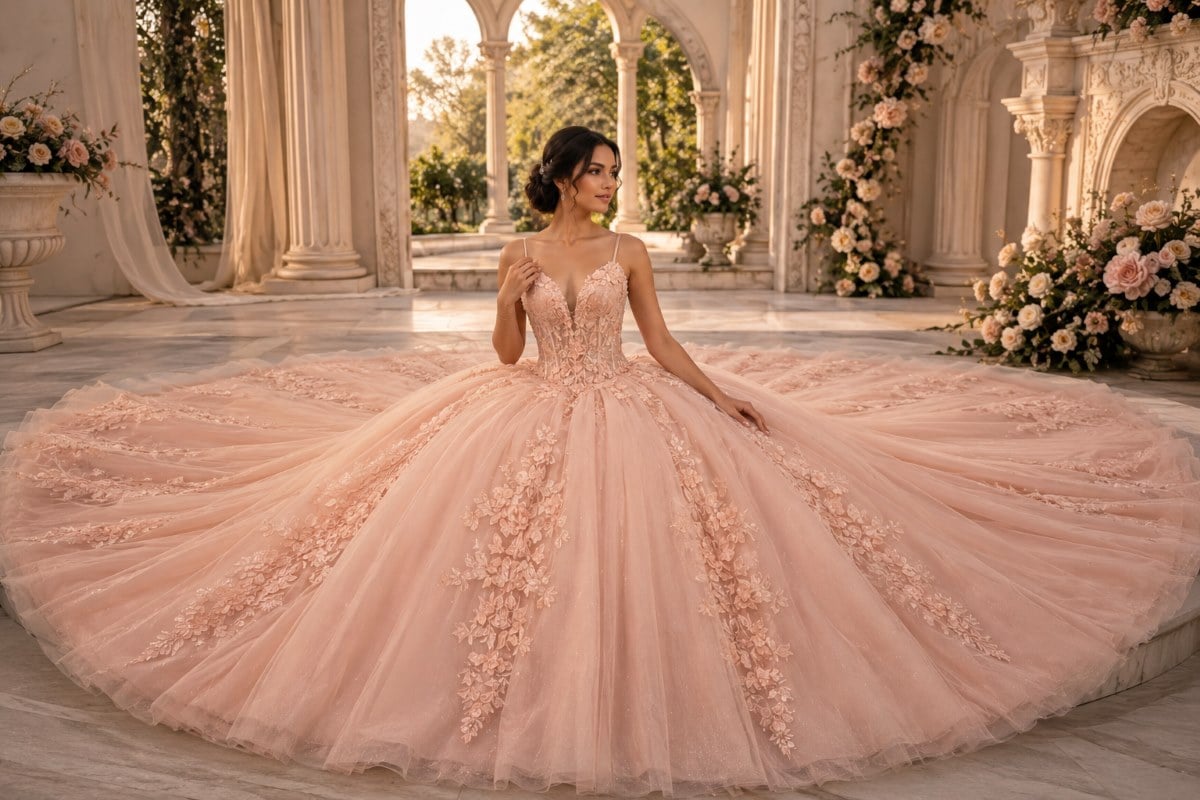
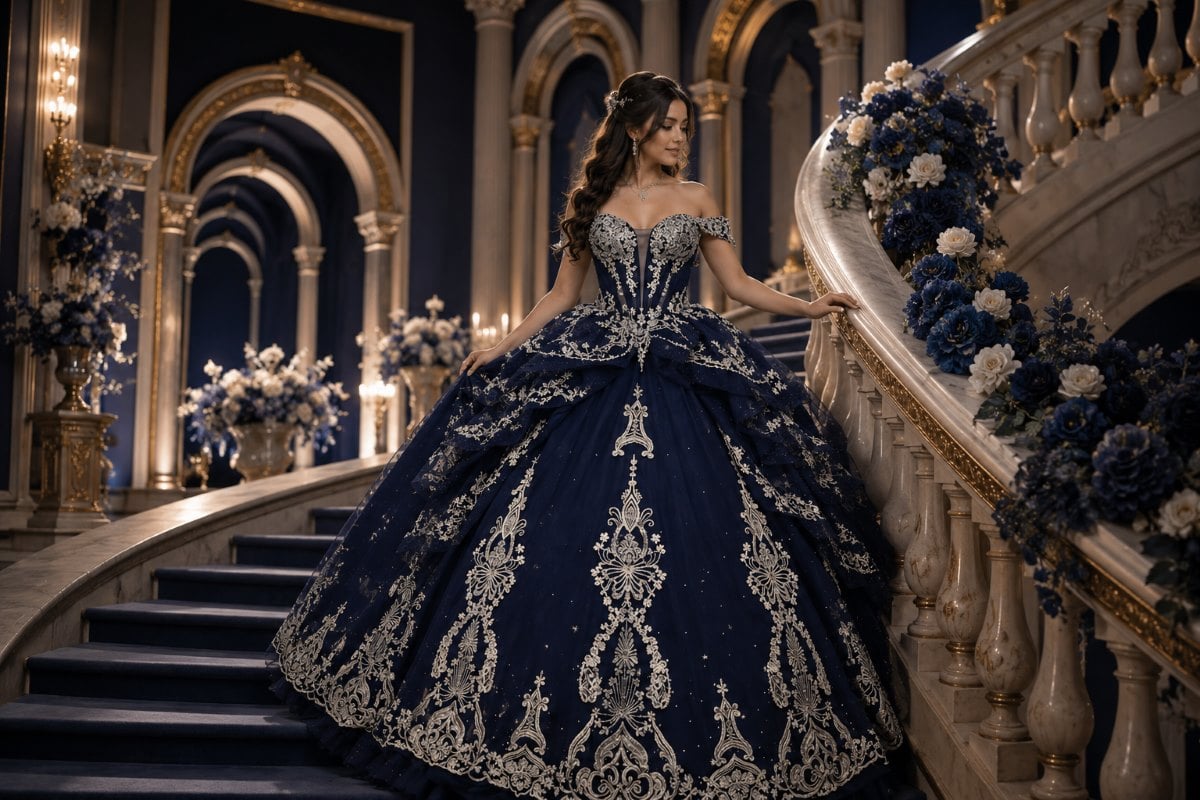
The defining characteristic of traditional Quinceanera gowns is the bell-shaped, dramatic skirt. In a portrait setting, you want this skirt to look full, symmetrical, and grand. Photographers often use a technique where the subject sits on a hidden stool or a wooden apple box. This allows the skirt to pool out in a complete circle around the body, creating a visually striking, grounded image. To execute this seated pose successfully, the bodice of the gown must have rigid interior boning. If the bodice is soft or flimsy, sitting down will cause the fabric to buckle and fold across the midsection, ruining the clean lines of the portrait. A properly structured corset bodice will stay smooth and tight whether you are standing or seated.
Managing Petticoats and Underskirts
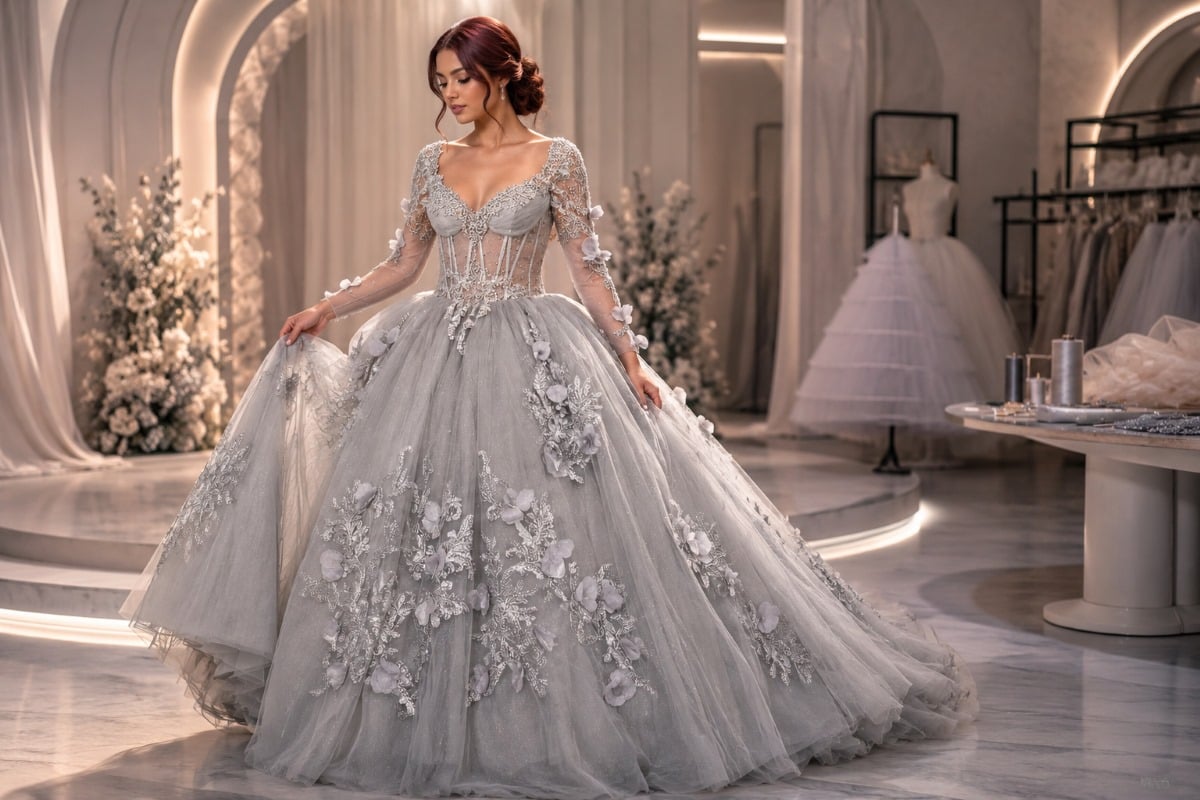
A voluminous skirt does not hold its shape magically; it relies on the correct undergarments. Knowing exactly what goes under a Quinceanera dress is essential for studio work. A structured hoop skirt or a multi-layered crinoline provides the necessary foundation. In the studio, your photographer will spend considerable time physically arranging the hem of your dress. If you wear a cheap, flimsy hoop skirt, the rings might become visible through the fabric of the dress when the flash fires, creating harsh horizontal lines across your skirt. Opt for a high-quality crinoline with layers of tulle that soften the shape of the hoops, ensuring the skirt looks like a solid, smooth bell of fabric in high-resolution images.
Colors That Photograph Best Under Studio Lights
Color theory behaves differently when subjected to professional lighting. A color that looks soft and beautiful in natural daylight might wash out completely under a studio strobe, or conversely, a dark color might absorb so much light that it loses all its fabric details, turning into a flat silhouette.
Navigating Pastels and Whites
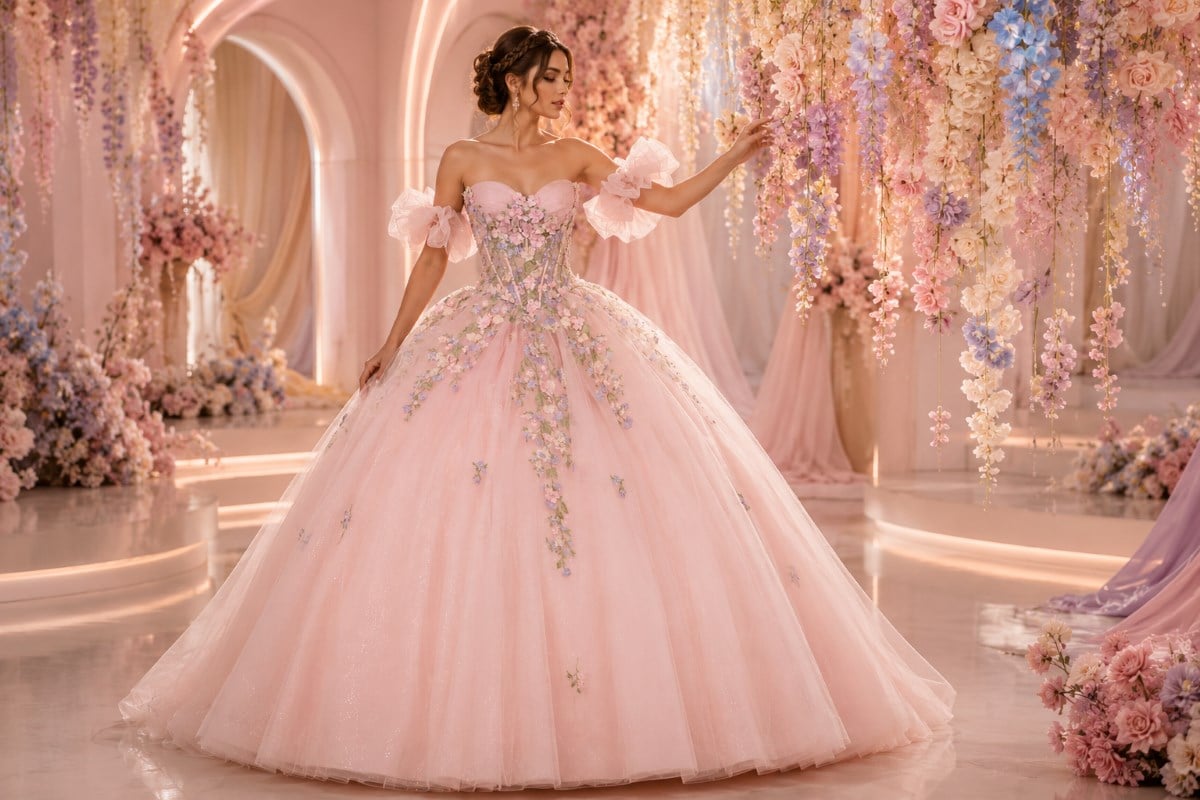
Light colors such as blush pink, baby blue, mint green, and traditional white are highly reflective. When hit with a powerful flash, they bounce light back into the camera lens. This creates a soft, angelic look, but it can also erase the fine details of the dress. If you choose a pale color, ensure the dress has significant physical texture—such as heavy lace appliques, layered organza ruffles, or 3D floral elements. This physical texture creates tiny shadows across the garment, giving the photograph depth and preventing the dress from looking like a flat white sheet.
The Power of Rich and Jewel Tones
For high-impact portraits, deeply saturated colors are exceptionally reliable. Understanding Quinceanera dress colors helps you realize why royal blue, emerald green, deep burgundy, and ruby red are so heavily favored by photographers. These jewel tones absorb the harsh flash rather than reflecting it. This absorption allows the camera to record the rich, true color of the dye, while the natural folds of the fabric create deep, luxurious shadows. This high-contrast interplay between light and shadow gives your portraits a three-dimensional, painted quality that feels highly sophisticated and expensive.
Fabric Textures and Camera Flash Physics
The material composition of your gown is arguably the most critical factor for a studio shoot. The lens does not care how much a fabric costs; it only cares how that fabric reflects light.
When your Quinceanera photo session dress is captured under high-powered strobes, matte and semi-matte fabrics perform the best. Mikado silk, heavy crepe, tulle, and velvet are incredibly photogenic. Mikado, a blended silk, possesses a very subtle, rich luster. It holds its shape rigidly and reflects light in a soft, glowing gradient. Velvet is the ultimate light-absorbing fabric, producing intensely rich colors and deep shadows, making it perfect for winter or vintage-themed shoots.
Conversely, you must exercise extreme caution with cheap, high-shine synthetics like basic polyester satin or organza with a highly iridescent finish. These materials act like mirrors. When the flash hits them, it creates “specular highlights”—bright, blown-out white spots on the photograph where all color and detail are destroyed by the glare. If you desire sparkle, choose dresses with matte sequins or carefully placed crystal beading rather than an overall shiny fabric. The beads will catch the light and create tiny, controlled points of shine without ruining the exposure of the photograph.
Necklines and Framing the Face
Because many studio portraits are tightly cropped—focusing from the waist up—the neckline of your garment carries a massive amount of visual weight. The geometry of the neckline dictates how the viewer’s eye travels up to your face. You want to select a shape that provides a clean, elegant frame without crowding your neck or chin.
| Neckline Style | Visual Effect in Close-Up Portraits | Best For |
|---|---|---|
| Off-the-Shoulder | Creates a strong horizontal line, exposing the collarbones and elongating the neck. Highly romantic. | Traditional portraits, balancing wide ball gown skirts. |
| Sweetheart | Softens the jawline with curved shapes. Draws the eye inward to the center of the chest. | Classic glamour, highlighting delicate necklaces. |
| Illusion High-Neck | Uses sheer mesh and floating lace to provide coverage without looking heavy. Draws the eye up to the chin. | Modest requirements, vintage styling, dramatic close-ups. |
| V-Neck | Creates vertical, descending lines that visually slim the torso and point directly toward the face. | Elongating a shorter torso, modern fashion-forward shoots. |
Hair and Makeup Harmony with the Gown
The beauty styling for a studio session differs slightly from event makeup. Because the studio lights are so intense, they tend to wash out facial features and highlight any oil or shine on the skin. Your makeup artist should use a high-quality, long-lasting matte foundation and be very sparing with highlighters. Heavy highlighter on the cheekbones or nose can look like sweat under studio strobes. Eyes and lips should be defined slightly heavier than you would for daylight to ensure they register clearly on camera.
Your hairstyle must coordinate with the architecture of your dress. If your gown features intricate beading on the back or a complex halter neckline, wearing your hair down in voluminous curls will hide the design entirely, making your upper body look cluttered. In this case, an elegant updo or a sleek ponytail is necessary to keep the neckline clean. If you are wearing a simple strapless or sweetheart gown, wearing your hair down fills the negative space on your shoulders beautifully, adding softness to the portrait.
Accessorizing for the Lens
Accessories should complement the gown, not compete with it. The most culturally significant accessory is the crown or headpiece. When selecting a Quinceanera tiara, consider the scale. A tiny, delicate tiara will get lost if you are wearing a massive, heavily embellished ball gown. Conversely, a massive crown might overpower a simple, elegant dress. Ensure the metal of your tiara matches the undertones of your dress embellishments; pair silver or platinum tiaras with cool-toned dresses (blue, white, emerald) and gold tiaras with warm-toned dresses (red, blush, champagne).
Keep your jewelry focused. If your dress has a heavily beaded, high illusion neckline, skip the necklace entirely and opt for simple stud earrings to avoid visual chaos. If you have an open off-the-shoulder neckline, a delicate pendant or a classic pearl strand fills the space perfectly. Remember that less is usually more in professional photography; you want the viewer to look at your face, not be distracted by excessive, heavy jewelry.
Posing Techniques for Large Gowns
Posing in a massive dress is a physical skill. Unlike casual photography, formal studio portraits require deliberate geometry. Creating a sense of motion prevents a highly structured Quinceanera photo session dress from looking stiff or heavy. Photographers achieve this by directing you to shift your weight onto one leg, creating an “S-curve” in your posture. Placing your hands gently on your upper thighs, rather than letting them hang flat at your sides, creates negative space between your arms and your waist, visually slimming your silhouette.
Another classic technique is the “skirt toss.” The photographer or an assistant will physically lift the edge of your tulle or organza skirt and drop it just as the camera fires. This captures the fabric suspended in mid-air, adding dynamic energy, lightness, and romance to the image. To achieve these poses successfully, your dress must fit immaculately across the ribs and waist so it does not shift out of place when you move.
Jovani’s Dedication to Quinceanera Craftsmanship
Achieving a flawless portrait is nearly impossible if the garment lacks structural integrity. A dress that relies purely on fabric without an architectural skeleton will always look slightly messy on camera. Jovani has spent decades perfecting the internal construction of formalwear, ensuring that every gown looks just as impressive under harsh studio lights as it does in person.
When you explore our collections, particularly our modern Quinceanera dresses, you will notice the precise tailoring. Our bodices are built with heavy-weight linings, high-density boning, and precise bust cups. This built-in corsetry does the heavy lifting, maintaining a sharp, smooth silhouette regardless of how you pose. We select premium fabrics that absorb light correctly, ensuring the colors remain rich and the details remain sharp. A Jovani gown provides the perfect foundation for your photo session, allowing you to focus on your confidence and your smile, knowing the dress is performing exactly as it should.
Frequently Asked Questions About Quinceanera Studio Styling
Should my hair be up or down for my Quinceanera portraits?
Your hairstyle should depend entirely on the neckline of your dress. If your dress features intricate details on the back, a high collar, or heavily embellished straps, you should wear your hair up to showcase the design. If your dress is strapless or has a simple sweetheart neckline, wearing your hair down in soft waves fills the bare space beautifully.
Do I need to bring my actual bouquet to the studio shoot?
Yes, it is highly recommended to bring your bouquet. A bouquet gives your hands a natural place to rest, solving the common problem of awkward hand placement in photos. If your real floral bouquet is not ready, ask your florist to create a high-quality silk replica for the studio session.
Why do some fabrics look shiny and cheap in professional photos?
Fabrics look cheap when they are highly reflective synthetics, like basic polyester satin. When the powerful studio flash hits them, it creates bright, blown-out spots of glare that destroy the detail of the dress. Matte fabrics like Mikado, velvet, or heavy crepe absorb the flash, creating rich, dimensional shadows instead of glare.
Is it normal for the dress to feel very tight when sitting down for photos?
Yes, a properly fitted corset bodice will feel rigid when you transition from standing to sitting. The boning is designed to keep your torso perfectly straight and smooth. While it may feel restrictive, this tightness prevents the fabric from buckling and ensures a flawless, regal posture in your seated portraits.
Can I wear a different dress for the photos than I wear for the party?
Yes, many families opt for a two-dress strategy. They use a massive, highly structured, and heavier ball gown specifically for the formal studio portraits and the church ceremony, and then change into a lighter, more mobile dress for the reception dancing and the surprise dance performance.
Securing Your Perfect Portrait
Finding the right Quinceanera photo session dress is a significant milestone in your planning process. By understanding how studio lighting impacts fabric, color, and silhouette, you can make informed decisions that guarantee your portraits will look like a high-fashion editorial. Prioritize structural integrity, coordinate your accessories carefully, and trust your photographer to guide your posing. Browse our complete collection to discover a meticulously crafted gown that will ensure your formal portraits remain breathtaking for generations.