
Let the Neckline Choose the Piece
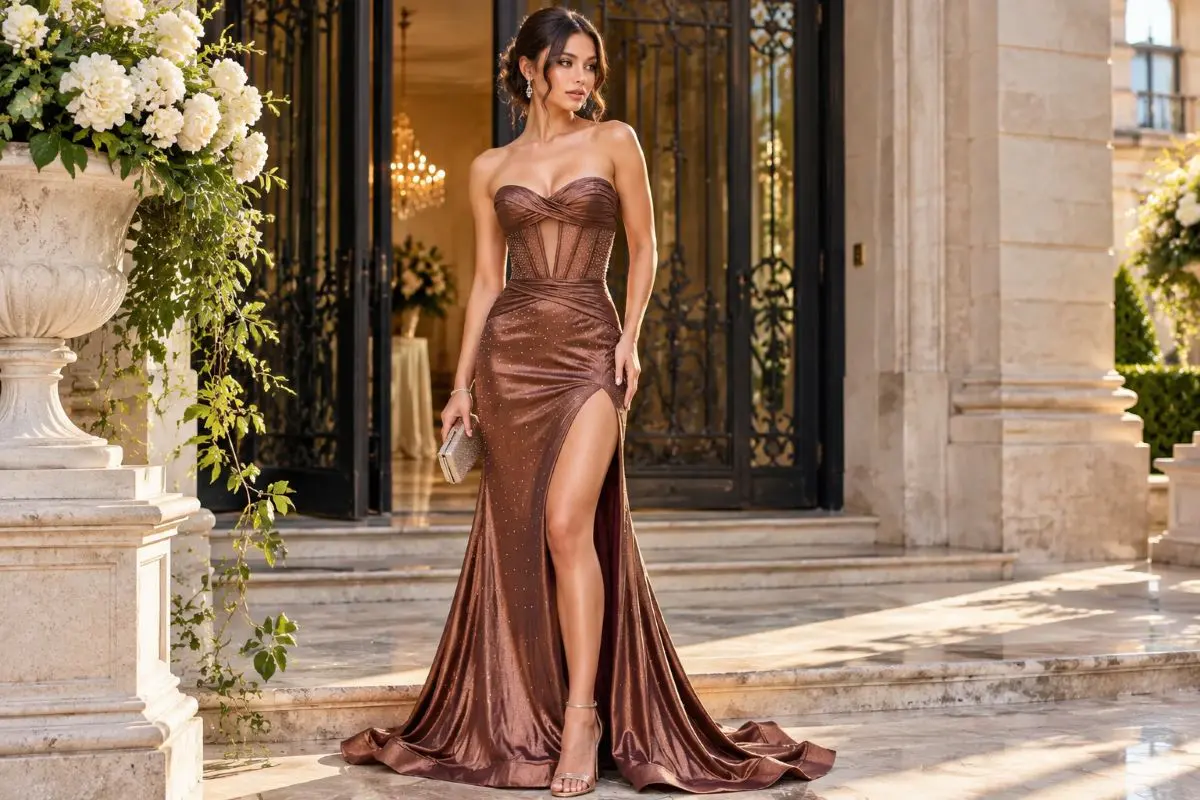
Most jewelry advice for prom is a list of things you could wear. That is not the problem anyone actually has. The problem is standing in front of a mirror with a dress on and a drawer of options, and not knowing which one to reach for.
Prom accessories are usually taught as a list, but this guide works the other way round. It starts from the dress, and from three decisions that settle almost every jewelry question: which metal, which piece carries the look, and how much is too much.
What jewelry should you wear to prom?
How do you choose jewelry for prom? Let the dress decide three things. The neckline decides whether a necklace or earrings carries the look, since an open cut leaves room for a necklace and a high, halter or one shoulder cut fills that space already. The embellishment decides how much sparkle to add, because a beaded gown is doing that job and a plain one is not. And the undertone of the fabric decides the metal, with cool shades leaning silver and warm shades leaning gold. After that, the working limit is one statement piece with everything else kept fine, because the dress should stay the loudest thing you are wearing.
Which metal goes with your dress
This is the first decision and the one most people get wrong by defaulting to whatever they own.
Silver, white gold and platinum read cool, and they sit naturally against blue, green, purple, silver and most pastels. Gold and rose gold read warm and suit red, coral, yellow, champagne and any warm neutral.
Black and white take both, so on those the choice is entirely yours. On a black gown for prom, silver reads sharper and gold reads richer, and either is correct.
Where the rule gets interesting is metallic dresses. A gold gown wants gold jewelry, since silver against it looks like a mismatch rather than a contrast. A silver gown is the exception, because silver behaves as a neutral and a single gold piece works as deliberate warmth.
Whichever you choose, pick one metal and stay with it. Mixed metals are wearable on a neutral dress, but on a colored one they read as unplanned.
Let the neckline decide the piece
The neckline is the single most useful thing to look at, because it tells you where there is room and where there is not.
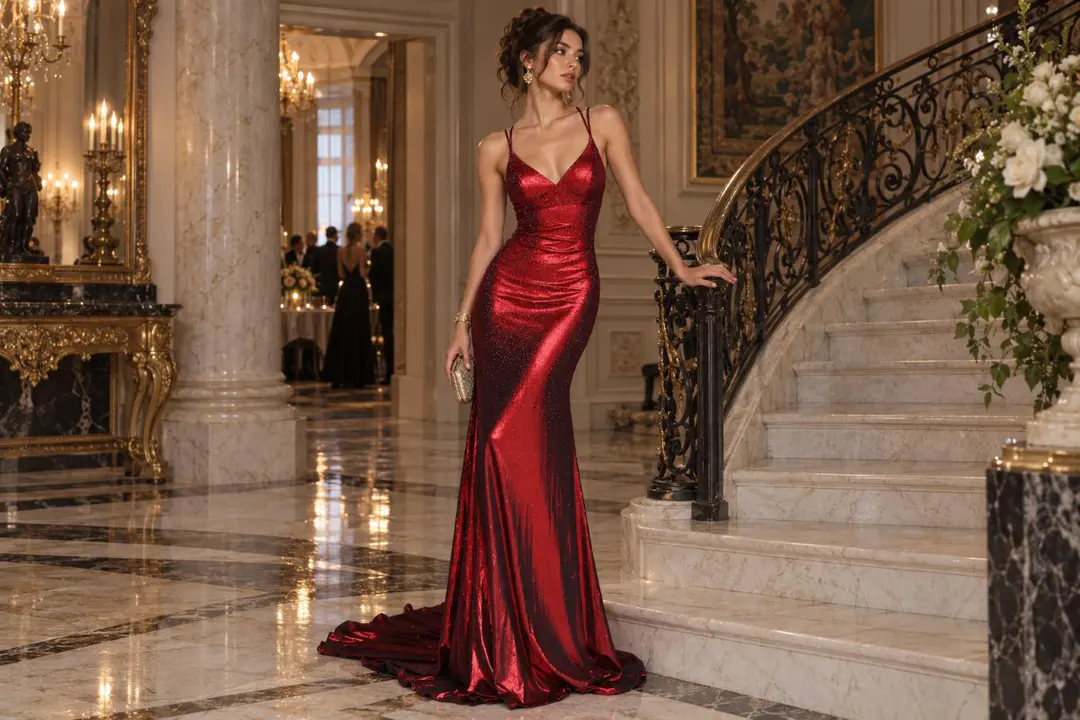
A strapless, sweetheart or scoop neckline leaves the collarbone open, and that is where a necklace belongs. A fine chain with a pendant, a collar necklace, or a single statement piece all work depending on how much you want to say. On a strapless prom style in particular, add earrings that are smaller than the necklace so the two do not compete.
A halter, a high neck or an illusion neckline fills that space already. A necklace here sits on top of the design and fights it, so skip the necklace and let the earrings carry the look. A drop earring or a small chandelier does it without adding anything at the collarbone.
A V neckline is the one that takes either, though not both. A pendant that follows the V or a pair of earrings, and the choice comes down to whether you want the eye at the center or at the face.
A one shoulder cut is its own case. The asymmetry is the feature, so a necklace interrupts it. Earrings, and possibly a cuff on the bare arm, finish it without touching the line.
How much is too much
The mistake that shows most in photographs is not the wrong piece but too many of them.
Statement earrings, a bold necklace, a cuff and a decorated bag together will always look busier than the sum of the parts, and against a formal gown that effect is stronger, not weaker. Pick one area to carry the interest and keep the rest quiet.
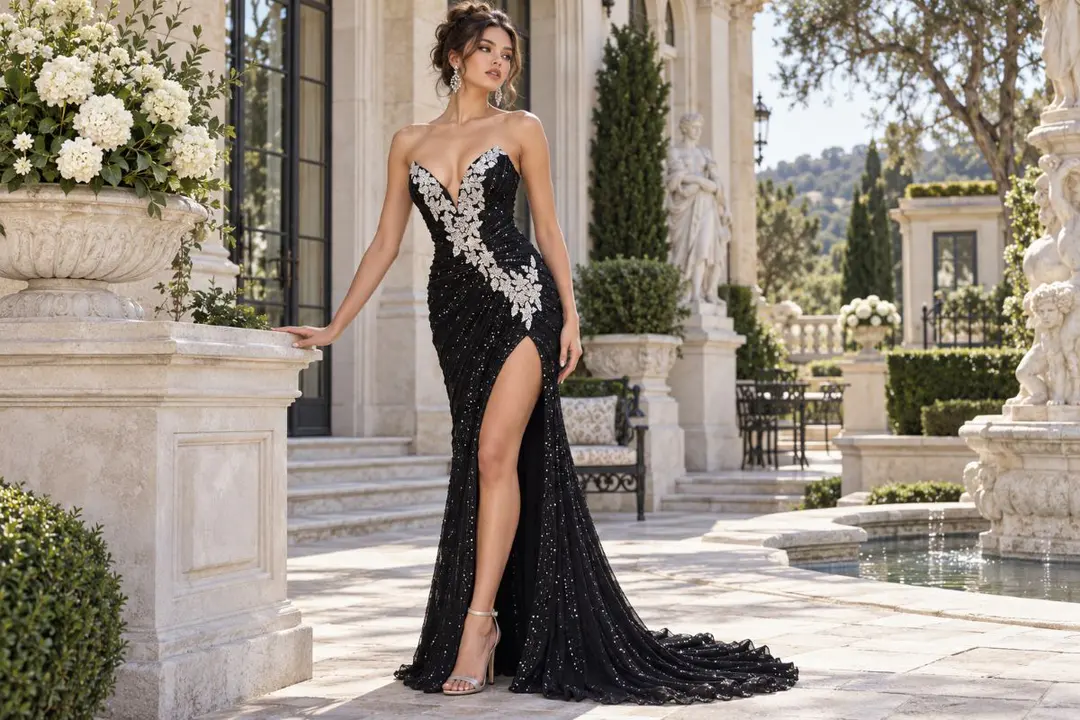
The clearest version of the rule is this: if the gown is embellished, the jewelry stays fine. If the gown is plain, that is where a stronger piece belongs. A beaded prom gown is already doing everything a statement necklace would do, so wearing one on top is two things competing.
And when something feels off in the mirror, remove a piece rather than adding one. Less almost always reads as more considered.
Prom dress jewelry by dress color
| Dress | Metal | Stones that work | Skip |
|---|---|---|---|
| Red | Gold or rose gold | Clear crystal, pearl, deep garnet | A second warm color |
| Black | Either | Clear crystal, pearl, one deep colored stone | Matte black on black |
| Navy or royal blue | Silver | Clear crystal, sapphire tones, pearl | Yellow gold |
| Emerald green | Gold | Clear crystal, pearl, deep green | Silver with cool stones |
| Pink and blush | Rose gold or silver | Clear crystal, pearl, soft pink stones | Heavy gold |
| Silver or champagne | Match the dress | Clear crystal only | A colored stone |
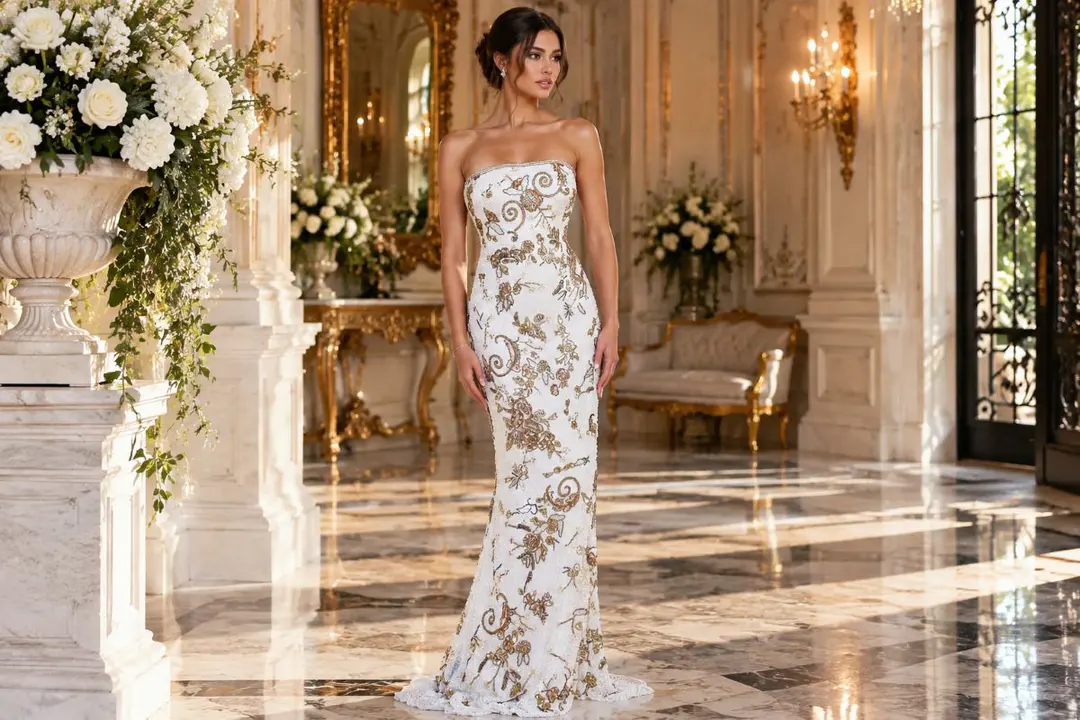
| White or ivory | Either | Pearl, clear crystal | Anything that reads bridal |
Clear crystal appears in every row for a reason. It adds light without adding a color to coordinate, which makes it the safest jewelry for prom on almost any dress.
Real, plated or costume
The honest answer is that nobody at prom can tell the difference from across a room, and the camera cannot tell at all.
Costume jewelry for prom is the sensible default. It is worn once or twice, it can be as bold as you like without the price making you nervous, and losing an earring on a dance floor is an annoyance rather than a disaster.
Where it matters is the closure and the finish. A cheap clasp that opens during a dance and a plating that turns your skin green by the second hour are the two things worth paying a little more to avoid. Look for a lobster or box clasp rather than a spring ring, and check the piece against your skin in daylight before the night.
Real pieces make sense if you already own them or if a family piece has meaning. Buying fine jewelry for a single evening rarely does.
Earrings, necklaces and the rest
Earrings are the piece worn at every prom and the one worth choosing first. Studs disappear against a strong dress, a drop earring frames the face, and a chandelier is a statement in itself. Match the scale to the hair, since a sleek updo shows an earring completely and loose hair half hides it.
Necklaces follow the neckline rule above and one more: the pendant should sit above the neckline, not on the fabric. A chain that lands on the bodice looks like it fell there.
Bracelets and cuffs show every time you lift the skirt to walk or raise a hand to dance, which is more often than you expect. One is enough, and a cuff on the bare arm of a one shoulder prom gown is the version that photographs best.
Rings are the piece most often forgotten and the one hands show in every photograph. A single cocktail ring does more than several thin ones.
Hair jewelry belongs in this list too, and it follows the same limit. A crystal comb or a fine headband on an updo works as the statement, in which case the earrings stay small.
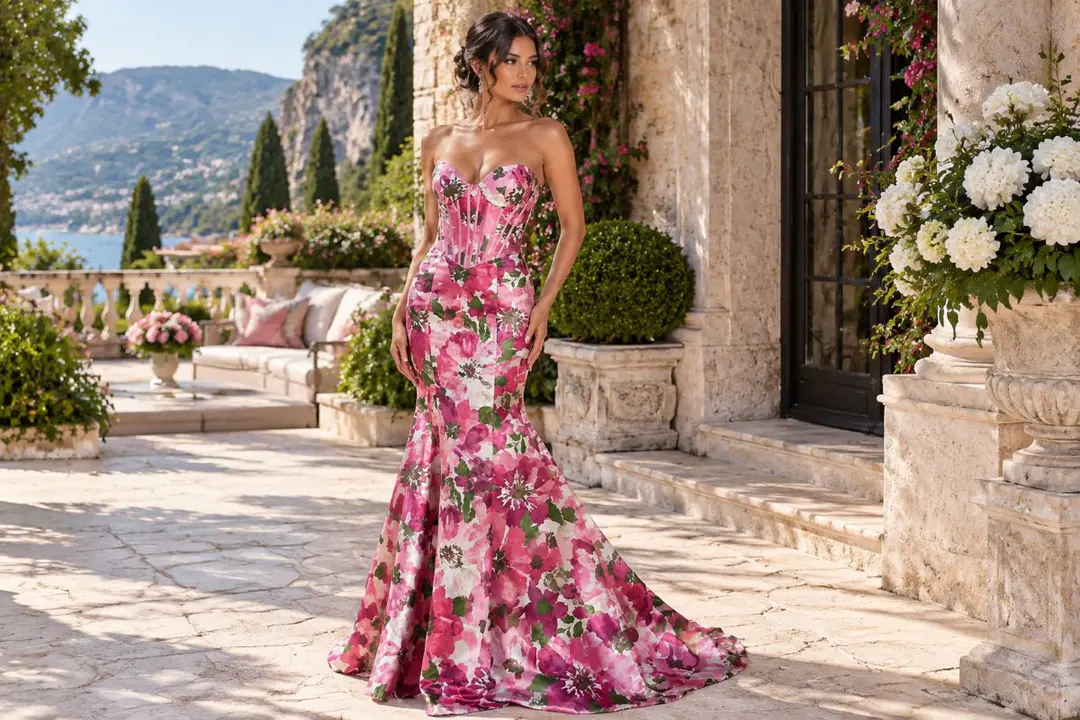
What prom jewelry looks like on camera
Jewelry behaves differently under a flash than in a mirror, and two things catch people out.
Clear crystal and cut stones read at full brightness under a flash, which is what makes them work. Matte metal and pearl read softer, which suits a soft dress and can vanish against a sequinned one.
And scale reads smaller on camera than in person. An earring that feels bold in the mirror usually photographs as medium, which is the argument for going slightly larger than feels natural if the photographs matter to you.
Prom Jewelry Questions
What is the best jewelry for prom?
Clear crystal in a metal that suits the dress undertone, worn as one statement piece with everything else kept fine. Crystal adds light without adding a color to coordinate, which is why it works on almost every gown, and the one piece rule keeps the dress as the focus.
Should you wear a necklace with a prom dress?
Only if the neckline leaves room for it. A strapless, sweetheart or scoop cut does. A halter, high neck, illusion or one shoulder cut does not, and a necklace on those sits on top of the design. On a V neckline choose a pendant or earrings, not both.
Is costume jewelry acceptable for prom?
Yes, and for most people it is the better choice rather than a compromise. A piece worn once or twice does not need to be fine to look fine, and it can be as bold as the dress asks without the price making you cautious. What is worth checking is the clasp, which should be a lobster or box style rather than a spring ring, and the plating, tested against your skin in daylight a day or two before.
Gold or silver with a prom dress?
Cool shades such as blue, green, purple and most pastels lean silver. Warm shades such as red, coral, yellow and champagne lean gold. Black and white take either. A gold dress wants gold, and a silver dress is the one exception where a single gold piece works.
How much jewelry is too much for prom?
The test is whether the dress is still the first thing people see. If the eye goes to the jewelry first, there is too much of it. In practice that means one statement piece, and the others small enough that a photograph would not lose anything if they were gone.
What jewelry works for homecoming?
The same rules at a slightly smaller scale, since homecoming dresses are usually shorter and less formal. Homecoming jewelry ideas lean toward drop earrings and a fine chain rather than a chandelier and a collar, and costume pieces are even more clearly the right call.
Trying the pieces against the dress
Metal and stone read differently against a specific fabric, and holding them against the gown in daylight settles in seconds what browsing cannot.
Bring the pieces you are considering to your fitting at an authorized Jovani retailer and look at them against the fabric before you decide.
For shoes, bags and hair, our guide to choosing prom dress accessories covers the rest of the outfit.