


How to wash a prom dress starts with one rule: a formal gown does not go in a washing machine, and most of the damage done to prom dresses happens in the days after the event rather than during it. Water rings from spot cleaning, a hem left folded in a bag, a loose bead pulled tight, sunlight on a dark color.
This guide covers how to clean a prom dress at home safely, what belongs at a dry cleaner, how a graduation gown differs completely, and how to store a dress so it survives until you want it again.
How do you wash a prom dress?
Can you wash a formal gown at home? Sometimes, and the care label decides. Plain chiffon, jersey and unlined crepe can usually be hand washed in cold water with a gentle detergent. Anything with beading, sequins, boning, structured layers or heavy lace should go to a dry cleaner instead, since water loosens adhesive and distorts internal structure. For most gowns the right answer is spot clean what you can, then have the whole dress professionally cleaned. Never put a formal dress in a washing machine or a dryer, and never use hot water on any of it.
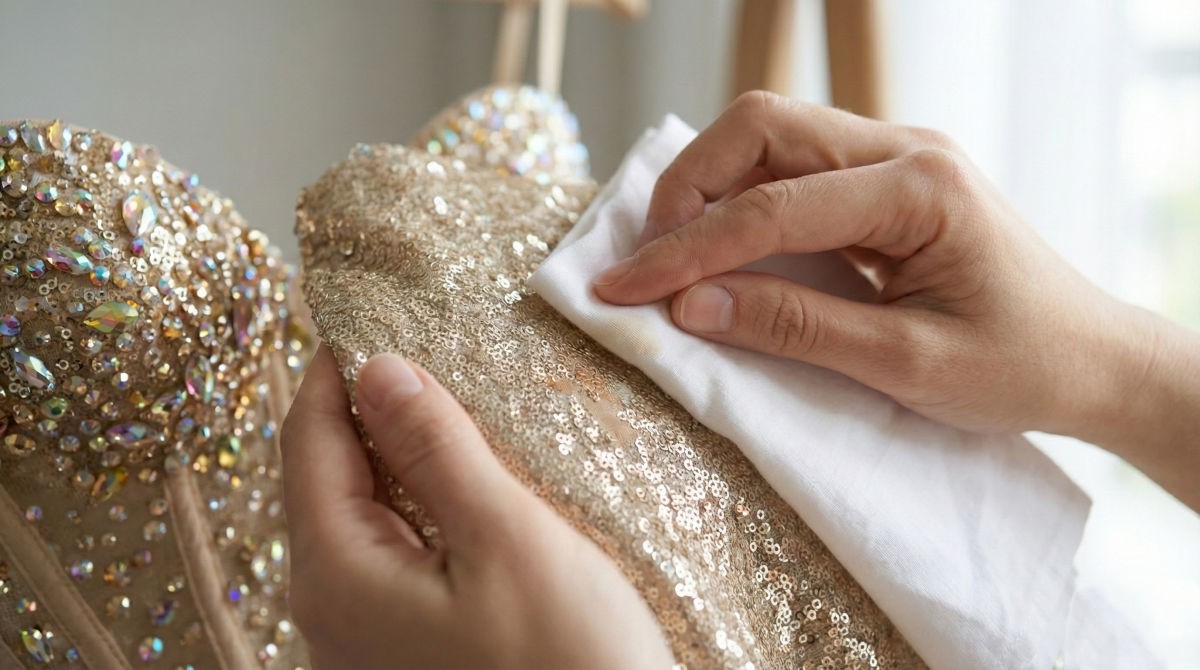
Check the fabric first
The care label is the starting point and it is worth reading before you touch anything, because the most common damage comes from using the right method on the wrong fabric.
Structured gowns with boning, padding or built-in cups hold their shape through internal construction, and soaking distorts that. A mermaid gown is the clearest example, since the fit through the torso depends on structure that water can warp.
Embellished gowns are the other category to keep away from water. On a sequin gown the discs sit on a base fabric and many are glued rather than sewn, so detergent can loosen them and water can dull the finish.
Light unlined fabrics are the most forgiving. Chiffon, plain jersey and simple crepe all handle careful hand washing, provided there is no beading and no internal structure.
Spot cleaning, which handles most of it
Most prom night marks are fresh, and fresh marks come out far more easily than set ones, so deal with them the next day rather than the next month.
Blot rather than rub. Rubbing pushes a mark deeper into the fibers and can also damage the surface of satin permanently. Press a dry cloth against the mark first to lift as much as possible, then work with a barely damp cloth and a very small amount of mild detergent.
Always test on a hidden area first, ideally an inside seam allowance where a mistake will not show. This matters most on satin, where water alone can leave a visible ring that is harder to remove than the original mark.
Use cold water only. Heat sets most stains permanently and can leave water rings on shiny fabrics that never come out.
Around beading, work beside the embellishment rather than on top of it, and keep moisture off the beads themselves wherever you can.
Common marks and what actually works
| Mark | Approach | Avoid |
|---|---|---|
| Makeup and foundation | Blot dry first, then cold water and mild detergent | Rubbing, which spreads it into the weave |
| Food and grease | Blot, then a little dish soap on a damp cloth | Hot water, which sets grease |
| Red wine or colored drink | Blot immediately, cold water, then a professional | Salt and home remedies on formal fabric |
| Deodorant marks | Rub gently with a dry cloth or nylon stocking | Water, which usually makes it more visible |
| Hem dirt | Let it dry fully, brush off, then spot clean | Cleaning while still wet, which spreads it |
| Perfume or hairspray | Professional cleaning | Home treatment, since alcohol can strip dye |
Dry cleaning a prom dress
Dry cleaning prom dress fabrics is the right call more often than people expect. Take the gown to a professional if it has beading, sequins, boning, a built-in corselette, multiple structured layers or heavy lace. Also go professional for any mark you cannot identify, and for anything alcohol-based such as perfume or hairspray, since those can strip color.
Two things make a real difference at the counter. Point out every mark specifically rather than assuming they will be found, and say what caused each one where you know, because the treatment differs. And go soon, since a mark that has been sitting for months is far harder to remove than one from last week.
Ask whether they handle formalwear specifically. A ball gown with layered tulle and a boned bodice is a different job from a suit, and not every cleaner is set up for it.
Hand washing, if the label allows it
Fill a clean tub with cold water and a small amount of gentle detergent, then lower the dress in slowly rather than dropping it. Move it gently through the water rather than agitating it.
Never wring or twist. That is the single most damaging thing you can do to a formal gown, because it distorts seams and can crack the finish on satin. Press water out gently instead, supporting the weight of the dress as you lift it since a wet gown is heavy and seams take that strain.
Rinse in cold water until no detergent remains, since residue attracts dirt and can leave marks as it dries.
Drying, where most damage happens
Lay the gown flat on a clean dry towel, roll the towel gently to absorb the water, then move it to a fresh dry towel. Do not hang a soaked dress, because the weight stretches straps, shoulders and seams permanently.
Air dry away from direct sunlight, which fades color quickly and is particularly harsh on deep shades. A red gown will show sun fading faster than almost any other color.
Never use a dryer, a hairdryer on heat or a radiator. Heat shrinks synthetic fibers, melts tulle and sets any remaining mark permanently.
Once dry, hang the gown at full length. Most creases from washing fall out on their own overnight, and if any remain, steam rather than iron.

How to wash graduation gown fabric
How do you clean a graduation gown is a different question entirely, and almost none of the above applies. Most are polyester or a polyester blend, they have no lining, no structure and no embellishment, and they are built to be cheap and disposable.
Can you wash a graduation gown at home? Yes, and unlike a prom dress it is usually the right answer. Hand wash it in cold water with a small amount of mild detergent, or use a machine on a delicate cycle inside a mesh bag if the label allows. Polyester handles both.
Hang it to dry rather than using a dryer on high, since polyester glosses and can melt under heat. Most gowns dry within a few hours and the creases from the packaging drop out as they hang.
If it only needs freshening rather than washing, hanging it in a bathroom with a hot shower running does the job in about twenty minutes. That is also the safest way to deal with the fold lines it arrived with.
Storing the dress afterwards
Clean it before storing, always. Invisible marks from sugar, wine or perspiration oxidize over time and turn brown months later, and by then they are usually permanent.
Use a breathable cotton garment bag rather than plastic. Plastic traps moisture, which causes yellowing and can encourage mildew, and a dry cleaner’s plastic sleeve is for transport rather than storage.
Hang a light gown on a padded hanger using its internal loops, never by the straps. A heavy beaded gown is better stored flat in a box with acid-free tissue between the folds, since the weight of the beading will stretch the shoulders if it hangs for months.
Keep it somewhere dark, dry and cool. An attic gets too hot, a basement too damp, and a window-facing wardrobe fades color. If you plan to wear it again, a lighter chiffon gown stores far more easily than a heavily beaded one.
Dress Cleaning Questions
How to wash prom dress fabrics at home?
Only if the care label allows it and the gown has no beading, boning or structured layers. Use cold water and a gentle detergent, move the dress slowly through the water rather than agitating it, and never wring or twist. Press water out with a towel and dry flat, never hanging while wet.
Should you dry clean prom dress fabrics, or wash them?
Yes for anything with beading, sequins, boning, a built-in corselette, structured layers or heavy lace. Also for unidentified marks and anything alcohol-based such as perfume, which can strip color. Point out every mark specifically and go soon, since old marks are far harder to remove.
How do you get makeup out of a formal dress?
Blot with a dry cloth first to lift as much as possible, then work with a barely damp cloth and a very small amount of mild detergent in cold water. Never rub, since that pushes makeup deeper into the fibers. Test on a hidden seam allowance first, especially on satin.
Can you wash a graduation gown?
Yes, and unlike a prom dress it is usually the right approach. Most graduation gowns are polyester with no lining or structure, so hand washing in cold water works well, and a delicate machine cycle inside a mesh bag is fine if the label allows. Hang to dry rather than using high heat.
Why should a dress be cleaned before storing?
Because invisible marks from sugar, wine or perspiration oxidize over time and turn brown months later, at which point they are usually permanent. A gown that looks clean when you put it away can come out stained, which is the most common storage mistake.
What is the best way to store a gown long term?
In a breathable cotton garment bag rather than plastic, which traps moisture and causes yellowing. Hang light gowns on a padded hanger using the internal loops, never the straps. Store heavy beaded gowns flat in a box with acid-free tissue, since the weight stretches the shoulders over months.
If the mark will not come out
Some marks are set into the fabric rather than sitting on it, and home treatment beyond the first attempt usually makes them worse rather than better. Stop and get advice before trying a third method.
If the gown is going back for alterations anyway, ask an authorized Jovani retailer who to use locally for formalwear cleaning, since not every dry cleaner handles structured gowns.