
Best Prom Dresses for Outdoor and Garden Venues
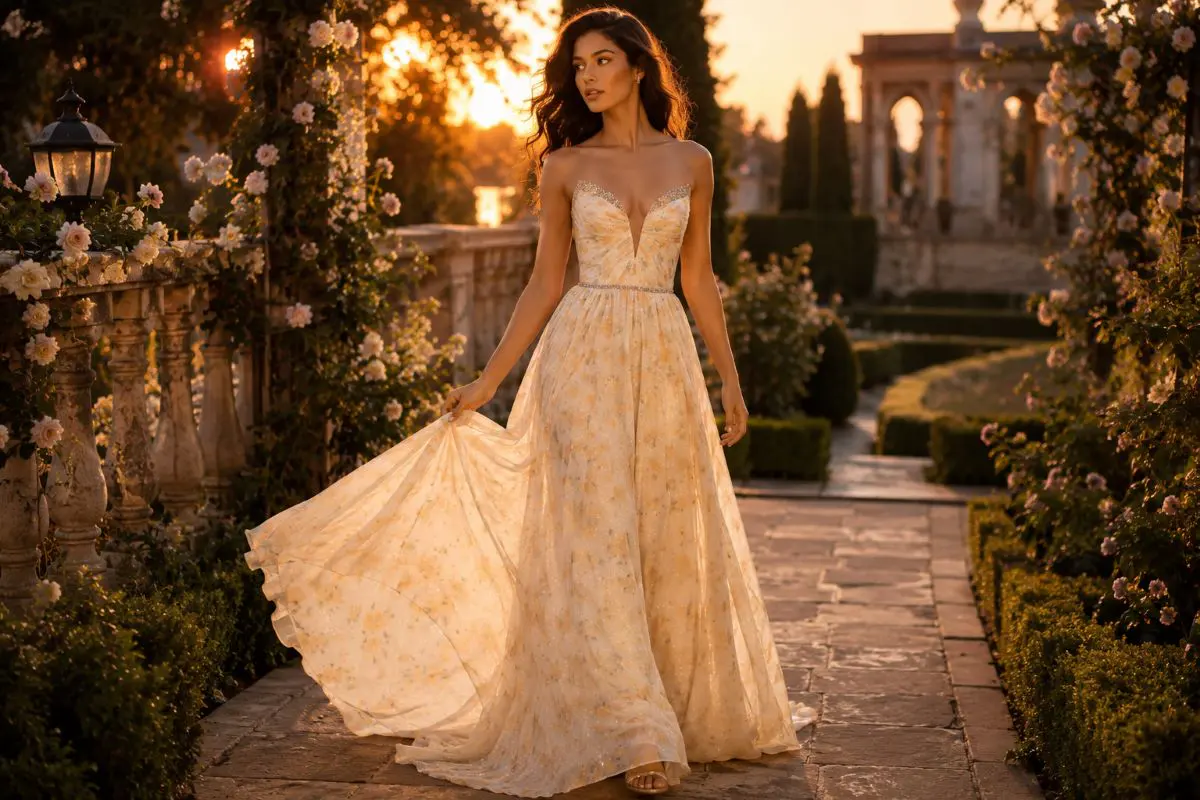
An outdoor prom asks more from a dress than an indoor ballroom does. Ground surface, temperature, wind, daylight, and skirt length can all affect how comfortable and manageable the gown feels throughout the event.
What should you consider for an outdoor prom?
Start with the venue surface, expected weather, skirt movement, and hem length. A dress that is easy to manage on grass or pathways can be more practical than one chosen only for how it looks indoors.
Outdoor venues vary widely. A lawn can mean soft ground and moisture, while a terrace may be paved and easier for heels. A conservatory offers shelter from wind but may still feel warm or humid. The setting should guide the practical checks you make before choosing a gown.
Which dress silhouettes are easier to manage outdoors?
Silhouette affects how much fabric you need to control while walking, sitting, and moving across uneven ground. Some shapes are easier to manage, but no single silhouette is automatically right for every outdoor venue.
A-line and easy-movement skirts
A-line dresses are often practical because the skirt gives walking room without the full volume of a ball gown. That can make them easier to manage on lawns, garden paths, and other uneven surfaces.
If you want to compare this shape, browse A-line prom dresses and focus on skirt width, hem length, and the amount of fabric you will need to control.
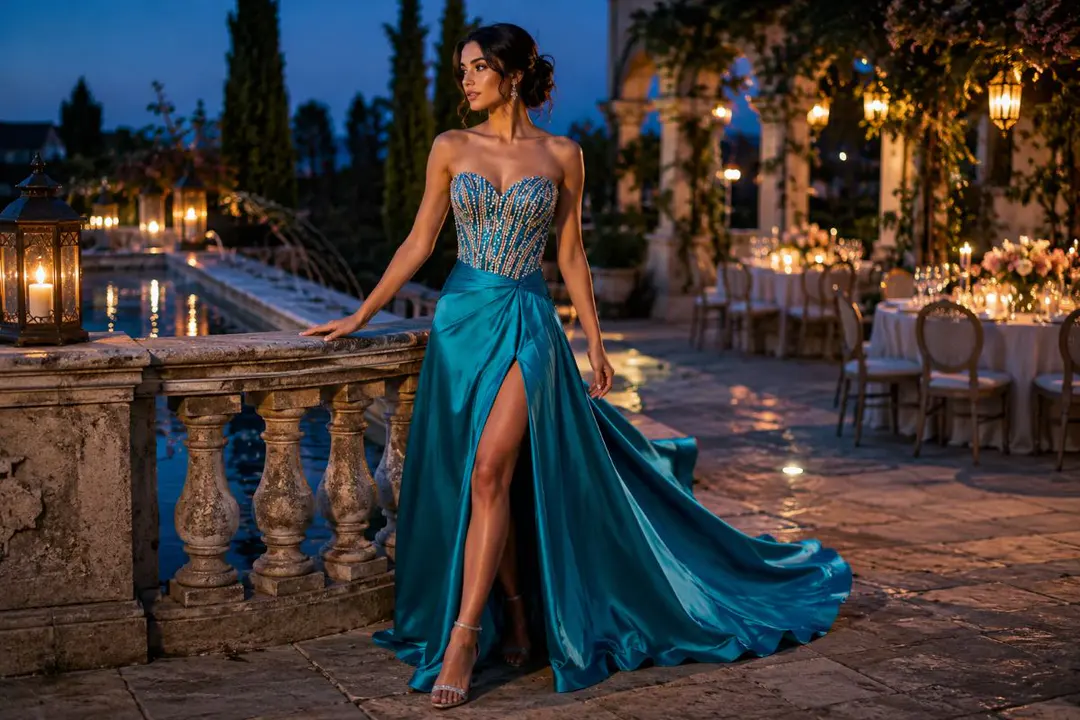
Flowing silhouettes
Flowing skirts can move well outdoors, especially when the gown is not overloaded with layers. The important point is not that a loose skirt is automatically cooler or easier. Check the fabric weight, lining, and how the skirt behaves when you walk or turn.
Full ball gowns and skirt volume
A full ball gown can still work outdoors, especially on paved or sheltered surfaces. On grass, gravel, narrow paths, or windy spaces, the extra volume may require more attention while walking and sitting.
Compare prom ball gowns by skirt volume rather than assuming the category itself is unsuitable for an outdoor event.
What should you check in the fabric and layers?
Fabric names alone do not tell you how comfortable a gown will feel outdoors. Total weight, lining, layer count, surface detail, and construction all affect how the dress moves and how warm it may feel.
Weight and movement
Lift part of the skirt during a fitting and walk at your normal pace. A gown that feels light on the hanger can still become harder to manage if it has several layers or dense embellishment.
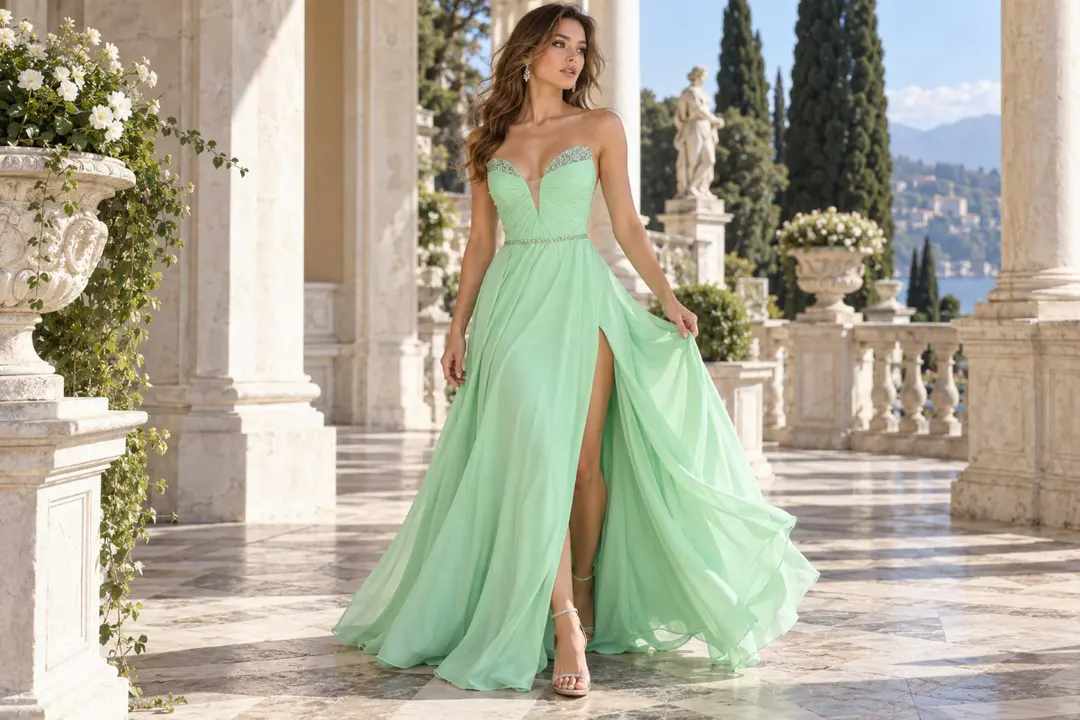
Lining and daylight
Bright natural light can make sheer panels, lining transitions, and fabric texture easier to see. Check the gown near a window or in daylight if possible so you know how the real layers read outside.
A lining can improve coverage, but it does not guarantee the same appearance in every lighting condition. Judge the exact dress rather than relying on the fabric category alone.
Embellishment and surface detail
Beading, appliques, and other surface details can add weight or catch on nearby objects. Check how secure they feel and whether the surface is comfortable against your arms when you move.
How should you choose the hem length?
Hem length matters more when the event includes grass, gravel, stairs, or damp ground. A floor-length gown can still work, but a hem that trails well beyond your shoes is more likely to collect dirt or become difficult to control.
Bring your intended shoe height to the fitting so the hem can be judged at the correct length. High-low or shorter styles may also be practical when the venue is less formal or the ground is especially uneven.
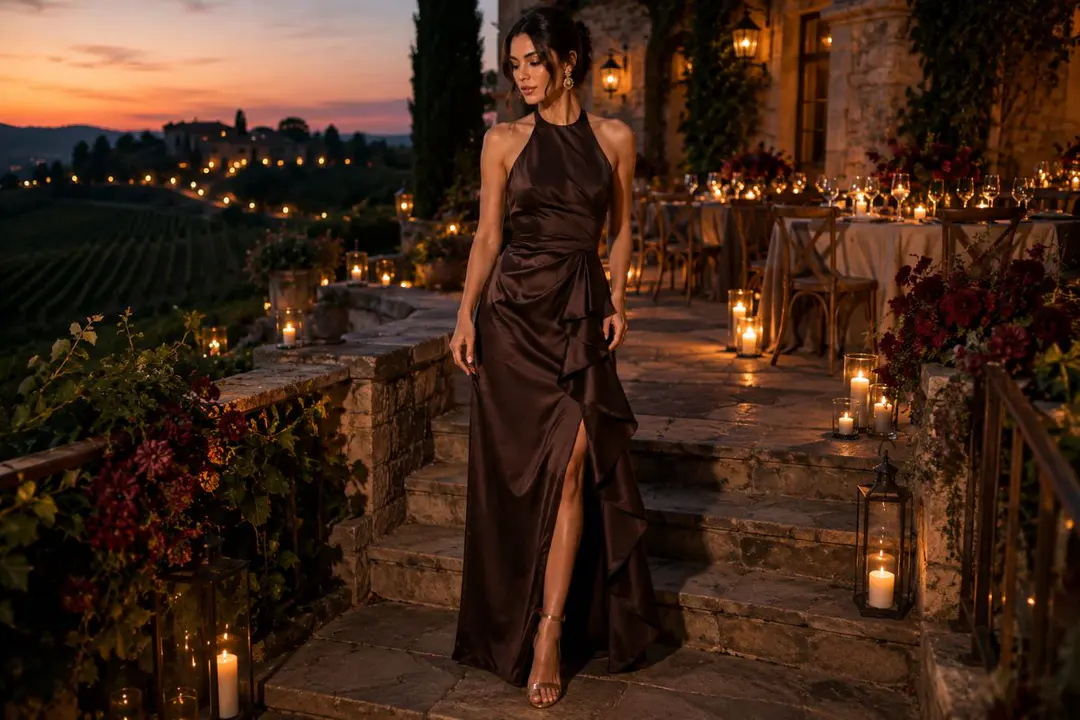
How color and print interact with the setting
Color does not become objectively better or worse outdoors, but the background can change how strongly a dress stands out in photos. If photography matters to you, think about contrast with the dominant colors at the venue.
Contrast with the background
A gown close to the surrounding foliage may blend more in wide shots, while a contrasting color may stand out more. That does not make green or neutral dresses poor choices. It simply changes how much separation you see between the dress and the setting.
Floral and botanical prints
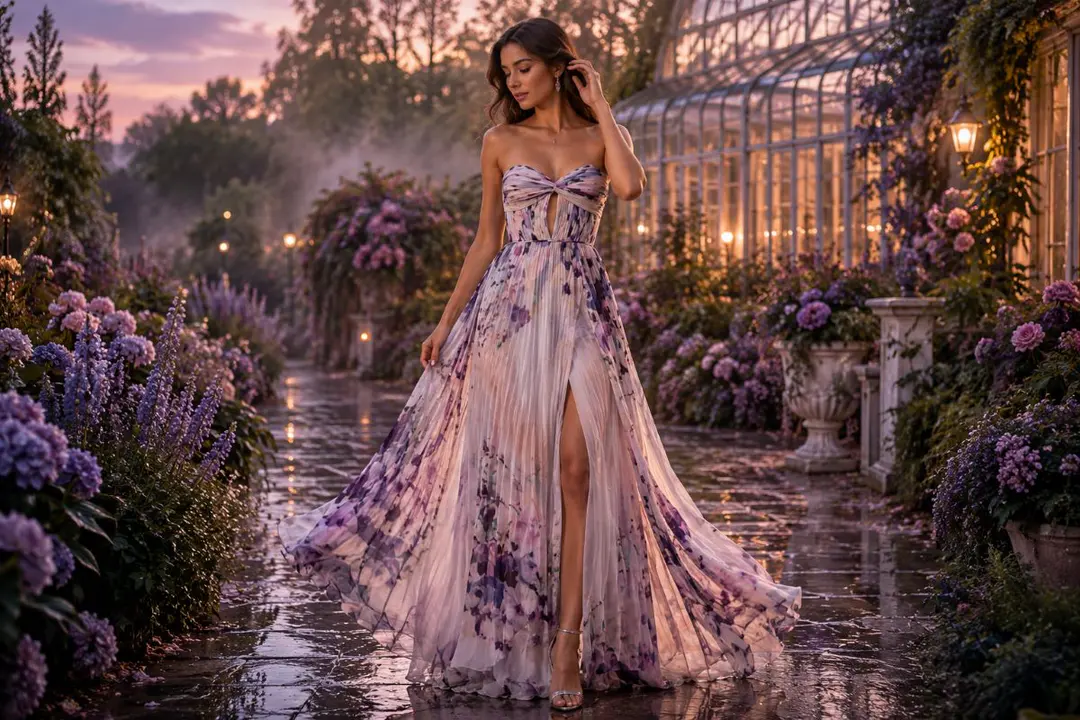
Floral prints can connect naturally with a garden theme. Compare the print against the venue if possible, because a dense pattern against dense greenery may create less separation in wide photos.
For more patterned options, browse print prom dresses and compare print scale as well as color.
What practical details matter outdoors?
Small venue details can affect comfort more than the dress category itself. Plan for the ground, weather, and lighting rather than assuming every outdoor event creates the same conditions.
Ground and shoes
Thin heels can sink into grass or soft soil. A block heel, wider heel, flat, or suitable heel protector may give you more stability, depending on the venue and the shoes you prefer.
Temperature changes
Outdoor temperatures can shift after sunset. If the forecast suggests a cooler evening, consider a wrap or light layer that works with the gown without changing how the bodice or straps sit.
Wind and weather
Wind can affect loose skirts, trains, capes, and unsecured hair. Test how much fabric you can comfortably control and check the forecast close to the event date.
Daylight and photos
Look at the gown in bright light before prom if possible. Daylight can show fabric texture, lining, and sheer areas differently from indoor lighting, while dusk can reduce contrast in darker colors.
For a broader venue decision guide, see Jovani's prom dress venue guide.
Match the dress to the outdoor venue
The same gown can feel easy at one outdoor venue and difficult at another. Surface, shelter, temperature, and walking distance matter more than the simple label of outdoor prom.
Garden or estate lawn
Grass and soft soil make hem control and shoe stability especially important. Moisture may also matter if the lawn is damp, so avoid assuming the ground will stay completely dry through the evening.
Vineyard or terrace
Paved surfaces can make long gowns and heels easier to manage than they are on grass. Temperature changes may still be noticeable as the event moves from daylight into evening.
Conservatory or glasshouse
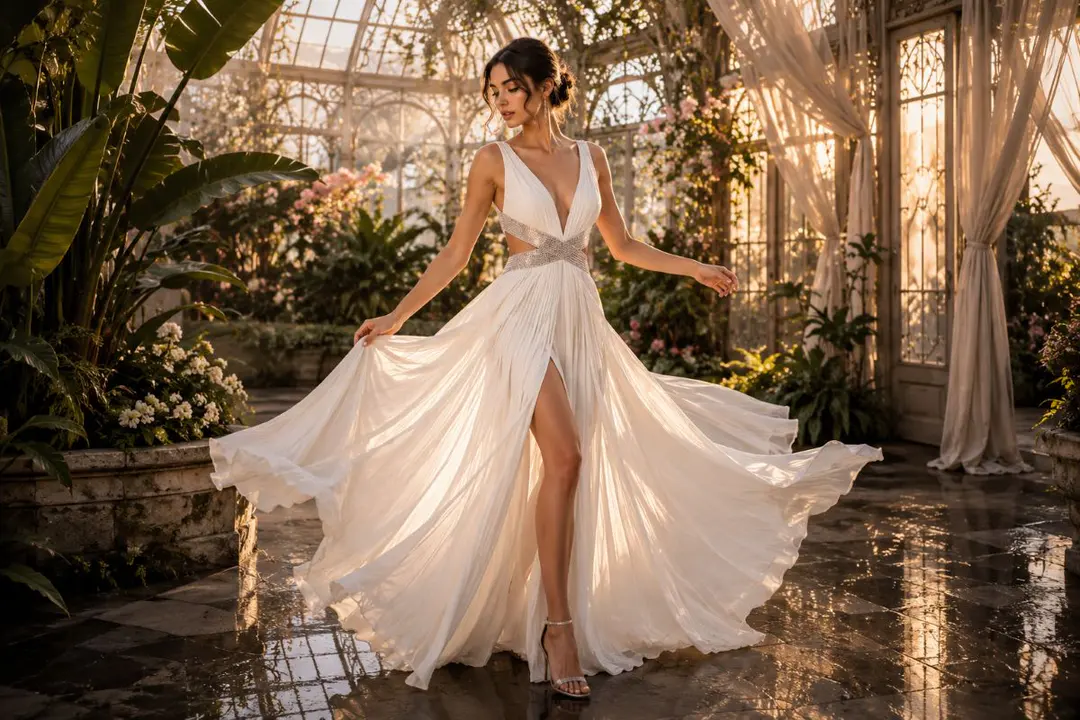
A conservatory protects you from wind and soft ground, which can make structured or fuller gowns more practical. Warmth and humidity may still affect comfort, so check the total weight and layers of the actual dress.
Indoor venues: ballroom, hotel and school gym
Whatever the venue, check four things before you choose: how formal it is, how much room there is to move, the lighting, and the temperature.
Ballroom
Smooth floors and open space make full skirts, longer hems and bold details easy. Sequins and crystals stand out under ballroom lighting, but a matte gown looks just as formal through shape and color.
Hotel
Hotels mix polished floors, elevators, stairs and hallways, so a hem you can control matters. If your gown has a train, make sure you can get through doors and elevators without constant adjusting, and check the color under both warm room light and camera flash.
School gym
A gym is not automatically casual, but it is often crowded with hard floors. A long gown works if the hem is safe with your shoes and the skirt is easy to manage on a busy dance floor. Test turning and stepping backward in your actual shoes.
What shoppers ask about outdoor prom dresses
These questions cover the practical decisions that matter most for garden, terrace, vineyard, and other outdoor prom settings.
What is a practical dress silhouette for an outdoor prom?
A-line is a practical starting point for grass or uneven ground, but the best choice depends on the surface, weather, and skirt volume. Any silhouette can work if you can manage it comfortably in the actual venue.
What fabric should I choose for a garden prom?
Choose by total weight, lining, and layer count rather than fabric name alone. A lighter construction may feel easier in warm weather, but the exact dress should be tested for movement and comfort.
Can I wear a long dress to an outdoor prom?
Yes. A long gown can work outdoors if the hem is manageable for the ground surface and your shoe height. Avoid excessive pooling if you expect grass, gravel, or damp pathways.
What shoes work best for prom on grass?
Stable options such as block heels, wider heels, or flats are practical starting points. Heel protectors may also help with some shoes, but the best choice depends on the ground and your comfort.
Are floral prints a good choice for a botanical prom?
Yes. Floral prints can work naturally with a botanical setting. Check how the print scale and color contrast with the background if wide photos are important to you.
What colors work well at a garden prom?
Any color can work. If you want stronger separation in photos, choose a shade that contrasts with the dominant background rather than one that closely matches the surrounding foliage.
Check the venue surface, expected weather, dress movement, and hem before making your final decision, then try the gown in person through an authorized Jovani retailer.