
A slit started as a practical detail that let a long skirt move, on a high slit evening gown as much as on a prom dress, and it has become a design feature in its own right. On a high-slit prom dress it decides how the fabric falls, how you walk, and what the whole gown reads as.
Wearing one well comes down to a few practical things: where the slit is placed, how the fabric behaves, which silhouette it sits on, what shoes go with it, and how to walk and sit in it. This guide covers all of those, plus how to have the slit lowered if the school dress code needs it.
Where the slit sits and why it matters
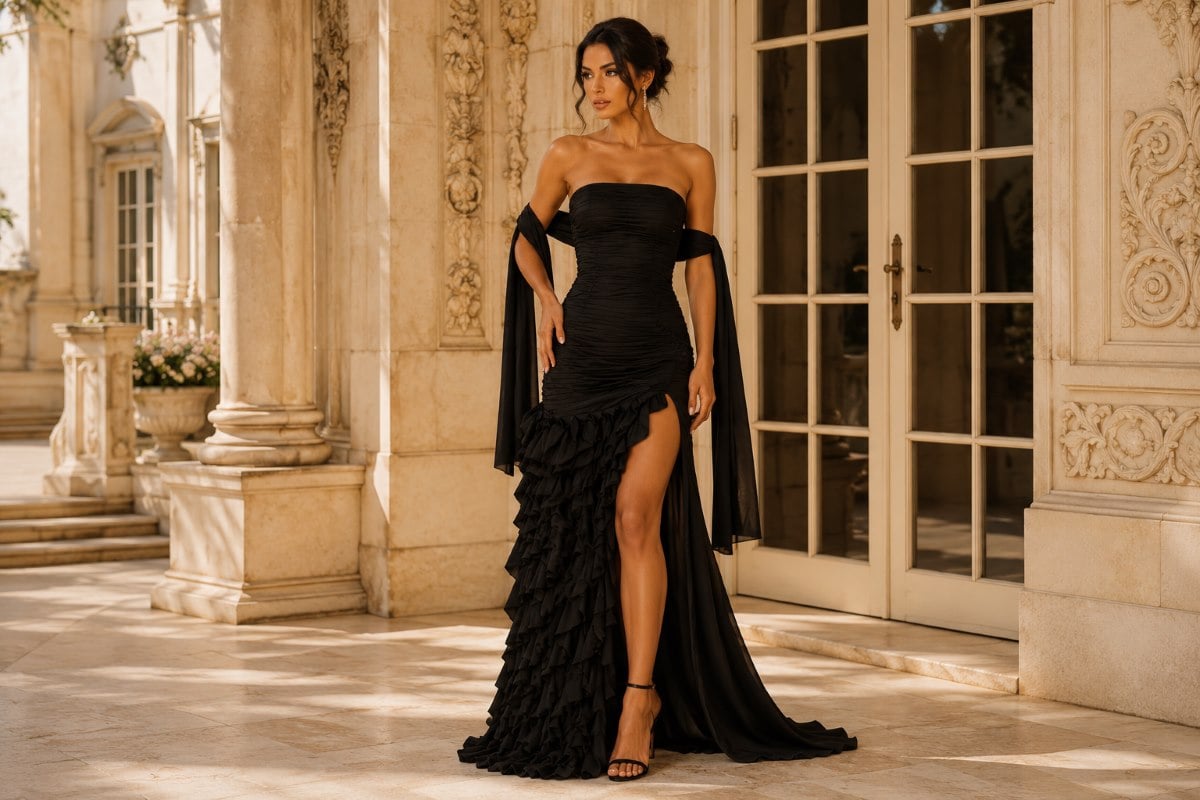
What should you know before choosing a high slit prom dress? Three things decide whether it works. The placement, which should sit on or just off a front seam so it opens with your stride and closes when you stop. The fabric, since satin folds back cleanly and holds a line, chiffon moves and can catch the wind, and jersey clings and only shows the slit in motion. And the height, which is set by the pattern and can be lowered by a tailor in an afternoon but cannot easily be raised. Beyond that, the shoes are fully visible so they matter more than usual, and the whole look reads best when the top half of the gown stays covered.
What a slit does to the line of the gown
A traditional floor-length skirt creates a continuous, unbroken block of color and fabric. A vertical slit breaks that block into two lines, which changes the proportion of the whole gown. This vertical line draws the eye upward, which lengthens the leg line and adds height to the wearer’s overall silhouette.
Beyond the visual elongation, the opening introduces the crucial element of motion. Formal wear is meant to be lived in, walked in, photographed, and danced in. When a prom dress with slit detailing is set into motion, the fabric parts and falls back together with every single step. That movement is most of what people respond to in this style. The placement is calculated rather than casual. It is usually set into a princess seam or a side-front panel. Too far to the side and it stays hidden and fights the stride. Too close to the center and the skirt loses its structure and becomes hard to manage. The front of the thigh, on or just off a seam, is where it works.

Balancing the slit with the top half
The rule that holds most looks together is contrast. If one part of the gown is open, the rest reads best covered or structured. That balance is what keeps the look deliberate.
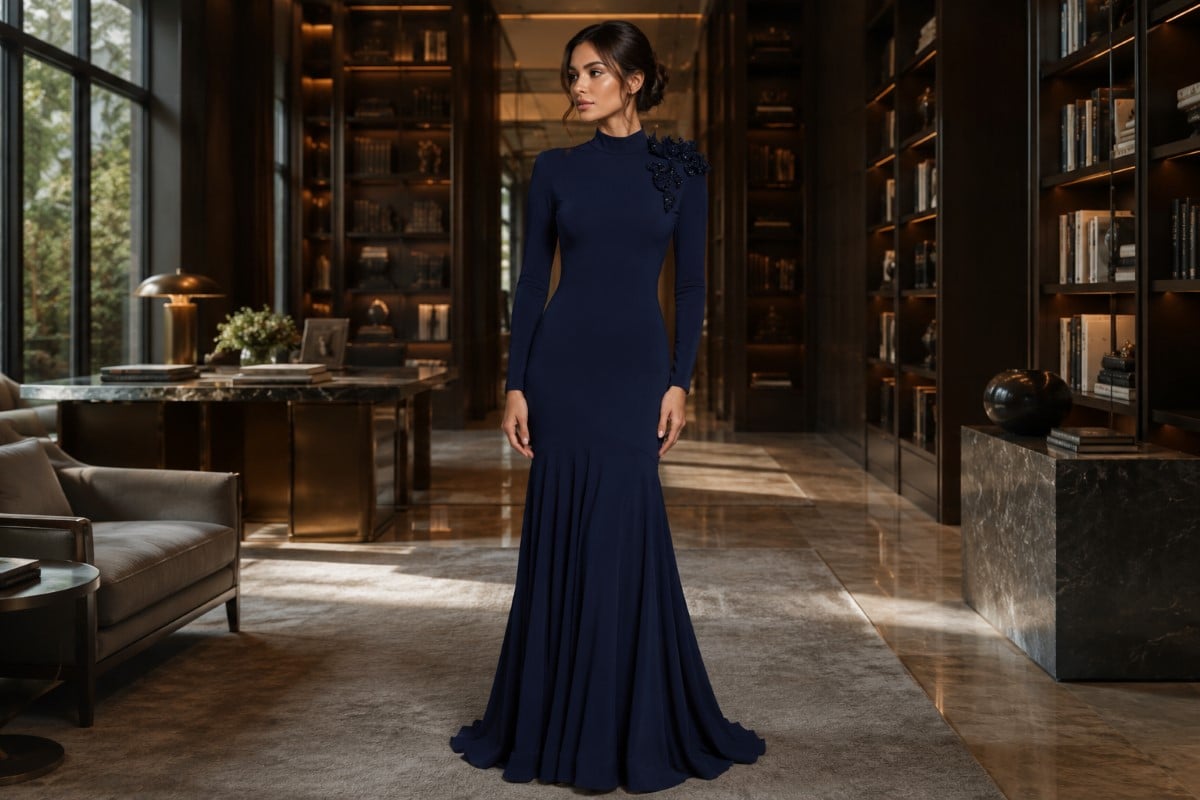
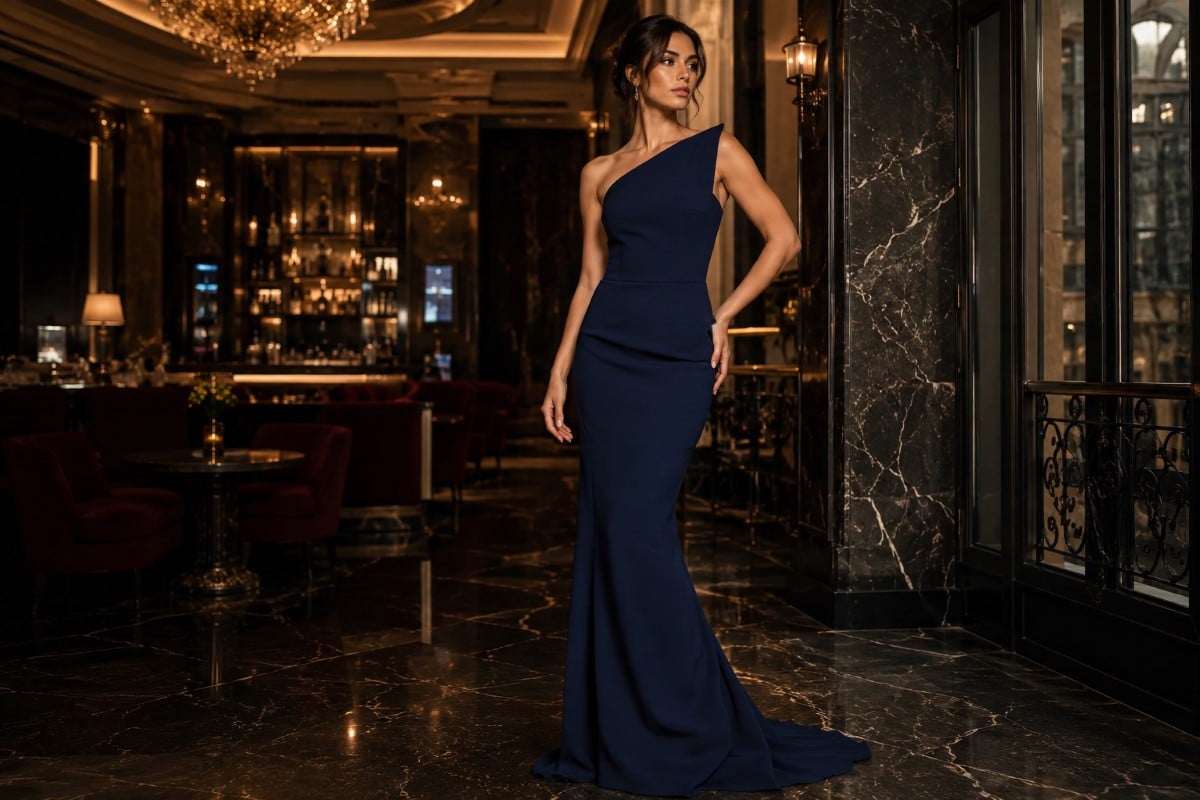
For instance, a high slit pairs well with long, fitted sleeves, a high mock neckline, or an asymmetrical one-shoulder bodice. The covered top half sets off the open skirt. The eye reads the whole gown rather than one part of it. A V neck or a corseted strapless bodice can also work with a high slit, but only when the fit is exact, since two open elements on a gown that shifts reads as a problem rather than a look. What makes any of these work is fit, not how much is shown.
Fabric, silhouette and color
The cut of the slit is only part of it. The materials used, the chosen silhouette, and the color palette all interact directly with the slit to change the gown’s entire personality.
How the fabric behaves at the slit
The fabric decides how the slit behaves, how it photographs and how it moves, and the three main families behave very differently.
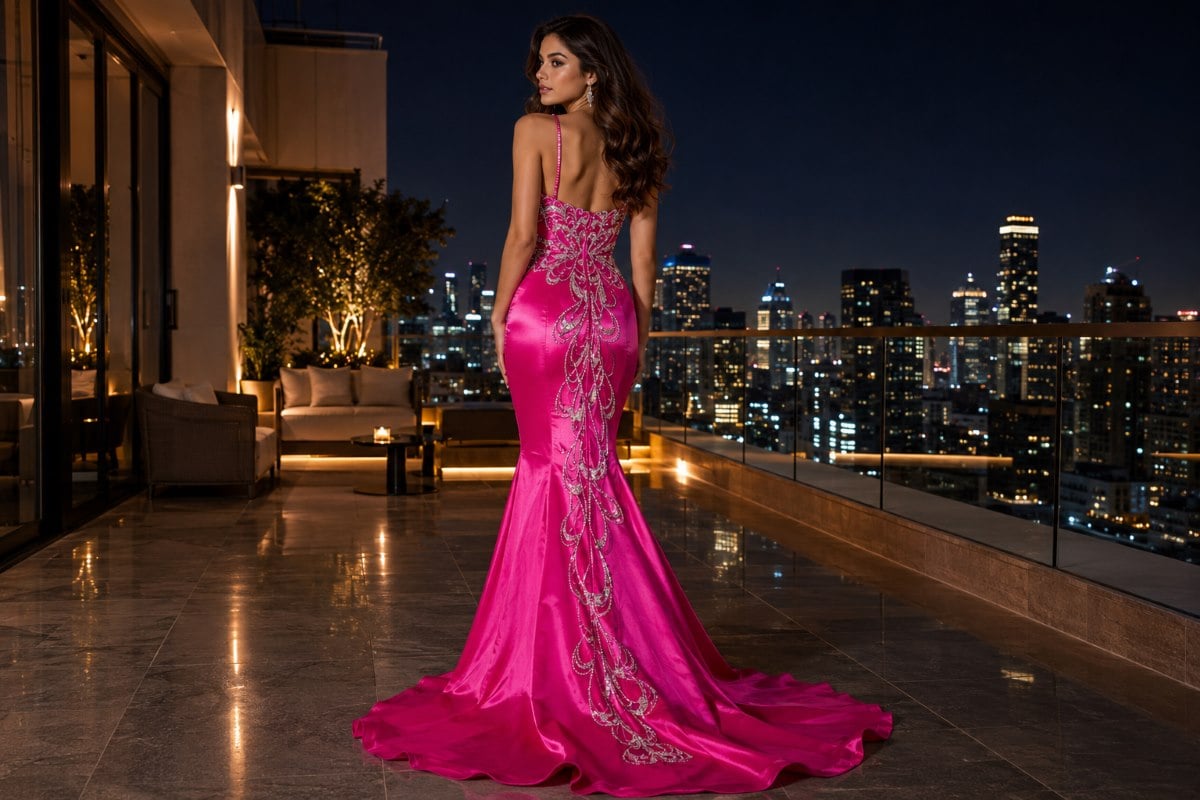
The drape of satin prom dresses holds a line and moves at the same time. Satin has weight, memory and a reflective surface. At the slit, the edges fold back cleanly and sharply. As you walk, the surface catches the light and the folds go dark, which is what gives satin its contrast on camera. It reads as polished and sharp. By contrast, a stiffer fabric like Mikado silk holds the opening in a fixed A shape even when you are standing still.
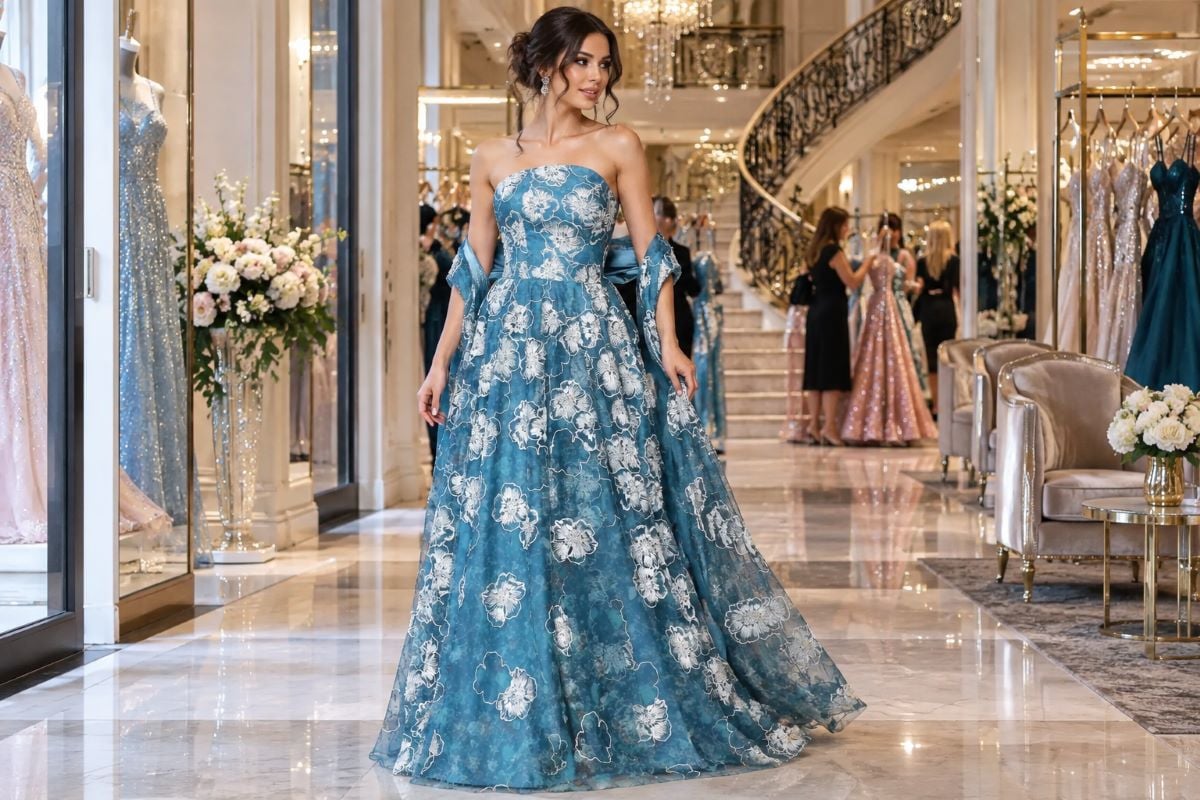
Chiffon, tulle and organza do the opposite. A high slit in a layered chiffon skirt is light and semi-sheer, so the opening catches the air in the room. This results in a billowing effect that reads as soft and romantic. If you want the skirt to move rather than hold a line, chiffon is the fabric.
Jersey and stretch crepe are the third family, and the most modern. They stretch in every direction and follow the body. Because jersey doesn’t hold a rigid shape, the fabric drapes against the leg and the slit only shows fully in motion.
Which silhouettes suit a slit
A slit works on almost any silhouette, and it changes each one differently. On an A line it modernizes a shape that can otherwise read as traditional, and it makes a full skirt lighter and far easier to move through a crowded room.
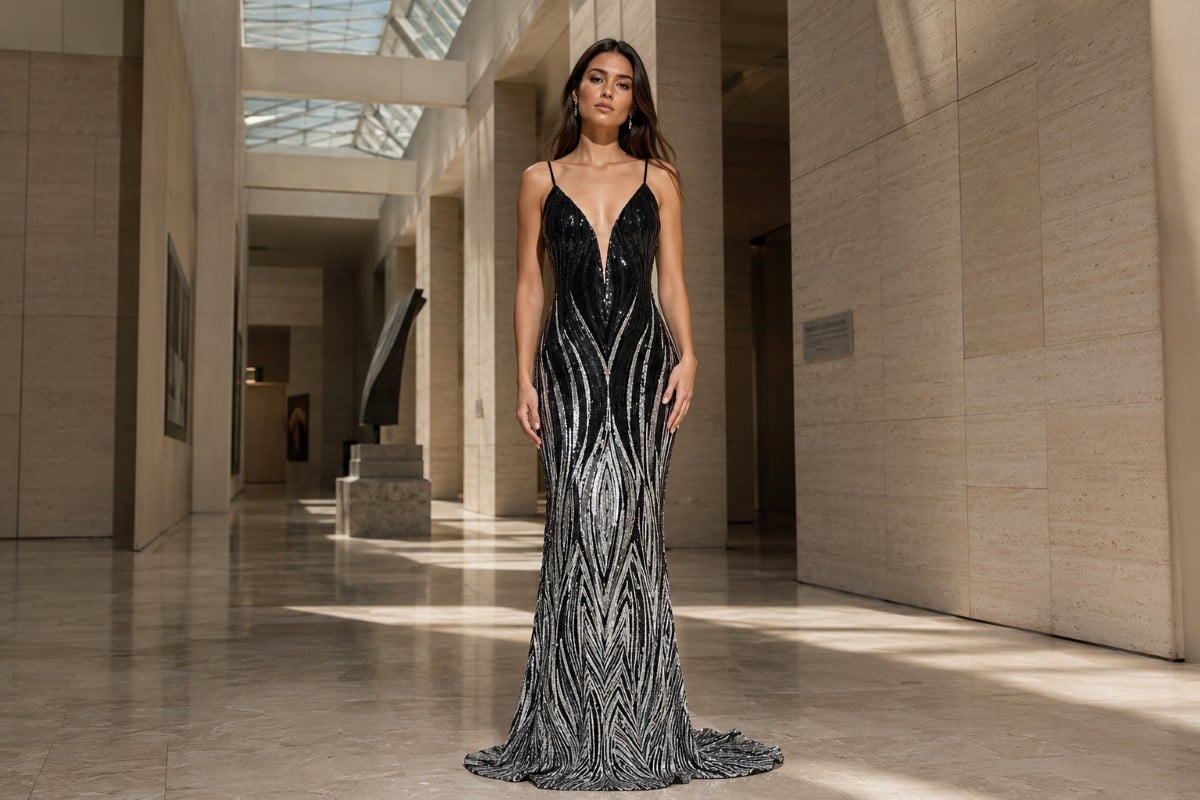
It is most dramatic when paired with closely fitted designs. It is strongest on a fitted mermaid prom dress, where the dress follows the waist and hip closely before flaring at or below the knee. Because the traditional mermaid style naturally restricts the movement of the legs, introducing an opening just above the flare point is as much practical as it is stylistic. It gives back a normal stride, so you can walk, climb stairs and dance. That practical reason is why the mermaid and the slit appear together so often.
Slits are also increasingly combined with other openings in the gown. A slit paired with a waist, back or bodice opening is the signature of prom dresses with cut-outs. The two openings read as one line down the gown. Cut-outs and a slit together need boning and a fitted lining to stay put, so check the inside of the bodice.
Color on a high slit evening dress
Color changes how bold the same slit reads, in the room and on camera.
Darker, heavily saturated jewel tones, such as emerald green, sapphire blue, or a deep, velvety burgundy, anchor the cut. They absorb light and contrast against skin, so the leg line reads clearly without taking over the gown. A black high-slit gown is the sharpest version of the look and the one that dates least.
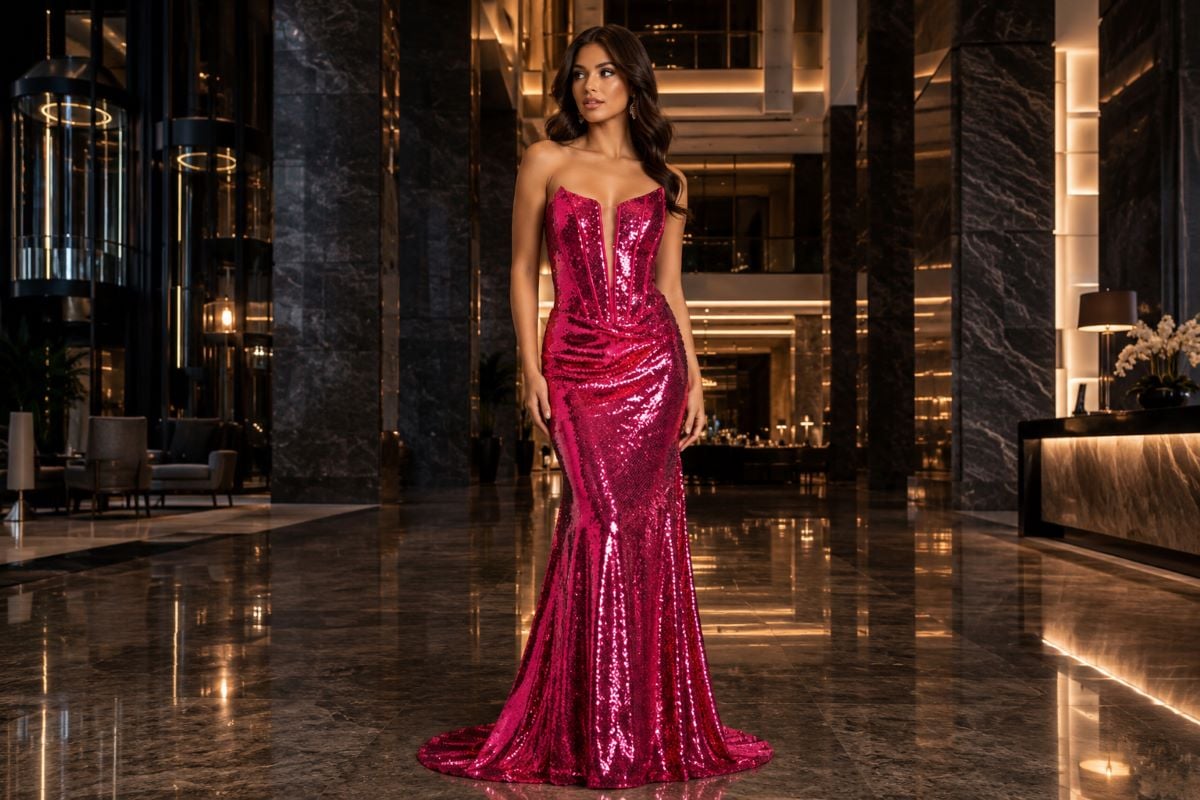
Conversely, pairing this bold style with vibrant neons or bright primary colors (like a true cherry red or a vibrant fuchsia) is the loudest version of the look. The color draws the eye on its own, and the slit doubles it.
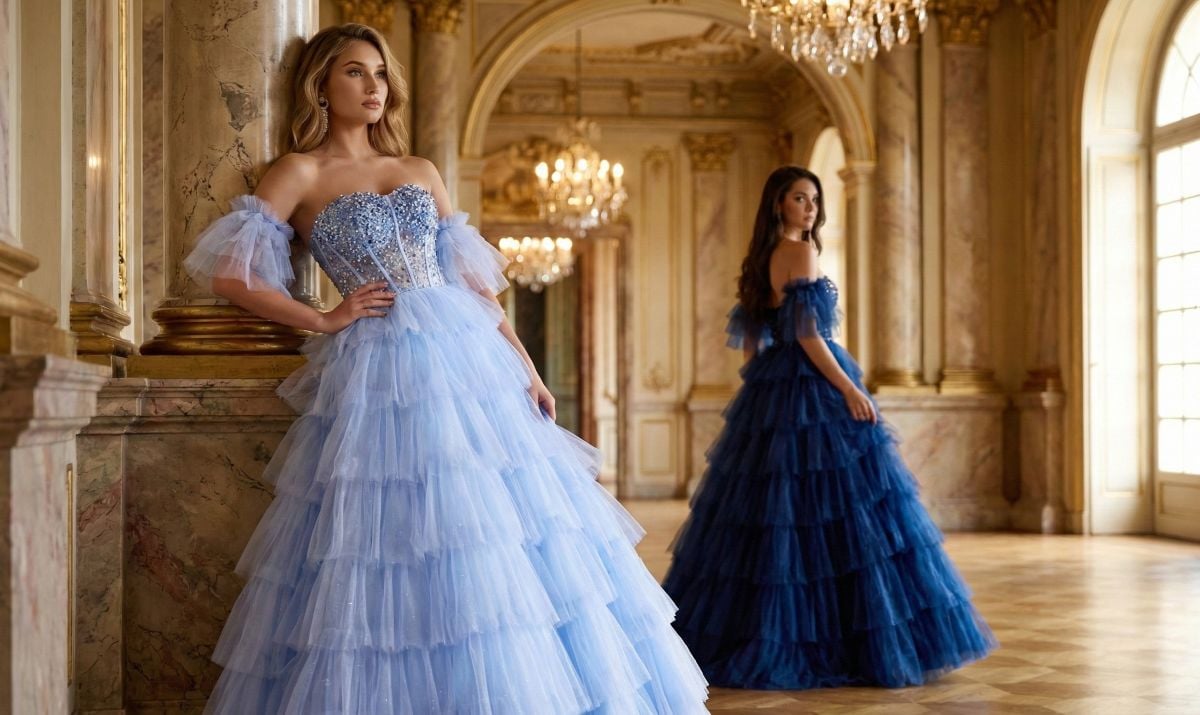
Pastels and soft metallics offer yet another approach. A blush pink, baby blue, or soft champagne gown sets the softness of the color against the sharpness of the cut. The soft color keeps the cut from reading as too much.
Wearing it on the night
The dress is half of it. Shoes and posture decide the other half.
Shoes are fully visible
With a slit, the shoes are no longer hidden under the hem. They are in every photograph, and they change the leg line and the posture.
The slit lengthens the leg line, so the shoe should continue that line rather than break it. A heel close to your own skin tone, or a clear heel, runs the line unbroken from the thigh to the toe. A strappy metallic heel that laces up the calf is the other direction, where the shoe becomes part of the design rather than disappearing into it.
Our guide to choosing shoes for a prom dress covers color and style, but with a slit the structure of the shoe matters just as much. A thick ankle-strap pump, for example, can visually cut the ankle in half and shorten the leg line, which actively works against the elongating purpose of the dress. A pointed toe lengthens the line further than a round or square one. And because a slit allows a wider stride, the shoe has to be secure enough to walk, turn and dance in.

Walking, standing and sitting
A high slit asks for a little posture awareness and not much else. Standing still for photographs, shift your weight to the back leg and let the front knee bend slightly through the opening. That is what opens the fabric naturally, and it is why the pose is so common on a red carpet.
Walking, let your normal stride part the fabric. There is no need to kick the skirt open. A well cut slit opens with a normal stride. A slit makes a crowded room easier, since the fabric stops tangling at the ankles. Shoulders back and chin level keep the look poised.
Lowering or securing the slit
A slit does not have to be worn at the height it was bought at, and adjusting it is one of the simplest alterations there is. The right height depends on your comfort, the school dress code, and your own leg length.
If a gown from the full prom collection has an opening that sits a little too high for your personal comfort or school rules, a tailor can lower it. The usual method is stitching the seam down a few inches and tapering it so the change is invisible. If you want to adjust the height during the night, keeping it lower for dinner and opening it later, a tailor can set small hook-and-eye closures along the inside of the seam.
For a light fabric that flies open in a breeze or while dancing, small dress weights can be sewn into the hem at the slit. A sheer illusion panel in a skin tone is the other option, and it keeps the look of the cut while closing the gap.
High Slit Prom Dress Questions
Can a high slit be lowered for a school dress code?
Yes, and it is one of the most common prom alterations. The tailor sews the two sides together from the original top of the slit down to the height the code allows, tapering the seam so it looks original. If you want to adjust it yourself during the night, hidden hook-and-eye closures along the seam do that.
What do you wear underneath a high slit dress?
The key is that nothing shows when you walk, sit, or step out of a car. High-cut, no-show laser-cut underwear in a shade perfectly matching your skin tone is usually the safest and most reliable choice. On a fitted jersey gown, one-leg shapewear made for slit skirts covers the closed side and leaves the slit side bare. Do a sit, stand and walk test in a full-length mirror before the night.
How do you stop the slit opening too far?
Light fabrics such as chiffon and georgette catch the wind. A tailor can sew small dress weights into the hem along the slit, which is invisible and keeps the fabric hanging. For a quick fix on the night, double-sided fashion tape at the top edge of the slit holds it against the thigh through a gust or a fast dance.
How should you pose in a high slit dress?
The goal is to show the line of the dress without looking stiff or posed. Shift your weight onto the leg on the closed side, bend the front knee slightly and bring it a little forward, and let the leg show through the opening on its own. Stand tall and keep the angle small. Kicking the leg out to the side reads as forced on camera.