
Strapless Gowns for Warm Weather and Outdoor Events

A strapless gown looks like the obvious answer to a hot outdoor event. Bare shoulders, no sleeves, nothing covering the arms, and every summer formalwear photograph seems to confirm it. The reality is more complicated, because heat and humidity affect a strapless bodice in a way they do not affect other necklines, and the mechanism that keeps a strapless dress in place is the exact thing warm weather works against. That does not mean avoiding strapless outdoors. It means choosing and preparing differently than you would for an air-conditioned ballroom. This guide covers what heat actually does to a strapless bodice, which fabrics and constructions handle it, and how to manage sun, wind, and grass in a strapless gown.
Why heat is a specific problem for strapless
A strapless bodice stays in place by gripping the ribcage through friction. Warmth undermines that in two ways at once, which is why a dress that felt secure indoors can start migrating within an hour outdoors.
The first is that fabric and elastic both relax as they warm. A band that was snug at room temperature has measurably more give at body temperature in direct sun, and the difference is enough to matter over an evening. The second is moisture. Perspiration between the band and the skin reduces friction, which is the entire mechanism holding the dress up. Combined, these are why the same gown behaves differently at an August garden party than at a December gala.
None of this makes strapless unwearable outdoors. It means the fit needs to start tighter than you would accept indoors, and the construction needs to be good enough that the boning is doing real work rather than the elastic alone. The range of strapless dresses shows the construction level that holds up when conditions are working against it.
Fabrics that work in heat
The fabric choice for an outdoor strapless gown involves a trade that indoor dresses do not face: the fabrics that hold a strapless bodice best are often the ones that breathe worst.

What performs well
Chiffon and georgette over a structured inner bodice give you the best of both, since the outer layer is light and moves in air while the internal corselette does the supporting. Lightweight crepe holds structure without excessive weight. Organza is airy and holds shape. Cotton sateen and cotton blends breathe genuinely well and are underused in formalwear for warm climates. The principle is a light outer fabric with the structure concentrated in a separate inner layer rather than in the outer fabric itself.
What causes problems
Heavy satin and duchesse are the most common mistake, since they look right for a formal outdoor wedding and trap heat completely against the torso. Velvet and brocade are simply wrong for the setting. Fully beaded bodices are heavy, which pulls downward exactly when the band is loosening, and metal beading gets genuinely hot in direct sun. Polyester linings do not breathe, and since a strapless bodice is a double or triple layer of fabric around the ribcage already, the lining choice matters more here than in a dress with an open back. For how these materials perform generally rather than just in heat, the overview of popular evening dress fabrics is a useful comparison.
Construction that holds up outdoors
What you are looking for in a warm-weather strapless gown is different from what you would look for in an evening one, and it comes down to where the support lives.
A dress with an internal corselette, meaning a separate structured band inside that does the gripping, is the most reliable outdoor option. It works independently of the outer fabric, so the outer layer can be as light as you like. This is the construction behind most well-made formal strapless gowns and it is worth looking for specifically.
Spiral steel boning matters more outdoors than indoors, because plastic boning softens in heat as well as bending under pressure. A grip strip along the inside of the band, usually a strip of silicone, adds friction that partly offsets what perspiration takes away.
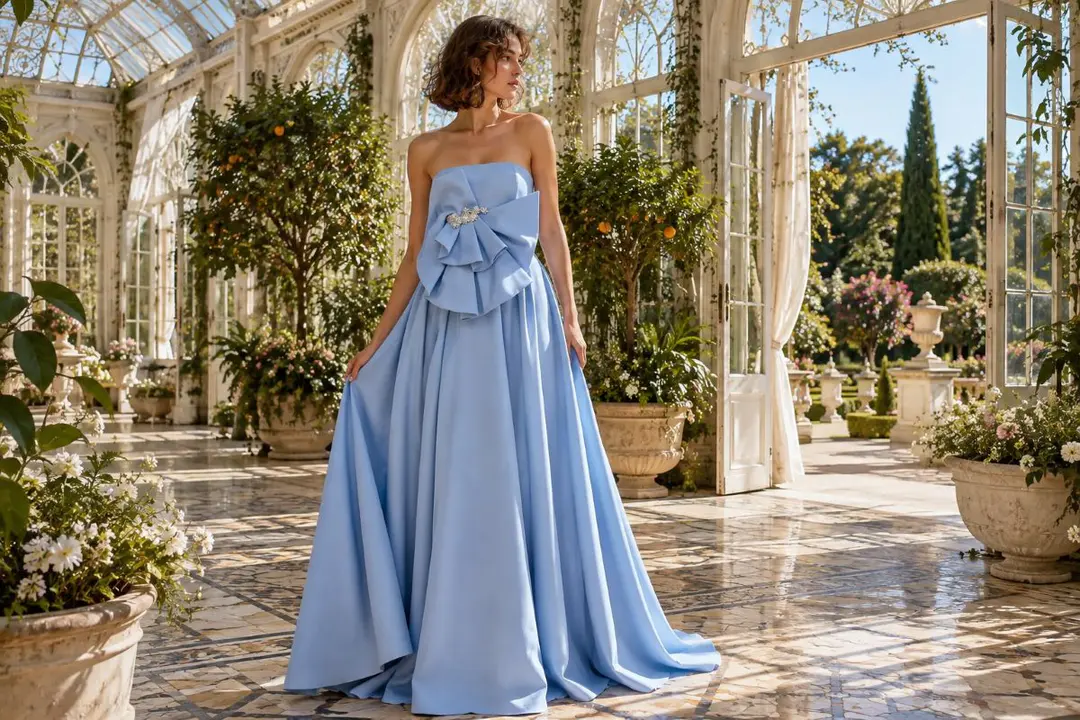
Skirt weight is the factor people miss. A heavy skirt pulls continuously downward on the bodice, and that constant load is what a warming band eventually loses to. A lighter skirt in chiffon or organza asks far less of the bodice than a full satin ball gown does. The styles among strapless evening dresses show how construction varies across the category.
Fitting for outdoor conditions
The fitting-room standard for an outdoor strapless gown should be tighter than for an indoor one, and this is the single most useful adjustment to make.
Indoors, the guideline is that two fingers should slide between the top edge and your chest with noticeable resistance. Outdoors in heat, aim for the firmer end of that range, since the band will relax as it warms and you are calibrating for how the dress will feel in three hours rather than how it feels in the fitting room.
Try it at the warmest part of the day if you can, or at least after walking rather than straight from a cool car. A strapless bodice fitted in an air-conditioned shop and worn in August heat is being judged in the wrong conditions.
The movement test matters more too. Raise your arms fully, sit, and stand, and remember that an outdoor event usually involves more standing and moving than a seated indoor dinner. The guidance on sitting in a formal gown applies to garden furniture as much as to a banquet chair.
Sun on bare shoulders
This is the practical consideration that gets overlooked entirely, and it is specific to strapless in a way it is not to other necklines.
A strapless gown leaves the shoulders, upper chest, and upper back fully exposed, and an outdoor event in daylight can mean two or three hours of direct sun on skin that rarely sees it. Sunscreen is the obvious answer and there is a complication: many sunscreens transfer onto fabric, and a white or pale gown will pick up a greasy mark along the top edge of the bodice where it meets the skin.
The workaround is to apply well before dressing, let it absorb fully, and choose a formulation that dries down rather than staying tacky. Applying after the dress is on is how the top edge gets marked.
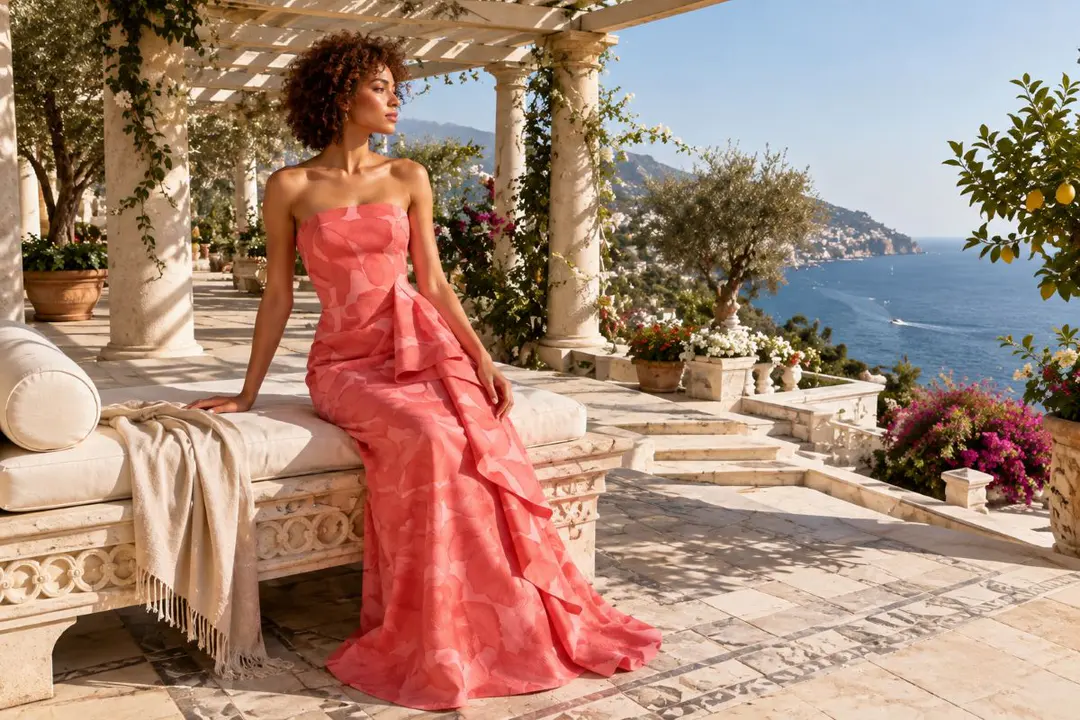
A wrap, a stole, or a light bolero solves both sun and the coverage question for a ceremony, and it earns its place outdoors far more than at an indoor event. It also lets you take the sun off your shoulders for part of the day without changing outfits. The styles among formal dresses show alternatives if a full day of exposed shoulders is not what you want.
Wind, grass, and the outdoor variables
Beyond heat, an outdoor venue introduces conditions that interact with a strapless gown specifically.
Wind and an unanchored bodice
Wind is the first. A strapless dress has nothing anchoring it at the shoulders, so a gust pushes against the bodice rather than being absorbed by straps. This is manageable in a well-fitted dress and awkward in a loose one, which is another argument for the firmer fit. A lighter skirt also catches wind more, so there is a balance between a light skirt that is easier on the bodice and a light skirt that lifts.
Ground, hems, and the evening chill
Ground is the second. Grass, gravel, and uneven paving are hard on a floor-length hem and hard on thin heels. A block heel or wedge stays stable, and a slightly shorter hem avoids the damp that grass picks up after late afternoon.
Temperature drop is the third and the one people plan for least. An outdoor event that starts in daylight often ends after dark, and bare shoulders that were welcome at four are cold at nine. A wrap covers this without changing the look. The advice on walking in a long gown covers the hem side of the problem.
Skirt volume interacts with all of this. The ball gown styles among ball gowns show how much fabric a full skirt carries, which is a great deal for a warming bodice to hold against.
Where a strapless gown works outdoors and where it does not
A strapless gown suits an outdoor evening reception, a garden party that runs into dusk, a marquee wedding, and a terrace event, all of which involve moderate temperatures and a mix of shade and open air.
It is a harder choice for a full-day outdoor event in peak heat, a beach ceremony with significant wind, or any event where you will be standing in direct sun for hours without shade. Not impossible, but it asks more of you and of the dress.
The alternatives worth considering are not compromises. A dress with delicate straps gives almost the same open neckline with an anchor at the shoulders, and it removes the heat and wind variables entirely. A halter has the same effect. If the appeal of strapless is the bare shoulder line rather than the absence of straps specifically, those options deliver most of it with far less management. A shorter length changes the arithmetic considerably, since less fabric means less heat trapped and far less weight hanging off the band. The strapless cocktail dresses collection shows that version.

Choosing well for a warm-weather event
Look for an internal corselette rather than support built into the outer fabric, since that lets you have a light outer layer without losing structure. Choose steel boning over plastic, which matters more in heat. Keep the skirt light, because skirt weight is what a warming band eventually loses to. Fit firmer than you would indoors, and test the dress warm rather than straight from air conditioning.
Then plan the practical layer: sunscreen applied and absorbed before dressing, a wrap for sun and for after dark, and shoes that handle grass. Get those right and a strapless gown works outdoors as well as it does anywhere. Get them wrong and you will spend the event managing a dress instead of enjoying it. To find a strapless gown built for warm weather rather than only for a ballroom, explore the current styles through an authorized Jovani retailer.
Strapless in the Heat
Is a strapless dress a good choice for a hot outdoor event?
It can be, but it needs choosing differently than an indoor strapless dress. Heat works directly against the mechanism that holds a strapless bodice up, since fabric and elastic relax as they warm and perspiration reduces the friction the band relies on. The answer is a firmer fit than you would accept indoors, an internal corselette doing the supporting, steel boning rather than plastic, and a lighter skirt.
Which fabrics work best for a strapless gown in warm weather?
A light outer fabric over a structured inner bodice is the ideal combination. Chiffon, georgette, and organza move in air while the internal corselette does the supporting. Lightweight crepe holds structure without weight, and cotton blends breathe well. Avoid heavy satin and duchesse, which trap heat against the torso, along with velvet, brocade, fully beaded bodices, and polyester linings.
How should the fit differ for an outdoor strapless dress?
Firmer than indoors. The usual guideline is two fingers sliding between the bodice edge and your chest with resistance; outdoors aim for the tighter end of that, since the band will relax as it warms and you are fitting for how the dress feels in three hours rather than in the shop. Try it warm rather than straight from air conditioning, since a fitting room gives a misleading impression.
What about sunscreen with a strapless dress?
Apply it well before dressing and let it absorb fully, because many sunscreens transfer onto fabric and a pale gown will pick up a greasy mark along the top edge of the bodice where it meets skin. Applying after the dress is on is exactly how that happens. Choose a formulation that dries down rather than staying tacky, and remember that a strapless neckline exposes shoulders, upper chest, and upper back for the entire event.
Does wind affect a strapless dress more than other styles?
Yes, because there is nothing anchoring the dress at the shoulders, so a gust pushes against the bodice rather than being absorbed by straps. This is manageable in a well-fitted dress and awkward in a loose one. There is also a balance to strike with the skirt, since a lighter skirt asks less of the bodice but catches more wind, while a heavier one is steadier in wind but pulls downward continuously.
What are the alternatives if strapless feels too risky outdoors?
Delicate straps or a halter neckline give almost the same open shoulder line while anchoring the dress, which removes the heat, wind, and slipping variables entirely. If what appeals about strapless is the bare shoulder line rather than the absence of straps specifically, those options deliver most of the effect with far less management. A shorter strapless dress is also considerably easier in heat than a full gown.