
An invitation arrives for a wedding, a gala, or an important formal event, and the timing is the kind life sometimes hands you: you are pregnant. The dress you imagined wearing six months ago no longer fits the same way, the rules you thought you knew about evening wear suddenly need adjusting, and the advice online tends to be either dismissive or overly cautious. Maternity evening dresses are their own category for a reason, and dressing well during pregnancy is entirely possible, often beautifully so, with a little understanding of which silhouettes work, which fabrics flatter, and which choices keep you comfortable through a long event. This guide covers all of it honestly: what changes during pregnancy, what to look for in a formal gown, and how to feel just as elegant as you would have in any other season of life.
Why Maternity Formal Dressing Deserves Its Own Approach
A pregnant body changes in ways that affect every part of a dress, and pretending otherwise sets you up for an uncomfortable evening. The waistline shifts, then disappears entirely. The bust grows and changes shape, sometimes dramatically. The lower back carries more weight and prefers gentler support. The body retains more heat. The ankles and feet swell, especially toward the end of the day. None of this is a problem to be solved, it is simply a different starting point for choosing a dress.
The honest truth most pregnancy style guides skip: a normal-sized dress in a larger size rarely works as a maternity solution. Sizing up gives you more fabric, but it does not solve the geometry. A standard dress is built with the waist where most women’s waists sit, and a pregnant belly does not respect that line. Maternity evening dresses, whether designed specifically as maternity wear or chosen from regular collections with maternity-friendly silhouettes, accommodate the actual shape of a pregnant body rather than treating it as a slightly larger version of a non-pregnant one.
The good news is that the formal wear world has more pregnancy-friendly options than most expectant mothers realize. The broad range of formal gowns includes silhouettes that work beautifully through every trimester, and the principles below help you find the right ones quickly without endless trial and error.
The Silhouettes That Genuinely Work Through Pregnancy
Three silhouettes consistently flatter a pregnant body and stay comfortable through a long event. Understanding why each one works helps you choose with confidence.
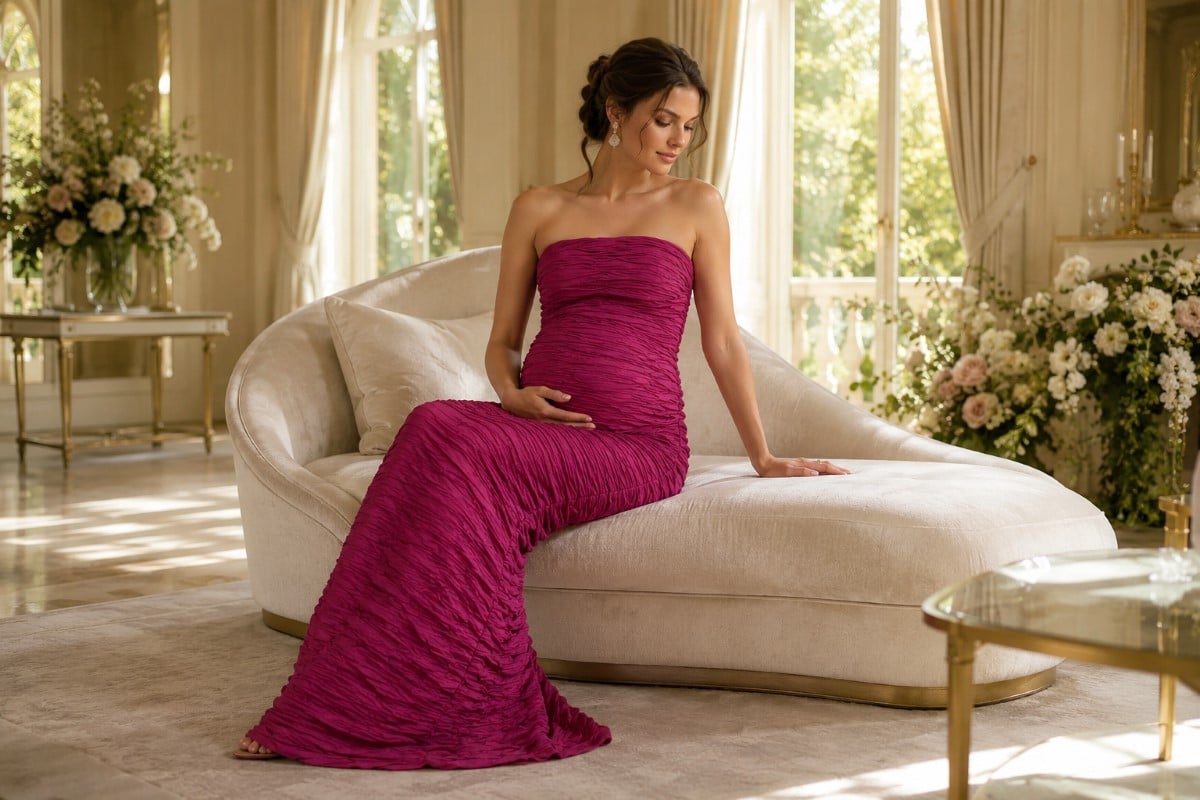
The Empire Waist: The Classic Maternity Choice
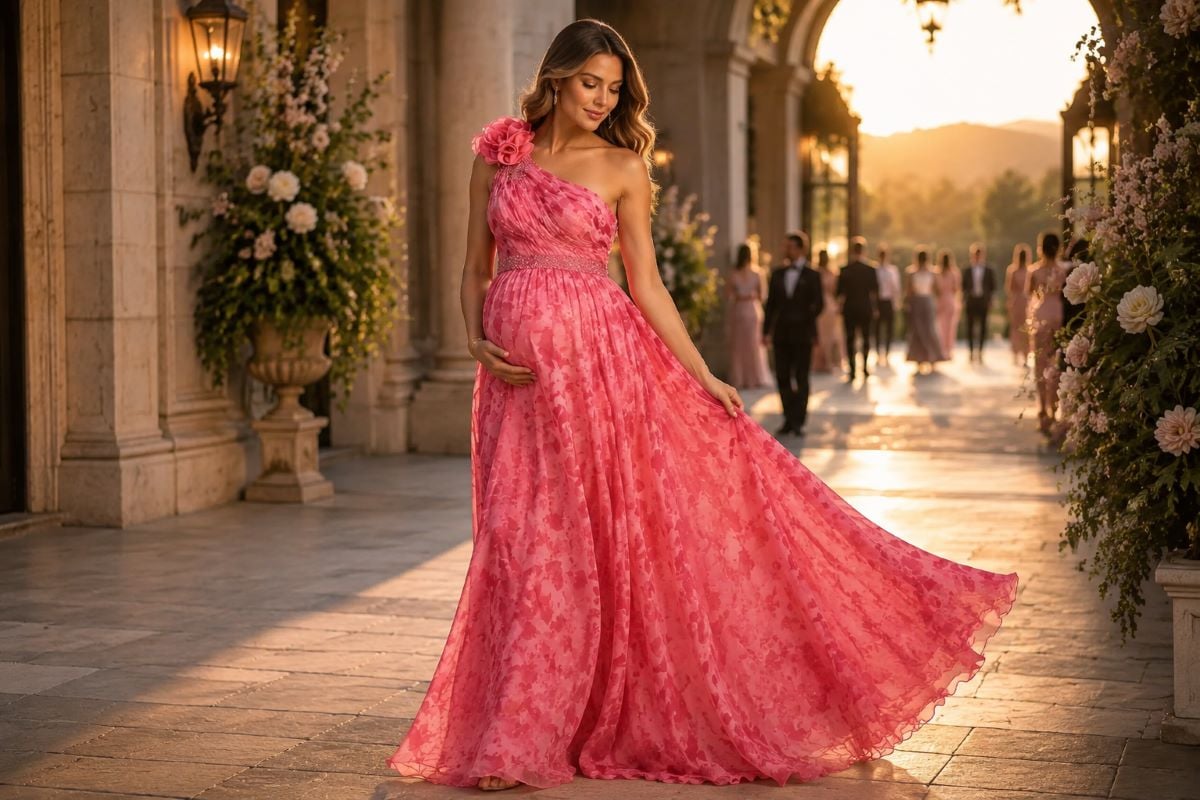
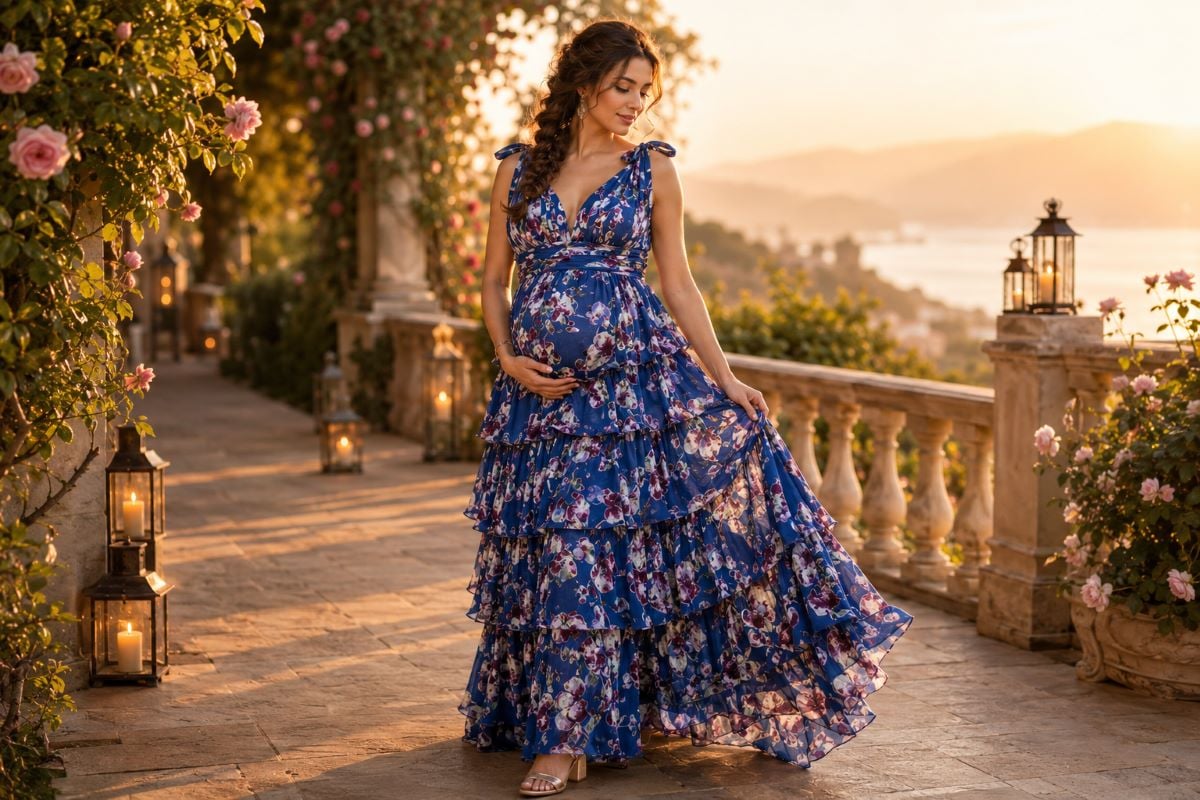
An empire waist sits just under the bust, with the skirt flowing freely from that high waistline down to the hem. This single design feature solves the central challenge of dressing a pregnant body: it gives the bump room to grow without strain, drapes flatteringly over the belly rather than fighting it, and creates a clean, elongated line from the bust down. The empire waist has been the maternity-formal answer for centuries, and it still works for the same reasons it always has.
For most pregnant women, especially in the second and third trimesters, an empire waist will be the most comfortable and most flattering choice for a formal event. The bust is supported, the belly is free, and the silhouette photographs as elegant rather than visibly straining.
The A-Line: Comfortable and Flattering
An A-line gown is fitted through the bodice and gradually flares from the waist to the hem. This shape works for early to mid pregnancy especially well, since the bodice can fit naturally and the flare gives the growing belly room. The styles among A-line evening gowns include many silhouettes with enough bodice flexibility to accommodate a first or second trimester body while still reading as a regular formal gown rather than a maternity one. As pregnancy progresses, the empire waist usually becomes more comfortable than the A-line, but for many women through about twenty-five weeks, a well-chosen A-line continues to work beautifully.
Flowing Column Styles With Stretch
A flowing column or sheath dress in a stretchy, draping fabric is the third reliable category. The key word is stretch: a fitted column in a rigid fabric is the wrong choice for a pregnant body, but a soft jersey, a stretchy crepe, or a draped chiffon column in a forgiving cut can be stunning. The look is sleek and modern, very different from the romantic empire, and suits women who want a more contemporary maternity gown.
The trick is choosing a column that drapes over the belly rather than clinging to it. Look for ruching at the side seam, a draped front, or a wrap-style construction that accommodates the changing shape gracefully. This category also tends to work best in solid colors that read as sophisticated and modern.
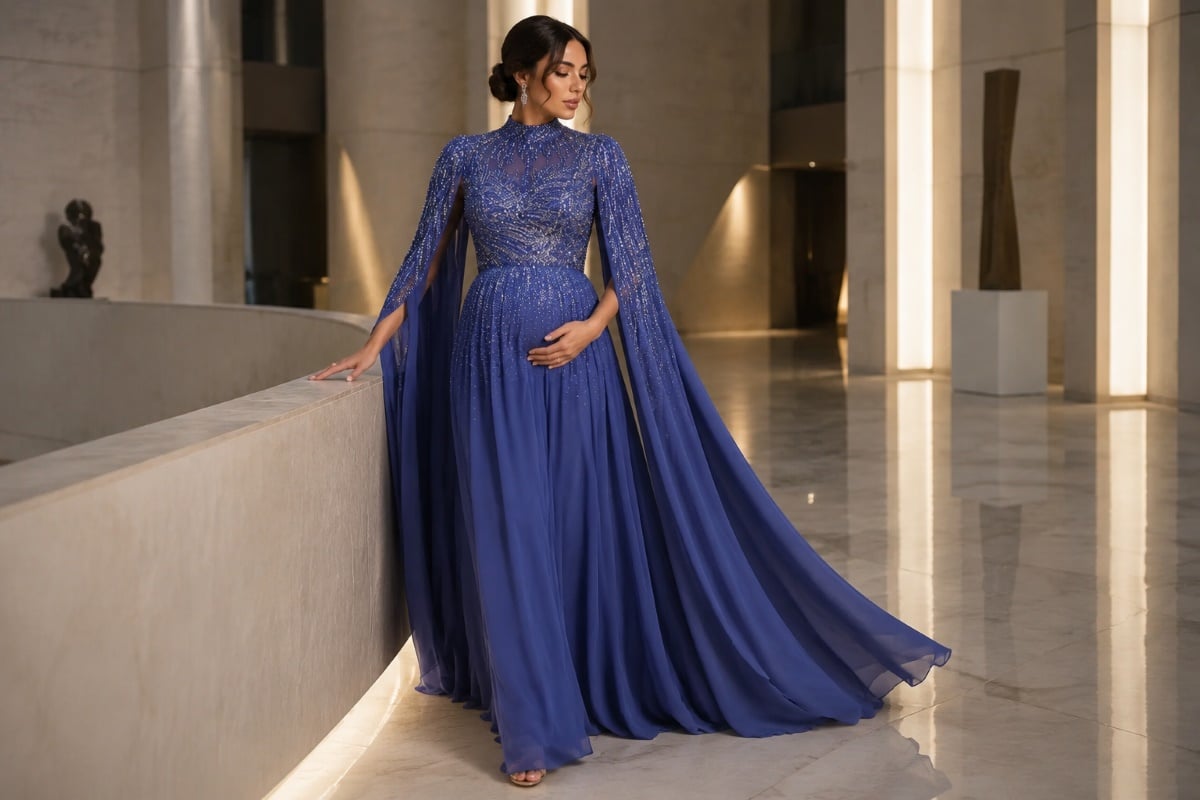
Silhouettes to Approach Carefully
Being honest about what does not work saves time and disappointment. A few silhouettes are difficult through pregnancy regardless of how lovely they look on a non-pregnant body.
A heavily structured mermaid silhouette is the hardest. The form-fitting hip and thigh of a mermaid have no give for a pregnant body, and even early in pregnancy the cut can feel restrictive. The dropped waist that defines the mermaid sits exactly where a pregnant belly needs room.
A traditional structured ball gown with a fitted natural-waist bodice is also challenging. The dramatic skirt is generous and forgiving, but the fitted natural-waist bodice presses against a growing belly. If you love the ball gown look, an empire-waist ball gown gives you the dramatic skirt with a maternity-friendly bodice, the best of both worlds.
Heavily corseted or structured bodices in any silhouette can feel uncomfortable through a long evening, even when they technically fit. Pregnancy comes with increased heat, mild swelling, and a need to breathe deeply, and a tight bodice fights all three. A more relaxed, draped, or stretchy bodice serves better through a multi-hour event.
Fabric Choices That Make the Difference
Fabric matters more in maternity formal dressing than almost any other styling decision, because the wrong fabric can be hot, restrictive, or unflattering on a pregnant body even in the right silhouette.
The most flattering fabrics for maternity evening dresses are soft, draping, and breathable. Chiffon is the standout choice, with its light weight, gentle drape, and ability to skim over the body rather than cling. The selection of chiffon prom dresses shows how beautifully this fabric moves and photographs, and the same chiffon construction transfers directly to evening wear where pregnancy comfort is a priority.
Soft jersey, stretch crepe, and lightweight knit fabrics all work well too, since they accommodate the changing body without requiring perfect fit. Look for fabrics with at least a little stretch, which is far more forgiving than a completely rigid construction.
Fabrics to approach carefully include heavy satin (warm and unforgiving), structured Mikado (rigid through a growing body), and any fully boned or corseted construction (uncomfortable for hours). These can work in early pregnancy in the right silhouette, but become harder as pregnancy progresses.
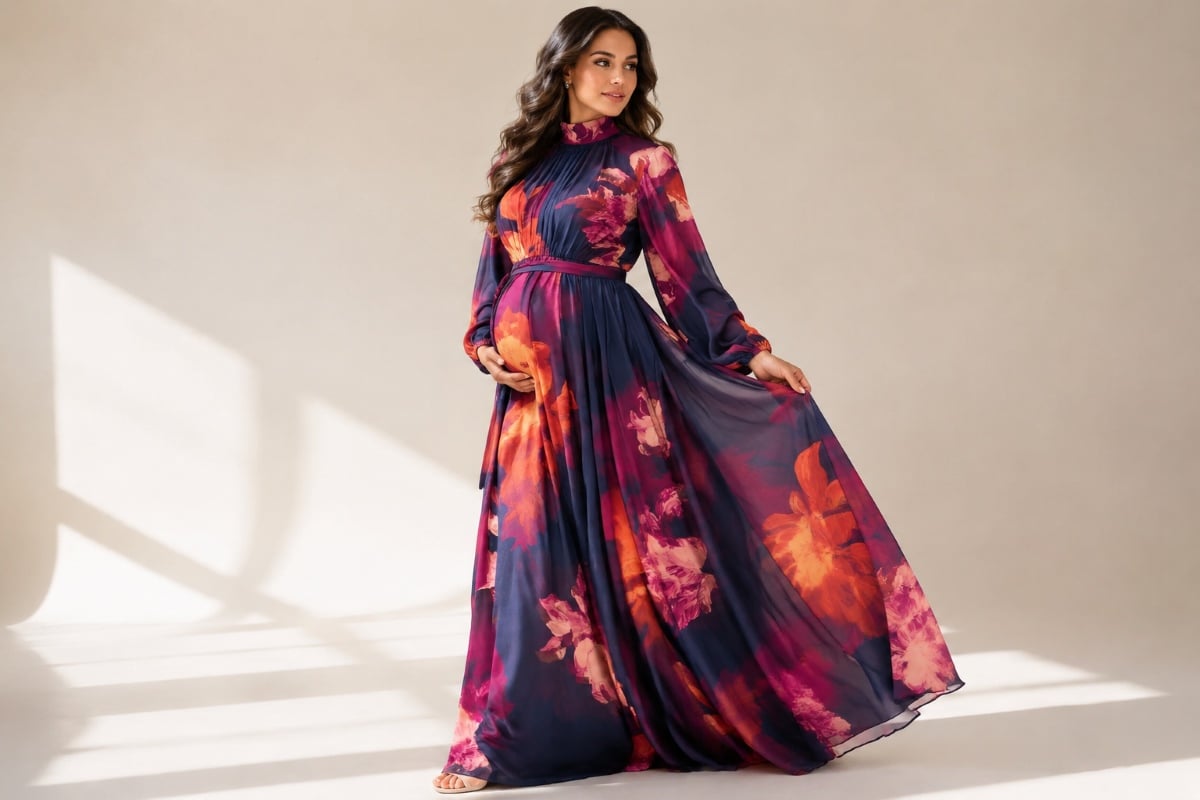
Coverage Considerations: Sleeves, Necklines, and Comfort
The neckline and sleeves of a maternity gown are where personal preference and physical comfort meet. Both matter, and most pregnant women find their preferences change through the course of pregnancy.
Many expectant mothers find that a fuller bust during pregnancy makes them more comfortable with sleeves or a higher neckline than they might normally choose. A short sleeve, three-quarter sleeve, or full long sleeve all provide elegant coverage and can feel reassuring during a stage when the body is changing rapidly. The styles among long sleeve evening dresses include many maternity-friendly cuts where the sleeves flow comfortably over arms that may feel different than usual.
That said, sleeveless gowns also work beautifully during pregnancy, especially in warmer weather or warm venues. Pregnancy raises body temperature, and a sleeveless empire-waist chiffon gown is genuinely one of the most comfortable options for a summer event. The selection of sleeveless formal dresses includes empire and A-line cuts that work as maternity options without any modification.
Necklines that draw the eye upward, V-necks, sweetheart shapes that flatter a fuller bust, off-the-shoulder cuts, all balance an empire silhouette beautifully and direct attention to the face. A high crew neck can feel constricting against a fuller bust during pregnancy, so consider this carefully if it is normally your preference.
Trimester-by-Trimester Practical Guidance
The shape of a pregnant body changes substantially across the three trimesters, and the right dress varies accordingly.
First Trimester (Weeks 1 to 13)
Most women show very little or not at all in the first trimester, but the body is already changing in subtle ways: bust growth, bloating, increased sensitivity. A regular formal gown in a slightly more forgiving cut often still works, but lean toward A-line silhouettes, soft fabrics, and slightly looser fits than you might usually choose. If you are not yet announcing the pregnancy, a structured A-line in a beautiful fabric photographs identically to a non-maternity event dress.
Second Trimester (Weeks 14 to 27)
This is when the bump becomes visible and continues growing, and when a true maternity-specific silhouette starts to matter. An empire waist or stretchy column becomes far more comfortable than any natural-waist cut. This trimester is also when most women feel their best during pregnancy: the early-pregnancy fatigue has eased, the late-pregnancy heaviness has not yet arrived, and a beautiful formal event is genuinely enjoyable.
Third Trimester (Weeks 28 to 40)
The final trimester brings the largest belly, the most fluid retention, and the most heat. An empire waist in a flowing fabric is almost universally the most comfortable choice. Pay particular attention to footwear (a comfortable, low-heeled option is essential), to the climate of the venue (overheating is more common during late pregnancy), and to seating (you may need to sit more often). A dress that is easy to sit and stand in matters enormously at this stage.
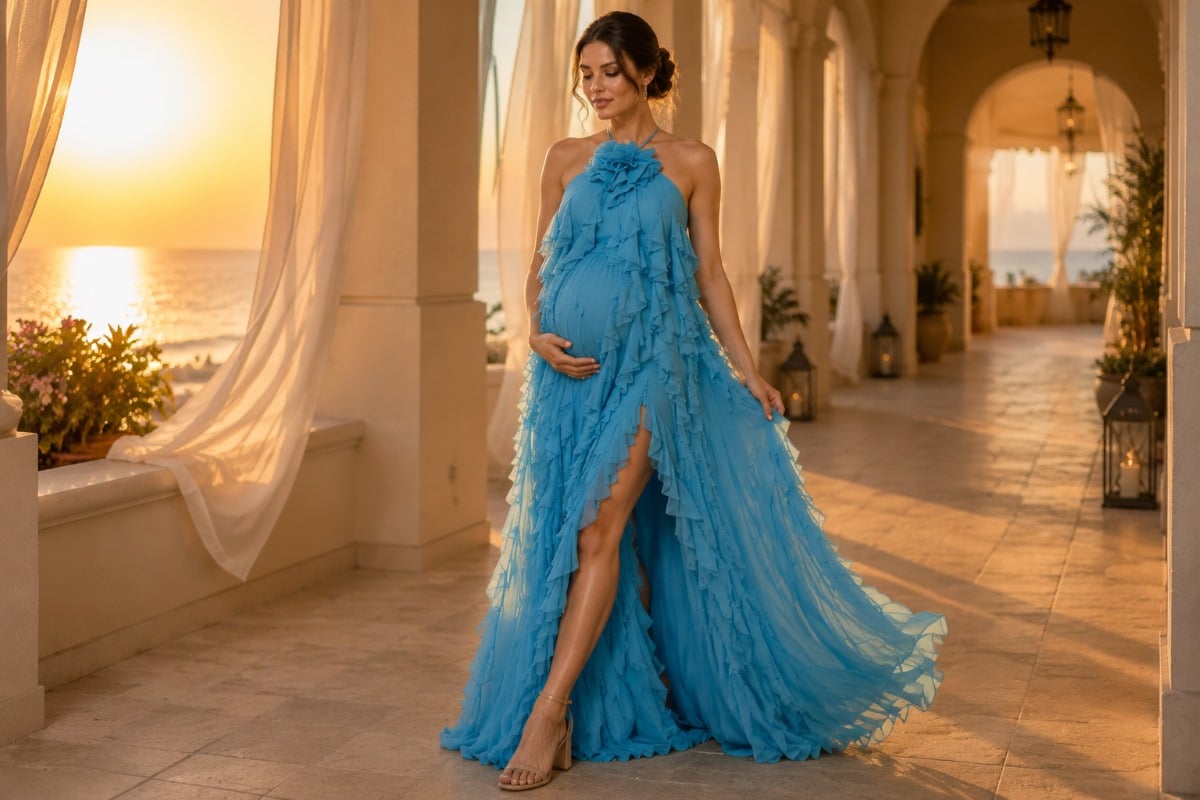
Shoes, Accessories, and the Full Look
The dress is the centerpiece, but a few other decisions complete the maternity formal look and make a real difference in how the evening feels.
Shoes deserve real thought. Late pregnancy ankle and foot swelling is the most common day-of surprise for expectant mothers at formal events, and a beautiful pair of stilettos that fit two weeks ago may not fit on the evening of the gala. Choose a comfortable, low-heeled or block-heeled option, or a refined flat. Block heels in particular keep you steady and prevent the stilettos-and-sore-feet exhaustion that compounds late-pregnancy tiredness.
Jewelry can take on a slightly larger role during pregnancy, since a beautiful necklace or pair of statement earrings draws the eye to the face and complements the cleaner silhouette of a maternity gown. Avoid anything that catches on flowing fabric or that requires constant adjustment.
A small clutch or refined handbag is more practical than a larger bag during pregnancy, when one hand may often be near the belly. Plan to bring water, comfortable backup shoes if possible, and any small comforts you may need. The broader principles in this guide on how to accessorize an evening dress apply, with extra attention to comfort and to keeping the silhouette uncluttered.
Comfort Across a Long Event
An evening event is rarely a quick affair: ceremony or arrival, cocktail hour, dinner, speeches, dancing, an after-party. For a pregnant woman, this length matters more than usual. A few practical tips help enormously.
- Plan to sit when you need to. Pregnant women, especially in the later trimesters, benefit from sitting more often than they might at a non-pregnancy event. Choose a dress you can sit comfortably in, and do not feel obligated to stand the entire cocktail hour.
- Stay hydrated. Pregnancy increases water needs, and formal events often involve standing in warm rooms. A small glass of water nearby throughout the night prevents the kind of late-evening fatigue that compounds when you are dehydrated.
- Wear undergarments that work. A supportive maternity bra, comfortable maternity underwear, and seamless construction underneath the gown make hours of wearing it far more comfortable. The guidance on smooth, supportive layers in common evening dress fit issues applies, with extra attention to pregnancy-specific support needs.
- Have backup options. If you can, have a second pair of comfortable shoes available (in your car or with a partner), so you can switch later in the evening when feet feel swollen.
- Eat well before and during the event. Pregnant women often need to eat more frequently than the formal event timing allows. A small snack before arrival, and not skipping any course at dinner, keeps energy stable.
These small choices add up to an evening you genuinely enjoy rather than endure, which is the entire point of dressing well for a special event.
Confidence Through Every Trimester
One of the most honest things to say about dressing a pregnant body for a formal event is that confidence comes from feeling comfortable, not from forcing a non-pregnant silhouette onto a pregnant body. The most flattering thing a pregnant woman can wear is a dress that fits her actual current shape, lets her move freely, and makes her feel beautiful in this stage of her life rather than as a smaller version of someone she used to be.
Pregnancy is a season of change, and the same beautiful expectant mother will photograph differently at week ten than at week thirty. Both are lovely. The dress that works at one stage may not be the dress that works at another, and there is no rule that says you need to commit to a single maternity formal style across the whole pregnancy. Many women own one second-trimester gown and choose a different one for a late-pregnancy event a few months later. The broader principles in evening dresses styling rules apply across every stage, with extra attention paid to comfort and movement during pregnancy.
Most importantly, dress for the body you have on the day of the event, not the body you had three months ago or the body you imagine you will have after. A dress fitted at the right moment, in the right silhouette, and worn with confidence is what makes a formal event feel special, no matter what trimester you are in.
Frequently Asked Questions About Maternity Evening Dresses
What is the best dress silhouette for pregnancy?
The empire waist is the most universally flattering and comfortable choice through pregnancy, especially in the second and third trimesters. The high waistline sits just under the bust, giving the belly room to grow while creating an elongated, elegant line. A-line silhouettes work well in early to mid pregnancy, and stretchy column styles suit women who want a more modern look.
Can I wear a regular evening dress while pregnant?
Sometimes, especially in early pregnancy when the body has changed less. A regular A-line or empire-waist gown in a forgiving fabric can work into the second trimester. By the third trimester, a true maternity-friendly silhouette becomes far more comfortable. Sizing up a non-maternity dress rarely solves the issue, since the cut needs to accommodate the belly, not just more fabric overall.
What fabrics work best for maternity formal wear?
Soft, draping, breathable fabrics work best: chiffon, soft jersey, stretch crepe, and lightweight knits. These move with the body and skim over the belly rather than clinging or restricting. Avoid heavy satin, rigid Mikado, and fully boned or corseted construction, which become uncomfortable through a long event during pregnancy.
Should I wear sleeves during pregnancy?
It depends on your preference and the climate. Some women find sleeves more comfortable during pregnancy, since the fuller bust and changing body can feel more reassuring with coverage. Others prefer sleeveless because pregnancy raises body temperature. A sleeveless empire-waist chiffon gown is one of the most comfortable summer maternity options.
What shoes should I wear to a formal event while pregnant?
A comfortable, low-heeled or block-heeled option is the safest choice, since pregnancy increases ankle and foot swelling and a beautiful pair of stilettos may not fit on the evening of the event. A refined flat works too. Bring a backup pair if you can, since feet often swell more as the evening progresses.
How do I look elegant rather than just covered while pregnant?
Choose a silhouette with intentional structure (empire waist with a beautiful bodice, A-line with a refined neckline, draped column with elegant detail). A dress that simply hangs off the body looks shapeless, while one with thoughtful cut and quality fabric reads as deliberately elegant. The dress should be designed for a pregnant body, not a tent designed to hide one.
Dressing Beautifully Through a Beautiful Season
Choosing among maternity evening dresses comes down to a few clear principles: prioritize an empire waist or another pregnancy-friendly silhouette, choose soft draping fabrics over rigid ones, balance the bust and belly with a flattering neckline, plan for comfort across a long event, and trust that the body you have on the day of the event deserves to be dressed beautifully exactly as it is. Pregnancy is one of the most photographed seasons of a woman’s life, and a thoughtfully chosen formal gown for a special event during that season becomes a treasured memory. Jovani has spent more than forty years designing evening collections with the empire silhouettes, draping fabrics, and quality construction that work beautifully through every stage of life, including the one where a new family is on its way.