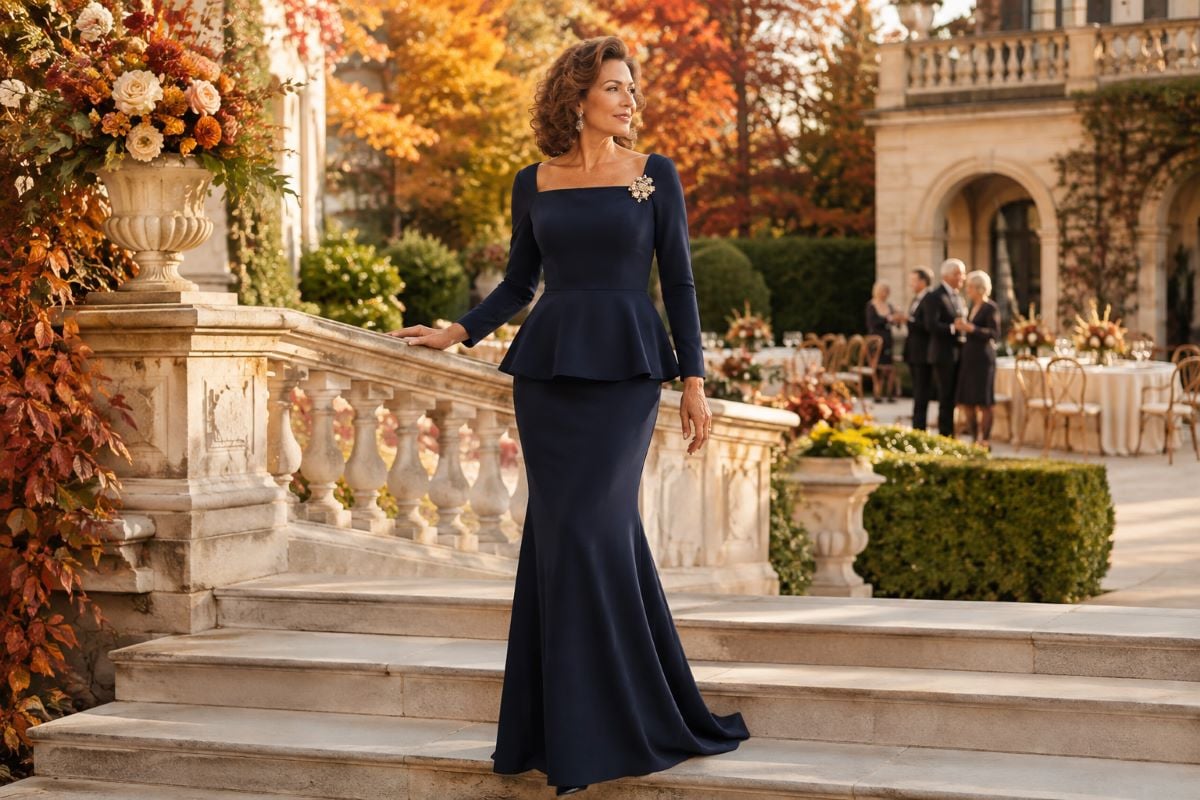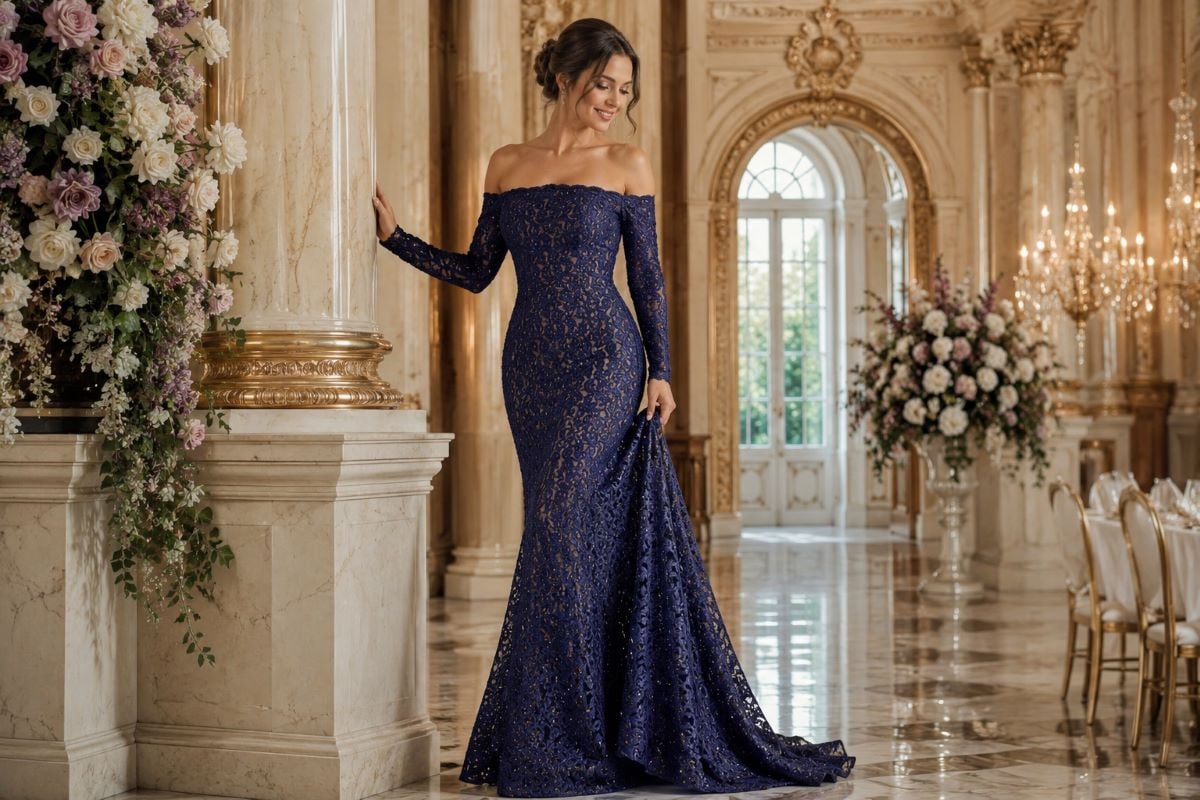

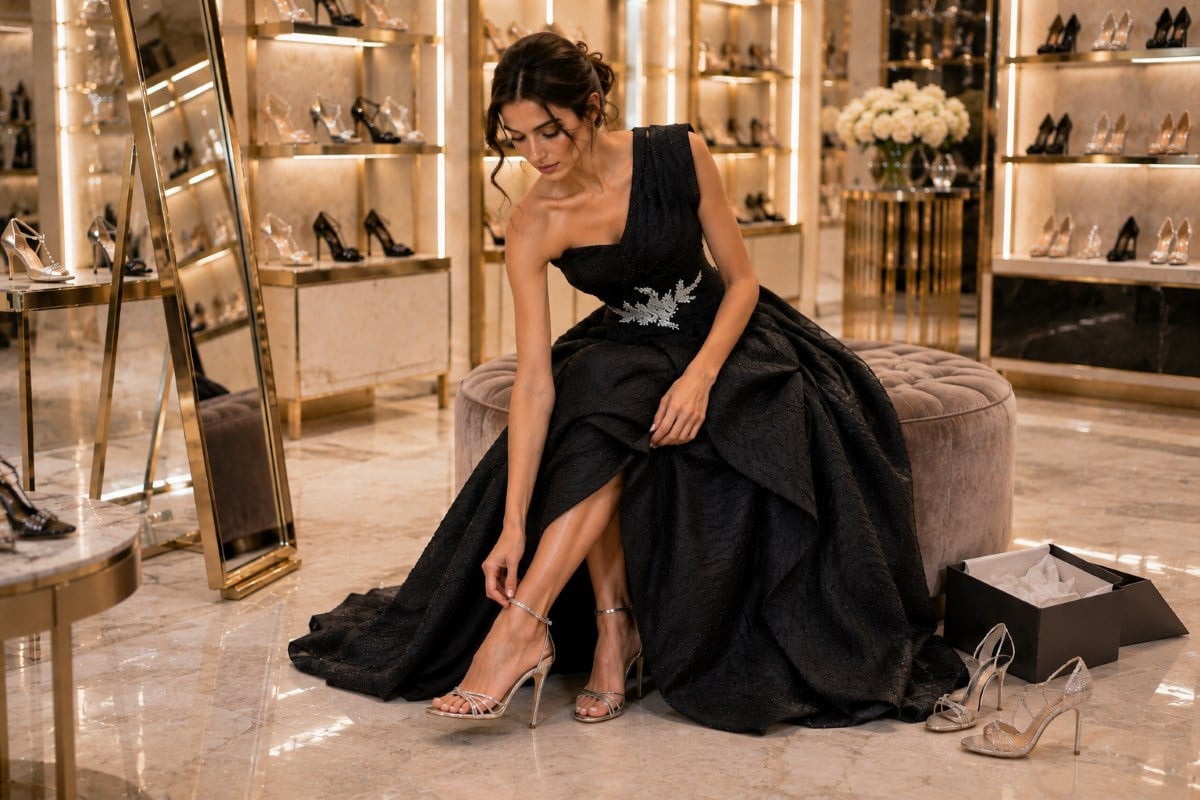
Getting a formal dress and shoes to work together comes down to four things: the length of the hem, the shape of the skirt, how long you will be standing, and what the invitation asks for. Get those right and the shoe almost picks itself. This guide works through each one, and it is direct about the pairings that do not work as well as the ones that do.
What shoes should you wear with a formal dress?
How do you choose shoes to wear with dresses for a formal event? Start with hem length, because it sets your heel height. A floor-length gown needs enough heel to keep the hem off the ground, usually two to three inches unless the dress was hemmed for flats. A knee-length or midi dress gives you free choice of height, so comfort and event formality decide. Then match the shoe to the skirt shape: a closed-toe pump for a fitted silhouette, a strappy sandal or a block heel for a flowy one. Color comes last, and neutral almost always wins.
Understanding your dress before you look at shoes
Shoes for evening dress looks are chosen from the dress outward, never the other way around, and formal gown shoes follow the same rule. Pairing formal dresses with shoes works best in that order, because the dress makes most of the decision for you, which is why shopping for shoes first tends to go badly. Two features matter more than the rest: whether the silhouette is fitted or flowy, and how the hem falls.
Fitted or flowy
A fitted evening dress has a clean, continuous line, and a shoe with a simple shape keeps that line intact. Closed-toe pumps are the safest match here, particularly for a formal gown at a black tie wedding, because a pointed or almond toe carries the line of the leg forward instead of interrupting it. A busy shoe with multiple thin straps competes with a fitted silhouette rather than supporting it.
A flowy dress moves, so the shoe needs to move with it. Strappy sandals, block heels and low wedges all work because they read as light rather than structural. This is also the one case where a slightly bolder shoe is fine, since a full skirt hides most of it anyway. If you want the pairing logic broken down further, our guide on how to match shoes and accessories with evening dresses takes it accessory by accessory.
Hem length and heel height
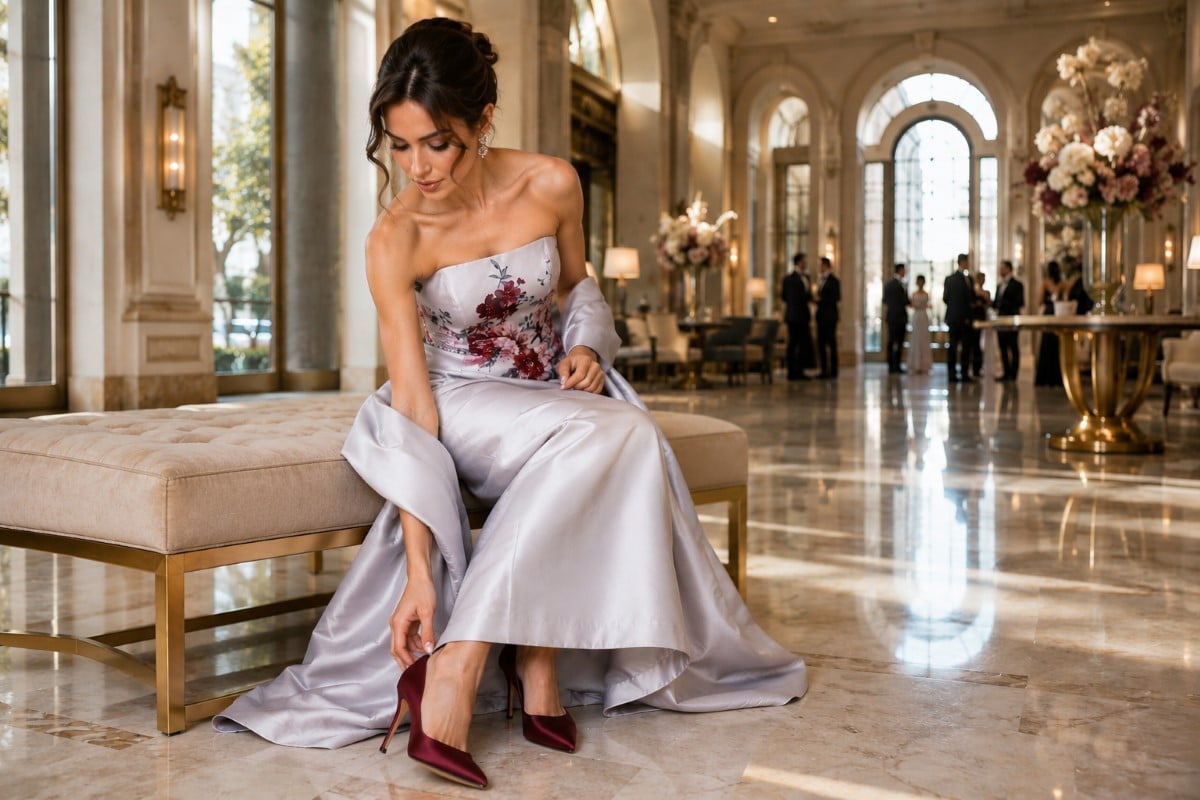
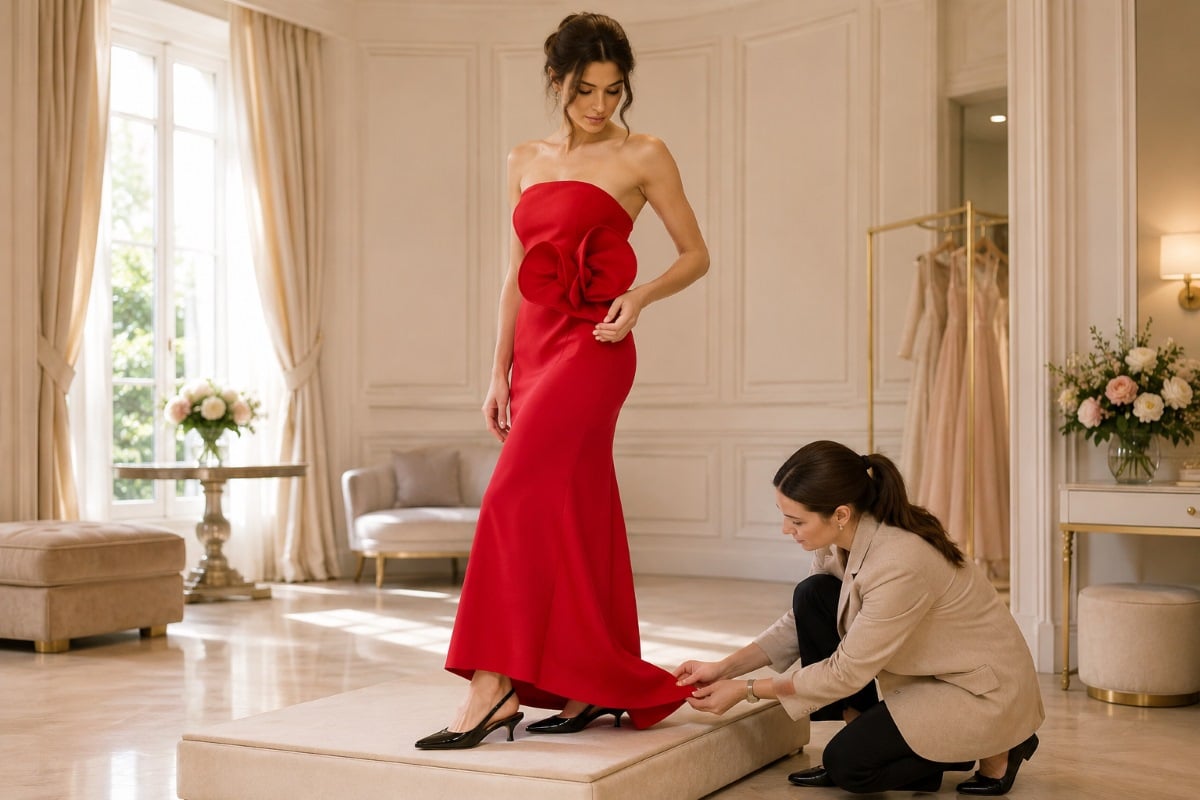
Heels for long dresses have one job before any styling question: keeping the hem clear of the floor. Hem length is the constraint people discover too late. With a floor-length gown, a heel that is too low lets the hem drag, which is both a tripping risk and the fastest way to ruin a fabric edge. A heel that is too high shortens the hem visibly and throws the proportion off. Aim for the height the dress was hemmed for and take the shoes to your fitting.
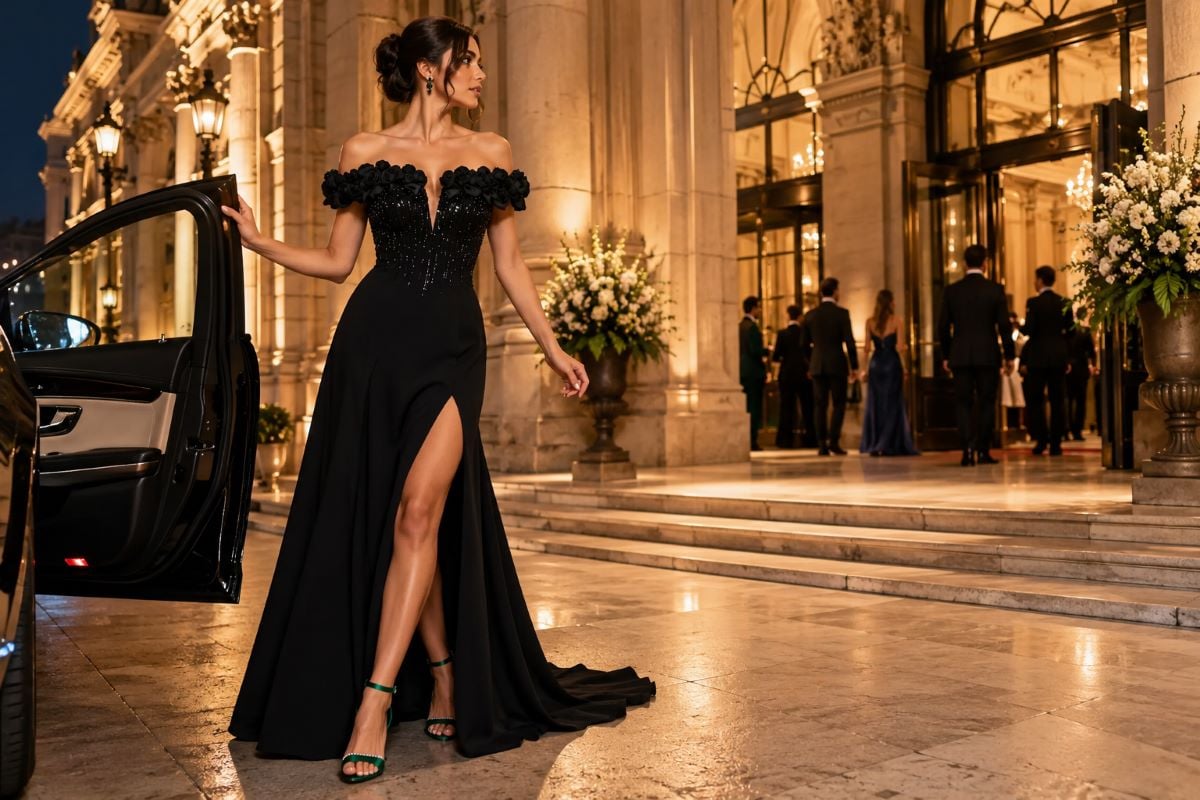
Two specific cautions for long dresses. Your shoes should barely show, so an expensive detail on the upper is wasted. And if the dress has a front or side slit, skip plain pumps, because the shoe becomes visible with every step and a pump reads oddly in isolation. A strappy heel or an ankle-strap sandal handles a slit far better.
Shorter dresses reverse the logic. With a knee-length or midi hem the whole shoe is on display, so the shoe becomes part of the outfit rather than a support for it. Keep the heel moderate rather than extreme, because a very high heel with a knee-length formal dress tips the look towards evening-out rather than formal event. Our guide to choosing the right length for your evening dress covers the hem decision itself in more detail.
Shoe choices by dress length
Because hem length drives the decision, it helps to see the evening gown shoes that suit each hem side by side rather than in prose.
| Dress length | Heel height that works | Best shoe styles | What to avoid |
|---|---|---|---|
| Floor-length gown | Two to three inches, matched to the hem | Closed-toe pump, ankle-strap heel, block heel | Flats unless the hem was shortened, decorative uppers nobody sees |
| Floor-length with a slit | Two to four inches | Strappy sandal, ankle-strap heel, embellished heel | Plain pumps, which look isolated when the slit opens |
| Midi or tea length | One and a half to three inches | Slingback, pointed pump, kitten heel | Chunky platforms, which cut the leg line at the widest point |
| Knee length or cocktail | Anything up to three inches | Pump, strappy sandal, dressy flat, low block heel | Very high stilettos, which shift the look away from formal |
| Short or above the knee | Low to moderate | Ankle-strap heel, block heel, embellished flat | Extreme heights that unbalance a short hem |
What dress shoes to wear, and at what heel height
Shoes for formal dress codes are usually chosen for the wrong moment. Heel height is where most regret happens, and the reason is simple. People choose for the first ten minutes of an evening rather than the fourth hour. A formal event usually means standing through a cocktail hour, sitting for a meal, then standing again, and often on a hard floor. A moderate heel you can walk in comfortably beats a higher one you spend the evening managing.
Block heels and low wedges spread weight across a wider base, so they stay comfortable far longer than a stiletto of the same height. A kitten heel gives lift without commitment and is the most underrated option for a long event. Platform heels are worth a mention because a platform under the toe reduces the actual angle of the foot, which means a taller-looking shoe can be easier to wear than its height suggests.
One honest note. If you do not already walk confidently in heels, a formal event is not the place to start. A well-chosen dressy flat or a low block heel looks considered. Visibly struggling in a high heel does not.
Flats and other alternatives to heels
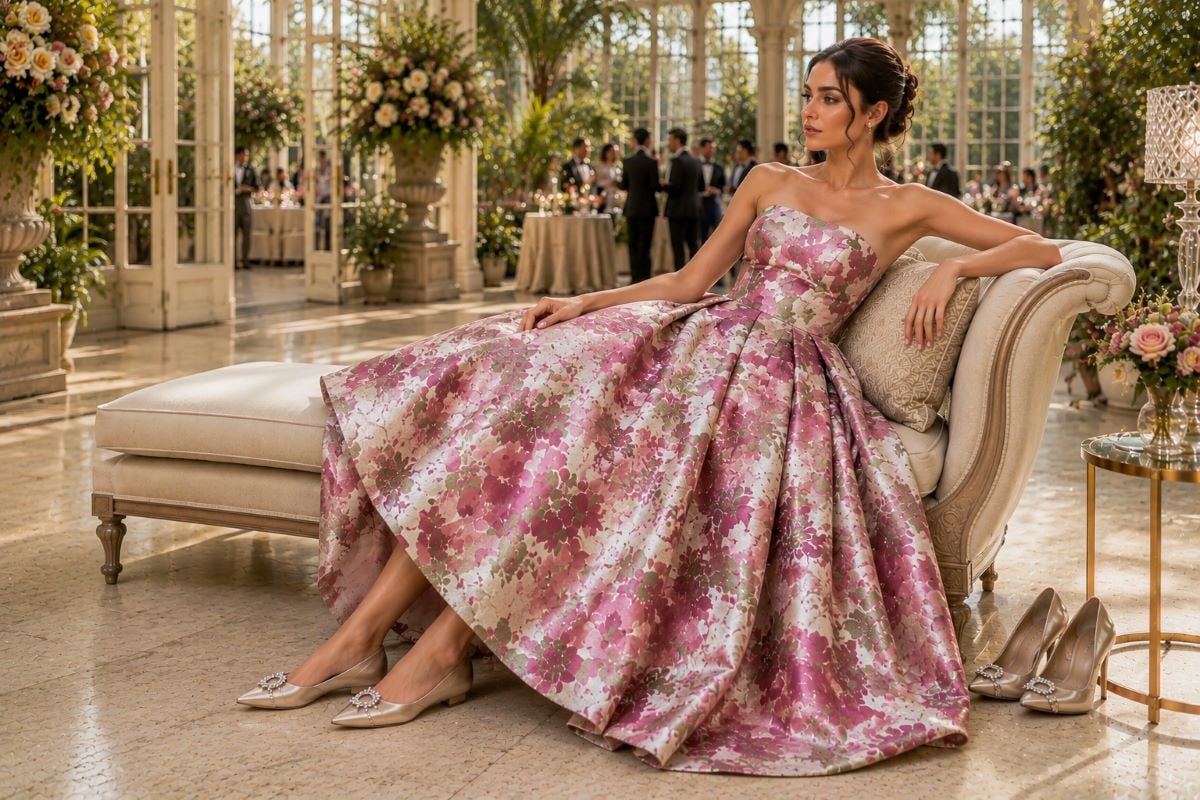
Flats to wear with formal dresses are a legitimate choice rather than a compromise, provided the flat is dressy rather than casual. What separates the two is material and finish. Satin, metallic leather, velvet or an embellished toe reads formal. Canvas, rubber soles and visible stitching do not.
Pointed-toe flats work best under a long gown because the point continues the line of the leg the way a heel does. Embellished ballet flats suit a knee-length or midi dress where the shoe is visible. A dressy loafer or a satin mule with a low heel bridges the gap if a true flat feels too casual for the dress code. The one thing to plan for is hem length, since a gown hemmed for a three-inch heel will drag with flats and needs shortening first.
A second pair is the other alternative worth planning. Many people wear a heel for the ceremony and photographs, then change into a foldable flat for the dancing. That is a practical solution rather than a failure of planning, and it is far better than leaving early because your feet gave out.
Open toe or closed toe
Closed toe shoes to wear with dresses are the more formal of the two, and for black tie, white tie or a winter event they are the safer default. A closed toe also hides a great deal, which matters if you have not had time for a pedicure. Our guide to black tie evening dresses explains where the formality line sits for those dress codes.
Open-toe and peep-toe styles read slightly softer and suit warm-weather events, outdoor receptions and cocktail dress codes. They also show more of the foot, so they need a pedicure and a shoe that fits properly, because an open toe reveals every gap and overhang. Strappy sandals sit in the same category and are the most versatile open option for evening.
Shoes for a cocktail dress
The shoes to wear with cocktail dress codes have more room than black tie allows, and they can carry more personality. With a knee-length or midi cocktail dress the entire shoe is visible, so this is the right place for a metallic heel, a satin pump in a strong shade or a sandal with an interesting strap arrangement.
For a black cocktail dress specifically, three options do most of the work. A nude heel lengthens the leg and keeps the attention on the dress. A metallic in gold or silver adds light without adding a color to coordinate. A black shoe in a different texture, satin against crepe or suede against satin, keeps the outfit tonal while stopping it looking flat. If you are working through a cocktail look in full, our guide on what shoes to wear with a cocktail dress goes deeper on the dress-code side.
Color and fabric coordination
Neutral shoes are the reliable answer, and there is no styling penalty for taking it. Nude in a shade close to your own skin tone gives the longest leg line and disappears under any color of dress. Black is safe with almost everything and is the correct choice for black tie. Metallics in gold or silver behave like neutrals in evening light, and gold in particular lifts a dark gown.
Matching the shoe exactly to the dress is harder than it looks, because dye lots differ and one shade off reads as a mistake rather than a match. If you want a coordinated look, pull a secondary color from the dress, from beading or an embroidered detail, rather than trying to match the main fabric.
Fabric works on a simple balance. A plain gown in silk, satin or crepe can carry an embellished or patterned shoe, because the shoe becomes the detail. A dress with beading, sequins, crystals or embroidery wants a simple shoe in one shade drawn from the dress, since two competing sources of sparkle read as busy rather than considered. The same balance applies to the bag, which is covered in our piece on choosing a clutch for an embellished gown.
Testing shoes before the event
Try shoes on late in the day, because feet swell and a shoe that fits perfectly in the morning can be tight by evening. Wear them indoors for two or three short sessions before the event to find the pressure points while you can still do something about them.
Take the actual shoes to your dress fitting, not a similar pair. Hem length is set from the shoe, and a difference of half an inch shows on a floor-length gown. Walk, sit and stand in both together, and check the hem from behind as well as in front.
Two small practical items solve most of what goes wrong on the night. Adhesive gel pads at the ball of the foot handle the pressure that builds while standing. A pair of stick-on sole grips handles a polished ballroom floor, which is more slippery than any surface you will have practised on. Jewellery and finishing touches are worth planning at the same time, and our guide on how to accessorize formal evening wear covers the rest of the look.
Evening Shoe and Dress Pairing Questions
What heels should you wear with an evening gown?
A closed-toe pump or an ankle-strap heel of roughly two to three inches suits most floor-length gowns, matched to the height the hem was set for. If the gown has a slit, choose a strappy heel instead of a plain pump, since the shoe becomes visible as you walk. Block heels are the more comfortable choice for a long event at the same height.
Should shoes be lighter or darker than the dress?
Either works, but the safest route is neutral rather than a close match. A nude shoe close to your skin tone lengthens the leg and pairs with any dress color. A darker shoe grounds a pale dress. What tends to look wrong is a near-match that misses, because a shade off reads as an error rather than a deliberate contrast.
Can you wear flats with a formal dress?
Yes, provided the flat is dressy rather than casual. Satin, metallic leather, velvet or an embellished toe reads formal, while canvas and rubber soles do not. Pointed-toe flats work best under a long gown because they continue the leg line. Remember that a gown hemmed for a heel will need shortening if you switch to flats.
What shoes go with a knee length dress?
The whole shoe is visible at this length, so it becomes part of the outfit. A pointed pump, a slingback, a strappy sandal or a low block heel all work, and a dressy flat is fine for a daytime formal event. Keep the heel moderate, since a very high stiletto pulls a knee-length formal dress towards a night-out look.
What shoes work with a cocktail dress?
Cocktail attire allows more personality than black tie, so a metallic heel, a colored satin pump or a sandal with a decorative strap all suit it. For a black cocktail dress, a nude heel, a metallic, or a black shoe in a contrasting texture are the three strongest options. Keep the heel height comfortable, since cocktail events involve a lot of standing.
Are closed-toe shoes more formal than open-toe?
Yes. Closed-toe styles are the more formal of the two and are the safer default for black tie, white tie and winter events. Open-toe, peep-toe and strappy styles read softer and suit warm-weather events, outdoor receptions and cocktail dress codes. An open toe also needs a shoe that fits precisely, since any gap or overhang shows.
Trying the pairing on in person
Everything on this page gets easier once the dress and the shoes are in the same room. Hem length, heel height and how a shoe reads against a fabric are all judgements you make standing up, not from a screen. To see how a gown falls with the shoes you have in mind, and to get the hem set correctly the first time, book a fitting with an authorized Jovani retailer in your area.