
Few things make an entrance like a train. That sweep of fabric trailing behind a gown turns a walk across a room into a moment, which is exactly why trains belong to the most dramatic corners of formal fashion, from red carpets to grand galas. But a train is also the element that intimidates people most, and understandably so. The same fabric that looks breathtaking on the approach can feel like a liability once you need to sit, dance, or simply move through a crowd. The truth is that an evening dress train is far more manageable than it looks, as long as you understand what kind of train you are wearing, choose it for the right occasion, and know a few simple techniques for handling it. This guide covers all of it: the different types of trains and how dramatic each one is, which events genuinely call for a train and which do not, the silhouettes that carry one best, and the practical mechanics of moving gracefully in one from the first entrance to the last dance.
What a train is and the different types
A train is the part of a gown that extends beyond the standard hemline and trails along the floor behind the wearer. Trains are measured by how far they extend, and knowing the names helps enormously when you are shopping or talking to a tailor, since the length determines both the drama and the practicality.
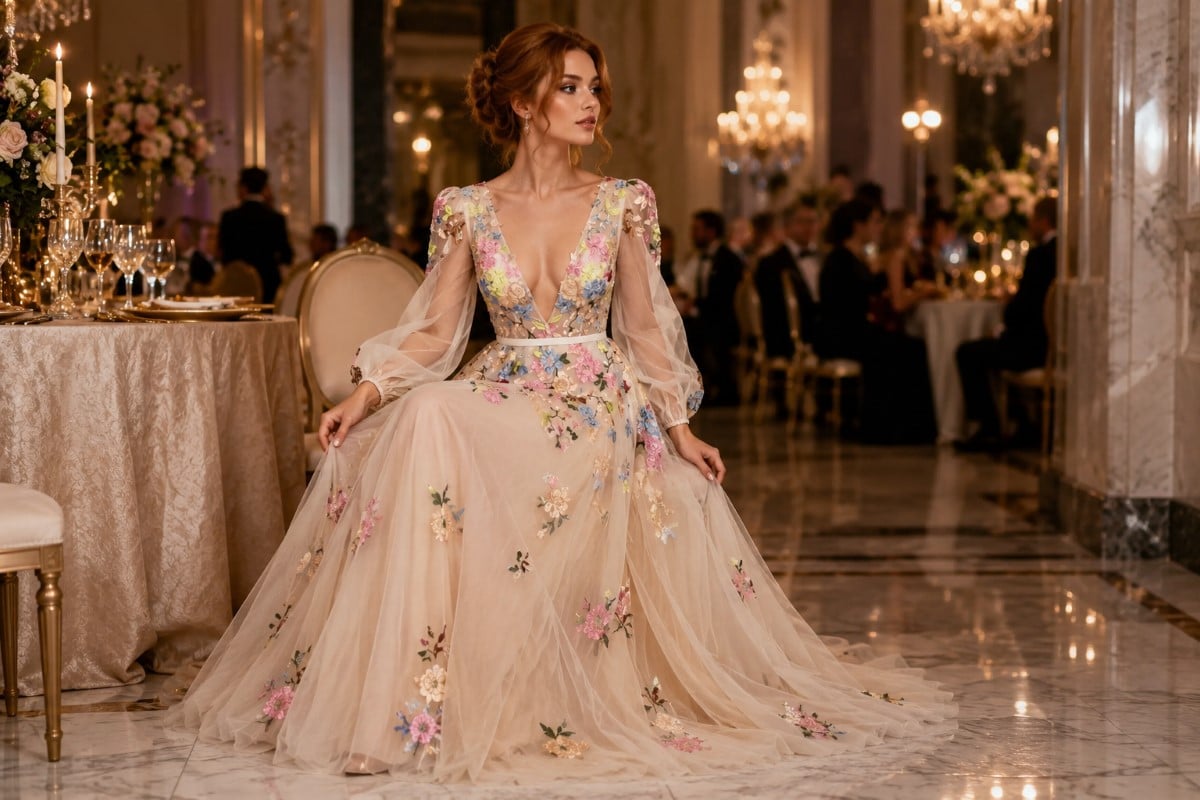
- Sweep train. The shortest and most manageable, extending just a short distance behind the hem, often only a few inches to a foot. It adds a graceful sweep of movement without much to manage, which makes it the easiest train to wear for a full evening.
- Court train. A moderate extension, longer than a sweep but still controlled. It gives a clear sense of drama while remaining wearable, a popular middle ground for formal events.
- Chapel train. A longer, more formal trail that creates real impact. It is more dramatic and asks for more management, and it suits highly formal occasions.
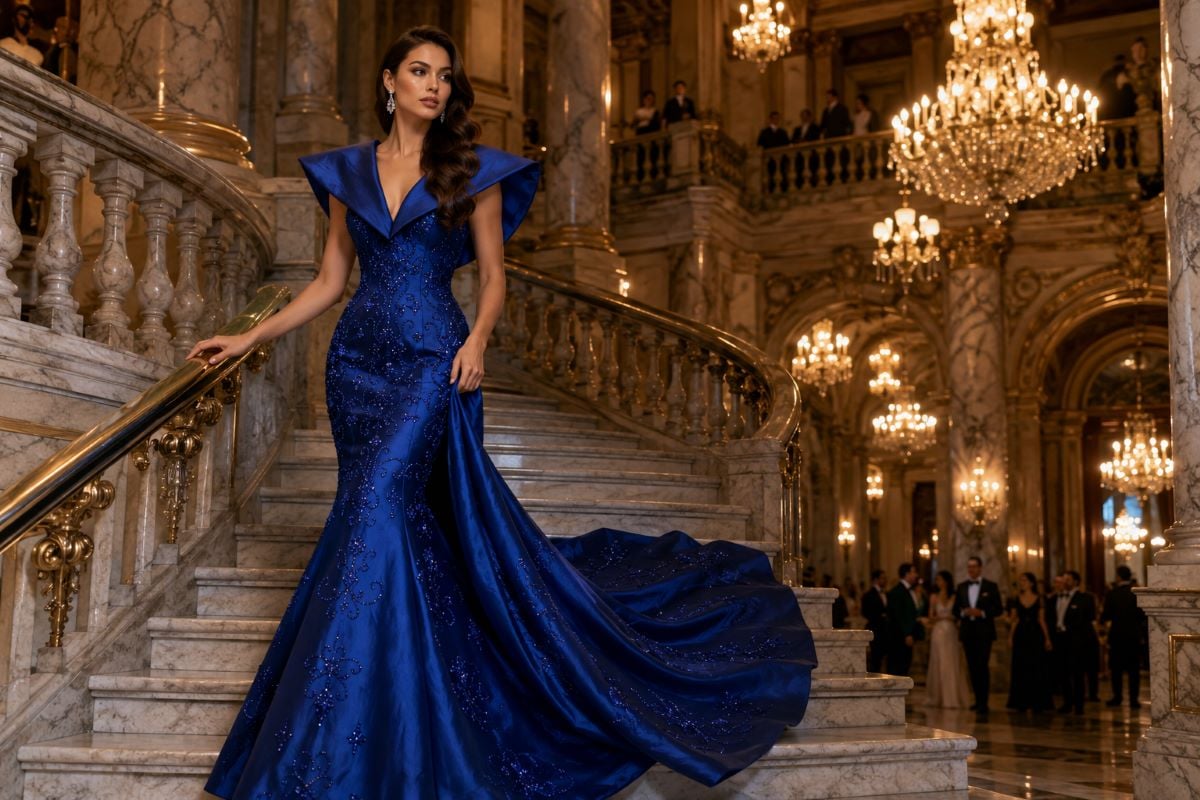
- Cathedral train. The longest and most dramatic, sweeping well behind the wearer. This is reserved for the most formal and ceremonial moments, since it commands attention but requires genuine planning to move in.
- Detachable train. Not a length but a feature, this is a train that attaches for the grand entrance and ceremony, then detaches to leave a clean floor-length gown for the reception. It offers the drama of a train with the freedom of a standard hem afterward.
The key takeaway is that train length sits on a spectrum from subtle to spectacular, and the right choice depends entirely on the occasion and on how much you want to manage. A sweep train is an easy, elegant touch, while a cathedral train is a true statement that demands commitment. This sits within the broader question of hemline and length, which our guide to picking the right dress length explores in full.
When to wear an evening dress with a train
A train is wonderful for the right occasion and genuinely impractical for the wrong one. Matching the train to the event is what makes it read as confident rather than misjudged. Here is when a train belongs and when it does not.
Occasions that call for a train
- Red carpet and high-profile events. The natural home of the dramatic train. These occasions reward theatricality and a striking entrance, and a train delivers exactly that for the cameras, in the same spirit as the looks in our red carpet evening dresses guide.
- Formal galas and charity balls. The level of formality supports a court or chapel train, which adds gravitas to a grand setting.
- Black-tie weddings as a guest. A modest sweep train can be appropriate and elegant, though it should never be so dramatic that it competes with the bride.
- Pageants and ceremonial moments. A train creates the sweeping, regal effect these events are built around, and it photographs beautifully on a stage.
- Any moment built around a grand entrance. If the event has a clear processional or photographed arrival, a train turns that moment into something memorable.
When to skip the train
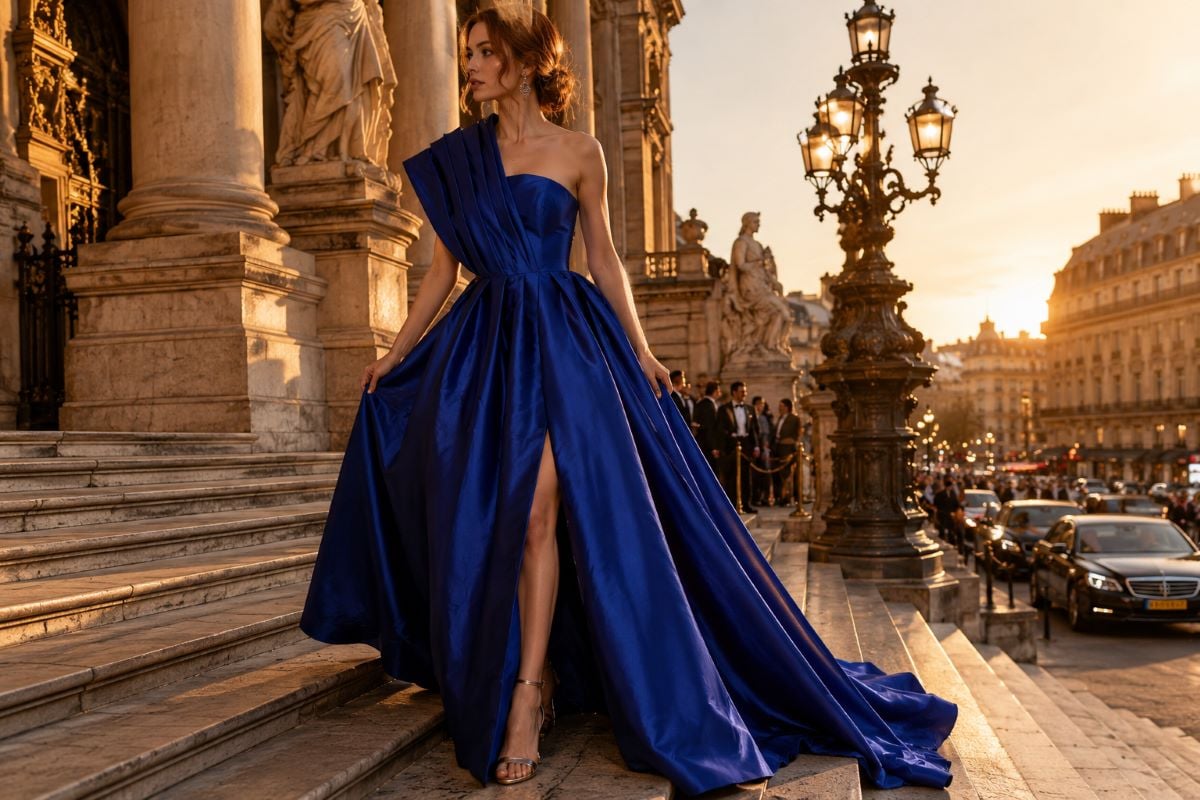
Honesty matters here. A train is the wrong choice for an event with a great deal of movement, tight spaces, or a casual tone. A crowded cocktail party, a venue with stairs and narrow passages, or an evening focused heavily on dancing all make a long train more burden than beauty. A daytime or semi-formal event generally does not call for a train at all, and a very long train at an under-formal occasion reads as overdressed. The reliable principle is to match the drama of the train to the formality and the physical setting of the event. If you will spend the night managing the fabric rather than enjoying yourself, either choose a shorter sweep train or skip it in favor of a clean floor-length hem. Choosing the right level for the occasion is what makes a train look intentional, and our guide on how to choose an evening dress for a night event helps match the gown to the occasion overall.
Which silhouettes carry a train best
A train interacts with the silhouette of the gown, and some shapes carry it more naturally than others. Knowing this helps you picture how a train will actually look and move on a given dress.
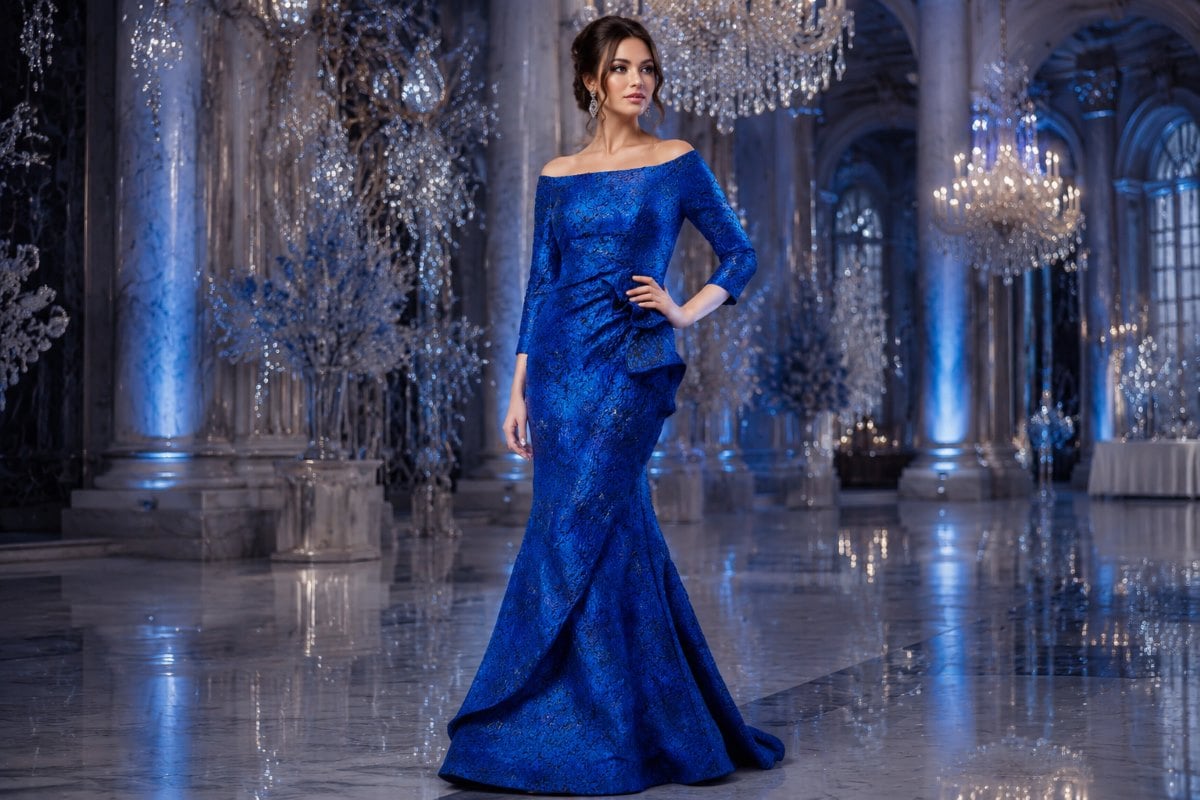
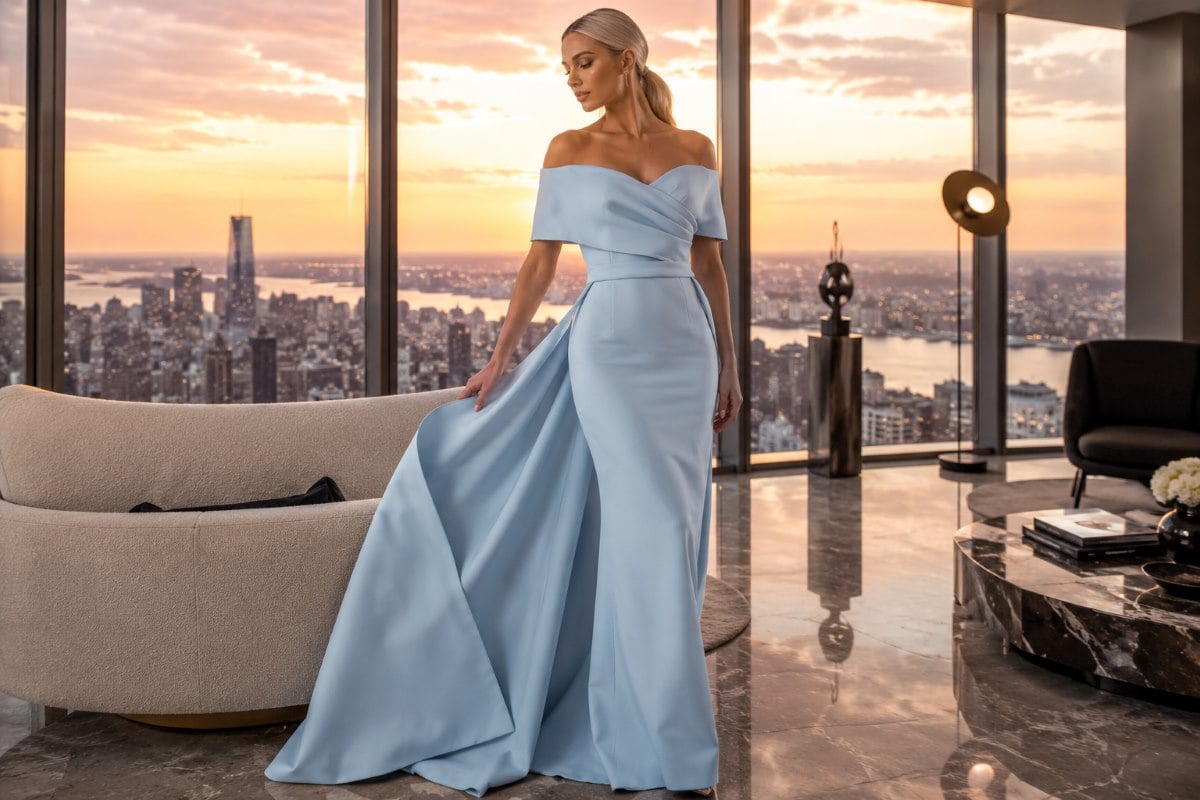
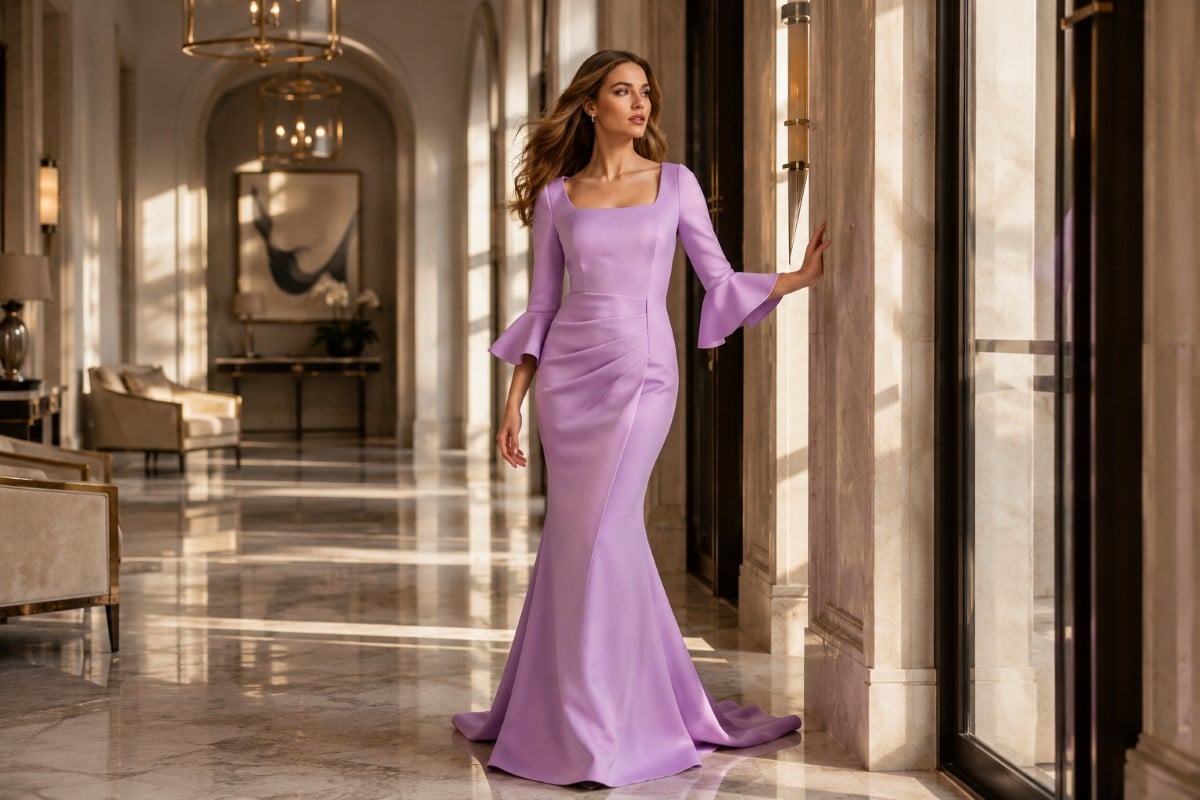
A mermaid or fit-and-flare gown carries a train dramatically, since the fitted shape through the body flares at the knee and can extend into a sweeping trail that emphasizes the hourglass line. The styles among mermaid formal dresses show how a train can flow naturally from a fitted silhouette. A ball gown carries a train regally, with the full skirt extending into a grand sweep that suits the most formal and ceremonial occasions, and the range of ball gown evening dresses demonstrates that sweeping effect. A sleek column or sheath can carry a more modern, understated train that adds a subtle trail to a clean line, which reads as contemporary rather than ceremonial. The most elaborate trains, with the finest construction, tend to appear on the highest tier of design, which is why the couture evening gowns selection is where the most dramatic trains often live. Whatever the silhouette, the train should feel like a natural extension of the gown rather than an add-on, and the best ones flow seamlessly from the skirt.
The mechanics of managing a train
This is the practical heart of wearing a train, and it is where most worry lives. The reassuring truth is that gowns with trains are designed to be managed, and a few simple tools and techniques let you move gracefully all evening.
It helps to think of the evening in two phases. The first phase is the entrance and the formal photographs, when the train is down and doing its job, trailing dramatically behind you. The second phase is everything after, the dinner, the mingling, and the dancing, when the train should be lifted and secured so it is out of the way. Almost every problem people have with trains comes from trying to live the whole night in the first phase. Once you accept that a long train is meant to be bustled up after the entrance, the management becomes simple, and the tools below are what make that transition effortless.
The bustle: your most important tool
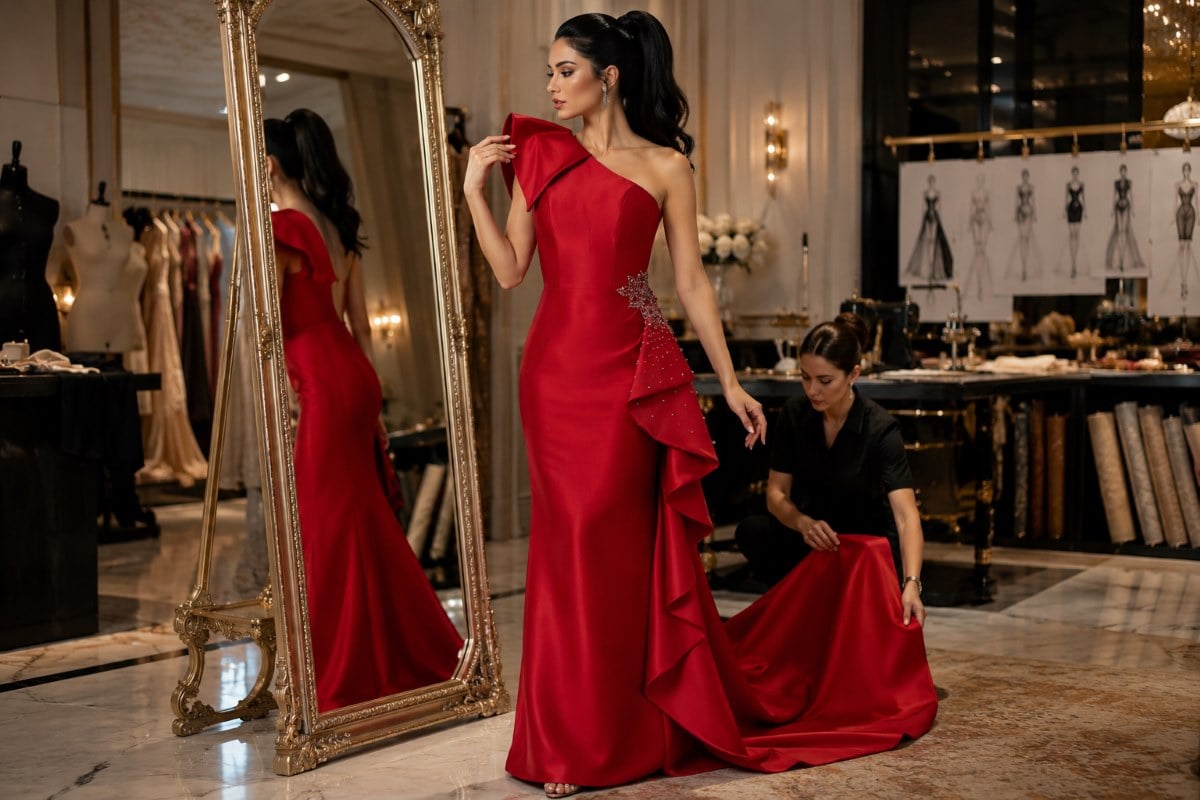
The single most useful feature on a gown with a train is a bustle. A bustle is a system of hidden hooks, buttons, loops, or ribbons that lifts and secures the train up off the floor, transforming the gown into a clean floor-length dress for the reception. After the grand entrance and the photographs, the train is bustled up, and you can dance and move freely. If your gown has a meaningful train, confirm it has a bustle or can have one added, since a tailor can build a bustle into most trained gowns. Practise bustling it before the event, and make sure someone attending knows how to do it, since it usually takes a second pair of hands.
The wrist loop: for movement before bustling
A wrist loop is a discreet ribbon or loop attached to the train that slips over your wrist, letting you lift and carry the train as you walk. It is the tool for moving gracefully before the train is bustled, such as crossing a room or navigating a doorway. Many formal gowns with trains include a wrist loop for exactly this reason. Lifting the train with the loop keeps it off the floor and out of harm’s way during transitions.
Walking, sitting, and dancing
Beyond the tools, a few habits make all the difference. When walking, take smooth, unhurried steps and let the train follow you naturally rather than rushing, and use the wrist loop for tight spaces. Before sitting, sweep the train to one side with your hand so you do not sit on it or crush it, and smooth it out once seated. For dancing, bustle the train first, since trying to dance with an unbustled train is the most common cause of stepping on the fabric or pulling a seam. On stairs, gather the train with the wrist loop or in your hand and take the steps deliberately. None of this is difficult once you have done it a few times, and the key is simply to be aware of the fabric behind you rather than forgetting it is there.
Choosing a trained gown with construction that holds up
A train puts more stress on a gown than a standard hem, since it is dragged, lifted, stepped near, and bustled throughout the night. This is exactly where construction quality shows, and a well-built train behaves very differently from a poorly made one.
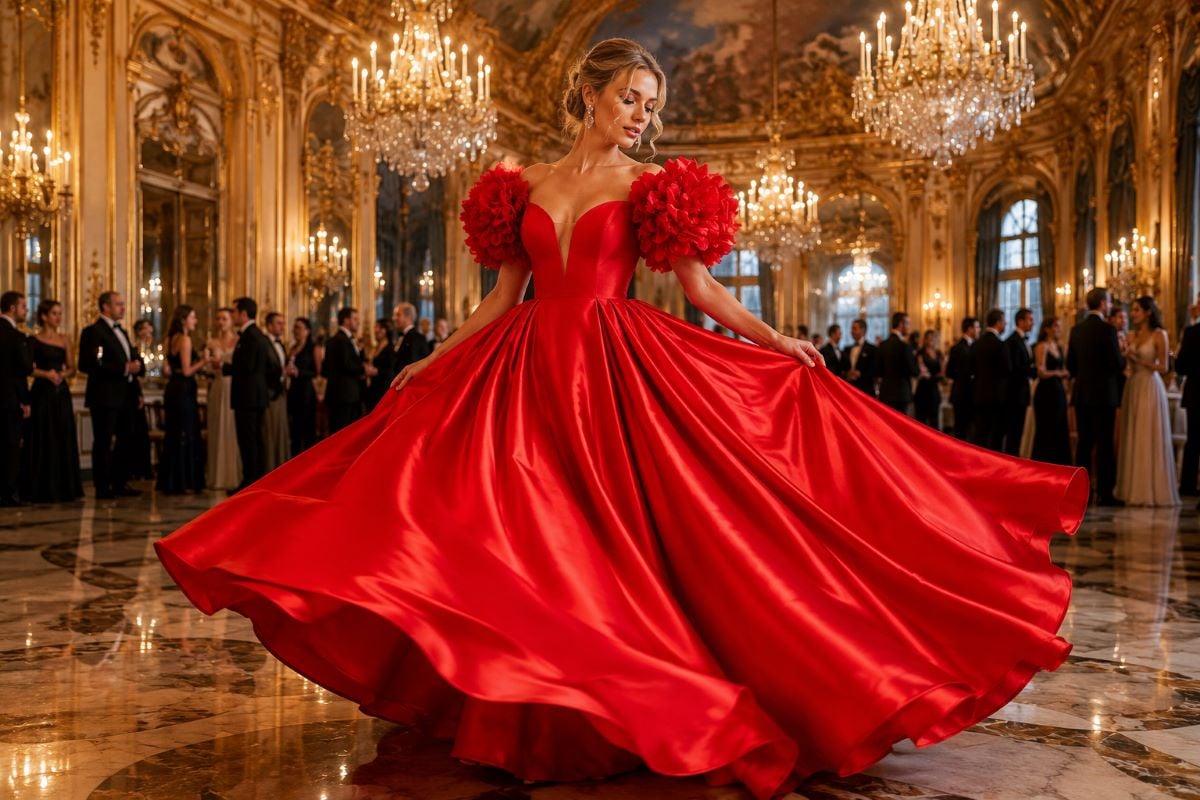
A quality trained gown has reinforced seams where the train meets the body of the dress, so the weight of the fabric does not pull or tear at the stress points. It has a properly finished hem along the train so the edge does not fray as it sweeps the floor. And it has a well-engineered bustle that lifts the train cleanly and holds it securely rather than sagging during the reception. Jovani has built structured eveningwear from its New York design studio for more than forty years, and that experience matters most in exactly this kind of detail, where a train has to be both dramatic and durable. A train constructed without this care looks beautiful for the first entrance and then begins to droop, fray, or strain as the night goes on. When you try on a trained gown, check how the train is attached, how the hem is finished, and whether the bustle holds firmly, since these details determine whether the train survives the whole celebration. The most dramatic trains appear at the highest tier of design for this reason, since the construction required is genuinely demanding.
Matching train length to the formality of the dress
One detail worth understanding is that the length of an evening dress train signals formality almost as clearly as the gown itself does. The longer the train, the more formal and ceremonial the message, so reading that signal helps you choose the right level for your event.
A floor-length gown with no train, or with only a subtle sweep, reads as elegant and appropriate across a wide range of formal occasions, which is why the styles among long evening dresses are the most versatile starting point for most events. As the train lengthens into court and chapel territory, the gown moves into clearly grand, high-formality territory that suits galas and ceremonial moments. A cathedral train sits at the very top of that scale and signals the most formal and theatrical setting of all. The practical lesson is to let the event lead. A modest sweep train adds a touch of drama without overcommitting, while a long train makes a statement that the occasion must be able to support. Choosing a train length that matches the formality of the event is what keeps the whole look balanced, since a dramatic train at an under-formal event reads as too much, and a plain hem at a grand ceremonial occasion can feel like a missed opportunity. When the train length and the event formality align, the gown looks perfectly judged.
Frequently asked questions about evening dress trains
What are the different types of evening dress trains?
Trains are named by length. A sweep train is the shortest and most manageable, a court train is a moderate extension, a chapel train is longer and more formal, and a cathedral train is the longest and most dramatic. A detachable train is a separate feature that attaches for the entrance and removes for the reception.
When should I wear an evening dress with a train?
A train suits highly formal occasions such as red carpet events, galas, charity balls, pageants, and any moment built around a grand entrance. It is best avoided at events with a lot of movement, tight spaces, or a casual tone, and at semi-formal or daytime occasions where it would read as overdressed.
How do I manage a train so I can dance and move?
The most important tool is a bustle, a hidden system of hooks or loops that lifts the train off the floor and turns the gown into a clean floor-length dress for the reception. A wrist loop lets you carry the train while walking before it is bustled. Sweep the train aside before sitting, and always bustle it before dancing.
What is a bustle and does my gown need one?
A bustle is a system of hidden hooks, buttons, or loops that gathers and secures the train up off the floor after the entrance and photographs. If your gown has a meaningful train, it should have a bustle or have one added by a tailor, since dancing or moving freely with an unbustled train is difficult and risks damaging the fabric.
Which dress silhouettes work best with a train?
A mermaid silhouette carries a train dramatically by flaring into a sweeping trail, and a ball gown carries one regally with its full skirt for the most formal occasions. A sleek column can carry a more modern, understated train. The most elaborate trains tend to appear on couture-level designs with the construction to support them.
Can I wear a train to a wedding as a guest?
A modest sweep train can be appropriate and elegant at a black-tie wedding, but it should never be so long or dramatic that it competes with the bride. Keep it understated, choose a respectful color that is not white or near-bridal, and avoid a long ceremonial train, which belongs to the bride alone.
When you are ready to find a gown with the drama of an evening dress train and the construction to carry it, explore the full range of formal gowns through an authorized Jovani retailer.