
Best Prom Dresses for an Apple Body Shape: Fit and Style Tips
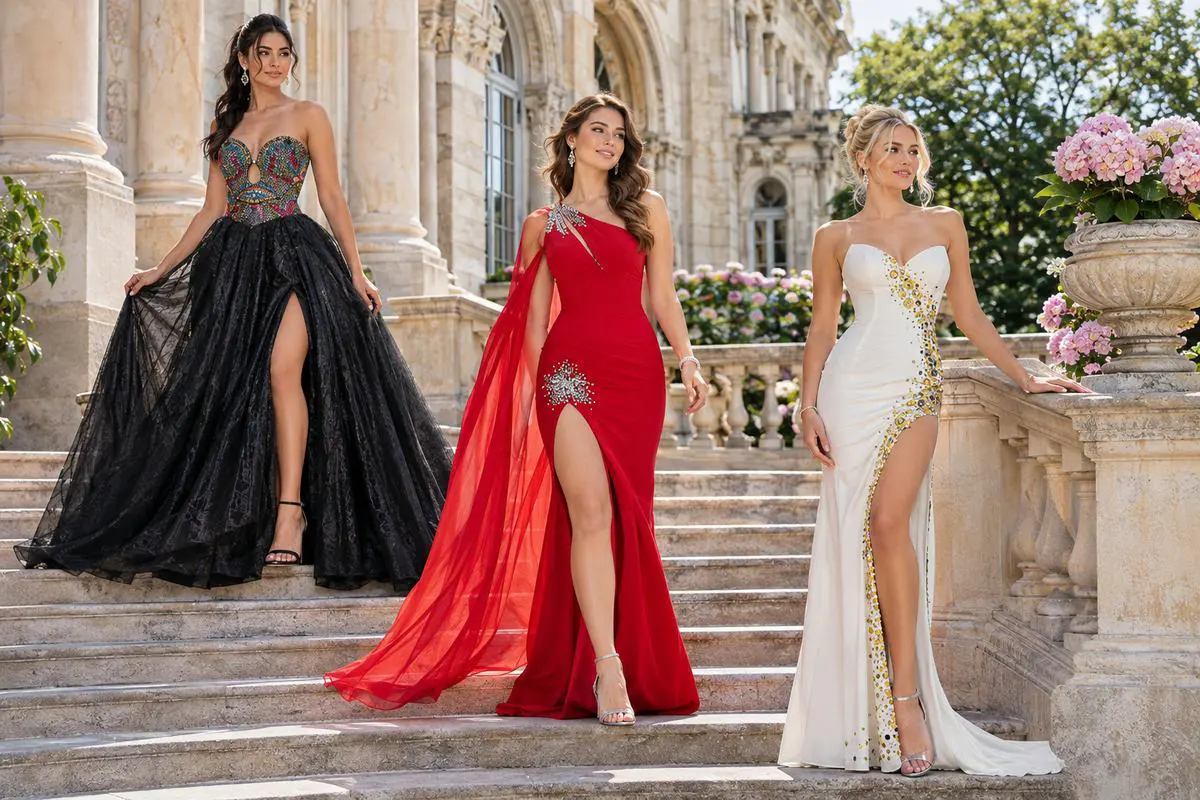
The best prom dresses for an apple body shape have a comfortable fit through the middle, a secure bodice, and a skirt you can move in. A-line and empire-waist styles are useful starting points, but they are not your only options. Your measurements and how the dress behaves when you sit matter more than a body-shape label.
An apple shape often means more fullness through the midsection, with less waist definition. Bust, hips, and leg proportions vary from person to person. Use these styling ideas as fitting-room options, not rules about what your body can wear.
What Should an Apple Body Shape Look for in a Prom Dress?
Start with a bodice that stays in place without pressing into your ribs or stomach. Then look at the waist seam: a slightly raised seam or gentle draping may feel easier than a rigid band. The skirt should allow a full step and a comfortable seated position.
You can compare these features across designer prom dresses rather than choosing a gown from a single body-type label. Try different waist placements, then judge each dress from the front, side, and while moving. Comfort and proportion both count.
Which Prom Dress Silhouettes Work for an Apple Shape?
A-line, empire-waist, and some straight or softly draped gowns can all work. The difference is where the dress fits closely and where the fabric begins to fall away from the body. Choose based on your torso length and preferred level of structure.
A-line dresses with room below the waist
An A-line dress has a defined upper section and a skirt that gradually widens. It can create a clear shape without holding tightly across the hips. The A-line prom dress collection is a useful place to compare skirt volume and bodice construction.
Jovani style 47041 is one concrete example: a floor-length chiffon A-line design with a ruched bodice, sweetheart neckline, and draped front bow. The flowing skirt illustrates how fabric can move away from the waist. For more detail on seam placement, see the guide to A-line prom gowns.
Empire waists with a higher seam
An empire waist sits just beneath the bust, so the skirt does not need to fit tightly around the natural waist. It can be especially useful when a low waist seam feels restrictive. Compare high-waisted prom styles and check where each seam lands on your own torso.
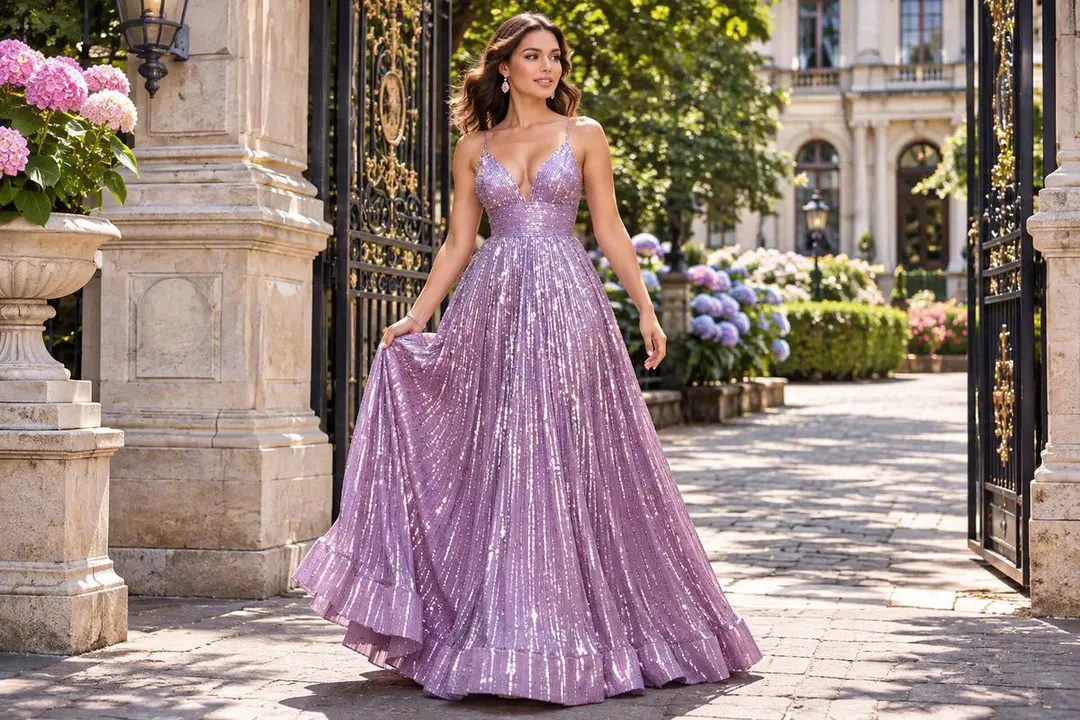
Jovani style 43920 offers another design reference. It is a pleated, floor-length gown with spaghetti straps, shown in lavender and teal. Look at the skirt movement and neckline security during a fitting rather than assuming every pleated style fits alike.
Column and ball gown options
A column dress with gentle ruching can look clean and modern, provided the lining does not pull across the stomach. A ball gown offers more skirt volume, but its fitted bodice must still feel comfortable. Neither style is automatically unsuitable for an apple shape.
Choose a Neckline That Supports Your Bust and Movement
A V-neck, sweetheart, scoop, or off-the-shoulder neckline may all work. Support depends on the cups, straps, back closure, and internal structure, not the neckline name alone. A good neckline stays where you expect it when you lift your arms and lean forward.
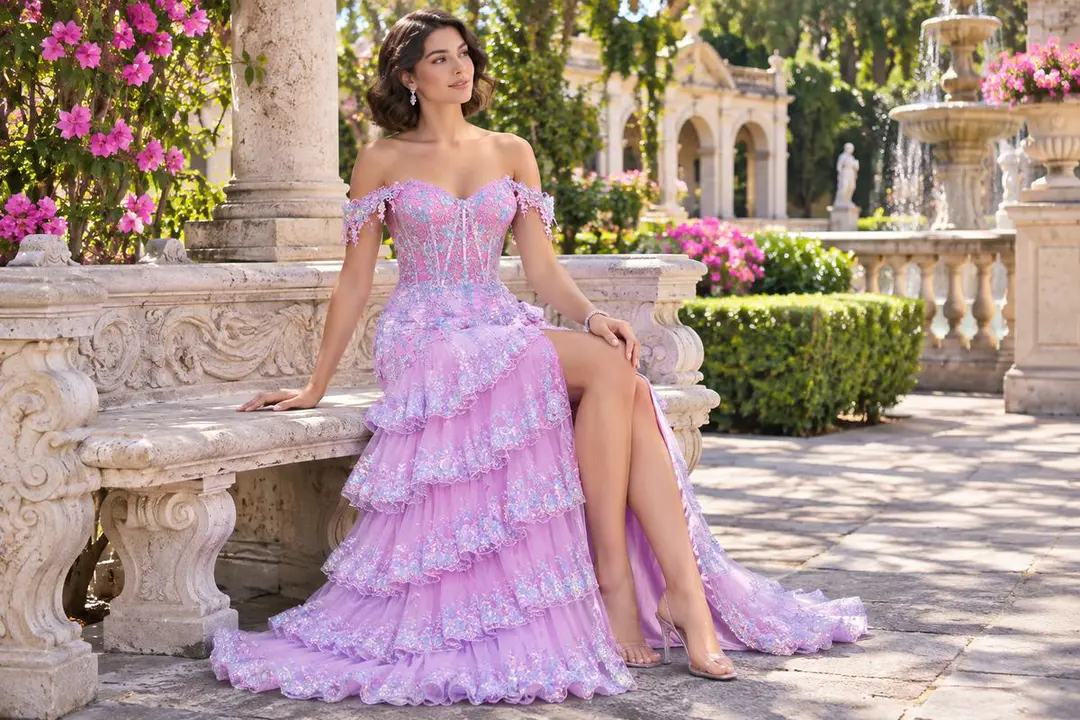
Jovani style 40397 shows an off-the-shoulder option with floral lace, a layered skirt, and a slit. Its open neckline is visually different from style 47041, so trying both can clarify your preference. Use the prom neckline fitting guide to compare coverage and stability before deciding.
Fabrics and Details That Change How a Dress Fits
Fabric weight affects the fit just as much as silhouette. Chiffon moves softly, but its lining determines coverage. Satin shows the direction of every seam and fold. Structured tulle gives volume, while stretch materials follow the body more closely.
When reviewing flowing chiffon prom gowns, check the lining and the way layers fall from the waist. Ruching can add texture without requiring a heavily cinched fit. Beading near the neckline is an option, but embellishment placement is a preference rather than a body-shape rule.
How to Check the Fit Before You Order
Measure your bust, natural waist, and hips without holding your breath or pulling the tape tight. Match each measurement to the size chart for the exact style. If measurements fall in different sizes, ask which areas a tailor can adjust before ordering.
For a structured gown, the largest relevant measurement often determines the safest starting size. The Jovani prom dress size and silhouette guide explains how to measure and compare proportions. Do not choose a smaller size in the hope that a corset will make it comfortable.
For shoppers who need a broader range of sizes, extended-size prom dresses include different silhouettes rather than one prescribed cut. In the fitting room, sit fully, take several steps, lift your arms, and check the back closure. Any pinching or shifting deserves attention before the dress is purchased.
Style Your Dress Without Complicating the Silhouette
Choose accessories after you know how the dress fits. A pendant can follow an open neckline, while earrings may suit an off-the-shoulder design better. Wear the shoes you expect to use at prom when checking the hem.
If you like a fitted look, try it. A body label does not determine your comfort level or your style. The goal is a dress you can wear through photographs, dinner, and dancing without repeated adjustments.
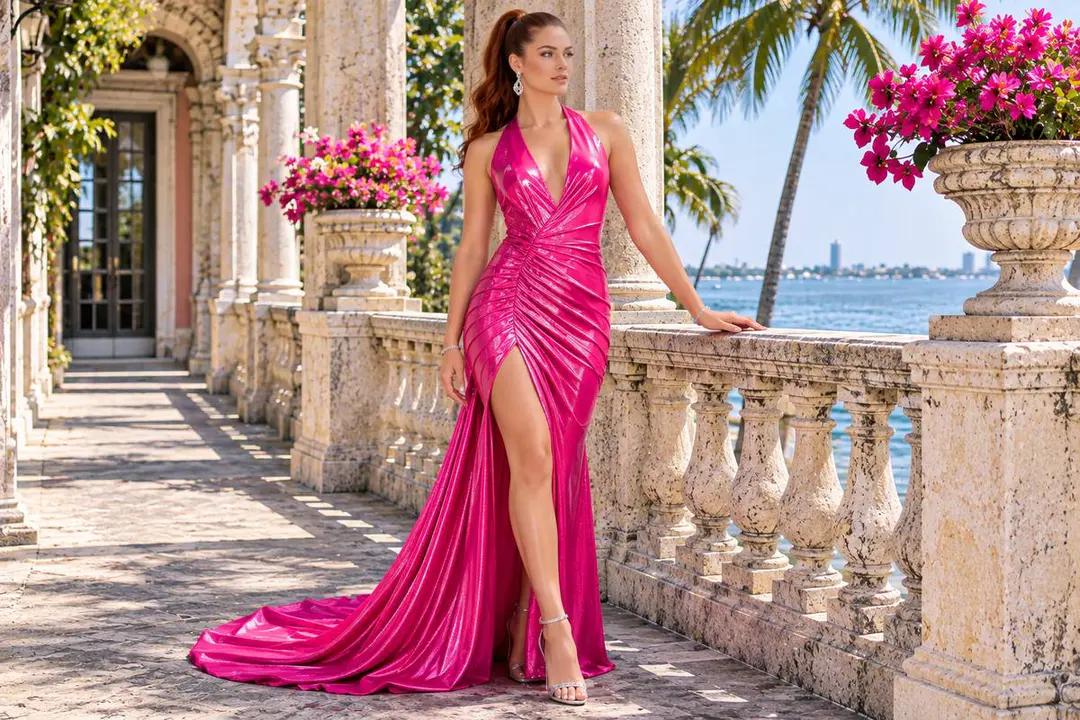
A Quick Fitting-Room Decision Check
Before making a final choice, run through four practical questions:
- Does the bodice stay in place when you raise your arms?
- Can you sit and breathe comfortably without the waist digging in?
- Does the skirt let you walk, climb a step, and dance?
- Can the retailer explain the size chart and any likely alterations?
Choose the dress that passes these checks and suits your school’s dress code. If you want to compare styles in person, use the Jovani authorized retailer locator to find a store and ask which gowns are available to try on.
Frequently Asked Questions
Can an apple body shape wear a fitted prom dress?
Yes. A fitted dress can work when the fabric, lining, and seam placement feel comfortable. Try gentle ruching or stretch with enough support, and sit down before deciding.
Is an empire waist always the best option?
No. An empire waist is one option, not a requirement. Some shoppers prefer an A-line seam at the natural waist or a straight dress with soft draping.
What if my bust and waist fall into different dress sizes?
Start with the size chart and prioritize the measurement that cannot be adjusted easily. Ask a retailer or alterations specialist about the bodice and waist before placing an order.
Can I choose a short prom dress instead of a gown?
Yes, if your event’s dress code allows it. A short dress can be a comfortable choice for dancing. Check its hem when seated and make sure the bodice stays secure.