
The Ultimate Guide to A-Line Prom Dresses
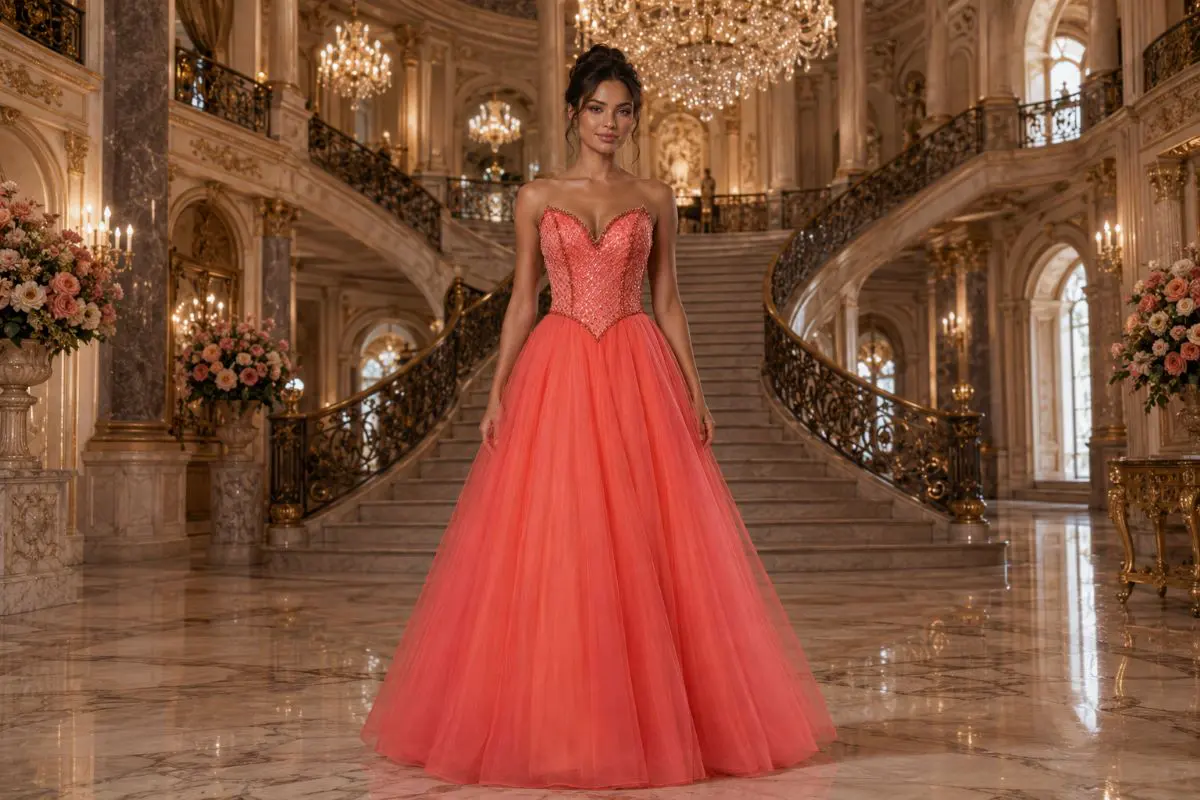
Of all the prom dress silhouettes, the A line is the most worn, and for a practical reason: it is fitted where a gown needs to hold its shape and loose where you need to move. It works across almost every frame, fabric and prom theme, and it is the shape most likely to still feel comfortable at the end of the night.
This guide explains what an A line dress is and how it differs from the shapes it gets confused with, how waist placement and skirt volume change it, which fabrics and necklines suit it, and what to check in the fitting room. To browse the gowns themselves, the A line prom dresses collection shows the full range.
What is an A line prom dress?
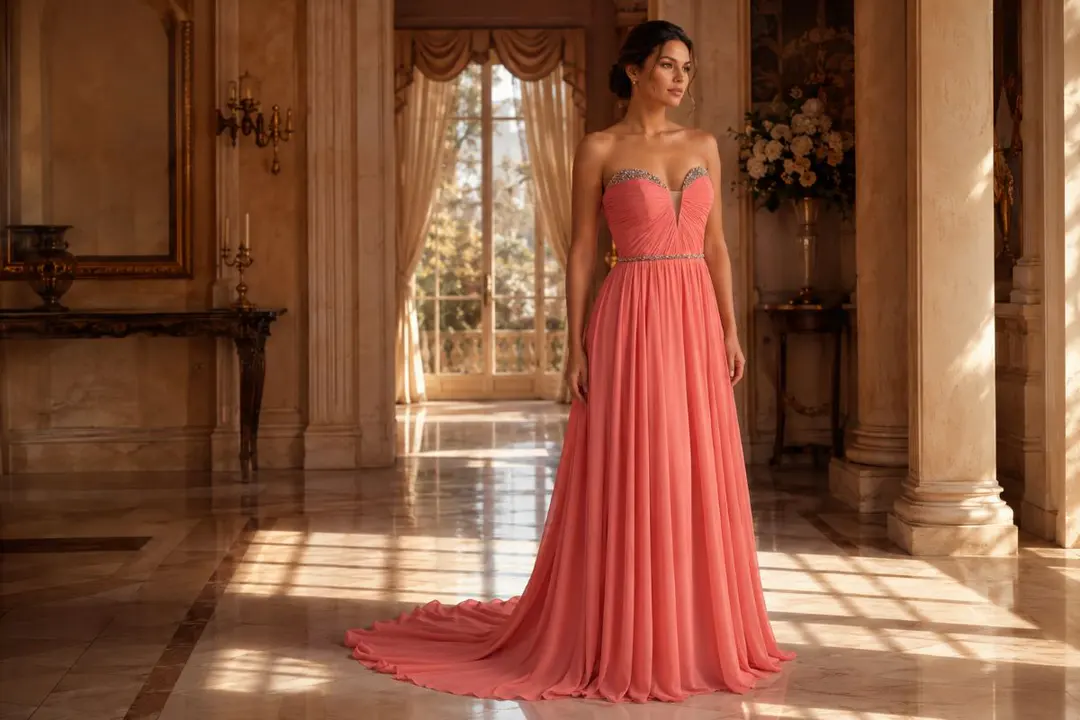
What makes a dress an A line? An A line prom dress is fitted through the bodice and waist, then widens gradually from the waist to the hem, so the whole gown traces the shape of a capital A. The flare starts at or just below the natural waist, which is what separates it from a fit and flare, where the skirt stays close through the hips before opening, and from a mermaid, which stays fitted to the knee. It is also narrower than a ball gown, whose skirt is far fuller and often supported by a petticoat. The result is a silhouette that defines the waist without gripping the hips or thighs, and that lets you walk, sit and dance freely.
The distinctions matter when you shop, because the names get used loosely. A ball gown and an A line can look similar in a photograph, but the ball gown's skirt is much wider and heavier. A fit and flare can be labeled as an A line when the flare actually starts at the hip. If freedom of movement is the reason you want an A line, check where the skirt starts to widen before anything else.
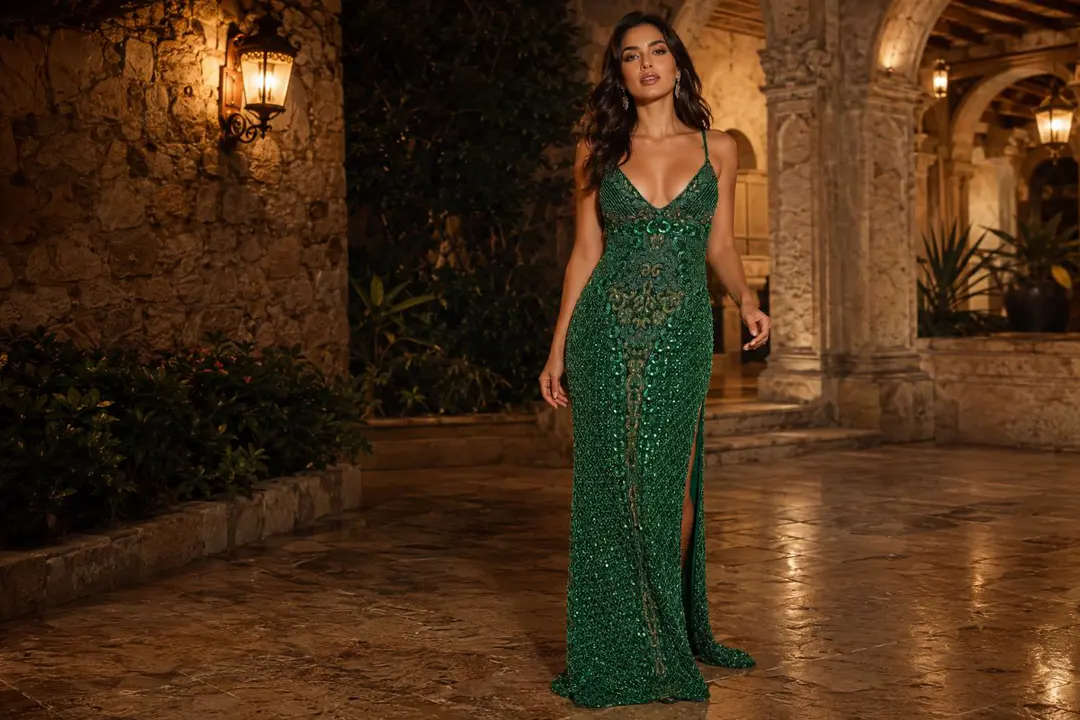
Why the shape works on so many frames
The A line creates balance without depending on the body underneath it. The fitted bodice defines the waist, the skirt moves away from the hips and thighs, and the contrast between the two gives the gown its shape. Because the skirt does not follow the body, the same silhouette sits well across very different proportions.
Two variables do most of the adjusting. Waist placement is the first: a seam at the natural waist reads classic, a slightly raised seam lengthens the leg line, and an empire seam just under the bust lets the skirt fall from higher still. Skirt volume is the second: a soft chiffon A line barely flares, while layered tulle builds real fullness.
On a shorter frame, a lighter skirt and a slightly raised waist keep the proportions balanced, and hemming to your shoe height matters more than usual. A taller frame carries a fuller skirt, bold prints and dramatic volume easily. A defined waist suits a corset bodice or a sweetheart neckline, while a frame that is fuller through the middle often finds an empire seam or soft draping more comfortable. For hip and thigh room, the A line is the most forgiving shape there is. Our guide to choosing a prom dress for your body type goes further on proportion.
A line cuts are also among the most comfortable plus size prom dress choices, because a supportive bodice and a defined waist hold the structure while the skirt allows room below.
The different kinds of A line
The silhouette is a starting point rather than a single look. A classic A line keeps to clean lines and a smooth satin or soft tulle skirt, and it is the version least likely to date in photographs. A princess A line adds fuller tulle layers, glitter or appliqué, which gives the fairytale feeling of a ball gown with more comfort and movement. A minimalist A line relies on structure alone, with mikado or heavy satin, a simple neckline and precise seams.
A beaded A line puts the detail on the bodice and usually keeps the skirt softer so the gown stays balanced.
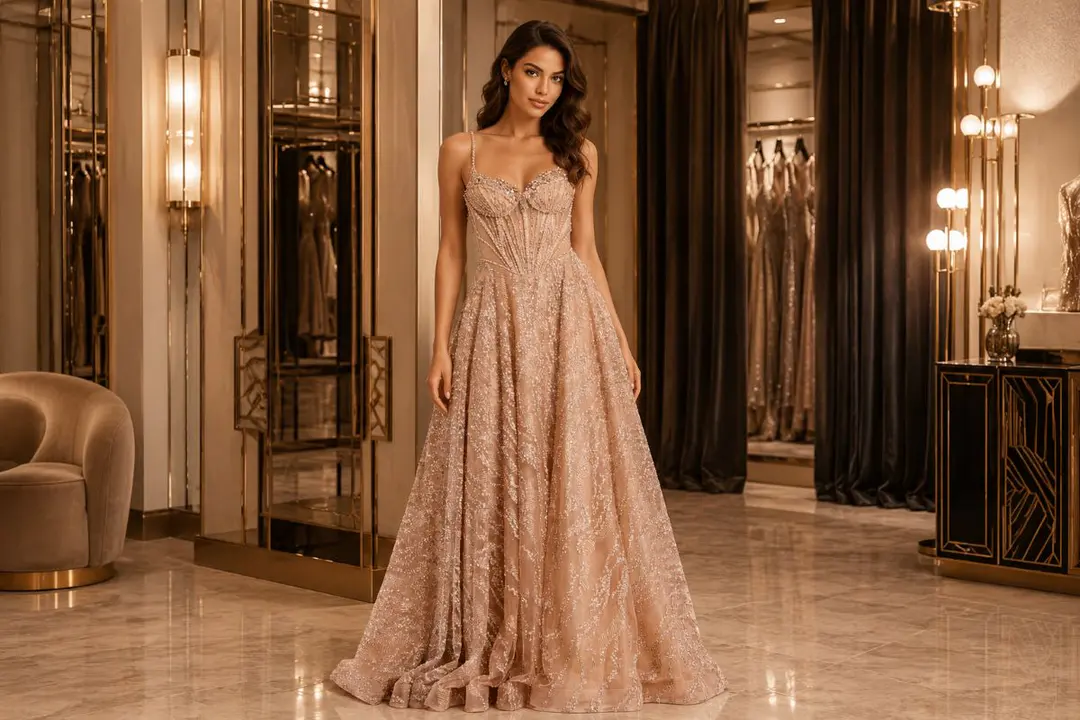
A floral A line uses prints, embroidered flowers or sculpted appliqué, and suits spring and garden venues. A modest A line adds higher necklines, sleeves and covered backs without losing the shape. And a two-piece A line pairs a crop top with a separate flared skirt for a more modern read.
Fabrics that change the A line
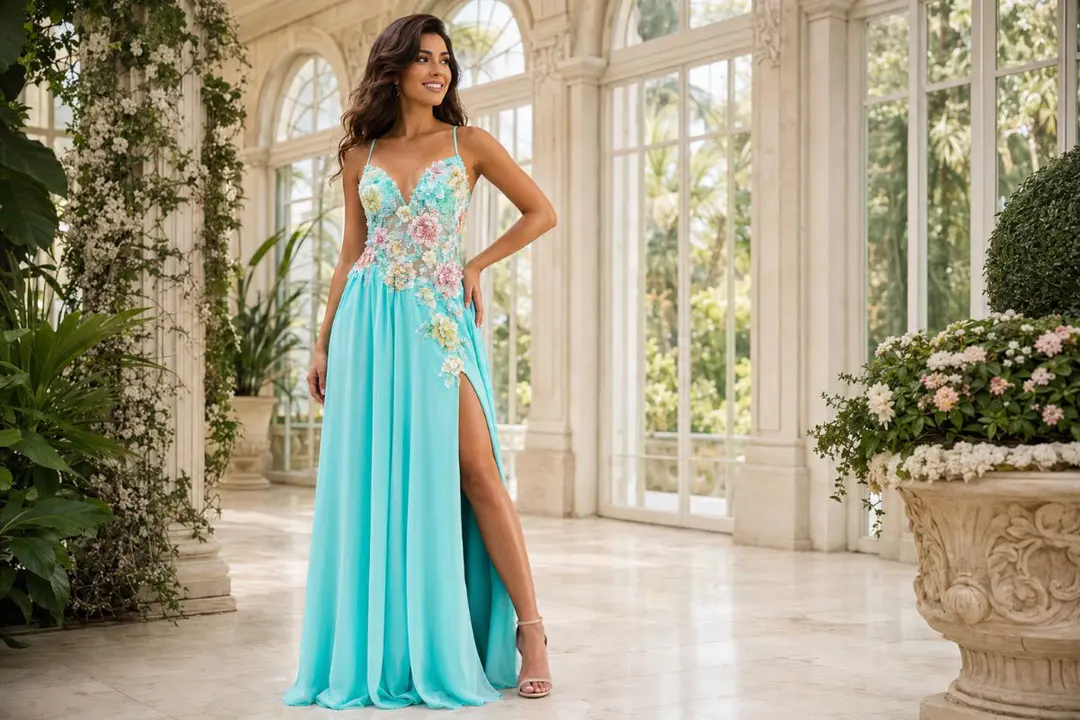
The same cut looks completely different depending on the fabric, because the fabric decides how far the skirt flares and how it moves.
Satin is smooth, polished and formal, with a natural shine that holds up under venue lighting, and satin prom gowns in an A line are the most classic version of the shape. Mikado is heavier and more structured still, which makes it the fabric for a crisp, architectural skirt.
Tulle is airy and romantic. Layered, it builds princess volume, and used lightly, it floats. A tulle prom dress is the easiest way to get fullness without the weight of a petticoat. Organza is crisper than tulle and holds volume while staying light.
Chiffon is the lightest option and the most comfortable for dancing, since the skirt moves with every step. Lace adds detail and a romantic feel, often on the bodice, sleeves or back. And glitter or sequin fabric turns the A line into a statement gown that catches every light in the room.
Matching the A line to your prom theme
Because the A line adapts so easily, the venue and theme are a useful way to narrow the fabric and finish.
For a classic ballroom prom, a floor-length A line in satin or mikado carries the formality of the room. A garden or outdoor prom suits floral prints, tulle or chiffon, and it is worth checking the hem length so the skirt clears grass and paving. A modern hotel venue suits a sleek, minimalist satin A line with clean seams.
A Hollywood or red carpet theme is where sequins and crystal beading earn their place, since both photograph brightly under flash. A beach or warm-weather prom is easier in chiffon, which breathes and moves in the breeze. And a black tie prom calls for strong construction, a structured bodice and a heavier fabric such as mikado, since that is what reads as most formal.
Necklines and how they change the look
The neckline sets the mood and decides the jewelry and hair. A sweetheart neckline is romantic and follows the curve of a heart. A V neckline lengthens the upper body with a strong vertical. A strapless neckline is the most classic prom choice and leaves room for a necklace.
An off-the-shoulder neckline frames the collarbone and shoulders. A one shoulder cut adds asymmetry and makes a simple gown feel current. A halter defines the shoulders and gives support, and a high neckline offers coverage and pairs well with beading or illusion fabric. The rule for styling follows directly: an open neckline leaves room for a necklace, while a high or halter neckline looks best with earrings alone.
How an A line wears on the night
The A line photographs well because the balance between a fitted bodice and a moving skirt reads clearly in portraits and group photographs alike, and the skirt adds movement in candid shots.
It is also one of the easiest shapes to dance, sit and walk in. The skirt leaves the hips and legs free, so there is none of the restricted stride of a fitted gown. That is the practical difference from a mermaid prom silhouette, which trades that freedom for a more dramatic line.
For styling, metallic shoes suit most colors and a heel close to your own skin tone lengthens the leg line. Keep the clutch small. Soft waves suit an open neckline and an updo suits a high neck or a detailed bodice. A soft, polished makeup look suits a romantic A line, while a classic minimalist one can carry a bold lip.
What to check in the fitting room
Start by checking where the skirt begins to flare, since that is what makes it an A line and not a fit and flare. Then sit down fully, raise your arms, and walk the length of the room, because the whole point of the shape is comfort in motion.
Check the bodice support. A structured bodice with boning holds its line without needing to be tight. Wear the undergarments and shoes you plan to wear on the night, since both change the fit and the hem.
Watch the skirt volume against your height, since too much fullness on a shorter frame is the most common mistake with this shape. And budget for a hem at minimum, since almost every long A line needs one to match the shoe. Because the skirt is loose through the hips, the rest of the alteration usually focuses on the bodice and waist.
A Line Prom Dress Questions
What is the difference between an A line and a ball gown?
Skirt volume and weight. A ball gown has a very full skirt, often supported by a petticoat, and makes the most dramatic statement. An A line flares more gradually from the waist, which gives a similar fitted-bodice look with far less width, and it is easier to move and sit in.
Is an A line the same as a fit and flare?
No, though stores sometimes use the names loosely. An A line starts to widen at or just below the waist. A fit and flare stays close through the hips and opens lower, often at mid-thigh. If you want the freedom of movement an A line gives, check where the flare begins.
Can an A line prom dress have sleeves?
Yes, and it is one of the easiest shapes to add them to, since the bodice is structured and the skirt balances the extra fabric at the top. Long sheer sleeves, flutter sleeves and cap sleeves all work, and sleeves are a common way to meet a modest dress code without changing the silhouette.
Is a short A line appropriate for prom?
It depends on your prom. Many proms expect floor length, while others welcome shorter gowns, especially for juniors. A short A line flares from the waist to above or at the knee and suits homecoming as well, so check your school's expectations before choosing.
Do A line dresses need a lot of alterations?
Usually less than fitted gowns. Nearly every long A line needs a hem set to your shoe height. Beyond that, work tends to focus on the bodice and waist, since the skirt is loose through the hips and rarely needs changing.
Which color works best for an A line?
Any, since the silhouette does not favor one. What changes is the mood. Deep jewel tones and black read most formal, pastels and florals read softer and suit spring or garden proms, and sequinned metallics turn the shape into a statement. Choose the color for your skin tone and the fabric for the effect.
Trying the shape on
The difference between an A line, a fit and flare and a ball gown is obvious in a mirror and easy to miss on a screen, so the fastest way to decide is to try all three.
Walk and sit in each at an authorized Jovani retailer, and check where each skirt starts to flare before you look at anything else.