
An art gallery opening is one of the more interesting invitations to dress for, precisely because there is rarely a clear instruction on the card. It is not a wedding, not a black-tie gala, and not a casual party, and the usual rules do not map onto it neatly. A gallery opening has its own atmosphere, its own pace, and its own unspoken etiquette, and the goal is to look considered and current without ever pulling focus from the reason everyone is there, which is the work on the walls. Knowing what to wear to an art gallery opening comes down to understanding the room you are walking into: the lighting, the hours on your feet, the crowd, and the quiet rule that the art comes first. This guide covers all of it, from reading the type of opening to choosing a silhouette that moves well in a packed space, so you arrive looking like you belong there.
First, read what kind of opening it is
Not all gallery events are the same, and the specific occasion shifts how dressed up you should be. The word opening covers a surprising range, and turning up dressed for the wrong version is the most common misstep. Before choosing anything, work out which of these you are attending.
- A public opening reception. The most common type, usually held in the early evening on a weekday, open to a broad guest list that often includes the gallery’s mailing list and the wider public. The tone is creative and polished but not formal. Smart, current, and comfortable is the target, and there is room for personality.
- A private view or VIP preview. A more exclusive event, often held the evening before a public opening, with collectors, critics, press, and personally invited guests. The room is smaller, the conversation is more focused on the work, and the dressing leans more elevated. You can comfortably dress up a step further here.
- A daytime or weekend opening. Smaller galleries, student shows, and group exhibitions often open during daylight hours. The dressing is lighter and more relaxed, and natural light through the windows changes how fabrics read, but the look should still be considered rather than casual.
- An artist talk or walkthrough. Some openings are built around the artist speaking about the work. These are quieter and more intimate, and the dressing is understated, since the focus is firmly on listening and looking.
- A museum or institutional gala tied to an exhibition. This is a different event entirely, a true gala with a stated formal dress code, and it should be dressed exactly as the invitation specifies rather than as a gallery opening. Do not confuse the two.
For a standard gallery opening, the dressing sits in the creative, contemporary register rather than the strictly formal one. If the invitation uses the phrase contemporary attire, our guide on understanding the contemporary dress code explains exactly what that means. For everything else, the venue, the gallery’s reputation, and the time of day are your best guide. A blue-chip gallery in a major city tends to draw a more polished crowd than a small experimental space, and dressing in step with the room is part of reading the event correctly.
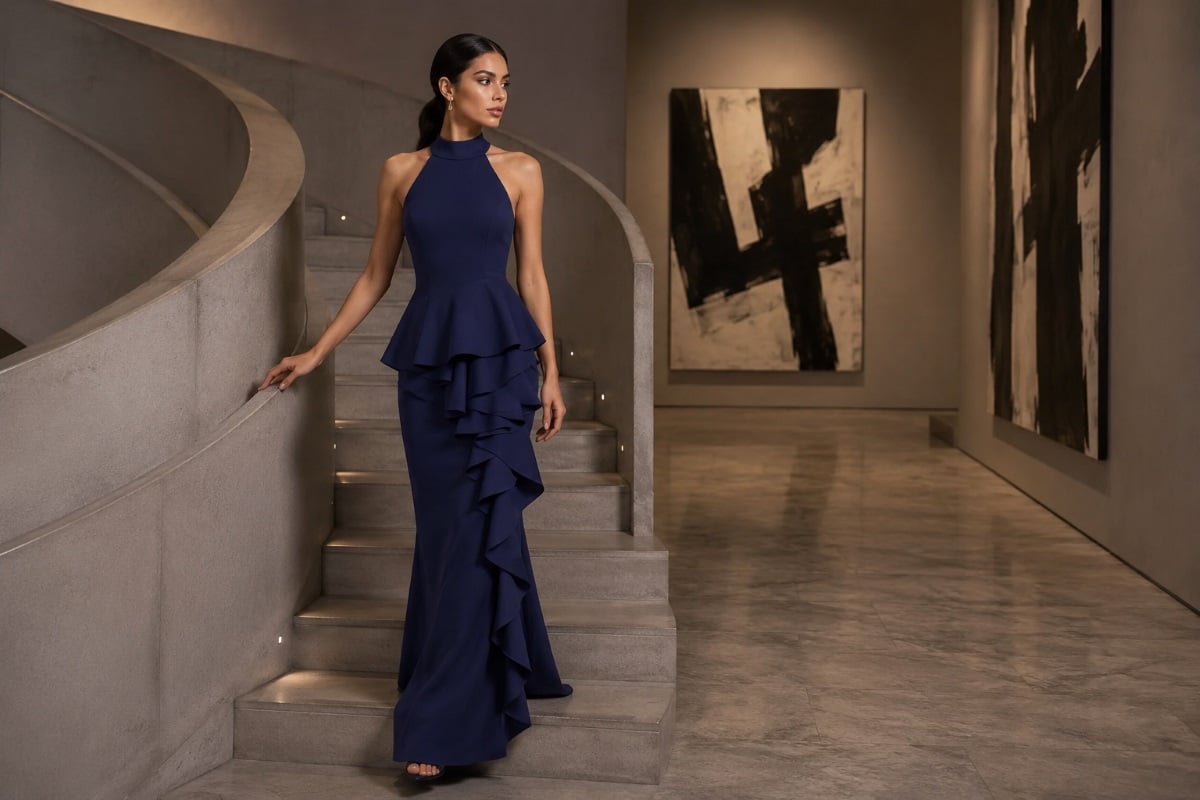
The golden rule: complement the art, do not compete with it
This is the single principle that separates someone who understands gallery dressing from someone who does not. The art on the walls is the point of the evening. Your outfit should make you look current and confident while leaving the visual spotlight where it belongs, on the work and on the artist.
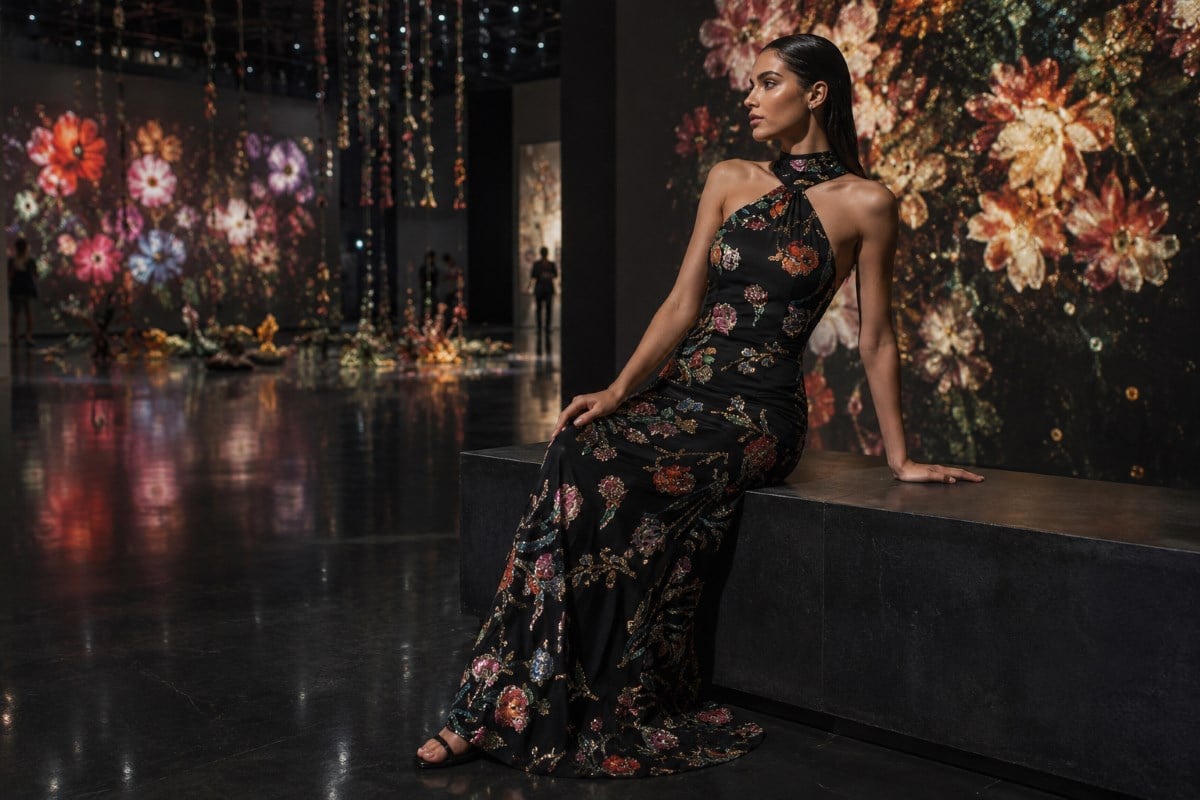
In practice this means favoring clean lines, strong silhouettes, and a considered use of color over busy prints, heavy sparkle, and loud embellishment. A gallery is a visually controlled space, often with white walls, polished floors, and deliberate lighting designed to remove distraction. A sleek, graphic outfit reads as fluent in that environment, as though you understand the visual language of the room. A dress drenched in crystals or covered in a chaotic print competes with the work and can look out of place, almost as if it is trying too hard. This is also why the contemporary aesthetic suits the setting so well, since it is built on architectural shapes, refined tailoring, and minimalist elegance. The styles in the contemporary gowns collection, with their sculptural draping and strong lines, are essentially designed for rooms like this.
There is a subtle social layer here too. A gallery crowd is visually literate by definition, and they read clothing the way they read a canvas, noticing proportion, construction, and intent. The aim is to look like you have a real eye for design, and a restrained, intentional outfit signals that far better than a maximalist one. Understatement, in this specific setting, is the more sophisticated choice. That does not mean dull. A single unexpected element, an interesting neckline, a sculptural sleeve, a confident color, gives the look personality without noise.
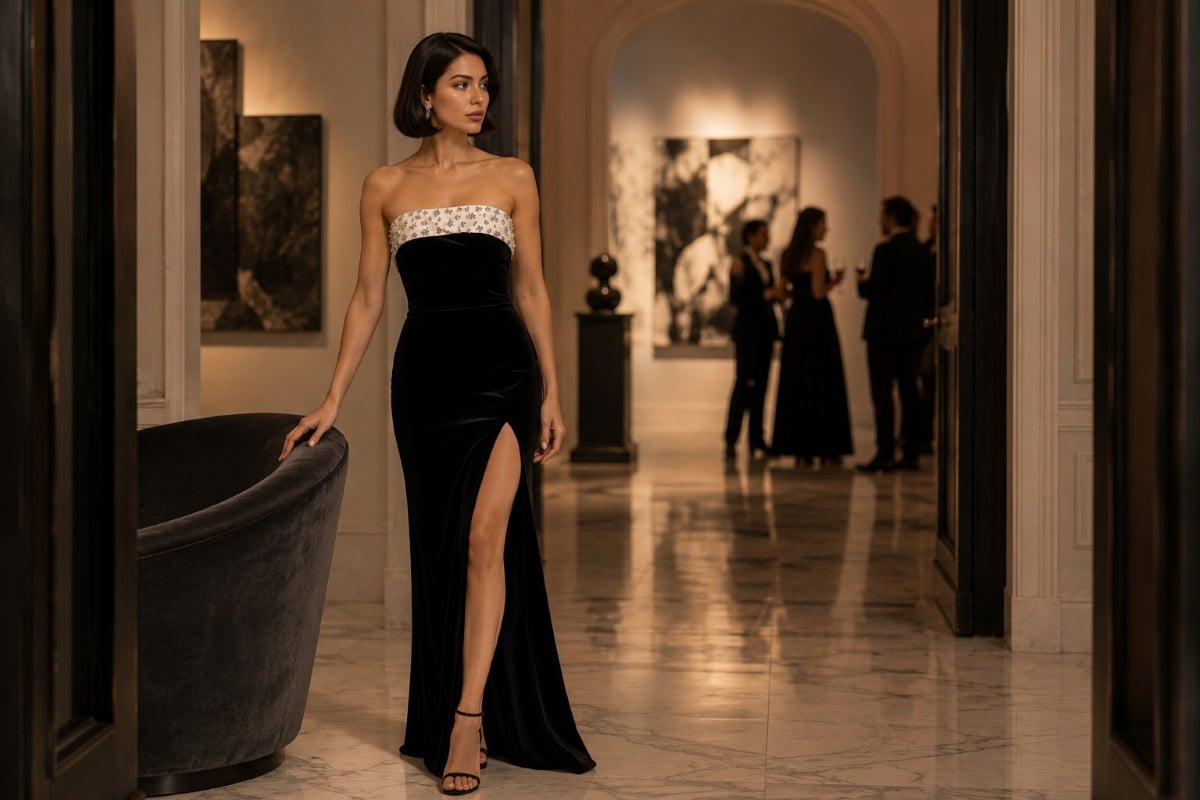
What to wear to an art gallery opening: silhouettes that work
With the tone understood, the silhouette is your next decision, and the gallery environment rewards specific shapes. When deciding what to wear to an art gallery opening, picture the actual room: a space full of standing guests, limited room to move, and a crowd that drifts from wall to wall.
A fitted, streamlined silhouette is the most practical and the most stylish choice. A gallery opening is a standing, mingling event in an often crowded space, so a sleek profile lets you move through the room with ease, while a voluminous skirt becomes genuinely cumbersome and can knock against people and pedestals. The clean shapes among fitted straight evening dresses are well suited to navigating tighter crowds without fuss.
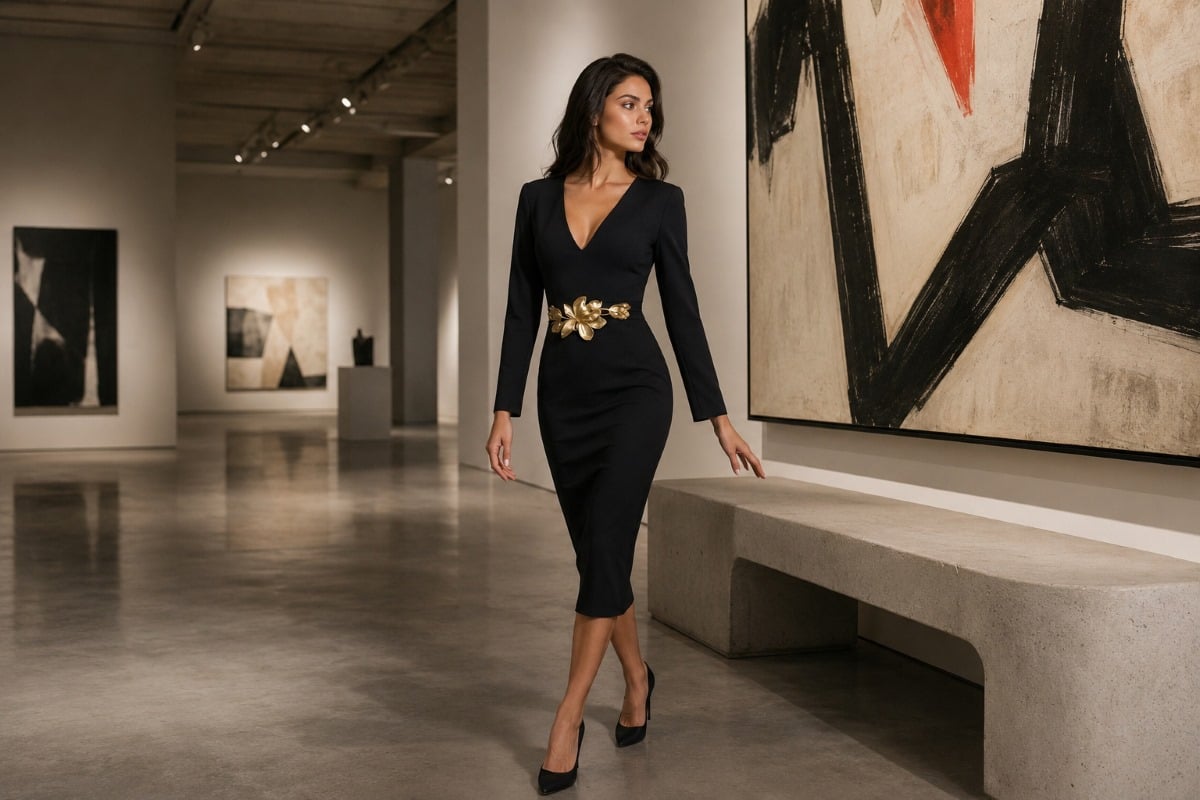
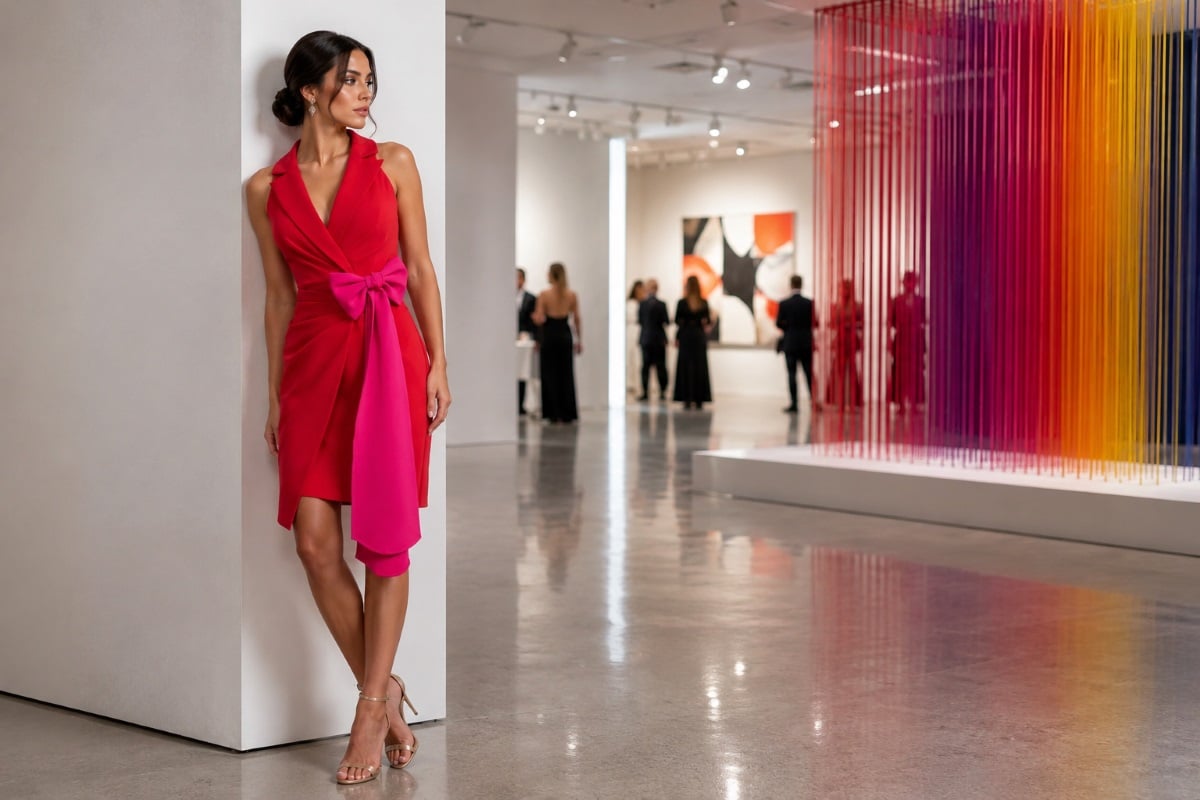
A midi length is arguably the ideal length for a gallery opening. It reads as modern, sophisticated, and a little fashion-forward without the formality of a floor-length gown, and it photographs well in a setting where you will likely end up in someone’s picture. The styles among midi formal dresses hit exactly the right register for the creative-but-not-formal tone of the event.
A tailored jumpsuit is another excellent and notably current option. It signals a confident, design-aware sensibility, moves effortlessly through a crowd, and stands apart from a room of dresses without trying hard. The range of jumpsuits offers a sharp, modern alternative for anyone who wants to look current without a single thing to manage all evening.
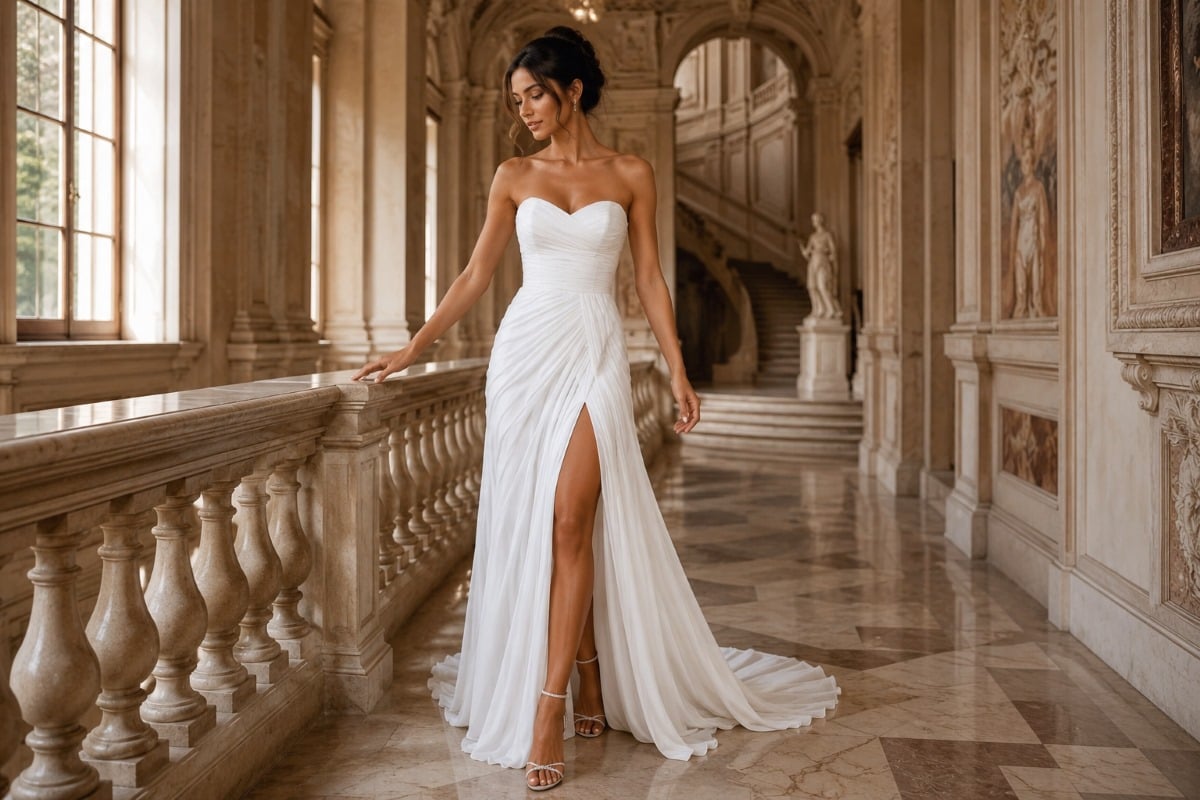
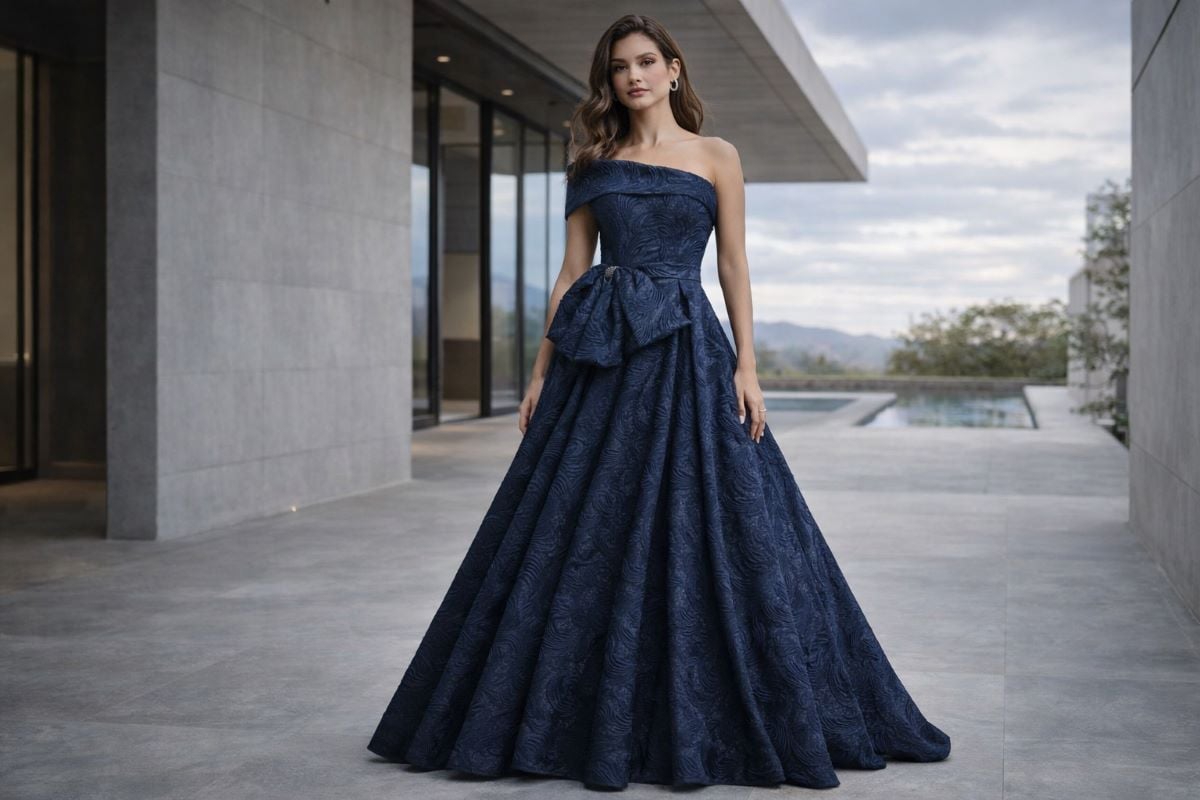
An architectural or asymmetrical piece, with an interesting neckline, a sculptural shoulder, or considered draping, is genuinely at home here, since the setting welcomes a dress that is itself a small work of design. What works less well is a very full ball gown, which overwhelms a tight space and reads as the wrong event, and an overtly bridal or heavily traditional formal look, which feels imported from a different occasion. The honest summary is that the gallery rewards modern restraint over traditional grandeur.
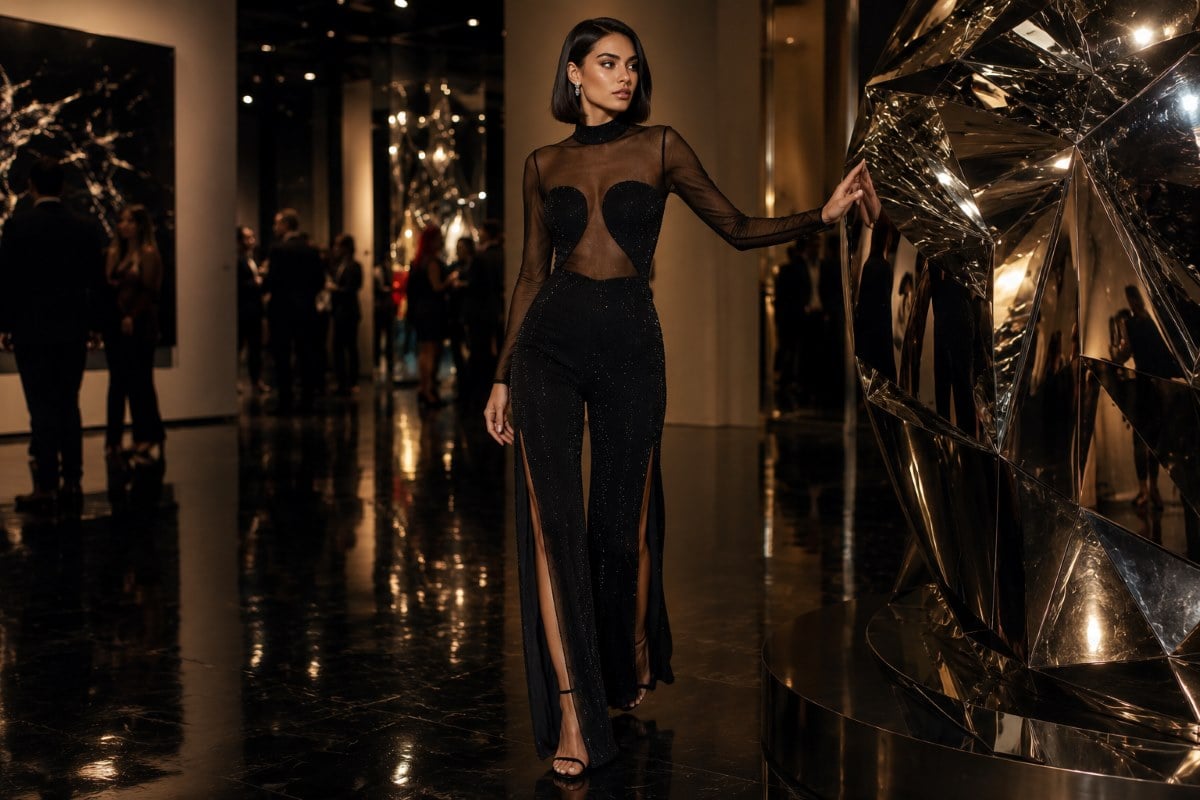
Dressing for gallery lighting
Gallery lighting is a real and overlooked factor, and it deserves genuine thought. Galleries are lit deliberately and often brightly, with clean, neutral white light directed precisely to show the artwork accurately. That light is honest in a way that flattering restaurant lighting is not, and it changes how your outfit reads once you walk in.
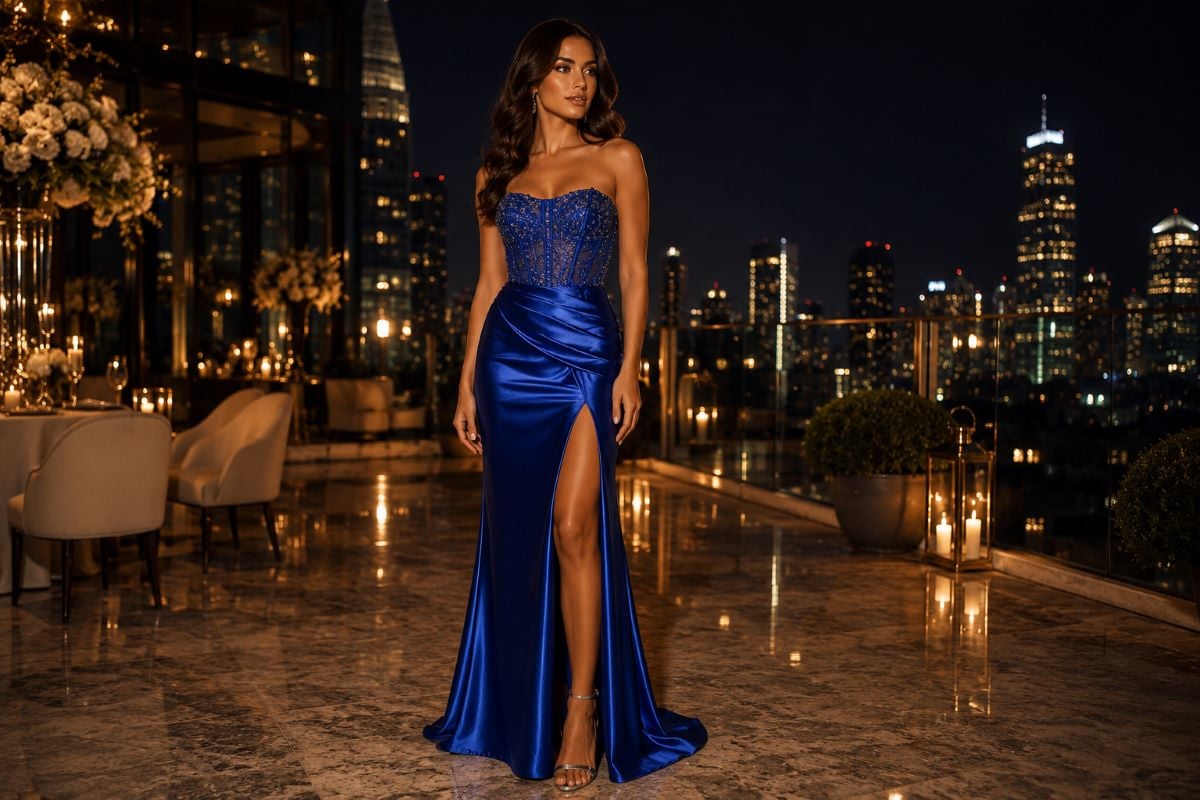
Strong, clear gallery light flatters matte and lightly textured fabrics, which look refined and intentional under it. Crepe, mikado, structured satin with a soft rather than glassy finish, and clean tailored fabrics all photograph and read beautifully in that environment. Very high-shine, heavily sequined fabrics can look harsh under bright white gallery lighting, the same way they can in unforgiving daylight, so a little shine is elegant while an all-over glitter finish is usually too much for the room.
Solid, confident color is your friend here. A single strong shade reads as graphic and modern against a white gallery wall, and it can be genuinely striking in photographs, which is part of why fashion-aware guests gravitate toward it. If you are weighing a bold color against a classic neutral, our guide on how to choose an evening dress color is a useful read. And there is a reason black is a perennial favorite in art circles: it is sleek, it never competes with the work, it photographs cleanly under any lighting, and it carries an effortless authority in creative spaces. The black formal gowns collection is a reliable place to start if you want the safest sophisticated choice. One practical note: think about the wall color of the gallery if you know the space. A pale, near-white dress can disappear against a white wall in photos, so a defined color or a deeper tone gives you more presence.
The practical realities: shoes, standing, and moving
A gallery opening is physically a particular kind of event, and dressing well for it means dressing for what your body will actually be doing for two or three hours straight.
You will be on your feet almost the entire time. Gallery openings rarely have much seating, if any, since the format is standing and circulating by design. This makes footwear the most important practical decision of the night, more important than at almost any seated event. Gallery floors are typically hard, polished concrete, stone, or wood, which is genuinely unforgiving over a long evening. Choose a shoe you can comfortably stand and walk in for hours: a block heel, a refined low heel, an elegant flat, or a fashion-forward architectural shoe all work and all suit the setting. A very high, delicate stiletto becomes a real problem on a hard floor across a long event, and discomfort shows in your posture and your face long before the evening ends.
You will also be moving and circulating constantly, walking between rooms, stepping back to take in a large piece, leaning in to read a label or look closely at detail, and standing in extended conversation. Choose a dress that lets you do all of that naturally, without tugging, adjusting, or thinking about it. A comfortable, well-fitting silhouette frees you to focus on the art and the people, which is the entire point of being there. Plan for temperature too, since galleries are frequently kept cool and air-conditioned to protect the artwork, regardless of the season outside. A sleek jacket, a tailored blazer, or a light wrap handles that without disrupting the line of the outfit. Finally, keep what you carry minimal, since you will want a hand free for a glass and for greeting people.
Styling and finishing touches
With the dress chosen, the styling should stay in the same considered, design-literate register. A gallery crowd notices detail, so a few intentional touches matter far more than a pile of accessories.
Let one element lead. If the dress has an interesting neckline or a sculptural shape, keep jewelry minimal and let the dress speak for itself. If the dress is simple and clean, a single strong piece of modern jewelry, a sculptural earring or an architectural cuff, becomes a deliberate focal point and shows a real point of view. This kind of considered restraint is the heart of contemporary styling, and our guide to the best contemporary dress styles goes deeper into building that look.
Carry a small, clean clutch rather than a large bag, since you will want your hands free and the silhouette uncluttered. Keep hair and makeup polished but not heavy, since a fresh, modern finish suits the honest gallery lighting better than a full evening face. A strong lip or a clean, defined eye is plenty. Above all, wear the outfit with ease. Confidence and a relaxed posture are what make a considered look read as genuinely effortless, and that effortlessness is the quiet goal of creative event dressing. The most stylish person in a gallery is rarely the most dressed-up one. It is the one who looks completely at home.
A few mistakes worth avoiding
Most gallery-dressing missteps are not about looking unattractive. They are about looking like you misread the room. A few are worth naming directly so you can sidestep them.
- Overdressing into black-tie territory. A floor-sweeping, heavily embellished gown signals a formal gala, not a gallery opening, and it can make you look as though you mistook the invitation.
- Wearing a loud, busy print. A chaotic print competes with the art and pulls visual attention in a space designed to control it. A solid color or a quiet texture is the wiser choice.
- Choosing impractical shoes. Delicate stilettos on hard floors across a three-hour standing event lead to visible discomfort. Comfort here is a style decision, not a compromise.
- Over-accessorizing. Stacking many statement pieces clutters the clean line that makes a gallery look work. Let one piece lead.
- Forgetting the temperature. A climate-controlled gallery can be genuinely cold, and shivering through an opening undermines an otherwise considered outfit. Bring a sleek layer.
َAbout dressing for a gallery opening FAQs
What is the dress code for an art gallery opening?
Most gallery openings do not state a formal dress code. The expected register is creative and contemporary, polished and current rather than strictly formal. Aim for clean lines and a considered look that complements the art rather than competing with it. A private view leans slightly more elevated than a public reception.
Can I wear black to a gallery opening?
Yes, black is a classic and reliable choice for a gallery opening. It is sleek, it photographs cleanly under any lighting, and it never competes visually with the artwork. A well-cut black dress or jumpsuit in a modern silhouette is one of the safest sophisticated options for the setting.
Should I wear a long gown to an art gallery opening?
Usually not. A full-length gown, especially a voluminous one, tends to be too formal and too cumbersome for a standing, circulating event in an often crowded space. A midi length or a sleek fitted silhouette is more appropriate, more comfortable, and more current for a gallery opening.
What shoes should I wear to a gallery opening?
Choose shoes you can comfortably stand and walk in for hours, since gallery openings have little seating and hard floors. A block heel, a refined low heel, an elegant flat, or an architectural shoe all work well. Avoid very high, delicate stilettos, which are difficult on hard gallery floors.
Is a jumpsuit appropriate for an art gallery opening?
Yes, a tailored jumpsuit is a notably current and appropriate choice for a gallery opening. It signals a confident, design-aware sensibility, moves easily through a crowd, and reads as modern and considered, which suits the creative atmosphere of the event well.
How dressed up should I be for a gallery opening?
It depends on the type of opening. A public evening reception calls for smart, creative dressing that is polished but not formal. A private view or VIP preview can be dressed a step further. A daytime opening is lighter and more relaxed. The venue and time of day are your best guide.
What colors work best for a gallery opening outfit?
Solid, confident colors work best, since a single strong shade reads as graphic and modern against white gallery walls. Black is a reliable favorite. Avoid busy prints, which compete with the art, and be cautious with very pale, near-white tones that can disappear against a white wall in photographs.
When you are ready to find a sleek, modern look for a creative evening, explore the formal dresses collection through an authorized Jovani retailer.