
How to Tell If a Little Black Dress Is See Through

To tell if a little black dress is see through, examine its lining, try it on in bright light, and check the skirt while moving. Black fabric can still reveal skin or undergarments, especially through lace, mesh, or thin stretched panels. A careful fitting helps you identify intentional sheer details and unexpected gaps in coverage before an event.
Start by comparing different little black dress styles. Two black minis can look equally opaque in photographs while their back panels, inner layers, and fabric weights behave very differently in person.
Why Can a Black Dress Still Look See Through?
A dark color does not guarantee coverage. Fabric density, openwork, stretch, and the difference between the outer layer and its lining determine how much light passes through a dress. Black lace over a nude backing also looks different from the same pattern over black.
A guide to black cocktail fabric finishes explains how matte, satin, velvet, and lace handle reflected light. That is a separate question from opacity: a dress can reflect little light and still contain sheer panels.
How Can You Tell If a Dress Is See Through?
Check transparency while wearing the dress, not just while holding it up. Use the undergarments you expect to wear and inspect the front, side, and back. A photograph can help, but compare it with your own view under the same lighting.
Look in Daylight and Indoor Lighting
Stand near indirect daylight, then move to ordinary indoor light. Check the bust, seat, sides, and skirt without assuming that black fabric hides everything. A camera flash may change the appearance, but a single photograph cannot prove the garment is opaque.
Turn slightly and look at seams where fabric stretches across the body. A fine weave may separate more when under tension, even though the same dress appears solid on its hanger.
Find the Lining and Where It Ends
Lift the outer layer carefully to identify any lining, backing, or built-in slip. Check whether those layers cover the bodice, skirt, and lower hem. A lined bodice does not mean the entire skirt has identical coverage.
Jovani's cocktail dress fabrics guide distinguishes an airy outer layer from the structure beneath it. Use that distinction when checking a black dress with chiffon, lace, or decorative mesh.
Sit, Walk, and Check the Back
Sit on a chair, stand up, and take a few normal steps. Watch whether the lining rides up while the outer layer stays low. Check how a slit opens and whether an intended illusion panel reveals more when you bend or turn.
A comfortable dress should let you move without constantly repositioning its layers. If a lining twists or bunches, ask a qualified alterations professional whether the construction can be adjusted.
Which Black Dress Fabrics Need Closer Inspection?
Lace, mesh, thin jersey, and lightweight satin deserve different checks. Material names alone cannot predict transparency because each style uses its own weight, lining, and construction. Inspect the actual garment instead of relying on a general rule.
Lace and Mesh With Contrast Backings
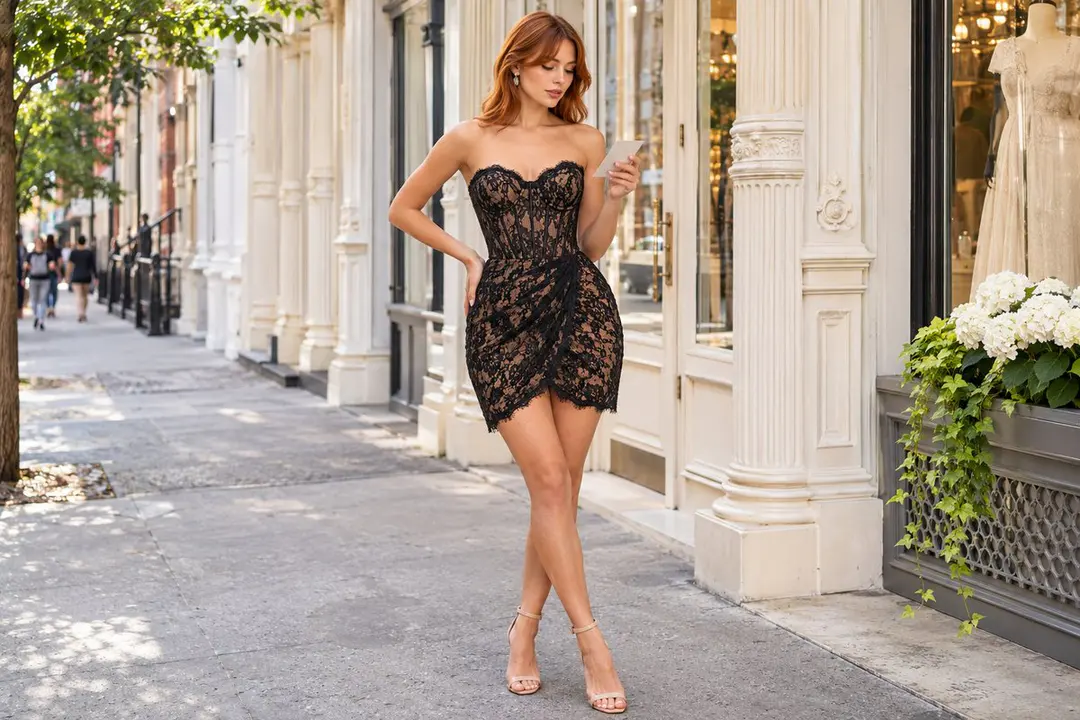
Black lace frequently uses an opaque or skin-toned layer to control coverage. Compare lace party dresses and look for the exact point where a backing begins and ends. An intentionally sheer sleeve is different from an unexpectedly unlined bodice.
Jovani's Strapless Black Lace Mini Dress features a floral lace overlay, a structured bodice, and an A-line mini skirt. Its listed black-and-nude combination makes backing color particularly important. Check the dress in person to confirm the coverage you prefer.

Satin and Fitted Stretch Fabrics
A smooth surface can reveal garment seams and undergarment outlines without actually being transparent. With short satin cocktail styles, examine the fabric at the hips and along the zipper. Stretch a small area gently while worn to see whether the appearance changes.
Jovani's Halter Neck Mini Dress With Open Back uses satin, a sleeveless halter neckline, and a short front with a train. Its open back is an intentional design feature. Check the bodice and side coverage separately from that open-back detail.
Crepe, Velvet, and Other Dense Finishes
A more substantial crepe or velvet may offer greater coverage, but thickness does not promise a smooth fit. Examine any cutouts and thinner lining sections. Velvet's surface may look lighter when its pile changes direction, which is not the same as being sheer.
For opaque areas, focus on fabric tension and the finish of the inner layers. A dark, dense front panel does not establish what is happening at the neckline, back, or hem.
What Should You Check When Shopping Online?
Read the product description for fabric, color combinations, lining information, and back details. Then compare close-up, front, and rear photographs. If a key area is not shown, ask the authorized retailer about its actual coverage before purchasing.
Jovani's black cocktail dress collection includes black-and-nude lace designs alongside solid black styles. That distinction is visible in product color listings, but it does not establish every lining detail. Request clarification rather than assuming how a dress will look on your skin.
Choose the Right Coverage for the Occasion
Decide how much coverage you want before selecting embellishment or accessories. For a dinner or reception, a lined bodice with decorative lace sleeves may feel appropriate. For a more conservative event, confirm that sheer sections match the host's expectations and your comfort level.
Browse short cocktail and party dress options by intended event, then inspect each style's actual lining. Jovani's cocktail attire pillar explains dress-code context, while this guide focuses on checking coverage before you commit.
What to Wear Under a Black Dress With Sheer Areas
Choose smooth undergarments that match your skin tone or the intended backing, then test them beneath the actual dress. A black bra may be conspicuous under nude-lined lace, even if it disappears under solid black. Seam placement can matter as much as color.
A separate slip may improve coverage when it works with the neckline, slit, and hem. However, a slip can also shift against the outer skirt. Test the complete outfit while walking and seated before deciding whether an extra layer solves the problem.
Check Construction Before Your Final Fitting
Inspect the inside seams, lining attachment points, closures, and any decorative mesh. Watch for lining edges that create visible lines or catch when you move. If a section feels scratchy or pulls unevenly, do not assume another undergarment will resolve the construction problem.
- Photograph the front and back in consistent, ordinary light.
- Check the coverage of each panel rather than judging the dress as one layer.
- Wear your planned undergarments and take a seat before making a decision.
- Ask about alterations before buying if the lining needs to be changed.
Knowing how to tell if a dress is see through helps you choose a black outfit for its real coverage, not only its photographs. To compare options in person, find an authorized Jovani retailer and ask to inspect the lining and fit.
Frequently Asked Questions
Does black fabric always hide underwear?
No. Black color can reduce visible contrast, but thin weaves, stretched areas, and openwork may still reveal underwear or its outline. Test the exact outfit in bright light before the event.
Can a lace dress have both opaque and sheer sections?
Yes. A lace dress can combine a lined bodice with sheer sleeves, an open back, or a partly lined skirt. Check each area individually rather than treating the fabric as uniformly covered.
Can a tailor add lining to a see-through dress?
Sometimes. A tailor may add a compatible lining or adjust an existing one, but seams, closures, and decorative cutouts can limit the work. Ask for an assessment before assuming the change is practical.
Will flash photography make a black dress transparent?
Not necessarily. Strong light can reveal sheer details or underlayers, but camera exposure also affects what a photograph shows. Check the garment in real lighting and review photographs only as supporting evidence.