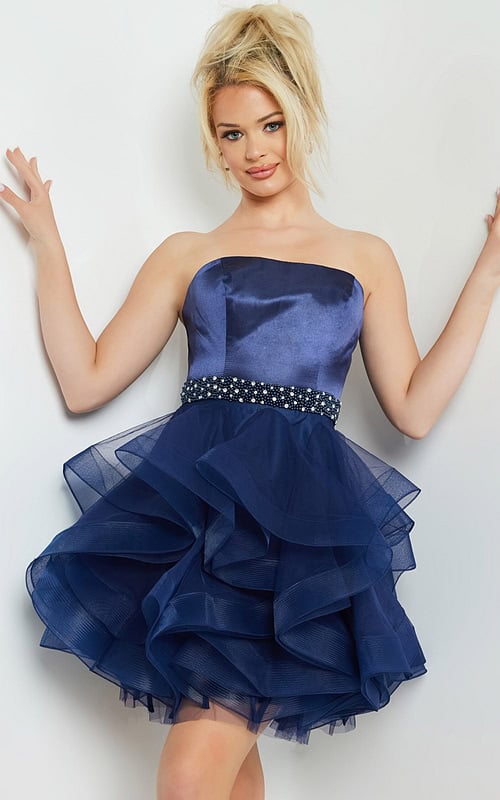
Fit & Flare Homecoming Dresses: Start With the Waist and Skirt
Fit & flare homecoming dresses can look similar in product images while fitting quite differently once you compare the waist seam and the point where the skirt begins to open. A seam positioned at the natural waist creates a clear break between the fitted bodice and fuller skirt. A slightly lower seam lengthens the fitted section before the flare begins, changing the overall proportion.
Princess seams and corset panels can shape the bodice without requiring the entire dress to stretch. If you are still comparing silhouettes across the wider selection of homecoming gowns, look closely at how much room each design gives through the hip and skirt. Fit-and-flare styles release below the waist, while bodycon homecoming dresses maintain a closer fit through the hips. That difference affects sitting, walking, and dancing as much as it affects the shape of the dress.
Let the Fabric Determine the Amount of Flare
Fabric has a direct effect on how the skirt holds its shape. Satin, mikado, jacquard, and other structured woven fabrics can produce a more defined flare, particularly when the skirt includes pleats or additional support underneath. These fabrics are worth considering when you want the waist-to-skirt transition to remain clearly visible rather than falling into a softer line.
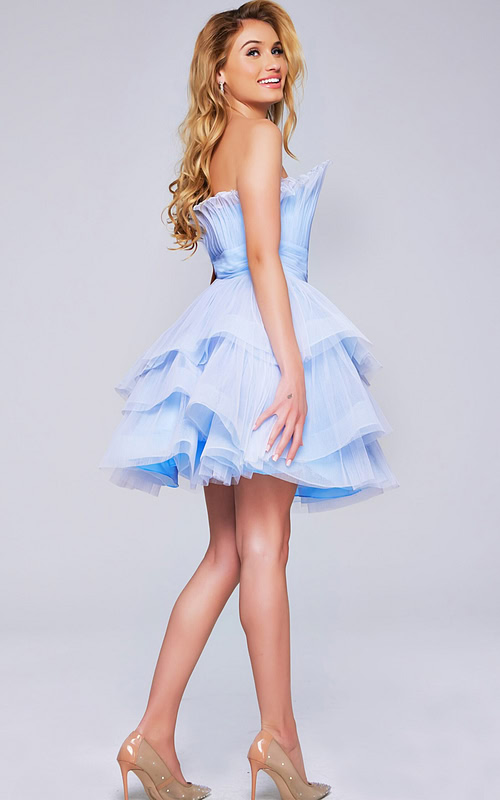
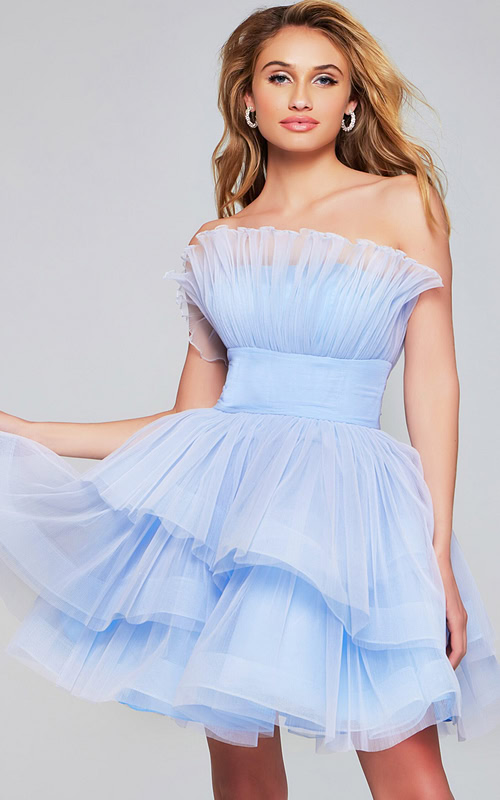
Tulle and layered mesh behave differently. Several lightweight layers can create fullness without the firmness of a structured satin skirt, giving the hem more movement when you walk or turn. Lining matters here too: a firmer or fuller lining can support the outer skirt, while a lighter lining allows the layers to fall more freely. Stretch should be checked separately from skirt volume. Some fit & flare homecoming dresses use stretch mainly through the bodice, while others rely on paneling, boning, or a lace-up closure instead. Check the fabric composition and closure rather than assuming two dresses with the same silhouette will feel equally flexible.
Compare Necklines With the Bodice Construction
A neckline should be considered together with the structure underneath it. Strapless and sweetheart styles usually need a bodice that stays anchored around the bust and ribcage. Boning, shaped cups, firm seams, and corset-style construction can provide that stability without shoulder straps.
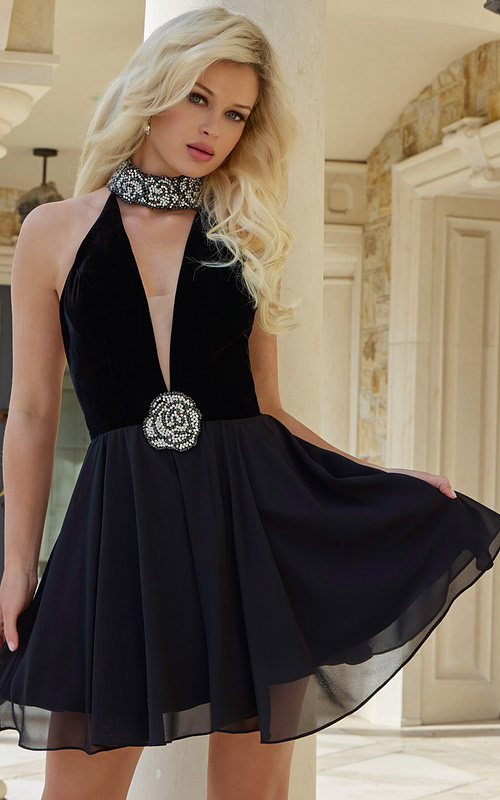
Spaghetti straps provide an additional point of support while keeping the upper body relatively open. Halter designs shift more of the support toward the neck and shoulders, while V-necklines can vary considerably depending on their depth and the placement of the straps. The wider selection of sleeveless Homecoming gowns can be useful when comparing these upper-body constructions without making sleeve length the focus of the current silhouette. Back construction also changes how precisely the bodice can be fitted. A standard zipper creates a relatively fixed circumference, while a lace-up back gives some adjustment through the bust, ribcage, and waist. On a fit & flare homecoming dress, that adjustment can be especially useful because the bodice needs to remain secure while the skirt moves more freely.
Check Skirt Volume and Hemline Together
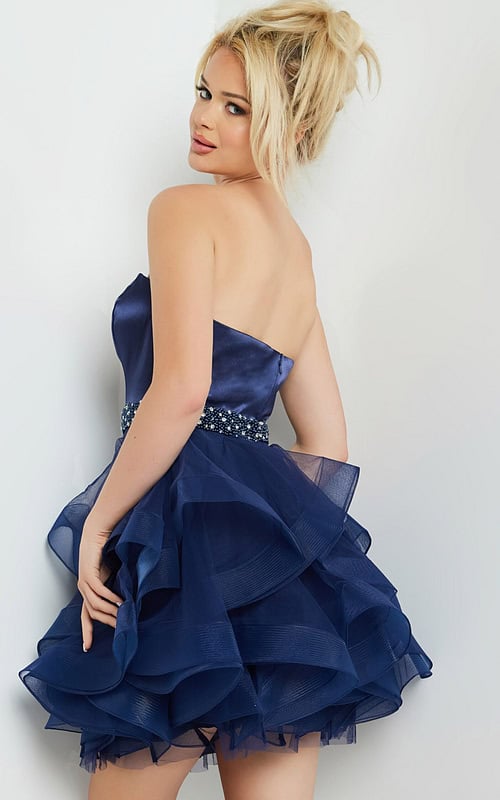
The word “flare” does not indicate one fixed amount of fullness. Box pleats can create volume immediately below the waist, while circular-cut skirts tend to open progressively and become more noticeable during movement. Gathered constructions produce softer fullness, and bubble hems concentrate volume closer to the bottom of the skirt. Length changes how each construction feels. When comparing short homecoming dresses, do not judge length only from the model image. Check the listed dress measurement when available and consider where the hem is likely to fall on your height.
A full skirt can also behave differently from a straight mini at the same measured length. Stiffer fabric or multiple layers may lift farther from the legs when sitting or dancing. For that reason, skirt stiffness, lining length, and overall hem measurement should be considered together. Retailers sometimes use fit & flare homecoming gowns to describe short styles as well as longer designs, so the product measurements are more useful than the word “gown” for determining actual coverage.
Decide Where Embellishment Works Best
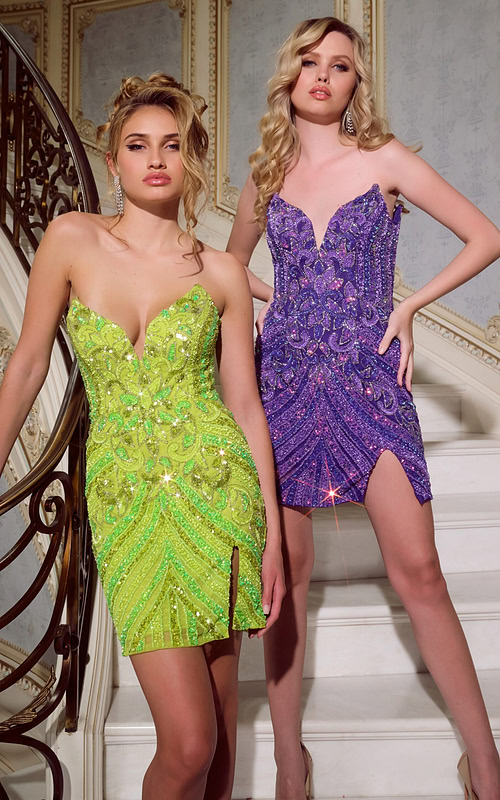
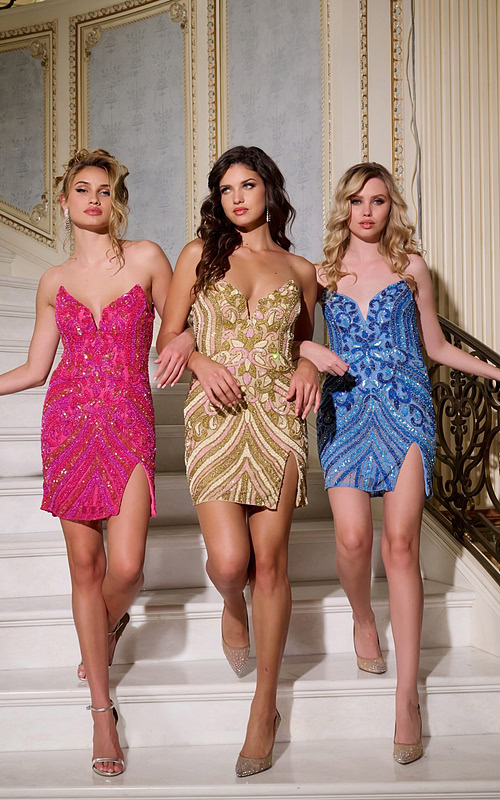
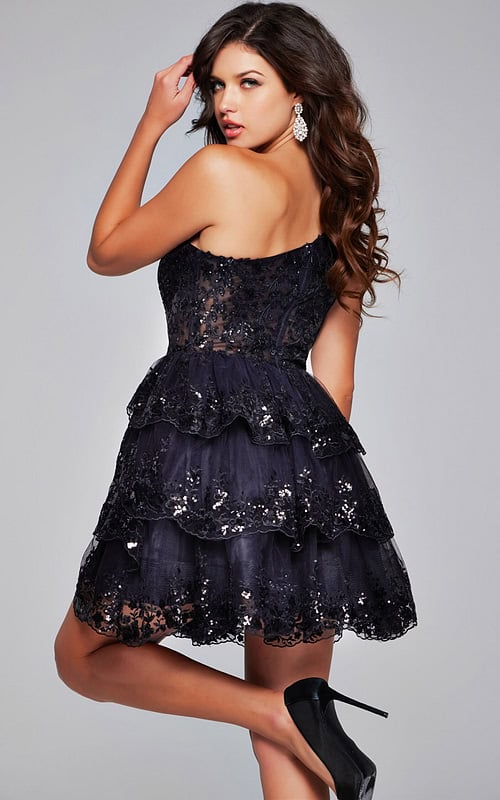
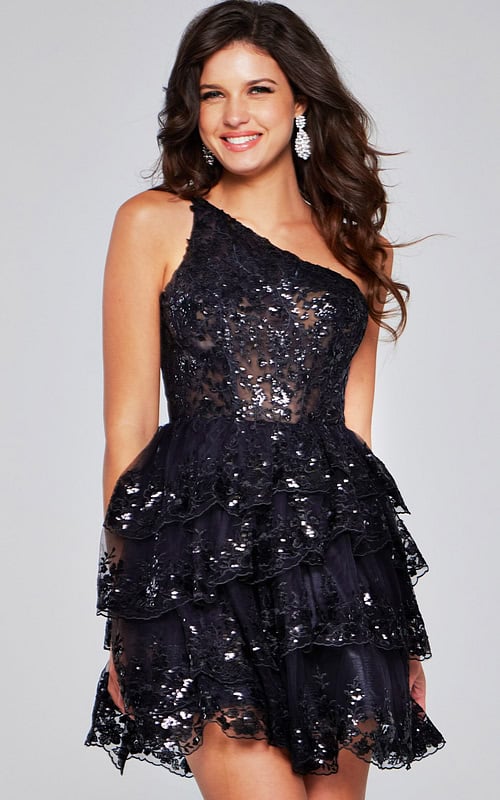
Embellishment changes both weight and movement. Dense beading over a structured bodice can make the upper portion feel firmer, while leaving the skirt relatively light. Scattered sequins, appliqués, or beadwork over tulle can add texture without creating the same continuous weight as an extensively embellished fabric.
Placement also changes how clearly the silhouette reads. Beading that finishes around the natural waist can emphasize the transition into the fuller skirt. Embellishment that continues below the waist creates a more continuous surface and may draw less attention to the seam itself. Shoppers considering more detailed finishes can compare beaded homecoming dresses separately while keeping silhouette and fit as the deciding factors here.
A simpler fit & flare homecoming gown places greater emphasis on fabric structure, pleating, and seam placement. Satin and jacquard, for example, can create definition through construction alone. With tulle or mesh, the number and stiffness of the layers become more important because they determine how much volume the skirt maintains.
Fit the Bodice Before Judging the Finished Silhouette
The bodice is the most important area to assess when choosing between fit & flare homecoming dresses. The waist seam should sit where the design intends; if it shifts significantly above or below that point, the skirt may begin to flare in the wrong place and alter the proportions. Start with bust, ribcage, and waist measurements, then look at how much adjustability the dress provides. A lace-up back can accommodate small fit differences, whereas a zipper combined with non-stretch fabric leaves less flexibility. A structured bodice should sit close enough to remain stable without restricting comfortable breathing or sitting.
The skirt generally provides more room through the hips, so sizing decisions should not be based on skirt fullness alone. Jovani’s use of seam placement, internal structure, and proportion is particularly important in this silhouette because a secure bodice allows the skirt to move without pulling the rest of the dress out of position. When two designs look similar from the front, comparing the fabric, waist construction, closure, and lining will usually tell you more about how each one will actually fit.