Beaded Homecoming Dresses: How to Compare the Details
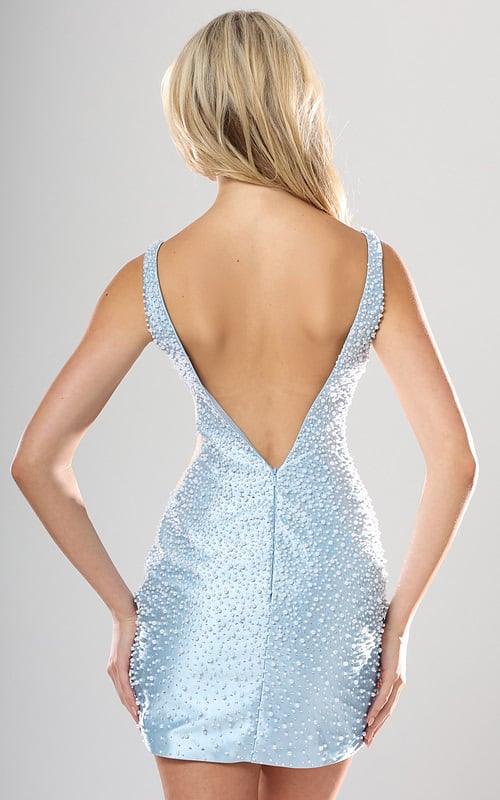
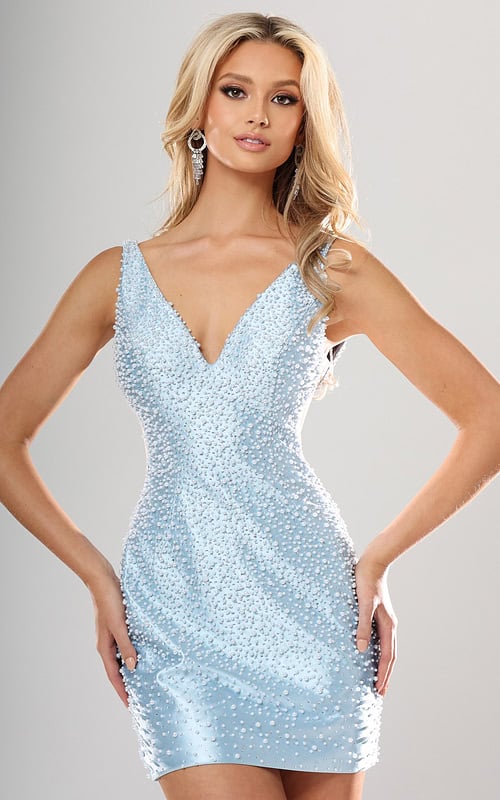
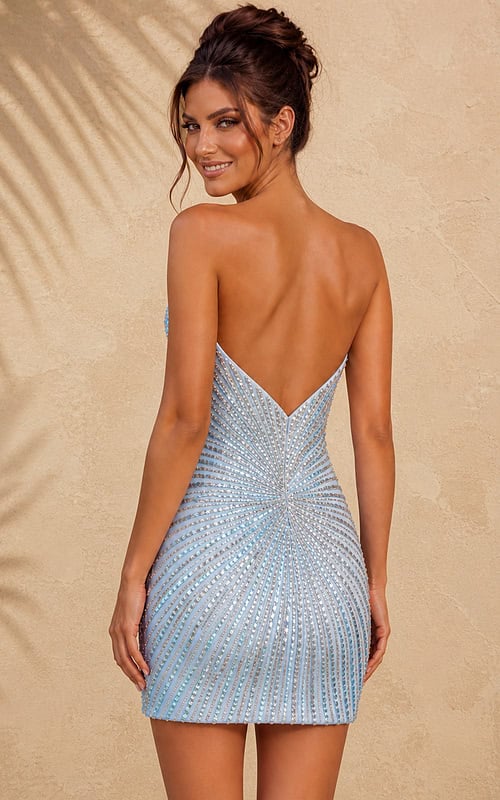
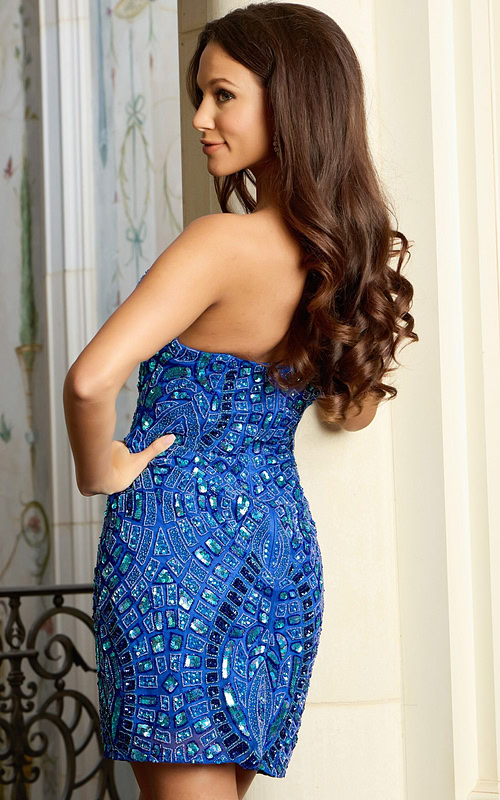
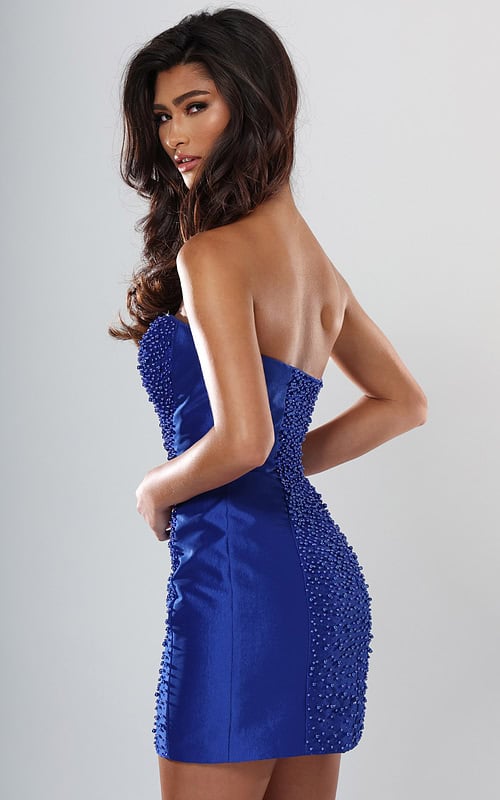
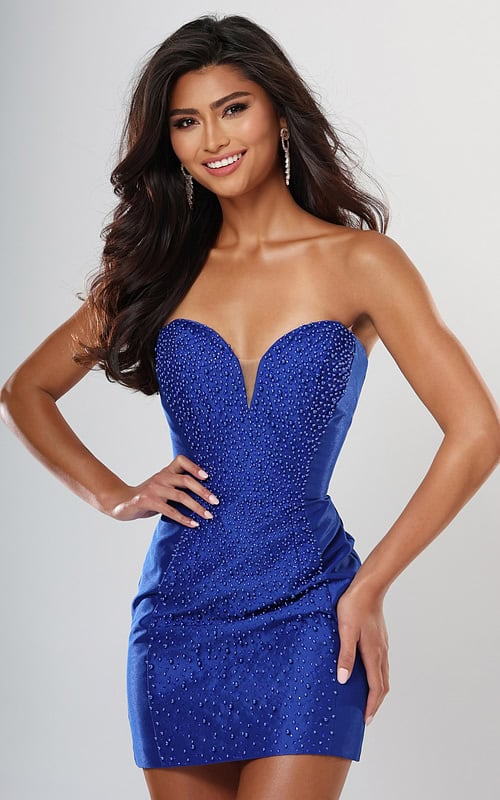
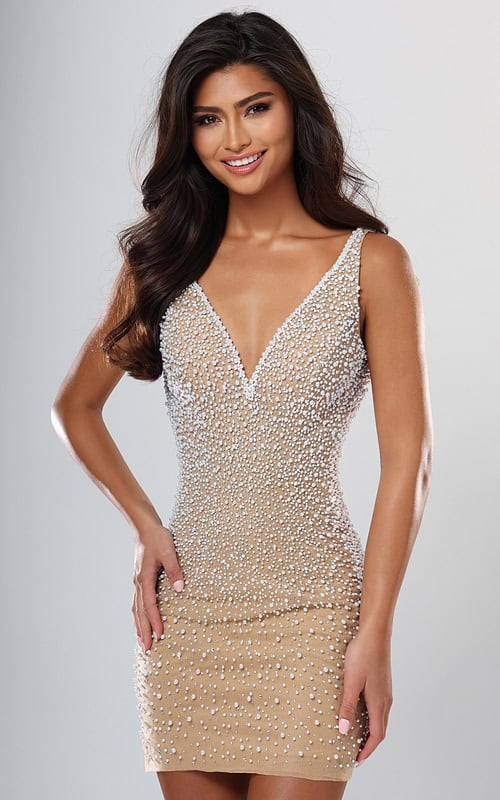
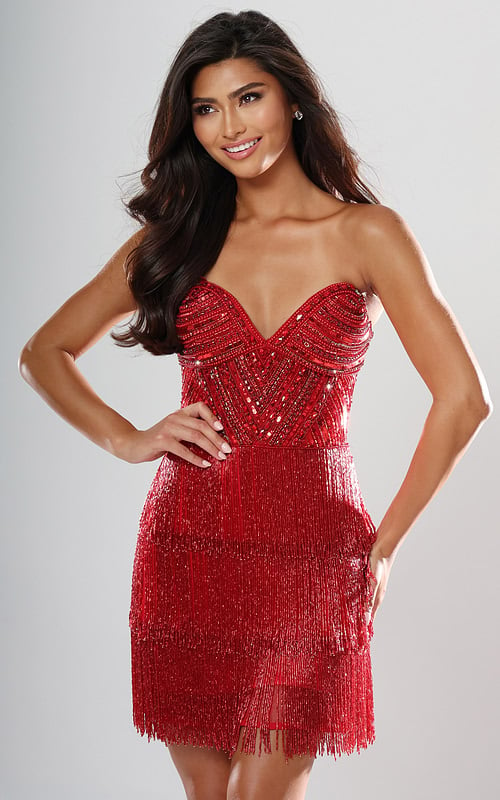
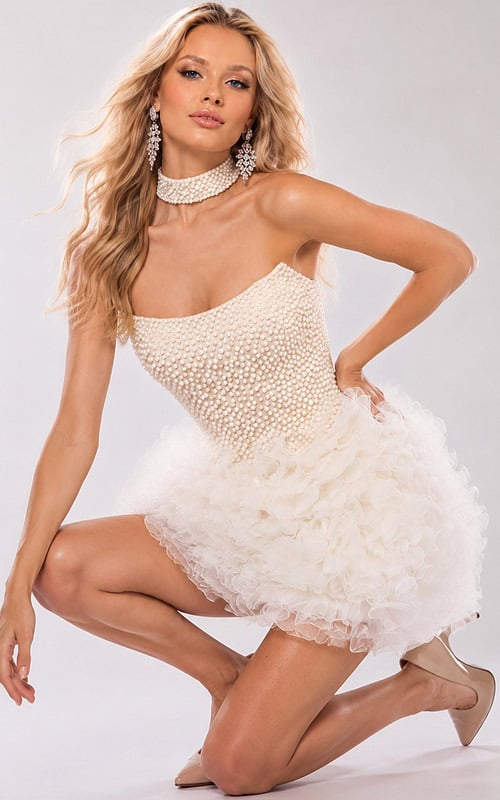
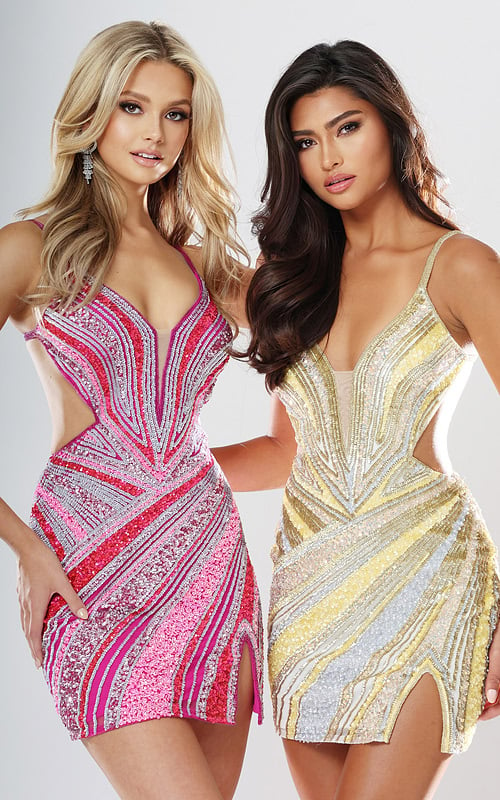
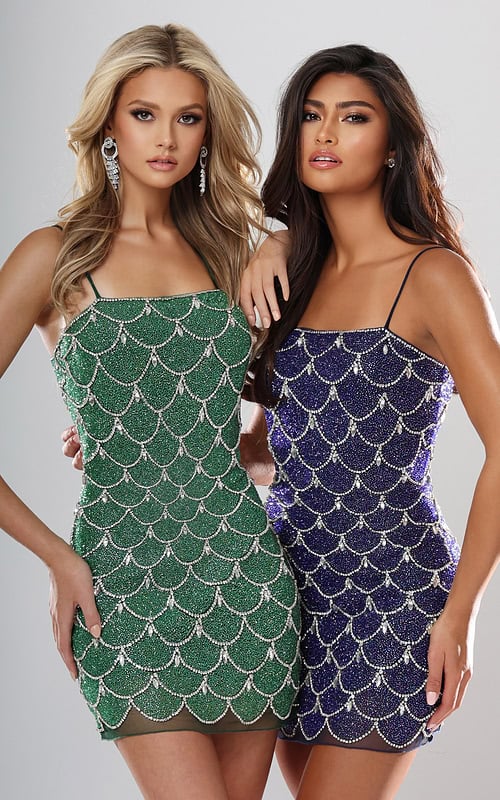
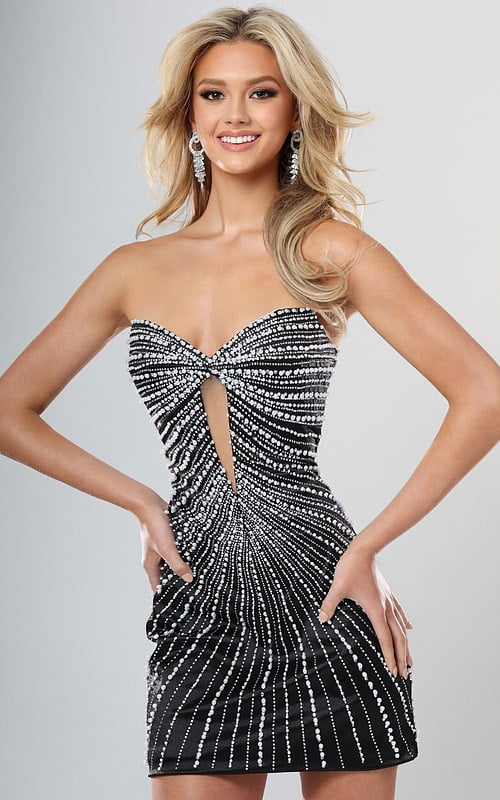
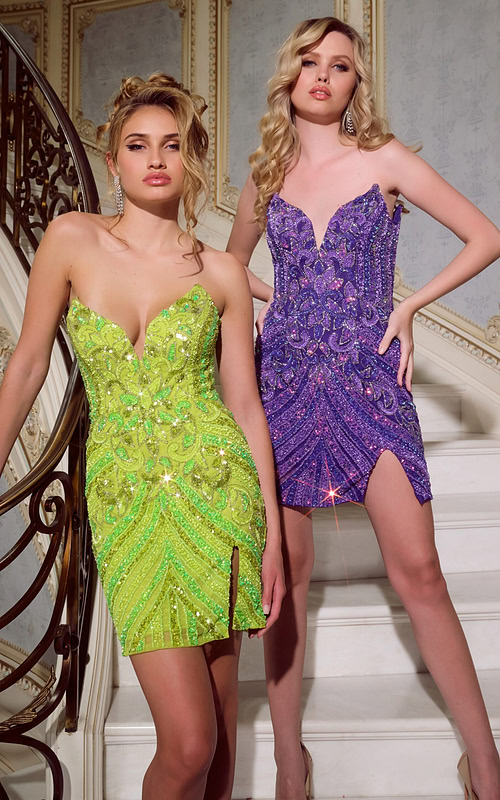
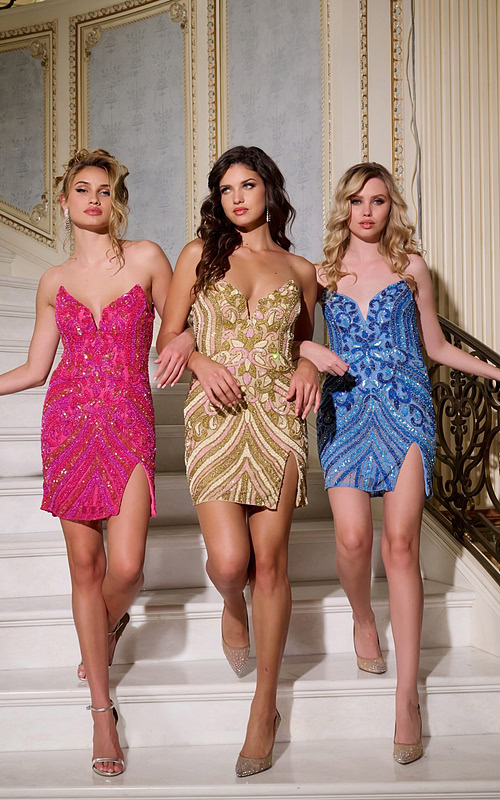
Beaded homecoming dresses can look similar at first glance, but placement and weight change how each style fits and moves. All-over beadwork gives a mini dress a denser hand, while crystals or pearls concentrated at the neckline, waist, or skirt add shine without the same overall weight. Check whether embellishment is stitched over mesh, satin, or another base fabric, because that foundation affects stretch and drape.
A fitted beaded mini usually follows the body more closely when the base has some give. Dense embellishment can reduce flexibility, so compare measurements and construction rather than assuming two fitted styles will feel alike. Shoppers who want to compare a wider range of proportions can also browse homecoming gowns for alternatives in different lengths and shapes.
Choose a Silhouette by Structure and Movement
Bodycon and sheath shapes work well with bead patterns arranged in vertical, diagonal, or contoured lines because the decoration follows the garment’s shaping. Fit-and-flare and A-line designs distribute volume below the waist, which can make them easier to move in when the bodice is heavily embellished.
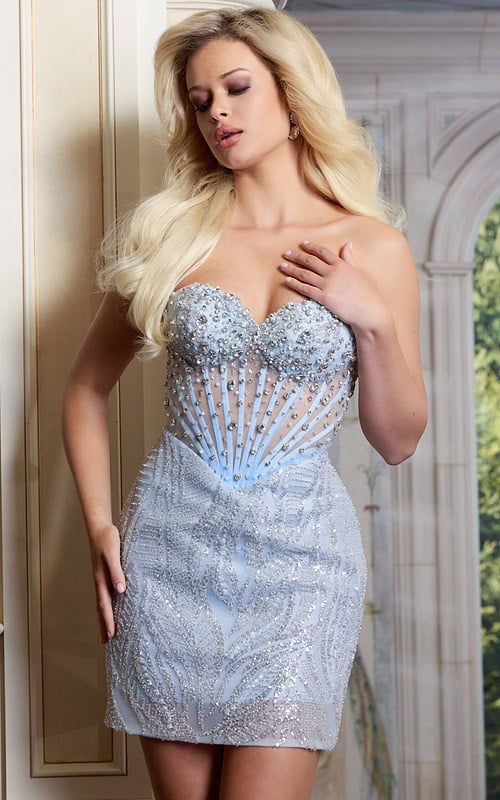
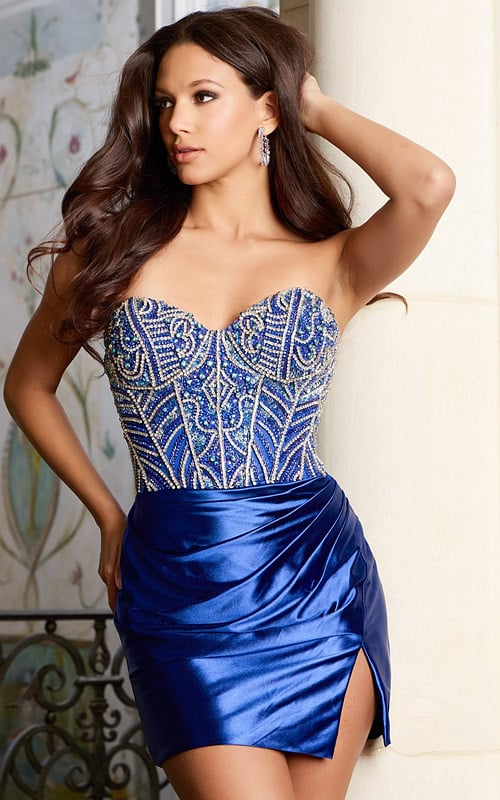
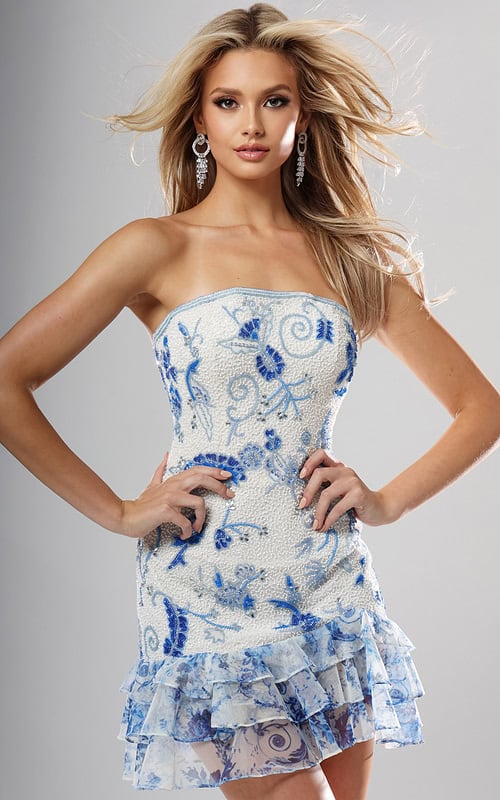
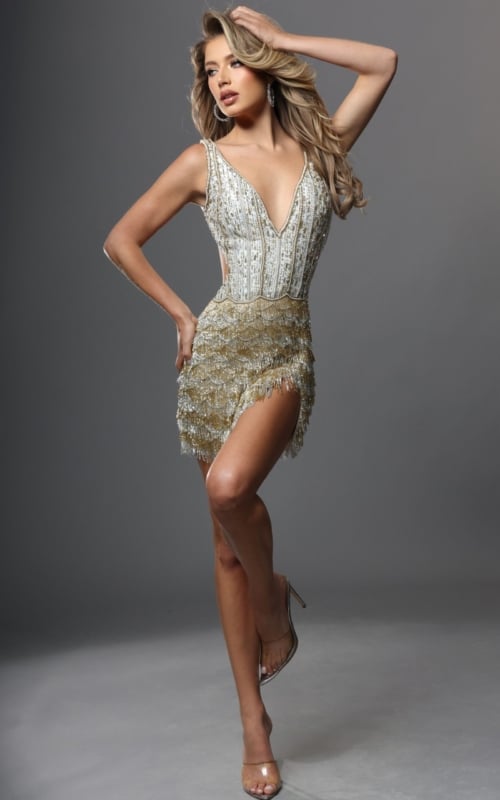
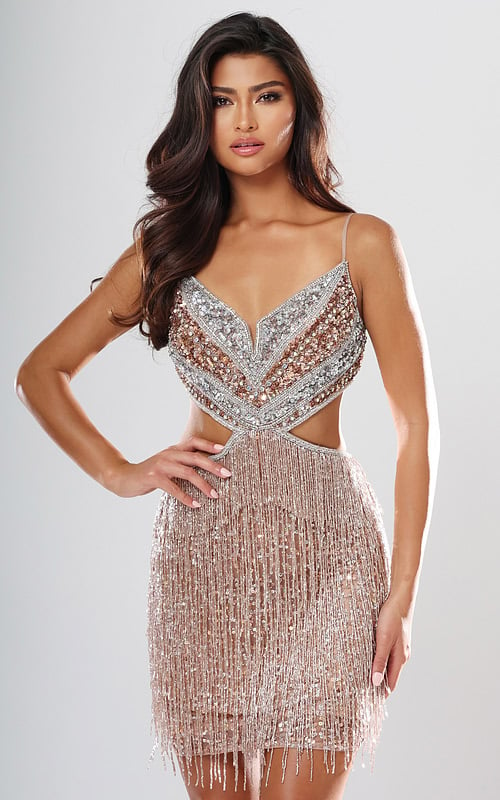
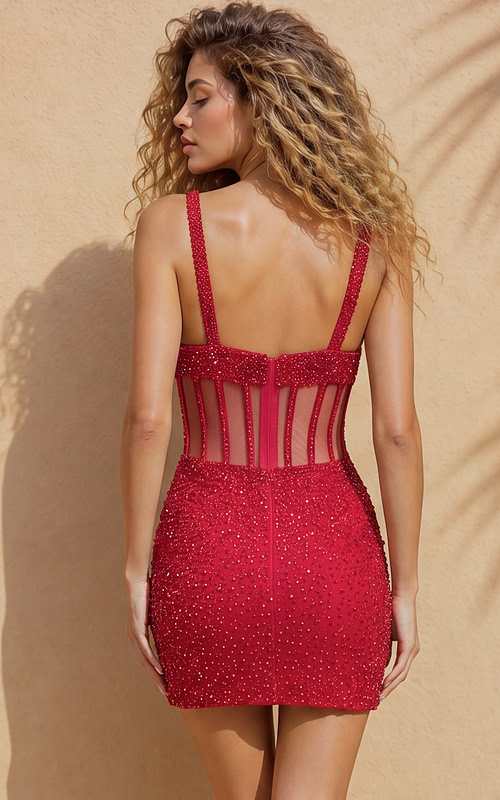
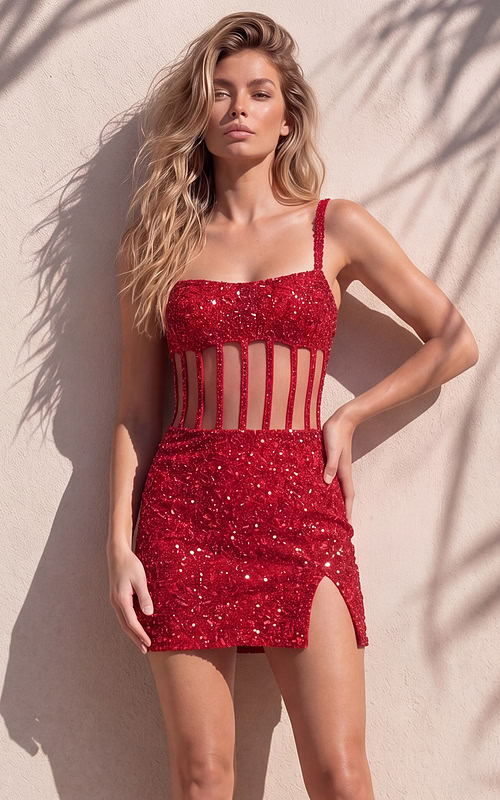
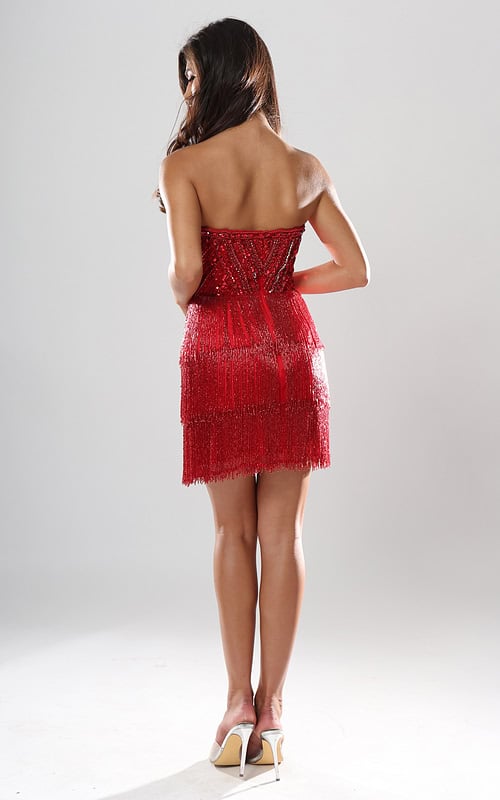
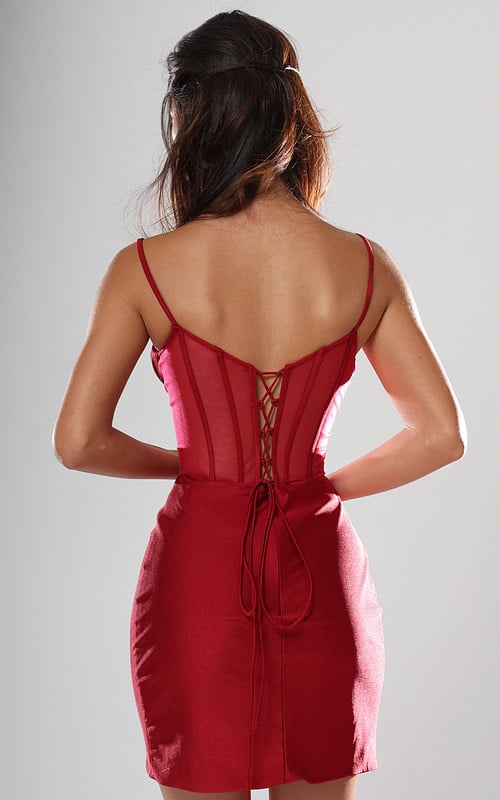
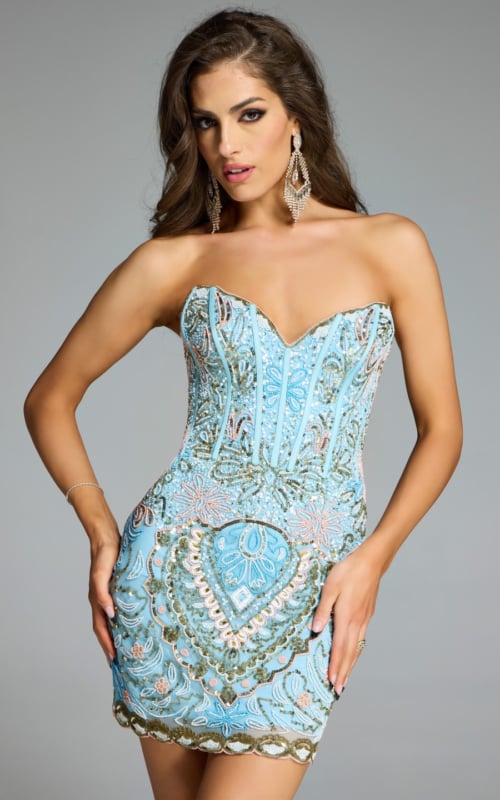
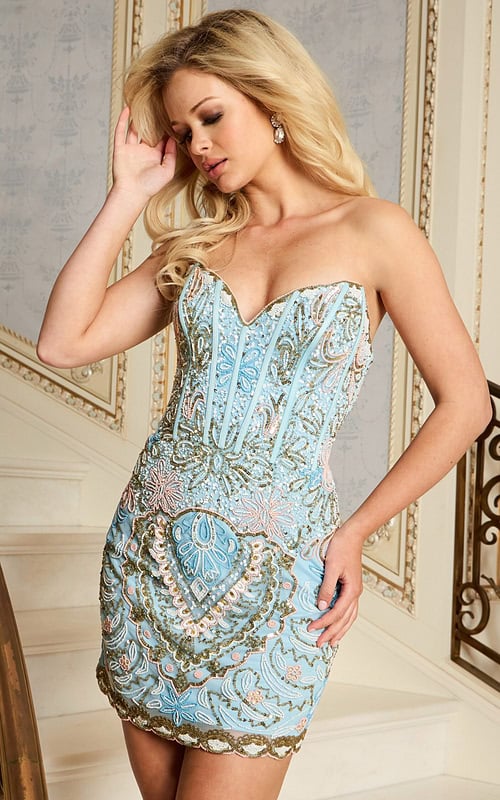
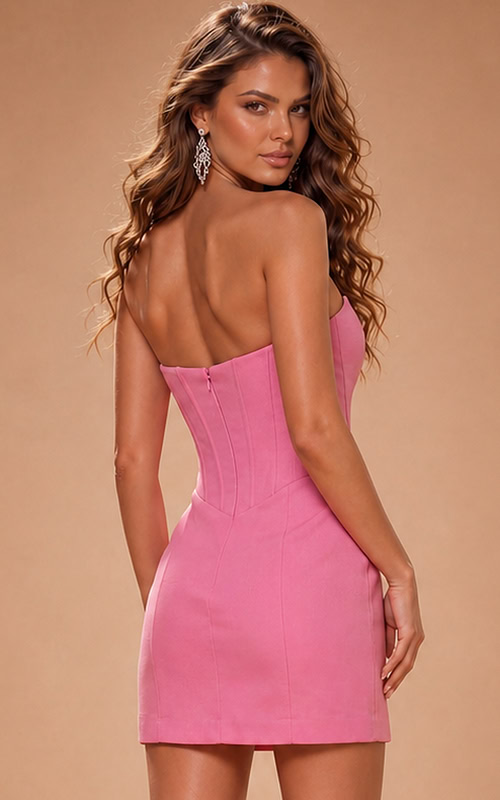
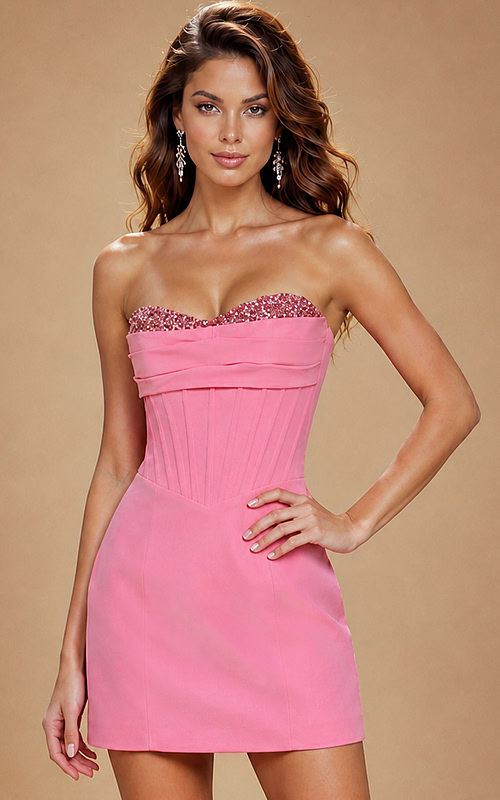
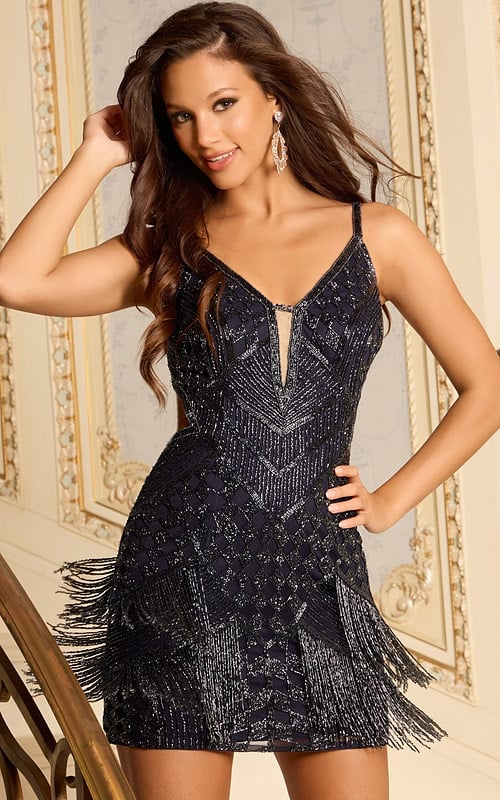
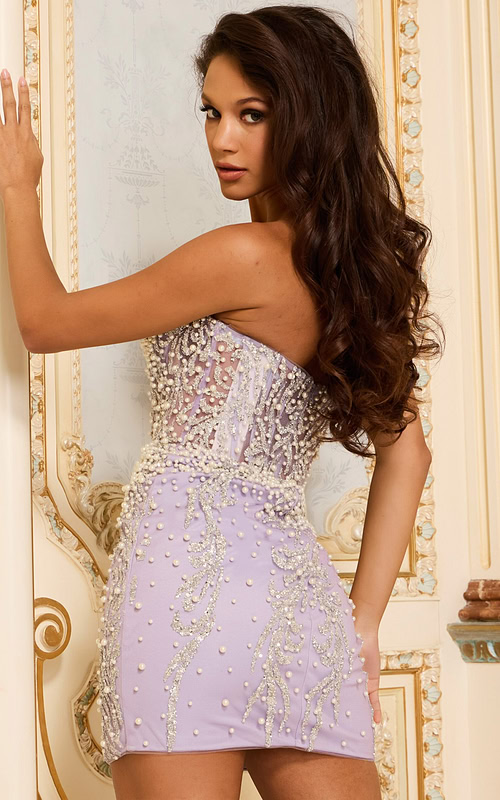
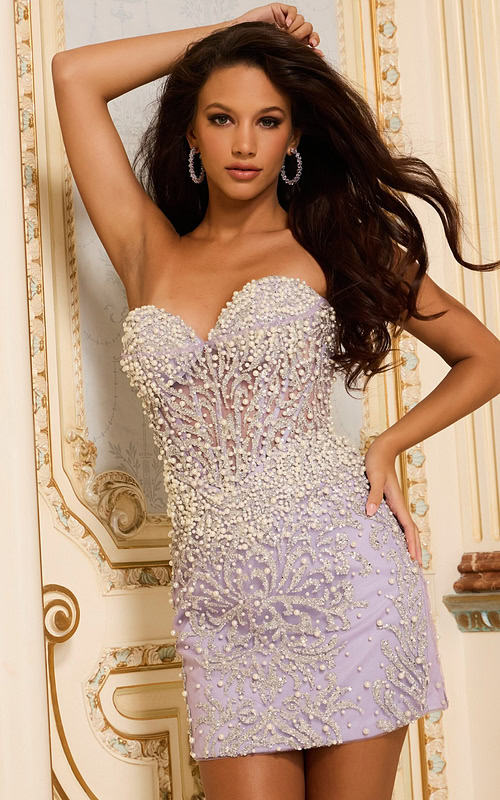
Corset construction changes the fit again. Boning and shaped panels create structure through the torso, while a lace-up back may provide some adjustability. If support is the priority, compare corset homecoming dresses with beaded options rather than choosing by embellishment alone. Jovani’s assortment includes fitted minis, corset bodices, tiered skirts, fringe, and sculpted details, so compare how much structure each dress provides and where the beadwork sits.
For more room through the bust, waist, or hip, plus size homecoming dresses provide another fit-led route. Check the individual size chart; beadwork, lining, and boning can all change how forgiving a dress feels.
Look at the Base Fabric, Lining, and Stretch
A beaded homecoming dress is not defined by the beads alone. Beaded mesh can conform closely to the body while keeping the surface flexible, especially with a stretch lining. Satin-backed designs feel smoother and may hold a cleaner shape, but can offer less give unless the fabric includes stretch.
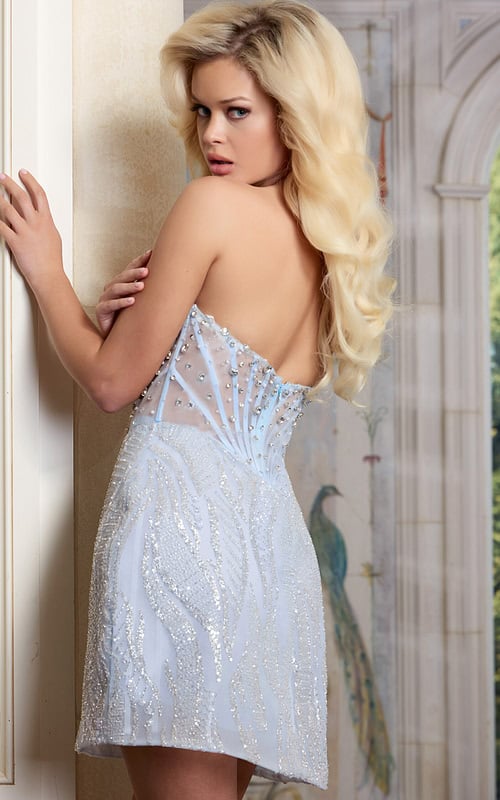
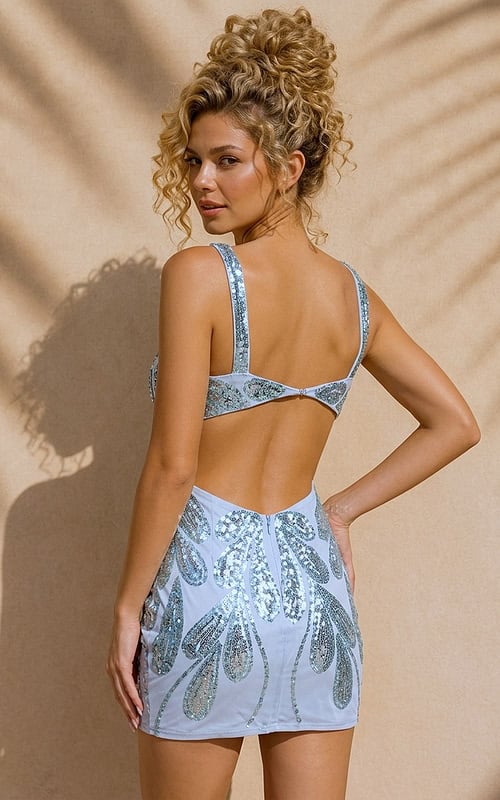
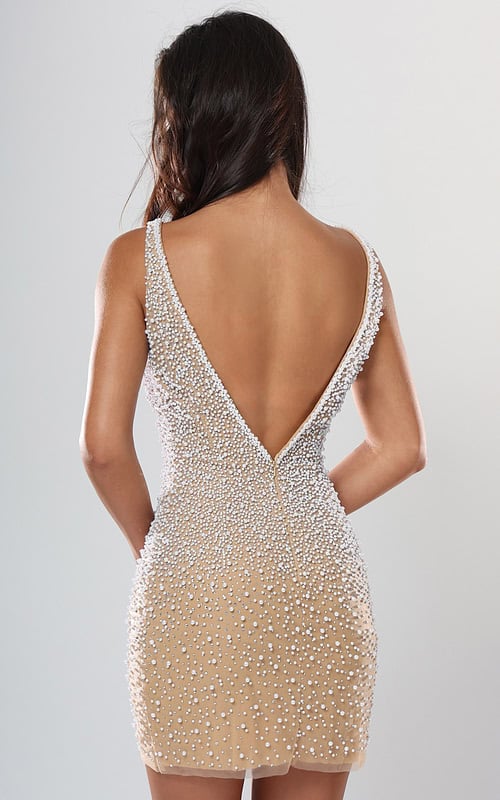
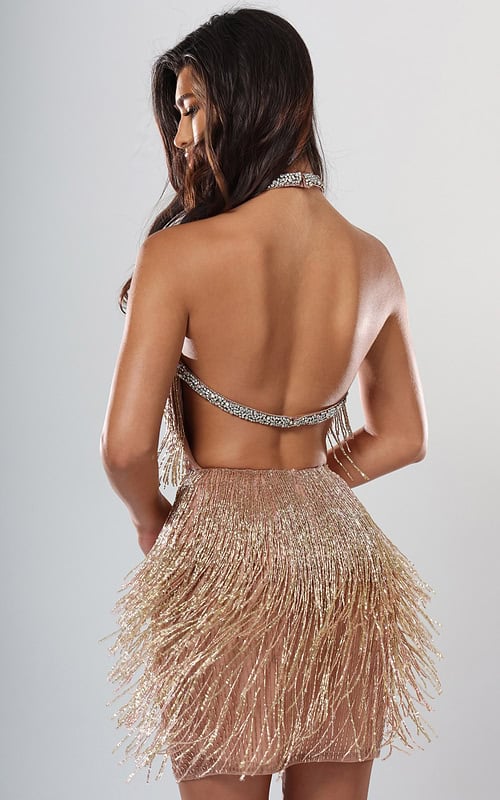
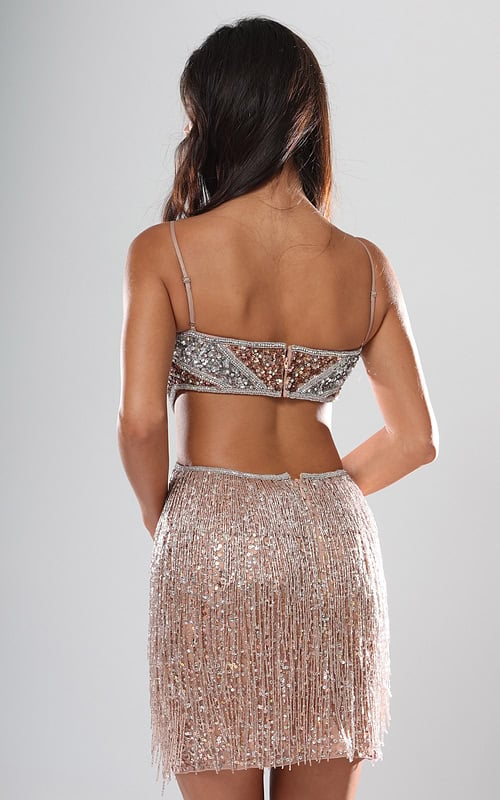
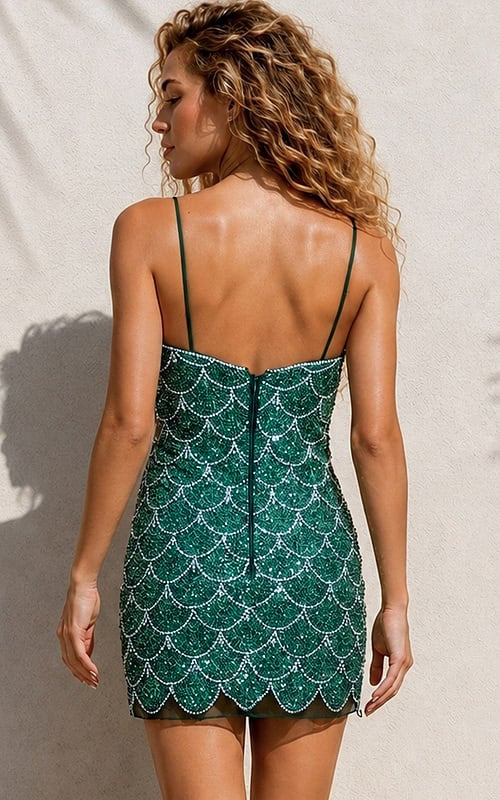
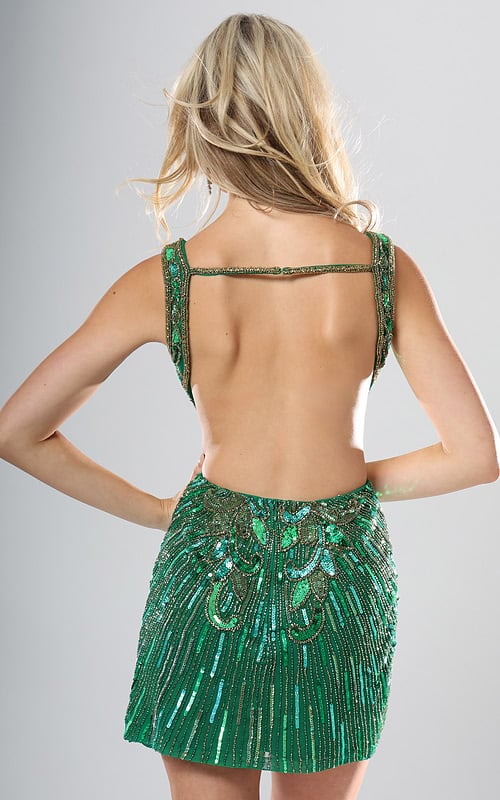
Lining matters because it supports the embellished outer layer and sits directly against the body. A stable lining can keep dense beadwork from pulling, while a softer stretch lining can make a fitted dress easier to sit and dance in. With sheer waist panels, illusion sections, or an open back, check where the lining begins and ends. Beaded homecoming gowns with fringe or dense crystal work may feel heavier than simpler minis. That makes secure straps, a well-fitted bodice, and balanced construction especially important.
Compare Necklines for Support, Not Just Shape
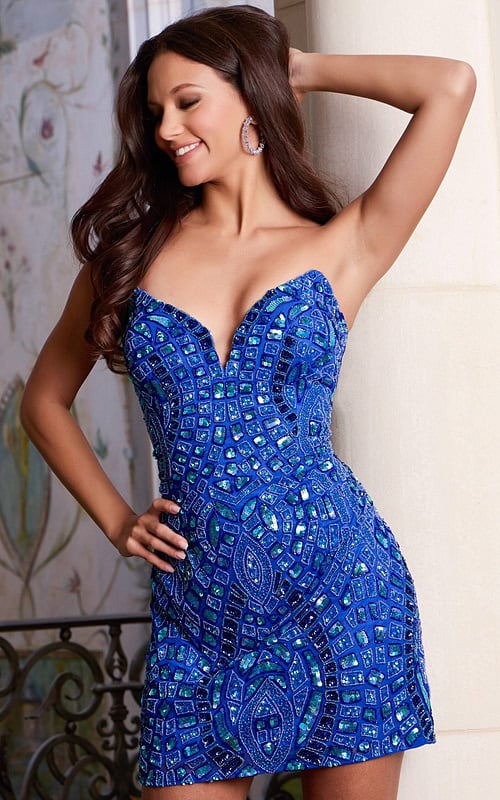
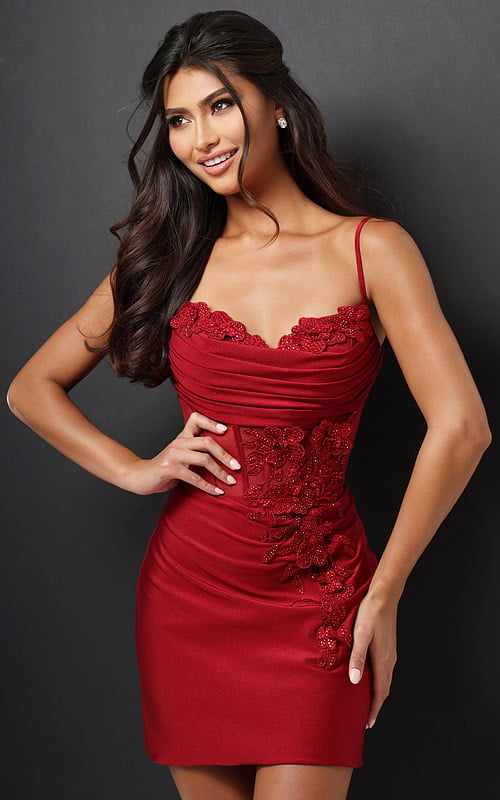
Neckline choice affects both appearance and security. Strapless and sweetheart styles depend more on internal bodice structure, so look for shaped cups, boning, grip, or a close upper-torso fit. V-neck and halter designs can distribute support through straps, while cowl necklines create softer drape and rely more on the base fabric.
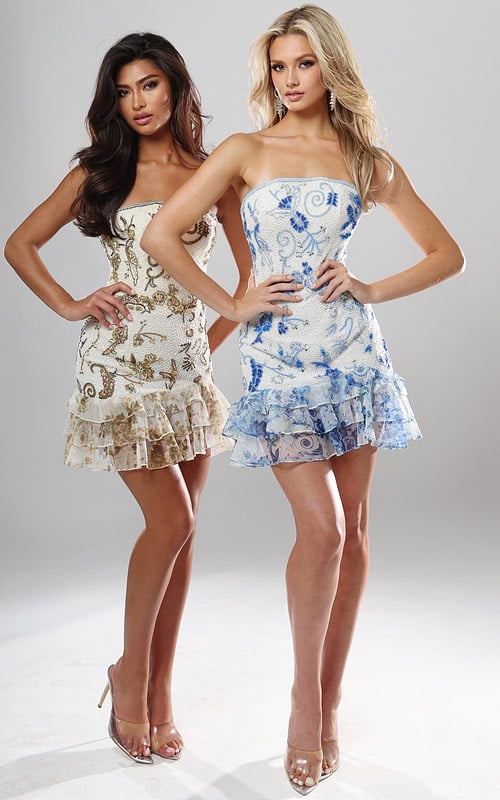
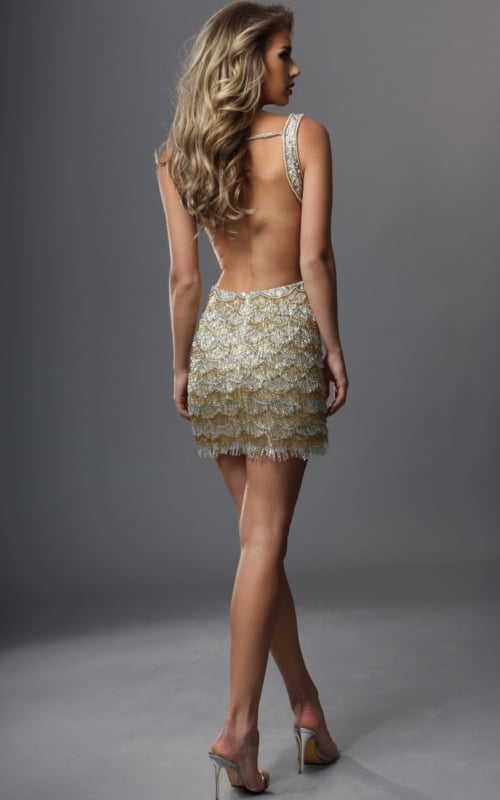
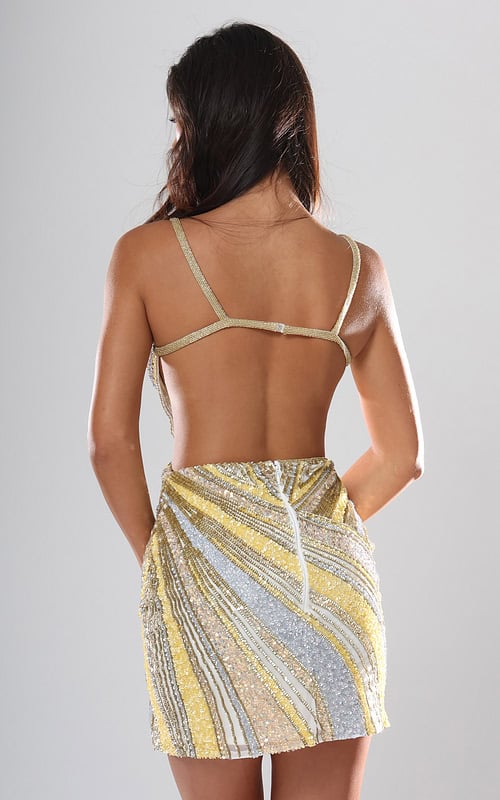
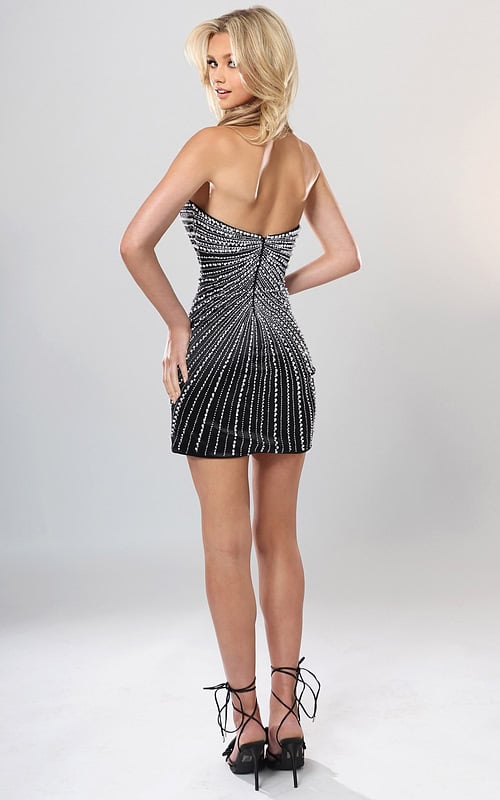
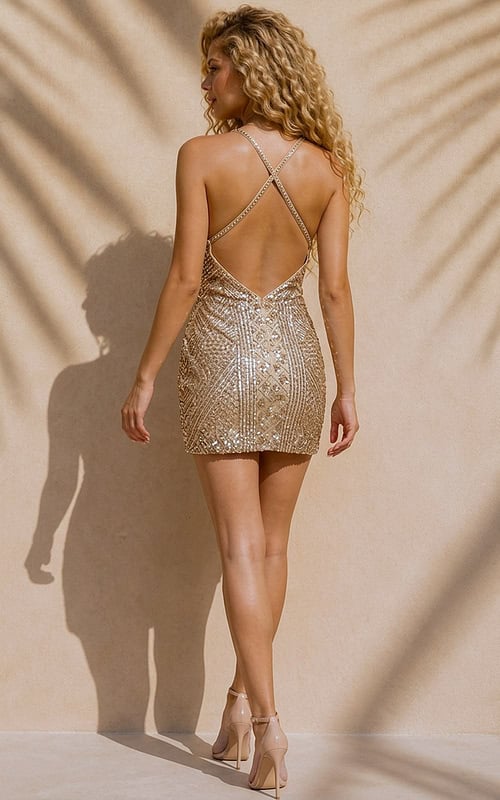
Dense beading around the bust emphasizes the upper body; a cleaner bodice with embellishment concentrated on the skirt creates a different balance. If floral beadwork or appliqué is the feature you want to compare, floral Homecoming dresses offer a more specific shopping path without changing the focus of this collection. A beaded homecoming gown with an open or low back should be assessed from both front and back. Check strap placement, closure type, and whether embellishment crosses areas that need to flex.
Match Length and Embellishment to Movement
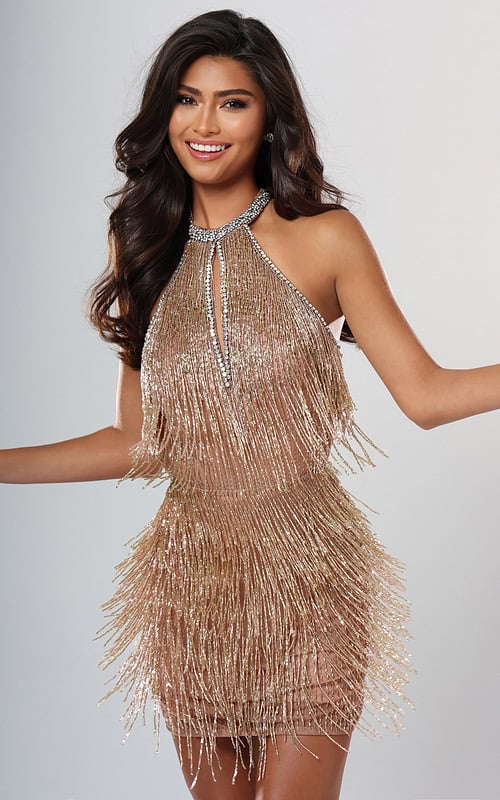
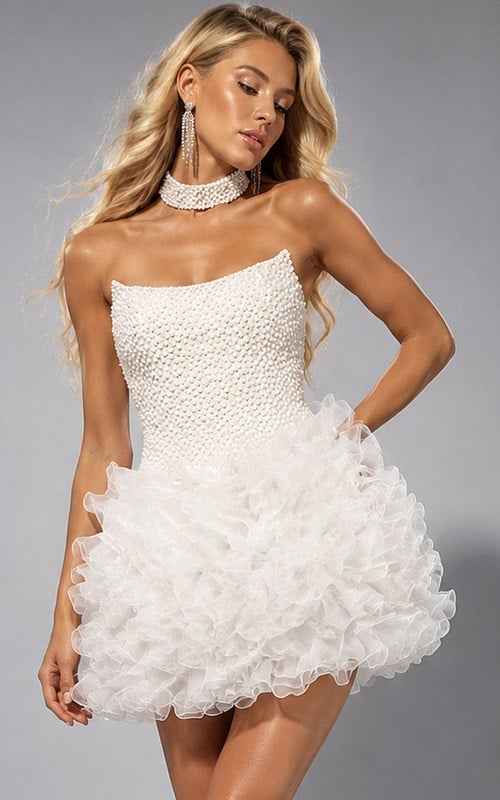
Short and mini lengths are common in current beaded homecoming dresses because they allow easy movement while keeping surface detail visible. A fitted mini creates a compact shape; a flared mini gives the skirt more room. Fringe adds movement at the hem or in tiers, but it also adds weight and needs enough clearance to hang freely.
Longer styles introduce more fabric and potentially more weight. Compare how much of the garment is embellished, whether the skirt is lined, and whether the silhouette is narrow or fuller. A heavily beaded narrow skirt can feel more restrictive than an embellished bodice paired with a softer skirt. For school dress codes or a preference for additional coverage, modest homecoming dresses provide a separate route through neckline, back, sleeve, or hem coverage. Set those fit requirements before focusing on surface detail.
Use Bead Placement to Narrow the Final Choice
The simplest way to compare beaded homecoming dresses is to decide where you want detail and how much structure you want underneath it. All-over beading gives consistent texture. A beaded bodice with a cleaner skirt focuses detail around the waist and neckline. Scattered crystals leave more visual space, pearls create a softer finish, and geometric layouts can reinforce a fitted silhouette.
Color changes the effect, too. Black, jewel tones, metallics, pale blue, and pink interact differently with crystal, pearl, silver, or tonal embellishment, so compare close-up product images as well as full-length views. Practical details still matter: closure, strap adjustability, lining, seam placement, and whether beadwork continues over high-movement areas.
Jovani’s focus on fit and construction helps distinguish one style from another. Start with silhouette and support, then compare bead density, base fabric, neckline, and length. That sequence makes it easier to choose a detailed dress that still provides the movement and security needed throughout homecoming night.