


Few fabrics command attention quite like velvet. Its dense structure absorbs light deeply, producing rich, highly saturated colors and dimensional shadows that no other material can replicate. This unique physical property makes it a historical favorite for royalty and a modern staple for winter galas, pageants, and high-end formal events. However, the exact characteristic that makes velvet so visually appealing—its raised, three-dimensional surface—also makes it uniquely vulnerable to damage. Unlike flat-woven fabrics such as chiffon or satin, velvet requires a specialized approach to maintenance. Mastering proper velvet gown care ensures that the fabric retains its luxurious texture, prevents permanent flattening of the fibers, and keeps your garment looking completely pristine for years of wear.
How do you clean, store, and revive a velvet dress?
To properly care for a velvet dress, always dry clean the garment rather than washing it, as water distorts the fabric’s raised pile. For minor spot cleaning, blot spills gently with a dry, clean cloth—never rub or scrub. To revive crushed or flattened velvet, hold a clothing steamer at least six inches away from the reverse side of the fabric (inside out) and allow the steam to gently plump the fibers; never let a hot iron or metal steamer head touch the velvet directly. Store the gown hanging on a broad, padded hanger inside a breathable cotton garment bag, ensuring it is not pressed tightly against other clothes in the closet, which causes permanent pressure creasing.
Understanding the Anatomy of Velvet
To understand why specific maintenance rules exist, you must first understand how velvet is physically constructed. Velvet is not defined by the fiber it is made from—it can be woven from silk, cotton, rayon, or modern synthetic polyesters. Rather, “velvet” refers to the specific weaving process. The fabric is woven on a special loom that weaves two thicknesses of the material at the exact same time. The two pieces are then cut apart down the middle, creating a fabric with a dense, short pile of vertical fibers on the surface and a flat, smooth back.
Because these vertical fibers stand upright, they behave like tiny microscopic brushes. When light hits these standing fibers, it sinks into the fabric, creating the famous depth of color. However, if these fibers are crushed, bent, or folded under heavy weight, they lay flat and reflect light differently, creating what appears to be a shiny, damaged, or discolored patch. Therefore, every step of your maintenance routine must focus on protecting the vertical integrity of this delicate pile.

Routine Maintenance: Actions After Every Wear
The foundation of excellent velvet gown care begins the moment you take the garment off at the end of the night. Preventative maintenance drastically reduces the need for aggressive cleaning or professional interventions.
Airing Out the Garment
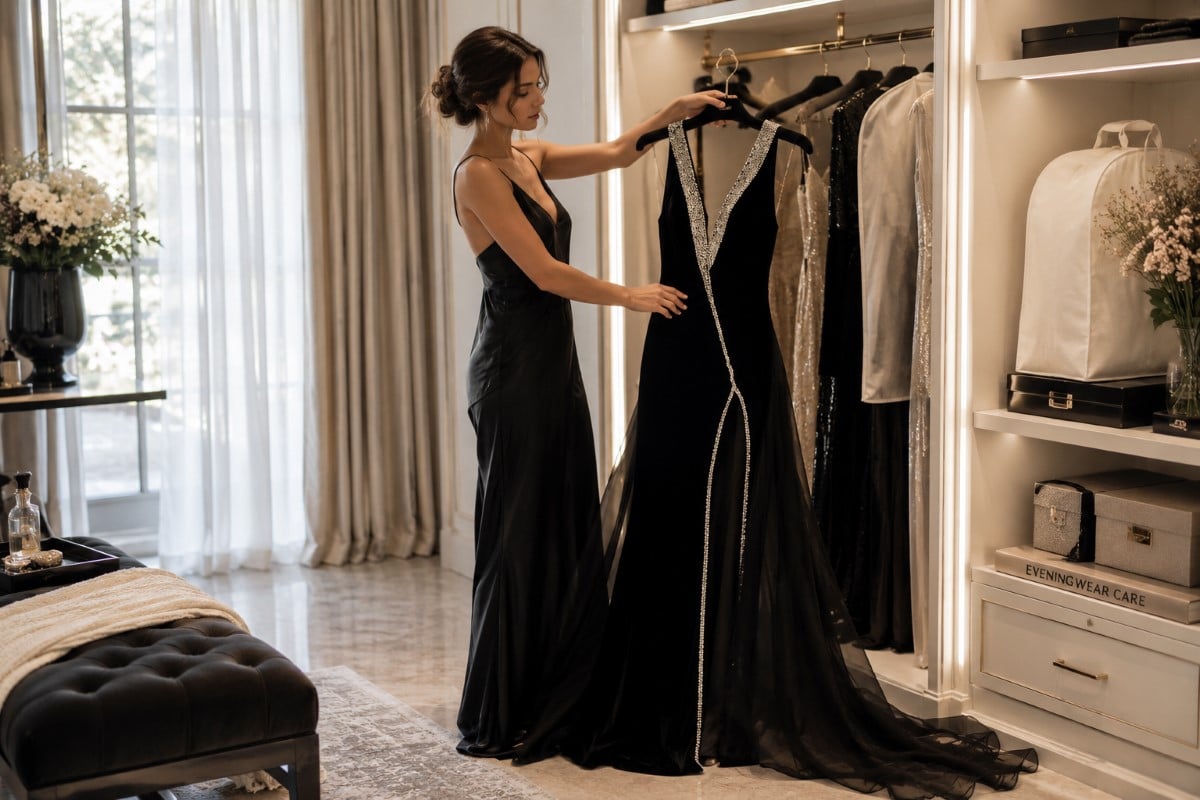
Body heat, natural perspiration, and ambient room odors (like food or smoke) become trapped in dense fabrics easily. Before putting your dress away, hang it in a well-ventilated room outside of its garment bag for at least 24 hours. Avoid hanging it in direct sunlight, as the powerful UV rays can rapidly fade the rich dyes typically used in velvet fabrics. Hanging it in a cool, dark room allows the natural fibers to breathe and release any trapped moisture, which prevents the development of mildew or stale odors.
Brushing the Pile
Dust and tiny microscopic particles settle into the vertical pile of the fabric very easily, making the garment look dull over time. Invest in a high-quality, soft-bristled garment brush—specifically one made with natural animal hair, such as a soft boar bristle brush. Synthetic nylon brushes can be too harsh and may scratch or pull the delicate fibers. Gently brush the entire dress, working strictly in the direction of the nap. The “nap” is the natural direction that the fibers lay. You can find the nap by running your hand gently down the fabric; if it feels completely smooth, you are moving with the nap. If it feels rough and the fabric looks darker, you are pushing against it. Always brush with the smooth direction to align the fibers correctly.
Tackling Spills: The Golden Rules of Spot Cleaning
Accidents happen during formal events. Whether it is a drop of water, a smudge of makeup, or a splash of a beverage, how you react in the first sixty seconds determines if the dress is saved or permanently damaged.
If liquid spills onto your dress, your immediate physical reaction might be to grab a napkin and wipe it away. You must fight this instinct. Rubbing or scrubbing wet velvet destroys the fabric instantly. The friction twists the wet fibers together, matting them down permanently. Once velvet is matted down by friction and moisture, no dry cleaner in the world can restore the original texture. Instead, take a clean, dry, white cotton cloth or a highly absorbent paper towel and press it gently directly onto the spill. Let the cloth absorb the liquid passively. Lift the cloth straight up. Repeat this blotting motion with a dry section of the cloth until the moisture is gone.
For solid spills, such as a drop of food, use the edge of a dull spoon or a butter knife to gently lift the solid material straight off the surface of the fabric. Do not push it deeper into the pile. For more complex stains like makeup or oil, it is best to consult guides on removing spots and stains to understand the chemical reactions, but as a general rule for velvet, leave heavy chemical treatments to professional dry cleaners to avoid bleaching the localized area.
The Steaming Process: Reviving Crushed Pile
The most common issue with heavy, structured gowns is pressure damage. If you sit during a long banquet or travel with the dress folded, the weight of the fabric presses against itself, flattening the vertical fibers. This results in shiny, flat patches across the seat, the back of the knees, or along the fold lines. A critical component of velvet gown care is knowing how to manipulate moisture without causing water spots.
The Hover Technique
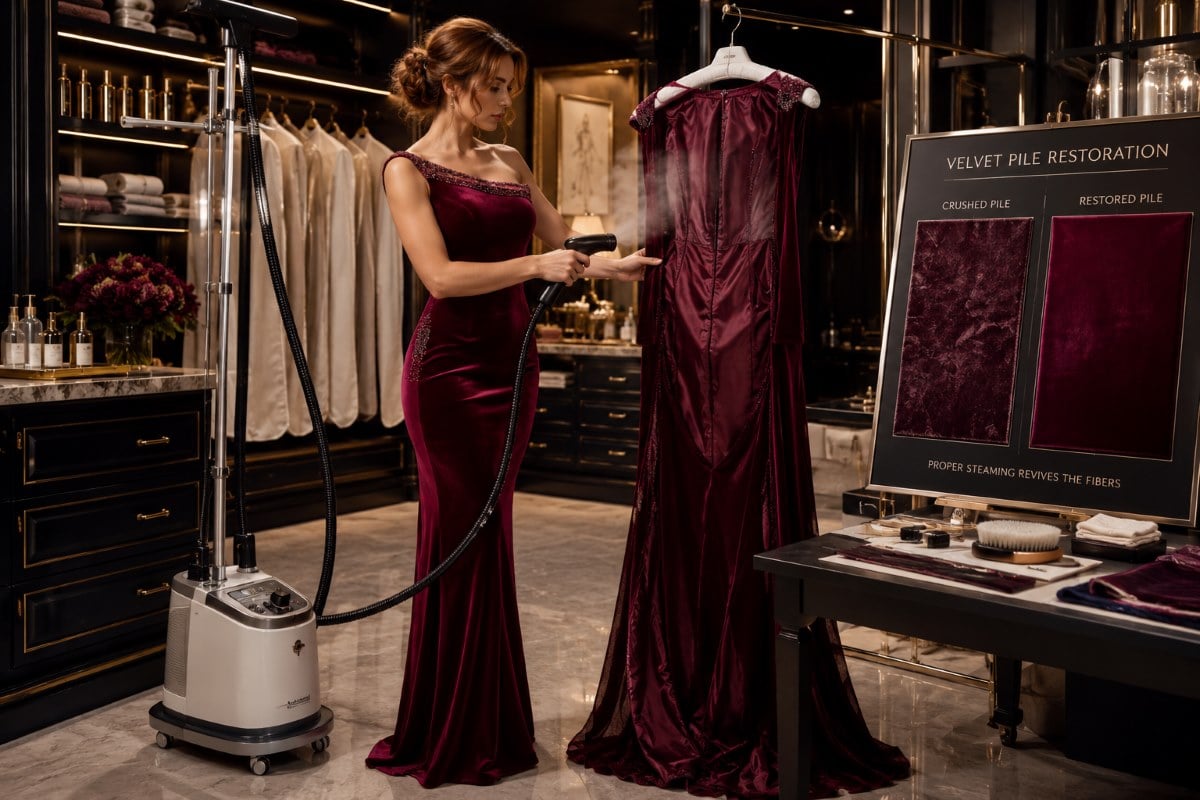
You can easily revive minor crushing using a standard handheld clothing steamer, but the technique requires precision. Never let the heated metal or plastic head of the steamer physically touch the velvet. If the hot plate touches the fabric, it will instantly iron the pile completely flat, causing catastrophic damage. Instead, hold the steamer head roughly six to eight inches away from the fabric.
For the best results, steam the garment from the inside out. Hang the dress inside out and apply the steam to the smooth, woven backing of the fabric. The warm, humid air will travel right through the weave and penetrate the base of the pile, causing the crushed fibers to swell and stand back up naturally. While steaming from the back, you can use your clean, dry hand on the front side of the fabric to gently coax the pile back into its proper direction.
The Steam Shower Method
If you do not own a specialized clothing steamer, you can utilize your bathroom. Hang the dress on a sturdy, padded hanger on the back of the bathroom door or over the shower rod (ensuring it is far away from the actual water flow). Turn your shower onto the highest heat setting and close the door, allowing the room to fill completely with thick steam. Leave the dress in the steamy room for twenty to thirty minutes. The ambient humidity works as a passive steamer, relaxing the wrinkles and plumping the crushed pile without applying direct, aggressive heat.
Why You Should Never Use a Traditional Iron
Standard flat irons are the natural enemy of velvet. Pressing a heavy, hot metal plate directly onto the fabric guarantees permanent damage. It crushes the pile into a solid, melted mass and leaves a distinct, shiny imprint of the iron’s shape on your dress.
Professional tailors and high-end dry cleaners use a highly specialized tool called a “needle board” (or a velvet board) when pressing is absolutely necessary. A needle board is a thick mat covered in thousands of tiny, upright steel wires. The velvet is placed face down onto the board, so the pile of the fabric slips safely between the steel wires. The tailor then presses the smooth back of the fabric. Because the pile is protected in the gaps between the wires, it does not get crushed. Unless you own this specific piece of tailoring equipment, you should strictly rely on steam and never attempt to iron your formalwear at home.
Navigating Dry Cleaning Services
When dealing with heavily structured garments like velvet gowns, washing them in a standard washing machine or even attempting to hand-wash them in a bathtub is highly discouraged. Heavy formal gowns contain interior architecture: stiff canvas linings, plastic or steel boning, and molded bust cups. Submerging the dress in water causes these internal structures to warp, rust, or shrink at different rates than the outer velvet, completely ruining the shape of the bodice.
Professional dry cleaning is mandatory, but you must communicate clearly with your cleaner. When dropping off the garment, explicitly ask them to use a “steam only” finishing process. Some high-volume, standard dry cleaners put garments onto automated mechanical pressing machines. If an automated press clamps down on a velvet bodice, it will ruin the texture. Ensure your chosen cleaner has specific experience handling delicate formalwear and understands the physics of velvet pile.
Long-Term Storage Protocols
When discussing long-term velvet gown care, the environment in which the garment rests for months at a time is just as crucial as how you clean it. Improper storage creates deep, permanent creases and invites fabric degradation.
Choosing the Right Hanger
Velvet is a notoriously heavy fabric. A floor-length ballgown carries significant weight in the skirt. If you hang a heavy dress on a thin wire hanger or a sharp plastic hanger, the weight of the skirt will pull downward, causing the thin hanger to dig deeply into the shoulder straps. Over a few months, this creates deep indentations in the velvet shoulders and can stretch the fabric permanently out of shape. Always use a broad, highly padded hanger. Wooden suit hangers with wide, curved shoulders are also excellent, as they distribute the weight of the garment evenly across a larger surface area.

The Dangers of Plastic and Overcrowding
Never store your dress inside the thin, clear plastic bag provided by the dry cleaner. Plastic does not breathe. If the temperature in your closet fluctuates, condensation can form inside the plastic bag, creating a damp environment that breeds mildew and destroys natural fibers. Instead, invest in a high-quality, breathable garment bag made of unbleached cotton or muslin.
Furthermore, velvet requires physical space. If you jam the garment bag tightly between heavy winter coats and other dresses in a crowded closet, the constant, long-term pressure from the neighboring clothes will crush the pile of the velvet. Your dress needs enough breathing room in the closet so that nothing is actively pressing against the fabric.
Boxing vs. Hanging
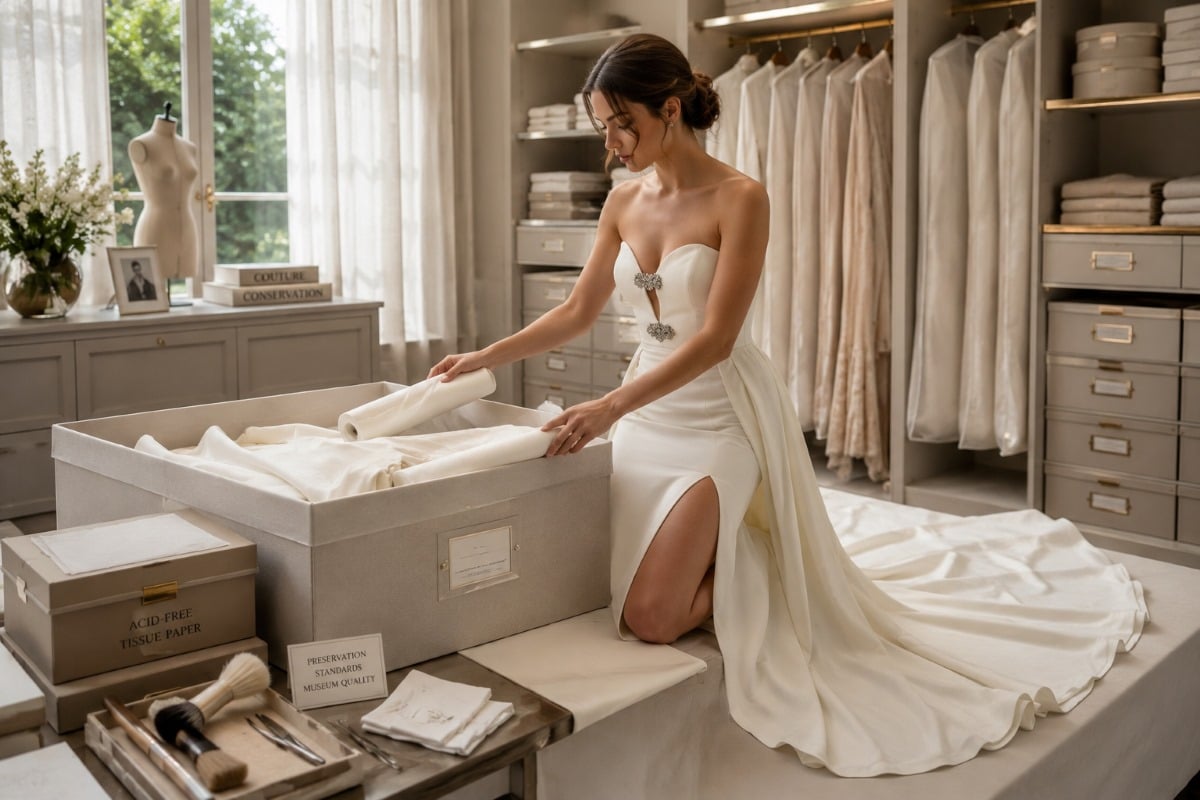
If your dress is exceptionally heavy, heavily beaded, or if it features a bias-cut that might stretch vertically over time, boxing the dress might be a safer option than hanging it. If you choose to fold the dress into a box, use a large, acid-free archival box. You must prevent the fabric from forming sharp, hard folds. Take generous amounts of acid-free tissue paper and scrunch it into thick logs. Place these tissue paper logs inside every single fold of the dress. This ensures the velvet rolls gently over the tissue paper rather than folding sharply in half, preventing permanent crush lines during the months in storage.
Handling Velvet While Traveling
Transporting a velvet gown requires strategy. If you fold it tightly into a small suitcase and leave it there for a two-day flight, you will arrive at your destination with a heavily creased, damaged dress. Knowing how to store your prom dress or formal gown while in transit preserves its immediate wearability.
The best method for packing velvet is the rolling method rather than the folding method. Lay the dress completely flat on a clean surface. Place a layer of clean tissue paper over the entire back of the dress. Carefully and loosely roll the dress from the hem up to the neckline, creating a soft cylinder. This rolling action prevents sharp creases from forming. Place the rolled dress at the very top of your suitcase; do not pack heavy shoes or toiletry bags on top of it. The moment you arrive at your hotel or venue, immediately unpack the dress, hang it on a padded hanger, and utilize the bathroom steam method mentioned earlier to relax any minor travel wrinkles.
Jovani’s Commitment to Premium Materials
The resilience of a velvet garment is directly tied to the quality of its manufacturing. Low-quality, thin velvets crush easily and rarely recover their shape, making them incredibly difficult to maintain. Jovani is committed to sourcing premium, high-density fabrics for our formalwear.
When you explore our extensive collections, including our dedicated line of velvet prom gowns, you will notice the substantial weight and structural integrity of the materials we use. We select velvets that offer brilliant light absorption, a luxurious hand-feel, and excellent recovery rates. By combining heavy-duty interior linings and expert tailoring techniques, we ensure the structural foundation of the dress supports the delicate velvet exterior perfectly. If you understand delicate evening dress fabrics and treat the garment with respect, a Jovani velvet gown will provide you with a lifetime of flawless, red-carpet-ready appearances.
Frequently Asked Questions About Velvet Maintenance
Can I put a velvet dress in the washing machine on the delicate cycle?
No, you should never put a structured velvet formal gown in a washing machine. The agitation will ruin the velvet pile, and the water will destroy the interior structure of the dress, such as the boning, stiff interfacing, and bust cups. Always use a professional dry cleaner.
How do I fix a shiny, flat spot on the back of my velvet skirt?
A shiny spot means the vertical pile has been crushed flat. To fix this, turn the dress inside out and hold a clothing steamer at least six inches away from the back of the fabric. The steam will pass through the weave and plump the crushed fibers back up. Never touch the steamer directly to the fabric.
What is the best way to remove lint or pet hair from velvet?
The best tool is a natural, soft-bristled garment brush. Brush the fabric gently in the direction of the nap (the smooth direction). Avoid using highly sticky chemical lint rollers, as the strong adhesive can sometimes pull the delicate fibers directly out of the base weave.
Can I use an iron on the inside lining of a velvet dress?
No. Even if you iron the inside lining, the pressure of the iron pushing the front velvet face against your ironing board will crush the pile and permanently flatten it. Stick exclusively to hovering a steamer or using the ambient steam from a hot shower.
Why does my velvet dress look like it has two different colors?
This is normal and is caused by the direction of the nap. If the fibers are brushed up, they look dark and rich because they absorb light. If they are brushed down, they reflect light and look lighter and shinier. Simply brush the entire dress uniformly in one direction to ensure the color looks consistent.
Ensuring a Lifetime of Elegance
Ultimately, mastering velvet gown care is about understanding the unique architecture of the fabric. By treating the three-dimensional pile with respect, avoiding direct heat and friction, and ensuring the dress has adequate space to breathe while in storage, you protect the investment you have made in your wardrobe. A well-maintained velvet piece never loses its visual power; it remains a sophisticated, luxurious staple year after year. Browse our complete collection to discover impeccably crafted velvet designs that offer unparalleled texture and timeless glamour for your next major event.