
Long Sleeve Graduation Dresses: Choosing Sleeves and Necklines
Long sleeve graduation dresses work well when their sleeves lie smoothly beneath the academic robe and the neckline stays clear of cords or stoles. A fitted sleeve and simple V-neck are reliable starting points. Before choosing, try the dress with the actual robe, because shoulder volume and collar details can change the fit.
Start with graduation dress options (opens in new tab) that match the ceremony, then narrow your choices by sleeve shape and neckline. The best option should feel comfortable while seated and look intentional once the robe comes off.
Are Long Sleeve Graduation Dresses Practical Under a Robe?
Yes, fitted long sleeves can work under a graduation robe, especially in an indoor ceremony or cooler weather. The challenge is extra fabric around the shoulder, elbow, and wrist. Test the combination before deciding rather than assuming every academic gown has the same sleeve cut.
A robe may have wide sleeves yet still pull at the shoulders when you reach forward. Wear both pieces, zip or fasten the robe, and shake hands at chest height. The graduation outfit planning guide (opens in new tab) covers the broader ceremony look; here the decision is specifically about sleeves and necklines.
Choose the Sleeve Shape Before the Fabric
Sleeve shape affects how the dress behaves beneath the robe more than sleeve length alone. Compare one close-fitting design with a shorter or fuller style, then check whether the fabric catches when you move.
Fitted Long Sleeves for Streamlined Coverage
A slim sleeve offers coverage without adding much volume beneath the graduation gown. Stretch crepe can be comfortable when the elbow bends freely, while fitted lace may need a soft lining. For a light-colored celebration, compare little white dresses (opens in new tab) that offer the coverage you want.
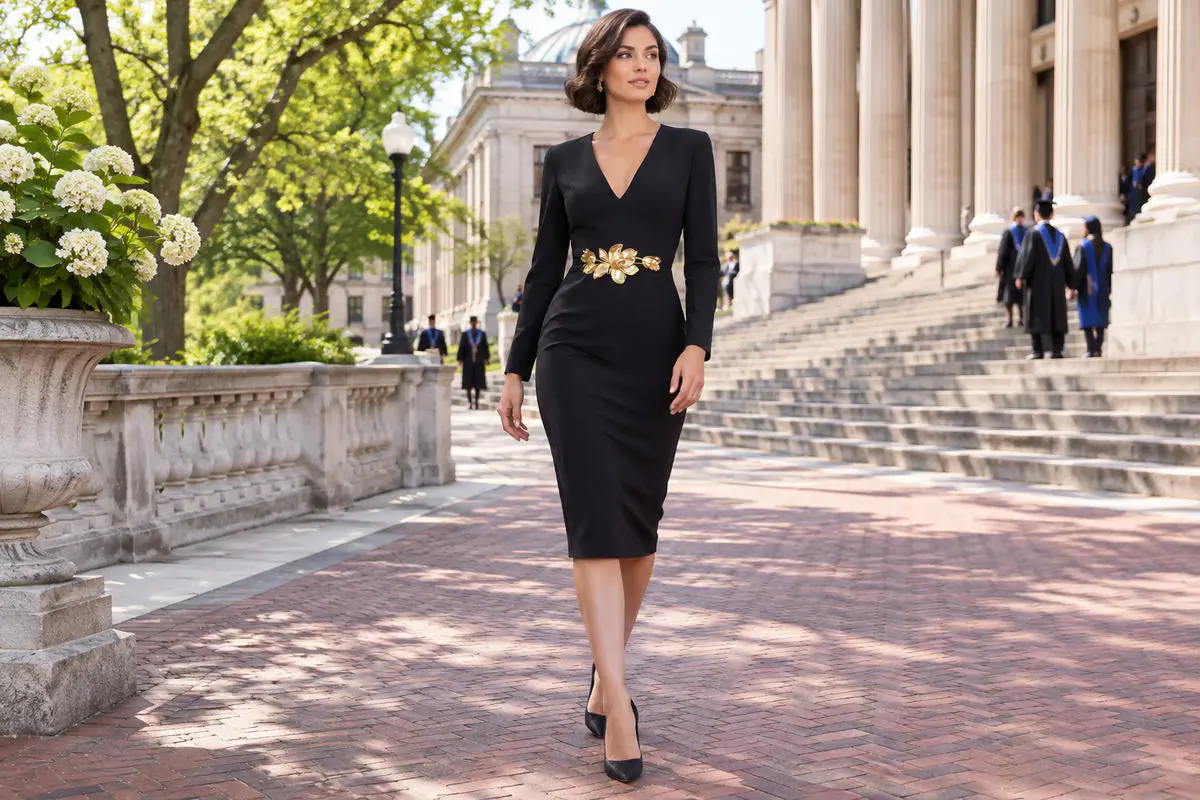
Jovani’s Elegant Long Sleeve V Neck Midi Dress With Sculpted Waist uses crepe, fitted long sleeves, and a V neckline. Its sculpted seams and metallic floral waist detail give the look structure after the robe comes off. The black midi is an example of construction, not a claim that every school accepts that color or length.
Short and Three-Quarter Sleeves for Less Layering
Short sleeve graduation dresses leave most of the forearm free inside the robe. Three-quarter sleeves provide more coverage while keeping cuffs away from the wrist opening. For an informal celebration after commencement, compare cocktail and party dresses (opens in new tab) with different sleeve lengths.
Jovani’s Fitted Crepe Dress With Ruffled Sleeves has a bateau neckline, knee-length sheath silhouette, and short puff sleeves. Its stretch crepe and pleated bodice offer a useful contrast to a slim-sleeved midi. The puff detail needs testing beneath a robe because it adds volume near the upper arm.

Puff, Bell, and Flutter Sleeves Need Extra Room
A dramatic sleeve can look appealing without the robe but compress or fold underneath it. Puff sleeves require shoulder room, while bell sleeves may bunch at the wrist. If you prefer a shaped skirt instead of statement sleeves, short fit-and-flare styles (opens in new tab) shift visual interest below the waist.
Do not reject every decorative sleeve automatically. First check whether you can raise both arms, lower them, and sit without twisting the dress. If the sleeve shifts or rubs, try a smoother version of the same silhouette.
Which Graduation Dress Necklines Work With Sleeves?
A V-neck, scoop, or simple square neckline usually keeps the area under the robe collar less crowded. High necklines can also work when their edges stay flat and school guidelines allow them. The goal is a neat overlap with the robe, not a universal rule about coverage.
V-Neck and Square Neck for a Clear Collar Line
A modest V-neck creates space around cords and stoles without needing a large opening. A square neckline frames the collarbone when the robe is removed. If the ceremony includes academic hoods, test the complete set because the hood can change how the neckline looks.
Bateau, High Neck, and Lace Details
A bateau neckline sits closer to the shoulder and may appear above the robe opening. A high neck needs smooth fabric rather than bulky layers. In lace cocktail dresses (opens in new tab), examine the neckline and sleeve lining closely so delicate trim does not catch on robe seams.
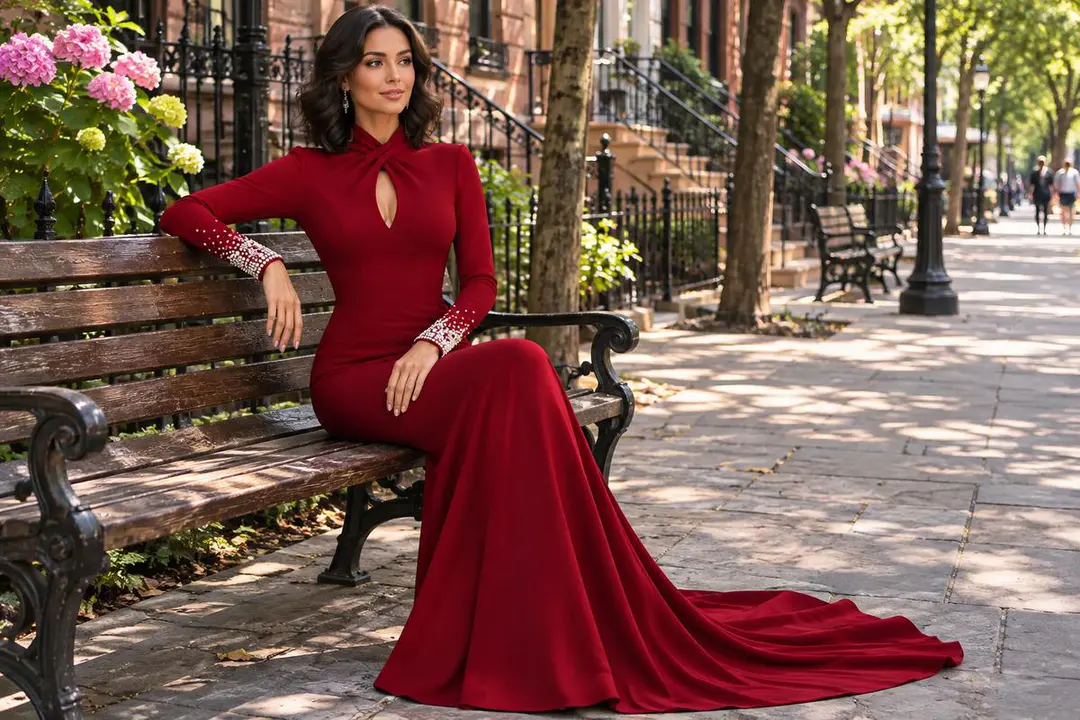
Jovani’s Long Sleeve Open Back Dress has a high neck with a keyhole cutout, crepe fabric, and long sleeves with beaded cuffs. Its floor-length sheath and small train make it a better reference for a formal celebration than an easy stage walk. Try the hem with your robe before considering that silhouette for commencement.
Balance Sleeve Coverage, Color, and Comfort
The best long sleeve graduation dress balances coverage with the room temperature and expected movement. White is a familiar choice, but requirements differ between schools and programs. If you are considering a pale shade, review white graduation dress styling (opens in new tab) and check the lining under daylight.
Long sleeves do not automatically mean warmth or modesty. A sheer lace sleeve offers different coverage from lined crepe, and a short sleeve may meet the dress code just as well. Choose based on the actual garment, venue, and any written ceremony policy.
Run a Realistic Cap and Gown Fitting
The most useful fitting happens with the exact graduation robe, cords, hood, and shoes you plan to wear. Stand before a mirror, then rehearse movements you will make at the ceremony. Watch the dress at the shoulder and collar rather than judging only the hem.
- Fasten the robe and reach forward as though accepting a diploma.
- Sit for several minutes and bend both elbows to check sleeve tension.
- Lift your arms slightly and confirm that cuffs do not catch or slide.
- Remove the robe and check the dress in daylight for photos afterward.
Younger graduates should also review their school’s rules for straps, coverage, and neckline depth. The eighth grade graduation dress guide (opens in new tab) explains why those requirements can differ from college ceremonies. A school policy takes precedence over a general styling preference.
Finish the Look for Photos and the Celebration
Once the robe is off, the dress neckline becomes the focus of portraits. A fitted sleeve with a plain collar can pair with simple earrings, while an embellished cuff may need no bracelet. Avoid adding several accessories where the robe already creates folds.
Check the sleeve edge for rubbing and the neckline for shifting when you turn your head. For a celebration dress, comfort and fit still matter after the academic robe is removed. Keep the final choice specific to your ceremony rather than to a photograph alone.
For help comparing long sleeve graduation dresses and other appropriate styles in person, use Jovani’s authorized retailer finder (opens in new tab) to contact a boutique. Bring your ceremony rules and ask to try the outfit with the robe.
Frequently Asked Questions
Can I wear a long sleeve dress to graduation in summer?
Yes, choose lightweight sleeves and test them beneath the academic robe before an outdoor summer ceremony. An unlined sleeve may feel cooler but offer less coverage than a lined one.
Should dress sleeves show beyond the graduation gown?
Keep cuffs inside the robe sleeve when possible, or check that a visible cuff looks deliberate. Wrist openings differ by school, so the full outfit is the best reference.
Is a white long sleeve graduation dress appropriate?
Yes, white long sleeve dresses suit many graduation celebrations, provided they meet the school’s requirements. Check opacity, lining, and the fit of sleeves beneath the robe.
Are graduation gown sleeves the same as dress sleeves?
No. Graduation gown sleeves belong to academic regalia, while dress sleeves are part of the clothing worn underneath. Requirements for a master’s or doctoral robe do not determine your dress sleeve style.