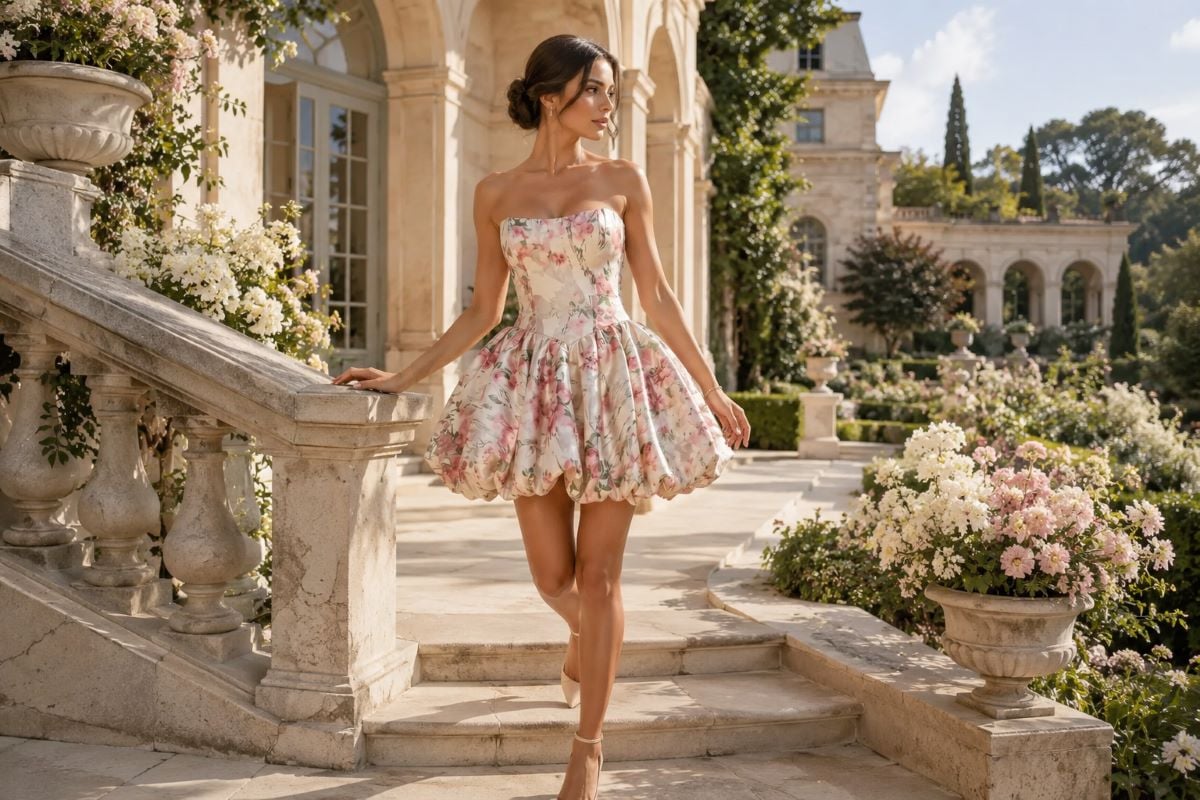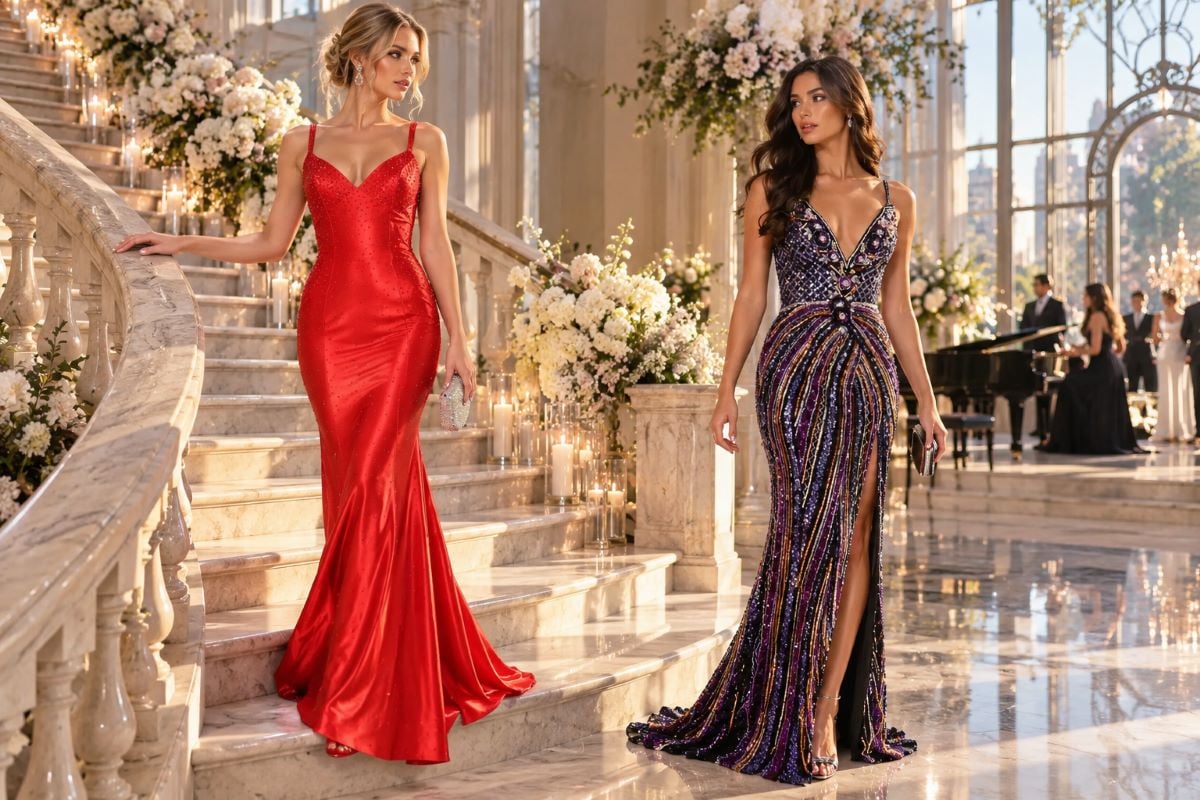

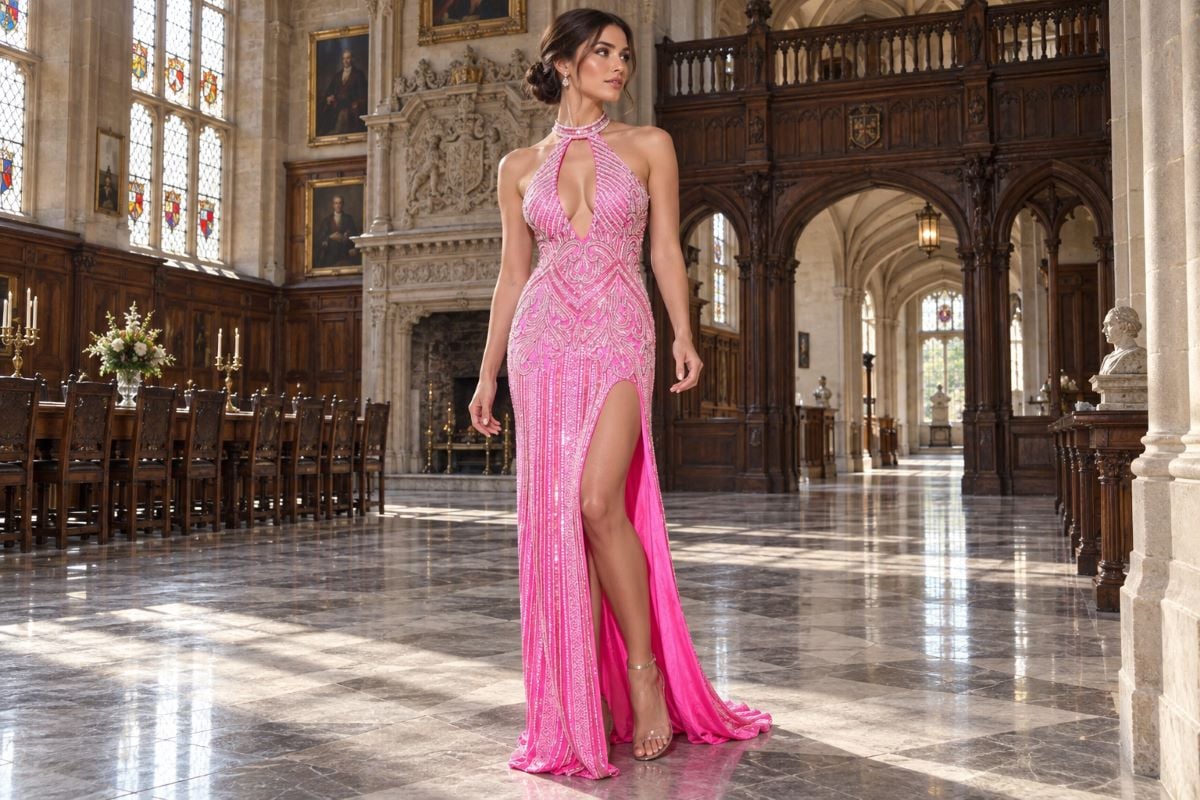
Finding the right prom dresses for religious schools can feel a little stressful at first. You’re trying to stay true to your school’s expectations, but you also want to look beautiful, confident, and completely yourself. Many students with strict school dress codes feel this way each year, especially when they need modest prom dresses for school guidelines that still feel like a real prom moment.
The truth is, you don’t have to choose between modesty and style. You just need a dress that respects the rules while letting your personality show through the shape, the color, or the details. Most students looking for school approved prom dresses want the same three things: something modest, something modern, and something that still feels like theirs.
Understanding Dress Codes in Religious Schools
What do religious schools usually require in a prom dress? The specifics differ by school and by faith, so the written dress code is the only reliable source and it is worth reading before shopping rather than after. Most codes address the same four areas: how high the neckline sits, whether the shoulders and upper arms are covered, how long the hem is, and whether the back is closed. A dress that meets all four almost always passes, and most codes state each one explicitly. Where they differ is in the details, such as whether a sheer sleeve counts as coverage or whether a slit is allowed at all, and those are the questions to ask the school directly.
It can seem limiting at first, but once those four areas are clear, the number of options that still pass is larger than most people expect.
A column silhouette for prom works beautifully because it stays refined without being tight.
Long gowns with soft structure also meet expectations, which makes floor-length prom gowns a natural match for students looking for modesty.
Some students prefer long sleeves, while others feel confident in high-neck designs or lined bodices. Whatever your comfort level is, there are plenty of modest prom dress ideas that align with both school rules and personal taste.
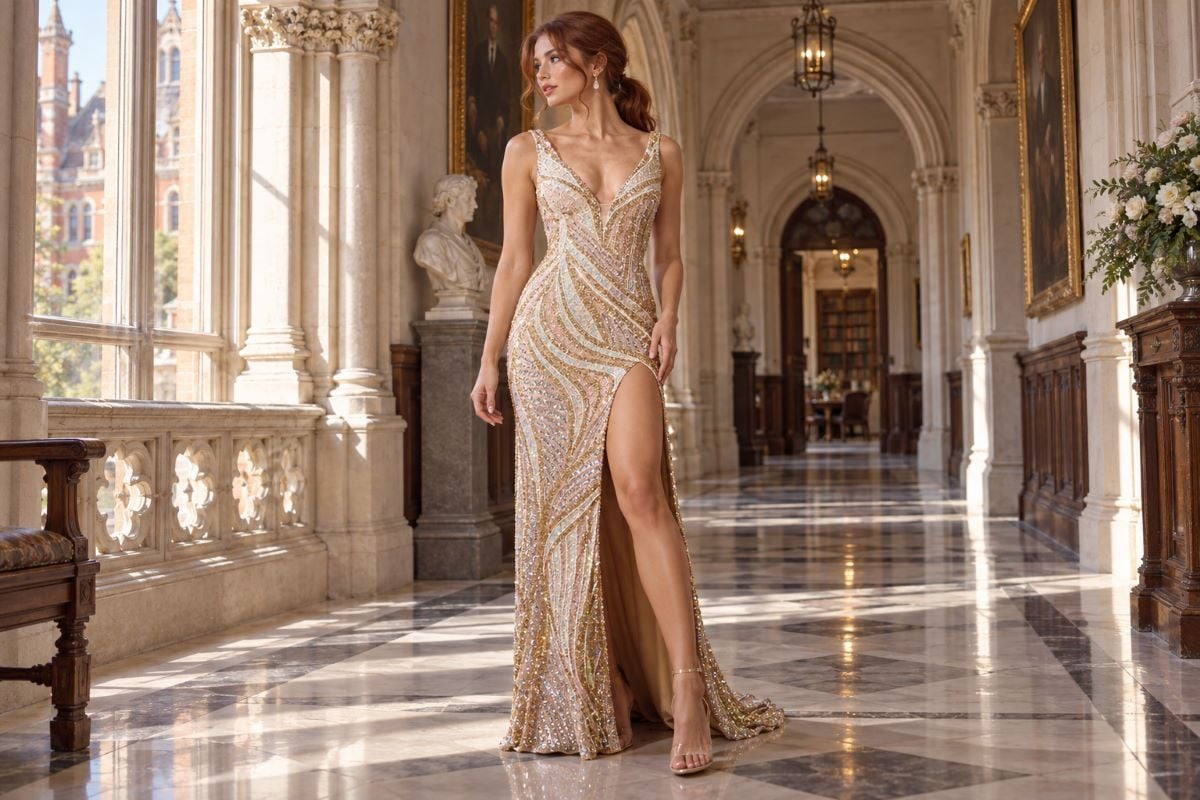
Reading the dress code before you shop
Every school writes its own code, and the same word can mean different things at different schools. Modest at one may mean covered shoulders, and at another it may mean sleeves to the elbow and a hem to the floor. Faith traditions differ too, so what a Catholic school expects, a Jewish day school expects and an Islamic school expects are not interchangeable, and a guide written for one will mislead at another.
So the first step is the written code itself, and the second is one question to whoever enforces it. Ask specifically about the details codes tend to leave unclear, such as whether an illusion neckline or a sheer sleeve counts as covered, whether a slit is permitted and how high, and whether a wrap or bolero can be removed once inside.
Bring a photograph of the dress to that conversation if you can, or the listing. A yes in writing before you order is worth more than any interpretation of the rules afterwards.
Balancing Modesty With Your Personal Style
Modesty doesn’t mean dull. In fact, many of the most stylish looks this year are modest by design. A great example is the modern one shoulder prom dress shape. When the fabric is placed securely and the bodice is lined, the silhouette feels creative without breaking any rules.
If you want something supportive and structured, a halter neckline gives coverage across the chest while still framing the face. And if you want something rich and elegant that naturally provides full coverage, prom dresses in velvet work well, since the fabric is thick, soft and naturally covering.
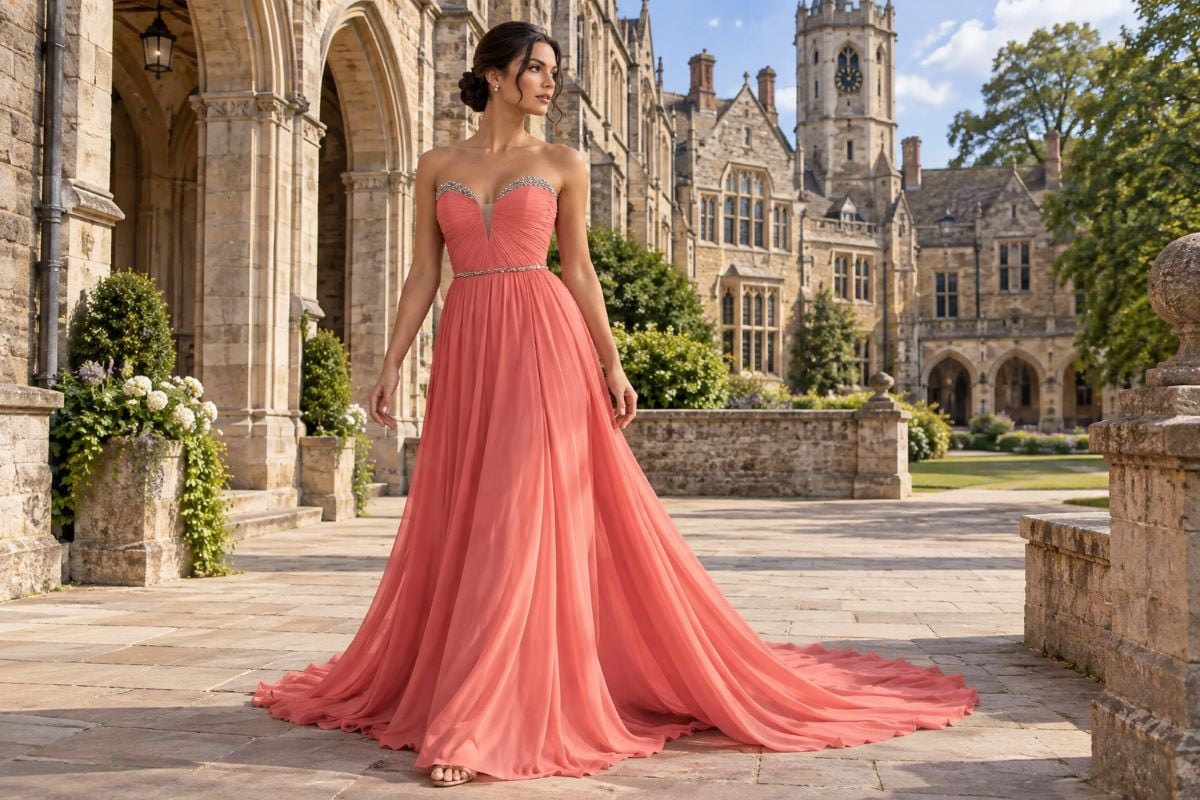
Color is another way to express personality within modest guidelines. Shades like coral prom dresses feel youthful and gentle, and a brighter shade brings energy without crossing any line in the code.
Even details like draping or soft patterns help create visual interest. An asymmetric prom design, for example, adds movement and style while staying completely modest.
Silhouettes That Fit Religious School Expectations
Some silhouettes naturally fit into dress codes without effort. Column shapes are classic and respectful, especially when you choose refined column silhouettes that smooth the body without clinging.
Students who love comfort and movement often choose body flattering flowy shapes gowns that feel soft, elegant, and easy to wear throughout the night.
If you love subtle uniqueness, asymmetric elements can be a great way to stay creative within modest guidelines. The key is making sure the coverage stays secure and school-friendly while still giving the dress personality.
Fabrics and Details That Support Modesty
Fabric plays a huge role in creating a modest look. Velvet, chiffon, lace, and satin all offer different levels of coverage without compromising on beauty.
For something soft and romantic, modest pastel chiffon looks offer gentle movement without being sheer. For something richer and more dramatic, luxe velvet textures add warmth and depth.
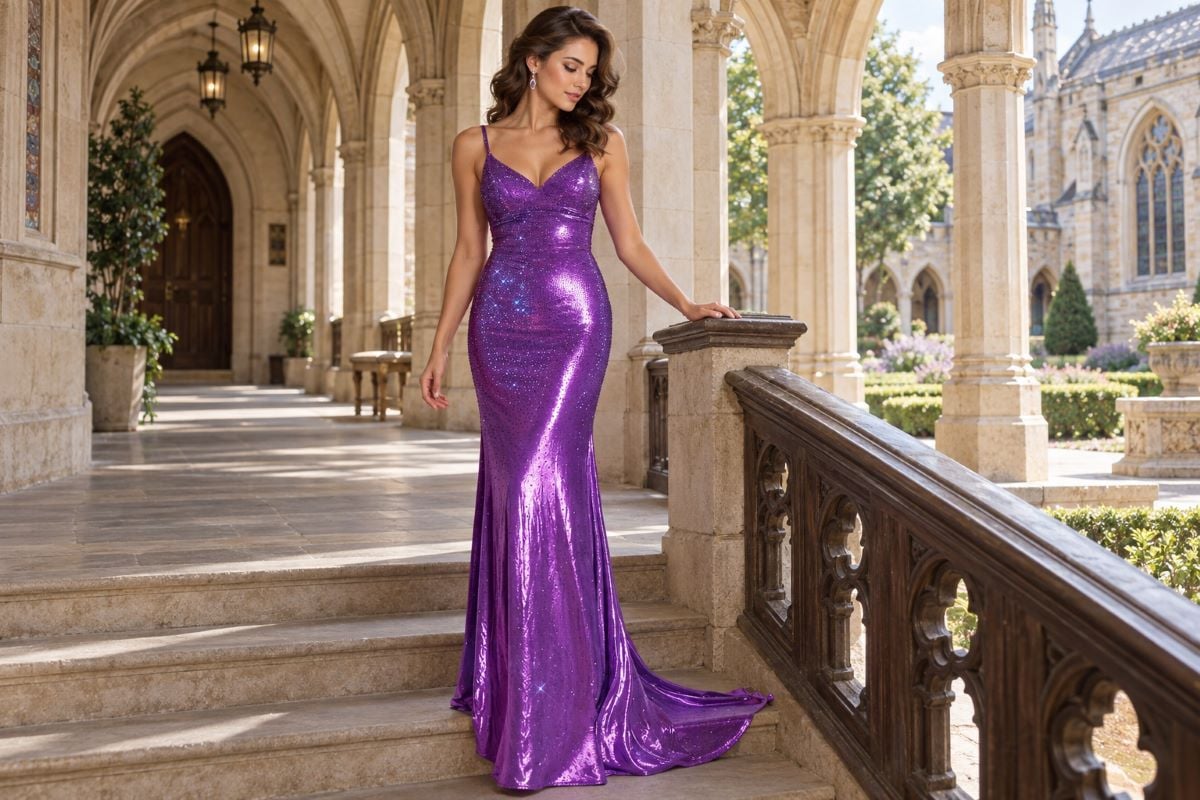
If you enjoy texture or sparkle, you do not need to avoid it. A modest cut in a lace gown for prom or a sequinned fabric can be fully school-appropriate when designed with a clean, modest silhouette. These details add charm without feeling too bold.
Minimalists often love after prom dresses clean lines, soft fabrics, and classic elegance that fits both the occasion and the dress code.
Color Choices That Work for Religious Schools
Religious schools rarely restrict color, which gives you freedom to express your personality. Coral, navy, white, silver, and champagne remain classic choices. But bold colors can look elegant too when the silhouette is modest. That’s where shades like bright orange or soft coral evening looks truly shine.
Color becomes the part of the outfit that speaks the loudest and when the structure of the dress is modest, even vibrant tones look graceful and completely appropriate.
Religious School Prom Dress Questions
What prom dresses are allowed at religious schools?
It depends entirely on the school’s written code, which is why reading it first matters. Most address neckline height, shoulder and arm coverage, hem length and whether the back is closed. A dress that meets all four usually passes, and the details worth asking about are sheer sleeves, illusion necklines and slits.
Do sleeves have to be solid fabric?
At some schools yes and at others a sheer or lace sleeve counts as covered. This is one of the most common points of difference between codes, so ask directly rather than assuming. Long sleeve prom styles in solid fabric are the safe choice if the answer is unclear.
Can a modest dress still look formal?
Yes, and coverage tends to read as more formal rather than less. A high neckline in a structured fabric, a floor length column, or a long sleeve in velvet all carry more weight than an open cut does. The formality comes from the fabric and the line, not from how much is shown.
Are slits allowed?
Often not, or only to the knee, and this varies more than almost any other rule. If a dress you like has a slit, ask before ordering rather than planning to have it sewn closed, since some slits are structural and closing them changes how the skirt moves.
What if the dress meets the code but a teacher disagrees on the night?
This is why a yes in writing beforehand matters. Send a photograph or the listing to whoever enforces the code and keep the reply. An approval you can show on the night settles it in a way an argument about interpretation never will.
Which colors work best?
Any of them, since color is almost never part of a dress code. Deep tones such as navy, emerald and burgundy read as formal and photograph reliably, and a softer shade works equally well. Color is where personal taste has the most room on a page where most other choices are set by the rules.
Checking the dress against the code
The dress that passes is the one that meets the written code and that you actually want to wear, and both parts matter.
Take a copy of the code to an authorized Jovani retailer and check each requirement against the gown in the fitting room, rather than trusting a description online.