
Prom Dress Length Guide: Long vs Short
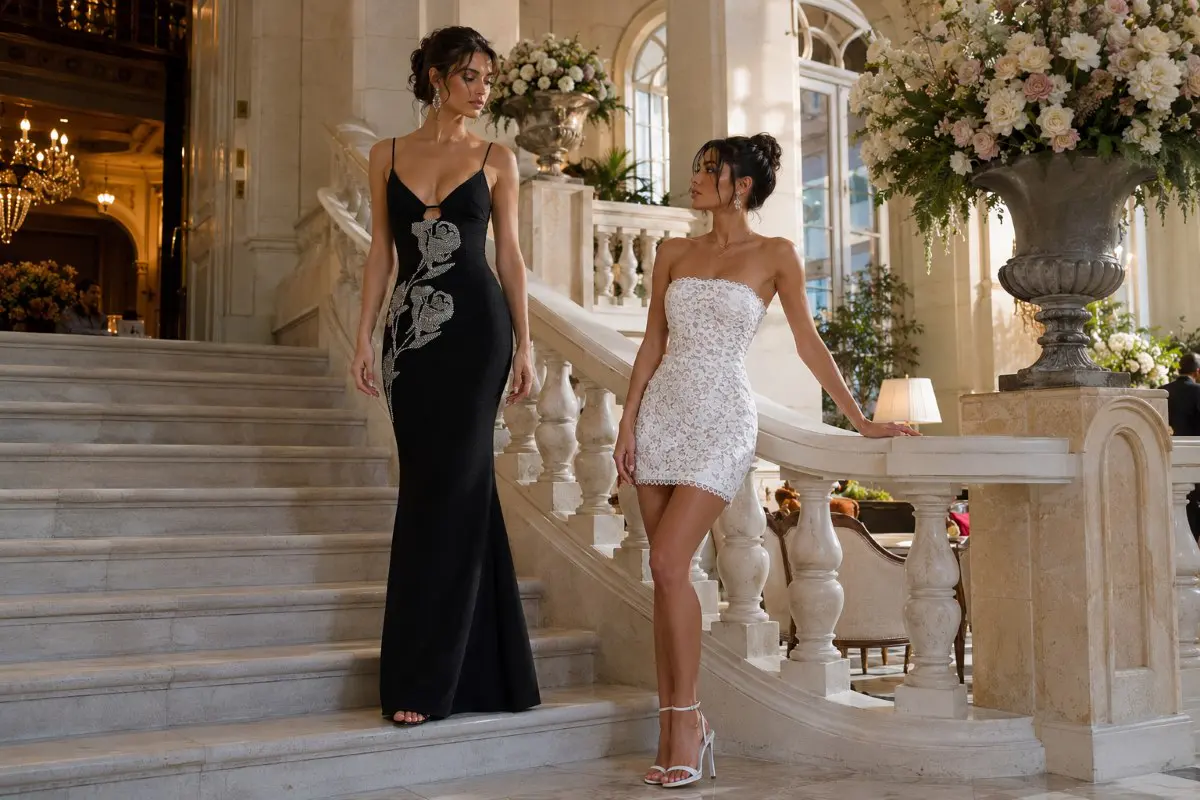
Prom dress length is the first real decision in dress shopping and the one that narrows everything else. Silhouette, shoes, alterations and how much you can dance all follow from it, which is why choosing it early saves a great deal of time.
This guide covers how long should a prom dress be, whether it has to be long at all, how each length behaves on different frames, and how the hem is actually set.
How long should a prom dress be?
What is the correct prom dress length? A floor length gown should clear the ground by a small margin at the front and just brush it at the back, measured in the exact shoes you plan to wear. That gap is what stops you stepping on the hem while keeping the line unbroken. A short dress should sit anywhere from just above the knee to mid thigh, depending on your comfort and your school's dress code. Midi and tea lengths sit between the two, and the one length to test carefully is any hem that stops at the widest part of the calf, since that shortens the leg line rather than lengthening it.
Do prom dresses have to be long?
Does a prom dress have to be long, and do prom dresses have to be long at all? No. There is no rule requiring a floor length gown, and the idea that prom demands one comes from tradition rather than from any dress code. Short and midi styles are fully appropriate, and at many schools they are the majority.
What decides it is three things. Your school's expectations come first, since some venues and some codes lean formal enough that a short dress would feel out of place. The venue comes second, because a hotel ballroom carries a long gown better than a school gym does. How much you plan to dance comes third, and that is the factor most people underestimate.
Can prom dresses be short is really a question about the after party, and the answer is almost always yes. If you are going on somewhere afterwards, a shorter dress handles the whole night in one outfit, while a full length gown often means changing.
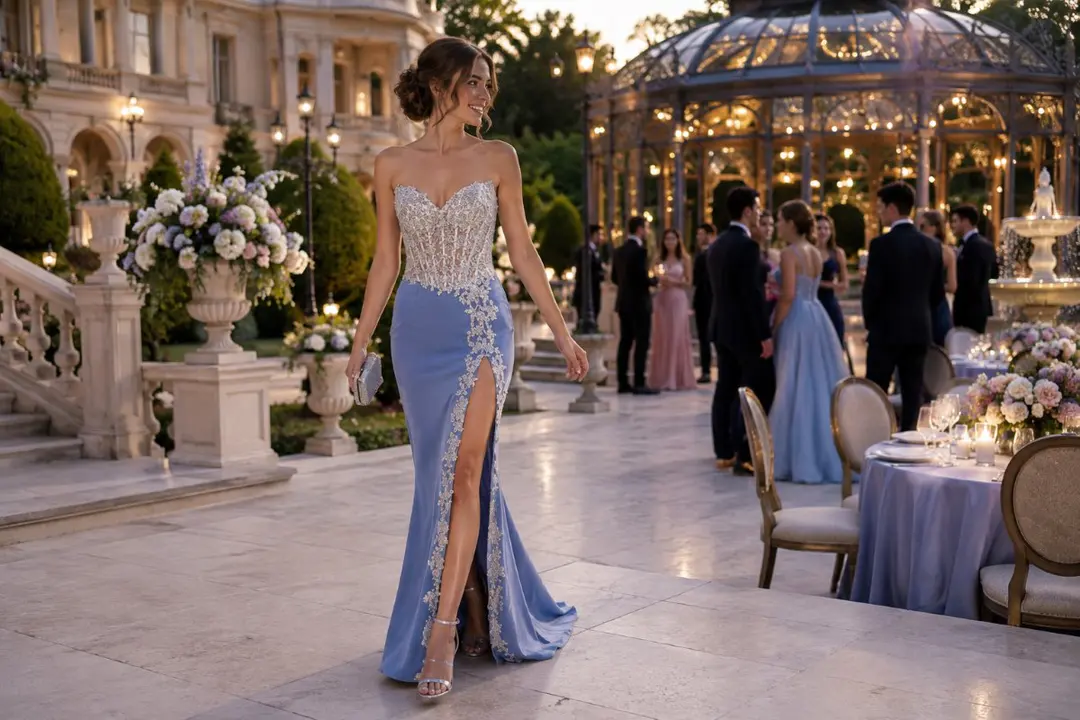
Every prom dress length compared
| Length | Where it falls | Best for | Trade-off |
|---|---|---|---|
| Mini | Mid thigh | Dancing, after parties, showing shoes | Least formal, and dress codes often restrict it |
| Short | Just above the knee | Warm venues, long nights, easy movement | Reads less formal than floor length |
| Midi | Mid calf to just below the knee | A grown up look without a full gown | Mid calf can cut the leg line |
| Tea length | Between calf and ankle | Vintage inspired looks, formal but mobile | Uncommon, so harder to find |
| High low | Short front, long back | Photographs and dancing at once | Needs a shoe you are happy to show |
| Floor length | Grazing the floor | Ballrooms, formal codes, dramatic entrances | Almost always needs the hem altered |
The row worth reading twice is midi. A hem that lands at the widest point of the calf visually shortens the leg, so look for one that finishes just below the knee or closer to the ankle instead.
Long prom dresses, honestly
A floor length gown is the most formal option and photographs best in a staged setting, particularly on stairs or against a backdrop. It also hides your shoes entirely, which means comfort can win over appearance when you choose them.
The costs are real though. A full or fitted skirt limits how you move, stairs and outdoor paths need attention, and the hem will almost certainly need altering. That last one catches people out, since it means the dress is not ready the day you buy it.
Within long gowns the silhouette changes the experience more than the length does. A ball gown gives the biggest entrance and the least mobility.
A fitted mermaid gown photographs strongly but shortens your stride. A column or A line gives most of the formality with far more freedom.
A slit is the compromise worth knowing about. A floor length gown with a front or side slit keeps the formal line while letting you walk and dance normally, and it also puts your shoes back on display.
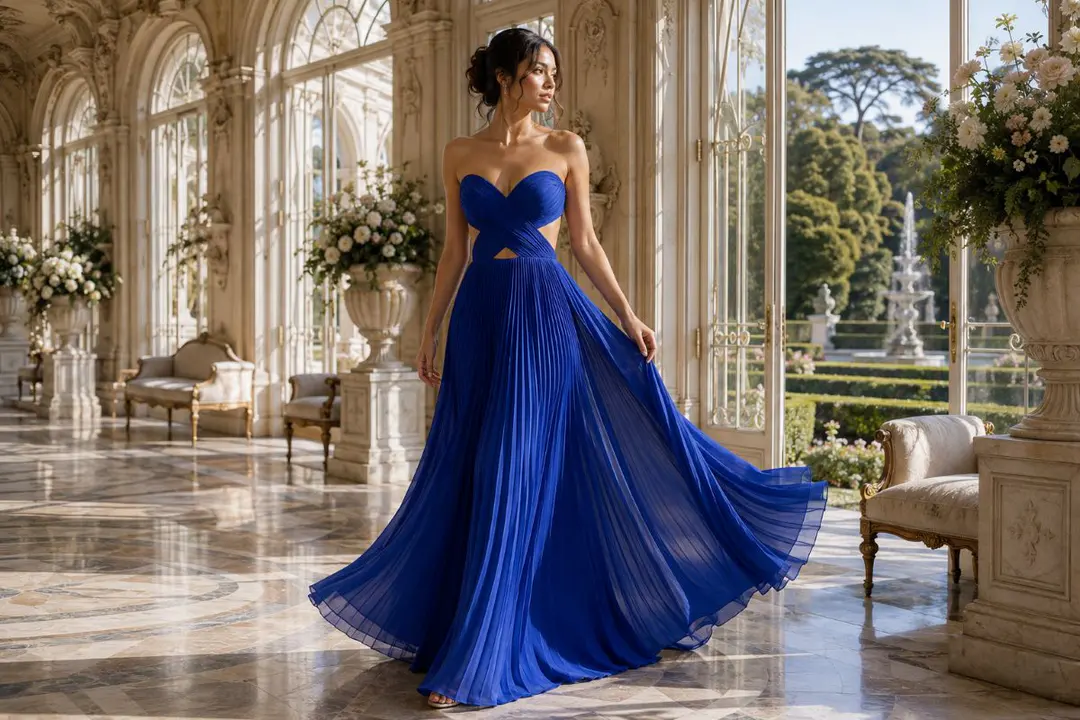
Short prom dresses, honestly
Short styles are built for movement, and that is the whole argument for them. You can dance without managing a skirt, you stay cooler in a crowded room, and your shoes become part of the outfit rather than being hidden.
They also handle the full evening in one outfit, which matters if there is an after party at a house or a more casual venue. A long gown at a house party is impractical in a way nobody mentions beforehand.
What you give up is formality. A short dress reads less dressy than floor length, which can feel wrong at a very grand venue or in group photographs where everyone else is in a gown. It also asks you to be comfortable showing your legs in every picture from the night, and that is worth deciding honestly rather than at the last minute.
Height, and what it actually changes
Are prom dresses long or short depends less on height than most guides claim, but it does change a few things.
On a shorter frame, a short hem gives the longest leg line and is the easiest route to a taller look. A floor length gown works equally well provided it is sleek rather than layered, since volume is what overwhelms a shorter frame, not length. Where a waist seam sits matters more than either.
On a taller frame, floor length is the easiest to find in a hem that already fits, and a fuller skirt is carried more easily. Short dresses can read very short on a long leg, so check the hem sitting down as well as standing.
The one thing that applies to everyone is the waist seam. A seam sitting below your natural waist shortens the leg line at any height, and that has more effect on proportion than the hem does.
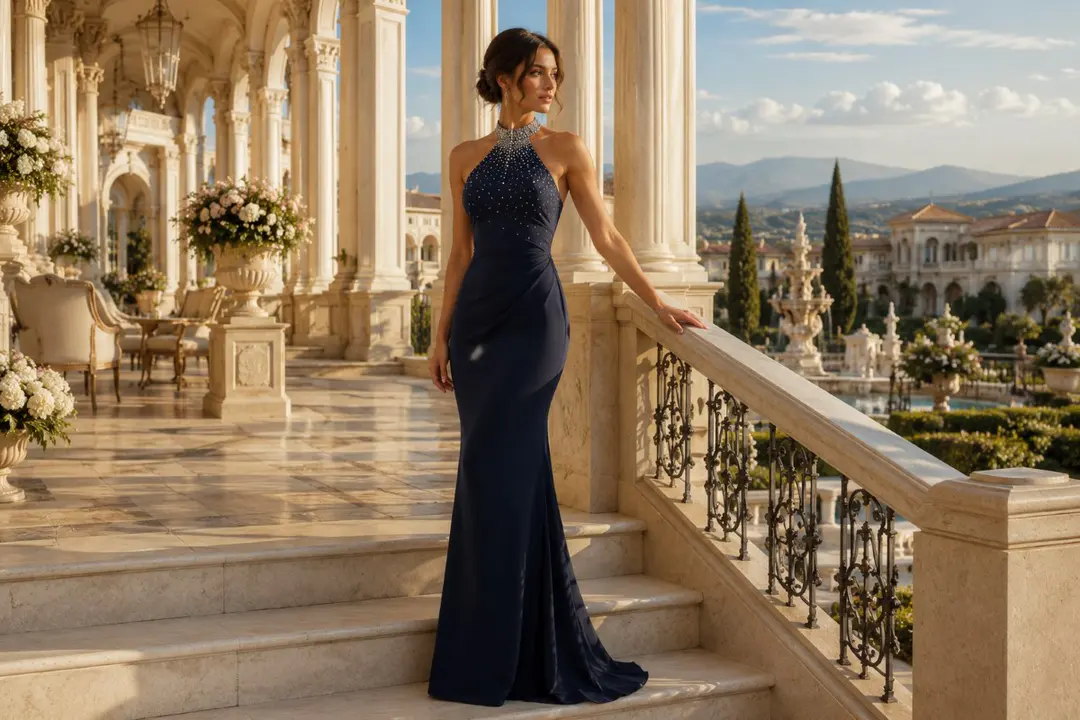
How the hem is actually set
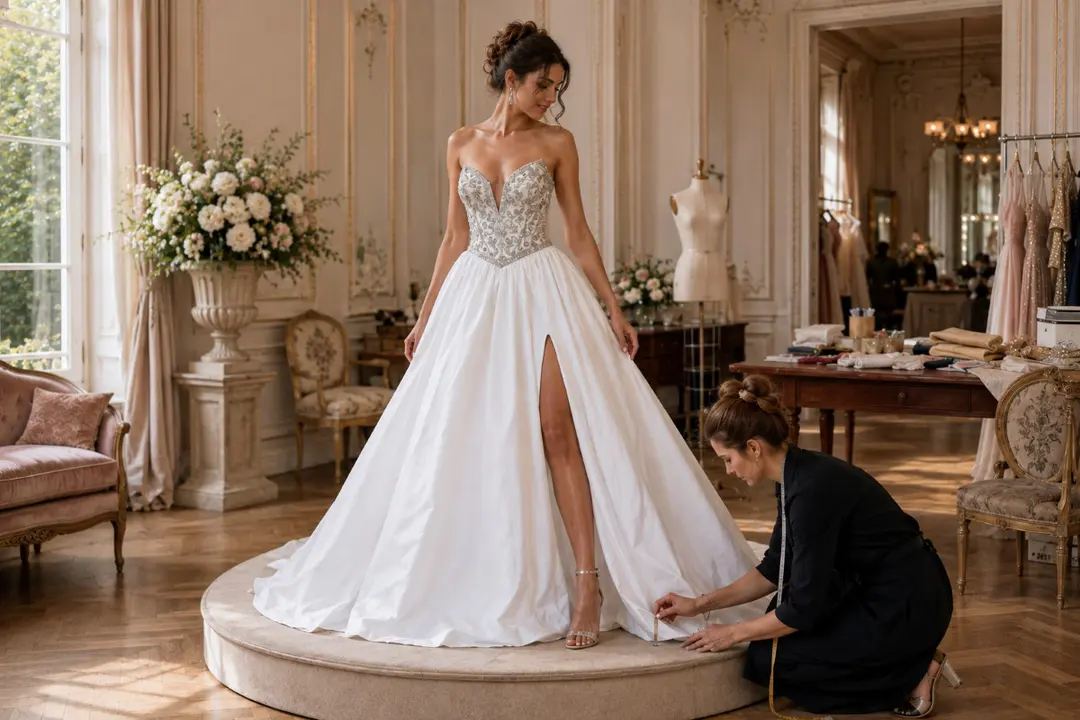
Length is measured from the shoe, not from the floor, which is why the hem is nearly always the last alteration done. Bring the exact pair you plan to wear to every fitting, since a difference of half an inch shows clearly on a long gown.
How long should floor length dresses be is answered by the gap: a small one at the front so the hem never catches under your foot, and a light brush at the back. Anything longer drags, and anything shorter exposes the shoe in a way that reads unfinished.
If you change your shoe height after the hem is set, the dress no longer fits. That is the single most common alteration problem with long gowns, and it is entirely avoidable by choosing the shoes first.
Matching length to the venue
A hotel ballroom or a country club leans formal, and floor length is the safest read. A school gym or a community hall is more relaxed, and short or midi fits comfortably. An outdoor venue argues for shorter, since grass, gravel and hems do not combine well, and a stiletto sinks.
How long does prom last matters here too, since a long evening on your feet rewards a shorter hem. Beyond that, the most reliable signal is the invitation and whatever your friends are doing, since prom is a group photograph as much as an individual one. If most of your year is in floor length, a short dress will stand out, which may be exactly what you want or exactly what you do not.
When you genuinely cannot decide, high low and tea length give you most of both. They are less common, which also means fewer people will have the same dress. A less common style is often where those lengths live.
Prom Dress Length Questions
How long should a long prom dress be at the hem?
It should clear the ground by a small margin at the front and just brush it at the back, measured in the exact shoes you plan to wear. That small gap stops you stepping on the hem while keeping the line unbroken. Any longer and it drags, any shorter and it exposes the shoe awkwardly.
Does prom dress have to be long, or is short acceptable?
No. There is no rule requiring floor length, and short and midi styles are fully appropriate. The decision comes down to your school's expectations, the venue and how much you plan to dance. At many schools shorter dresses are the majority rather than the exception.
Are prom dresses short or long more often?
Are prom dresses long or short is the wrong framing, because both are common and neither is more correct. Floor length is more formal and photographs better in staged settings, while short styles are easier to dance in and let your shoes show. Formal ballroom venues lean long, school gyms and outdoor venues lean short.
Can prom dresses be short?
Yes, provided your school's dress code allows the hem you choose. Short dresses handle the whole evening in one outfit, which is useful if there is an after party. The trade-off is that they read less formal, which can feel out of place at a very grand venue or in group photographs.
What length suits a shorter frame?
Short hems give the longest leg line and are the easiest route to a taller look. Floor length works equally well as long as the gown is sleek rather than layered, since volume rather than length is what overwhelms a shorter frame. Where the waist seam sits matters more than the hem.
Why does the hem need altering on almost every long gown?
Because length is set from the shoe rather than the floor, and gowns are cut to a standard height. Bring the exact pair you plan to wear to every fitting, since half an inch shows on a floor length hem. Changing shoe height after the hem is set is the most common problem.
Trying the lengths side by side
The fastest way to settle this is to try one floor length, one short and one midi in a single visit, because seeing all three on your own frame answers in minutes what browsing cannot.
Shortlist from the prom dresses collection first, narrowing by length before anything else.
Then take the shoes you plan to wear to an authorized Jovani retailer, so the hem can be measured and quoted at the same time.