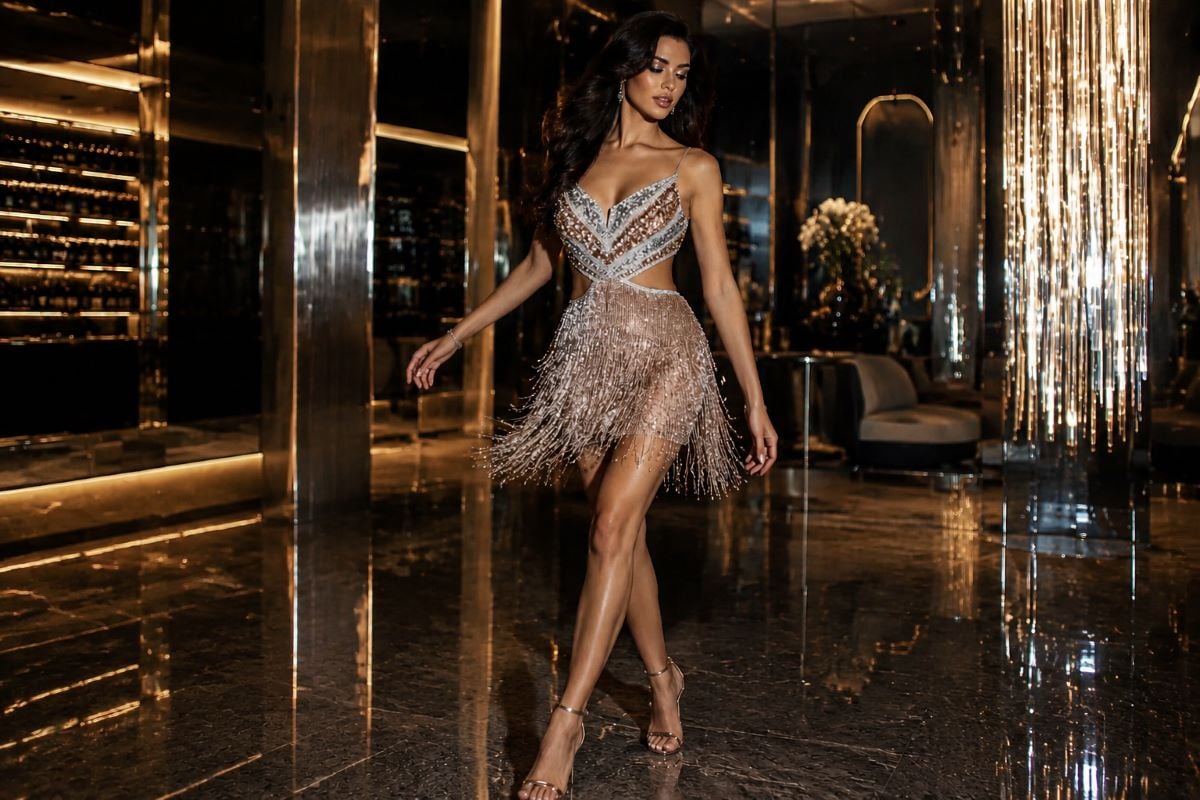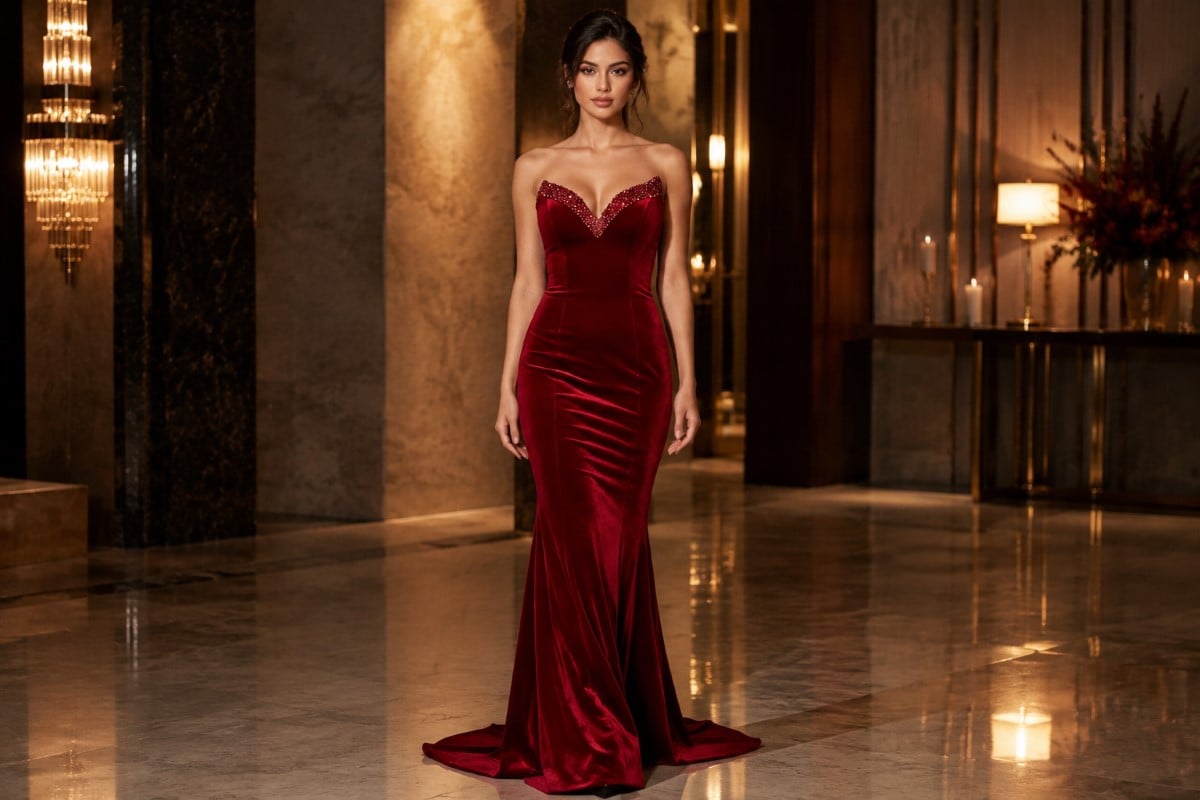


A gold dress does not sit still the way a matte color does. Where a flat fabric absorbs most of the light that reaches it, a metallic surface returns it, so the dress changes constantly as you move across a dance floor and it photographs with a brightness no matte color can produce. That is the appeal, and it is also the reason gold goes wrong more often than most colors, because the same property that makes it luminous makes it unforgiving about finish, undertone, and quantity. This guide covers the different kinds of gold, which ones suit which complexions, how gold behaves under the specific lighting of a school dance, how much metallic is the right amount, and what to wear with it.
Why gold works at a prom specifically
A prom venue is usually dimly lit, often with colored spots or a lighting rig over the dance floor, and that environment rewards a reflective fabric more than almost any other setting. In a bright room, gold reads as one more warm color. In a dark room with moving light, it reads as luminous.
The photographic argument is stronger still. Most prom photographs are taken on phones, often with a flash, in low light. Under those conditions matte colors flatten and dark colors lose detail, while gold picks up the flash and returns it, so the dress holds dimension and the picture has a focal point.
There is also the simple matter of impact. Gold reads as celebratory and expensive without needing a dramatic silhouette, which means the dress can be comfortable and simply cut while still being the most striking thing in the photograph. The styles among gold prom dresses show how much variation the shade covers.
The kinds of gold and how each behaves
Gold is not one finish, and the differences matter more than the differences between shades of most colors.
Bright gold, champagne gold, and rose gold
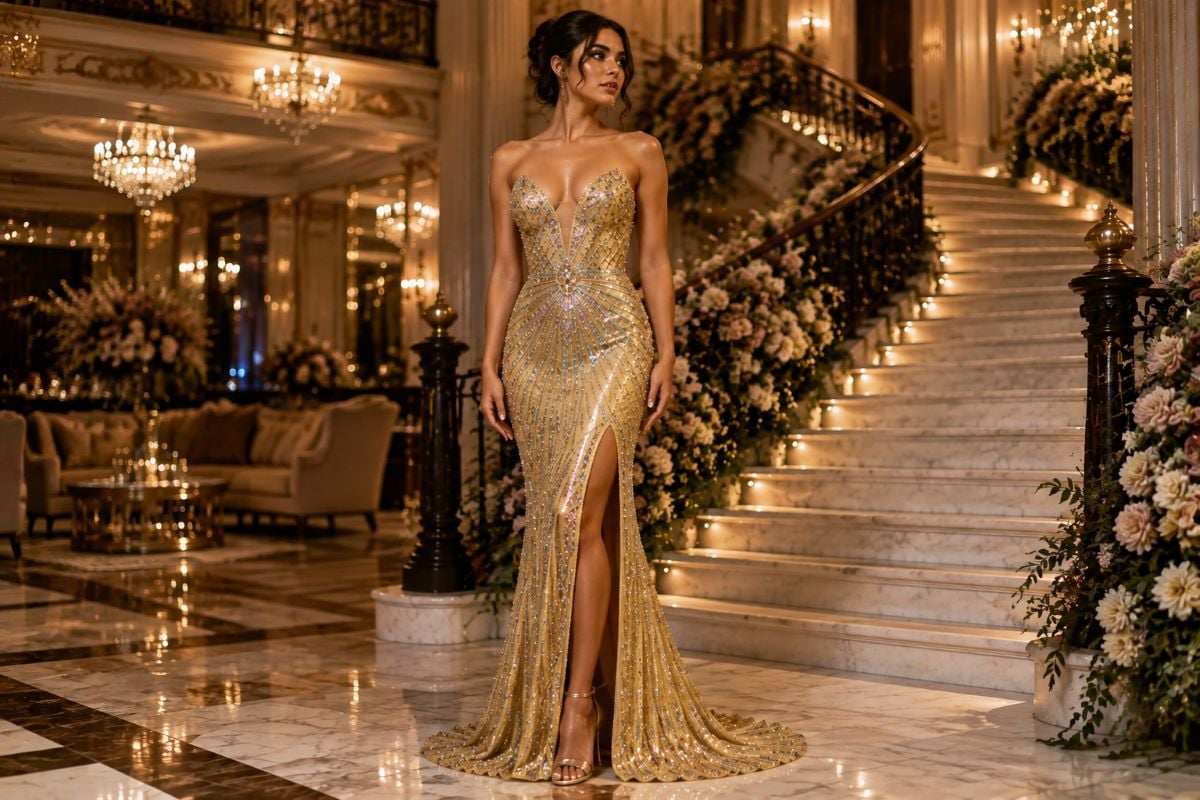
Bright or yellow gold is the most saturated and the most obviously metallic, reading as warm, rich, and unmistakable. It creates maximum impact and photographs most vividly. Champagne gold is paler and softer, closer to a warm neutral with metallic content, which reads as elegant rather than bold and suits someone who wants the glow without the full statement. Rose gold carries pink in it, which makes it warmer and softer again and flatters fair and pink-toned complexions particularly well. Antique or old gold is muted and slightly brown, reading as vintage and understated. These four suit different people and different moods, so trying one and disliking it tells you very little about the others.
Sequin, foil, lamé, and beaded gold
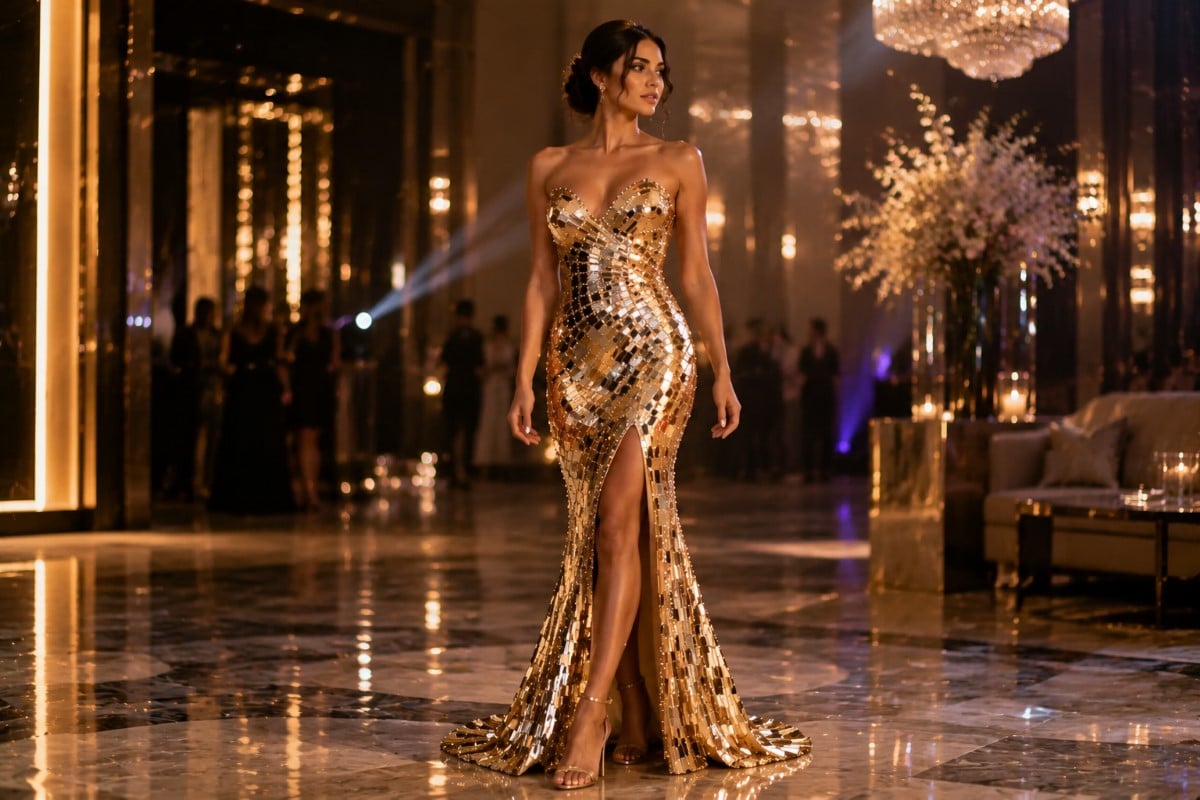
The finish matters as much as the shade. Sequins produce moving points of light and read as the most festive and energetic, which suits a dance floor. A foil or lamé fabric produces broad continuous sheets of reflection, which reads as sleeker and more dramatic but shows every wrinkle and every line of the body underneath. Beading gives texture and scattered light rather than continuous shine, which is the most forgiving of the three and the most expensive-looking. Brocade and jacquard with metallic thread give the quietest version, where the gold appears in the pattern rather than across the whole surface. If a gold dress feels like too much, changing the finish usually fixes it faster than changing the shade.
Matching gold to your complexion
Gold is warm by definition, so the question is which version of warm suits you rather than whether warm suits you at all.
Warm undertones, showing as golden, peach, or yellow beneath the skin, sit naturally with bright and antique gold. The dress and the complexion share a temperature and the effect is harmonious and glowing.
Cool undertones, showing as pink or blue, do better with rose gold or a cooler champagne gold, where the pink content bridges the gap. A strongly yellow gold against very cool skin can create a slightly jarring contrast, though the effect varies enough that it is worth trying rather than ruling out.
Depth of complexion matters as much. Deeper complexions carry bright saturated gold spectacularly, and the contrast between a luminous metal and deep skin is one of the most striking combinations in formalwear. Medium and olive skin suits the entire range. Fair complexions often do best with rose gold or champagne gold, since a very bright yellow gold can overwhelm and can also sit close enough to fair skin in value that the dress reads as a pale shimmer rather than as gold. The guide to prom dress colors for different skin tones covers how to identify your undertone.
How much gold is the right amount
This is the decision that separates a gold dress that looks considered from one that looks like a costume, and almost nobody thinks about it before shopping.
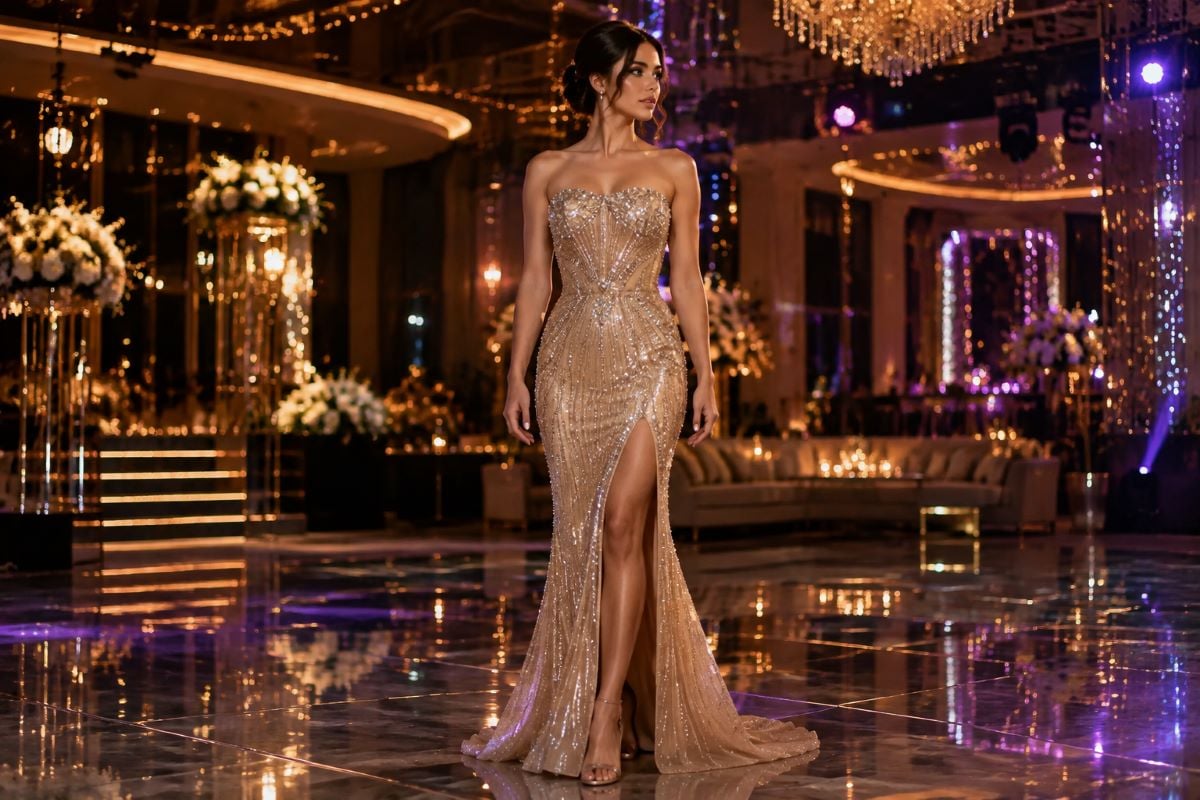
An allover metallic gown, fully sequinned or in a lamé fabric, is the maximum version. It reads as high impact and genuinely glamorous, and it works when you want the dress to be the entire statement. It also demands a very clean silhouette and minimal accessories, because anything added on top competes with a surface that is already reflecting light from every angle.
A partially metallic dress, with a beaded bodice over a plain skirt or metallic detail on a matte ground, gives you the glow in a controlled quantity. This is generally the easier version to wear and the one that suits most people, since the eye gets a focal point rather than a whole field of shine.
A metallic accent, such as gold embroidery or a metallic thread woven into a colored fabric, is the quietest version and reads as detail rather than as a gold dress at all.
The useful principle is that reflectivity behaves like volume. More metallic surface means more visual noise, so the more gold there is, the simpler everything else should be. The metallic styles among metallic prom dresses show the range across those levels.
Silhouette decides how much metal is on show
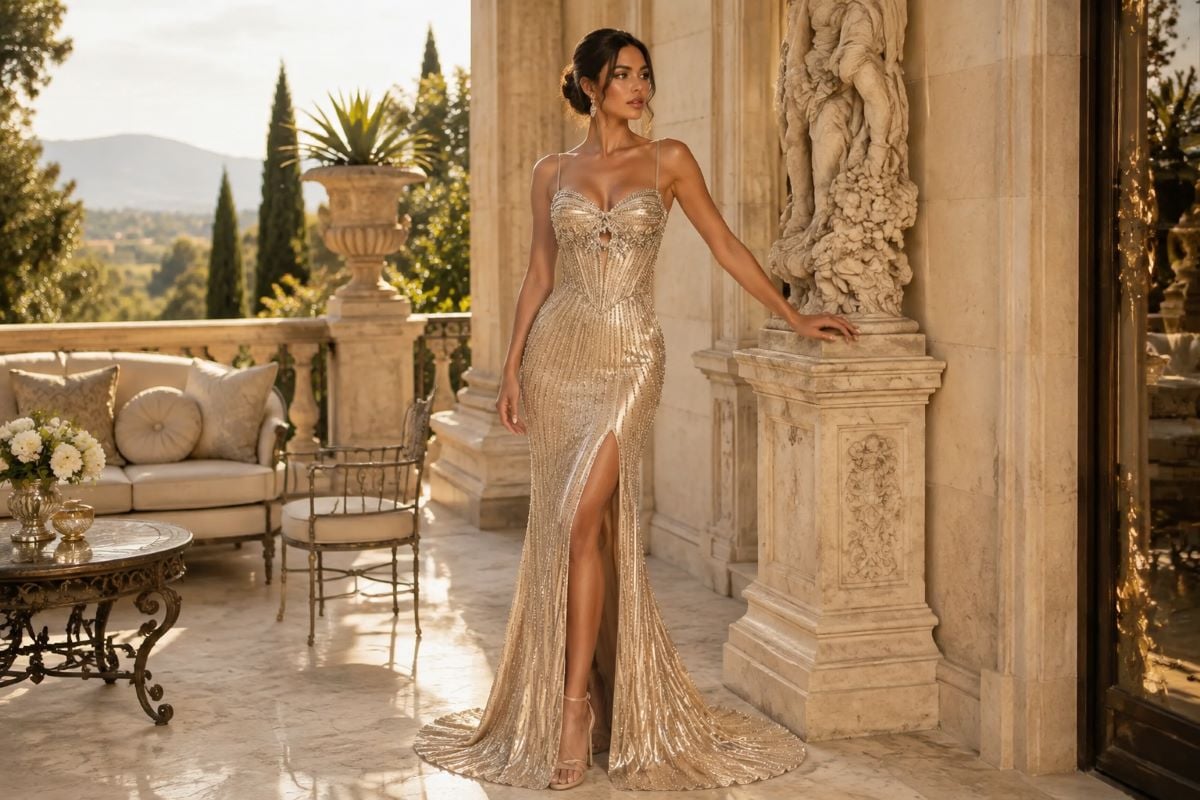
With a reflective fabric the amount of material is the amount of shine, and that changes the impact more than the shade does. A full ball gown in bright gold puts an enormous reflective surface in the room and is unmistakably a statement. A fitted column in the same fabric concentrates the shine into a narrow line, which reads as sleek rather than overwhelming. A shorter dress reduces the quantity again and lets a bright gold feel playful. If a gold appeals but feels like too much, choosing a less voluminous silhouette works as well as stepping down to a quieter finish.
Lining and construction matter more with metallics
Reflective fabrics are less forgiving than matte ones, so what sits underneath does real work. A sequinned or foil gown needs a proper lining, both for comfort against the skin and to stop the fabric clinging where it should skim. Sequins in particular can be scratchy against bare skin over a long evening, which is a practical consideration for a night of dancing. A well-built bodice also matters, since a reflective surface highlights every line and a poorly fitted metallic dress shows its problems far more plainly than a matte one would.
Gold under dance lighting
Gold behaves differently from every other color under artificial light, and understanding that helps you choose.
Under warm lighting, which most venues use, gold intensifies. The warm light and the warm metal reinforce each other and the dress reads as richer than it did in the shop. This is the most flattering condition for gold and the most common one.
Under cool or white lighting, gold reads closer to its true shade and can look slightly flatter, though it still reflects.
Under colored lighting, gold takes on the color of the light, which is worth anticipating. Blue uplighting over a dance floor will make a gold dress read greenish in that light and in photographs taken there. This is not a problem, since every reflective fabric does it, but it explains why a dress can look different in one set of photos than another.
The practical takeaway is that a gold dress will look its best in the warm-lit areas of the venue and in flash photographs, and slightly different under colored stage lighting. The broader picture in the prom dress colors guide covers how shades behave across an evening.
Gold at a high school dance
Prom is a high school event and the dress should suit that setting. Gold makes this reasonably easy, since the color reads as festive and celebratory rather than mature, but the finish matters here more than usual.
A heavily reflective, body-skimming lamé can read as more grown-up than a school setting calls for, while the same shade in a beaded or sequinned dress with a fuller skirt reads as celebratory and age-appropriate. The color is not the variable; the finish and the cut are.
Beyond that, the usual practical points apply. Check your school’s published dress code before buying, since many specify hem length and coverage. Choose a neckline and fit you can move in without adjusting, since a dress you manage all night photographs worse than one you forget you are wearing. And be aware that metallic fabrics can be warm, so a heavily sequinned gown in a crowded room is a genuine consideration for an evening of dancing.
What to wear with gold
Gold is doing a great deal of work already, so the accessories should mostly stay out of its way.
For jewelry, gold with gold is the cohesive choice and always works. Silver against gold is the harder combination and generally looks accidental rather than deliberate. If the dress is heavily metallic, the strongest option is minimal jewelry or none at all, since the dress is already reflecting light from every angle and additional shine reads as clutter.
For shoes, metallic gold is the most cohesive, and a nude matched to your own skin depth keeps the line long without adding a second shine. Black works with a deeper antique gold but tends to look heavy against a bright one. A colored shoe is generally the wrong move, since it introduces a competing element.
If you want a second color, gold pairs beautifully with black, deep green, burgundy, and navy, so a wrap or a clutch in one of those reads as intentional. The specific advice in the piece on how to accessorize a gold prom dress covers the combinations in more detail.
If you want the reasoning rather than the recommendations, the wider guidance on matching jewelry metals with dresses explains why some metal pairings read as deliberate and others do not.
Deciding how much shine you want
The quantity of metal matters more than the shade of it, so start there. Decide first how much metallic you actually want, since the difference between an allover sequin gown and a beaded bodice on a plain skirt is far bigger than the difference between two shades of gold.
Then check the shade against your face rather than in a full-length mirror, since gold’s flattering effect depends entirely on the relationship between the metal’s warmth and your own. Bright, champagne, rose, and antique gold will produce four different results on the same person.
Look at the fabric under a light source that moves, or move yourself while looking, because a reflective fabric is static on a rail and only shows its character in motion. A gold that looks flat in a fitting room may be spectacular on a dance floor, and vice versa.
And be honest about comfort, since metallic fabrics tend to be warmer and less breathable than matte ones. The sequin styles among sequin prom dresses show the most reflective end of the range.
The same metal behaves differently at a more formal register, where the finish tends to be quieter and the cut cleaner. The gold evening dresses show that version of the shade. To find the gold that suits your own coloring and the amount of shine you actually want, explore the current styles through an authorized Jovani retailer.
Gold, From Champagne to Full Sequin
Who can wear a gold prom dress?
A wider range than people expect, because gold spans bright yellow, champagne, rose, and antique versions that behave quite differently. Warm undertones suit bright and antique gold naturally. Cool undertones do better with rose gold or a cooler champagne gold, where the pink content bridges the gap. Deeper complexions carry saturated bright gold spectacularly, while fair complexions often look best in rose or champagne gold, since a very bright yellow can overwhelm.
What is the difference between gold, champagne gold, and rose gold?
Bright or yellow gold is the most saturated and obviously metallic, creating maximum impact. Champagne gold is paler and softer, closer to a warm neutral with metallic content, reading as elegant rather than bold. Rose gold carries pink, which makes it warmer and softer and flatters fair and pink-toned complexions particularly well. Antique gold is muted and slightly brown, reading as vintage and understated. Disliking one says little about the others.
How much metallic is too much?
It depends on how simple everything else is. An allover sequin or lamé gown is the maximum version and works when you want the dress to be the entire statement, but it demands a clean silhouette and minimal accessories. A beaded bodice over a plain skirt gives the glow in a controlled quantity and suits most people better. The principle is that reflectivity behaves like volume, so the more metallic surface there is, the simpler everything else should be.
Does gold photograph well at a dance?
Unusually well, and that is one of the main reasons to choose it. Most prom photographs are taken on phones with a flash in low light, and under those conditions matte colors flatten while dark colors lose detail. Gold picks up the flash and returns it, so the dress holds dimension and the picture gains a focal point. Under colored stage lighting it will take on the color of the light, which is normal for any reflective fabric.
Should you wear gold or silver jewelry with a gold dress?
Gold with gold is the cohesive choice and always works. Silver against gold generally looks accidental rather than deliberate. If the dress is heavily metallic, the strongest option is minimal jewelry or none at all, since the dress is already reflecting light from every angle and additional shine reads as clutter rather than as styling. For shoes, metallic gold or a nude matched to your skin depth are the two reliable options.
Is a gold dress too much for a high school dance?
No, and the color is not the variable to worry about. Gold reads as festive and celebratory rather than mature. What can push a dress toward looking too grown-up is the finish and cut rather than the shade, so a heavily reflective body-skimming lamé reads differently from the same color in a beaded dress with a fuller skirt. Checking your school’s dress code before buying is worth the two minutes it takes.