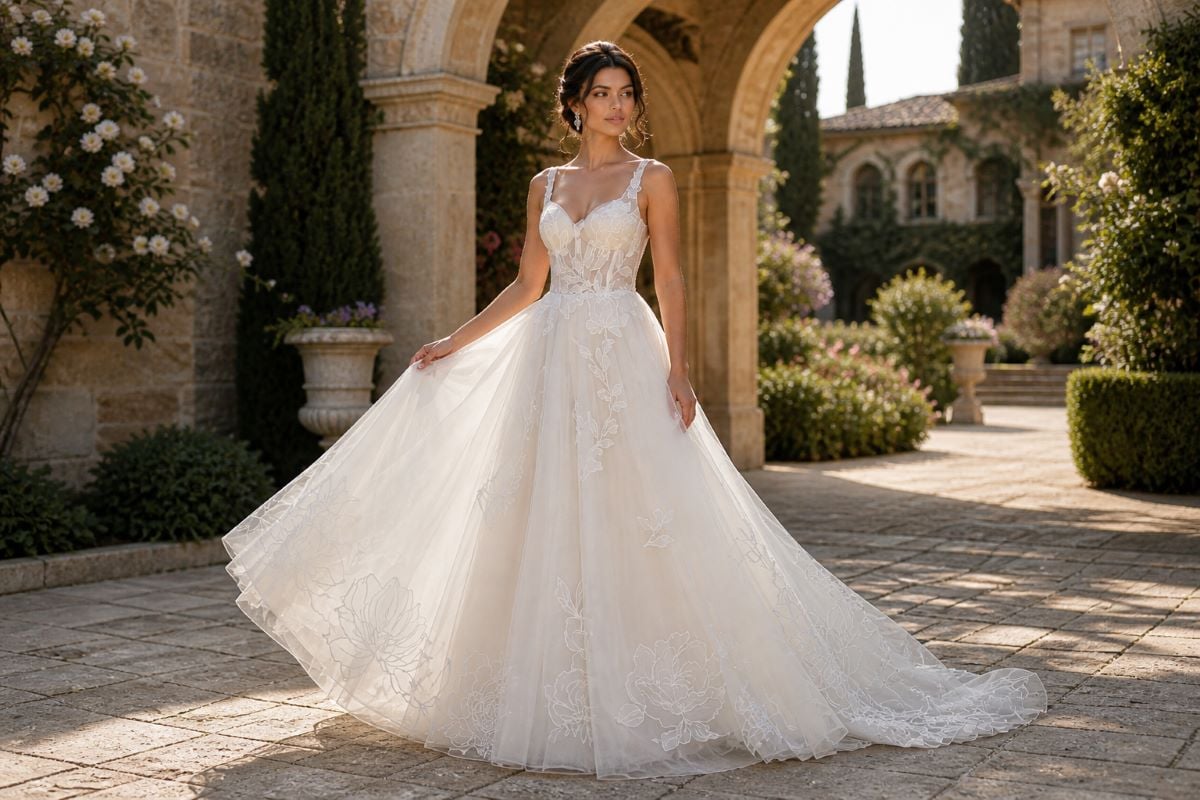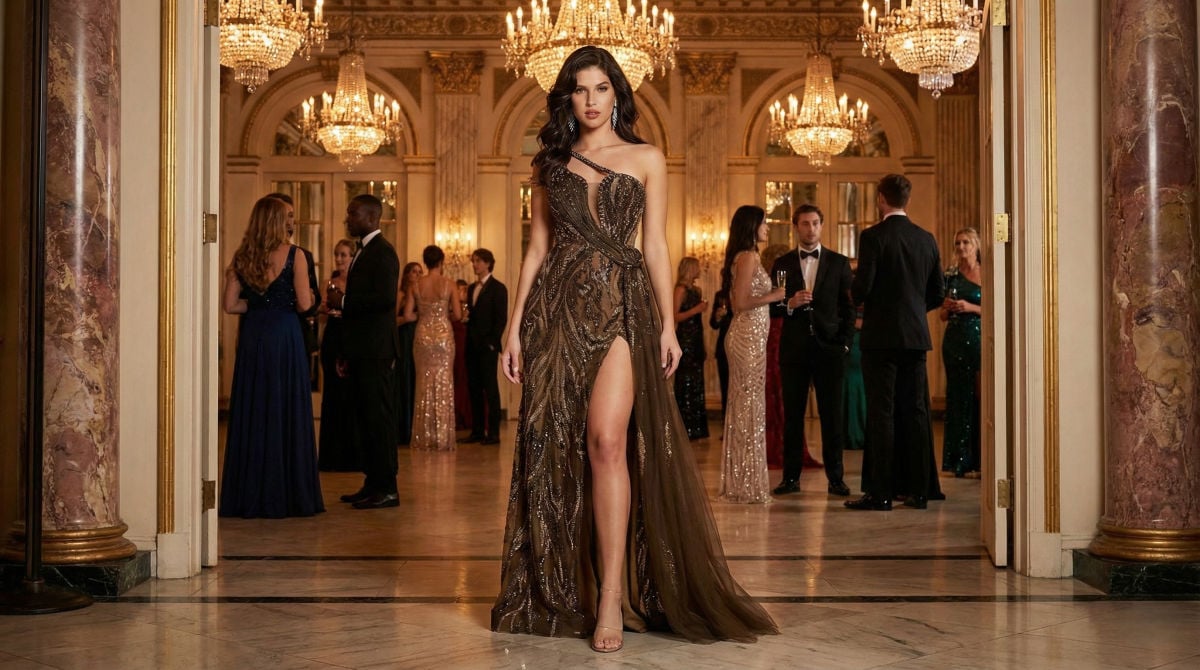


Mermaid prom dresses fit close through the bodice, waist and hip, then flares below the knee. That single mechanic is why it photographs the way it does: the flare makes the waist read as the narrowest point by contrast, so the shape does the work rather than the fabric.
It is also the least forgiving silhouette in formal wear, and most of what goes wrong with one is fit rather than style. This guide covers who it suits, where the flare should sit, what to check before buying, and how to actually move in it.
What is a mermaid prom dress?
How does a mermaid gown differ from a trumpet? Both are fitted through the torso and hip, and the difference is where the skirt releases. A mermaid holds close to somewhere between the knee and the mid calf before flaring sharply, which gives the most dramatic shape and the shortest stride. A trumpet releases higher, usually at the mid thigh, in a gentler flare, so it looks similar in a photograph but is considerably easier to walk in. If you love the look but worry about movement, a trumpet is the version to ask for.

Where the flare sits changes everything
This is the detail that decides whether a gown works on you, and almost nobody asks about it in a store.
A flare starting at the knee is the classic mermaid and the most dramatic. It is also the most restrictive, and on a shorter frame it can cut the leg line at an awkward point. A flare starting just above the knee is the most wearable version of the same look, giving the shape with a usable stride.
A flare starting at the mid thigh is a trumpet, and it suits anyone who wants the fitted torso without committing to the restriction. A flare starting below the mid calf is the most dramatic of all and the hardest to dance in, so it belongs to events where you will mostly be standing and photographed.
When you try a mermaid gown on, look at where the flare begins in relation to your own knee rather than to the photograph, since the same dress releases at different points on different heights.
Who it suits, honestly
A mermaid prom dress suits an hourglass shape most straightforwardly, since the gown follows a line the body already has. A pear shape works well too, because the fitted torso and the flare below the hip balance the proportion, though the fit through the hip needs to be exact.
A straighter frame can absolutely wear one, and the version to look for is a gown with a structured, boned bodice that creates the waist definition rather than relying on your own. That construction is what makes the silhouette work, not the shape underneath it.
The two situations where a mermaid is genuinely harder are a very short frame, where the flare position can cut the leg line, and a long torso, where the waist seam may sit below your natural waist. Both are fixable with the right cut, but both need trying on rather than ordering blind.
Extended sizes work on exactly the same principles, and a plus size gown in this silhouette depends on the same internal structure to hold its shape.
What to check before you buy
| Check | How to test it | What it tells you |
|---|---|---|
| Stride | Walk the length of the fitting room, then turn | Whether you can move normally at the event |
| Sitting | Sit fully in a chair for a minute | Whether the hip and thigh fit is right |
| Stairs | Step up onto something raised | Whether you can manage the venue |
| Bodice | Press for boning, then raise your arms | Whether structure or tightness holds it up |
| Flare position | Note where it starts against your knee | Whether the proportion works on your height |
| Hem | Check in the exact shoes you will wear | Whether the train will drag or trip you |
The stride test is the one that matters most and the one people skip. A gown that feels fine standing still can shorten your steps enough that walking looks careful rather than confident, and that shows in every photograph and every video.
Fabric, and why it decides the outcome
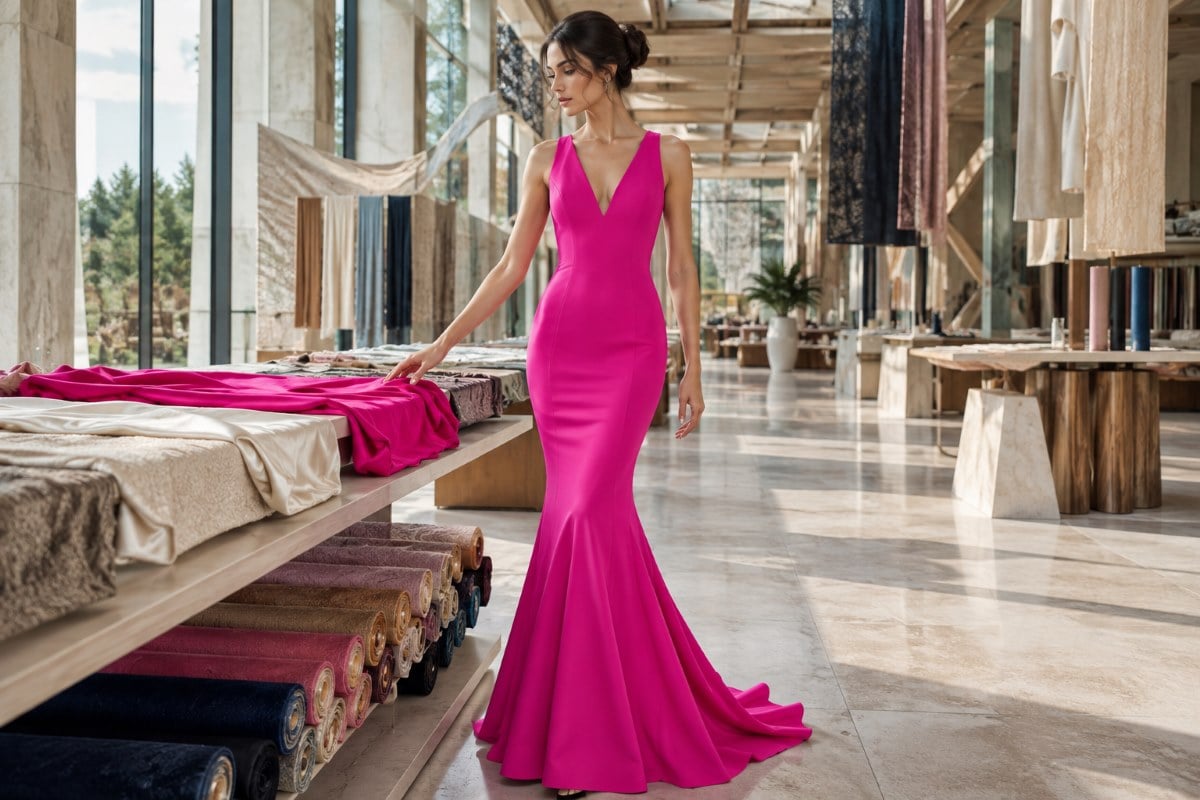
A mermaid depends on fabric with structure, because the silhouette has to hold a shape rather than drape over one. Heavy satin and matte crepe both do that, keeping a clean line through the hip and a defined flare at the hem.
Thin, light satin is the fabric to avoid in this shape specifically. It clings rather than skims and shows every line beneath, which is why the same silhouette can look expensive in one fabric and cheap in another at a similar price.
Sequins work beautifully here and are the most common finish on this silhouette, since the fitted surface catches light along the whole body as you turn. The trade-off is weight and zero stretch, so the fit has to be precise and the alterations properly done.
Stretch crepe and jersey are the comfortable options and they let you move more, but they need a lined bodice with boning, otherwise the shape softens over the evening.
Alterations matter more here than anywhere
Order to your hip measurement and have the waist and bodice taken in. This silhouette is fitted at the point where most people are widest, and a gown that is tight through the hip cannot be fixed by anything else being right.
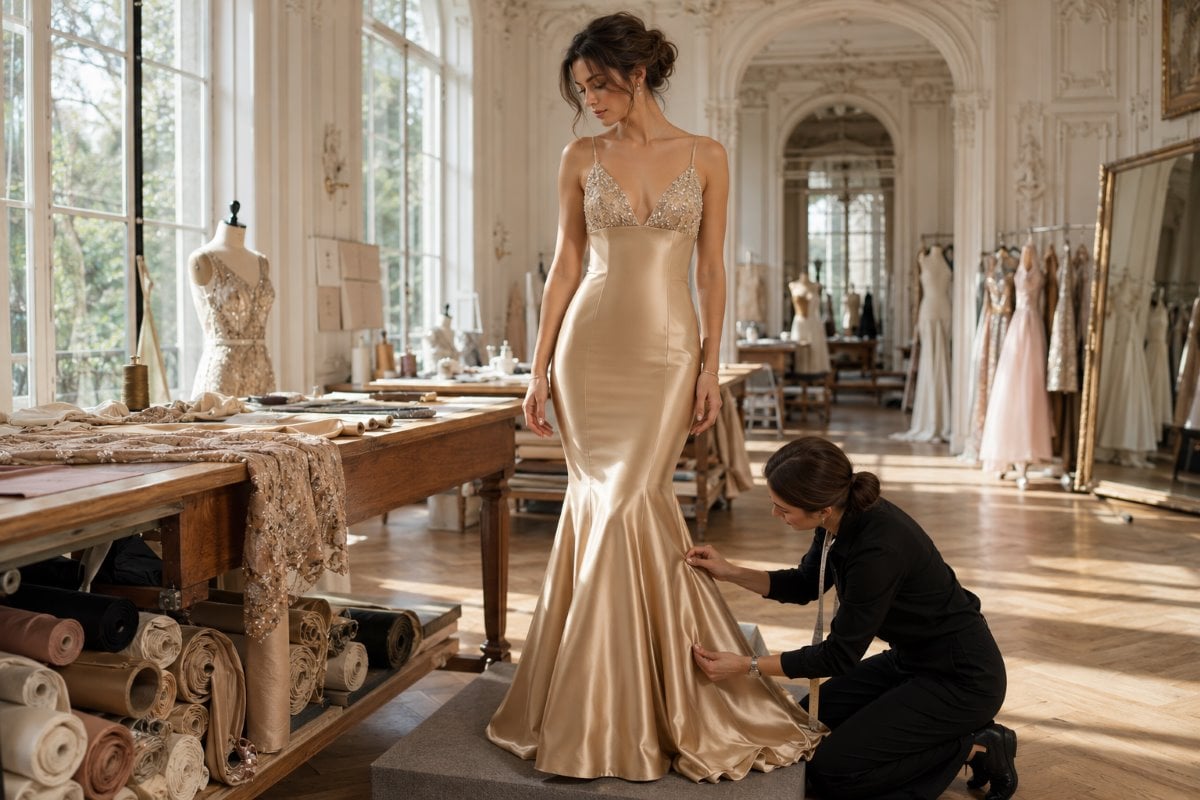
Two alterations are worth asking about specifically. Raising the flare by an inch or two changes the whole proportion and is a straightforward job on most gowns. Adding a small hidden slit or a kick pleat at the back restores stride without changing how the dress looks, and it is the single most useful modification for a mermaid you plan to dance in.
Allow more time than you would for another silhouette, since a fitted gown usually needs more than one fitting and a beaded one needs the beading removed and resewn along any altered seam.
Styling and moving in it
The gown is the statement, so keep everything else quiet. Fine jewelry, a small clutch and a heel you can walk in. A neckline that is already open leaves room for a necklace, and a high or halter neck means earrings instead.
Shoes matter more than usual because your stride is shorter. A block heel gives stability where a stiletto does not, and since the hem hides the shoe anyway, comfort should decide.
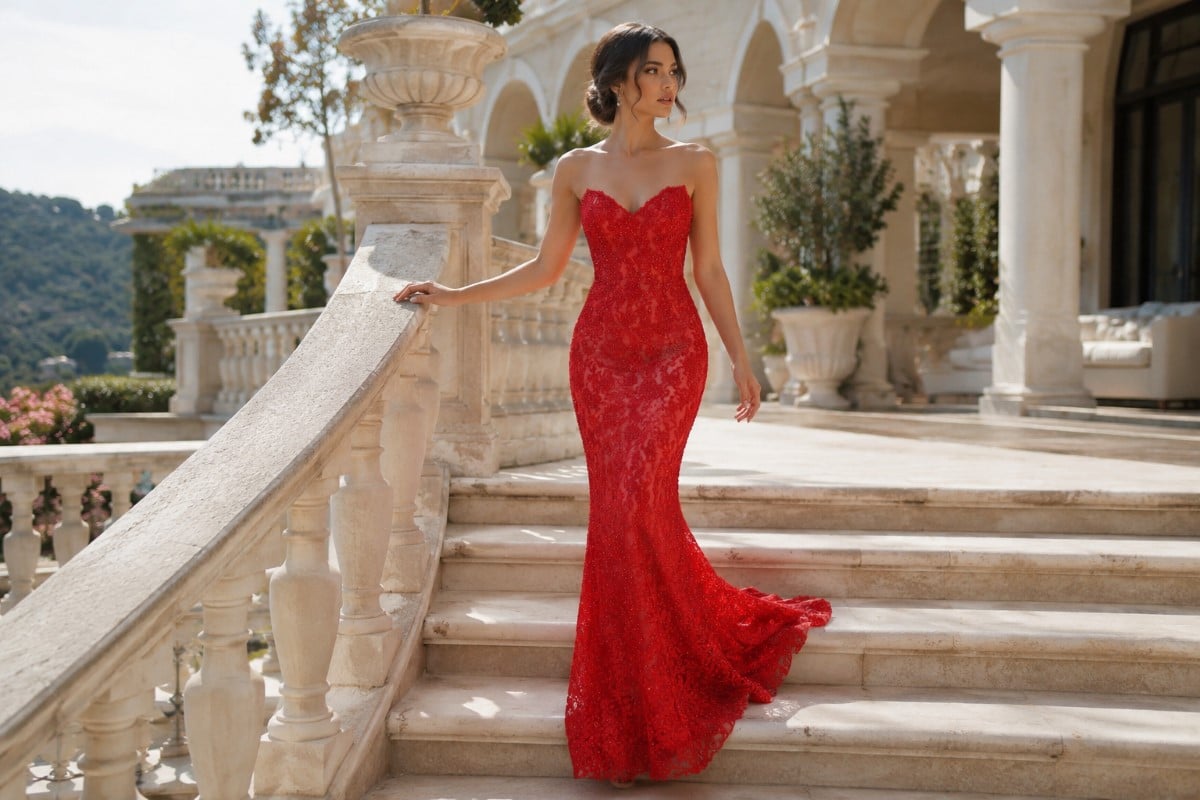
For movement, take smaller steps deliberately rather than fighting the dress, turn from the hips rather than the shoulders, and gather the flare in one hand on stairs. A red gown in this shape photographs particularly strongly, which is worth knowing if the photographs matter more to you than the dancing.
Mermaid Prom Dress Questions
What is the difference between mermaid and trumpet?
Where the skirt releases. A mermaid holds close to somewhere between the knee and mid calf before flaring sharply, giving the most dramatic shape and the shortest stride. A trumpet releases higher, usually mid thigh, in a gentler flare. They look similar in photographs but a trumpet is much easier to walk in.
Who suits a mermaid prom dress?
An hourglass is the most straightforward match and a pear shape works well, since the fitted torso and flare balance the proportion. A straighter frame works too with a structured, boned bodice creating the waist. The harder cases are a very short frame and a long torso, both fixable with the right cut.
Can you dance in a mermaid dress?
Yes, with the right version. Walk the fitting room and sit fully before buying, since a gown that feels fine standing can shorten your stride noticeably. A trumpet flare or a hidden kick pleat at the back restores movement without changing how the dress looks.
What fabric works best for this silhouette?
Heavy satin and matte crepe, because the shape has to hold rather than drape. Sequins work beautifully and catch light along the whole body, though they add weight and no stretch. Thin light satin is the one to avoid here, since it clings and shows every line beneath.
What size should you order in a mermaid gown?
Order to your hip measurement and have the waist and bodice taken in. This silhouette is fitted at the point where most people are widest, and a gown that is tight through the hip cannot be corrected by anything else. Allow extra time, since fitted gowns usually need more than one fitting.
Where should the flare start?
Just above the knee is the most wearable version, giving the shape with a usable stride. At the knee is the classic and most dramatic. Below the mid calf is the hardest to move in. Check where it falls against your own knee rather than trusting the photograph, since height changes it.
Trying the silhouette on
No photograph shows where a flare will sit on you or how short your stride becomes, and both decide whether this gown works.
Walk, sit and take a step up in each option at an authorized Jovani retailer, and ask whether the flare can be raised or a kick pleat added before you commit.