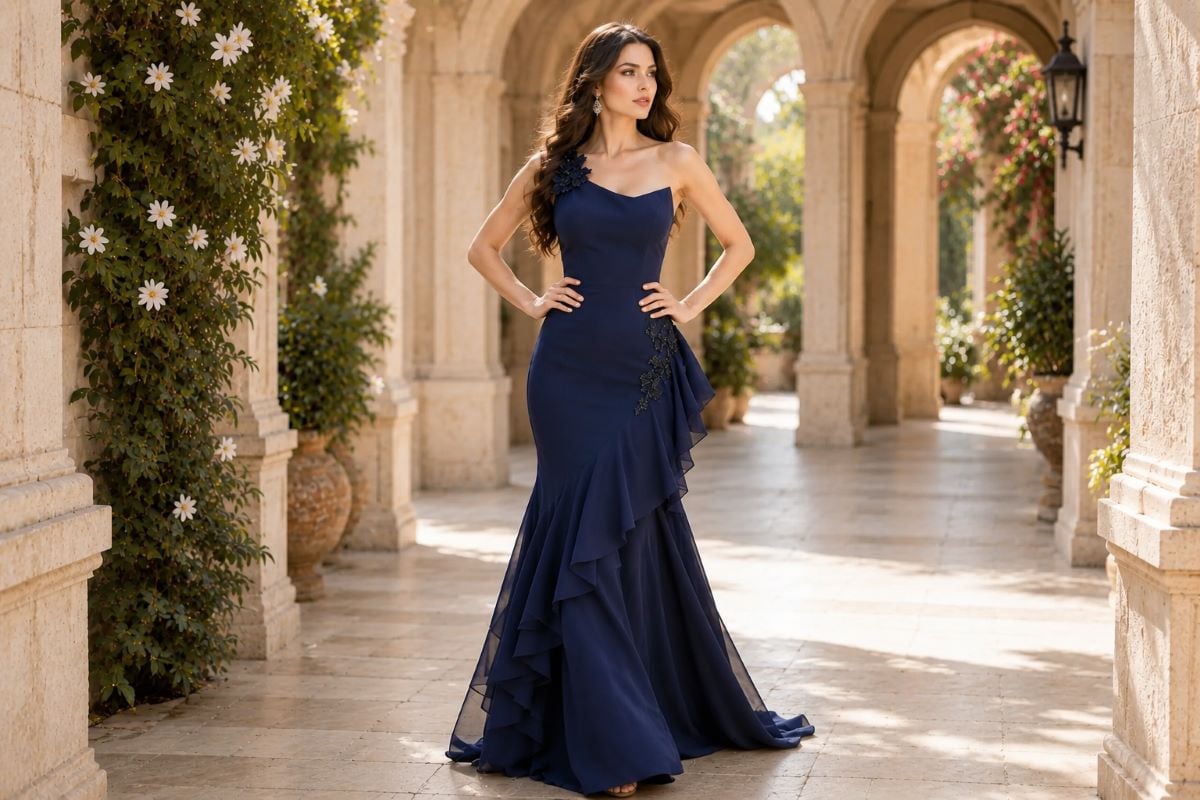

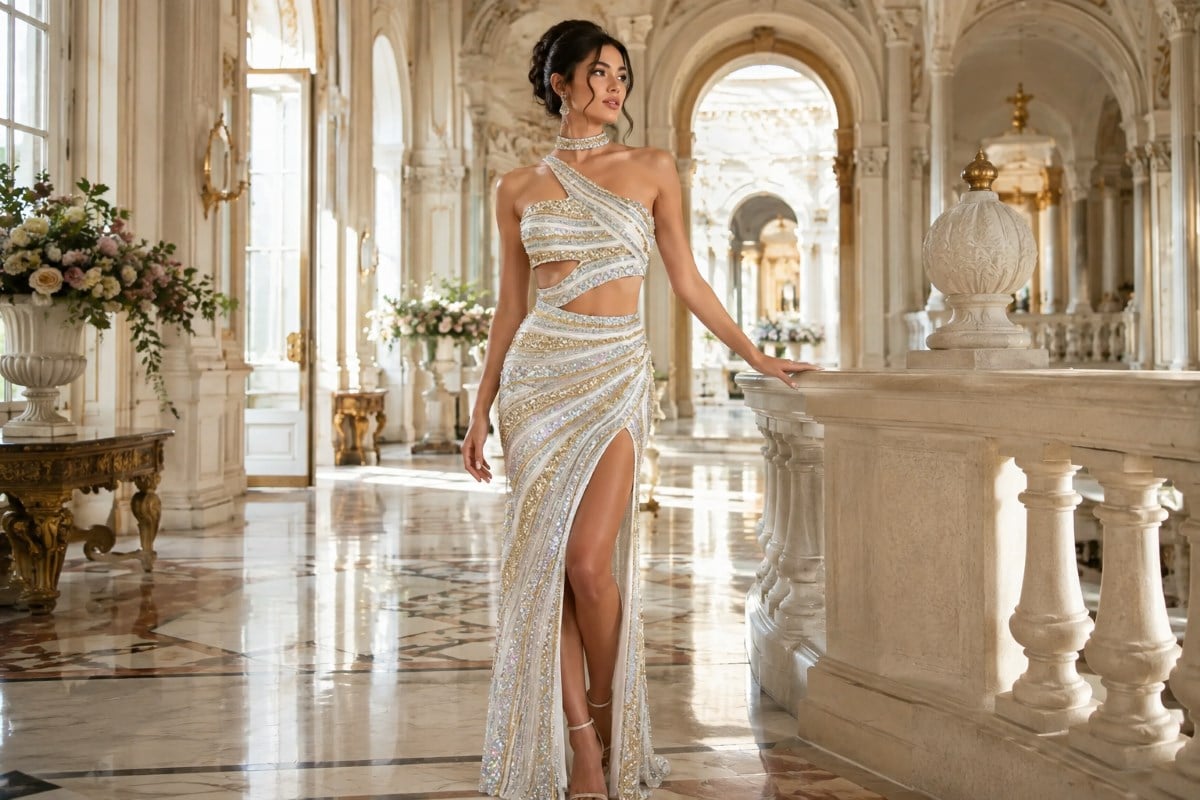
A cutout prom dress solves a problem plain gowns cannot: they show shape without showing much skin. A single opening at the waist or the back changes the whole line of a dress, which is why the style keeps returning rather than fading out.
The catch with any prom cut out dress is that placement decides everything. A well-positioned cutout stays put through four hours of dancing, and a badly positioned one has you adjusting it all night. This guide covers the cutout types, which work with which silhouette, what to check before buying, and how to handle a school dress code.
What is a cut out prom dress?
What counts as a prom dress cut out? Prom dresses with cutouts have deliberate openings in the fabric that reveal small sections of skin, and there are four main kinds. Waist cutouts sit at the sides or front and narrow the middle visually, the classic cut out dress prom shape. Side cutouts curve along the ribcage and create shape without a low neckline. Open back designs place the opening at the back, which shows the least from the front. Illusion cutouts fill the opening with sheer mesh, so the shape reads as an opening while the fabric stays continuous. The last of those is the most forgiving and the easiest to wear.
Cutout types and what each one does
| Cutout type | What it does | Suits | Watch for |
|---|---|---|---|
| Waist, front or side | Narrows the middle and defines the waist | Straighter frames wanting shape | Openings that gape when you sit |
| Side along the ribcage | Creates a curve without a low neckline | Anyone wanting coverage up top | Placement shifting as you move |
| Open back | Shows nothing from the front, everything from behind | Photographs and entrances | Bra options, since most will show |
| Underbust | Adds a line under a corset bodice | Structured gowns with boning | Needs precise fit to sit correctly |
| Illusion mesh | Gives the look of an opening with fabric in place | School dress codes, first-time wearers | Mesh tone should match your skin |
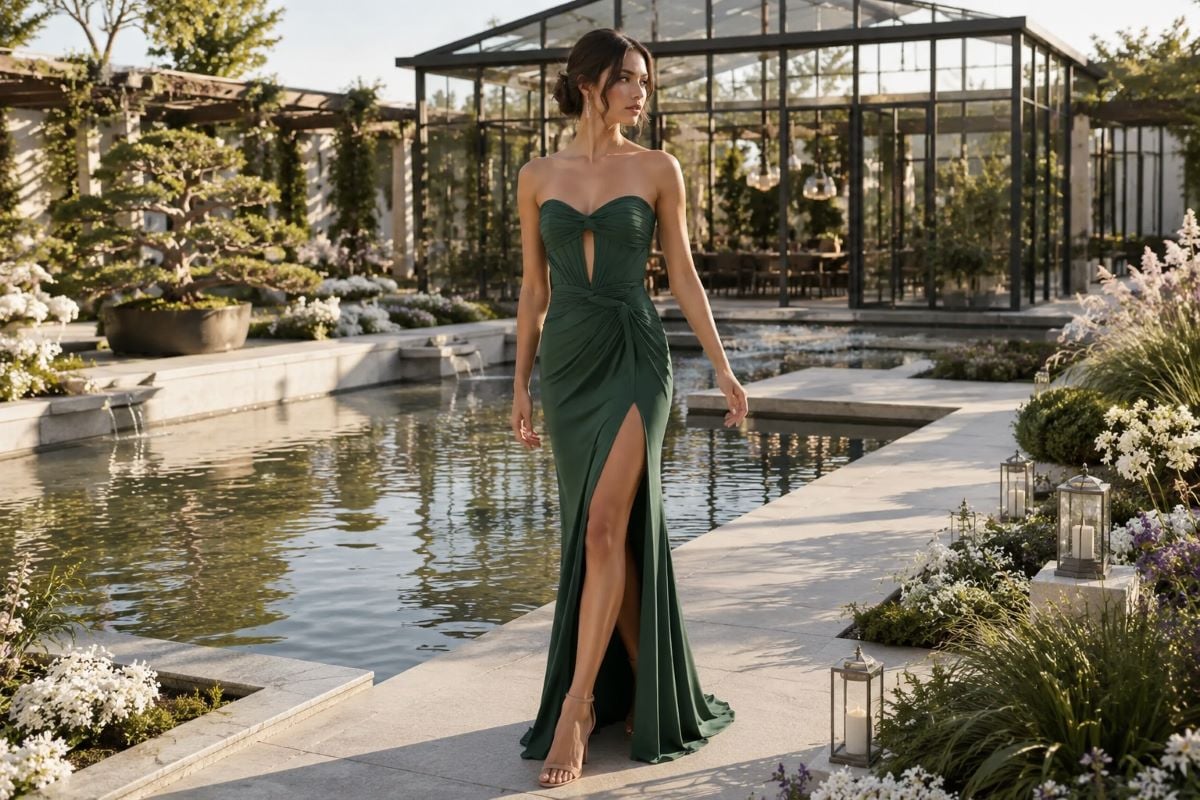
| Neckline keyhole | Small opening at the chest or collarbone | The most subtle option available | Very little, this is the safest cutout |
Prom dress side cutouts and open backs get most of the attention, but the most useful row is illusion mesh. A prom dress with cutouts filled by sheer fabric reads as a cutout in photographs while remaining a closed dress in practice, and it passes almost every school dress code. If you like the look but not the exposure, start there.
Which silhouette carries a cutout best
A cutout works best when the rest of the dress is calm. On a fitted column or a mermaid silhouette, an opening at the waist or side reads as deliberate design, because there is nothing else competing for attention.
Prom dresses cut out at the sides behave differently under a full skirt. A structured bodice with side cut out prom dresses openings above a wide skirt creates strong contrast, and the waist reads as the narrowest point in the whole outfit. This combination photographs particularly well.
Where it goes wrong is on a heavily embellished gown. All-over crystal work plus multiple openings gives the eye too many places to land, and the result reads busy rather than considered. If your dress is covered in sparkle, one small opening is plenty. A smooth satin gown is the better base for a bolder cutout.
Fabric decides how well an opening holds its shape. Structured satin, crepe and mikado keep the edges of a cutout crisp. Soft chiffon and thin jersey let the opening shift as you move, which is the main reason cutouts end up needing adjustment.
What to check before you buy
Everything about a cutout is decided in the fitting room, and four checks catch almost every problem.
Sit down fully. This is the single most important test, because an opening that looks perfect standing can gape completely when you sit. If the edges pull apart or the fabric bunches, the placement is wrong for your torso length.
Raise both arms above your head, then lower them. A cutout that shifts and does not return to position will do that all evening. Well-constructed openings are anchored with boning or a lining that holds them in place.
Work out the undergarment question before you commit, not afterwards. Most cutout designs and every open back gown rule out a standard bra, so the dress needs built-in cups, or you need adhesive alternatives, and both should be tested in advance.
Finally, check for fashion tape tabs or silicone strips along the edges. Their presence tells you the designer expected the opening to need securing, which is a good sign rather than a bad one.
School dress codes
Dress codes vary enormously between schools, so the only reliable move is to read yours before shopping rather than after. Most restrictions target midriff exposure and back coverage specifically, and those are exactly where cutouts sit.
Illusion mesh is the standard workaround and it satisfies most codes, since the skin is technically covered. A small keyhole at the neckline or a modest open back usually passes where a large waist opening does not.
If a dress you already own turns out to be a problem, a tailor can insert a matching or mesh panel into an opening in a single afternoon, and it is one of the cheapest alterations available. That is far better than discovering the issue on the night. For anything genuinely uncertain, a more covered style removes the question entirely.
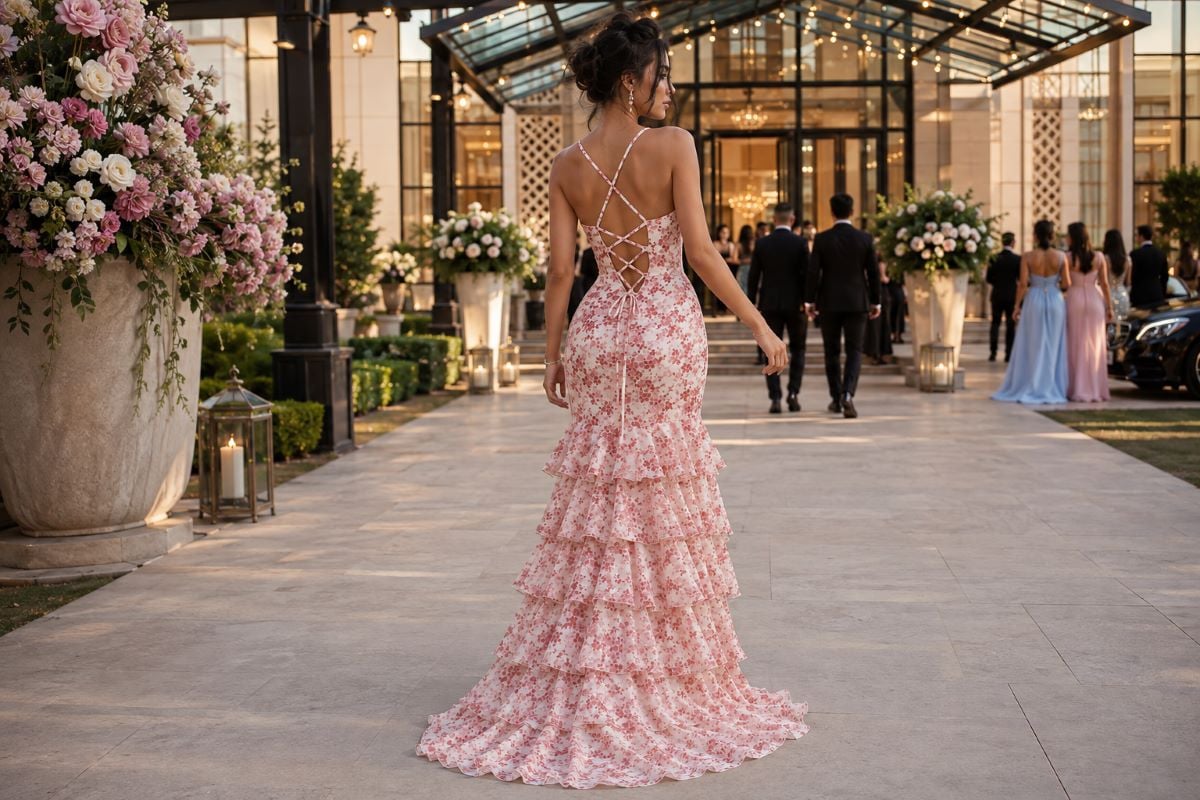
Styling around an opening
The rule is that the cutout is the statement, so everything else stays quiet. A dress with a waist opening does not want a wide belt, a layered necklace and a bold clutch as well.
Jewelry follows the position of the opening. With an open back, skip the necklace entirely and let earrings do the work, since a chain across a bare back competes with the design. With a waist or side cutout, a necklace is fine because it sits in a different zone. With a keyhole at the neckline, earrings again, since a pendant lands directly in the opening.
Shoes and bag stay neutral. A metallic or a shade close to your own skin tone keeps the attention where the dress put it. This is not the outfit for a statement shoe.
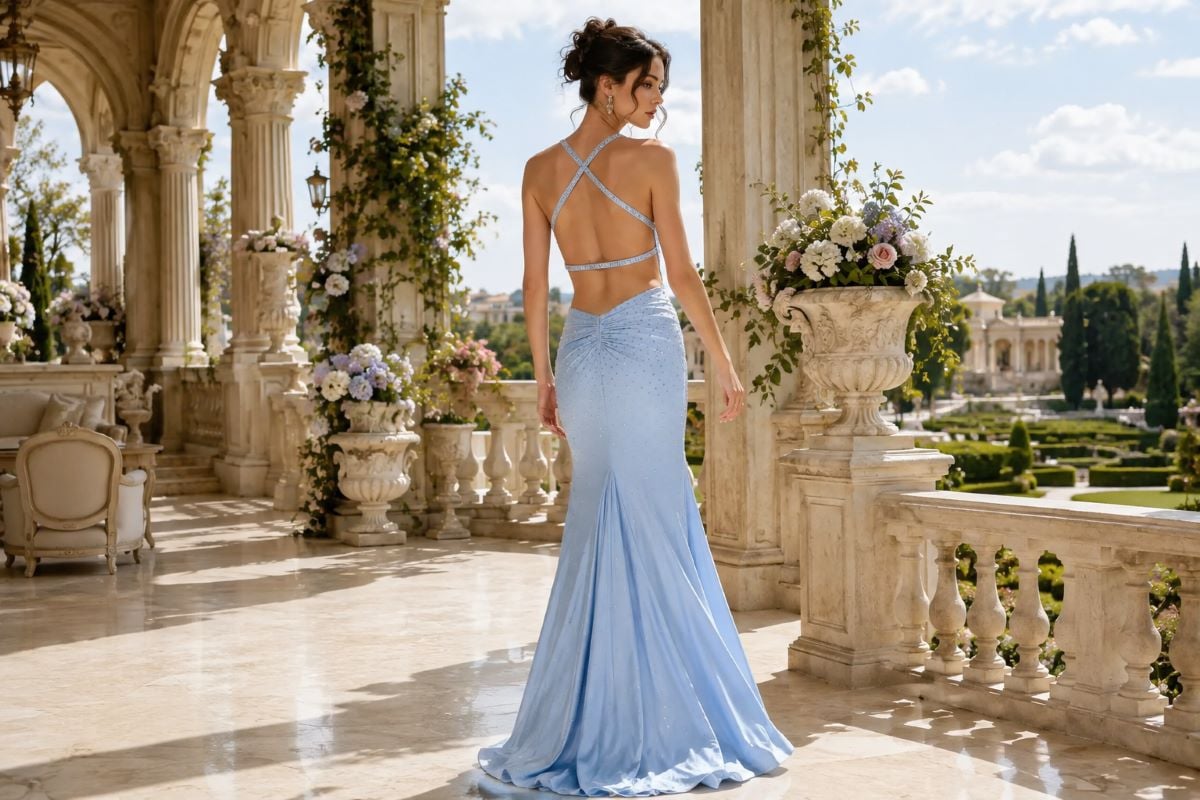
Color and finish
A single continuous color makes an opening read most clearly, because the eye sees the shape rather than the color change. Black is the most common choice, and a black prom dress with cut outs is the most searched version for good reason, since the contrast between fabric and skin is at its sharpest.
A cut out black prom dress is not the only option, and deep jewel tones do the same job with more color, so emerald, sapphire and burgundy all define an opening clearly. Metallics and heavy sequins are the trickier case, because a reflective surface catches light along the edges and can blur where the opening actually starts.
Pale shades are the least effective, since a pastel against skin gives the lowest contrast and the cutout can disappear in photographs. If you want a light color, choose a design where the opening is outlined with beading or a contrasting trim.
Cut Out Prom Dress Questions
What is a cut out prom dress?
A cutout dress has deliberate openings in the fabric revealing small areas of skin. The four main types are waist cutouts at the front or sides, side cutouts along the ribcage, open back designs, and illusion cutouts where sheer mesh fills the opening. The illusion version is the most forgiving to wear.
Are cut out prom dresses allowed at school proms?
It depends entirely on the dress code, and most restrictions target midriff and back coverage specifically. Illusion mesh satisfies most codes since the skin is technically covered. Read your school’s policy before shopping, and remember a tailor can insert a mesh panel into an opening cheaply if needed.
What bra do you wear with a cutout dress?
Usually none, which is why this needs deciding before you buy. Most cutout designs and all open back gowns rule out a standard bra, so look for built-in cups or boning in the bodice. Adhesive alternatives work for some designs, but test them in advance rather than on the night.
Does a prom dress with cut out sides stay in place?
Prom dresses with the sides cut out stay put when well constructed, because the openings are anchored with boning or a lining. Test it by sitting down fully and by raising both arms and lowering them. If the opening gapes when you sit or shifts and does not return, the placement is wrong for your torso length.
Which silhouette suits a cutout best?
A fitted column or mermaid, because a calm dress lets the opening read as deliberate design. A structured bodice above a full skirt also works and makes the waist read as the narrowest point. Heavily embellished gowns are the difficult case, since sparkle and openings compete for attention.
What color shows a cutout most clearly?
Black gives the sharpest contrast between fabric and skin, which is why it is the most common choice. Deep jewel tones such as emerald, sapphire and burgundy do the same with more color. Pale shades give the lowest contrast and the opening can disappear in photographs.
Trying a cutout gown on
No cutout can be judged from a photograph, because whether an opening sits correctly depends on your torso length and where your natural waist falls, and neither of those shows on a model.
Shortlist from the cut out prom dresses collection before you go, narrowing by silhouette rather than by opening.
Then take that list to an authorized Jovani retailer and run the sitting and arm tests before you decide.