

Prom pictures are the part of the night you keep. Long after the playlist fades, the photos are what you share, frame, and look back on, so a little planning goes a long way. The best prom picture ideas are not complicated. They come from choosing poses that suit your dress, light that flatters it, and a few locations you have scouted ahead of time.
This guide covers solo poses that show off a gown, couple and friend group poses that feel natural, indoor ideas for a rainy day or a photo session at home, tips for shooting on a phone, and a shot list so nothing important gets missed.
What Are the Best Prom Picture Ideas?
The best prom picture ideas combine a pose that shows off your dress, soft light, and a simple background. Start with a full length solo shot, add a walking or twirling shot for movement, then take couple and group photos, a few close ups of the details, and candid moments. Shoot in the hour before sunset or beside a large window for the most flattering light.
Everything below builds on that formula. Pick the ideas that match your dress, your group, and your schedule, and plan around the light before you plan anything else.
Solo Poses That Show Off Your Dress
Your solo photos are where the dress gets its full moment, so take them first while hair, makeup, and fabric are at their freshest. Ask whoever is holding the camera, whether that is a parent, a friend, or a professional, to shoot each pose several times, since small changes in your hands and chin make a big difference.
The Angled Stance
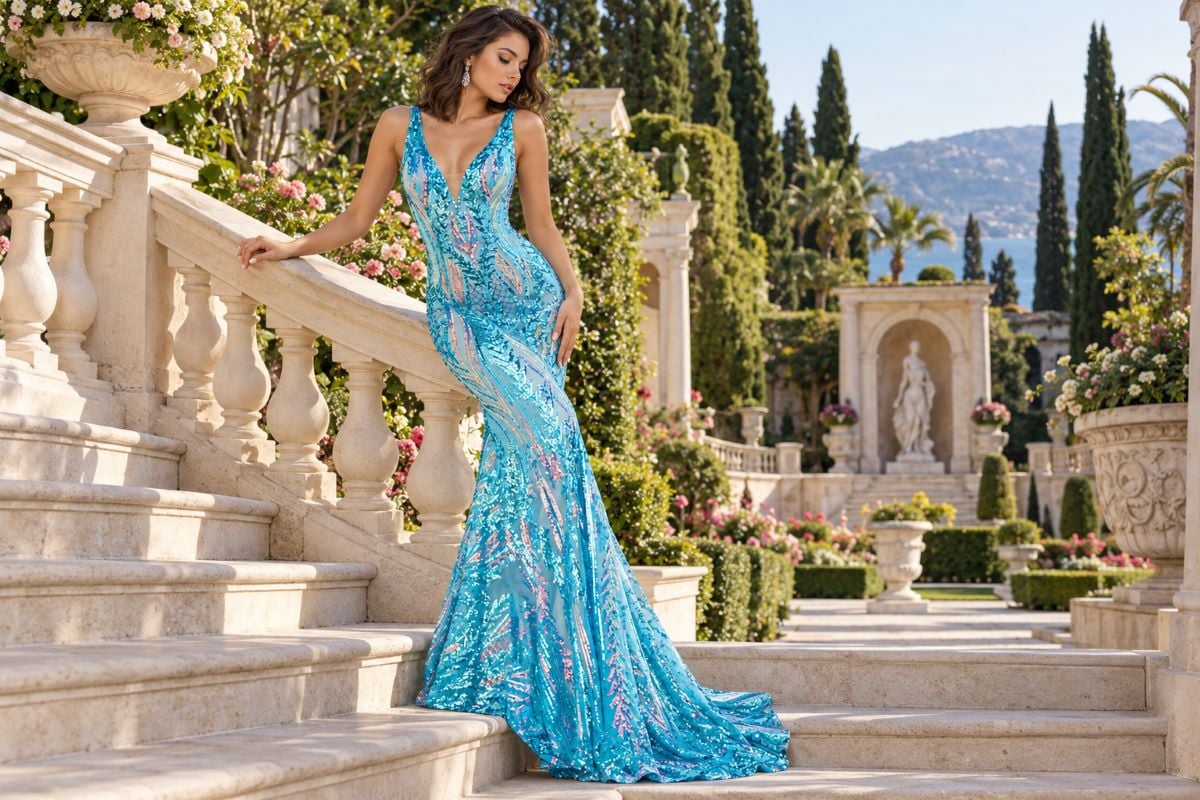
Turn your body about forty five degrees away from the camera, put your weight on your back leg, and bend your front knee slightly toward the other leg. Keep your shoulders relaxed and turn your face back toward the lens. This classic stance gives a fitted gown a clean line and works in almost any setting.
The Over the Shoulder Look
If your dress has a low back, cutouts, or a dramatic bow, turn away from the camera and look back over one shoulder. This is the pose made for backless prom dresses, and it captures the details you never see in a mirror. Drop the shoulder nearest the camera slightly so your neck stays long.
The Walking Shot
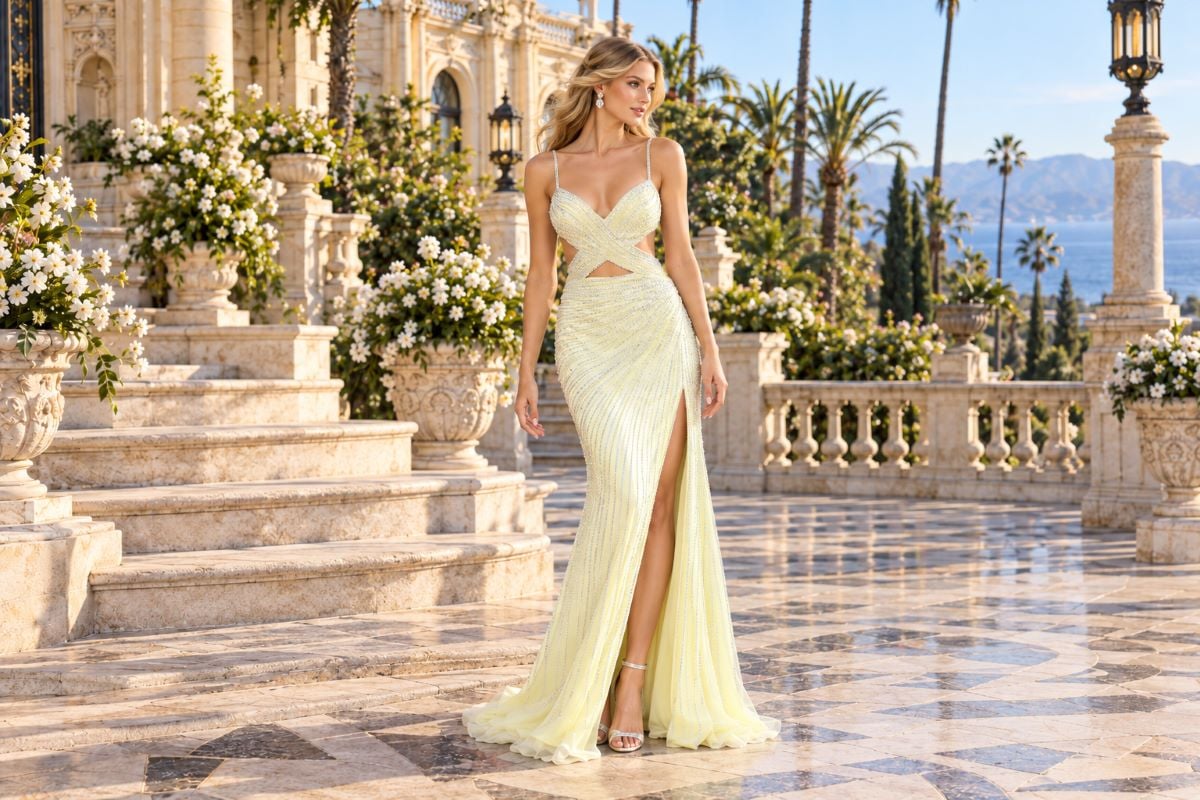
Walk slowly toward the photographer, or across the frame, while they take a burst of photos. Movement shows how a skirt flows and how a slit opens with each step, which a still pose cannot do. Look slightly down and ahead rather than straight at the lens for a natural feel.
The Twirl
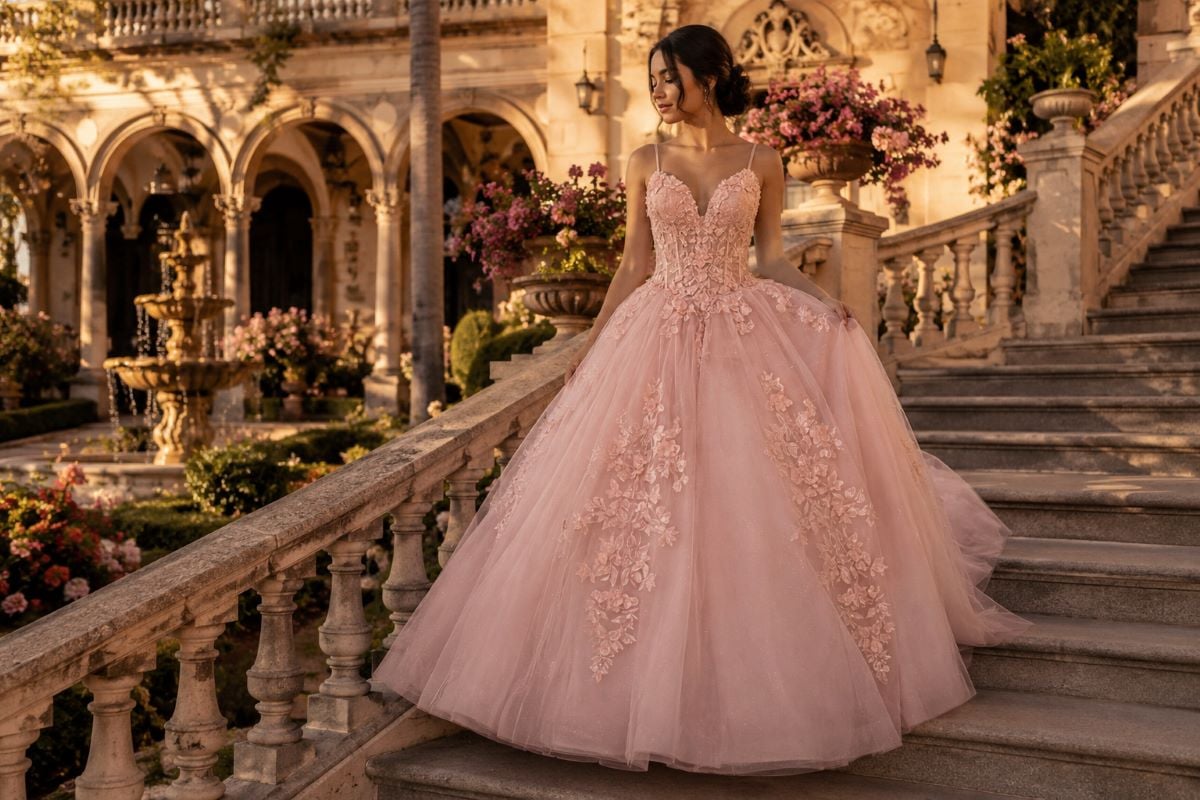
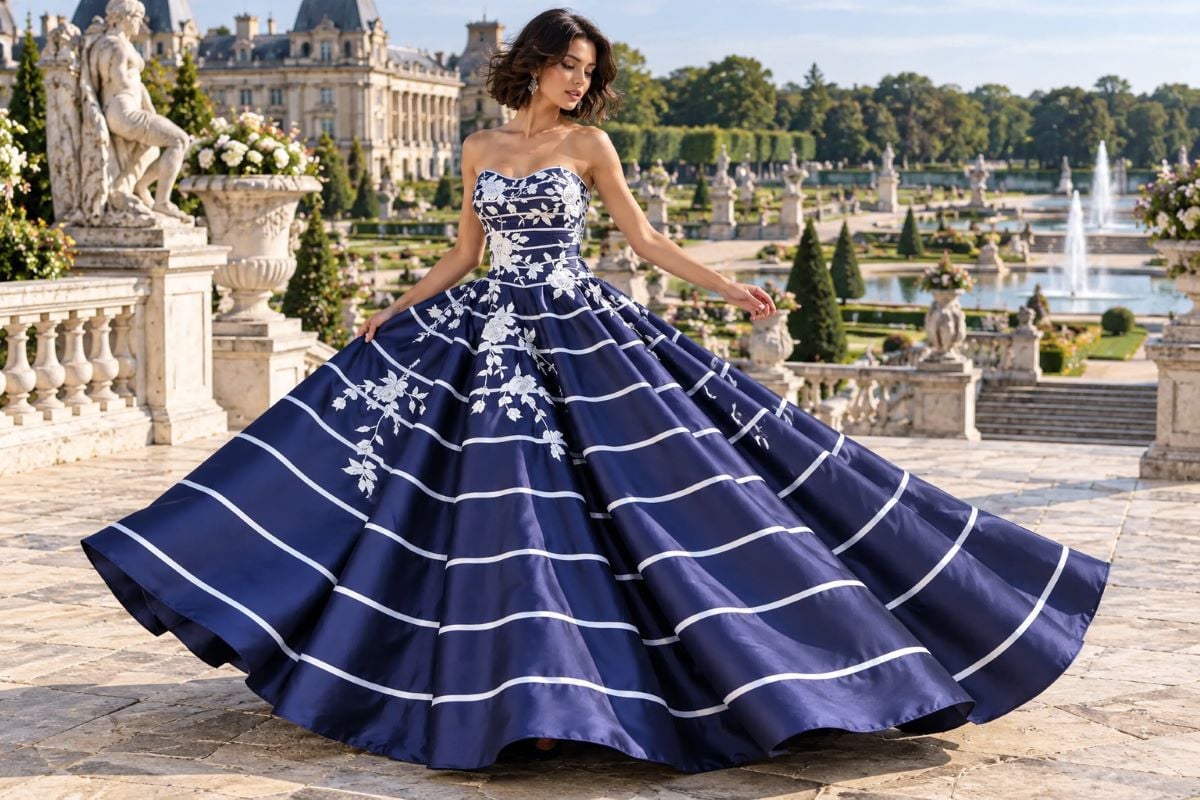
Full skirts were made for this. Hold the skirt lightly at your sides, spin once, and have your photographer use burst mode to catch the moment the fabric lifts. Ball gowns for prom and layered tulle styles show the most movement, so give yourself a few takes and some open space.
The Seated Pose
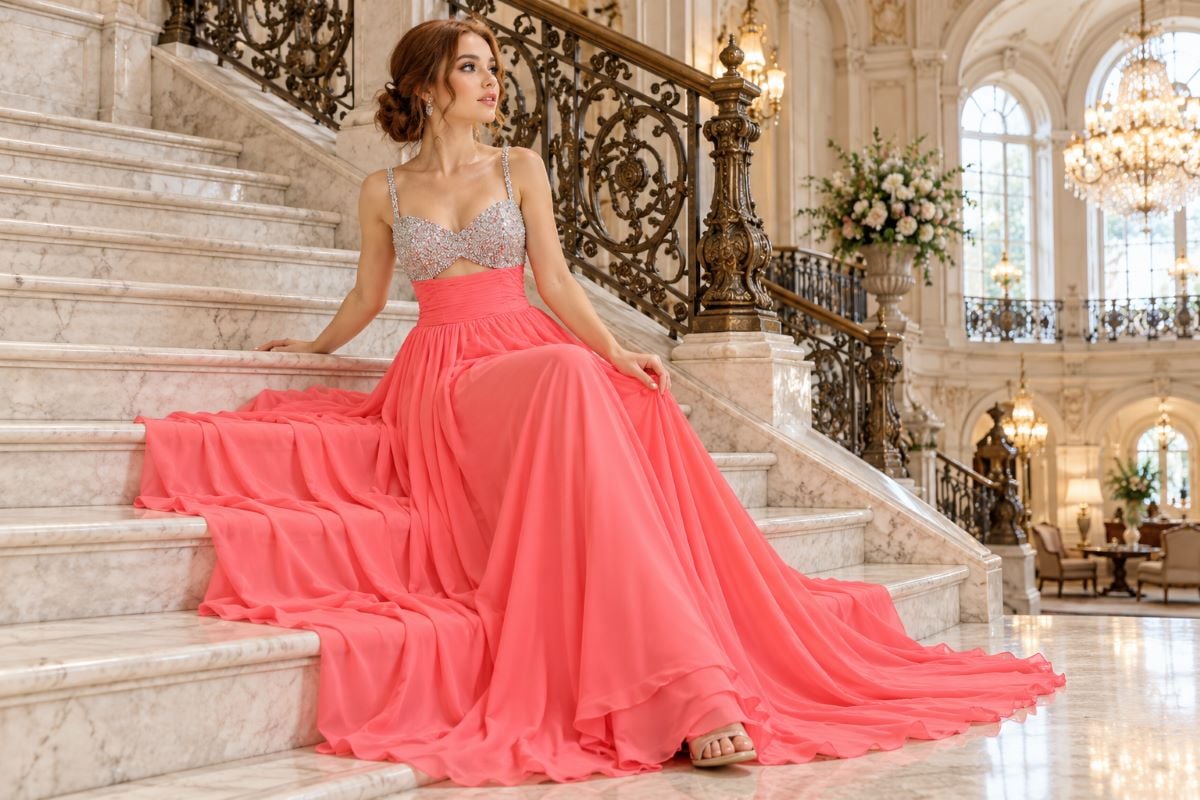
A grand staircase or a garden bench gives you a seated option. Sit near the edge, angle your knees to one side, and arrange the skirt so it spreads around you. Seated shots soften the mood of your set and give a long train somewhere to rest.
Match the Pose to Your Silhouette
Different dress shapes reward different poses. An angle that flatters one silhouette can flatten another, so it helps to know which poses suit your gown before the camera comes out.
Fitted styles like mermaid prom dresses look best when the camera sees the line from shoulder to knee. Use the angled stance, place one hand lightly on your hip, and let the flare at the hem fan out. Shoot from about waist height so the hem stays in the frame.
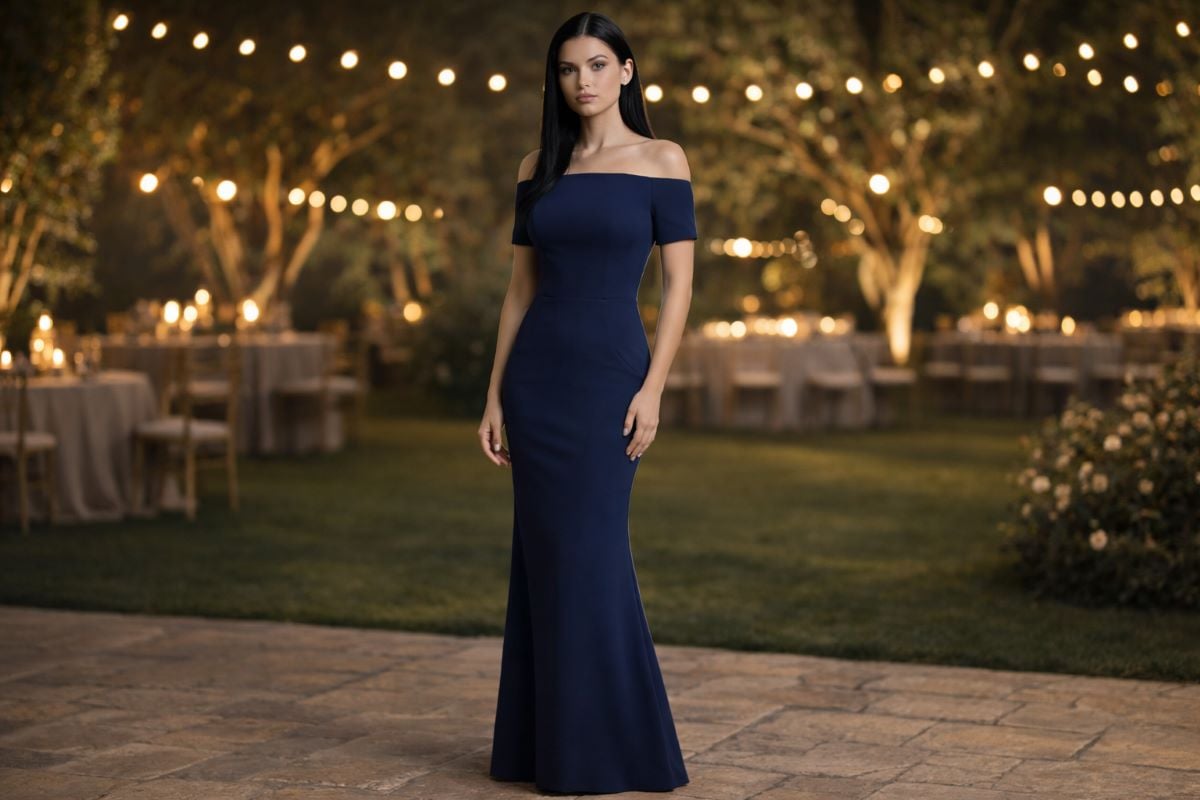
Ball gowns and A line skirts need room. Step back so the full skirt fits in the frame, hold the skirt slightly out to show its volume, and try the twirl. A sleek column or sheath gown suits clean, still poses against simple backgrounds, where the line of the dress becomes the focus.
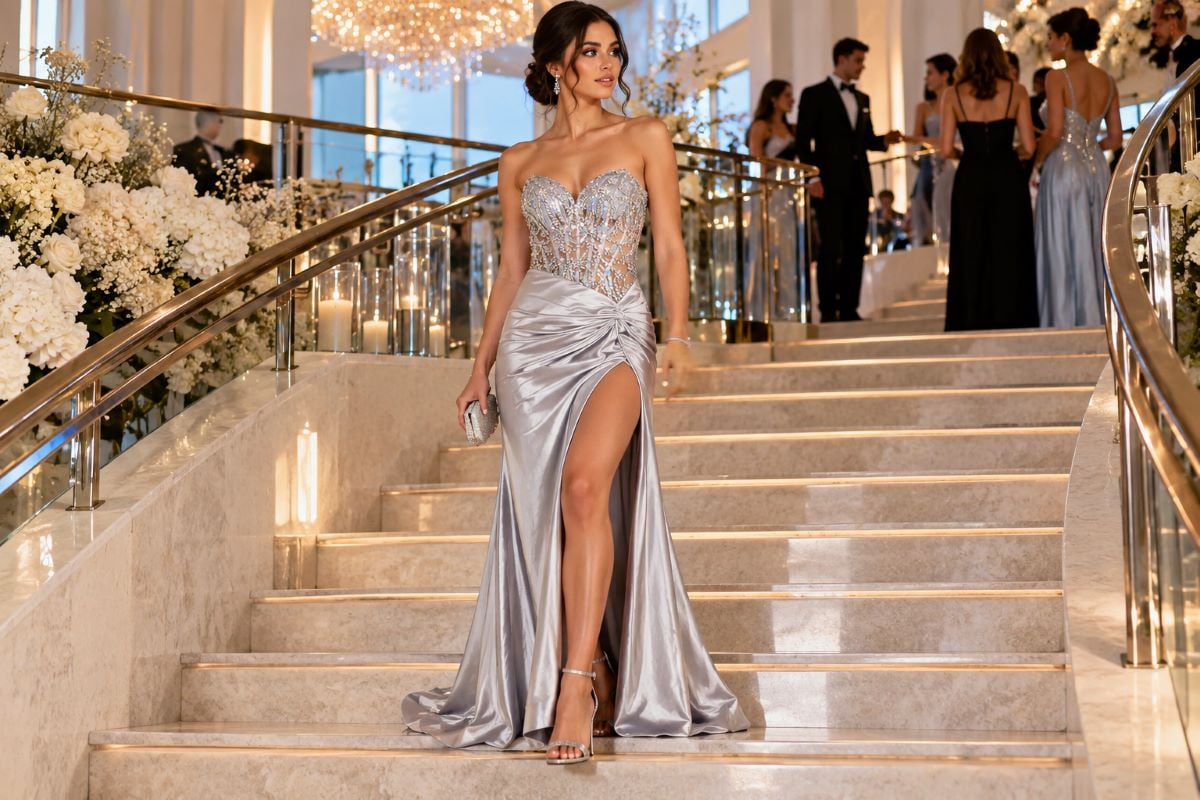
High slits come alive in the walking shot. Lead with the leg on the side of the slit and keep the step natural rather than exaggerated. If your gown has a train, as many long prom dresses do, ask a friend to fan it out behind you before each shot, then step forward carefully between frames.
Couple Poses That Feel Natural
Couple photos feel awkward when both people stand stiffly facing the camera. A few small adjustments fix most of that, whether you are posing with a date or a close friend.
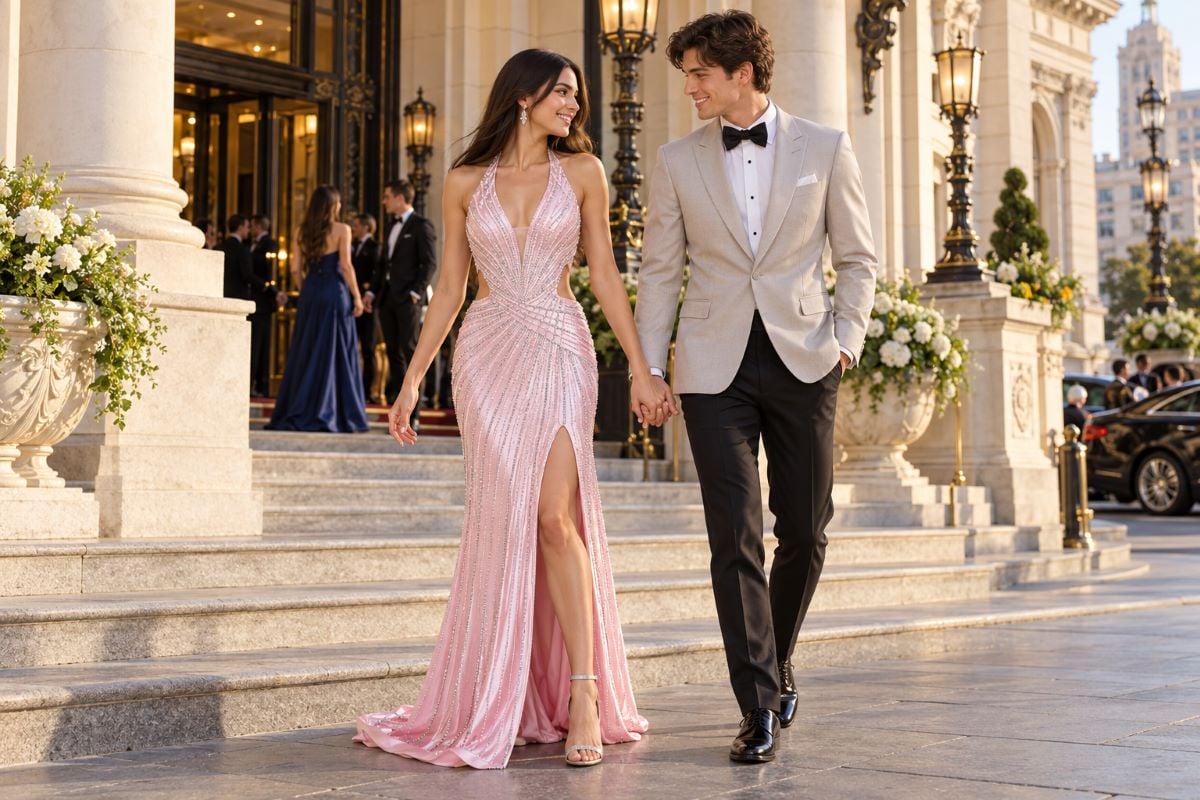
Start side by side, turned slightly toward each other, with arms linked or hands held. Then try the classic prom pose, with your date standing just behind you and to one side, hands resting lightly at your waist. Angle both bodies away from the camera rather than square to it, which looks more relaxed and shows more of the dress.
Candid moments often turn out best. Pin the boutonniere or slip on the corsage while the photographer shoots, walk hand in hand toward the camera, or share a joke and let the laugh happen. Facing each other with both of you smiling makes a sweet close up. Keep hands out of pockets and arms slightly away from the body so neither of you looks rigid.
Group Prom Picture Ideas
Group photos take the most organizing, so set them up early, before everyone scatters toward the cars. One designated photographer with a plan saves a lot of shouting.
Stagger heights instead of lining everyone up shoulder to shoulder. Put the tallest people toward the center and the back, angle everyone slightly toward the middle, and leave small gaps so each dress can be seen. A V formation, with one person at the point, works well for groups of around six to ten.
Arrange by dress, too. Spread similar colors through the group rather than clustering them, and place gowns with trains toward the front edges, where the fabric can fan out without being stepped on.
If your friends planned coordinated colors, these matching prom dress ideas for friend groups show how to build a palette that reads well in photos.
Finish with movement. A line of friends walking toward the camera arm in arm, a group jump, or everyone looking at each other and laughing gives you the candid shots people end up framing.
Indoor Prom Picture Ideas
Rain, wind, or a tight schedule can push photos indoors, and some of the best prom pictures happen there. The secret is finding the light first.
At home, a staircase is the classic indoor setting. Stand a few steps up with the skirt draped down the stairs, or pose the group on different steps for an easy height arrangement. A large window is your best light source, so face it at an angle and switch off overhead lights that mix in a yellow cast.
At the venue, look for a grand entrance, a mirror wall, string lights, or a quiet corridor with clean walls. Hotel lobbies and ballrooms often have high ceilings and soft lighting that suit long gowns. For a playful set, a photo booth or a backdrop with balloons gives you fun shots without any posing pressure.
Outdoor Locations and Golden Hour
Parks, gardens, waterfronts, and downtown architecture all make strong outdoor backdrops. Choose a spot with enough open space to step back for full length shots and a background that does not compete with your dress.
Timing matters more than the location. The hour before sunset, often called golden hour, gives warm, soft light that flatters skin and makes fabric glow. Harsh midday sun causes squinting and hard shadows, so if you must shoot then, move into open shade under trees or beside a building. Check the weather and sunset time the day before, and ask permission before shooting on private property or at a venue with rules about photography.
Detail Shots Worth Taking
Close ups tell the story the wide shots miss. Photograph the beading or embroidery on the bodice, the texture of the skirt, the back of the dress, your shoes, and your clutch, ideally in soft window light that shows texture without glare.
Flowers deserve their own frame. A close up of the corsage on your wrist next to the boutonniere on your date’s lapel is a prom tradition, and this guide to the prom corsage and boutonniere covers how to match both to your look before photo day.
Prom Photo Tips for Shooting on a Phone
You do not need a professional camera for beautiful prom photos. Most phones handle prom pictures well with a few adjustments.
Wipe the lens before you start, since a smudge blurs every shot. Use portrait mode for single and couple photos, and switch to the regular camera for groups so no one at the edge gets blurred. Tap the screen on a face to set focus, then slide the brightness down slightly so a white or pale dress keeps its detail.
Avoid the ultra wide lens for close portraits, since it stretches faces and bodies near the edges. The standard lens or the two times zoom looks more natural. For full length shots, hold the phone at about waist height and tilt it up slightly, which keeps proportions balanced and makes a long gown look longer. Burst mode is your friend for twirls, walks, and jumps.
Shimmering fabrics need one more setting change. Sequin prom gowns and beaded styles catch every light source, so a direct flash can turn sparkle into white glare. Turn the flash off and let soft, angled light make the sequins twinkle instead.
A Prom Photo Shot List
A shot list keeps the session calm and makes sure the important photos happen before everyone leaves. Share it with whoever is holding the camera.
| Shot | When to take it | Quick tip |
|---|---|---|
| Full length solo portrait | First, while everything is fresh | Angle your body and relax your shoulders |
| Back of the dress | Right after the solo portrait | Look over the shoulder nearest the camera |
| Walking or twirl shot | During the solo set | Use burst mode |
| Detail close ups | While the light is soft | Turn the flash off for sequins and beading |
| Corsage and boutonniere | When the flowers are exchanged | Photograph the moment, not only the result |
| Couple portraits | Before leaving for the venue | Angle toward each other with relaxed hands |
| Friend group photo | As soon as the whole group arrives | Stagger heights and spread colors |
| Family photo | Before you leave home | Include the people who helped you get ready |
| Candid moments | All night | Keep shooting between poses |
Editing Prom Photos Without Overdoing It
A light edit makes good photos better, while heavy editing makes them look dated quickly. Adjust brightness and contrast, straighten tilted horizons, and crop out distractions at the edges of the frame.
Pay special attention to color. Indoor lighting can tint a dress yellow or orange, so adjust the white balance until the gown matches the color you actually wore. Keep skin looking like skin. Natural texture and real smiles age far better than heavy filters, and the photos will still look like you years from now.
Once you have your favorites, back them up in two places, send the best ones to everyone in the group, and consider printing a few. A printed photo on a shelf gets looked at far more often than one buried in a camera roll.
Plan Your Photos Around Your Dress
The dress sets the tone for every photo, so choose your poses and locations with your silhouette and color in mind. If you are still choosing a gown, try your favorites on at an authorized Jovani retailer and take a quick phone photo in the fitting room to see how each one moves and photographs.
Prom Picture and Pose Questions
How do you pose for prom pictures alone?
Angle your body about forty five degrees from the camera, put your weight on your back leg, relax your shoulders, and turn your face toward the lens. Then add a walking shot, an over the shoulder look for the back of the dress, and a twirl if your skirt is full.
What are good prom picture poses for couples?
Stand side by side turned slightly toward each other with arms linked, try the classic pose with your date just behind you and hands at your waist, and capture candid moments like the corsage exchange or a shared laugh. Angling both bodies away from the camera looks more relaxed.
How do you pose a big group for prom pictures?
Stagger heights with taller people toward the center and back, angle everyone slightly toward the middle, and leave small gaps so every dress shows. A V formation suits medium sized groups, and walking or jumping shots add candid energy.
What are good indoor prom picture ideas?
A home staircase with the skirt draped down the steps, a large window for soft natural light, a hotel lobby or ballroom entrance, a mirror wall, and string lights all work well. Switch off overhead bulbs that mix a yellow cast into the window light.
What time of day is best for prom pictures?
The hour before sunset, known as golden hour, gives the warmest, softest light. If your schedule only allows midday photos, move into open shade to avoid squinting and harsh shadows.
How do you make a long prom dress look good in photos?
Step back far enough to fit the whole gown in the frame, hold the phone at about waist height tilted slightly up, and fan out any train before each shot. Walking and twirling shots show how the skirt moves, which still poses cannot capture.