
Mother of the Bride Dresses with Capes: Fit and Style Guide
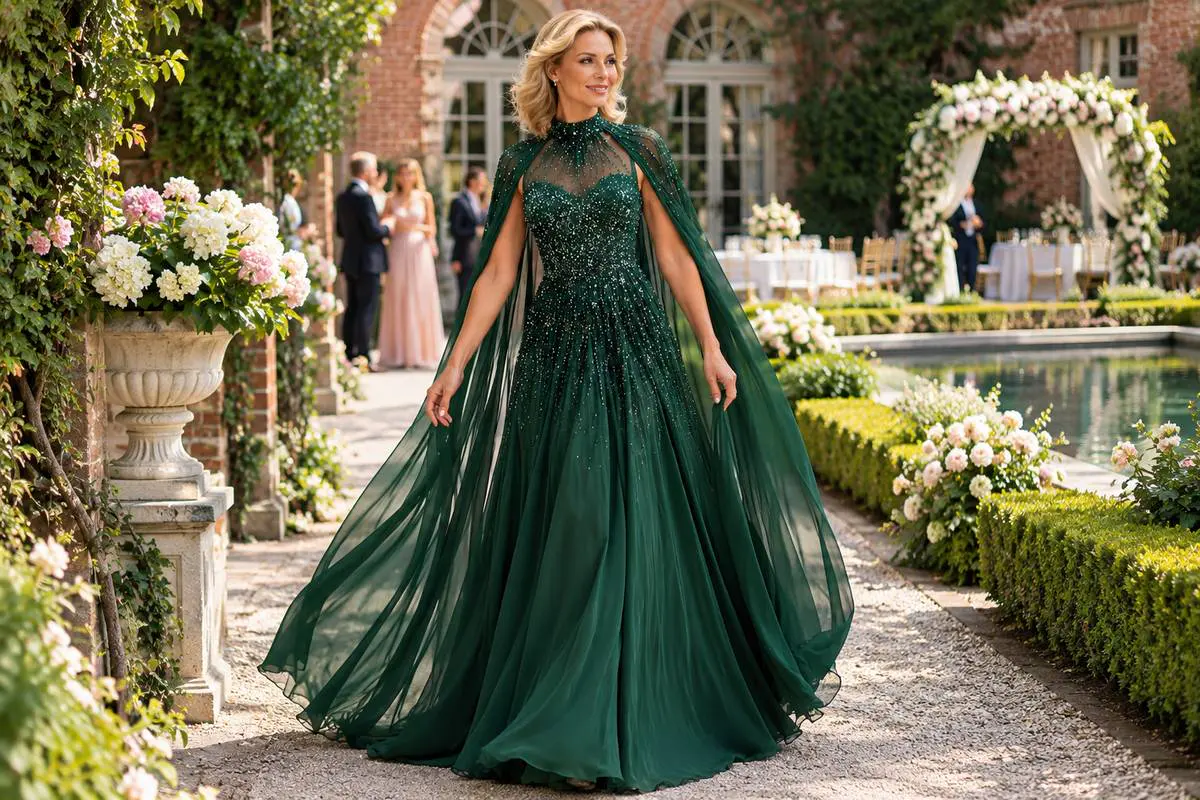
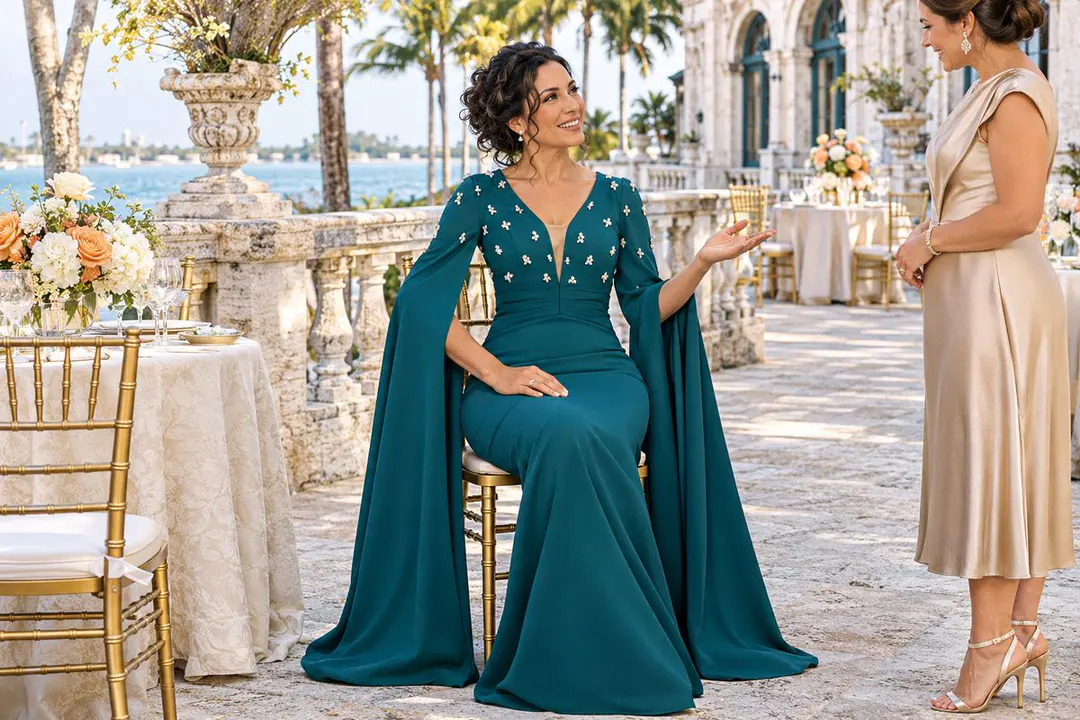
Mother of the bride dresses with capes give you a flowing shoulder detail without requiring a separate shawl. The best choice depends on how the cape attaches, what it covers, and whether it stays comfortable through a full wedding day. Start with the dress code, then test the cape in motion.
A cape can be a short shoulder drape, long sleeve-like panels, or an overlay falling down the back. Compare mother of the bride and groom dresses (opens in new tab) for the overall level of formality, but judge each cape as part of the gown rather than an accessory.
What Makes a Cape Dress Different From a Wrap?
A cape dress has a draped feature built into the garment or attached at designated points. A wrap is a separate piece that you can reposition or remove. That distinction matters when you need reliable shoulder coverage during photographs, greetings, and dinner.
A cape sleeve often hangs open beneath the arm, so it may create the appearance of a sleeve without enclosing it. An overlay can cover the back while leaving parts of the arms exposed. Look at the actual construction before assuming the gown satisfies a ceremony requirement.
Jovani’s mother of the bride and groom etiquette guide (opens in new tab) addresses coordinating formality with the other mother and the wedding party. That shared context matters more than choosing a cape merely because the detail looks dramatic on its own.
Choose Between Cape Sleeves and a Shoulder Overlay
Cape sleeves and shoulder overlays create different effects. Choose by attachment point, length, and coverage first. Then look at whether the fabric complements the fitted bodice and skirt.
Cape sleeves attached at the shoulder
Cape sleeves fall from the shoulders, sometimes extending toward the wrist or hem. They leave fabric moving beside the arm rather than enclosing it. This construction can frame the upper body while keeping the shape of the dress visible.
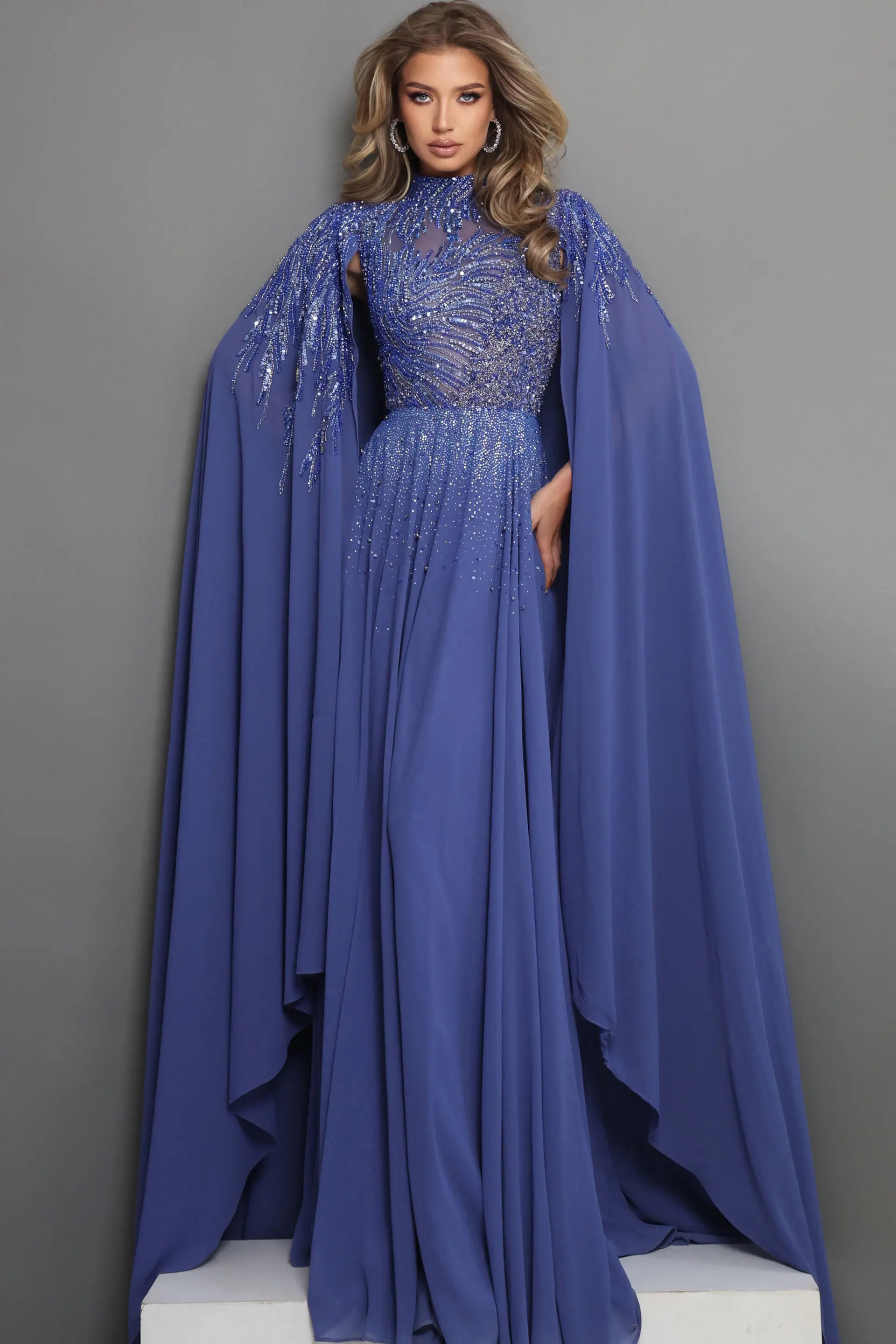
Jovani's Beaded Cape Sleeves A Line Dress has long cape sleeves, a royal blue chiffon skirt, and a gathered waist. Its illusion neckline and beaded embroidery create detail near the face. The pleated A-line skirt gives a distinct contrast to the flowing sleeve panels.
Cape overlays that fall from the neckline or one shoulder
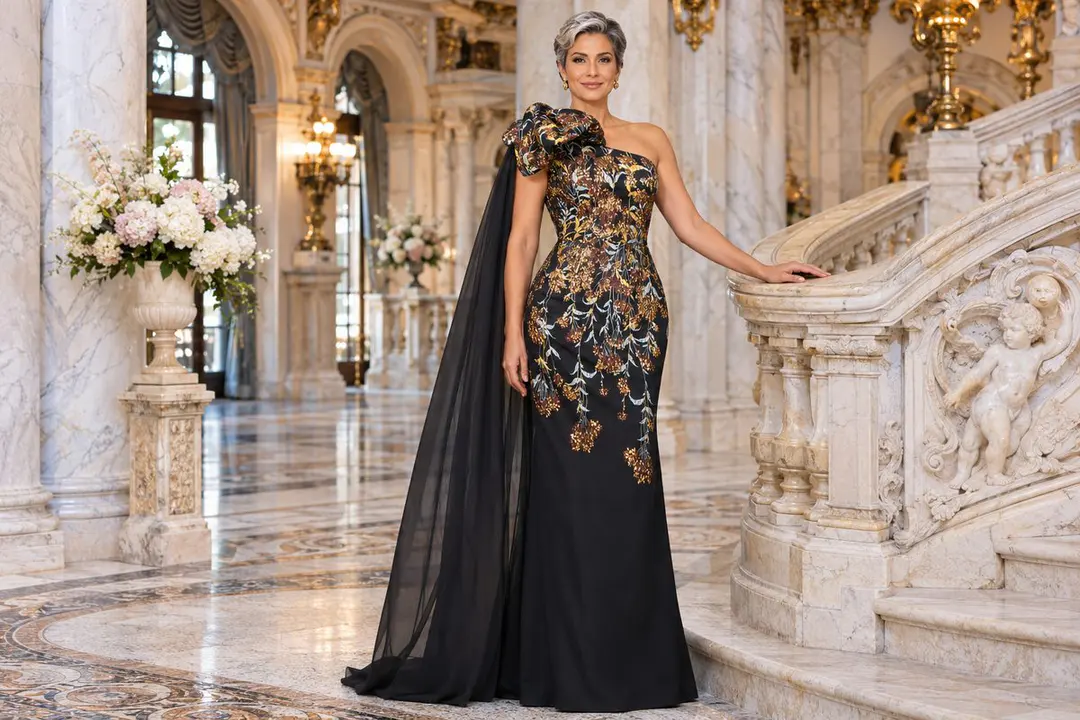
A cape overlay may descend from one shoulder or extend across the upper back. It often creates an asymmetrical outline, particularly over a fitted dress. Check its attachment points and whether the drape stays behind you when you turn.
If you prefer a softly widening skirt, compare A-line mother of the bride styles (opens in new tab) alongside fitted cape dresses. The useful question is whether the two layers move together, not whether a particular silhouette has a flattering label.
Which Cape Dresses Suit Formal and Daytime Weddings?
Floor-length cape gowns suit many formal and black-tie weddings, provided the fabric and decoration match the invitation. A shorter dress with a controlled cape can work for some daytime celebrations. Follow the actual dress code rather than treating capes as automatically formal.
Black tie and formal evening receptions
At a formal evening event, floor-length gowns for mothers (opens in new tab) offer a starting point for cape details. Beaded mesh, richly finished crepe, or an embroidered bodice can make the cape feel integrated rather than added later. Keep the rest of the styling restrained.
Daytime, garden, and semi-formal celebrations
For a daytime wedding, lighter layers usually feel less dominant than heavy embellishment. A narrower cape or shorter drape may be easier around outdoor seating. Ask whether the fabric catches in chair backs or brushes the ground when you walk.
How Should a Cape Gown Fit and Move?
The bodice should stay secure while the cape moves independently. Test walking, sitting, turning, and reaching forward. A flowing shoulder panel does not compensate for tightness at the bust or hips, and it should not pull the neckline out of place.
Try the dress with the undergarments and shoes you intend to wear. Raise both forearms to greeting height and check for strain at the shoulder seams. Then sit in a dining chair and look for fabric trapped under the seat or caught behind the arms.
Jovani's Embellished Gown with Deep V-Neck and Cape Sleeves uses beaded mesh, a fitted mermaid silhouette, and draped cape sleeves. Its closed back and sculpted fit distinguish it from a loose chiffon style. The deep V-neck also makes neckline security worth testing while moving.
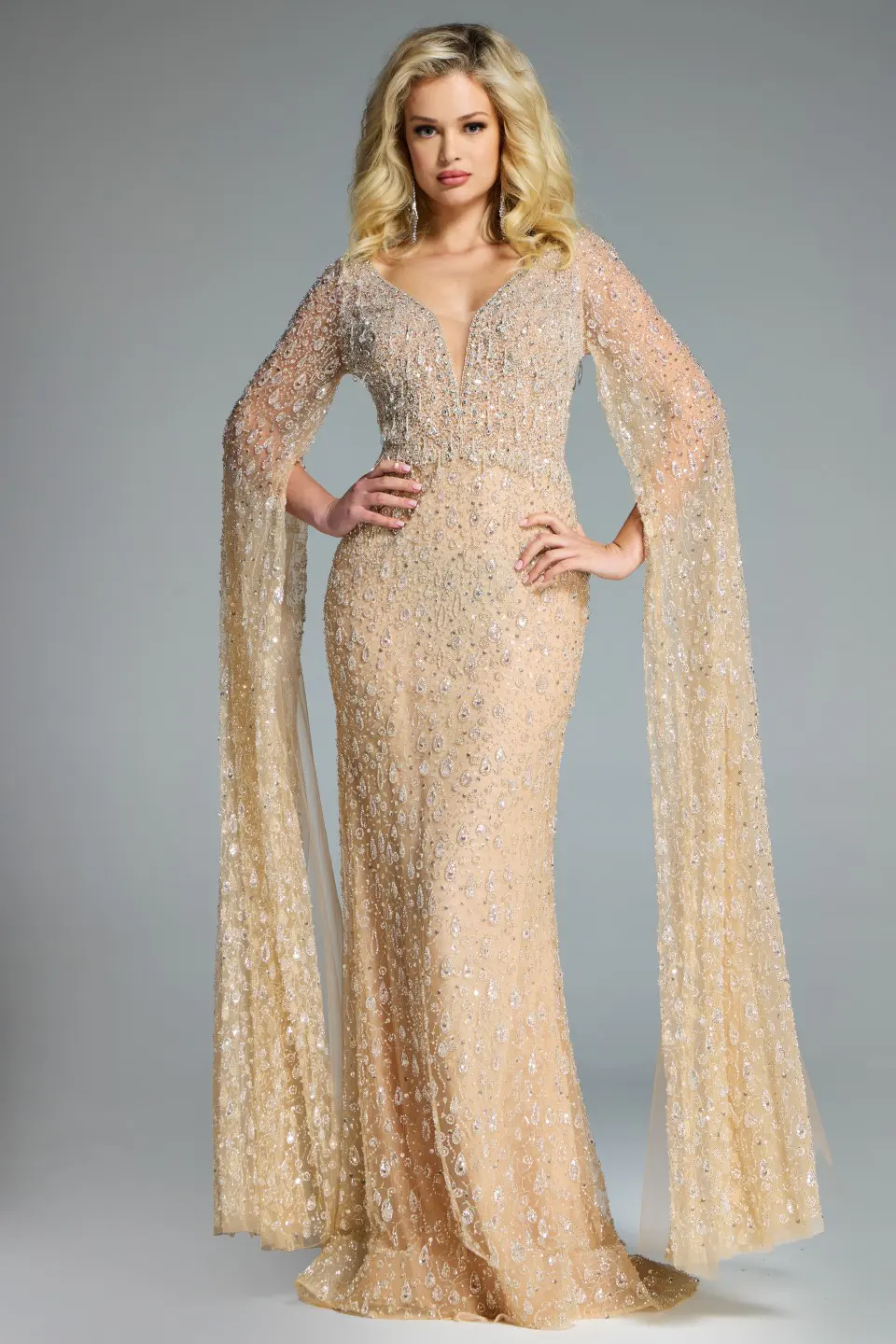
Compare the two fits rather than making assumptions from the cape alone. A close mermaid skirt may limit stride length more than an A-line skirt. Jovani’s A-line fit explanation for mothers (opens in new tab) offers a useful companion comparison when the skirt choice remains unresolved.
Which Fabrics and Necklines Provide Real Coverage?
Fabric opacity matters more than cape length alone. Chiffon can create a soft outline, but sheer panels may show the arms beneath them. Beading adds weight at attachment points, while a lined neckline provides coverage that an open drape cannot.
Look through chiffon gowns for mothers (opens in new tab) if you prefer movement without a dense outer layer. Check each garment’s lining and sleeve construction. A transparent cape may meet your personal comfort preference without meeting a venue’s specific coverage rules.
A high neckline with opaque coverage differs from an illusion neckline made from mesh. For ceremonies with stated requirements, consult the hosts or venue. Covered mother of the bride designs (opens in new tab) can help you compare higher necklines and fuller arm coverage.
Styling a Cape Gown Without Extra Layers
A built-in cape usually supplies the shoulder detail, so additional wraps can crowd the neckline. Keep jewelry away from embroidered seams and shoulder fastenings. Short earrings or a bracelet may work better than a necklace when beading already frames the face.
If you need warmth rather than visual coverage, a removable piece may still be practical. Jovani’s guide to wraps and shawls for mothers (opens in new tab) explains that separate layers serve a different purpose. Decide which job the cape already handles before adding another garment.
A Final Cape Dress Fitting Checklist
Bring two contrasting cape styles to a fitting: one with attached sleeve panels and one with a shoulder overlay. Wear your planned shoes and ask for help checking the back. This comparison usually reveals whether the feature works with your ceremony and reception plans.
- Confirm the cape attachment does not pull the neckline while turning.
- Check actual arm coverage in daylight and indoor lighting.
- Sit and stand without trapping long panels against the chair.
- Walk a few steps to test skirt length and shoulder drape.
- Ask the retailer whether alterations would change the cape attachment.
For an in-person comparison, visit an authorized Jovani retailer (opens in new tab) with your measurements and wedding dress code. Ask to try both a chiffon cape style and a more structured gown before selecting the final look.
Frequently Asked Questions
Are cape dresses appropriate for the mother of the groom?
Yes. A cape dress can suit either mother when its color, coverage, and level of formality fit the wedding. Coordinate with the couple and the other mother without requiring identical outfits.
Do cape sleeves fully cover the upper arms?
Not necessarily. Some cape sleeves drape beside the arms and remain open underneath. Check the garment on your body and confirm whether the ceremony requires opaque sleeves or only shoulder coverage.
Can a cape gown work at a daytime wedding?
Yes, a lighter cape gown can work for a daytime ceremony if the length and embellishment suit the invitation. A short drape usually feels less formal than a sweeping beaded cape.
Should I wear a shawl over a cape dress?
Usually choose one visible shoulder layer. Add a separate shawl only if warmth or coverage needs justify it, and check that the extra fabric does not crowd the neckline.