
How to Choose a Long-Sleeve Mother of the Bride Dress: Fit, Fabric and Alterations
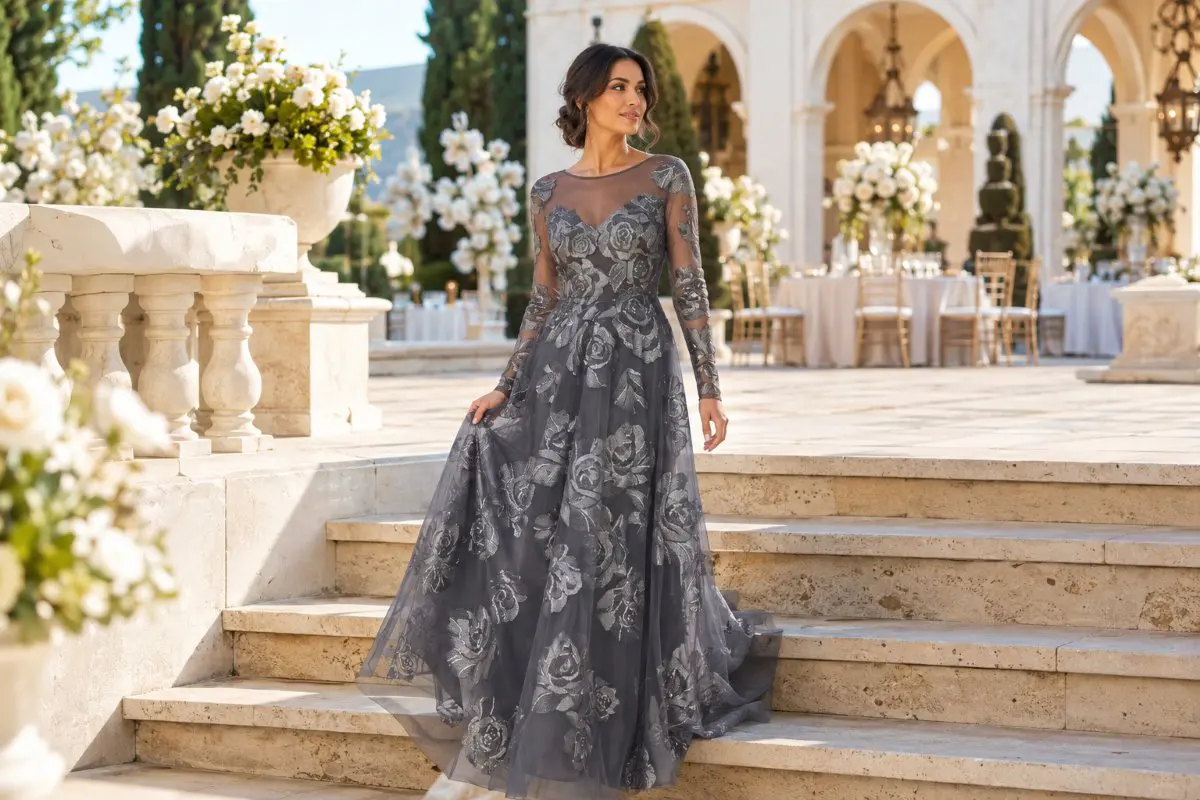
A long-sleeve mother of the bride dress can work for many seasons, venues, and dress codes, but the sleeve alone does not guarantee warmth, modesty, comfort, support, or formality. Choose the complete gown by checking the wedding plan, sleeve construction, lining, upper-arm and shoulder fit, movement, undergarments, alteration limits, and care label. A sheer mesh sleeve and a lined beaded sleeve may look equally covered in a product thumbnail while behaving very differently through a ceremony and reception.
This guide focuses on full-length or near-wrist sleeves. It explains how illusion mesh, lace, chiffon, crepe, jersey, satin, velvet, and embellishment affect fit and wearability without assigning a universal season or body type to any one fabric. Use it to evaluate the design, then compare the current long sleeves mother of the bride dresses collection when you are ready to shop.
Start With the Wedding Plan
Before comparing sleeves, ask the couple for the information that controls the decision:
- the invitation's dress code and the couple's preferred level of formality;
- the ceremony venue and any coverage expectations;
- the reception venue, climate control, terrain, and likely temperature;
- the wedding palette and colors reserved for the couple or wedding party;
- the event schedule, including outdoor photographs and travel between venues;
- whether a wrap, jacket, or change of outfit will be practical;
- the expected role of the parent during the ceremony, portraits, receiving line, speeches, and dancing.
Long sleeves are a preference, not a requirement of the role. They may provide the coverage you want, support a particular design, or reduce the need to manage a separate wrap. A sleeveless gown can be equally appropriate when it matches the wedding's plan, and the full mother of the bride dresses collection holds both routes side by side.
Emily Post's attire guidance for the mothers notes that the two mothers do not have to wear dresses of the same length and recommends distinct rather than identical colors. The useful principle is coordination, not matching. Share photos with the couple and the other parent when that helps align formality and palette, but do not assume that both outfits need the same sleeve length, neckline, or fabric.
What Counts as a Long Sleeve?
Retail categories are not always consistent. A product page may group full sleeves, bracelet sleeves, three-quarter sleeves, cape sleeves, and off-the-shoulder designs together. Read the product details and study every view.
- Full-length sleeve: reaches the wrist or close to it.
- Bracelet sleeve: stops above the wrist so jewelry remains visible.
- Three-quarter sleeve: ends between the elbow and wrist.
- Bell, bishop, or blouson sleeve: describes shape and volume, not necessarily length.
- Cape sleeve: drapes from the shoulder or bodice and may not enclose the arm like a conventional sleeve.
- Illusion sleeve: describes a sheer or visually light construction, not a guaranteed degree of stretch, softness, or coverage.
If wrist coverage, religious requirements, warmth, or arm mobility is important, confirm the actual construction rather than relying on the category label.
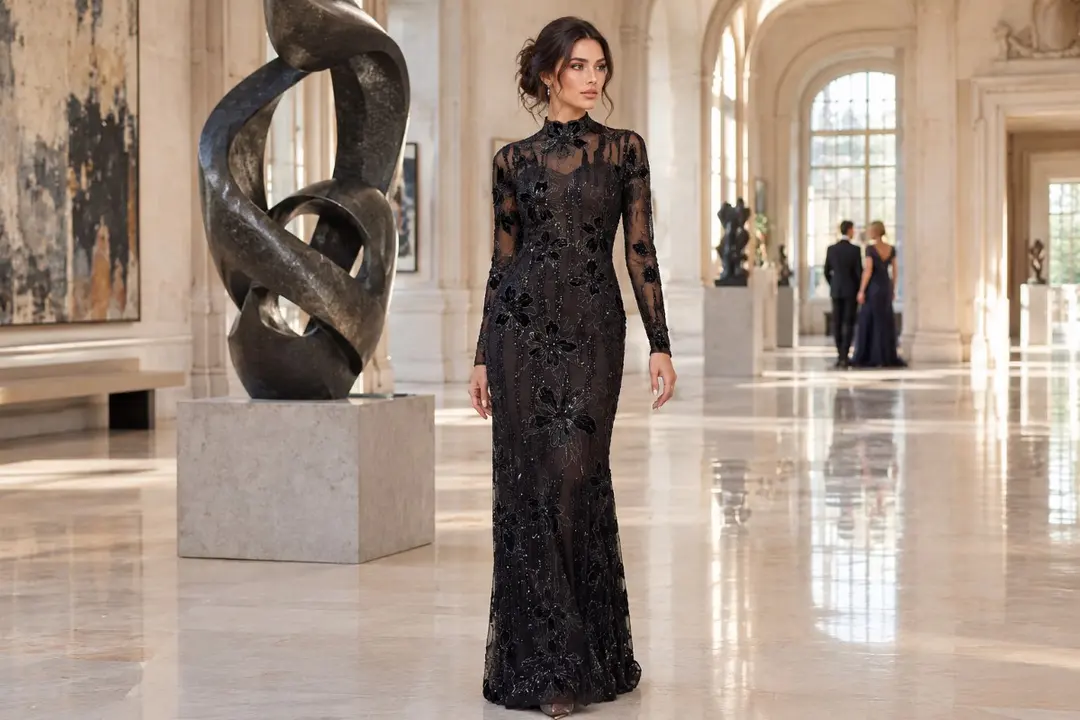
Compare Sleeve Constructions Before You Compare Colors
Sleeve behavior comes from the full construction: fiber, weave or knit, weight, thickness, lining, seam placement, stretch, appliques, beading, cuffs, closures, and the way the sleeve connects to the bodice. The table below identifies practical questions rather than promising one result for every garment.
| Sleeve construction | What it may provide | What to test | Alteration considerations |
|---|---|---|---|
| Illusion tulle or mesh | A sheer visual line, applique placement, or partial coverage | Transparency, recovery, scratchiness, seam pressure, color match, snags, and whether the bodice remains secure when the arms move | Appliques, beading, skin-tone matching, and seams can limit reshaping or shortening |
| Lace | Openwork texture, pattern, scallops, or a layered effect | Actual opacity, lining, stretch, motif placement, skin contact, and whether the edge catches jewelry | Scalloped cuffs, border motifs, corded areas, and appliques may need to be removed and repositioned |
| Chiffon, georgette, or a flowing woven sleeve | Drape, movement, softness, or volume | Transparency, cuff width, reach, trailing fabric, seam stress, static, and contact with food or candles | Fullness, gathered caps, cuffs, elastic, and finished edges affect whether length or width can change cleanly |
| Crepe, jersey, or another fitted opaque sleeve | A clean line and varying degrees of stretch or structure | Upper-arm room, elbow bend, recovery, shoulder lift, lining, seam strain, and transparency when stretched | Feasibility depends on seam allowance, knit or woven construction, sleeve cap, armhole, and matching fabric |
| Satin or another structured woven sleeve | A smooth or reflective surface and a more defined shape | Range of motion, seam puckering, elbow creasing, lining, pressure marks, and snag risk | Old stitch marks, limited stretch, cuffs, pleats, or directional sheen can complicate changes |
| Velvet sleeve | Dense pile, visual depth, and a substantial surface | Nap direction, pressure marks, arm mobility, lint, lining, and venue conditions | Nap matching, bulk, pressing limits, and visible stitch history require garment-specific assessment |
| Beaded, sequined, embroidered, or appliqued sleeve | Surface detail, sparkle, pattern, or a statement effect | Weight, abrasion, loose pieces, snagging, underarm comfort, shoulder fatigue, and missing embellishment | Resizing may require removing and replacing embellishment; matching replacement pieces may be limited |
Illusion Tulle and Mesh
Illusion sleeves are often described as barely there, but that phrase should not be treated as a performance guarantee. Fine net can be soft, firm, stretchy, rigid, smooth, or scratchy depending on the fiber and construction. Embroidery, beads, sequins, and appliques can add weight and reduce stretch. A skin-tone mesh may create a visual effect of floating decoration while remaining visibly sheer at close range or under flash.
CAMEO, the Museum of Fine Arts Boston's materials database, describes tulle as thin, fine netting that can be made from different fibers. That definition does not establish the comfort, opacity, or strength of a finished sleeve. Check the exact garment on the body and in the ceremony's expected light.
Lace
Lace is an openwork category with many constructions, fibers, motif scales, edges, and degrees of density. A lace sleeve may be unlined and transparent, partly lined, or fully backed by another fabric. It may stretch or resist movement. The word lace alone does not tell you whether the sleeve will be cool, warm, forgiving, formal, or easy to alter.
Inspect the inside as carefully as the outside. Raised cords, thread ends, beads, sequins, or stiff motifs can rub the inner arm or catch on another person's clothing during a hug. A scalloped wrist may be an important design feature, but shortening it can require moving the border rather than simply turning up a hem.
Chiffon and Flowing Sleeves
CAMEO defines chiffon as a sheer, lightweight plain-weave fabric made from finely twisted yarns. That makes transparency and lightness reasonable starting points, but it does not prove that every chiffon sleeve is breathable enough for a hot venue or resistant to wrinkles during travel. Fiber content, density, gathers, cuffs, lining, and the rest of the gown matter.
For bell, bishop, or draped sleeves, sit at a table and simulate eating, signing a guest book, holding a glass, and reaching across a place setting. Wide cuffs can contact plates, candles, floral arrangements, or chair hardware. A fitted cuff can control volume, but it must remain comfortable with the elbow bent.
Crepe, Jersey, and Other Fitted Sleeves
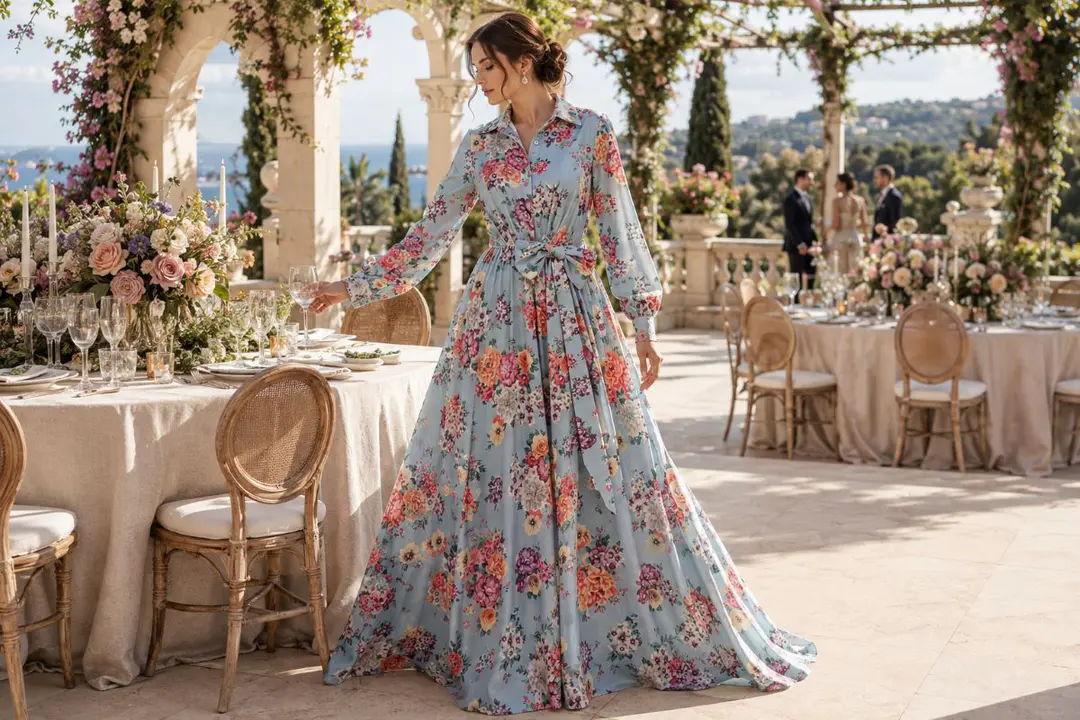
Do not assume all crepe is rigid or all jersey is highly elastic. Crepe describes a family of textured effects, and jersey describes a knit construction that can be made from different fibers and at different weights. A fitted sleeve should be evaluated for both stretch and recovery: it must allow movement and return without remaining bagged at the elbow.
Pay attention to the upper arm, armhole, shoulder, and back at the same time. Sleeve pressure can pull the bodice upward or create diagonal wrinkles across the back. If the fabric becomes lighter or more transparent when stretched, the sleeve may be too tight even when it technically closes. The fitted-opaque end of this spectrum fills the crepe mother of the bride dresses range.
Satin, Velvet, and Embellished Sleeves
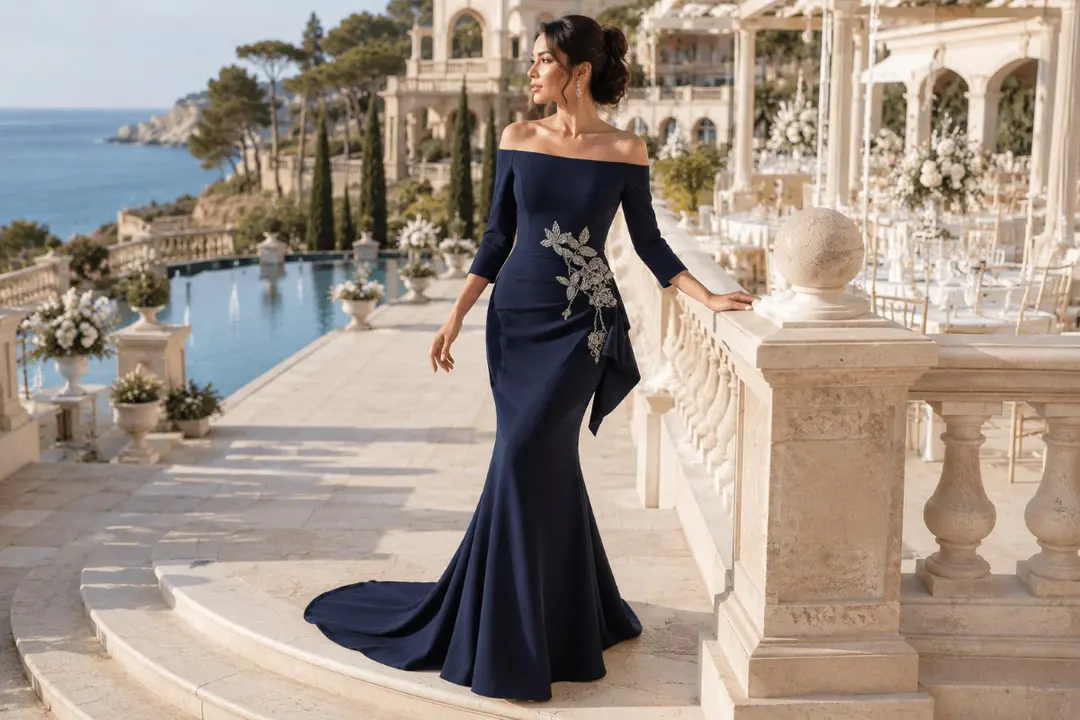
A satin weave creates sheen through long floating threads and may snag, while velvet has a dense cut pile. Those structures require different inspections. Satin may show seam tension, pressure, or sharp highlights. Velvet can show changes in nap, crushing, and lint. Neither label alone predicts comfort or alteration feasibility, and how that sheen decision plays across a whole gown is compared in our guide to matte versus shiny mother of the bride fabrics.
For beaded or sequined sleeves, move for several minutes rather than judging the first impression. Check whether the surface rubs the side of the bodice, scratches the underarm, catches the skirt, or adds noticeable fatigue. Count and photograph any loose or missing pieces before purchase and ask whether matching replacements are supplied. Embellishment handled at range scale fills the beaded mother of the bride dresses collection.
Sleeve Coverage Does Not Equal Temperature Control
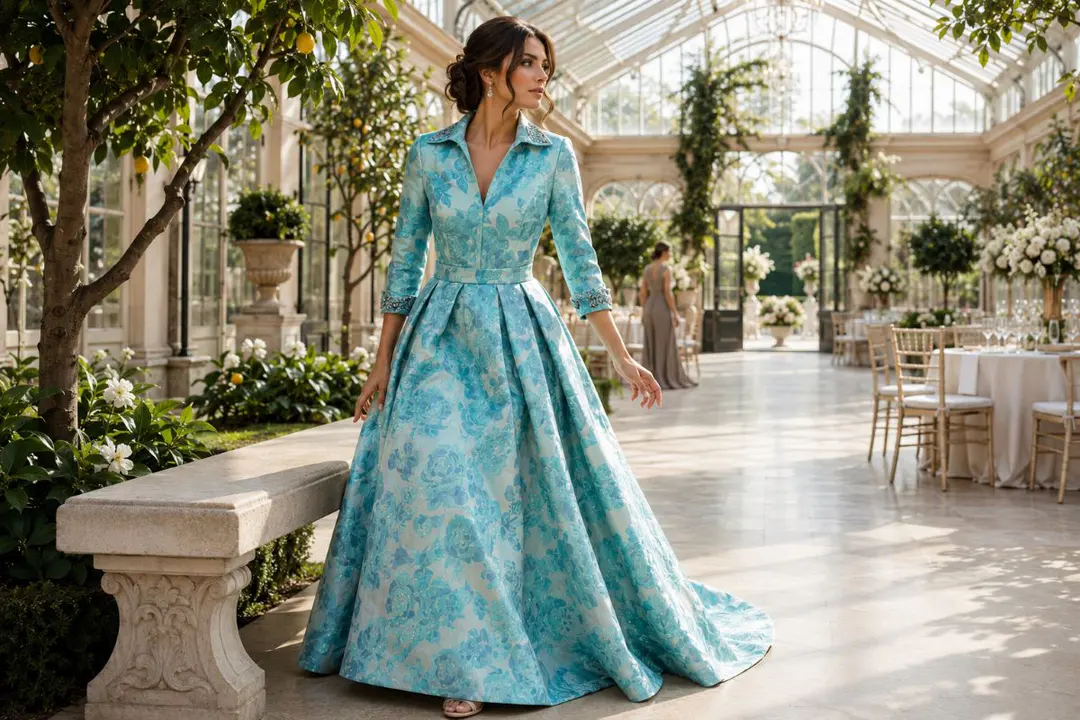
A sheer sleeve is not automatically cool, and an opaque sleeve is not automatically warm enough for an outdoor winter ceremony. Thermal comfort depends on the full garment and environment: fiber, yarn, fabric structure, thickness, weight, air permeability, moisture behavior, lining, number of layers, fit, humidity, wind, sun, activity, and venue climate control.
Peer-reviewed textile research illustrates why the fabric name cannot answer the question by itself. A study published by the Journal of Textile and Apparel, Technology and Management found that thickness, structure, and weight influenced thermal-comfort properties in the tested knitted fabrics. Another study reported that fiber and knit structure affected thermal and permeability properties. These studies concern specific test fabrics, not formal gowns, but they support a careful conclusion: evaluate the constructed dress and the event conditions rather than assigning comfort to a sleeve label.
For a Warm-Weather Wedding
- Check whether the sleeve, bodice, and skirt are lined.
- Consider direct sun, humidity, shade, wind, and indoor air conditioning.
- Notice beadwork, dense embroidery, corsetry, and multiple skirt layers.
- Wear the gown long enough to assess heat and friction, not just for a two-minute fitting.
- Plan water, shade, transportation, and a wrap only if those choices suit the schedule.
For a Cool-Weather Wedding
- Do not treat sheer sleeves as insulation.
- Plan outerwear that fits over the shoulders, sleeves, and embellishment without crushing them.
- Check the gap between vehicle, ceremony, photo locations, and reception.
- Consider wind and precipitation as well as temperature.
- Try the coat or wrap with the complete gown before the wedding day.
Perform a Seven-Part Sleeve Fit Test
New Mexico State University's pattern and fitting guide says a properly fitted garment should not bind, pull, sag, strain, or wrinkle unnecessarily. Use those warning signs throughout this test.
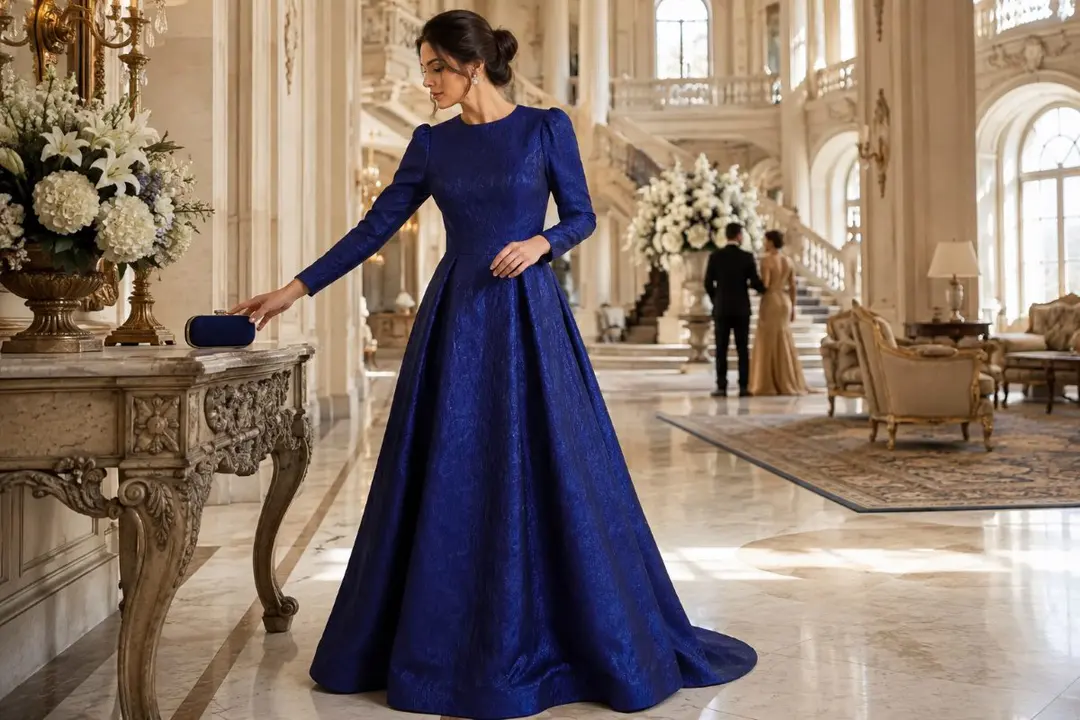
1. Check the Shoulder and Armhole
Stand naturally. Look for pressure, cutting, folds, or a sleeve seam that appears displaced. The armhole should allow movement without exposing the bra or lifting the complete bodice. A shoulder problem is not always solved by widening the sleeve because the bodice, back width, sleeve cap, and armhole work together.
2. Perform the Hug Test
Reach both arms forward as if hugging the couple. Notice pulling across the upper back, shoulder blades, upper arms, and sleeve seams. The zipper and bodice should remain stable. Repeat while wearing the intended bra or shapewear because undergarments can change fit and movement.
3. Raise the Arms
Lift the arms to shoulder height and then overhead. Watch how far the bodice rises, whether it returns, and whether the neckline, cups, waist, or back shifts. A sleeve that allows the arms to move but pulls the entire gown out of position is not functioning well for the planned event.
4. Bend the Elbows
Hold a bouquet, glass, phone, and small bag. Bend the elbows fully and rest the forearms on a table. Check pressure at the elbow, cuff, and upper arm. Confirm that buttons, zippers, elastic, or beaded cuffs do not pinch.
5. Sit and Stand Repeatedly
Observe whether the sleeves drag the neckline backward, whether the cuffs catch the chair, and whether the bodice must be readjusted after standing. Repeat in a low chair when possible.
6. Turn and Dance
Rotate the torso, sway, and dance for several minutes. Listen and feel for embellishment catching, mesh pulling, seams rubbing, or sleeves twisting around the arm. Check the gown again after movement rather than assuming the first fit is unchanged.
7. Review Photos and Video
Take front, side, back, seated, and arms-raised photos in daylight and indoor light. Use flash if the reception will include it. Sheer sleeves, nude mesh, lining edges, bra straps, skin-tone mismatch, wrinkles, and strain can appear differently in photographs than in a fitting-room mirror.
Coverage and Undergarments Require a Whole-Gown Check
A visible sleeve can create an impression of coverage without making the garment opaque. Illusion mesh, lace, chiffon, and openwork may reveal skin, undergarments, tattoos, or lining edges. If the ceremony has coverage expectations, ask what counts rather than assuming that any sleeve satisfies the requirement; when full coverage is the actual brief, the modest mother of the bride dresses range is built for it from the pattern up.
The correct undergarment depends on the neckline, cups, bodice support, back height, transparency, and personal needs. A sheer sleeve does not determine whether a regular bra will work. Bring the intended bra, shapewear, hosiery, and any modesty layer to the fitting. Check:
- whether straps or bands show through the back, shoulder, or armhole;
- whether cups align with the bust rather than sitting too high, low, narrow, or wide;
- whether shapewear edges create lines beneath the bodice or skirt;
- whether adhesive products are compatible with skin and garment construction;
- whether the solution remains secure while sitting, hugging, raising the arms, and dancing.
Do not depend on fashion tape to correct a sleeve, shoulder, neckline, or bodice that is fundamentally the wrong size or shape.

Ask About Alterations Before You Rely on Them
Statements such as "sleeves can almost always be shortened" or "a tailor can simply add sleeves" are too broad. The answer depends on the exact pattern and finish. Obtain an assessment from a formalwear alterations professional before buying when the change is essential, and build the schedule around the mother of the bride alterations timeline.
Shortening a Sleeve
A plain sleeve with an accessible hem may be comparatively straightforward. Complexity increases with:
- scalloped lace or a border motif;
- beaded, sequined, embroidered, feathered, or appliqued cuffs;
- buttons, loops, zippers, vents, or covered closures;
- tapered sleeves that become too narrow when shortened;
- multiple layers or a separate lining;
- directional velvet nap or satin sheen;
- gathers, pleats, elastic, or shaped cuffs.
Narrowing or Widening a Sleeve
Available seam allowance, stretch, embellishment, and armhole construction control the options. Widening may require fabric that is unavailable. Narrowing can change motif placement or create a new mismatch with the armhole. Ask the tailor to assess both the sleeve and bodice.
Adding Sleeves
Adding sleeves to a sleeveless gown is not merely attaching two fabric tubes. The armhole may not be shaped or reinforced for a sleeve, and the new construction can affect support, movement, neckline stability, and appearance. Matching color, texture, weight, stretch, and embellishment may be difficult. A removable bolero, jacket, cape, or wrap can be a better solution in some designs, but it must still be tested with the gown.
Removing Sleeves
Sleeves may be integrated into an illusion yoke, neckline, back, or supporting structure. Removing them can expose unfinished edges, reduce support, or require the armhole and bodice to be rebuilt. Do not assume removal will produce the same result as a dress designed to be sleeveless; a gown built that way from the start lives in the sleeveless mother of the bride dresses range.
Long Sleeves Do Not Set the Dress Code by Themselves
A full sleeve can look formal, relaxed, minimal, romantic, dramatic, or casual depending on the complete gown. Length, fabric, silhouette, embellishment, neckline, train, color, footwear, and accessories all contribute. A long-sleeve knee-length lace dress and a long-sleeve beaded floor-length gown should not be assigned the same formality simply because both cover the arms.
Use the invitation and the couple's plan as the standard. For a religious ceremony, confirm neckline, back, shoulder, arm, hem, head-covering, and footwear expectations with the venue or family. Avoid broad assumptions about an entire religion or culture.
Coordinate the outfit with the wedding palette without copying the bridal party unless requested. The mother's dress should be distinct from the couple's attire and should not rely on a universal prohibition or requirement for one color. When the wedding has a formal color plan, send the couple a photo of the actual fabric because screens and color names may be misleading.
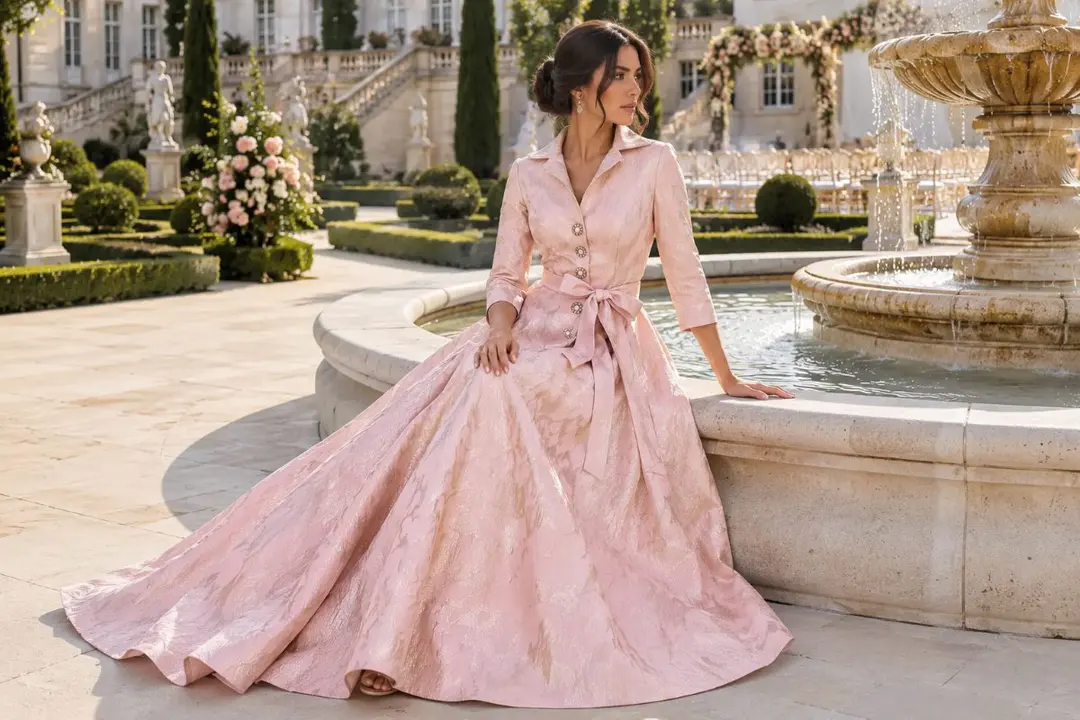
Plan Shoes, Jewelry, and Outerwear Around the Sleeves
- Choose smooth jewelry settings near tulle, lace, chiffon, and mesh.
- Test bracelet and watch clasps against the cuff and inner sleeve.
- Check whether earrings catch a high neckline, cape, shoulder applique, or hair.
- Try the handbag under the arm and against the hip; textured surfaces can abrade sleeves or beadwork.
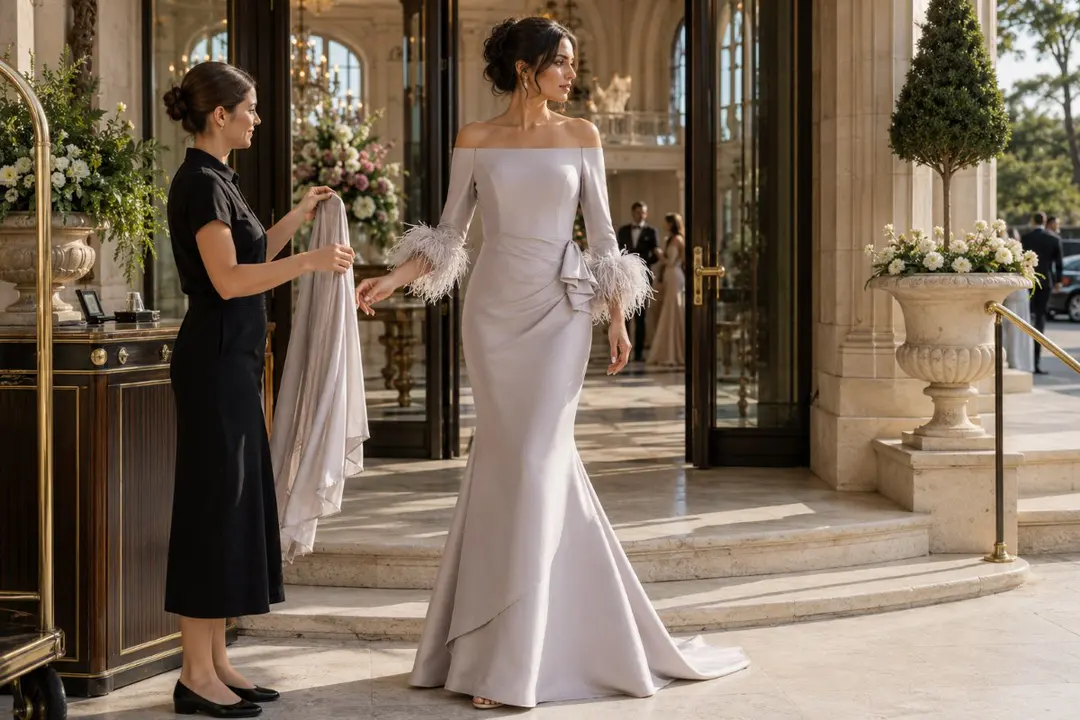
- Put on outerwear slowly and confirm that it does not crush puffed, beaded, feathered, or bell sleeves.
- Wear the final shoes before approving the gown's hem.
- Consider traction, stairs, grass, standing time, and mobility rather than choosing a heel height only for appearance.
A sleeve can change how a coat or wrap fits through the shoulder and upper arm. Bring the actual layer to a fitting instead of assuming a standard coat size will accommodate the gown.
Follow the Finished Garment's Care Instructions
Do not apply one steaming, ironing, washing, dry-cleaning, hanging, or folding rule to every long-sleeve gown. A garment may combine mesh, lining, lace, satin, feathers, beads, boning, pads, zippers, and adhesives, each with different risks.
The U.S. Federal Trade Commission's Care Labeling Rule guidance states that instructions must account for the entire garment, including non-detachable linings, trim, buttons, zippers, and other details. It also requires warnings when a procedure such as ironing or steam could cause harm. Follow the label on the finished gown and ask the retailer or manufacturer when the instructions are unclear.
For travel, use a clean garment bag that does not abrade embellishment. Support heavy sections rather than allowing all weight to hang from delicate mesh or shoulder seams. Keep rough jewelry, hook-and-loop fasteners, exposed zippers, and sharp bag hardware away from the sleeves. After travel, inspect the dress before applying heat or steam.
Long-Sleeve Mother of the Bride Dress Checklist
- Confirm the dress code, palette, ceremony expectations, and event schedule with the couple.
- Verify whether the product has full, bracelet, three-quarter, cape, or illusion sleeves.
- Check the fiber content, lining, stretch, weight, embellishment, cuffs, and closures.
- Wear the intended bra, shapewear, hosiery, and shoes during the fitting.
- Perform the shoulder, hug, reach, elbow, seated, dance, and photo tests.
- Check transparency and coverage in daylight, indoor light, and flash.
- Try jewelry, handbag, wrap, jacket, or coat with the gown.
- Inspect seams, mesh, lace, beads, sequins, embroidery, and replacement pieces.
- Get a garment-specific alteration assessment before relying on sleeve changes.
- Approve the hem while wearing the final shoes.
- Read the care label and plan transport, storage, and cleaning for the complete garment.
Long-Sleeve Mother of the Bride Dress FAQ
Are long sleeves too hot for a summer wedding?
Not necessarily, but sheer does not automatically mean cool. Comfort depends on fiber, structure, thickness, weight, lining, embellishment, fit, humidity, sun, activity, and air conditioning. Wear the full gown long enough to test it under conditions similar to the event.
Do long sleeves make a mother of the bride dress more formal?
Not by themselves. Length, silhouette, fabric, construction, embellishment, neckline, train, footwear, and the wedding context determine formality. Match the complete outfit to the invitation.
Can long sleeves be shortened?
Sometimes. A plain cuff may be easier than scalloped lace, buttons, a zipper, feathers, beadwork, or a border motif. Taper and lining also matter. Ask a formalwear tailor to inspect the exact sleeve before purchase when shortening is required.
Can sleeves be added to a sleeveless gown?
Possibly, but the armhole and bodice may not be designed to support them, and matching fabric can be difficult. Adding sleeves can affect movement, neckline stability, and support. Get a professional construction assessment before relying on this alteration.
Are illusion sleeves considered modest or opaque?
They are usually sheer or semi-sheer, so they may create a visual line without providing opaque coverage. Ceremony expectations differ. Ask the couple or venue what counts and inspect the sleeve under strong light and flash.
What should I wear under a gown with illusion sleeves?
The answer depends on the neckline, cups, bodice, back, transparency, and support needs, not the sleeve alone. Bring the intended undergarments to the fitting and check them while moving and in photographs.
Should the mother of the bride and mother of the groom wear the same sleeve length?
No. They can coordinate formality and choose distinct, complementary colors without matching sleeve length or dress length. Follow the couple's preferences rather than a fixed rule.
Are long sleeves appropriate for beach, garden, or religious weddings?
They can be, but the right construction depends on the specific venue, weather, terrain, ceremony expectations, and complete gown. Do not assign chiffon only to beaches or crepe only to ballrooms. Confirm requirements and test the garment under realistic conditions.
The right long-sleeve mother of the bride dress is the one that supports the wedding plan and remains comfortable and secure through hugs, photographs, dinner, speeches, and dancing. Compare styles online, then visit an authorized Jovani retailer with the intended undergarments, shoes, and outer layer so the complete gown can be evaluated before purchase.