
Homecoming Dress Fabrics: How to Choose for Dancing and Photos
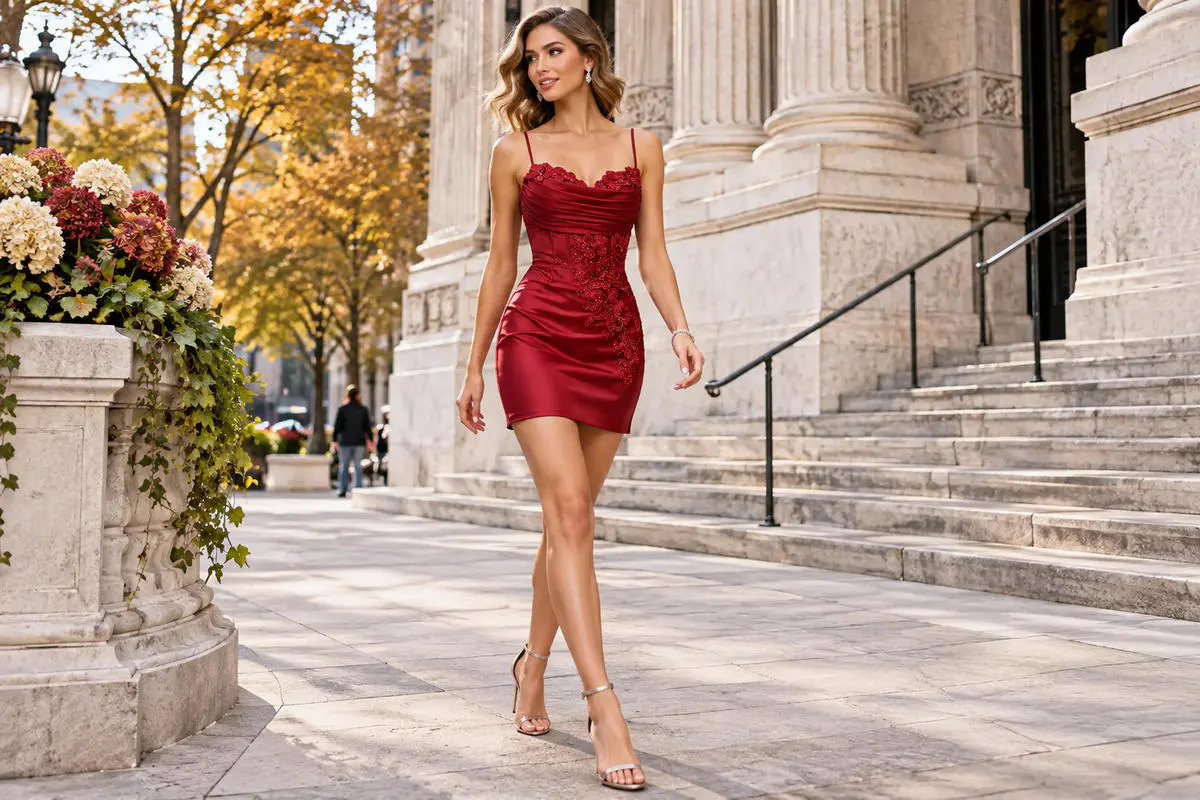
Compare homecoming dress fabrics by how they bend, what touches your skin, and how they look under flash. If you want a skirt that swings, start with lined chiffon. For more shape, try layered tulle or jacquard. For shine, compare satin with sequins in the same lighting. Compare two dresses of a similar cut so a fuller skirt or a looser fit doesn’t skew the result.
Which Homecoming Dress Fabrics Are Best for Dancing?
For a close fit, try stretch crepe or jersey with a lining that moves with you. If you prefer a fuller skirt, try chiffon or a lightly layered A-line. When comparing homecoming dresses (opens in new tab), sit before you judge a fabric by its feel on the hanger. A stretchy outer layer won’t help much if the lining pulls across your lap.
A flared skirt may let you take a longer step even when the fabric itself doesn’t stretch. Use Jovani’s broader homecoming dress guide (opens in new tab) to narrow down the shape before you compare how the materials behave.
Satin, Crepe, and Jacquard in Photos
Satin can pick up broad highlights, crepe usually reads more matte, and jacquard shows its pattern even in softer light. Take one photo from the front and another at an angle, since a fabric’s sheen can change when you turn.
Satin for Sheen
Satin gets its sheen from the way it’s woven, so two satin dresses can have different weights and levels of stretch. Jovani style 52247 uses satin with a draped bust and ruching. If you prefer a softer sheen, look for satin that reflects light only at the folds rather than across the entire bodice.
Crepe for a Matte Finish
Crepe is a good starting point if you want less shine. Its lightly textured surface can make a simple cut look more defined without a glossy highlight. Stretch varies by dress, so try sitting in the actual garment rather than relying on the fabric name.
Jacquard for Woven Pattern and Shape
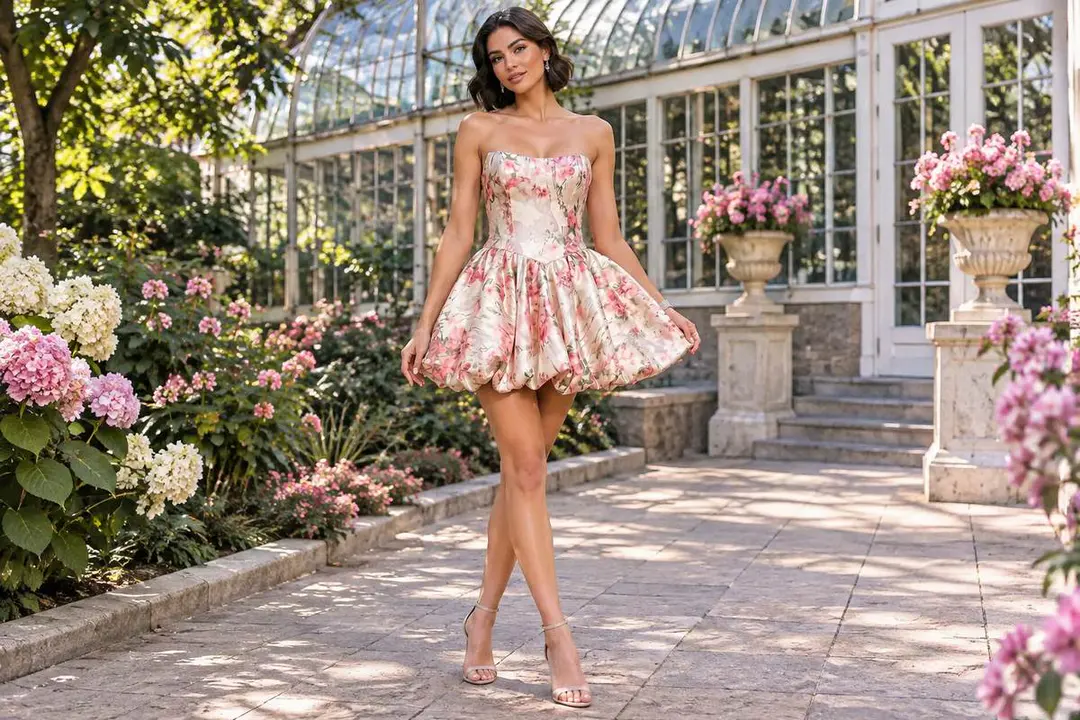
In jacquard, the pattern is woven into the fabric rather than printed on top. Jovani’s floral styles for homecoming (opens in new tab) include style 52380, which pairs floral jacquard with a bubble hem. If you like a skirt that keeps its shape in photos, compare it with a draped fabric at the same length.
Chiffon and Tulle for Movement and Volume
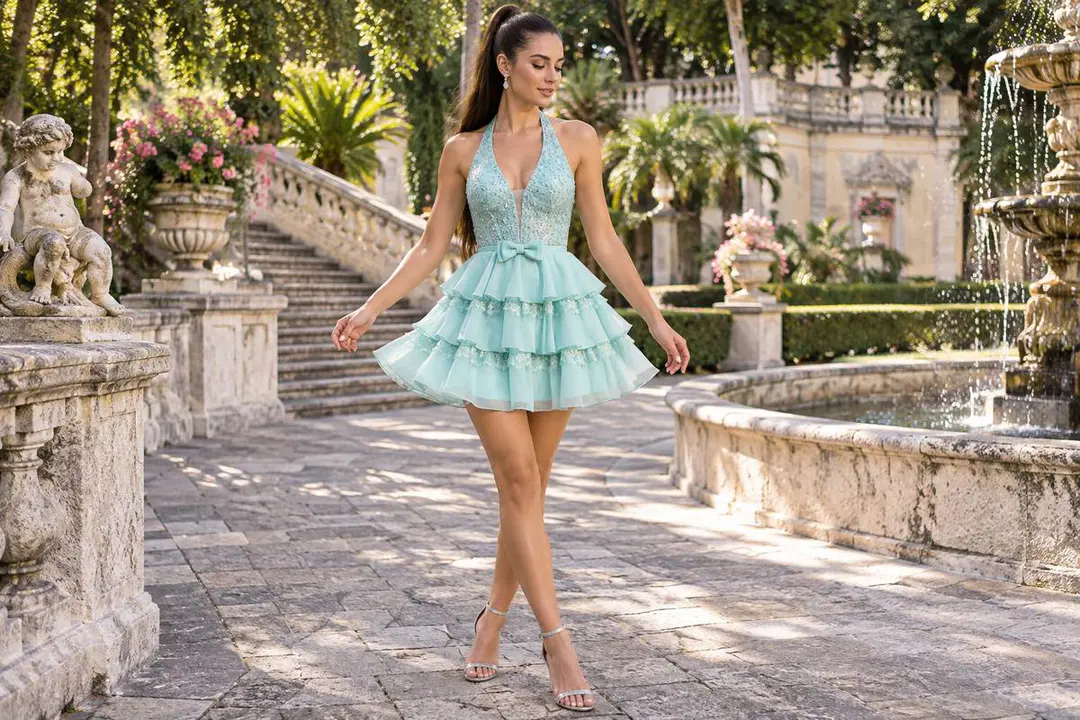
Chiffon falls in soft folds, while layers of tulle can hold a skirt away from the body. Compare how two A-line homecoming dresses (opens in new tab) move when you turn and how much room they take up when you sit. The skirt may look light in a photo but feel quite different once you account for its lining.
Jovani style 52158 pairs a lace bodice with a tiered chiffon skirt. Style 42340 uses tulle for a layered skirt and a ruched bodice. When you try either fabric, look at where the lining ends so you know which parts of the skirt may look sheer in brighter light. A layered tulle skirt can also feel fuller on a chair than it looks on a hanger, especially if it has a firmer underskirt.
Sequins and Beading Change the Weight
Sequins tend to reflect in small flashes, while beadwork adds raised texture where it’s sewn. The placement matters as much as the amount. A dress with beading at the neckline can feel different from one with the same detailing across a fitted skirt.
If you’re comparing sequined dresses for the dance (opens in new tab), lower your arms and walk a few steps. Check for rubbing where your upper arms meet the bodice.
Turn once under the fitting room lights to see if the sparkle comes mostly from the bodice or continues across the skirt. If you’ve decided you want sparkle, compare full coverage with scattered accents in Jovani’s sequin dress styling guide (opens in new tab).
Try sitting in beaded homecoming dresses (opens in new tab) to see where the embellishment presses against your legs. Also check that the zipper moves freely where the trim meets the seam. If the dress feels heavier than you expected, try embellishment on the top with a simpler skirt.
Put the Dress Through a Fitting Room Test
Once two dresses make the shortlist, try them under the same conditions. Wear the shoes and undergarments you plan to use, then do the same three checks in each dress.
- Sit down and cross your legs. Notice if the lining pulls or the fabric pinches at the waist.
- Take a few long steps, turn, and raise your arms. Check whether the skirt rides up or the straps start to rub.
- Take one photo near a window and another with flash. Compare the shine at the bodice and how much of the lining you can see.
Bring any jacket or wrap you plan to wear, especially if the dress has rough sequins or raised beads at the shoulders. Put the layer on and take it off once to check whether the lining catches before you commit to that pairing.
If you’re also choosing between a mini and a midi, Jovani’s guide to homecoming dress lengths (opens in new tab) covers how the venue and school rules affect that choice. Use the same movement test for whichever length you prefer.
Before deciding between homecoming dress fabrics, try your two favorites in person if you can. An authorized Jovani retailer (opens in new tab) can help you compare the lining, weight, and finish in the styles you’re considering.
Frequently Asked Questions
Is velvet too warm for homecoming?
Velvet can work for a cool venue or outdoor photos. If the dance is in a warm gym, try a lighter fabric and bring a removable layer for the trip.
Can I wear chiffon to a fall homecoming?
Yes. Lined chiffon works for an indoor dance in fall, even if it’s cool outside. If photos are outdoors, bring a warm layer rather than choosing the dress for the walk alone.
Is satin the same as silk?
No. Satin describes the weave, while silk is a fiber. A satin dress may be made from silk or another fiber, so read the label before deciding how to care for it.
Can I iron a sequin homecoming dress?
Avoid putting an iron directly on sequins. Follow the care label or ask the retailer how to handle creases, especially where sequins meet mesh or another fabric.